Showing posts with label rifle. Show all posts

Tuesday, May 8, 2018

Starting Your Armory

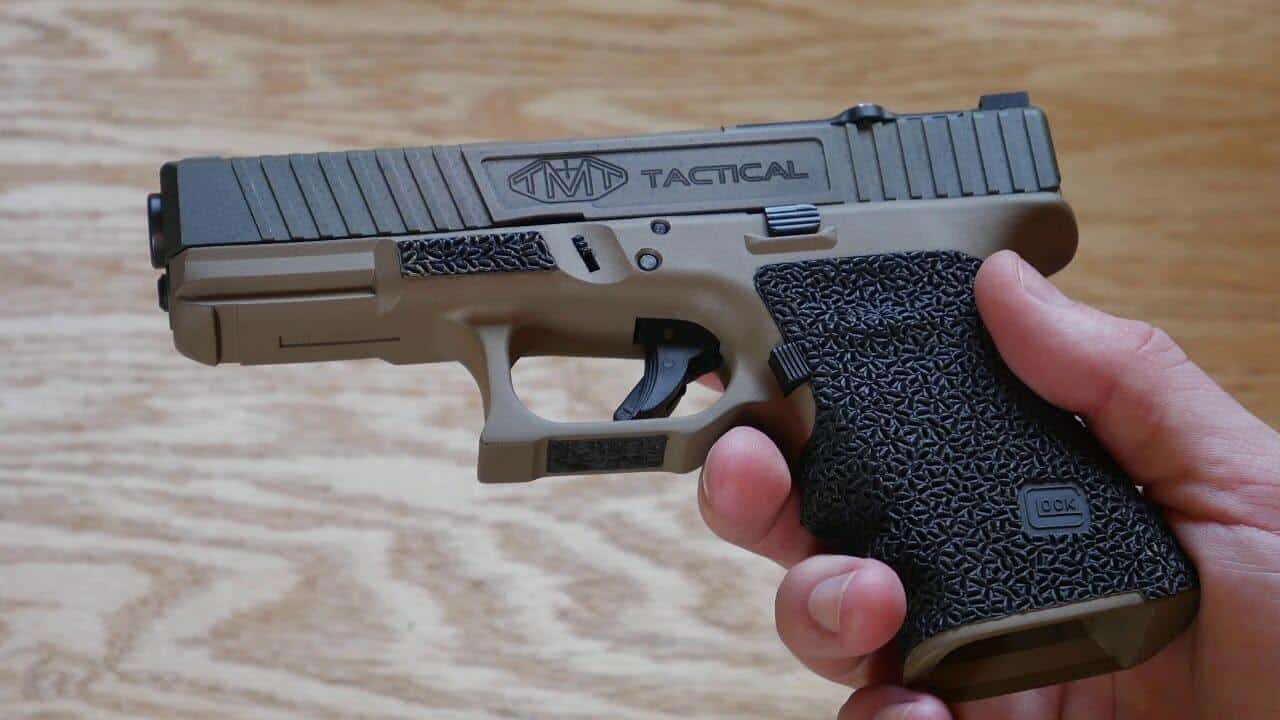
handgun and ammoIf you’ve decided to take your personal or home defense seriously, you’re probably researching buying a few firearms, or perhaps you already own one or more. The world of firearms can be confusing, so I wanted to cover a few points every prospective gun owner should consider.


First, you need to ask yourself what the objective is. Are you planning for home defense, or is the gun going to be used for self-defense away from home? Or do you plan on hunting, and if so, what are you going to be shooting at? This distinction will start you down the right path.


Second, what is your experience with weapons? If you grew up with guns and have practiced a lot, you’re in a much different place than the person who’s never touched one.


If you read gun enthusiast publications you’re likely to hear everything from ‘buy as many guns as you can afford’ to ‘buy as few guns as possible’ and everything in between. My advice is to buy the weapons you expect to need and become an expert with them.So let’s get on to building your armory.


One of the best starting points for your armory is a revolver or semi-auto handgun that you can use for home, self-defense and even emergency hunting, and you can carry it with you discreetly. My favorite weapon for this purpose is the .357 Magnum, an all-around gun that is effective, easy to use and flexible.


By flexible I mean it shoots several different types of ammo and the ammo is widely available. There’s an old saying that the best gun is one you have with you when you need it, and with the .357 you can carry it with you without too much trouble. If you want additional capacity, I like the Glock 23, a .40 caliber semi auto that gives you the ability to carry eight more rounds than the five-shot .357.However, a semi-auto is a much more complex weapon both from an operational and maintenance standpoint. More can go wrong… so be honest about your own skill level before buying one.


Once you have a trusted handgun, I recommend you acquire a firearm for home defense, and in my opinion the hands-down winner would be a 12 gauge pump shotgun.It is a powerful and extremely versatile gun, because you can vary your ammunition based on your needs. You can shoot birdshot, buckshot, slugs, darts (flechette rounds), explosive fragments, bean bags, pepper gas, tear gas, rock salt, rubber slugs/buckshot, pyrotechnic whistles, bolo’s and even flares.With that range of ammunition you can kill almost anything you can imagine, except hunt game at long distances.


Much of personal and home defense is deterrence, and this is where the pump shotgun really shines. If some thug is scouting your place and is carrying a knife or a handgun and you show up on the front doorwith a shotgun in hand, he’s going to move on. You see, even if you’re skilled with a handgun, a person can survive and even continue firing after being hit, but with a shotgun, you’re almost guaranteed a powerful, knock-down hit and serious bleeding.


Nobody wants to face an angry homeowner with a shotgun, even if she’s a 5′ grandma. If you suffer the misfortune of facing an intruder in your home, the sound of that shotgun pumping has been known to send intruders running away… quickly.


Once you have a handgun and a shotgun, you have covered 95% of your defense needs. Anyone in your home who might handle the gun in an emergency should spend a lot of time at the range, training and shooting with both weapons.


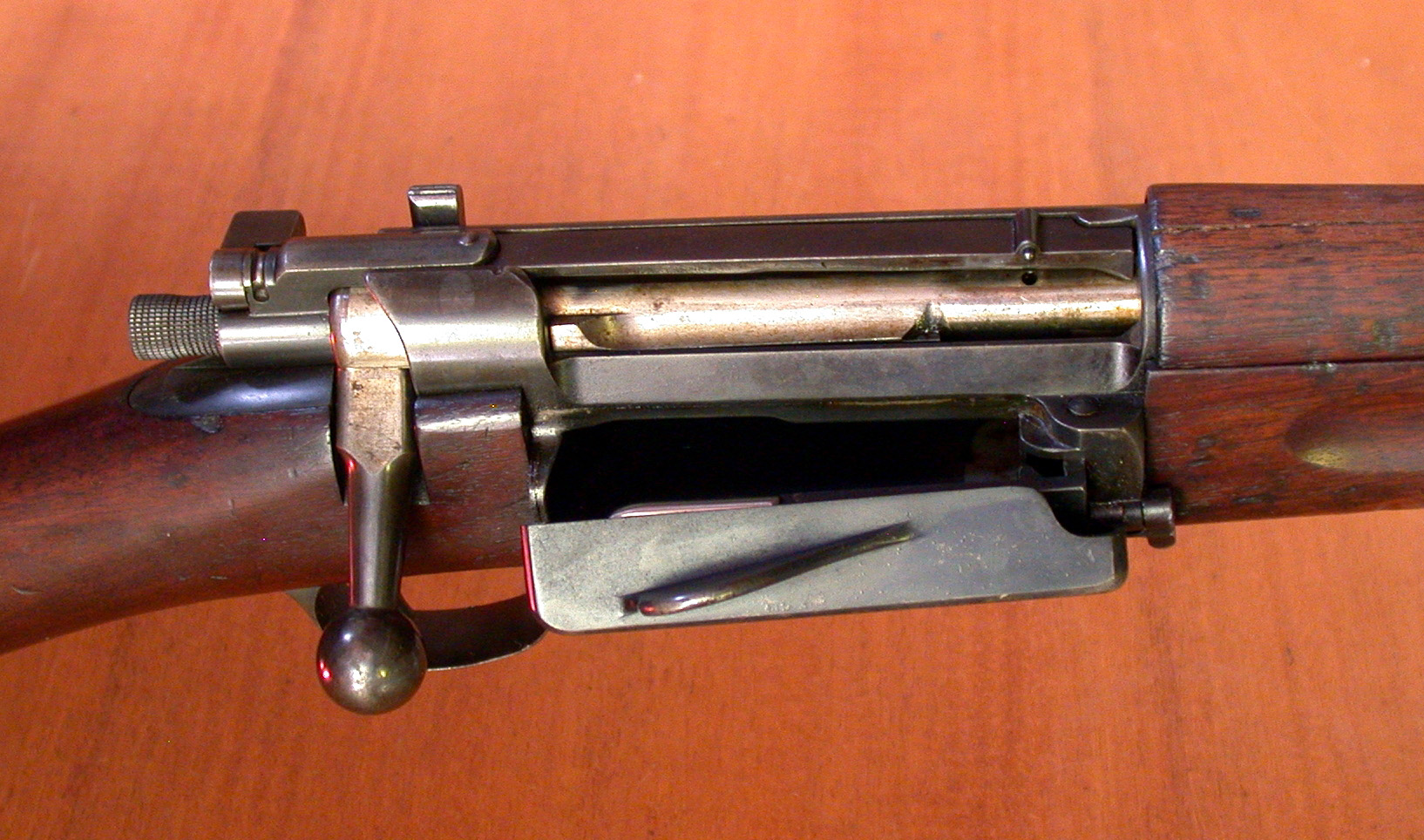
Your third, and final component to your armory should be a rifle.The rifle gives you the ability to hunt or take down threats at a distance, and in conjunction with your other two weapons will cover virtually every need you might have.


rifle at canyonChoosing the right rifle involves an evaluation of the stopping power, the likely uses, the range of the weapon, availability of parts and ammunition, and the weight.I also like to own different weapons that can shoot the same ammo, since it makes buying and stockpiling ammunition easy.


If you’ve purchased the .357 I recommended, one great option would be a lever-action rifle that uses the .357 magnum rounds.A lever gun is the rifle equivalent of a revolver; easy to use, easy to clean and simple and reliable when you need it. I think of my lever gun like a hammer in my toolkit… it’s really that versatile.


Now, if you want something with greater range, I recommend the .308 rifle.It has more power and precision at distance than the .357 lever rifle.It’s great for hunting many different types of game and is more effective than higher-powered, similar rifles.


One of the great things about the .308 rifle is it can fire the 7.62x51mm NATO rifle cartridge, the same round fired by the best battle rifles in the world. This means that your available ammunition now includes the most-produced rifle cartridge in the world.


These three or four firearms will make for a very robust armory that will cover almost any need. If you can envision a scenario where these weapons will not meet your need, you should probably be worried about escape and evasion rather than fighting.


The post Starting Your Armory appeared first on Off The Grid News.

Monday, February 19, 2018

4 Optics That Will Revolutionize Your Survival Rifle

4 Optics That Will Revolutionize Your Survival Rifle


A quality optic for your rifle can be one of the most important upgrades imaginable. However, have you ever thought about optics for your survival rifles?


When looking at optics for these survival rifles, I tend to look at several different features.


Durability is an obvious one. In a survival situation, you won’t be able to replace the optic easily, and you’re probably going to have to expose it to the elements at some point.


Accuracy is another obvious one. However, as I’m sure you’ve seen, most modern optics hold their zero really well, so you probably won’t have to worry about this one too much. It comes more into play when considering that some people just won’t shoot some optics as well as others. It’s a fact of shooting.


The last feature that I like is an optic that has an etched reticle or uses fiber optics. This eliminates the need for batteries. I like this due to the fact that batteries may be hard to come by in a survival situation.


Generally speaking, I prefer no magnification for a survival rifle. However, a variable magnification scope that starts at 1x magnification would work just the same. I have found that with enough practice, I am able to accurately and effectively shoot out to 300-plus yards without any magnification. Conversely, shooting at 50 yards and closer with magnification can be very difficult.


Let’s talk about some of our favorite survival optics.


Vortex Spitfire


The Vortex Spitfire is a prismatic scope, so it is extremely compact. It is only four inches long, and weighs in at 11.2 ounces. This compact size is one of the biggest appeals of a prismatic optic. The reticle just uses dual rings, so it is extremely easy to acquire targets. While the reticle is etched on the prism, it also can be illuminated in red or green.


In terms of durability, this one is hard to beat. It is waterproof, fog-proof and shockproof. The anodized finish adds in to this, and the optic can be used in any variety of temperatures.


The eye relief is comfortable, and the scope is parallax free, so you will be able to easily shoot with this optic. I found this to be an excellent, accurate optic, especially when considering the relatively low MSRP.


Vortex also offers a Spitfire prism scope with 3x magnification.


Burris AR-1X


This optic from Burris is another great choice for your survival rifle. It is the same size as the Spitfire, but it is a little bit heavier. The eye relief is also a little bit shorter, so some will not find this as comfortable for shooting.


While the Spitfire was a prismatic sight, this one utilizes lenses. The lenses are fully multi-coated, so you will be able to see more clearly. It allows for a lot of light transmission, so it’s consistently easy to see.


The reticle is slightly more complex than the Spitfire. It uses a large circle, but also includes a bullet drop compensator. On one hand, this will help the intelligent shooter extend his range. However, on the other hand, it may slow down your target acquisition. Similar to the Spitfire, this one has an illuminated reticle that can be either red or green. The black reticle is etched on the lenses, so you don’t need a battery.


This optic will work well on a survival rifle. It is small, durable, and will last for a long while. However, it is slightly more difficult to use, due to the more advanced reticle. As far as price goes, this one is much more affordable than the Spitfire.


Trijicon ACOG


The Advanced Combat Optical Gunsight (ACOG) is very commonly used in the military. This is actually my favorite survival optic, but be warned, it is extremely expensive.


This optic is my favorite due to how durable it is and the fact that it uses fiber optics. There are never any batteries involved.


In terms of magnification, there is a wide variety available. The scopes are all fixed magnification, and they start at 1.5x magnification and go up to 6x magnification. For the survival rifle, I recommend 1.5x or 2x. Maybe 3x magnification, but it will take some getting used to at close range.


Similar to the Burris optic, these optics utilize classic lenses as opposed to the prism used in the Spitfire. They are extremely durable, as evidenced by the military using them in combat. The reticles of each ACOG are slightly different, but most of them incorporate some bullet drop compensator. I found them to be easier and quicker to use than the Burris optic.


Iron Sights


This one should be obvious. No matter what optics you decide to use on your rifle, having iron sights as a backup is absolutely crucial. Now that almost all optics rely on electronics, and use some form of illuminated reticles, it is very important to have that manual backup.


I can’t imagine having a survival rifle without iron sight backups. I recommend shooting with your iron sights every once in a while, just in case you ever have to use them in a survival situation.


What are your favorite optics? Share your tips in the section below:

Monday, January 22, 2018

5 Guns Not To Be Without During Trying Times

5 Guns Not To Be Without During Trying Times


Let’s imagine for a moment that the world of tax-funded public safety and well-stocked grocery stores are a thing of the past and you, perhaps with a handful of family and friends, must fend for yourself in a tough and hostile environment. Among the considerations for survival are, of course, firearms. Which would you choose?


The most critical consideration for firearms in this scenario would be reliability. Does it go “bang” with every trigger press? Does it cycle the widest possible spectrum of ammo available in that caliber? Is it simple to maintain? What ammunition is likely to be found in the area? It’s a given that one of each major civilian classification of firearms will be needed—a handgun, a rifle, and a shotgun. Our task here is to pick an ideal group of five.


THE TOP THREE


Handgun


The Glock 17/19 has a long track record of reliability and the other criteria here. While Glock offers a wide variety of calibers and models, the 9mm is a commonly available cartridge worldwide, and less pricey. Like the AR-15, parts are currently ubiquitous, and many are interchangeable between models/calibers.


As a true admirer of the 1911, it’s hard to think of turning my back on that old standby. Indeed, it’s more accurate. But it falls behind, quickly, where ease-of-maintenance and magazine capacity are concerned. Newer models are, in my experience, less reliable than Colt originals


Concealability, which may or may not be a consideration in this scenario, isn’t easy with the G17 but the Glock 19 can bridge this gap effectively.


Carbine


A carbine, with its shorter barrel, offers ease of maneuverability as well as the capability of reaching out to larger game, within limited range, to provide for food. Larger capacity magazines and quick reloading capability may be necessary to defend against attackers of the two-legged variety.


My choice for a long-term carbine partner is the AR-15. The platform is proven as reliable, and most owners have accumulated a supply of spare parts. Ammunition and magazines as of this writing are readily available, but that can change on a moment’s notice, of course!


The .223/.556 cartridge is admittedly not the most ideal for down-range energy. Thanks to the other virtues named here, though, it garners top billing on the list. I have personally taken deer-sized game with the .223/.556.


Shotgun


This was the easiest choice. A shotgun in general has nearly endless applications based on the variety of loads available, especially if one has reloading equipment. The Remington 870 pump action, chambered in 12-gauge, has endured as one of the most reliable shotguns in history. It’s inexpensive, made for utility, and rugged. Semi-auto shotguns abound on the market today, but none have the track record of reliability and simplicity as does the 870. The gauge selection is due to the wide range of loads available in 12-gauge.


The Mossberg 500 was a close runner-up, but the 870 edged it out thanks to personal experience both in the field and in law enforcement. It’s capable of earning its keep by obtaining large and small game and is an effective defense weapon.


Traditional hunting models are probably the most common 870s in civilian homes. The police model, with its shorter 18-inch barrel and larger magazine capacity, offers more practicality. Either one will serve the owner well, with greater reliability than most semi-auto shotguns. I have taken everything from birds to varmints to big game with a 12-gauge 870. Not to mention the shotgun is an effective deterrent against two legged pests.


TWO MORE


Now imagine for a moment that we have the luxury of two other guns at our disposal. To me, the ideal ones are—


A Bolt-Action Rifle


As with the AR-15, the brand and model are less important as there are many choices with legendary track records. It’s comforting to know that, with the assistance of an optic, the little arsenal includes something that can be effective at long distances for most game and any precision shooting needs. The ideal caliber could be the .270, .308 or 30-06, all of which are more or less commonly available. All can effectively take any game in North America and, of course, provide greater long-range precision capabilities.


Rate of fire and weight are potential drawbacks with this firearm. In comparison to others here, this platform requires greater knowledge and time investment on the part of the operator to accomplish the long-range feats it’s capable of.


A .22 Rimfire


There’ll be plenty of nay-sayers for this cartridge as a final choice, but the .22 has been a ballistic tool of choice for hunters, assassins, farmers and housewives for over a century. It’s eliminated countless barnyard varmints and more good and bad guys than I care to count. If we as consumers discount the memory of the days when .22 was three cents per round, the cost and availability factors aren’t as dire as it once was just a mere year ago.


Notice there’s no make and model named in the subheading—that’s a reflection of how difficult it is to choose among the many candidates. In the end, utility is king. Some of my favorites are the Ruger 10-22 Takedown, Ruger 22 Bearcat and S&W Model 17 Revolvers or the KelTec PMR and CMR 30 in 22 Magnum (if you have a good supply of 22 mag ammo). Choices in this category are endless and should boil down to what you have experience and confidence in. Another consideration: 500 rounds of .22 is portable in comparison to the same amount in other calibers.


Many will likely argue that a .22 rifle is preferable to a .22 handgun. And I’d not argue back much, especially when discussing a firearm for a beginner to use effectively. In a world where the return on investment of both resources and calories may be critical, perhaps a .22 should be at the top of this list.


Bottom line: I want a “survival” gun that is reliable, simple to operate (including maintenance issues), in a caliber that ammunition can easily been obtained and that I have confidence and ability with. The picks listed here are one person’s opinion … but the choices are endless.


What would you put on your list? Share your thoughts in the section below:

Monday, December 11, 2017

Clever Home Defense Tactics That Will Keep You Safe

Clever Home Defense Tactics That Will Keep You Safe

Public Domain Pictures


Many people own weapons for the purpose of protecting their home. However, how many people actually have a plan for what to do if they ever have to use them?


While it is a scary thought, thinking about some home defense basics is worthwhile. Having your weapons is great. Having a plan increases your ability to protect yourself with them.


In this article, we will go over some basic home defense tactics. I have written previously about how I like to have weapons spread out throughout my house. While I realize that not everyone agrees with this thought process, the tactics will be similar.


As long as you have a weapon that is easily accessible, your home can be defended. How you do that is up to you, whether you have guns throughout your house, or if you are always armed on your person. However, for home defense, I cannot understate the importance of having a shotgun. In my opinion, this really is the most important home defense weapon.


You Don’t Need A Firearms License For This Weapon!


Before getting into the tactics, we are going to assume that you have all of the non-weapon home defense measures in place. Examples could include motion sensor floodlights, deadbolt locks, and a security system. As we all know, these aren’t always enough, but they are a necessary start.


Let’s get into the tactics.


Avoid/Escape


I know what you’re thinking. This is not what you want to do in the event your house is being broken into.


While many people don’t want to hear this, it is the safest answer. If you can safely get out of your house or barricade yourself in a room (armed, of course), that will be your safest bet. Arm yourself first, but if you can safely get out, I would recommend doing that. Get away or get out, call the police, and be prepared.


Fight


However, in many situations, this isn’t possible. Maybe you’ve got kids upstairs, the intruder knows you are home, or you aren’t going to be able to get out of the house. Whatever the case may be, there is a good chance you may have to engage the intruder.


When it comes to engaging the target, speed is the most important factor. Speed of acquiring the target, speed of engaging the target, and speed of re-engaging the target are all very important things to consider.


Target Acquisition


To increase your speed acquiring a target, there really is only one thing to do. Practice, practice, practice.


Go to the range and practice aiming down your sights and acquiring targets. Move your body around and move the target around. You don’t even have to go to the range. Do dry runs in your house or backyard, as long as you are certain the weapon is cleared.


Engaging the Target


It may seem simple. Aim and shoot. But, consider the fact that your life will be threatened and your adrenaline will be pumping. Do you think it might be possible to accidentally leave the safety on, or make a similar mistake?


This can be improved with practice, as well. Run through it as much as possible; it will eventually become muscle memory.


Part of this could be taking the target by surprise. Anything that can give you a speed advantage should be considered. In a situation like this, being controlled but fast will keep you alive.


Now, keep in mind that you may have to re-engage a target that will likely be moving. Improving the speed at which you can do this also comes from practice. Practice acquiring targets, engaging the target, and cycling the weapon, if necessary. It is hard to replicate shooting a moving target, but the more time you have spent looking down your sights, the easier it will be.


Protecting Yourself


Obviously, it would be ideal to engage an intruder in a plate carrier and Kevlar helmet. However, this isn’t always possible, so what other ways are there to protect yourself and those around you?


As most people who are familiar with weapons and ballistics are aware, there really isn’t much true cover inside a house. There are very few things that will actually stop a bullet in your house. However, concealing part of your body will give the intruder less to return fire at. If part of your body is concealed by a wall or something similar, this will make you much safer.


Another way to make yourself safer is to change the position from where you’re shooting. Taking a knee makes less of your body exposed, and makes it more difficult for an intruder to potentially return fire.


So, if you are able to quickly acquire and engage a target while part of your body is concealed, you will do a good bit in improving your safety.


However, where is that bullet going? Like we talked about before, there isn’t much in your house that will stop a bullet. So, while you are going over some potential courses of action, be sure to take into account exactly what and where you are shooting. Think about whether or not people may actually be behind the target you’re shooting at. This is the exact kind of thing that you would not think about in the moment. However, having somewhat of a plan will help.


Weapon Accessories


Some people swear up and down by their weapon accessories. I think that they can sometimes be helpful, but many people rely too heavily on them.


Weapon accessories can help you, but they cannot replace practice. Practice using your weapons. Use the accessories as accessories rather than necessities.


However, with that said, there are two accessories that I think are very helpful in a situation like this. A quality sight can make it much easier to acquire a target. A red dot style sight that you can shoot with both of your eyes open can give your weapon point and shoot ease of use, which could be extremely useful in the middle of the night or when your adrenaline is pumping.


The other accessory that I think would be helpful is a bright flashlight. While being directly in front of your target is certainly less than ideal, a very bright flashlight can buy you some extra time. It could disorient your target, and give you enough time to acquire and engage the target.


One Final Tactic to Consider


If for any reason you have to clear a room in your house, there is one basic tactic to check out. Look up the “slicing the pie” tactic on YouTube. It is easier to see it in a video than read it in words. However, it is a simple tactic that can help you to clear a room if you need and will keep you safe.


What other home defense tactics have you been taught? Be sure and leave a comment below!

Monday, October 30, 2017

5 Reasons To Add A Red Dot To Your Rifle

5 Reasons To Add A Red Dot To Your Rifle

TruGlo red dot. Photo by Eve Flanigan.


Iron sights are standard equipment on most entry-level AR-15 rifles and other firearms. There’s a lot to like about iron sights—they generally adjust for windage (rear sight) and elevation (front sight) easily and quickly, they’re durable, and learning to use them properly goes a long way in developing competence as a marksman.


Practical as they are, though, irons have limitations. Here are five reasons to consider adding a red dot to your AR:


1. Faster target acquisition


Shoulder the rifle, put the dot on target, bang. There’s no rear/front sight alignment, no mental bandwidth expended reminding oneself to focus on the front sight when our natural inclination is to look at the target. This is the greatest advantage of a red dot.


There are still purists who scoff as this concept, saying it’s the cheater’s version of an age-old skill, and reminding red dot users that someday, that battery could die at an inconvenient moment. To them I’d say yes, both these things are true, along with suggesting one of the many sights on the market that allow the user to co-witness, meaning using the irons with the electronic sight attached. Thus, a common moniker for irons is BUIS, or backup iron sights.


2. Better accuracy at distance


Along with enhanced speed at finding the target, the properly zeroed red nearly eliminates doubt as to where to aim at longer-distance targets. Whereas there’s a window of judgment regarding the position of the front sight within the rear when viewing a target through BUIS, most red dots offer a precise point of aim. Of course, there’s a point when distance shooting requires a magnifying scope and use of a reticle. But for distances up to around 200 yards, and even larger targets at longer distances, the basic, non-magnifying red dot makes an ideal shooter’s helper.


3. Compensates for eye limitations


Many shooters find it a challenge to focus on the front sight once the AR is on target, either because it’s too tempting to focus on the target or physical limitations within the eye itself which prevent objects around arm’s length from being in focus. This is often an unwelcome development in shooters, whose eyesight is undergoing age-related changes.


You Don’t Need A Firearms License For This Weapon!


Using a red dot is simple and can often reduce or eliminate psychological or physical barriers to proper aim. While a non-magnifying unit can’t make small targets appear bigger, these sights can enhance a shooter’s confidence in aiming at small targets. Many models even lend themselves to an additional optical accessory that magnifies. That advantage is not without costs in addition to the literal sense of the word. Generally, these dual accessories will consume the “rail estate” the rear iron sight occupies, and visual distortions can occur in some conditions or distances.


4. Easier shooting in dim-light conditions


Red dot optics are not capable of casting light onto a target. However, they outshine plain black BUIS in making the point of aim clear when ambient light is scarce. Since most defensive encounters and varmint hunting doesn’t occur in broad daylight, a red dot can expand the hours of your AR’s usefulness.


A sight with adjustable brightness can really prove its value in being able to move from daylight to darker conditions. A quality red dot optic will allow the user to choose among several brightness settings.


5. More good choices at entry-level prices than ever before.


For years, the electronic sight market was crowded at the far ends of expense—and price was almost always commensurate with quality. It’s pretty much still a guarantee that the $60 sight/mount combo on Ebay won’t hold zero and won’t satisfy the need for accuracy that any responsible shooter holds dear. Today, a wide range of choices are available that can provide years of service and good accuracy. Two examples that come to mind are the Bushnell Enrage, currently available at less than $150 including complete mounting equipment. Or try the feature-laden Lucid Optics HD7 for under $300.


Of course, there are premium optics and mounting gear out there, too. I’ve spent time behind bargain-basement optics, upgraded bargains like the ones mentioned above, as well as setups that cost in excess of $700. All in the latter two classes delivered performance that allowed me to put rounds where I wanted them to go, within a reasonable distance.


Get Training


Having a new accessory like a red dot doesn’t make anyone an expert shooter. Understanding a proper zero for your anticipated engagements, and knowing the mechanical offset effect of your bore/optic is a necessary part of responsible AR red dot operation. Get good training and practice regularly.


What do you think about red dots? Share your thoughts in the section below: 

Tuesday, September 19, 2017

Moscow Unveils A Monument To Kalashnikov, The AK-47’s Designer


akstatue


A brand new statue of Mikhail Kalashnikov holding his signature AK-47 assault rifle was unveiled in Moscow on Tuesday. The statue commemorates one of Russia’s most renowned inventions.


Kalashnikov is a staple name in Russia. The history of the rifle though began almost 100 years ago when its designer was born. The inventor of the world’s most famous rifle was born into a Siberian peasant family in 1919. He was mechanically minded and first aspired to design farm equipment. But World War II called him into the army and he was wounded in the 1941 battle of Bryansk. While he was in the hospital recovering, he heard other soldiers saying their weapons were insufficient to those of the Nazi’s. So, Kalashnikov got to work designing his own rifle.


He made a successful rifle in 1947 for the Russian army. The infamous gun’s name (AK-47) commemorates the designer and the year of accomplishment. Avtomat Kalashnikova (19)47.


The AK-47 soon became widely popular for its adaptability to rugged conditions, including jungles, deserts, and the bitter cold. It is simple to operate and easy to maintain. With little training, users of this rifle can often field-strip an AK-47 in a half a minute.


The gun was quickly adopted by Soviet Bloc armies and the Soviet Union distributed them to the armies of ideological allies and revolutionary groups throughout Africa and Asia. Moscow also freely licensed other countries to produce local versions.


By some estimates, the AK-47 and its versions account for about one-fifth of the world’s firearms. The rugged and reliable weapon is the number one choice for many armies, terror groups, and history collectors worldwide.


In the words of Russian President Vladimir Putin: “The Kalashnikov rifle is a symbol of the creative genius of our people.” Or as Russia’s Culture Minister Vladimir Medinsky put it: the Kalashnikov rifle has become “Russia’s cultural brand.”


Kalashnikov solidified his place in not just Russian history, but in world history as well. His invention is on the flags of Mozambique and Hezbollah and its barrel is shown on Zimbabwe’s coat of arms.


In 2013, Kalashnikov died at the age of 93.


Click here to subscribe: Join over one million monthly readers and receive breaking news, strategies, ideas and commentary.

Gas Masks, Filters, Body Suits, Anti Radiation Pills

Please Spread The Word And Share This Post


Author: Mac Slavo
Views: Read by 267 people
Date: September 19th, 2017
Website: www.SHTFplan.com


Copyright Information: Copyright SHTFplan and Mac Slavo. This content may be freely reproduced in full or in part in digital form with full attribution to the author and a link to www.shtfplan.com. Please contact us for permission to reproduce this content in other media formats.


Wednesday, September 13, 2017

California Woman Busted With Illegal Gun: A Stock-less 10/22


ruger-10-22


California woman Leticia Sept was taken into custody after officers on patrol encountered her near a recreational vehicle that was parked illegally and found her with the firearm.  The illegal gun was a stockless Ruger 10/22, and thanks to gun laws, she’s in a lot of trouble with the government.


Police in Fresno arrested the woman Monday after they found her in possession of a .22LR rifle that came up a little short on their tape measure. Her trouble wasn’t with the fact the rifle had no stock, although it didn’t slip past the more “gun savvy” out there. California law requires rifles to be at least 26 inches long, and this particular rifle was only 24 inches in length. But the federal government has regulations on SBRs too.


The Bureau of Alcohol, Tobacco, Firearms, and Explosives considers “a weapon made from a rifle if such weapon as modified has an overall length of less than 26 inches or a barrel or barrels of less than 16 inches in length,” to be regulated under the NFA.


According to Guns.com, an inmate search at the facility shows Sept is still in custody as of Tuesday morning. Her bail set at $12,000. Officers also recovered “composite knuckles and an illegal narcotic” from Sept, and she was booked into the Fresno County Jail on charges of misdemeanor possession of paraphernalia and two weapons violations– a misdemeanor for the knuckles and a felony charge on the SBR.


So much for “shall not be infringed.”  Although it stands to reason that the cops were looking into the possession of the narcotics, the illegal weapon just compounded the issue with the state.


Click here to subscribe: Join over one million monthly readers and receive breaking news, strategies, ideas and commentary.

Gas Masks, Filters, Body Suits, Anti Radiation Pills

Please Spread The Word And Share This Post


Author: Mac Slavo
Views: Read by 712 people
Date: September 13th, 2017
Website: www.SHTFplan.com


Copyright Information: Copyright SHTFplan and Mac Slavo. This content may be freely reproduced in full or in part in digital form with full attribution to the author and a link to www.shtfplan.com. Please contact us for permission to reproduce this content in other media formats.


Wednesday, September 6, 2017

Kalashnikov Unveils New Anti-Drone Weapon


rex-1


While most western countries are reverting back to medieval technology to combat the use of drones, legendary Russian arms manufacturer Kalashnikov, makers of the AK series, has developed an advanced anti-drone gun. Drones are now becoming more widely available, therefore, anti-drone technology is becoming a major field in the defense industry.


Of course, Kalashnikov is leading the pack in anti-drone warfare. Built on the MP-514K rifle system, the fully modular device comes equipped with interchangeable jamming units, which disrupt GPS, GLONASS, WiFi, and other electronic and radio signals, rendering drones inoperable. Due to its ability to block phone signals, the device also can be used to prevent remote detonation of improvised explosives.


Meet the REX-1.


For the first time in Russia, Kalashnikov Concern, the largest arms manufacturer in the country, showed off its electromagnetic anti-drone rifles at the Army-2017 expo in the Moscow Region. Prototypes of the REX-1 are also undergoing tests in some subunits of the Russian National Guard.


The gun has some fascinating features which makes it extremely effective. It is able to “fire” continuously for four hours. It can then be recharged for four hours using an ordinary 220-volt socket, or it can be connected to an additional battery for uninterrupted use. And, according to Nikita Khamitov, head of the special projects department at Zala Aero Group – the company that developed the new weapon and is part of Kalashnikov Concern, it’s possible to change each component in a matter of seconds, just like changing the magazine on an assault rifle.


“This radiomagnetic ‘gun’ suppresses the command and control channels of the world’s most commonly encountered drones. It’s also installed with a number of interchangeable electromagnetic and infrared units that suppress GSM, GPS, GLONASS, Galileo [the last three are various types of satellite navigation systems – RBTH], and other channels,” said Khamitov. -RBTH


Drones generally have two default modes in case communication is lost with the operator.  They will either return to the start point or automatically land. “In the latter case the drone will disappear from enemy radars, and you effectively have a new toy in your hands,” Khamitov added. “A particular feature of the device is the possibility of not just neutralizing unmanned aerial vehicles but also explosive devices triggered by remote control – via a phone call or text message, as one sees in films. The gun shuts out all external signals and gives the combat engineer group time to arrive on the spot and completely eliminate the threat,” Khamitov said.


And it’s possible you could end up getting your hands on a REX-1 too.  Well, the civilian version, anyway.  According to Khamitov, a version of the gun could definitely be designed for the civilian market. Or course, not all its functions would be made available. For instance, in the civilian version, the GPS neutralizing device would not be included.


The price of the weapon will be determined when the subunits of the Federal National Guard Troops Service decide the number they want to procure. “Looking at the market, I think the civilian version of our system could cost around $5,000,” Khamitov said.


Click here to subscribe: Join over one million monthly readers and receive breaking news, strategies, ideas and commentary.

Gas Masks, Filters, Body Suits, Anti Radiation Pills

Please Spread The Word And Share This Post


Author: Mac Slavo
Views: Read by 293 people
Date: September 6th, 2017
Website: www.SHTFplan.com


Copyright Information: Copyright SHTFplan and Mac Slavo. This content may be freely reproduced in full or in part in digital form with full attribution to the author and a link to www.shtfplan.com. Please contact us for permission to reproduce this content in other media formats.


Friday, August 25, 2017

The Under-The-Radar ‘War Rifle’ That Probably Won’t Ever Be Banned

The Under-The-Radar


The Krag-Jorgensen rifle was the first smokeless rifle officially used by the US Army. It is a five-shot bolt-action rifle that was first adopted in 1892 and was made obsolete by the famous Model 1903 Springfield.


The Krag saw use in the Spanish-American War, where its slow reload time and lower pressure cartridge was shown to be inferior against the Mauser rifle, and it soldiered on through World War I in the hands of the National Guard and as a rear-line weapon. Some even made it to France in the hands of railway troops, and there is one case of it actually being used in WWI combat. In a nutshell, the Krag served the US in two wars, and was a National Guard staple in the early 20th Century, yet this peculiar rifle has faded out of common memory.


So why bother? For one, Krags are classified as antiques and all are Curio and Relics, making them very low on the gun-grabbing agenda. My own personal Krag was made in 1896, making it an antique that is nearly unregulated by the ATF, yet it shoots a pretty effective .30 caliber round. The Krag also is a marvelous hunting rifle.


The Krag itself is a strange firearm, loading from a side-mounted box magazine that has to be flipped open to drop individual rounds into it. However, since the ammo feeds from the side, the Krag has a buttery-smooth action that isn’t hampered by dragging on rounds pushing up from a box magazine, but we’ll touch on that again in a bit.


The round itself is a very interesting round. Loaded with 40 grains of period smokeless powder and using a .30-caliber bullet, it is commonly sold as .30-40 Krag, although before the advent of the 1903 Springfield, it was sold as .30 Government. More powerful than the ubiquitous .30-30, the .30-40 Krag is still weaker than the 7mm Mauser it faced during the Spanish-American War, leading the Army to develop a high-pressure round that turned out to crack Krag receivers.


Be Prepared. Learn The Best Ways To Hide Your Guns.


The Under-The-Radar Today, the .30-40 is a rather obsolete round. While commercial lever-action and single-shot rifles were made in that round well into the 20th Century, and some modern guns have been made in it, it remains obscure due to the age of most guns firing it. We are long past the glory days when surplus Krags were dirt-cheap, and what remains are sporterized guns made when they had little value, or valuable unaltered military issued guns. The unusually smooth action of the Krag made them very popular as a hunting rifle, and even today you can find a sporterized Krag for about $200-$300 depending on the quality of the work and if the gun can be readily restored.


Perhaps you have a dusty old Krag that belonged to your father or grandfather, or you found one cheap at a pawnshop with a cut-down stock and barrel, or maybe you just like weird guns. Either way, the Krag has an awful lot going for it, as long as you can feed it ammo. The best thing about it is that it uses a standard 7.62mm bullet. As long as you load in acceptable pressure range, you can take advantage of the incredible array of .30-caliber bullets available to the reloader. You can load the .30-40 to velocities approaching 3000 FPS with a light 100-grain bullet, or develop energy of about 2,200 foot pounds with a 150-grain bullet moving at about 2,500 feet per second. Either way, it isn’t a shabby round, although a modern .308 can do all that and more.


Story continues below video


As mentioned earlier, it also is a great hunting rifle. The round is capable of taking almost any game in North America (.30-40 lever-action rifles were very popular in Alaska before the development of more powerful smokeless hunting rounds, and were popular purchases for those taking part in the Klondike Gold Rush). While the round is decent, it’s the action that is amazing. The first time I cycled my Krag’s action I fell in love. Never have I handled such an amazingly smooth bolt-action. There is almost no drag, and the bold glides in the action like a fine piece of machinery. If you can find a sporterized Krag beyond restoration, or a complete action, it can serve as the basis of a fine hunting rifle.


Ammo itself is expensive — nearly $2 per round retail when you can find it, but more readily is made from shaping .303 British brass, or buying regular .30-40 brass on the rare moments it is sold. I built up my brass supply the painfully expensive way by buying factory ammo, but unless you are going crazy with your loads, or want to shoot thousands of rounds a year through your rifle, you don’t need a lot of brass.


In correct military form, the Krag can be a valuable rifle, especially a correct carbine. In unsalvageable sporter form, it is a strange rifle shooting a strange round that can become a workhorse hunting rifle if you are willing to invest the time and effort to keep it shooting. These rifles served the United States for a long time, and then became classic hunting rifles. They are obscure, but a joy to shoot, and their extreme age makes them legally advantageous in the face of growing attacks on our right to keep and bear arms, while the handy 7.62mm bore gives them a utility far beyond their age. If you have a Krag, it is worth the bother to make it shoot again, and if you like playing with something different, hunt down an old sporter to play with. No matter what, though, this forgotten rifle can once again give excellent service if you let it.


Pump Shotguns Have One BIG Advantage Over Other Shotguns. Read More Here.

Monday, July 24, 2017

Tricking Out Your AR-15 For Survival: 5 Things To Do

Tricking Out Your AR-15 For Survival: 5 Things To Do

Image source: santantactical.com


When the M-16 was first introduced to the Army during the Vietnam War, it was not readily accepted. On one hand, this is common, as military personnel aren’t quick to give up their old guns. But on the other hand, rumor has it that some of the plastic parts for the original M-16, specifically the buttstock and forestock, were manufactured by Mattel, and showed up with the famous “Made by Mattel, it’s swell” logo molded into the stock.


I don’t know if that rumor is true or not, as I missed the Vietnam War. But I was trained on the M-16 in boot camp, some years later and carried one throughout my years in the military. Now the M-16 has been replaced, or more accurately upgraded, and has become the M-4, incorporating the lessons learned through years of use in the field.


Shortly after the first M-16s reached the field, the Armalite company came out with the civilian semi-automatic version, known as the AR-15. Today, this rifle, in all its variants, is the most popular sporting rifle on the market.


Who knew, when the M-16, AR-15 and M-4 hit the market, that they were based on the most versatile and adaptable gun platform ever? Yet today, there are so many models of this basic gun on the market that they defy counting. Not only are these variations different from a cosmetic point of view, but from a functional one, too. You can find AR-15s that are set up for short-range CQB or long-range sniper fire. There are even a couple of models out there that are classified as pistols, because they are built specifically for one-handed shooting.


But does all this variation make sense to you and me in a survival situation? Is it just eye candy, or will any of it actually help us survive?


You Don’t Need A Firearms License For This Weapon!


To answer that question, we must first look at what survival shooting consists of. Basically, we can break this down into two separate things:


  • Hunting for food.

  • Defending yourself and your family.

Those two types of shooting are quite different. To start with, it’s rare that you’ll have animals walk up to you, asking to be converted into dinner. Hunting generally means long-range shooting, and in most cases, from 100 yards to 200 yards. While there are many hunting shots that are much further than that, the vast majority fall into that range.


On the other hand, defensive shooting is all short-range. While there are some who talk about shooting enemies at long-range, they haven’t taken into consideration the legal ramifications of that. It’s all but impossible to prove that anyone you shot at 400 yards was an “imminent danger to life and limb” unless they were shooting at you with a sniper rifle.


With that in mind, what we really need is a gun that’s good at close to medium range. While that’s still a lot to try and do with one gun, it’s much more doable than trying to build a gun that’s useful for both CQB and sniping.


1. Optics


Probably the most important thing you can do to make your AR-15 into a survival gun is make sure that you have good optics on it. Amazingly, many people spend a lot of money on their gun, but go for a cheap optics package. This isn’t limited to AR-15 owners, as it’s a common problem with big game hunters, as well.


Even so, there are several options to consider. For distances out to about 100 yards, a Red Dot or Reflex sight is the fastest and easiest to use. That gives you the ability to get on target faster than any other optics system you can put on a rifle.


But these sighting systems are limited range. Using a Red Dot at 200 yards is a lot like trying to use iron sights at that distance. At that point, you need a telescopic sight.


There are two ways of handing this. One is to use a system like the EOTech one, where you have a Red Dot sight with a telescopic sight that’s designed to work with it. While pricy, that gives you a lot of flexibility in one optics package. The other is to put an adjustable telescopic sight on your AR-15. While that’s not as quick to use as a Red Dot, it does give you the ability to work at multiple ranges.


Another thing you should definitely consider is to keep the iron sights on your gun, even when switching over to something more sophisticated. There are offset mounts you can buy for iron sights, which allow them to sit to the right of the telescopic or Red Dot sight. That way, you’ve always got something that you can use at close range, even if your battery goes dead in your other optics package.


2. Foregrip


One of the great upgrades that the newer AR-15s offer is a quad rail. This allows you to mount a plethora of accessories to your gun, some more useful than others. But probably the most useful of all (besides the optics) is a foregrip. Holding the forestock in the traditional manner is really not all that ergonomic, so your wrist will get tired after a while. A foregrip gives you a much more natural, comfortable way of holding the gun with your support hand.


I’ve got a foregrip with built-in laser sight and tactical flashlight. While I must admit that the laser sight is of limited use, it is nice having the ability to quickly acquire a target, even before raising the gun to my line of sight. The tactical light is handy for building clearing operations. Both can be turned on intermittently or left on, providing a lot of flexibility.


Keep in mind that any light you mount on your AR-15 will be able to be seen by any bad guys at a much greater distance, than it will reveal them to you. So you don’t want to walk around with a tactical light on, like you see in the movies. Rather, you want to turn it on briefly, catch a snapshot of what’s in front of you, and then move immediately, before anyone can shoot at where you were.


Some people mount a bipod on the rails of their AR-15, but that’s more of a sniper rifle accessory. Unless you are planning on doing long-range shooting, a bipod is nothing more than extra weight to carry around.


3. Sling


While the sling may not seem like an important upgrade to your AR-15, you’ll discover its true utility if you ever have to bug out. Carrying a rifle at the ready or even at port arms for hours is tiring. Those tired arms translate directly into inaccurate shooting. You can’t shoot accurately when your arms are shaking.


The newer one-point and two-point slings that they have available for the AR-15 allow you to carry the gun slung over your chest, rather than over your shoulder. A gun carried over your shoulder is not ready for use in the least. The seconds that it takes to unsling it and move it into firing position are critical. But with the gun slung across your chest, it only takes enough time to lift the gun into position.


4. Barrel and chamber


One point of discussion for many is what caliber is the best. I’m not even going to enter into that discussion, as most of what people say is nothing more than their personal opinion.


Barrel length is important, though. Since we’re talking short- to intermediate-range shooting, you don’t need to have a long one. The 18-inch minimum that the ATF requires for rifle barrels is enough. Please note that 18 inches includes the flash suppressor, only if you have it permanently attached to the barrel. That means welding it in place. Sticking with an 18-inch barrel prevents you from having to get a permit from the ATF for a “short-barreled rifle.”


5. .22LR conversion


While caliber isn’t important for most hunting or defense, there is one place it is important. That is, hunting small game. If you go with a 5.56mm/.223 chambered barrel, you can also buy a .22LR conversion kit for your AR-15. This kit consists of a bolt and magazine, allowing you to shoot the much cheaper and lower velocity .22LR ammo. With it, you can use your AR-15 for hunting small game, which will probably be much easier to find than large game.


What would you add to our list? Share your AR-15 thoughts in the section below:  

Monday, June 26, 2017

I Never Wanted An AK. Until I Found This Rock-Solid, Flaw-Free Model

I Never Wanted An AK. Until I Found This Rock-Solid, Flaw-Free Model

Image source: VEPR.org


It took me a long time to buy my first AK. Put off by stories of inconsistent construction, even among higher-priced brands, I hesitated for years. But in the fall of 2016 I had the opportunity to test a Molot VEPR FM-AK47, and came to find room in my heart, wallet and gun safe for my first AK platform rifle.


The VEPR won me over for several reasons. The first is construction. Its receiver and barrel are milled from thicker metal than most AKs, as it’s modeled on the RPK machine gun design. It’s tough, and less subject to damage from the heat that results from repeated firing. The downside of this is that it comes in at 0.5-1.0 pounds heavier than many AKs. Of the three FM-AK47s in the past several months that I fired, none have shown the construction flaws considered typical for the platform — front sights that aren’t in a plumb line with the barrel, crooked sight rails on the receiver, and out-of-round rivet holes are absent. The FM-AK47s I fired had none of these problems.


Though the manual for the FM-AK says that slightly offset front sight posts are to be expected and should not impact performance, this potential annoyance has been absent on each of the several new ones I’ve handled.


Made In Russia … And America


Another reason I’m a fan of this rifle is pedigree. It is manufactured in a small town in the state of Kirov, Russia. The Molot factory is well-known for its production of military and sporting arms. The FM-AK47 contains eight major components, not including the barrel, manufactured in Russia. In keeping with Statute 18 U.S.C. § 922(r), the 1968 Gun Control Act, certain complete firearms cannot be imported into the States. Thus, the FIME Group (Firearms Importers, Manufacturers, and Exporters) of Las Vegas, Nev., established a relationship with Molot wherein FIME creates and assembles the remaining necessary parts to make the FM-AK47. The rifle represents a genuine international partnership with a company within another country. It gives me the chance to know the world’s most common rifle platform as well as support American manufacturing. Win-win.


The Self-Defense Weapon That Doesn’t Require A Firearms License!


The FM-AK47 has earned my affection for what it has — and doesn’t have — in features. The rifle comes with a traditional AK cleaning kit, and the US-made polymer stock has a traditional trapdoor storage for that kit or other whatnots. In a break from tradition, it has no bayonet lug. Good for me, as if it did, I’d have the irresistible urge to install a blade and probably cut myself or my car’s upholstery. It has a sight rail mounted on the receiver (perfectly straight, I might add). It facilitates the rapid installation or removal of optics — a feature I’ve used extensively. Unusual for any AK product is an adjustable rear sight, with traditional meter markings. Should I be without a front sight tool, I can at least dial in elevation from the rear. The FIME Group-manufactured barrel is chrome-lined, another rare find for an AK.


How Does it Shoot?


Small arms designer and AK-47 creator Mikhail Kalashnikov was quoted as saying that, had he pursued his original career path of designing train engines, the machines would still have looked like AKs. The FM-AK stays true to the Kalashnikov vision with its solid black finish, ribbed handguard, no-frills appearance. Although looks can be easily changed, I think it fittingly hearkens the memory of a brilliant engineer.


All that is great, but how does it shoot? The answer: extremely well, for an AK. The rifle easily puts three rounds in a single hole at 25 yards, even with inexpensive ammunition. Some have criticized me for not testing accuracy at 100 yards; with my imperfect vision and no magnifying optic for the gun, I really cannot do it justice. However, I have managed to land all rounds in a torso-sized target from 100 yards in a qualification test, and that’s good enough to be confident that it’s effective at that range.


With the round count currently standing at about 600 through my copy of the FM-AK47, most of that ammo being cheap Tula Ammo, notorious for causing problems, there have been zero issues with firing or feeding. The rifle is inexpensive to run, un-fussy, and a lot of fun. The only issue I’ve had with the rifle is one of the traditional sling loops, made of something that resembles heavy wire more than steel, became bent with use. FIME Group replaced it promptly.


The FM-AK47 is more expensive than most entry-level AKs at $999.99. It’s substantially less than many premium brands, some of which have failed to deliver on expected construction standards. If you’re going to buy one AK in a lifetime, this is one that should last for several.


Have you ever fired an FM-AK47? Share your thoughts on this rifle in the section below:

Monday, June 12, 2017

Are Short-Barreled Rifles Really Worth The Government Hassle?

Are Short-Barreled Rifles Really Worth The Government Hassle?

Image source: Sig Sauer


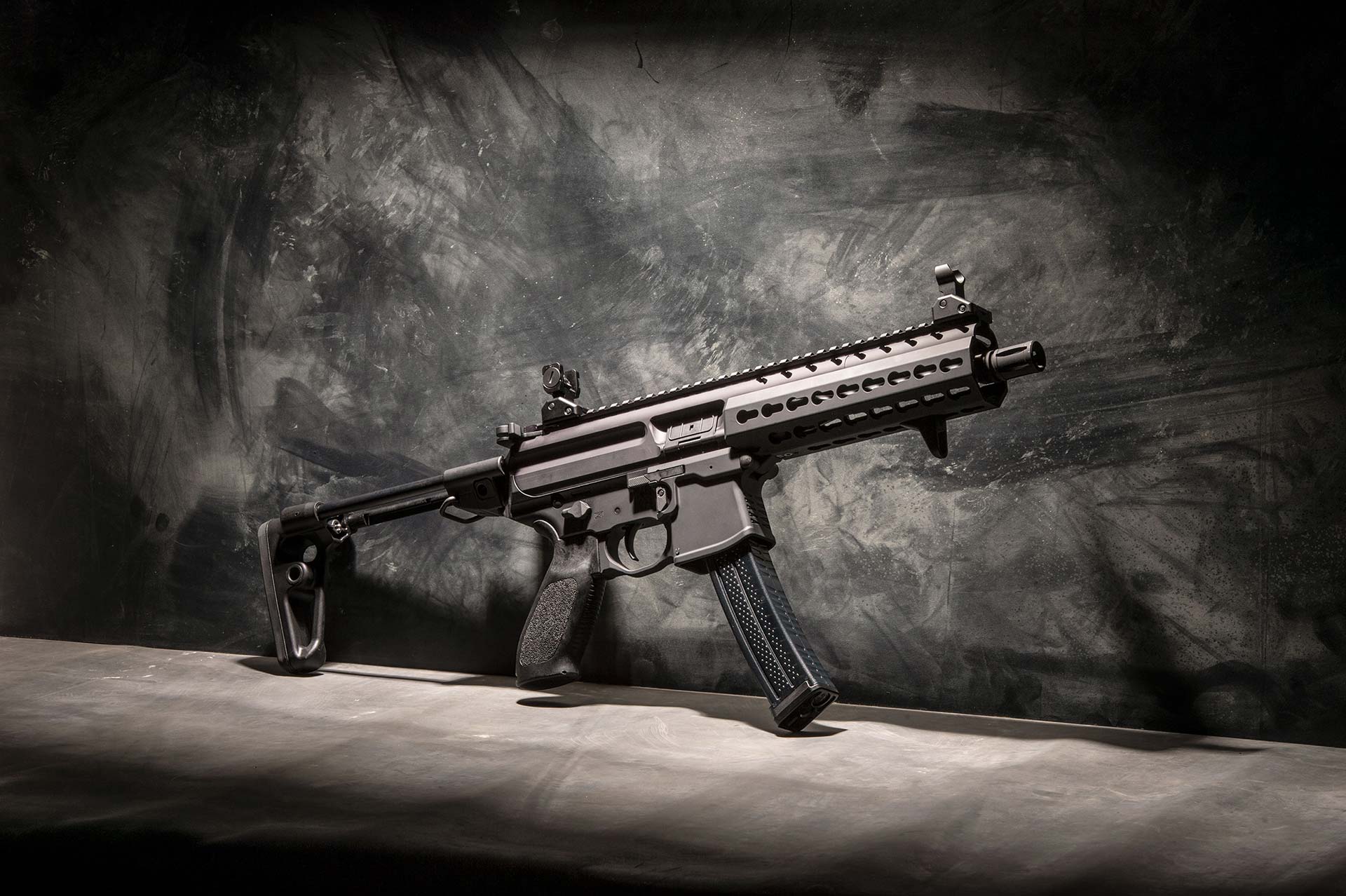
Short-barreled rifles (SBRs) and pistol versions of popular rifle platforms are interesting niche firearms that are designed to bridge the gap between your pistol and your rifle.


Traditional rifles provide excellent long-range accuracy and firepower, but are not as effective for use in close quarters. Conversely, pistols are not considered effective beyond 50 yards, and even that can be a stretch for most shooters. This middle ground is where SBRs and pistol variants shine. They are roughly the size of a sub-machine gun, giving the user greater magazine capacity and accuracy than their pistol, without the size and weight of a full-sized rifle.


What is legally considered a pistol, rifle or short-barreled rifle can be somewhat confusing to the uninitiated. In a nutshell, the standards are as follows:


  • A rifle has a total barrel length (including muzzle devices) of 16 inches or more, an overall length of 28 inches or more, and a stock.

  • A short-barreled rifle has a barrel length (including muzzle devices) of less than 16 inches, and a stock. SBRs are regulated by the National Firearms Act (NFA); they require a background check and tax stamp from the ATF to own. Not all states allow ownership of SBRs.

  • A pistol has a barrel length of less than 16 inches, and does not have a stock. If a stock is added to a pistol, it becomes a short-barreled rifle, and is subject to ATF regulations under the National Firearms Act. However, the use of a stabilizing brace is permitted on a pistol.

While an SBR is the ideal midpoint between a pistol and a rifle, not every state allows you to own one. Furthermore, the process of getting an SBR takes months to complete, and having to purchase a tax stamp for the weapon adds hundreds of dollars to the cost of ownership. Consequently, many people will buy a pistol version of a rifle as an alternative to an SBR. While it’s not quite the same thing, it’s close enough for most shooters.


The Self-Defense Weapon That Doesn’t Require A Firearms License!


When considering a SBR or pistol variant, barrel length and caliber are important deciding factors. Most AR platforms come chambered in .223 Remington or 5.56mm NATO, but there are some models available in pistol calibers such as 9mm, .40 S&W, or .45 ACP. Other platforms, including the Sig MPX, CZ Scorpion, and variants of the venerable H&K MP-5, are offered almost exclusively in 9mm.


You should select your weapon’s caliber and barrel length based on the maximum distance you may need to engage a threat. In terms of rifle calibers like .223 or 5.56mm, the shorter your barrel is, the less effective your bullet will be over great distances. Comparatively, pistol calibers are most effective inside of 50 yards. If you want a weapon that is effective out to 150 yards, a 5.56mm pistol with a 10.5-inch or greater barrel would be ideal, whereas a 9mm with a 7.5-inch barrel would be perfectly adequate for 50-yard engagements.


An SBR or pistol with stabilizing brace makes a great addition to any bug-out bag or 72-hour kit. They are ideal for maneuvering in confined spaces, such as the inside of a home or vehicle, and are easily stored in a bag or backpack when not in use. Many people keep a pistol variant as a trunk gun, just in case they find themselves in a hostile situation while on the road. When placed in a bag designed for concealed weapon transport, such as the 5.11 Select Carry Sling Pack or Blackhawk Diversion Carry Racquet Bag, a pistol variant or SBR can be stored discreetly while still being readily accessible when needed.


Before attempting to purchase a pistol variant or SBR, consult your local gun store to find out what is legal to own in your state. While pistol variants are technically pistols, open carry of this type of firearm is strongly discouraged, as it will likely cause concern among members of your community, result in unnecessary attention from local law enforcement, and identify you to criminals as a potential target. If you intend to carry this sort of firearm in a bag, you may need to obtain a concealed pistol license. When going on a road trip with this type of firearm, research gun laws in the states you will be crossing.


Have you ever owned a short-barreled rifle or pistol variant? What advice would you add? Share your tips in the section below:  

Friday, May 26, 2017

History Teacher Brings Civil War Replica Rifle To Class. It Ended With A Lockdown

History Teacher Brings Civil War Replica Rifle To Class. It Ended With A Lockdown


Anti-gun hysteria found its way to East Manatee, Fla., on Thursday when a school was locked down because a history teacher brought a replica of a Civil War rifle — that does not work — to class.


Braden River Elementary School and Middle School locked down after somebody saw the teacher with a replica of a flintlock rifle and called 911, EAGNews reported. The gun cannot shoot and has a musket.


“All clear Braden River Middle School,” the Manatee County Sheriff’s Office tweeted after the incident. “Turned out to be a teacher with antique rifle for class. Kudos to public for see something say something.”


Turn Drive Time Into Learning Time With Your Kids!


Middle school principal Randy Petrilla said the incident was a misunderstanding.


“A teacher at our school brought in a Civil War era rifle for a demonstration in their class,” Petrilla told the Bradenton Herald newspaper. “This teacher had previously notified the school [resource officer] that he would be bringing the rifle to school. As he was bringing the rifle into the school this morning, someone saw him and reported it to law enforcement.”


Petrilla continued, “Law enforcement responded immediately and began searching the school and during that process it was established that the alleged threat was actually related to the teacher with the rifle.”


Parents were split on the incident. Some said that common sense was needed, while others said it’s better to be safe than sorry.


“In 1966 the Cadet Training Rifle was big,” Bill Gage wrote on Facebook. “Bolt action with wooden bullet. We’d bring our realistic looking wooden M1 to school and play ‘war’ at recess. Times have changed.”


What is your reaction? Share it in the section below:

Monday, April 3, 2017

5 Portable, Takedown Rifles You Can Hide Anywhere

5 Portable, Takedown Rifles You Can Hide Anywhere

Savage Model 42


Takedown firearms, which can be disassembled for compact transport, are booming in popularity. Why? Who wouldn’t want long gun-scale effectiveness in a package that fits discreetly into a day pack or business case, or even under the truck seat? For hunting, varmint control and protection, these budget-friendly shooters are a great option.


Though takedown guns are available in high-power models, the focus for this article is lightweight models, usually in rimfire chambering with a couple of shot shell models thrown in. All are easy on the wallet. Within those parameters, here are five favorites


1. Ruger 10/22 Takedown


Sturm, Ruger, & Co. has a wise approach to business. Rather than peddle new guns that no one’s asked for year after year, they crank out new versions of proven ones. It’s a winning strategy that benefits the consumer. The internals of the 10/22, a 10-round semi-auto in 22 LR, are the same as ever. The takedown model comes with a handsome pack, a choice of finishes including but not limited to camo, TALO brights and tactical. Some even have a threaded barrel covered by a handsome flash hider. This little rifle delivers camp and prep-friendly convenience. Assembled, lengths vary by package, in the area of 35 inches. Weight is less than five pounds, unadorned by optics. New prices range from $250 to $550, depending on features.


2. Savage Model 42 Takedown


The Model 42, a longtime hit among small-game hunters, has been updated into a series of takedown models — regular and compact/youth. In any version, its over-and-under barrels offer the choice of firing 22LR or 22 Winchester Magnum on top, and .410 on the bottom. Its single action-only operation requires cocking the hammer, an element of safety for those who like to carry “hot,” as well as lending a traditional look to the profile. Another lever allows the user to choose which barrel fires.


The Self-Defense Weapon That Doesn’t Require A Firearms License!


A black synthetic stock features austere environment-friendly sculpting for easier grip and carry. The 42 Takedown is available in regular and compact models. Overall length of the compact version is 34.75 inches. An Uncle Mike’s carry pack is included. Although MSRP is $500, the Model 42 can be found new starting in the mid-$200s.


3. Chiappa Double Badger Takedown


5 Portable, Takedown Rifles You Can Hide Anywhere

Chiappa Double Badger Takedown. Image source: YouTube screen capture


With shoes and mopeds, consumers count on Italian design to be unique, with great quality. The same goes for guns. The first foreign entry on this list is Chiappa’s Double Badger. Unlike others featured here, it folds in half, rather than completely separating receiver from barrel. It is therefore a little harder to pack, as the V-shaped folded firearm takes up more space than the others. However, traditionalists will appreciate the classic look and feel of its lever-action operation and checkered walnut stock. Subtle but important modern touches include fiber optic sights. Like the Savage 42, it comes with 22LR/WMR and .410 or 20-gauge chambering. Chiappa sells a range of chokes to customize the shot pattern, too. A dedicated backpack is sold separately, which is a bit of a disappointment considering most others include the pack. Retail pricing for the Double Badger typically hovers in the mid-$300s, although feature-dependent pricing can push actuals $100 higher or lower.


4. Ruger 22 Charger Takedown


The second Ruger entry on this list is a short so-called pistol (okay, legally called a pistol) chambered in 22LR. The Charger has modern features like a Picatinny rail for mounting your favorite optic, and can easily be fitted with a bipod for stability, which is a helpful feature on this stock-less platform. It comes with colorful wood or synthetic furniture. The Charger’s 10-inch barrel breaks away from the lightweight receiver that features a pistol grip, making it a very compact package. Fully assembled, it’s only 19.25 inches long. Weighing in at 3.5 pounds, it’s also the lightest choice here, sans optic, which is necessary since it comes without front or rear iron sights. The Charger does have a threaded barrel, making it ideal for urban varmint sniping where legal. Unlike the 10/22, the standard magazine of this semi-auto holds 15 rounds. Ruger sells it with a hard plastic case. Although some accoutrements and effort are required to fire accurately, this is by far the most packable choice here. Some will take a shine to its non-traditional profile and will be happy to pick up a Charger/bipod set for under $400.


5. Browning SA-22


Stepping well into the zone of legacy, Browning offers several grades of its long-standing takedown model. For purposes of this article, we’ll discuss the plain and most practical Grade 1 SA (semi-auto) 22. The company makes a range of finishes, as well as centerfire models on the takedown platform. With a classic black walnut stock and 19-inch blued barrel, the SA-22 has a tubular, 10-round, bottom-loading magazine and crossbolt safety. It comes drilled and tapped for scope installation, or use the brass bead front sight and rear blade. At 37 inches with the 19 3/8-inch barrel attached, it’s the longest rifle on this list, but misses being the heaviest at just 5 pounds, 3 ounces. No bag is included. Expect to pay close to $500 for this classic. Also, expect it to hold its value for resale better than others presented here.


What is your favorite takedown? Share your thoughts on takedowns in the section below:

Monday, March 27, 2017

How To Build A Survival Gun Cache On A $500 Budget

How To Build A Survival Gun Cache On A $500 Budget

Image source: MossbergOwners.com


Survivalists who find themselves on serious budgets always will be faced with the problem of accumulating the gear they want within a price point that they can afford. Putting together a survival armory of guns is no exception.


Let’s say that you only have $500 to spend on guns. Many would say that with this budget, it’s A) impossible to build a complete armory that covers your bases, and, B) the guns that you do buy for your armory will be cheaply made or of low quality.


Both of these are absolute nonsense. While $500 is certainly not going to buy you as many guns as a $2,000 or $3,000 budget will, it’s still not impossible to gather the guns you need for this amount.


In fact, you will be able to acquire the three most important guns that you need for just $500.  The specific models that you can buy may not be the fanciest examples on the market, but they are still reliable and will work well enough.


Let’s outline what the three most important categories of guns to have are, and then list an example of a make and model of gun that you can have in that category.


12 GA SHOTGUN – MAVERICK 88 ($180)


It’s hard to say no to a 12-gauge shotgun being the first gun that you own. The 12-gauge round is highly versatile. You can use buckshot for home defense, birdshot for target shooting and bird/small game hunting, and slugs for hunting bigger game such as deer or wild boar.


You also should ideally make your shotgun be a pump-action model over a single shot or semi-automatic, the reason being that you have more capacity than a single and greater reliability with feeding different types of rounds over the semi.


We’re going to cap off the price of a budget shotgun at $180, and the best model that you can buy for this price is going to be the Maverick 88 shotgun, which is the budget model of the world-renowned and highly popular Mossberg 500. While the Maverick doesn’t come with a lot of the same features as the 500, it is still highly reliable and more than adequate for defensive or hunting use.


The Self-Defense And Hunting Weapon That Doesn’t Require A Firearms License!


Although the Maverick 88 usually costs around $200 for a new model, you can very easily find used ones for $180 or even a little less on online auction sites such as Gunbroker.com.


.22 RIFLE – MOSSBERG 702 PLINKSTER ($100)


No gun collection of personal battery of arms is complete without a .22 rifle, even if you only have $500 in total to spend. .22 ammunition is very small, meaning you can store and carry lots of it on you. It’s also a perfect round for small game hunting, plinking, general homestead use, and for introducing new people to the sport of shooting. If necessary, it could be used for self-defense, as well.


Normally, the three .22 rifles that I would recommend first would be the Ruger 10/22, Marlin Model 60, or Smith & Wesson M&P 15-22. Unfortunately, none of these options is going to work, since I’m capping off the price for a .22 rifle at $100.


At this price point, your best option will be the Mossberg 702 Plinkster, which can be found used for even $80 or $90 if you look hard enough online. The Mossberg 702 is available in a wide variety of configurations and comes standard with a 10-round magazine, although higher capacity 25-round magazines also are available.


9MM PISTOL – TAURUS PT111 G2 ($220)


We’re now left with $220 to spend on our final firearm, which absolutely must be a pistol. The pistol is the gun you will have strapped to your side at all times during a disaster scenario. You want it to be easily concealed. I also recommend in this case that your pistol be a 9mm, simply because it’s the cheapest and most plentiful pistol caliber there is.


The specific pistol that I am going to recommend at this price point is going to be a pistol I wrote about recently, the Taurus PT111 G2. While it normally sells for around $250 new at most sporting goods stores, a quick perusal on Gunbroker shows that it can be purchased new or used in good condition for the $200-$220 range.


The PT111 G2 is a compact firearm, which makes concealment easy, but is also large enough so that you can get a full grip on the weapon. It holds 12 rounds in the magazine plus an additional round in the chamber, which is plenty of firepower for defending yourself against multiple attackers. Reviews of the PT111 G2 have been mostly very positive, and owners applaud its reliability, ergonomics and overall value. And besides, it looks much better than a Hi-Point.


Conclusion


So, there you have it. For $500, give or take a few dollars, you should easily be able to acquire a solid survival armory. And they cover your bases: target shooting, home defense/personal protection, and small-game or big-game hunting.


What do you think? What would be in your $500 survival gun armory? Share your thoughts in the section below:


If You Run Out Of Ammo, What Would You Do? Learn How To Make Your Own! Read More Here.

Monday, March 20, 2017

The Rifle That Makes 1,000-Yard Hits Seem Super-Easy

The Rifle That Makes 1,000-Yard Hits Seem Super-Easy

Image source: Terry Nelson


The 6.5 Creedmoor centerfire rifle cartridge was introduced by Hornady in 2007. It has taken a few years to catch on, but it has taken off like wildfire.


Earlier in 2016, I had the distinct privilege of being able to test one of Savage Arms’ offerings in the 6.5 Creedmoor — the Model 10 BA Stealth. While hitting a mark at 1,000 yards and beyond is often a sought-after benchmark for rifle shooters, today it has become almost commonplace.


I will have to admit, though, that the 6.5 Creedmoor has made that distance and beyond seem almost too easy. Don’t get me wrong; you have to do your part, especially if you have those nasty crosswinds. With relatively high sectional density and ballistic coefficient, 6.5 mm bullets, in general, are known for their success in rifle competitions. For some loads, the 6.5 mm Creedmoor is capable of duplicating the muzzle velocity or trajectory of the 300 Winchester Magnum with only minimal felt recoil. Along with its success as a competition and target cartridge, the 6.5 Creedmoor is exploding in popularity in the hunting and tactical markets.


Vicious New Hand-Held Self-Defense Tool Turns Lethal In Seconds!


The primary features of the Savage 10 BA Stealth in 6.5 are:


The first day I had the Savage 10 BA Stealth on a long-distance range, I was hitting steel out to 1,000 yards. Admittedly I had the use of good ammo, American Eagle 140gr OTM (open tip match), a great optic — a Bushnell Elite Tactical LRS 6-24x first focal plane scope — and I made use of a good ballistics table. There seems to be quite the discussion on the gun blogs of the effective range of this cartridge, from as little as 400 yards and out to 1,200-plus yards. Suffice it to say with the right ammo, 400 yards is child’s play with 6.5, and in the hands of a good rifleman, 1,000 yards-plus is attainable for many.


There is a wide selection of good factory ammo and volumes of data for reloaders. Muzzle velocities for the 6.5 are in the 2700 to 3200 fps range, depending on bullet weight and load.


With the aforementioned Savage Stealth in 6.5 Creedmoor (Savage offers the Stealth in 308 Winchester, also) I personally took a mule deer in New Mexico this past November during legal deer season. Using Federal Fusion 140 grain soft point, I made a 327-yard uphill, one-shot kill and the deer never moved. I say this while holding the greatest respect to the animal and only to point out that the 6.5 Creedmoor is, in fact, a very suitable cartridge for the hunting environment.


If you’re looking for an ultra-flat shooting cartridge with mild recoil and want to challenge yourself at the 1,000-plus yard mark, the 6.5 Creedmoor is worthy of consideration. And I’m still enjoying the venison sausage in case anyone is wondering!


Have you ever shot anything – even a target — from 1,000 yards? What were you using? Share your tips in the section below:


Pump Shotguns Have One BIG Advantage Over Other Shotguns. Read More Here.

Monday, March 13, 2017

5 Nifty Multi-Caliber Guns That Will Save You Big Money On Ammo

5 Nifty Multi-Caliber Guns That Will Save You Money On Ammo

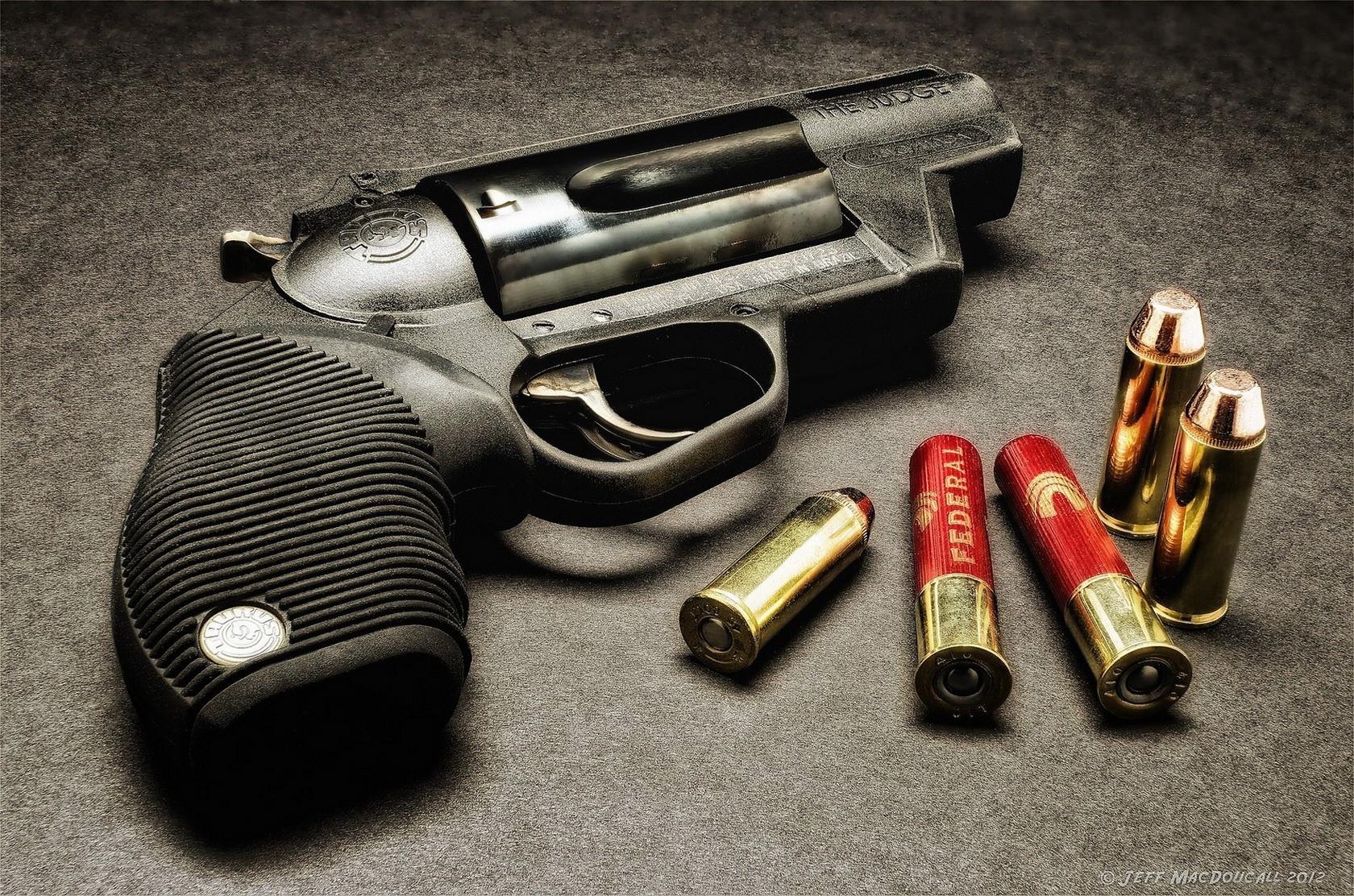
Taurus Judge. Image source: Taurus


Multi-caliber firearms have great appeal. Here’s a look at five choices of revolvers and long guns that add versatility to your gun collection while making your ammunition dollars stretch further.


1. Any .357 Magnum revolver


The 357 Magnum load boasts a fast-moving, heavy round. Although I don’t subscribe to the notion of stopping power, at least as it compares in importance to shot placement, there’s no denying that this caliber delivers tremendous impact, and commensurate recoil. Ammo isn’t terribly pricey for self-defense at approximately 50 cents per hollow-point round, but for practice, it can be both uncomfortable and costly.


Pick up some 38 Special full metal jacket (FMJ) for practice and plinking, and your 357 Mag revolver will serve as both a range and self-protection gun. This cartridge is the same diameter, but shorter, with a smaller powder charge than 357. Using 38 Special is also a great adaptation to make shooting more comfortable for arthritic or injured hands.


The Ruger GP100 is a popular and proven full-size 357 Magnum revolver that most people find pleasurable to shoot, even using the bigger cartridge. Prices are typically in the $600 range for plain models. Ruger’s carry-friendly LCR (lightweight compact revolver) is also available in 357. Expect snappy recoil from that one using 357. The LCR is priced in the $400 range, with many bargains available.


Safety and shopping notes: The 38 Special cartridge can be loaded into a 357 Magnum firearm, but the 38 Special handgun cannot be loaded with 357 Magnum ammunition. Similarly named 357 Sig and 380 are calibers designed primarily for semi-auto firearms, and are NOT cross-gun compatible to 357 Mag/38 Spl.


2. Taurus Judge revolver


This hefty Brazilian revolver can shoot 45 Long Colt or 2.5-inch 410 shotshell loads, or a mixture thereof, from its five-chamber cylinder. It’s available in barrel lengths starting at two inches, up to 6.5 inches — and there may even be a few in circulation that are even longer; these are just the lengths I’ve seen students bring to class. There’s no getting around the big recoil with the big cartridge. Suffice to say, the two-inch barrel model should be avoided by people with achy hands.


Be Prepared. Learn The Best Ways To Hide Your Guns.


The Judge is very popular as a home-defense weapon. Its weight makes it impractical for daily carry, though there are surely some folks who manage to do so. The 45 Long Colt is expensive to purchase; defensive loads often cost in excess of $1 per round. On the other hand, 410 gauge shells, popular for use with the Judge as a defense against venomous snakes, can be picked up for less than 50 cents per round.


Usually found in the mid-$400 range, prices vary widely with the Judge depending on features and finish. In my experience, they require more frequent repairs and maintenance when fired regularly, thanks to the stresses of high-pressure rounds cycling through a comparatively small weapon. Nonetheless, Judge owners who embrace the “bigger is better” philosophy seem to glean a sense of security from having this model in the nightstand.


Safety note: Responsible self-protection includes proper target identification. None of the models mentioned thus far include an auxiliary light rail. A flashlight is therefore a needed accessory for dim-light defense. For most people, handling and flashlight and a 40-ounce loaded revolver are mutually exclusive activities.


3. Bond Arms derringers


Moving to the physically smaller end of the spectrum, Bond Arms of Granbury, Texas, makes a line of derringers with barrels ranging from 2.5 to 4.25 inches. Not only do the barrels range in length, but they range in caliber, as well. The same firearm that fires 22LR also can fire 45 Long Colt, as well as most popular handgun calibers in between, regardless of whether the case is rimmed or not. Quite an innovative design!


Bond Arms derringers have a two-round capacity, and are extremely compact. They’re big on Texas style — easy to conceal but lovely to behold. Firing them does require some familiarization, even for experienced shooters, as their single-action operation with cross-bolt safety and downward-favoring trigger press are out of the ordinary. Recoil from Bond’s short barrels and larger calibers is severe, but smaller calibers are easily managed, so a range of barrels will allow the entire family to enjoy one gun. A Bond Arms derringer will cost from $450 to over $1,000 depending on model. While extra barrels are priced between $100 and $200, the company runs half-off specials on barrels around the holidays.


4. Savage Model 42 over-and-under rifle


This old standby by Savage Arms of Massachusetts is versatile, and although it’s a classic platform, its looks have been updated with a modern synthetic stock. In addition to being ideal for small game, the 42 is a good snake/varmint control tool. Some will consider it their choice for home defense, too. It weighs just over six pounds, and is a modest 36 inches long including the 20-inch barrel. It’s therefore easy to handle for everyone, including the elderly and young shooters. People in both of these groups have made good use of “squirrel guns” in necessary home defense encounters.


The break-open action allows the user to load 22 Long Rifle, or 22 Winchester Magnum, depending on model, in the top barrel, and a 410 gauge shotshell in the lower barrel. A lever allows the user to choose which barrel fires. Add a scope for longer-range action on small game or coyotes. There’s no magazine, so extra ammunition must be stowed or carried.


MSRP on the Model 42 is $500, but expect real prices to be lower. Used models can be found for less than $200, and the high $300s can net a full-featured new Model 42 with a synthetic stock that will last a lifetime.


5. Frontier Tactical War Lock Multiple Caliber System and Rifles


Frontier Tactical is by far the youngest manufacturer on this list. Based in Florida, this veteran owned and operated business invented a new system that brings multi-caliber ease to the AR sporting rifle platform. The AR platform is already highly customizable, but the War Lock eliminates the time-consuming process of replacing complete upper receivers, or the removal/disassembly of the barrel requiring a shop and tools. With their $600 Multi-Caliber System 2-barrel kit, your AR15 can quickly switch calibers, to load and fire your choice of over 90 common or not-so-common calibers: 17 Remington, 17-223, 20 Practical, 204 Ruger, 223 Remington, 25-45 Sharps, 300 AAC Blackout, 5.56mm NATO, 6.8, 6.8 SPC, 6.8mm Remington SPC II, 6x45mm, and American 30 BHW. The War Lock even allows adaptation of the AR to pistol calibers, a way to save money on practice and perhaps make your handgun ammunition double as rifle fodder.


Frontier Tactical’s system is offered for regular and free-float barrels, but some firearms may still not be compatible due to manufacturing differences. Check with them before purchasing a conversion system for your own AR15.


Just starting as an AR owner or just want a whole new multi-caliber rifle? Frontier Tactical’s FT-15 War Lock Entry Carbine comes with War Lock components. It’s priced at $1,300, chambered in NATO 5.56/.223 Remington for starters.


Conclusion


Whether your choice is a model that’s been around for decades, or a newer platform that milks more mileage from your existing gun or ammunition supply, multi-caliber capability can increase the usefulness and economy of your trigger time. Options listed here are some, but not all, on the market today. More choices will likely crop up in the coming year.


Safety first! Always be sure you’re loading compatible ammunition into your firearm.


What is your favorite multi-caliber firearm? Share your advice in the section below:


Ammunition prices, where provided, were sampled from national retailer Lucky Gunner.


Pump Shotguns Have One BIG Advantage Over Other Shotguns For Home Defense. Read More Here.