Showing posts with label ammo. Show all posts

Monday, November 6, 2017

3 Little-Known Ammo Makers That Gun Owners Should Know About

3 Little-Known Ammo Makers That Gunowners Should Know About


If you’re a gun owner, then you likely know all about the big names in ammunition. Winchester, Remington, Federal and Hornady are popular brands for all forms of shooting – from hunting, to training, to self-defense. But they’re not the only ones.


A recent conference for gun writers in the industry brought three companies to the surface that I suspect many shooters are not aware of, even though these companies have been around for quite some time.


Precision Delta


Based out of Ruleville, Miss., this company has been around since 1982, long enough that I’m embarrassed to say I should’ve known of them. The company is perhaps better known for ammunition components such as bullets. However, the company offers two distinct lines of ammo geared toward training and competition.


Their “Performance Standard” line is remanufactured, using only once-fired cases. This ammo has undergone an extensive case-processing operation to bring it back to factory SAAMI (Sporting Arms and Ammunition Manufacturers’ Institute) specifications. Precision Delta uses their own match-grade bullet for this line of ammo. They produce it in 9mm, 40 S&W, 45 Auto, 38 Special, and 223 Remington. While pricing for this line is not at bargain-basement levels, it is reasonable and sold in bulk quantities.


You Don’t Need A Firearms License For This Weapon!


Precision Delta’s next line of ammo is the “Performance Pro.” This line uses the company’s own precision-made jacketed bullet and is engineered for optimum performance. They use new, high-quality brass for this load, specialized for precision and competitive shooting. The Performance Pro line is manufactured in 9mm, 40 S&W, 45 Auto, and 38 Special.


Learn more at Precision Delta’s website.


DoubleTap


Mike McNett is the founder and president of DoubleTap Ammunition. He started making his favorite ammunition, 10mm, in his garage in 2002. Since then, the company has grown to be one of America’s largest, producing many loads that are branded under other names. Located in Cedar City, Utah, DoubleTap Ammunition has rapidly gained a reputation for powerful, reliable and accurate ammunition.


“We continue to be at the cutting edge of innovation from defensive ammunition to hunting ammunition,” he said. “Every single round that goes out the door has been touched by our hands and inspected by our eyes.”


The company currently offers 82 “mainstream” calibers and another 17 special order calibers. They can take any special order under certain quantity requirements. DoubleTap produces millions of rounds of ammunition every year. Additionally, the company offers brass and hard-cast bullets to the general public.


DoubleTap offers the following categories of ammunition:


  • DT Defense — both handgun and rifle offerings based on self-defense needs.

  • DT Hunter — handgun and rifle cartridges built for hunting.

  • DT Long range — rifle ammunition built specifically for the long-range shooter.

  • DT Safari — heavy rifle cartridges for your African Safari.

  • DT Tactical — rifle and handgun ammo designed for tactical use.

  • DT Target — primarily built for handgun target shooting, although 223 and 308 is also offered in this category.

The company also offers a more economical line of ammunition under the Colt name. Ammo under the Colt brand is broken down into “Defensive” and “National Match” categories.


Are you an STI Pistol shooter? If so, DoubleTap has specific offerings for the STI brand of pistols.


Finally, a “Ted Nugent” line of ammo is available from DoubleTap and is, of course, endorsed by the Nuge himself.


Visit the DoubleTap website.


Desert Tech


If you’ve heard of Desert Tech, you probably associate the name with their bullpup design precision and modern sporting rifles. Their design allows for easy switch out of barrels and calibers, but that discussion is for another day.


Most likely you’ve not heard of Desert Tech’s line of precision rifle ammo. It’s more than suitable for law enforcement, military and competition applications.


Desert Tech representatives state that the accuracy and consistency of their match rifle ammo comes from “proprietary formulas and strict quality standards.”


The company, based in Salt Lake City, Utah and founded in 2007, produces match rifle ammo in the following calibers: .223Remington, 308 Winchester, 6.5 Creedmoor, .338 Lapua Magnum, .375 CT, and .50 BMG.


Desert Tech also offers a full line of accessories, training, and now the new MDR (Micro Dynamic Rifle), a bullpup design carbine.


For more information, visit the Desert Tech website.


Most long-time shooters have their long-standing, favorite ammunition, but these companies could provide you with some unique options for your shooting needs. Give them a try!


Have you ever shot ammo from these companies? What did you think? Share your thoughts in the section below:

Monday, September 18, 2017

Hoarding Ammo: How Much Should You Store?

Hoarding Ammo: How Much Is Too Much?

Image source: Pixabay.com


As gun owners and advocates of defensive living, we’re constantly scrutinized for exercising our Second Amendment rights. I’m sure many readers have numerous firearms available to them. Good. But the long-term concern, at least in my estimation, is the ammunition to feed those firearms.


While we are enjoying the right to keep and bear arms, it’s worth pondering the possibility of having firearms, but not ammunition. Consider in just the last few years there have been attempts to restrict ammo purchases due to environmental or public safety concerns.


Let’s not forget the bare shelves of just a few years ago because of the political climate. .22 rimfire is just now becoming reasonably available again.


While many readers are surely prepared in the ammo supply arena, from conversations with students, I’d venture a guess that most aren’t. The question is not just for you, but perhaps generations to come. Teaching students on an ongoing basis, I find it not uncommon for folks to struggle to come up with a couple hundred rounds of handgun or carbine ammo to conduct even baseline training.


Discover The Secrets Of The Word’s Top Survivalists!


Back to my original thought of: How much ammo? Well, it depends on what your primary, secondary or other uses may be. That, of course, varies from person to person.


So here ya go … my top five reasons to hoard ammunition.


1. Hunting. For most standard big-game considerations, I could probably get along for quite some time with a couple hundred rounds. But thinking down the road for many years, I would like to have 500 to 1,000 rounds per caliber of any hunting rifle. Small game means shotgun and rim fire; the round count here could increase exponentially.


2. Sport/Competition. If it’s USPSA, IDPA, 3Gun, Trap, Skeet, Silhouette or others, start thinking in the thousands of rounds or even higher for the long term.


3. Training. This is where things could get interesting. Shooting well is a perishable skill (yes, dry fire can take place of live fire to some extent). I shoot almost on a weekly basis, at least handgun. That may not be sustainable in tough times. I focus most of my weekly handgun shooting on 9mm to keep it economical. I like to keep a minimum of 5,000 rounds available if possible.


4. Defensive. I store several hundred rounds of good quality handgun, shotgun and rifle ammo that fits this category on hand … per caliber or gauge. A sub category here would be the battle rifle or fighting carbine, at which point there is no such thing as too much ammo.


5. Bartering. The sky’s the limit. All common calibers and rimfire ammunition is in high demand even now. Imagine ammunition over-the-counter availability being gone overnight! In really tough times or a run on the supply, ammunition will always retain a high trade value. So the question is, how much do you need to have for yourself and family versus how much you can afford to sell or barter with?


It goes without saying that the cost, storage and transportation of ammunition may require logistical planning. Ammunition is heavy! Storage can have its own challenges. Basically, prioritize cool, dry and durable storage when it comes to ammo. The military style 30- and 50-caliber ammo cans or the sealed spam cans of ammo make good long-term storage options.


Other than your local Walmart or hardware store, where might one find ammo today without breaking the bank? Some obvious choices may be your local gun shows (or similar events) and some online ammo sales sites (these sites have also been under fire in recent months). A few less obvious locations to find ammo at sometimes below wholesale prices are flea markets, estate sales and garage sales.


This may bring up the question: How long will ammo store? In my experience, if it has been stored properly and out of the elements, it can be good for decades. I have shot military surplus that was 50-plus years old, without issues. Not to disparage any hand loaders, but I stay away from reloaded ammo that I do not know the source of. I say this because you will run across such ammo at flea markets and garage/estate sales.


Someone once called ammo the precious metal of the future. I couldn’t agree more.


How much ammo would you store? Share your thoughts in the section below:
Monday, March 13, 2017

5 Nifty Multi-Caliber Guns That Will Save You Big Money On Ammo

5 Nifty Multi-Caliber Guns That Will Save You Money On Ammo

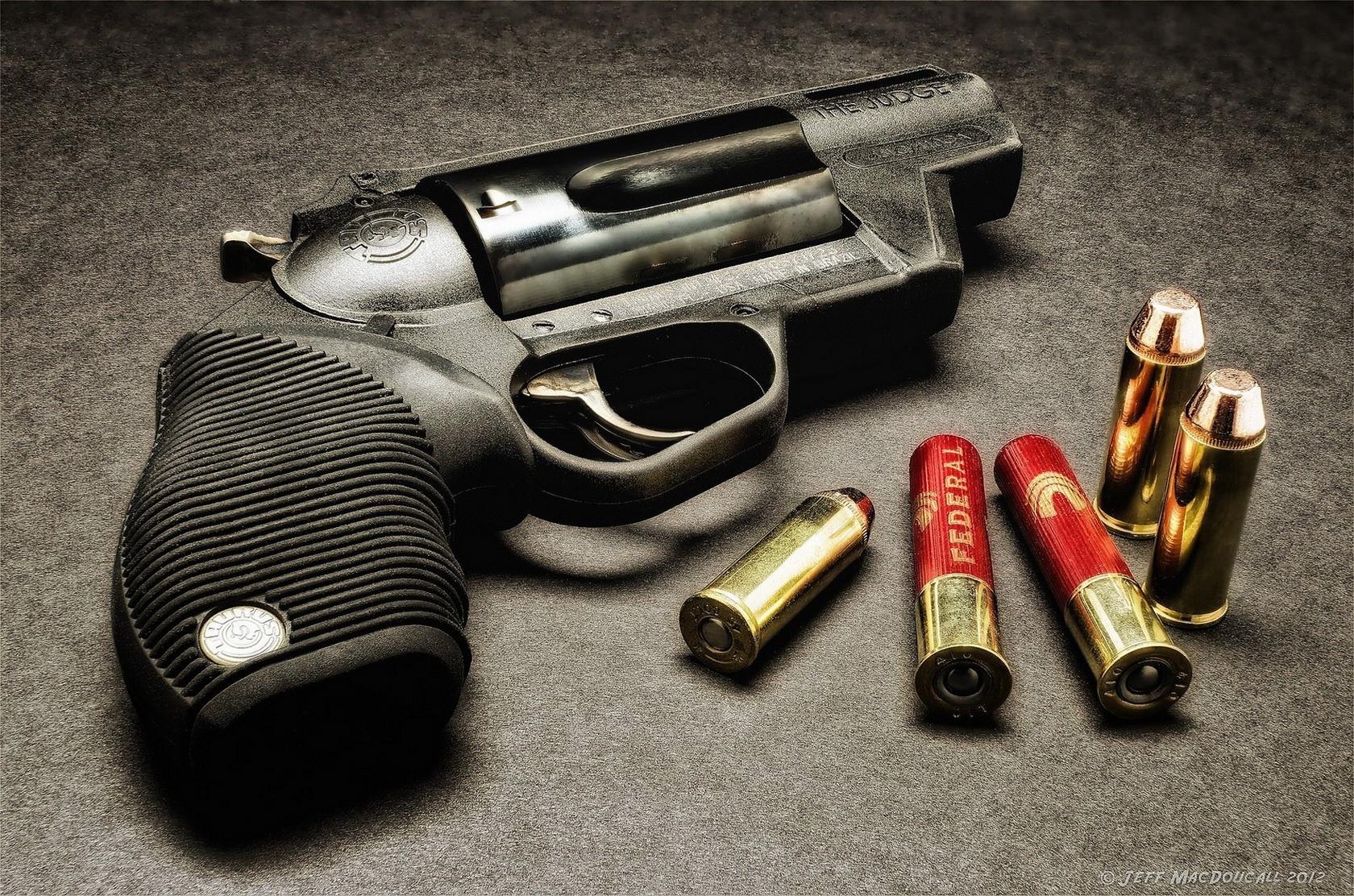
Taurus Judge. Image source: Taurus


Multi-caliber firearms have great appeal. Here’s a look at five choices of revolvers and long guns that add versatility to your gun collection while making your ammunition dollars stretch further.


1. Any .357 Magnum revolver


The 357 Magnum load boasts a fast-moving, heavy round. Although I don’t subscribe to the notion of stopping power, at least as it compares in importance to shot placement, there’s no denying that this caliber delivers tremendous impact, and commensurate recoil. Ammo isn’t terribly pricey for self-defense at approximately 50 cents per hollow-point round, but for practice, it can be both uncomfortable and costly.


Pick up some 38 Special full metal jacket (FMJ) for practice and plinking, and your 357 Mag revolver will serve as both a range and self-protection gun. This cartridge is the same diameter, but shorter, with a smaller powder charge than 357. Using 38 Special is also a great adaptation to make shooting more comfortable for arthritic or injured hands.


The Ruger GP100 is a popular and proven full-size 357 Magnum revolver that most people find pleasurable to shoot, even using the bigger cartridge. Prices are typically in the $600 range for plain models. Ruger’s carry-friendly LCR (lightweight compact revolver) is also available in 357. Expect snappy recoil from that one using 357. The LCR is priced in the $400 range, with many bargains available.


Safety and shopping notes: The 38 Special cartridge can be loaded into a 357 Magnum firearm, but the 38 Special handgun cannot be loaded with 357 Magnum ammunition. Similarly named 357 Sig and 380 are calibers designed primarily for semi-auto firearms, and are NOT cross-gun compatible to 357 Mag/38 Spl.


2. Taurus Judge revolver


This hefty Brazilian revolver can shoot 45 Long Colt or 2.5-inch 410 shotshell loads, or a mixture thereof, from its five-chamber cylinder. It’s available in barrel lengths starting at two inches, up to 6.5 inches — and there may even be a few in circulation that are even longer; these are just the lengths I’ve seen students bring to class. There’s no getting around the big recoil with the big cartridge. Suffice to say, the two-inch barrel model should be avoided by people with achy hands.


Be Prepared. Learn The Best Ways To Hide Your Guns.


The Judge is very popular as a home-defense weapon. Its weight makes it impractical for daily carry, though there are surely some folks who manage to do so. The 45 Long Colt is expensive to purchase; defensive loads often cost in excess of $1 per round. On the other hand, 410 gauge shells, popular for use with the Judge as a defense against venomous snakes, can be picked up for less than 50 cents per round.


Usually found in the mid-$400 range, prices vary widely with the Judge depending on features and finish. In my experience, they require more frequent repairs and maintenance when fired regularly, thanks to the stresses of high-pressure rounds cycling through a comparatively small weapon. Nonetheless, Judge owners who embrace the “bigger is better” philosophy seem to glean a sense of security from having this model in the nightstand.


Safety note: Responsible self-protection includes proper target identification. None of the models mentioned thus far include an auxiliary light rail. A flashlight is therefore a needed accessory for dim-light defense. For most people, handling and flashlight and a 40-ounce loaded revolver are mutually exclusive activities.


3. Bond Arms derringers


Moving to the physically smaller end of the spectrum, Bond Arms of Granbury, Texas, makes a line of derringers with barrels ranging from 2.5 to 4.25 inches. Not only do the barrels range in length, but they range in caliber, as well. The same firearm that fires 22LR also can fire 45 Long Colt, as well as most popular handgun calibers in between, regardless of whether the case is rimmed or not. Quite an innovative design!


Bond Arms derringers have a two-round capacity, and are extremely compact. They’re big on Texas style — easy to conceal but lovely to behold. Firing them does require some familiarization, even for experienced shooters, as their single-action operation with cross-bolt safety and downward-favoring trigger press are out of the ordinary. Recoil from Bond’s short barrels and larger calibers is severe, but smaller calibers are easily managed, so a range of barrels will allow the entire family to enjoy one gun. A Bond Arms derringer will cost from $450 to over $1,000 depending on model. While extra barrels are priced between $100 and $200, the company runs half-off specials on barrels around the holidays.


4. Savage Model 42 over-and-under rifle


This old standby by Savage Arms of Massachusetts is versatile, and although it’s a classic platform, its looks have been updated with a modern synthetic stock. In addition to being ideal for small game, the 42 is a good snake/varmint control tool. Some will consider it their choice for home defense, too. It weighs just over six pounds, and is a modest 36 inches long including the 20-inch barrel. It’s therefore easy to handle for everyone, including the elderly and young shooters. People in both of these groups have made good use of “squirrel guns” in necessary home defense encounters.


The break-open action allows the user to load 22 Long Rifle, or 22 Winchester Magnum, depending on model, in the top barrel, and a 410 gauge shotshell in the lower barrel. A lever allows the user to choose which barrel fires. Add a scope for longer-range action on small game or coyotes. There’s no magazine, so extra ammunition must be stowed or carried.


MSRP on the Model 42 is $500, but expect real prices to be lower. Used models can be found for less than $200, and the high $300s can net a full-featured new Model 42 with a synthetic stock that will last a lifetime.


5. Frontier Tactical War Lock Multiple Caliber System and Rifles


Frontier Tactical is by far the youngest manufacturer on this list. Based in Florida, this veteran owned and operated business invented a new system that brings multi-caliber ease to the AR sporting rifle platform. The AR platform is already highly customizable, but the War Lock eliminates the time-consuming process of replacing complete upper receivers, or the removal/disassembly of the barrel requiring a shop and tools. With their $600 Multi-Caliber System 2-barrel kit, your AR15 can quickly switch calibers, to load and fire your choice of over 90 common or not-so-common calibers: 17 Remington, 17-223, 20 Practical, 204 Ruger, 223 Remington, 25-45 Sharps, 300 AAC Blackout, 5.56mm NATO, 6.8, 6.8 SPC, 6.8mm Remington SPC II, 6x45mm, and American 30 BHW. The War Lock even allows adaptation of the AR to pistol calibers, a way to save money on practice and perhaps make your handgun ammunition double as rifle fodder.


Frontier Tactical’s system is offered for regular and free-float barrels, but some firearms may still not be compatible due to manufacturing differences. Check with them before purchasing a conversion system for your own AR15.


Just starting as an AR owner or just want a whole new multi-caliber rifle? Frontier Tactical’s FT-15 War Lock Entry Carbine comes with War Lock components. It’s priced at $1,300, chambered in NATO 5.56/.223 Remington for starters.


Conclusion


Whether your choice is a model that’s been around for decades, or a newer platform that milks more mileage from your existing gun or ammunition supply, multi-caliber capability can increase the usefulness and economy of your trigger time. Options listed here are some, but not all, on the market today. More choices will likely crop up in the coming year.


Safety first! Always be sure you’re loading compatible ammunition into your firearm.


What is your favorite multi-caliber firearm? Share your advice in the section below:


Ammunition prices, where provided, were sampled from national retailer Lucky Gunner.


Pump Shotguns Have One BIG Advantage Over Other Shotguns For Home Defense. Read More Here.

Thursday, March 9, 2017

Preppers Stuck In Cities: Elite Chartering “Getaway Boats in Case of Manhattan Emergency”

grid-down-city


There is an inherent dilemma for most of the people living in cities.


Even those who are aware of the extremely fragile fabric of society are often stuck living urban lives. Perhaps they plan to retire to a country abode, or construct a hideaway to escape to if the need ever arises, but for now, they are stuck in the city making a living.


This is true even for the rich, but now, they have a back-up plan.


The biggest of American cities, and one of the most gridlocked, is New York City, with Manhattan and Long Island both isolated islands – trapped during emergencies from the rest of the world.


That’s why those with means, and forethought, are now chartering emergency charters to get out of the city – probably a good idea, especially if the helicopter is out of your price range.


via NY Post:


“A lot of people don’t want to wait on a line to get on a ferry, and they don’t want to worry about walking off of Manhattan, as people had to do in the past,” [Chris Dowhie, co-owner of Plan B Marine] told The Post.“They know a boat is the fastest way, and we take the worry out of maintaining and preparing and always readying your vessel,” he added.


Not only does the company promise a speedy getaway, it plans individual evacuation routes for each person, depending on their personal needs.


[…]


“You don’t have a captain. You have to drive this boat yourself,” Dowhie told The Post, adding that in a crisis, people are more concerned with helping their own families than maneuvering someone else’s escape vehicle.


[…]


The unique evacuation service costs an annual fee of $90,000 and is catered toward wealthy individuals and corporations who don’t have time to mastermind their own escape.


Clients access the boats with an individual punch-in number, and should they need to abandon it at any time, Dowhie’s company will locate it.


Interesting concept, and the fact that this has become a business model is also telling of the times.


Estimates have placed evacuation from major coastal cities at more than 24 hours:


hd-120924.Hours.to.evacuate

Estimated evacuation times during major emergencies.


For Long Island, where millions of New Yorkers live, it would be 20-29 hours to get off the island – during that time, people will lose their patience, run out of gas, become hungry, be denied access to medications and drugs, need emergency services, resort to crime, etc.


The one percenters have long been serious about their prepping, for they know too well about the very real dangers being constructed, and the house of cards that is ever poised to collapse.


There has been a steady rise in the upper class investment into underground bunker communities – typically decked out with furnishings and amenities that nearly compare with above-ground living.


They have also been the high profile investors buying up getaway farms in places like New Zealand or South America, and hedging with mountain retreats and fortified safe rooms.


While the amount of money they are spending remains mostly pocket change the biggest players, it represents a serious consideration of the high risk for social disruption, chaos and mega-disasters, such as the collapse of the power grid.


James-Bond-Jetpack


The good news is that while the rich may indeed be living the high life, with escape hatches built in, there are many steps that the average, and more modest, individual can also take to increase your chances of survival during modest times.


When it comes to elite prepping, you have to always ask yourself: ‘Do they know something that I don’t know?‘


Considering their access to power, and their insider vision of human affairs, the chances are very good that they may.


Boats and hideaway properties can be arranged at lower prices as well, or DIY. If you’re not on an island, there are likely some back roads that can save your life, and keep you out of the major chaos. Plan your escape route, with several alternate routes, that avoid the major intersections with highways, bridges and other points at which the majority of traffic is forced to flow, at a slow, grinding and dangerous pace.


Safe rooms can been adapted to almost any space, and for relatively little money, and fortifications can be retrofitted where ever you need them. Just food for thought, better now than too late.


Something big is coming.


Read more:


The Prepper’s Blueprint: The Step-By-Step Guide To Help You Through Any Disaster


Elite Bunker Down in “Secure, Safe Rooms Hidden in Plain Sight”… And You Can, Too


Considerations for SHTF Living & Bug Out Locations


How to Create a Safe Room in Your House or Apartment


Strategic Relocation Guide: How To Position Yourself To Survive A Major TEOTWAWKI Event


A Green Beret’s Guide To Low-Budget Home-Defense Techniques 101: “Early-Warning Systems and Fortifications”

Wednesday, February 8, 2017

Californians Are Stockpiling Ammo; Sales Skyrocketing; Buyers Fear Shortage

Californians Are Stockpiling Ammo; Sales Skyrocketing; Buyers Fear Shortage

Image source: Flicker / creative commons / license: https://creativecommons.org/licenses/by/2.0/


SACRAMENTO, Calif. — Ammunition sales in California have exploded ahead of the state’s rigid new gun control laws – and they won’t take effect for at least a year.


“In the last quarter, we saw a 33 percent [rise] in our ammunition sales and that’s projected to go up,” Monique Hall of Poway Weapons and Gear Range told San Diego’s CW6 TV.


On Jan. 1, 2018, a new law will take effect that restricts online ammunition purchases by requiring that all ammo sales or transfers be shipped through a licensed dealer. Ammunition purchased from out-of-state companies also will have to go through a California dealer.


Then, on July 1, 2019, a new law will take effect requiring background checks for all ammunition purchases.


The concern among gun owners: Ammo will be scarce and more expensive, as people stockpile it and stores get out of the ammo business.


Be Prepared. Learn The Best Ways To Hide Your Guns.


“We’re selling a lot more ammunition right now,” Patrick Jones, owner of Jones’ Fort gun store in Redding, told The Sacramento Bee. “And we will continue to do so up until the time the registration kicks in.”


All total, about a dozen new gun-related laws are taking effect in California, either this year or in 2018 or 2019. Confusion over which law takes effect when has impacted sales.


“I’ve definitely been picking up a little more than I typically would,” target shooter Mark Ball told The Bee. “I do worry about – not so much about supply but prices. The fact California has these extra rules in place, what’s that going to be like?”


The new laws impose a $1 fee on each ammunition purchase to cover the cost of the background checks, and buyers will need an ammo license, which could cost as much as $50 under the law. (The price has yet to be finalized.)


Another fear is that large retailers like Walmart will stop selling ammunition in California, simply wanting to avoid the hassle, The Bee reported. It stopped selling guns in 2003 for a similar reason.


If large retailers get out of the ammunition business, prices likely would skyrocket due to a lack of competition. And if smaller stores decide not to sell ammo, it could force gun owners to drive long distances to buy it.


“It definitely makes it difficult for a guy or gal up, say, in the Susanville area, or Alturas, or someplace remote like that to get to a big-box store, and then especially if your big-box store is in Reno and you’ve got to cross the state line,” David Bess, the chief of enforcement at California’s Department of Fish and Wildlife, told the newspaper.


Bess, too, is stocking up.


“I was just over at a place the other day, and I was in there with my boys,” he said. “I saw some (ammunition I needed), and I said, ‘Hey, grab as much of that stuff as they’ll allow us to buy.”


Do you support background checks on ammo? Share your thoughts in the section below:


Learn How To Make Your Own Ammo! Read More Here.

Tuesday, January 31, 2017

Elite Are Prepping For a Collapse: “A World That’s Becoming Increasingly Unstable”

Shelter


This article was written by Michael Snyder and originally published at his Economic Collapse blog.


Editor’s Comment: There is little doubt that the world is becoming quite unstable. What remains arguable is whether or not we’ve reached a tipping point from which things cannot return to normal. The start of the Trump presidency has been marked by sharp divisions, protests, anger and political turmoil that has gripped headlines and brought anger to a fever pitch. Economically, the  flashpoint for crisis is just around the corner, and could hit home at literally any point.


While things may continue to appear normal, the fabric of society is extremely vulnerable, and those with the means and advanced effort to prepare for the collapse are doing so. Things are incredibly delicate and the number of viable potential threats and catastrophic emergencies is many fold. Perhaps the fact that things have remained stable for this long is a piece of great fortune and a source of false security. Do what you can and get ready, because there is no guarantee that the future will take care of you and yours.


Now It Is The Elite That Are Feverishly ‘Prepping’ For The Collapse Of Society


by Michael Snyder


Once upon a time, “prepping” was something that was considered to be on “the lunatic fringe” of society. But in 2017, wealthy elitists are actually the most hardcore preppers of all. This is particularly true in places such as Silicon Valley, where a whole host of young tech moguls are putting a tremendous amount of time, effort and money into preparing for apocalyptic scenarios. So while interest in prepping among the general population has fallen extremely low right now, the election of Donald Trump has given liberal wealthy elitists even more urgency to prepare for what they believe is a very uncertain future.


In the January 30th, 2017 edition of the New Yorker, reporter Evan Osnos has done an extraordinary job of profiling these wealthy elitists that are “getting ready for the crackup of civilization”. One of the people that he interviewed was Steve Huffman, the young co-founder and CEO of Reddit…


Huffman, who lives in San Francisco, has large blue eyes, thick, sandy hair, and an air of restless curiosity; at the University of Virginia, he was a competitive ballroom dancer, who hacked his roommate’s Web site as a prank. He is less focussed on a specific threat—a quake on the San Andreas, a pandemic, a dirty bomb—than he is on the aftermath, “the temporary collapse of our government and structures,” as he puts it. “I own a couple of motorcycles. I have a bunch of guns and ammo. Food. I figure that, with that, I can hole up in my house for some amount of time.”


According to the article, Huffman estimates that “fifty-plus percent” of his elite friends in Silicon Valley have some form of “apocalypse insurance”. Needless to say, that number would be far higher than for the general population as a whole.


Another tech mogul that was interviewed by Osnos for the story was former Facebook product manager Antonio García Martínez…


Last spring, as the Presidential campaign exposed increasingly toxic divisions in America, Antonio García Martínez, a forty-year-old former Facebook product manager living in San Francisco, bought five wooded acres on an island in the Pacific Northwest and brought in generators, solar panels, and thousands of rounds of ammunition. “When society loses a healthy founding myth, it descends into chaos,” he told me. The author of “Chaos Monkeys,” an acerbic Silicon Valley memoir, García Martínez wanted a refuge that would be far from cities but not entirely isolated. “All these dudes think that one guy alone could somehow withstand the roving mob,” he said. “No, you’re going to need to form a local militia. You just need so many things to actually ride out the apocalypse.” Once he started telling peers in the Bay Area about his “little island project,” they came “out of the woodwork” to describe their own preparations, he said. “I think people who are particularly attuned to the levers by which society actually works understand that we are skating on really thin cultural ice right now.”


As you can see, a lot of these liberal elitists are actually secretly stashing away lots of guns and ammunition.


So don’t believe everything that you read about them being “anti-gun”.


Other big names in Silicon Valley have decided that having a property on the other side of the planet is the best form of “apocalypse insurance”. The following comes from a story about Paypal founder Peter Thiel in the New York Times…


Mr. Thiel’s admiration for New Zealand is longstanding. “Utopia,” he once called it. He has an investment firm in the country that has put millions into local start-ups. He also owns lavish properties there, which his Silicon Valley friends hope to fly to in the event of a worldwide pandemic.


And of course Thiel is far from alone. So many wealthy individuals are buying up property in New Zealand these days that it is actually becoming a significant political issue over there. In fact, it is being reported that foreigners purchased an astounding 3500 square kilometers during the first ten months of 2016…


Statistics showed foreigners had bought over 3500 square kilometers of New Zealand in the first ten months of 2016, which is over four times as much as they did in the same period in 2010.


LinkedIn co-founder Reid Hoffman told The New Yorker that New Zealand had become the hot topic among Silicon Valley leaders lately.


“Saying you’re ‘buying a house in New Zealand’ is kind of a wink, wink, say no more. Once you’ve done the Masonic handshake, they’ll be, like, ‘Oh, you know, I have a broker who sells old ICBM silos, and they’re nuclear-hardened, and they kind of look like they would be interesting to live in.”


Hoffman estimated that over half of the Silicon Valley insiders were into preparedness – especially since anti-elite sentiment has risen around the globe in recent years. It was intensified by events like Brexit and the election of Donald Trump, he added.


So are these wealthy elitists ahead of the curve, or are they just being paranoid?


Only time will tell, but they didn’t become exceedingly wealthy in the first place by being stupid.


As I discussed yesterday on The Most Important News, there are certainly reasons to be optimistic now that Donald Trump has become president, but there are also lots of reasons to be prepping harder than ever.


We should be hopeful for the future and working for a better tomorrow, but we also need to understand that we live in a world that is becoming increasingly unstable.


And most of us think that it is just common sense to purchase insurance for our homes, our cars, our health, our lives and so many other things, and yet most of the population is completely unprepared for a major catastrophic event.


It is a good thing to have balance in life. My wife and I are very proud preppers, and there won’t ever be a time when we aren’t prepping.


But we also live our lives without any fear. We know that the world is going to get crazier and crazier, but we do not believe that it is a time to dig a hole and try to hide from the world.


Rather, now is a time to rise up and become the people that we were created to be.


This year my wife and I are going to be taking on some new adventures, and these new adventures are going to give us a bigger voice than ever before.


Someone once told me that life is like a coin. You can spend it any way that you want, but you can only spend it once.


We don’t want to spend our lives paying bills and killing time.


Instead, we want to do all that we can to make a difference and to change the world.


So unlike these wealthy elitists, let us not be in fear of what is coming. There is no other time in history that I would have rather lived than right here and right now, and I can’t wait to see what comes next.


This article was written by Michael Snyder and originally published at his Economic Collapse blog.

Thursday, January 19, 2017

The US Military Is Making Bullets That Grow into Flowers After Shooting

January 19, 2017   |   Jake Anderson


(ANTIMEDIA) With climate change initiatives increasingly calling for biodegradable polymers to replace plastic, the pressure continues to mount on both federal and private entities to clean up their acts. The United States Department of Defense has reacted to this pressure with a new technology that would replace training ammunition with biodegradable material that contains bioengineered seeds. The seeds would sprout into flowers that consume the biodegradable components of the ammo.


The new proposed initiative, created by the DoD with assistance from the Small Business Innovation Research (SBIR) program, intends to phase out current training ammunition, including 40 mm grenades and 155 mm artillery rounds. The initiative will not affect ammunition rounds in active combat zones; however, the environmental impact of ammunition in training zones is greater. In fact, a report released by the Government Accountability Office (GAO) states that contamination from training ammunition covers 15 million acres of land.


The new initiative would have a two-pronged effect: one, it would prevent further contamination; two, it would help eliminate past contaminants, defraying some of the estimated $35 billion cleanup bill.


There is, of course, no small irony in ammunition sprouting flowers, given the history of the flower as a symbol for peace. For instance, a seminal image from the 1960s features a Vietnam War protester, later named Flower Child, holding out a flower to a legion of troops at the March on the Pentagon. Poppy flowers were also symbolically associated with the end of World War 1 and, subsequently, pacifism. Even this symbolism, however, is not without controversy, as over the decades some have come to view poppies as representative of British militarism.


flowers


Photograph by Marc Riboud, 1967

The DoD hopes the replacement of hundreds of thousands of training ammunition rounds with biodegradable material will inspire others in the private sector to take on similar projects that diminish our reliance on plastic. In the meantime, the U.S. military will sprout flowers from bullets in order to clean up collateral contamination.


This article (The US Military Is Making Bullets That Grow into Flowers After Shooting) is free and open source. You have permission to republish this article under a Creative Commons license with attribution to Jake Anderson and theAntiMedia.org. Anti-Media Radio airs weeknights at 11pm Eastern/8pm Pacific. If you spot a typo, email edits@theantimedia.org.

Thursday, October 27, 2016

4 Steps To Ensure Your Ammo Lasts (Virtually) Forever

4 Ways To Make Sure Your Ammo Lasts (Virtually) Forever

Image source: Pixabay.com


It’s a fact that without ammunition, your guns will be little more than metal and plastic clubs. But it’s also a fact that if your ammunition has been stored in poor conditions, it not only won’t last as long as it should, but it also could potentially become dangerous to shoot if it is corroded or deteriorated.


This is why you need to store your ammo the same way you store your firearms. After all, you store your firearms in a secure and environmentally safe location, so why wouldn’t you do the same with your ammunition in which you may have invested even more money?


All ammo has a definitive shelf life. Eventually, it will go bad. But if you use proper storage techniques, you can make your ammo last on the shelf for year and years. Ammunition that has been taken care of properly and stored in the right conditions should last for 12 to 15 years before you begin to notice signs of discoloration or corrosion.


Let’s learn about some basic and yet effective storage tips you can use to ensure that you get the most out of your ammo:


1. Store in metal ammo cans.


Regardless of whether you like to keep your ammo in the boxes it came in or store it loosely, you will need to place it in metal ammo cans for storage purposes. Green metal ammo cans can be found at virtually any sporting goods store, in the $10-$20 dollar range, depending on the size of the can.


The reason why you should store your ammo in these metal cans is not just for ease of organization, but also because the cans are airtight and waterproof. They are sealed around the edges, which means you could even dunk them underwater and they would keep the water out.


2. Store in a dry place.


Humidity and moisture in general will be the biggest contributor to corrosion and discoloration. Since corroded ammo is not safe to fire, it’s imperative that you select a storage location where the moisture is kept to a minimum.


Be Prepared. Learn The Best Ways To Hide Your Guns.


Yes, storing your ammunition in the green metal ammo cans will do a lot to resist moisture, but it never hurts to be extra careful. Keep in mind that ammunition is not cheap, so you want to take extra good care of your investment. Store it in a dry place with low moisture levels, and you can sleep knowing your ammo should remain in good condition several years down the road.


3. Store at normal room temperature.


Whatever you do, never store your ammunition outdoors, or even in a garage or an outdoor shed, for that matter. This is because the temperature level fluctuates drastically outdoors, between night and day. In the summer, for example, it can be hot and humid during the day and then cool and chilly during the night. Excessively hot temperatures, in particular, will cause your ammunition’s overall shelf life to shorten. This is why you must store your ammunition indoors at all times, and what’s more, you must store it in a place that remains consistent at a normal room temperature.


4. Store it in a secure location.


Last, store your ammunition in a secure location where it will be safe from those who shouldn’t be handling it – whether that is children or thieves. If you can afford it, you could even store your ammunition in a separate safe from the safe where you store your guns.


At the very least, your ammo should be stored locked. This means either putting a small lock on each ammo can, or storing it in a room with a lock on the door.


Remember: Apply the same levels of precaution to storing your ammo as you do your guns. That way your family will be safe – and your ammo will be there when you need it.


What advice would you add? Share your tips in the section below:


If The Grid’s Down And You Don’t Have Ammo, What Would You Do? Read More Here.