Showing posts with label World War I. Show all posts

Wednesday, March 21, 2018

Triggering War. A Manufactured “Catalytic Event” Which Will Initiate An All Out War? Are We Going to Let this Happen Again?

Triggering War. A Manufactured “Catalytic Event” Which Will Initiate An All Out War? Are We Going to Let this Happen Again? | nuclear_explosion | Government Corruption Sleuth Journal Special Interests US News War Propaganda World News


By Prof. Graeme McQueen, Global Research


The assassination of Archduke Ferdinand on June 28, 1914 led to the outbreak of World War I. The Gulf of Tonkin incidents on August 2 and August 4, 1964 enabled what we call the Vietnam War.


GR Editor’s Note 


Russi-Gate, Novichok, Eastern Ghouta, False Flags?


This carefully research article by Professor Graeme McQueen presents a timely historical viewpoint which is  routinely “censored” by the mainstream media as well by the search engines. The danger of World War III is not front-page news.


Kindly consider forwarding it Professor McQueen’s article to your friends and colleagues, crosspost it on alternative media and blog sites.


The threat of World War III is real, yet there is no anti-war movement in sight.  In the US, Canada and the EU, the peace movement is defunct, ignorant of the broader implications of nuclear war.


This is why, dear readers, we call upon your support and endorsement. There is a real “conspiracy” to trigger war. That’s the truth. Establish community networks, spread the word, organize at the grassroots level.


In the words of Prof. McQueen:


“Our task is clear. We must mobilize both our investigative resources and our communication resources to nullify the efforts of those who specialize in the construction and encouragement of war triggers and who wish to keep the war system robust. We lost over 100 million people to war in the 20th century. Are we really going to let this happen again?” 


Michel Chossudovsky, Global Research Editor 


***


As we watch Western governments testing their opponents – today Iran, the next day the DPRK, and then Russia and China – we hold our breaths. We are waiting with a sense of dread for the occurrence of a catalytic event that will initiate war. Now is the time to reflect on such catalytic events, to understand them, to prepare for them.


The assassination of Archduke Ferdinand on June 28, 1914 in Sarajevo led to the outbreak of World War I. The Gulf of Tonkin incidents on August 2 and August 4, 1964 enabled what we call the Vietnam War.


Both events were war triggers. A “war trigger”, as I am using the term, is an event that facilitates an outbreak or expansion of hot war–that phase of the war system in which active killing takes place.


War triggers can lead affected populations to cast aside their critical faculties and their willingness to dissent from government narratives. They can also disable moral values and ideological commitments. At the outbreak of World War I the peace movement, the women’s movement and the socialist movement were all shattered.


Triggering War. A Manufactured “Catalytic Event” Which Will Initiate An All Out War? Are We Going to Let this Happen Again? | il_570xN.1142325194_ciru | Government Corruption Sleuth Journal Special Interests US News War Propaganda World News While there is debate among scholars today about the extent of the frenzy in Europe as World War I began, it is difficult to dismiss sophisticated eyewitnesses such as Rosa Luxemburg (image on the right), who referred to what she saw as:


“mad delirium”; “patriotic street demonstrations”; “singing throngs”; “the coffee shops with their patriotic songs”; “the violent mobs, ready to denounce, ready to persecute women, ready to whip themselves into a delirious frenzy over every wild rumour”; “the atmosphere of ritual murder”. (Luxemburg, 261)


What Luxemburg described was a subjective state produced by a successful war trigger, in which a population becomes extremely lethal as it readies itself to rush at its foe while simultaneously battering anyone in its own ranks that dares to dissent.


Luxemburg herself dared to dissent. This led to two and a half years in a German prison cell. During this time she wrote the Junius Pamphlet, criticizing Europe’s socialist leaders for having been captured by the spirit of war, and pointing to the consequences of their folly:


“the cannon fodder that was loaded upon the trains in August and September is rotting on the battlefields of Belgium and the Vosges…Cities are turned into shambles, whole countries into deserts, villages into cemeteries, whole nations into beggars, churches into stables; popular rights, treaties, alliances, the holiest words and the highest authorities have been torn into scraps”. (Luxemburg, 261-2)


Luxemburg’s anger had a solid basis in what has become known as “the August madness” that struck Europe. For example, on August 3, 1914, when the war had just begun, the following call went out to university students from the most senior officials in the Bavarian universities:


“Students! The muses are silent. The issue is battle, the battle forced on us for German culture, which is threatened by the barbarians from the East, and for German values, which the enemy in the West envies us. And so the furor teutonicus bursts into flame once again. The enthusiasm of the wars of liberation flares, and the holy war begins”. (Keegan, 358)


In response to this hysterical appeal, the German university students volunteered in large numbers. Untrained, they were thrown into battle. In the space of three weeks 36,000 of them were killed.


Germany was not unique, of course, in its vulnerability. Randolph Bourne, in an unfinished essay generally known as “War is the Health of the State”, described what he saw somewhat later in the United States as that country flipped from anti-war to pro-war and joined in the global disaster. He observed that once the executive branch had made the decision to go to war the entire population suddenly changed its mind. “The moment war is declared… the mass of the people, through some spiritual alchemy, become convinced that they have willed and executed the deed themselves.”


Therefore, the people, “with the exception of a few malcontents, proceed to allow themselves to be regimented, coerced, deranged in all the environments of their lives, and turned into a solid manufactory of destruction.”


It is true that war madness of the kind that accompanied WWI has been less common in the years since then, partly because that war turned out to be an unprecedented catastrophe. But I believe it is entirely wrong to think that in today’s era of high technology and digitalized war the arousing of the spirit of war in a population is no longer sought or needed. A highly influential analysis of American Vietnam War strategy, carried out by one Col. Harry Summers, concluded some years ago that a chief cause of the US downfall was the failure of leaders to arouse their population’s emotions. The American people, said Summers, had been forced to fight that war “in cold blood”, which they found intolerable. In fact, this failure to arouse the war spirit was taken by many US analysts to have led to the “Vietnam syndrome” – a reluctance to intervene in the affairs of other countries militarily. This was a timidity unsuitable, they felt, for an imperial power.


One of the purposes of the September 11, 2001 operation, in my view, was precisely to change that situation – to arouse intense feelings of unity, aggression and support for government in order to banish once and for all the Vietnam Syndrome and to launch with great energy the new global conflict formation (the “War on Terror”) so that the 21st century, with the military leading the way, would become another American Century.


Still, war triggers are not all the same, and we need to create categories. We can distinguish three broad types: accidental war triggers, managed war triggers and manufactured war triggers.


An accidental war trigger is an event that triggers hot war in the absence of intention. The pressure of events, random clashes, the everyday quest to satisfy physical needs – all these may, in the absence of warlike intent, produce a war trigger. After the event occurs it may lead, again without conscious plotting, directly to a hot and violent conflict between contending parties.


No doubt many war triggers throughout history fit the category of accidental war trigger. However, the more I have studied recent human wars the less ready I have become to promote the triggering events as accidental.


Triggering War. A Manufactured “Catalytic Event” Which Will Initiate An All Out War? Are We Going to Let this Happen Again? | Wash-Times-June-28-1914 | Government Corruption Sleuth Journal Special Interests US News War Propaganda World News


Years ago when I gave talks on war triggers I used to give the assassination of Archduke Ferdinand as an example of an accidental war trigger. True, I understood that the assassin of the Archduke did not act alone: Gavrilo Princip, the young Serbian nationalist, was certainly not a “lone wolf”; he was one of several armed men stationed along the route of the Archduke’s carriage, and although he was committed to this plan it is also pretty clear that he was deliberately used by a group with high-level connections to carry out the assassination. But I felt that the planners were unlikely to have sought the large-scale conflagration they ended up getting, and I was impressed by the variety of elements in the “Balkan cauldron” that seemed to defy rational planning. Likewise, I was impressed by the numerous systemic factors operative in the wake of this event that led to a major war, ranging from a flourishing arms industry, through genuinely deluded ruling classes and entangling state alliances, to systems such as railways that gave an advantage to the first party to mobilize. All in all, I felt that non-deliberate factors outweighed deliberate factors, so I called this an accidental war trigger.


Recent reading, however, has made me less confident of this position. Especially since encountering Docherty and McGregor’s book, Hidden History: the Secret Origins of the First World War, I am inclined to reclassify the World War I war trigger as a managed trigger.


managed war trigger is one in which a party of influence consciously acts to increase the chances of hot war, either by deliberately creating conditions where a war trigger is likely to arise, or by seizing an event after the fact and shaping it into a war trigger.


If World War I’s war trigger must be moved from accidental to managed, this increases the number of cases in this already well-stuffed category. The Pearl Harbor attack that caused the US entry into World War II was certainly managed. The factors that would increase the chances of the Japanese attack on Pearl Harbor, thereby overcoming the US population’s resistance to entering this war, were studied and made part of a deliberate program. The Japanese advance on Pearl Harbor was consciously allowed to proceed. The declaration of war on Japan was the immediate fruit of this managed attack.


The Gulf of Tonkin incident also falls into this category. This was no accidental dustup in the Gulf of Tonkin. US leaders had created a systematic program of naval raids on the coast of North Vietnam (the DESOTO raids) intended to stimulate responses. While there is still debate about the degree to which this incident was planned, I am on the side of those who see it as highly deliberate provocation by US leaders, constructed and used to create hot war. The North Vietnamese response to the intrusion of the Maddox and the Turner Joy was remarkably mild, but it was magnified and distorted by US Cold Warriors so that it could be portrayed as “communist aggression” that required violent response.


The success of these last two managed war triggers can be seen in the record of voting in the US Congress. On December 8, 1941 there was only one vote in Congress against the declaration of war on Japan. On August 7, 1964 the House voted unanimously in favour of the Gulf of Tonkin Resolution, while in the Senate the vote was 88-2.


These voting statistics are sobering. The readiness of the group mind to revert to a pre-rational state—to take aggressive action with dire consequences without seeking any serious confirmation of the facts of the matter—puts humanity in a state of profound risk.


manufactured war trigger carries the manipulation of populations even further. Here, deliberateness is extreme: it is not simply a matter of increasing the chances that this or that incident will occur, or making a mountain out of a molehill after the event. Here, those desirous of war write the script, choreograph the action, plan the output, and carry out, or subcontract, the actual event. Typically, they will also prepare to demonize and marginalize anyone who dares to challenge the narrative they present to the world.


The War on Terror is a master class in manufactured and managed war triggers. My own studies have concentrated on the two-part operation of the fall of 2001 – the September 11 airplane incidents and the immediately following anthrax letter attacks. These were manufactured war triggers, and they were successful in winning the support of both the US population and its representatives for foreign wars and restrictions on domestic civil rights.


Washington Post-ABC poll initiated on the evening of 9/11 reportedly found that:


“nearly nine in 10 people supported taking military action against the groups or nations responsible for yesterday’s attacks even if it led to war. Two in three were willing to surrender ‘some of the liberties we have in this country’ to crack down on terrorism”. (MacQueen, 36)


Meanwhile, on September 11 cowed members of Congress fled for their lives on receiving information that a plane was headed toward the Capitol.  That evening they assembled on the Capitol steps to sing God Bless America and to begin what was, in effect, their complete capitulation to those who had manufactured this war trigger.


On September 14, 2001 the Authorization for Use of Military Force was passed with a vote of 98-0 in the Senate and 422-1 in the House.


By late October members of Congress had begun to recover somewhat, and the USA Patriot Act, restricting domestic civil rights, met more opposition in the House than had the rush to war, passing by a vote of 357-66. Its fate in Senate, however, was more typical of such cases: 98 to 1.


These outcomes in Congress demonstrate the remarkable success, in the short term, of the manufactured war triggers of the fall of 2001. The effects of such operations, however, are temporary, so the perpetrators have had no choice but to continue managing and manufacturing war triggers to maintain the fraudulent War on Terror. The FBI (and parallel federal police agencies in other Western countries) busily entrap and recruit young people as fodder for the War on Terror, while in other cases False Flag attacks are carried out using wholesale invention. These initiatives have had a mixed success. For example, the official account of the Boston Marathon bombing is widely accepted despite its contradictions and absurdities; but the story of the Syrian chemical weapons attack of 2013 failed to accomplish its apparent aim of greatly expanded direct US military involvement in Syria. Likewise, sceptics of the recent claim of Russian “novichok” use in the UK are already vocal.


We would do well to remember that the on-going production of managed and manufactured war triggers takes great resources and cannot forever remain leak-proof. It carries serious risks for war planners. The successful and definitive exposure of even one of these frauds before the people of the world could affect the balance of power overnight.


Our task is clear. We must mobilize both our investigative resources and our communication resources to nullify the efforts of those who specialize in the construction and encouragement of war triggers and who wish to keep the war system robust. We lost over 100 million people to war in the 20th century. Are we really going to let this happen again?


*


Graeme MacQueen is a former Director of the Centre for Peace Studies at McMaster University, a member of the 9/11 Consensus Panel, and a past co-editor of the Journal of 9/11 Studies.


Professor McQueen is a frequent contributor to Global Research.


Sources


The Junius Pamphlet: The Crisis in the German Social Democracy, in Rosa Luxemburg Speaks, edited by Mary-Alice Waters. New York: Pathfinder Press, 1970.


John Keegan, A History of Warfare. New York: Alfred Knopf, 1993.


Randolph Bourne, “The State (‘War is the Health of the State’)”, 1918.


Col. Harry Summers, On Strategy: A Critical Analysis of the Vietnam War. Presidio Press, 1982.


Gerry Docherty and Jim MacGregor, Hidden History: The Secret Origins of the First World War. Edinburgh: Mainstream Publishing, 2013


Robert B. Stinnett, Day of Deceit: The Truth about FDR and Pearl Harbor. New York: Touchstone, 2001.


Graeme MacQueen, The 2001 Anthrax Deception: The Case for a Domestic Conspiracy. Atlanta: Clarity Press, 2014.


The post Triggering War. A Manufactured “Catalytic Event” Which Will Initiate An All Out War? Are We Going to Let this Happen Again? appeared first on The Sleuth Journal.

Friday, August 25, 2017

The Under-The-Radar ‘War Rifle’ That Probably Won’t Ever Be Banned

The Under-The-Radar


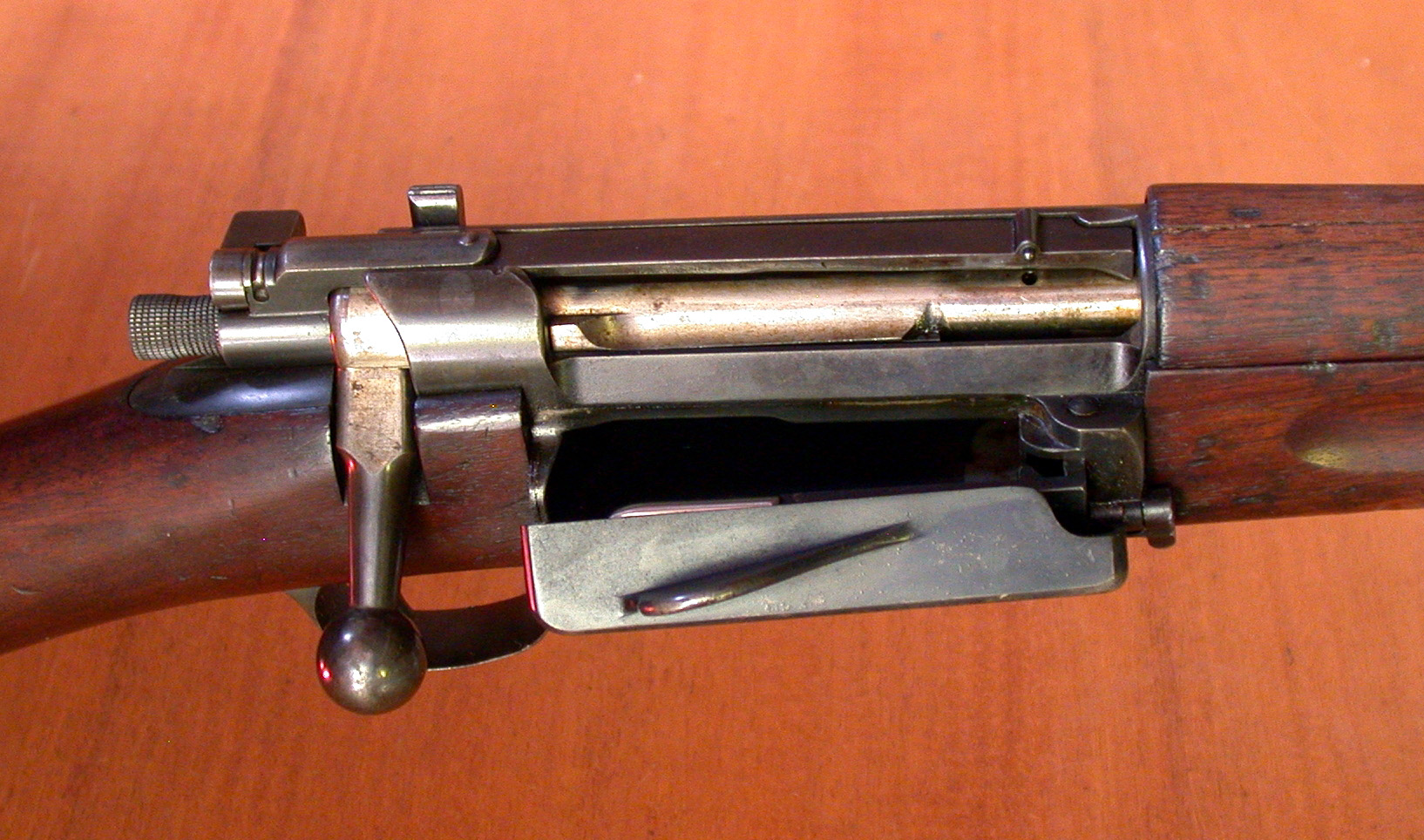
The Krag-Jorgensen rifle was the first smokeless rifle officially used by the US Army. It is a five-shot bolt-action rifle that was first adopted in 1892 and was made obsolete by the famous Model 1903 Springfield.


The Krag saw use in the Spanish-American War, where its slow reload time and lower pressure cartridge was shown to be inferior against the Mauser rifle, and it soldiered on through World War I in the hands of the National Guard and as a rear-line weapon. Some even made it to France in the hands of railway troops, and there is one case of it actually being used in WWI combat. In a nutshell, the Krag served the US in two wars, and was a National Guard staple in the early 20th Century, yet this peculiar rifle has faded out of common memory.


So why bother? For one, Krags are classified as antiques and all are Curio and Relics, making them very low on the gun-grabbing agenda. My own personal Krag was made in 1896, making it an antique that is nearly unregulated by the ATF, yet it shoots a pretty effective .30 caliber round. The Krag also is a marvelous hunting rifle.


The Krag itself is a strange firearm, loading from a side-mounted box magazine that has to be flipped open to drop individual rounds into it. However, since the ammo feeds from the side, the Krag has a buttery-smooth action that isn’t hampered by dragging on rounds pushing up from a box magazine, but we’ll touch on that again in a bit.


The round itself is a very interesting round. Loaded with 40 grains of period smokeless powder and using a .30-caliber bullet, it is commonly sold as .30-40 Krag, although before the advent of the 1903 Springfield, it was sold as .30 Government. More powerful than the ubiquitous .30-30, the .30-40 Krag is still weaker than the 7mm Mauser it faced during the Spanish-American War, leading the Army to develop a high-pressure round that turned out to crack Krag receivers.


Be Prepared. Learn The Best Ways To Hide Your Guns.


The Under-The-Radar Today, the .30-40 is a rather obsolete round. While commercial lever-action and single-shot rifles were made in that round well into the 20th Century, and some modern guns have been made in it, it remains obscure due to the age of most guns firing it. We are long past the glory days when surplus Krags were dirt-cheap, and what remains are sporterized guns made when they had little value, or valuable unaltered military issued guns. The unusually smooth action of the Krag made them very popular as a hunting rifle, and even today you can find a sporterized Krag for about $200-$300 depending on the quality of the work and if the gun can be readily restored.


Perhaps you have a dusty old Krag that belonged to your father or grandfather, or you found one cheap at a pawnshop with a cut-down stock and barrel, or maybe you just like weird guns. Either way, the Krag has an awful lot going for it, as long as you can feed it ammo. The best thing about it is that it uses a standard 7.62mm bullet. As long as you load in acceptable pressure range, you can take advantage of the incredible array of .30-caliber bullets available to the reloader. You can load the .30-40 to velocities approaching 3000 FPS with a light 100-grain bullet, or develop energy of about 2,200 foot pounds with a 150-grain bullet moving at about 2,500 feet per second. Either way, it isn’t a shabby round, although a modern .308 can do all that and more.


Story continues below video


As mentioned earlier, it also is a great hunting rifle. The round is capable of taking almost any game in North America (.30-40 lever-action rifles were very popular in Alaska before the development of more powerful smokeless hunting rounds, and were popular purchases for those taking part in the Klondike Gold Rush). While the round is decent, it’s the action that is amazing. The first time I cycled my Krag’s action I fell in love. Never have I handled such an amazingly smooth bolt-action. There is almost no drag, and the bold glides in the action like a fine piece of machinery. If you can find a sporterized Krag beyond restoration, or a complete action, it can serve as the basis of a fine hunting rifle.


Ammo itself is expensive — nearly $2 per round retail when you can find it, but more readily is made from shaping .303 British brass, or buying regular .30-40 brass on the rare moments it is sold. I built up my brass supply the painfully expensive way by buying factory ammo, but unless you are going crazy with your loads, or want to shoot thousands of rounds a year through your rifle, you don’t need a lot of brass.


In correct military form, the Krag can be a valuable rifle, especially a correct carbine. In unsalvageable sporter form, it is a strange rifle shooting a strange round that can become a workhorse hunting rifle if you are willing to invest the time and effort to keep it shooting. These rifles served the United States for a long time, and then became classic hunting rifles. They are obscure, but a joy to shoot, and their extreme age makes them legally advantageous in the face of growing attacks on our right to keep and bear arms, while the handy 7.62mm bore gives them a utility far beyond their age. If you have a Krag, it is worth the bother to make it shoot again, and if you like playing with something different, hunt down an old sporter to play with. No matter what, though, this forgotten rifle can once again give excellent service if you let it.


Pump Shotguns Have One BIG Advantage Over Other Shotguns. Read More Here.

Thursday, April 13, 2017

WWI Anniversary: 100 Years Of ‘Making World Safe For Democracy’

One hundred years ago today, President Woodrow Wilson, who was elected on his antiwar slogans, asked a joint House-Senate session for a declaration of war on Germany. His war has launched endless wars ever since…and only made the world safe for the emergence of Hitler, Mussolini, and Lenin.


Wednesday, March 1, 2017

Making The Same Mistakes Again (Remember The 'Lord Clive')

Via Jeff Thomas of InternationalMan.com,


The image above is of the 18th-century home of friends in Colonia, Uruguay. Today, sitting on their back patio on the Rio de la Plata, I looked out at a small yellow buoy in the harbour that marks the final resting place of the Lord Clive, a large, 60-gun British warship from the 18th century.


In 1763, we British, already at war with Spain, decided to expand the venture to the New World. The Lord Clive arrived in Colonia, Uruguay, and began firing into the tiny town. With her heavy contingent of cannon, her captain was confident that he could do enough damage to make the Spanish inhabitants surrender. After extensive bombardment, the Spanish had still not raised the white flag; however, the crew of the Lord Clive had managed to set fire to their own ship. The crew abandoned ship.


Local accounts of the event have it that, swimming ashore, the English crew apologized for bombarding the town and asked for mercy. Not surprisingly, the Spanish killed them.


Of course, this is not the outcome that’s described in English history books. Although the defeat of the British on that day is acknowledged, the folly is not. Although historians will generally acknowledge a defeat, they’re often reluctant to mention any idiocy on the part of their own military. And so any English-language version of the story tells a different tale from the account above.


This is a great pity, as much can be learned from historical idiocy. Since it’s rarely taught, military leaders often make the same idiotic mistakes that their predecessors made.


As an example, we can look at the adventures of the US today and observe their serial invasions over the last fifteen years in the Middle East and elsewhere. These adventures are being pursued ostensibly “to make the world safe for democracy.” However, whenever the US takes over a foreign country, it puts in place a puppet government—not exactly the textbook definition of “democracy.”


And, of course, warfare is very costly. Choosing to invade multiple countries at the same time, as the US has been doing over the last fifteen years, is even more costly.


And the US government never misses an opportunity to portray the Russians as evil aggressors—an appellation far more suited to the US. On one occasion after another, Russia has sought to tone down the level of aggression, whilst the US has been conducting a shoving match with the Russians, goading them into conflicts.


This is extraordinarily foolish, as it would take very little to light the fuse of direct warfare between the US and Russia. Over the centuries, quite a few countries have challenged Russia, but Russia has always proven to be a very hard country to defeat. Although American films about World War II tend to portray the US as having won the war against the Germans, it was the Russians who did the lion’s share of the job. Even when poorly armed and poorly prepared, Russia simply throws another ten or twenty million men at the problem and ultimately wears out any attacker. Russians don’t necessarily like war any more than any other people, but they do have astonishing staying power. They’ll grimly see a war through, long after their opponents have lost heart.


In addition, China and others have stated their support for Russia, should the US get carried away with its aggression in the Middle East. Both China and Russia have stated that, should the US move on Iran, they will join the fray on Iran’s side.


It would be foolhardy in the extreme for the US government to assume that it could take these powers on and come out of the fight victorious.


But what does this have to do with the burning of the Lord Clive?


Well, as stated above, the captain of the Lord Clive had a massive warship capable of doing a great deal of damage as he bombarded houses, including the one pictured above. But the crew became so caught up in their zeal for destruction that they failed to extinguish a fire on board the ship and had to dive overboard, surrendering to the Spanish, who by that time were understandably not feeling particularly merciful.


The US is in a similar situation. It’s not exactly in the best shape at home. The economy is on the ropes, and a financial collapse may be imminent. The government is rapidly becoming more autocratic, and a police state is likely to be instituted in the near future. It will be needed as funds for entitlements dry up and those who now praise the nanny state find that they’ve been lied to all this time. Pension funds also are beginning to fail, and people in both the private and public sectors will be more than a bit peevish when they discover that this rug, too, has been pulled out from under them.


If we were to imagine the worst possible future for the US, it might go something like this:


  • The US invades Iran or directly attacks Russian forces in Syria or another country.


  • Russia retaliates and the world takes up sides as World War III begins.


  • For the first time in their history, the American people are angrier at their own government than they are at the trumped-up enemy their government has chosen to oppose.


  • The US government finds that it must fight a full-blown foreign war at a time when it’s fighting a second one at home.


  • All of the above takes place at a time when the US is broke and is economically unable to sustain a fight on either front.


  • The world turns against the US for causing this fiasco, and, for the first time, there’s no one standing on the same side as the US.


  • The US effort collapses and, like the crew of the Lord Clive, the US, in effect, abandons ship and asks for forgiveness from those it has invaded.


In the above scenario, we can imagine that the US would have created a situation that would maximize enmity from the rest of the world. (In 1919, Europe forced the Treaty of Versailles on Germany, not out of necessity, but out of vengeance. It served to cripple the German people for decades thereafter—both socially and economically.)


A final thought: Every night on American television news programmes, pundits, politicians, and retired generals perform their sabre rattling, stating that the world at large had better cooperate with the US or else. Whilst this bravado may appeal to a segment of the American population, the programming is also available to the rest of the world. We who aren’t American and don’t reside in the US listen to the threatening rhetoric and find it decidedly unsettling. More to the point, the world’s leaders are also observing these programmes. They have a similar tone to the Nazi buildup in the 1930s. To those outside the US, US leaders are becoming increasingly dangerous.


If this does play out along the lines of the sinking of the Lord Clive, it will be the American people who will pay the price for their leaders’ reckless behaviour.


*  *  *


An unpopular foreign war, an unwinnable fight with Russia, friendly nations turning on the US, economic collapse at home… Given the current political climate, it’s not hard to see how this “worst possible future” could quickly and easily become reality. In fact, New York Times bestselling author Doug Casey thinks it’s just a matter of time before the next crisis hits the US. Doug thinks the situation is so critical that he put together this groundbreaking video. Click here to watch it now.

Monday, December 26, 2016

102 Years Ago Today, WWI Soldiers Called a Christmas Truce and Refused to Fight — Here’s Why it Failed

“It was a short peace in a terrible war,” recalled 108-year-old Alfred Anderson, 90 years after the storied Christmas truce in 1914, during the nascent stages of World War I.


Legend describes spontaneous soccer matches, camaraderie between foes, and general holiday merriment among gentleman soldiers — who had just the previous day been shooting to kill.


But, as legends go, time gilds and — though, indeed, a patchy truce between British and German troops did occur in areas along the bloody Western Front — it bore only a sketchy resemblance to the one depicted in movies, art, and other well-intentioned but fictionalized accounts.


“I remember the silence, the eerie sound of silence,” Anderson told the Guardian in 2004. “Only the guards were on duty. We all went outside the farm buildings and just stood listening. And, of course, thinking of people back home. All I’d heard for two months in the trenches was the hissing, cracking and whining of bullets in flight, machinegun fire and distant German voices.


“But there was a dead silence that morning, right across the land as far as you could see. We shouted ‘Merry Christmas’, even though nobody felt merry. The silence ended early in the afternoon and the killing started again. It was a short peace in a terrible war.”


In some areas, the informal and unofficial truce lasted mere hours. In others, troops didn’t fire a shot from Christmas Eve until after the new year. And in many positions along the Front, no ceasefire occurred at all — though there was a lull in the fighting.


Historians disagree on specifics, but letters penned by soldiers tell of German troops hoisting lanterns and signs reading, “you not shoot, we not shoot,” above the trenches, singing carols to celebrate the holiday amid bitter conditions — which were answered, in places, by the British.


“Stille Nacht. Heilige Nacht,” the British heard — the words foreign, but the tune of Silent Night familiar — and soon verses volleyed between the opposing trenches.


“First the Germans would sing one of their carols and then we would sing one of ours, until when we started up ‘O Come, All Ye Faithful’ the Germans immediately joined in singing the same hymn to the Latin words Adeste Fideles,” wrote Graham Williams in a letter, obtained by the New York Times, as quoted in TIME. “And I thought, well, this is really a most extraordinary thing ­— two nations both singing the same carol in the middle of a war.”


Tentatively, individuals climbed from ironic safety of the wet, muddy trenches and made their way into no man’s land. Others, upon seeing their comrades’ brave actions not met with gunfire, soon followed.


Officers in various locations first met their counterparts at the halfway point and agreed to allow burial of the dead — whose bodies had been left to the elements for weeks. Soldiers soon fraternized, trading cigarettes, buttons, hats, tins of bully beef, and other supplies — and, indeed, in some spots, kicked around makeshift soccer balls — though, contrary to popular depiction, no full matches broke out.


“In my mouth,” wrote London Rifle Brigade Pvt. Henry Williamson, then just 19-years-old, in a letter to his mother, “is a pipe presented by the Princess Mary. In the pipe is German tobacco. Ha ha, you say, from a prisoner or found in a captured trench, Oh dear, no! From a German soldier. Yes a live German soldier from his own trench. Marvelous, isn’t it?”


At the time of the informal Christmas ceasefire in 1914, the horrors of trench warfare had only recently become apparent — and the brief break allowed the men on both sides a chance to catch their breath and somewhat renew spirits.


But the ease with which opposing sides made merriment with one another deeply troubled commanding officers — who rightly worried the chance to see the enemy as human would thwart the soldiers’ will to fight — and by the next Christmas, the threat of court martial hung in the balance for anyone attempting such fraternization.


And this point — that troops, given the chance to familiarize themselves will grasp they’re fighting someone else’s war — is likely why the account of the Christmas truce has, over the decades, been adorned with the fanciful ornamentation of wishful thinking. It constitutes, this legend, in many ways the yearning of humanity not to engage in violent conflict — particularly on as massive a scale as exists today.


Soldiers in 1914 were not entirely certain they belonged on that battlefield, as the reasons for the Great War didn’t derive from a place of moral imperative as it would seem to not long afterward in World War II — and hasn’t since.


In fact, separation by degrees of the humanity of individual soldiers on opposing sides and partially fabricated moral rectitude form the basis for all war propaganda for a reason — should troops not buy the dehumanization, they would ostensibly never kill.


Of course, the mythical nature of the Christmas truce forgets these same men who shook hands and exchanged holiday pleasantries all eventually took up arms and fired at each other — on a massive scale — around 11 million military personnel perished and 20 million suffered injury over the duration, according to many estimates. Their fighting killed civilians, too — around 7 million innocent people died in World War I.


That’s the trick of propagandizing war — time sugar coats stark atrocity and glorifies the military — because without that, it’s arguable no one would fight at the behest of those who have the actual conflicts of interest.


Put simply, if the well-heeled political elites had no one to fight their battles, there would be no war — thus, terms like “duty,” “patriotism,” and “service” are purposely meant to stir an emotional response — often handed down in families for generations.


While, certainly, the hopeful overtones represented by the famous Christmas truce should not be understated, starry-eyed discussion of the ceasefire without including what followed for years afterward is horrendously negligent of reality — and does a disservice to the atrocity that is the killing of people on an enormous scale during wartime.