Showing posts with label pistol. Show all posts

Monday, February 26, 2018

The Perfect Carbine-Pistol Package That Will Fill All Your Gun Needs

The Perfect Carbine-Pistol Package That Will Fill All Your Gun Needs


If you like compact and maneuverable carbines in the hot 22 WMR rimfire cartridge, then the Kel-Tec CMR-30 is for you. When Kel-Tec introduced the CMR in .22 WMR, it added another player to their lineup of lightweight, compact rifles. There’s a lot to love about this little gun, and if you combine it with the Kel-Tec PMR-30 pistol (same caliber) you would have a dynamite package for hunting, survival, defense and target shooting.


This carbine barrel is 16.1 inches with a 1 in 16-inch twist. With stock fully extended, the overall length is 30.6 inches. Thanks to mostly aluminum construction, it’s very light, at 3.8 pounds unloaded.


Lots of Features


The CMR is loaded with a wide range of useable features right out of the box. Examining this nice carbine overall you will find:


Adjustable stock. Kel-Tec calls it a four-position stock, but that doesn’t include the fully collapsed position, which shortens the gun to a very portable 22.7 inches. The ambidextrous adjustment lever is located just under the top front of the trigger guard. Operation in my experience has been silent and very smooth.


Metal sling loops on either side of the buttstock. Admittedly, they’re small, but that’s a trait that can be compensated for by using a length of paracord to accommodate larger sling hardware connecting points.


The magazine release, like most other things on this rifle, is ambi-friendly. Its location at the rear lower edge of the mag well takes a little getting used to, however.


Ambidextrous safety. Several folks that shot in testing the CMR are southpaws — and all found the thumb-operated lever convenient.


A textured pistol grip that complements this gun’s pack-ability with its narrow and flat profile. The signature Kel-Tec texture makes keeping a solid grip and shoulder mount easy.


A roomy trigger guard allows for safe operation, even with gloved hands.


Flip-up Magpul rear sight, with aperture that’s adjustable for windage. This (along with its mate up front) is a surprisingly high-end attachment. Regardless of the reason for putting better sights on the CMR-30 than on other Kel-Tec carbines, they did right by the consumer with this choice.


To match the rear sight, the front is a flip-up, Magpul adjustable post. This setup is great for keeping the gun compact, as optics can clear the sights without being mounted extra-high. The sights can thus co-witness with many optic setups.


More Pictatinny rail than you’ll ever use runs the length of the stock, top and bottom. You can add more stuff than you probably need!


Ambidextrous bolt operation, with a charging handle big enough to grab onto and operate quickly to clear a malfunction while keeping the gun shouldered. It’s also there to simply lock the bolt back, though doing that without breaking the firing position would take more work than I’ve put into this gun so far. The lock-back lever isn’t ambi; it’s on the left side only. At first glance it appears the charging handles may reciprocate during firing, endangering fingers. They don’t—they’re only for manually pulling the bolt rearward.


Threaded muzzle, with a good checkered steel cap, allows for quick installation of a suppressor or flash hider. The cap keeps the threads clean and the barrel streamlined without an accessory.


Trigger


The CMR trigger has a bit of take-up but isn’t heavy or grainy, and the reset is palpable without being match-grade sensitive.  Kel-Tec says the weight range is three to five pounds, and it’s not adjustable.


Finally, Kel-Tec provides a full-color, highly detailed owner’s manual. It’s a nice gesture in an age when most manufacturers are issuing dull, generic manuals that drive us to YouTube when it’s time to clean the firearm.


Accuracy and Ammo


Shooting the CMR with a variety of setups was found to be more than acceptable. Especially considering a magnified optic was NOT utilized for a detailed accuracy test.


Ammo types during the trial include CCI TNT Green (lead-free) 30 grain, CCI Maxi-Mag 40 grain, and Hornady Critical Defense 45 grain. All achieved one to one-and-a-half-inch groups at 25 yards, with the TNT Green forming the tightest group of less than an inch. This is not to pass negative judgement on the other loads, as improvised rests used in the prone position, wind and shooter error surely had some effect, as they usually do.


Keep in mind that just a year or so ago 22WMR ammo was quite challenging to find, due to supplies having been bought up over the previous six to eight years because of concerns over gun and ammunition availability. Moral to this story: Keep a very good supply of the calibers of ammo you enjoy shooting and intend to use for all purposes.


Magazines


The owner’s manual provides rather sternly worded instructions about loading the magazines, and they’re not kidding. Loading the 30-round mag is the only thing inconvenient about operating this gun. Ammo must be loaded from the front of the magazine while sliding the round toward the rear wall of the magazine. The manual recommends tapping the flat backside of the mag on a flat wooden surface every 5-10 rounds. The spring is quite tight, and much pressure is required to load the last 10 rounds. The rounds also tend, at any stage of loading, to get a little off kilter in their double-stack configuration. The four misfeeds experienced during the 125-round test (a three percent failure rate) can probably be attributed to a slightly displaced round near the top of a full magazine. Once you become accustomed to the magazine loading procedure, it’s not that big a deal.


The magazine drops easily from the mag well upon release. This allows one to run speed or tactical reloads without hassle.


Takedown


Disassembling the CMR-30 is a straightforward process, if unusual in comparison to most common semi-autos. A small pin located on the frame and above the trigger must be pushed through with an improvised pointy object. The grip/trigger assembly separate as one unit, along with the stock, and barrel/bolt assembly which can be separated for cleaning. It’s not intuitive, but once done, it’s easy to repeat.


Parting Thoughts


Mounted with a magnifying optic, zeroed for the shooter’s ammo of choice, the Kel-Tec CMR-30 is a highly portable, dependable and accurate tool for a variety of applications out to at least 100 yards and probably beyond. For shooters whose visual acuity is good, the same is true for using the rifle with its stock sights.


What’s even more attractive is that the CMR-30 companion gun, the Kel-Tec PMR-30, is a full-size pistol of the same caliber and the magazines are the same for both.


Both the CMR and the PRM appear to enjoy a continued high demand. Current retail pricing for the CMR-30 ranges from $450 to $550.


Have you ever shot either of these guns? What did you think? Share your thoughts in the section below:

Monday, December 18, 2017

5 Tips For The Novice Concealed Carrier

5 Tips For The Novice Concealed Carrier

Image source: Pixabay.com


First of all, welcome to the world of concealed carrying! Most concealed carriers would agree that carrying a weapon will make you feel safer and more prepared if the unthinkable happens. Still, there are a few things that are easily forgotten, especially if you are also fairly new to firearms.


1. How to Conceal


While it seems extremely obvious, how to conceal your weapon should be a major consideration. Despite what some people will say, there is no one-size-fits-all answer. Some people will prefer to carry appendix, some over their back pocket, and some will use completely different methods to carry. For the new concealed carrier, this could be overwhelming.


In my opinion, the best way for you to carry is whatever you are comfortable with. For me, I prefer carrying over my back pocket, but find that it’s harder for me to conceal the weapon there, based on my body shape. This drove me to consider carrying appendix, which is now how I carry for most of the year.


You Don’t Need A Firearms License For This Weapon!Finding the best way for you to concealed carry will almost certainly take trying out multiple holsters. For my first carry weapon, I had four different holsters before I found the right one. It’s like a glass slipper, except for guns, so it’s way more awesome. Trying out multiple holsters to find the most comfortable one is extremely important, because if you aren’t comfortable carrying with one holster, odds are you won’t carry at all.

Another important factor to consider is the time of year. During the summer in hotter areas, a pocket gun, such as a small .380, in a pocket holster will be your best friend. As the weather gets cooler, it will be easier to conceal bigger guns in multiple ways, as you will be wearing more, heavier clothing.

2. Drawing


Keep in mind the fact that carrying a weapon means you have to be prepared to draw it. In the event that the unpredictable happens, the last thing you want is to be fumbling around, unable to efficiently draw your weapon.


My advice would be to practice drawing if you are new to carrying or trying out a new holster. Empty the magazine, clear the weapon, and practice drawing. As you get more proficient, and if the range you shoot at allows for it, start practicing with live ammunition. The more efficiently you can draw your weapon, the more prepared you will be.


3. Thumb Safety


This reminder is aimed specifically at someone that is new to firearms. Keep in mind whether or not the firearm you are carrying has a safety. If it does, and you have to draw it, remember to flip the safety! In a high-stress situation, simple things like this are extremely easy to forget. Once again, practicing drawing and using your weapon will help develop muscle memory.


4. Best Ammo


For someone new to firearms, the different kinds of ammunition can be overwhelming. This could be argued endlessly, but do some research on the best ammo for personal defense and make your own decision. My personal preference is to carry hollow point ammunition. Hollow point bullets are designed to expand when they enter a target, which will cause more damage to a bad guy.


Another thing to keep in mind for someone new to concealed carrying is the time of year. If your potential target is wearing a huge winter coat, you might want some hotter ammunition or a larger caliber weapon to penetrate the extra layers.


5. Extra Ammo


Yet another facet of concealed carrying that could be argued endlessly. My opinion on whether or not to carry extra mags/ammo is that it should be based on your assessed threat level. If I’m just taking my dog on a walk or running to the gas station, I may not carry any extra mags. If I’m going to a more crowded area, like a shopping mall or a grocery store, I’m probably going to grab some extra ammo on the way out the door.


Overall, carrying a concealed weapon is an excellent idea, provided that you know how to safely and accurately operate the weapon you are carrying. For me, the added peace of mind is an awesome feeling.


While there are hundreds of factors that go into concealed carrying, these five reminders are just a few of the basics for someone new to concealed carrying to keep in mind.


What advice would you add? Share it in the section below:

Thursday, November 2, 2017

Purse Carry: A Good Idea Or An Accident Waiting To Happen?

Purse Carry: A Good Idea Or An Accident Waiting To Happen?

Image source: Cutting Edge Products


Women in recent years have bought and begun carrying concealed handguns in unprecedented numbers.


I believe that’s a good thing for personal and public safety. If you look closely at big-city newspaper reports, usually buried far beneath the front page you’ll find stories detailing how a gun in the hands of a good citizen prevented or ended a violent crime. An untold number of other crimes never happen, and are never reported, thanks to the presence of a gun in a would-be victim’s hand.


Unfortunately, not all people, women included, understand what it is to carry in a safe manner that still allows access to the firearm.


The Danger of Purse Carry


Purse carry is the most common method I hear women discuss — even by those who’ve been licensed and packing for years. This is disappointing in a few ways. First, drawing from a purse is slower than drawing from most on-body locations. Five seconds is the average length of a deadly force encounter. Can drawing from a purse happen faster? With the right equipment and practice, yes. But that’s a tall order that most women simply aren’t going to take time for.


You Don’t Need A Firearms License For This Weapon!


Second, most women haven’t practiced drawing from a purse, and may not understand that dropping it to the ground, for a handheld style, or firing one-handed if using a shoulder strap purse, are often necessary for the purse not to interfere, dangerously, with point of impact.


As too many news reports have described, a purse can’t be under the owner’s control 100 percent of the time. Children as young as two have gotten handguns out of purses, with tragic results.


Finally, carrying in a purse requires diligent observance of the safety rule “finger off trigger until the sights are on target.” For many purses, breaking another safety rule, “never allow the muzzle to cover anything you’re not willing to destroy,” is nearly impossible not to break during the draw or while re-holstering.


Nevertheless, purse carry has a couple of advantages. The greatest is the ability to pack a bigger gun that’s easy to shoot and holds more ammunition. Another is the capability to establish a firing grip on the gun while it’s in concealment, which can buy valuable seconds as well as send a strong non-verbal message to the observant thug.


Some instructors tout the fact that a revolver can be fired repeatedly from inside a purse as an advantage. Anyone who’s given it any thought will realize that the likelihood of those shots impacting the intended target is small. As wise instructors say, “there’s a potential lawsuit attached to every bullet.” Except for distances close enough to smell the assailant’s breath, shooting from inside a purse is an irresponsible plan that’s not likely to stop the attack, and could kill or injure bystanders.


A couple incidents have been cited in the news wherein women dropped a loaded gun into a purse along with all the usual stuff—pens, keys, eyebrow pencils, etc. Any one of these items can, and has, caused a negligent discharge while the gun was in the purse and the owner was going about her business. Responsible purse carry means, in part, choosing one of the hundred-plus designs of bags specifically made for concealed carry, which has a dedicated gun section, an inner holster of some kind, and a reinforced bottom.


Consider Purses With Gun Compartments


Safe purse carry means the gun is contained in a compartment that holds it and only it, and perhaps a spare magazine, assuming your purse has:


  • An inner sheath or holster of some sort that keeps the firearm anchored in one predictable position inside the dedicated space.

  • A closure for the gun’s compartment that is quick and easy to open. You should be able to grasp the opening device (a flap or zipper pull) in your fist and open it without having to use fingertips. This keeps access to your gun in the gross motor action department.

  • The ability to cleanly draw without crossing the muzzle over any of your own body parts (most often the support-side hand is at risk here).

  • Construction that allows you to carry the purse in exactly the same position every time you use it, one in which your firing hand can easily get to the gun.

If the purse is not a holster-purse or is retrofitted or pinch-hitting as such, the gun compartment must not be penetrable by any object, within or outside of the purse, during normal use. What you must avoid is any object like a pen, keys or a child’s fingers being able to get inside the trigger guard from outside the compartment.


The purse is under your control at all times. That means on your body any time you’re not in the car or at home. There can be no leaving it where it can be stolen or rifled through by a child.


Now does purse carry still sound like the easiest way to carry your gun? It’s not convenient to do well, but it is workable, and is the preferred method of many women. When the guidelines above are followed, purse carry can work, though it is not recommended.


What is your opinion about purse carry? Share your thoughts in the section below:

Monday, October 9, 2017

5 Steps To Finding The Perfect Concealed Carry Gun

5 Steps To Finding The Perfect Concealed Carry Gun

Image source: Glock.com


So you have finally decided to carry concealed on a daily basis. Or maybe you’ve had a carry license for a while and you’re in the market to purchase a serious carry gun. Whatever the case, your decision to carry daily is not unfounded. The world is becoming more dangerous each day.


The variables for the selection of a concealed handgun can be almost endless. The following five considerations can aid you in your quest for the perfect carry gun.


1. Concealable


Let’s start out with the obvious: Concealability of your chosen pistol. While this may seem straightforward, it can prove to be a challenge. How you carry is, of course, unique to you and your daily habits. Suffice to say that a good carry system in the form of a holster or other method is essential. But the gun itself must lend itself to practical means of concealment.


Most likely, the upper size limit would be along the line of a Glock 19, the Smith and Wesson 2.0 or the Springfield XDM 3.8 models. The average person may find these handguns a bit too challenging to easily conceal day to day. A single stack pistol or a snub nose revolver will probably fit the bill, and there are some excellent choices. The S&W Shield, Glock 42 or 43 models and the Ruger LCR all come to mind. With the appropriate carry system, any of these guns can be easily concealed day to day.


2. Capable


Here I am mostly referring to caliber as related to ballistic performance in defensive use. We could write volumes and debate till the end of time about what the best pistol caliber is for concealed carry and self-protection. Realize that most any handgun caliber that you would realistically carry concealed has limitations on how effective it can really be on another human. So the age-old debate of 45 ACP vs 9mm is easy for me. I like the 9mm because of the higher round capacity it will offer in any handgun of comparable size to the 45 ACP. Have no doubt: I love the old 45 Auto. But with the advent of increased ballistic performance in 9mm ammunition, better recoil management and higher round count, I usually opt for the 9mm.


You Don’t Need A Firearms License For This Weapon!


Consider that I see everything, from 22 rim fire to 44 magnum, show up in concealed carry courses today. And while there may indeed be a time and place for both of these extremes, somewhere in the middle is probably more realistic.


Have your doubts? Consider that the most commonly used pistol caliber today by the U.S. military and American law enforcement is the 9mm.


I must mention reliability of the gun itself in this section. This means: Does the gun fire and cycle every time I pull the trigger? If the gun is too picky about the ammunition you feed it, get rid of it. Some guns on the market today are more accurate than others, but all are accurate enough for defensive purposes. When it comes right down to it, I will sacrifice a bit of accuracy for reliability every time in a defensive handgun.


3. Comfort


It should stand to reason that if you are going to conceal your handgun, comfort of carry needs to go along with it. I can assure you if the gun and/or carry system is not comfortable, you will not carry it for long. So what factors will influence the comfort factor? Most likely it will be weight, overall dimensions (length and width), and perhaps the platform of the gun itself. Don’t forget to consider the weight of your handgun once fully loaded. This may indeed influence whether you carry a double or single-stack pistol along with the caliber (i.e. 45 ACP ammo is heavier than 9mm).


Along with comfort, a carry method for keeping your firearm highly secure while carrying concealed must also be a consideration. You must remember: Your pistol could be used against you if it comes loose from its concealment place in the midst of a confrontation.


4. Control


Here I am speaking of how well you as an individual can control and manipulate the gun itself. Many factors influence this: grip strength, the fit of the gun in your hand, your willingness to train, caliber and the make and model of the handgun.


Bottom line: You need to be able to run the gun under the most stressful of times. Factors such as recoil control, reloading the gun with ease, malfunction clearances and defeating any safety devices the gun may have could all be critical if the day comes that you need your pistol for real.


5. Cost


The cost of a concealed carry handgun can vary greatly. In general terms, the bargain-basement-priced pistol may not provide you with needed reliability, while the extreme high-priced handgun may be all for show and not practical.


If you take a look at the Glock, S&W, Ruger, Springfield, Sig Sauer line of modern-day pistols or revolvers, you will be able to find something in the $300 to $675 price range that should fit your needs.


In the end, I am looking for a gun that is reliable every time, easy to operate, concealable and has a proven track record. Then I head to the range and put in some serious training time. After all, it’s the defense of self and family that’s really at stake.


What advice would you add? Share it in the section below: 

Tuesday, September 19, 2017

Concealed Carry 101: What They Didn’t Tell You During Firearm Training

Concealed Carry 101: What They Didn’t Tell You During Firearm Training


Since 2001, America’s sleepy eyes have slowly been opening to the threats we face each day. In just the last five years, we have watched radical Islam step out from the shadows and murder people with impunity — both in American and Europe.


In many states, you need firearms training to get your concealed carry license. What you never get, though, is training on how to carry that weapon. In fact, I didn’t even get advice on how to carry my weapon. It is truly your responsibility to learn about holsters and positions to carry.


The Discomfort of Ignorance


Many people take to magazines, blogs and YouTube videos to decide how to carry their weapon. Some even are trading their personal comfort for the ability to carry their weapon. Look, it’s 2017; there is no time for bulky, uncomfortable holsters or carrying positions.


Kydex – This hard plastic material makes up many of the new holsters on the market. The material is cheap and strong to protect your trigger.


Leather or nylon – These holsters will take some time to break in, but they can be comfortable, as well. They are effective, but personally I want something sturdy protecting my trigger. I have kids, and I am not a sedentary person.


Vicious Hand-Held Self-Defense Tool Doesn’t Require A License!


Combo – These are very cool designs that offer up the tough plastic protection of the Kydex hull along with a nylon or leather backing.


(There are some great examples of these holsters here.)


12 O’clock, 3 O’clock, 6 O’clock


But it’s not enough simply to have the right holster. You also need to consider where on your body you carry it. Let’s examine the options:


12 o’clock, appendix or front carry – This is a method I hadn’t considered until just recently. The appendix carry offers incredible ease of access. You are merely a shirt lift away from grabbing your gun. Many people like appendix for its ability to conceal your weapon in an area most people aren’t expecting. The biggest drawback is not having the ability to bend forward with some types of holsters.


3 o’clock, right hip or 9 o’clock, left hip – This method is most common and probably just comes down to your dominant hand. It offers good mobility. Some people are not a fan because of the possibility of something called printing. Printing is showing the outline of a weapon through your clothes, thus giving away the fact that you are carrying concealed.


6 o’clock, small of your back – To me, this is movie-style carrying. I am a very flexible guy and I still find that this is a very inconvenient way of carrying. With training and muscle memory I am sure it gets easier, but this position is not my cup of tea. That said, many people love it. It puts the gun out of the way and is there when you need it.


Chest carry – If belt carry doesn’t offer you the carry style you like, then look into chest holsters. These strap to your chest and offer access to your gun without a hindrance at the waist.


Leg carry — Some people strap to their thigh or even their calf, depending on the size of the weapon. These can be very effective and unobtrusive methods of carrying concealed.


Off-body carry – If you find that having a gun on your person is too much of a burden or discomfort, consider off-body carry. Over-the-shoulder bags will offer quick access to your weapon. Look for bags that are designed for conceal carry.


You Be the Judge


Unfortunately, many people are stuck carrying a weapon in an uncomfortable way because some guy online told them it’s the best way. There is only one true way to fix your problem, and that is to experiment. Carry in several diverse ways before settling on one concealed carry method.


What is your favorite concealed carry method? Share your tips in the section below:

Sunday, September 3, 2017

I Was In Law Enforcement. Believe Me, You Need To Carry A Firearm Every Day

I Was In Law Enforcement. Believe Me, You Need To Carry A Firearm Every Day

Image source: Alien Gear Holsters


It’s very simple folks; the police usually will not be able to save you. Don’t get me wrong, I have been a law enforcement officer for many years. Officers want to get to you but the majority of the time the incident is over by the time police arrive.


So in essence I believe in my right, and your right to protect yourself and those around you. Having said that, do not take your decision to carry lightly. Once you have made this decision, stay well prepared and confident with your firearm and carry system. A fellow instructor once told me, “It has to become a lifestyle,” when it comes to your personal defense and by necessity your own well-being and preparedness. I couldn’t agree more.


So what do I carry? It depends on many factors. When I teach concealed carry I talk to students about tradeoffs when they begin carrying a concealed firearm. Considerations include concealability of your handgun, single vs. double stack magazine models, caliber, ease of operation, dependability, comfort, and of course there are many others.


I assure you that if your carry handgun and carry system are not comfortable, you will not carry for long. This brings to mind the quote, “the gun you have on you, is better than the one left at home”!


My selection for carry on any particular day is driven by such factors as weather (hot or cold outside?), activities and location planned for the day, along with attire.


The following comprise my concealed carry selection 98% of the time–


Smith & Wesson Shield in 9mm. I like the feel of this pistol; it’s streamlined and easily concealable. I shoot it well and have found it to be very reliable. It comes with eight- and seven- round magazines, plus one in the chamber, and it is a reasonable carry gun. I most often carry this pistol in an appendix position. I like the Guardian Angel holster system that provides a leather or soft back with a firm kydex outer portion. I most often carry a spare magazine as well.


Glock 19, 9mm. Likely one of the most common handguns for concealed carry. Very reliable with good accuracy and a great mid-size carry gun with a magazine capacity of 15. I will carry in a Guardian Angel or SpetzGear appendix or belt-mounted kydex, pancake-style holster.


Glock 42, 380 Auto.  When I need to go small with a high degree of concealability, this is my choice. I carry in the appendix or pocket position via a BladeTech or Sticky holster. The Glock 42 is very reliable and suitable for those attire-limiting occasions. The Glock 42 comes standard with a six round magazine, but plus two extensions are available for the magazine.


Ruger LCR, 38 Special. Very concealable and problem free from an operational standpoint. The 38 Special cartridge has taken care of its share of “bad guys” over the years and there is a wide variety of good defensive ammo available for this caliber. I often carry in the appendix position in a soft-sided Sticky Holster.


Understand, I have no opposition to larger caliber handguns, such as the 40S&W or the 45ACP. I have and will carry these caliber guns on occasion. It all boils down to your comfort and ability to shoot and handle the gun well.


Other EDC (Every Day Carry) items I am seldom without include; a spare magazine or ammo source for my carry gun du jour, a flashlight (most often a Steamlight ProTac- 2L), a good blade (or two) and a tourniquet (CAT, SWAT or comparable).


If you’re a person that has a high degree of concern over the caliber issue, perhaps keep in mind the following: carry the largest caliber handgun you can shoot well and will commit to carrying every day. And then train well; train often. After all you are carrying to protect yourself and those you care about.


Friday, August 11, 2017

I Teach Concealed Carry Classes. Here Are 3 Deadly Mistakes New Owners Make.

I Teach Concealed Carry Classes. Here Are 3 Deadly Mistakes New Owners Make

Image source: Pixabay.com


For more than a decade, I’ve carried concealed and competed in area matches. Now I’m an instructor.


As a practitioner and teacher of concealed carry and gun handling, there are a handful of errors that don’t surprise me anymore. Some, I made myself and now witness others doing the same.


This article is an attempt to help others learn from typical mistakes of new concealed carriers.


1. Choosing a gun that’s too complicated.


I tend to agree with a comment made in a class I took earlier this year with Rob Pincus of Personal Defense Network: “It’s 2017. You should have a gun that goes bang without you having to do anything but press the trigger.”


His comment was a bit tongue-in-cheek, but the sentiment is valid. Safety is the result of observance of muzzle-and-finger discipline first, and a good holster that covers the trigger guard second. In light of the handful of drop-safe manufacturing issues in recent years, selecting a model with a solid reputation in that department earns a place on the safety checklist, too.


Vicious New Hand-Held Self-Defense Tool Turns Lethal In Seconds!


In that high-stress moment that the gun is carried to address, the ability of the mind to tell the fingers to do things like disengage a safety lever is greatly diminished. Likewise, many people commit accuracy errors on that initial long trigger pull that is the correct firing procedure on a double/single action handgun. The KISS (keep it simple, stupid) principle should apply when choosing a lifesaving product.


This advice will make some fans of certain platforms scoff. I love my 1911 as much as the next person, but I’ve also tested myself with it in competition and have experienced a couple moments in which my finger “forgot” to disengage the safety lever. Lesson learned.


2. Blowing the bank on the first holster.


It’ll likely be necessary to experiment with various methods of carry before settling on one that suits your lifestyle. That holster that had great reviews in the magazine, or was praised by a friend who carries, and perhaps cost over $100, may not suit your daily habits.


What does “suit your lifestyle” mean? It means the gun/holster setup must be comfortable enough to wear for the typical hours you spend doing things typical for your day. Examples: people who have to bend from the waist a lot will find “printing” of the gun to be a problem if they carry inside the waistband, behind the midline. Women who wear dresses may find that carrying on-body means choosing a gun that’s much smaller than what they’d prefer, as models that fit comfortably and safely in thigh or bra holsters are limited.


Retention of the gun in the holster is a consideration. If your job involves climbing trees or on and off roofs, for example, the ability of the holster to not allow the gun to slide out without your help is critical. Velcro is a popular retention device, but is noisy—a potential risk in some situations.


Above all, the holster must prevent penetration of the trigger guard by any outside object, whether the gun is worn on the body or off. Choices abound; it’s wise to keep an open mind and try several rigs until you find one that’s ideal for you.


3. Yakking about your armed status.


It’s very tempting to talk about your gun, choice of holster, licensure and experiences as a concealed carrier, especially in the workplace. A few workplaces nurture a culture friendly to self-protection; many more do not. Conversations, even among trusted friends or coworkers, can increase your risk for burglary when inside-circle stories about firearms are inevitably shared outside of that circle. A staggering number of people have a close relative who is substance-dependent and possibly motivated to steal.


Likewise, boasting about your armed status via gun stickers or catchy sayings stuck on your car or front lawn also may increase the likelihood of a car or home burglary when you’re not around. In a recent survey of Oregon inmates convicted of burglary, signs like “due to the price of ammo, don’t expect a warning shot” repelled about half of would-be burglars. Others reported they view such signs as an advertisement of where to snatch guns when the homeowner is away.


Braggadocio should be reserved for supportive circles, and not T-shirts, public social media posts, or even the interior of your AR-15’s dust cover. Unfortunately, wearing or otherwise promoting somewhat tongue-in-cheek statements, the kind about self-defense commonly found in gun-owner circles, are often cited as legal evidence the gun owner was looking for a fight. While gun owners should not have to kowtow to the whims of anti-gunners, the fact is, public statements about gun use may well be used to your detriment in court.


Summary


These three “mistakes” will surely not meet with agreement of everyone. I hope it gives readers who are new to, or in their first years of daily carry, food for thought as they navigate decisions about defensive living.


What mistakes would you add to our list? Share your thoughts in the section below:

Thursday, July 27, 2017

The $360 All-Metal 9mm That’s Great For Concealed Carry

The $360 All-Metal 9mm That’s Great For Concealed Carry

Image source: Armslist.com


Turkish gun maker Canik manufactures a compact 9mm worth looking at for daily carry, recreational shooting and home defense. Though Canik is the manufacturer, this double/single action pistol bears the name of its importer, TriStar.


The TriStar C100 has an all-aluminum frame and weighs 37.3 ounces unloaded. Its barrel is 3.7 inches. It’s not light, and it’s not tiny. However, it is compact enough for carry, and the weight helps make it a low-recoil shooter. It’s shipped with two metal 15-round mags, the followers of which are the only plastic components I can find on the gun.


The C100 has a rather easy-racking slide. Racking the slide, with a loaded magazine, chambers a round and cocks the external hammer. Unlike traditional double/single action firearms, it has no de-cocker. There is a thumb-operated safety that’s easy to use, not unlike a 1911 safety. The pistol is thus capable of being carried “cocked and locked,” avoiding the long double-action trigger pull if desired.


For those who prefer a double-action first shot, for safety or nostalgia, it’ll do that, too. It’s necessary to de-cock the hammer using both the trigger and a thumb on the hammer to let it down softly. Since this requires breaking one of the firearm safety rules, keep your finger off the trigger until the sights are on target and you’re ready to shoot. Be sure to honor another safety rule: Never allow the muzzle to cover anything you’re not willing to destroy during de-cocking.


You Don’t Need A Firearms License For This Weapon!


The trigger’s operation in double-action mode is heavy, in excess of 12 pounds, but smooth. In single action, there’s still a slight bit of takeup. In both modes, the break is crisp and the travel is buttery.


Textured grips have indentations in all the right places to make this non-modular handgun fit an impressive range of hand sizes. Deep sculpts at the trigger-finger area shorten the distance from backstrap to trigger. The mag release is a fairly easy reach, as well.


The ergonomic assets continue with the low-bore axis of this pistol. In 9mm, it’s a treat to shoot, with very little recoil. The C100 also comes in .40 S&W, which I have not tested.


Under the barrel is a standard rail, long enough to accommodate most tactical pistol lights. Although a DA/SA handgun isn’t my choice for home defense, this one will do the job.


On the range, the C100 has so far been dependable, with a variety of brass- and aluminum-cased ammo, both FMJ and hollow point. I was expecting misfeeds resulting from incomplete or delayed ejection of brass from its small, right-side only ejection port. Those misgivings turned out to be unfounded.


Accuracy is good from this little gun, in no small part due to the rails that run the entire length of the frame. The barrel is not fixed, but its range of deviation is less than half that of typical polymer pistols.


The three-dot sight system on this pistol is better than it needs to be for an economy gun. They’re steel, and the rear sight is drift-adjustable. It’s easy to distinguish the front from rear-sight dots as the front one is larger, but not gaudy. The rear sight has rounded edges that are concealment-friendly.


There is detailed texturing on the pistol, with a line of about 12 custom-looking grooves along the top of the slide, grippy-cocking serrations, and grip panels with sandpaper-like texturing for the lower fingers. Such detail is quite unexpected and lovely to behold, but could prove annoying for those who work in dusty conditions or roll around on the ground with the gun.


For the person who wants a classic profile and a solid metal handgun for daily carry, the C100 just may fit the bill. For the family wanting to have one gun every trained member of the household can easily use, it fits the bill. Thanks in part to having a rail and 15+1 capacity along with a trim size, the C100 will make a top pick for anyone needing versatility from their handgun.


The price is right, too. Currently, the C100 is typically priced around $360.


Incidentally, much ado has been made about whether the C100 is a clone of the CZ 75. In many ways, especially its profile, it appears to be. I, for one, wouldn’t hesitate to choose this well-made new model over the CZ, especially where budget is concerned.


Have you ever shot a C100? What did you think? Share your thoughts in the section below:

Friday, July 21, 2017

The Super-Dependable European Pistol That’s Finally Catching On In The U.S.

The Super-Dependable European Pistol That’s Finally Catching On In The U.S.

Image source: FIME


Fans of the double/single action platform looking for a moderately priced but quality pistol for home and self-protection have a new, little known but solid choice — the Rex Zero 1 pistol series.


I have a test copy of the compact version of this pistol in hand for testing. Last fall, I had the chance to fire the full-size Zero 1. Based on these trials, I feel these pistols deserve more awareness in the market.


Rex pistols are made by the Arex (pronounced: ARRR-ex) factory in Slovenia, a modern manufacturing facility that has the latest CNC machining equipment. The brand is popular in Europe, but relatively unknown in the United States.


FIME (pronounced like “fine” with an m) Group of Las Vegas is the sole U.S. importer of Rex pistols, and local dealers can order from them.


For those familiar with traditional DA/SA design, such as the Sig Sauer P220, the Rex offers a couple of differences. First is 9mm chambering. Modern 9mm defense rounds are, of course, smaller than 45 ACP, but their higher velocity and improved bullet design offer undeniable destructive power. Also, you get higher capacity magazines. The standard model holds 17 rounds. The compact packs 15. A newer tactical model holds 20.


Goofy Gadget Can Recharge Your Laptop — And Jump-Start Your Car!


In addition to bigger capacity and the reduced recoil of a 9mm, the Rex adds a thumb-operated safety lever. It can thus be carried in the cocked and locked position, allowing the user to avoid the time and effort associated with its 13-pound double-action trigger pull. Of course, a sturdy holster that shields the trigger guard should be part of wearing or storing the gun in this configuration, keeping in mind there is no mechanical substitute for muzzle and finger discipline.


Another reason to choose a sturdy holster for the Rex Zero 1 is to protect the magazine release. It’s not unheard of for ambi safety levers to be disengaged during a struggle, whether with another human or a seatbelt.


Like a traditional DA/SA, Rex Zero 1 pistols feature a de-cocking lever on the left side only. Upon chambering a round or pausing during a string of fire, safe users will de-cock or put the safety on before re-holstering or storing in loaded condition. My own thumb, on my small/medium-size hand, has a struggle reaching and sweeping the decocker from the firing grip position. The decocker doubles as a slide stop.


Beneath the barrel is a Picatinny rail for mounting an auxiliary light. The addition of a light brings into question holster availability. FIME’s sister company, KVar, offers a variety of inside- and outside-waistband rigs.


Lots of survival-minded folks shy away from polymer pistols, preferring something that feels more durable. The lower is made of 7075 aluminum, which isn’t going to rust or go bad in severe elements. The slide is steel, as are the sights.


It’s Dependable, Too


The Mec-Gar metal magazines are equally durable. This company makes magazines for many big-name brands and understands the need for reliability in mags.


These are hefty pistols that fill the hand and deliver very little felt recoil. The full-size Rex Zero 1 weighs 29 ounces without the magazine. Despite the thickness of the grip, I am able to operate the trigger in double action without much effort, thanks to thoughtful sculpting of the grip that makes it thinner right where the trigger finger lies. That’s not true for every DA/SA pistol, including full-size Sigs. A short and light five-pound pull is found in single-action mode. Trigger reset is good, crisp, and what I consider just long enough to be appropriate for a non-competition handgun.


The white, drift-adjustable, three-dot sights are low-profile but highly visible. They are not, however, night sights.


Dependability is excellent — perhaps this should be the first criterion for a self-defense handgun! I fired two inexpensive brands of FMJ and one brand of hollow-point cartridges through the gun with no malfunctions. The ejection port is uniquely shaped, with a bit of extra room at the rear, and this surely enhances clean ejection.


FIME Group and Arex went the extra mile to develop a very detailed, clearly illustrated owner’s manual. In the age of generic manuals in which manufacturers force gun owners to head to YouTube to consult self-appointed experts for advice, The Rex Zero 1 series provides all needed information in the manual. It’s included in the hard case that comes with the gun.


These tank-like handguns are shootable by most adults and make a good choice for home or vehicle defense, as well as recreational shooting. Due to its size, carrying one concealed would require commitment and is best suited for waistband carry under loose covering garments. MSRP on the standard and compact Arex Rex Zero 1 pistols is $670. The tactical model’s suggested price is $200 more. Real market prices are substantially lower.


Have you ever shot an Arex Rex Zero 1? What did you think? Share your thoughts in the section below:

Monday, June 19, 2017

5 Reasons I Choose Concealed Carry Over Open Carry

5 Reasons I Choose Concealed Carry Over Open Carry

Image source: Wikipedia


Make no mistake, I believe in the right of self-protection and the right to carry a firearm. While there are occasions when I carry openly — mostly in more remote locations and on the firing range — I much prefer to carry concealed.


While there are some advantages to open carry, I believe as a general rule you are much better served carrying your handgun concealed. Let’s take a look at five good reasons to keep your pistol concealed.


1. Be the quiet professional.


I much prefer to NOT let everyone around me know that I am packing heat. Yes, it’s a constitutional right. But why insist on advertising one’s armed status to the world? As discussed in the following outlined points, consider keeping the tactical advantage by not letting those around you see your firearm. Some people will immediately believe you’re a demented person whose intent is evil. Your carry demeanor is best served by blending in, being quiet about it and having some consideration for those who just don’t get it!


2. Keep the tactical advantage.


Understand that not all criminals burst through the door and begin shooting. Some are very calculating and cunning, and take time to surveil their surroundings. That could play out two ways for you. If you’re carrying concealed, your ability is well-hidden.


The Self-Defense Weapon That Doesn’t Require A Firearms License!


If you are carrying open, you may unfortunately be the criminals’ or terrorists’ first target. On the flip side, your open carry sidearm may dissuade the attack to begin with. Personally, I would rather maintain the element of surprise for myself and not be the focus of the bad guys’ ill-intent.


3. Don’t waste law enforcement’s time.


There are plenty of videos online showing confrontations between open carriers and law enforcement. And I get it: Many officers don’t understand the legalities of carrying open where it’s legal. But understand that law enforcement must respond when that call comes in of a “man with a gun.” Many times, officers don’t have a clue as to the circumstances, and therefore need to be cautious on their approach. Why waste the officer’s time in the first place when you can be discreet and avoid any contact with law enforcement? They have better things to do than have a discussion face to face with someone carrying open. It puts both parties in potential danger.


A self-examination of motives for open carry, and drawing the attention of police, can be a valuable exercise. If the aim is to educate, non-confrontational approaches are more likely to result in their willingness to listen with an open mind. If the reason is related to ego and drawing negative attention, that will likely be the outcome. Unfortunately, the resulting negative assumptions are often generalized to all gun owners.


4. Consider the view of the general public.


More and more of the general public today get downright upset when they see a gun carried openly. Being frightened or offended are common responses. Should you care? I believe so. Unless you live in a community where open carry is readily accepted and practiced, you’re asking for trouble. Gun owners all know that gun rights are generally under attack (now by individual states more than the federal government). Perhaps we all should choose our battles carefully. I would rather retain my ability to carry concealed than possibly lose it all.


5. Don’t encourage more restrictions.


The end result is the fight in state and local legislatures, not to mention at the federal level depending on who is sitting in the Oval Office. The unfortunate fact is that where you are sitting geographically in the country is what influences how big an issue you have ahead of you with concerning concealed carry — much less open carry. In recent months, we also have seen private business post signs against open carry or guns because of controversies surrounding the issue. Proceed with caution.


Final Thoughts


Some will interpret my position as anti-open carry. Nothing could be further from the truth. My only goal is to give you food for thought, having had a long career dealing with such issues. Bottom line: quiet and professional is a winning strategy.


Perhaps James Monroe said it best: “The right of self-defense never ceases. It is among the most sacred.” I couldn’t agree more.


Do you agree or disagree? Share your thoughts in the section below:

Monday, June 12, 2017

Are Short-Barreled Rifles Really Worth The Government Hassle?

Are Short-Barreled Rifles Really Worth The Government Hassle?

Image source: Sig Sauer


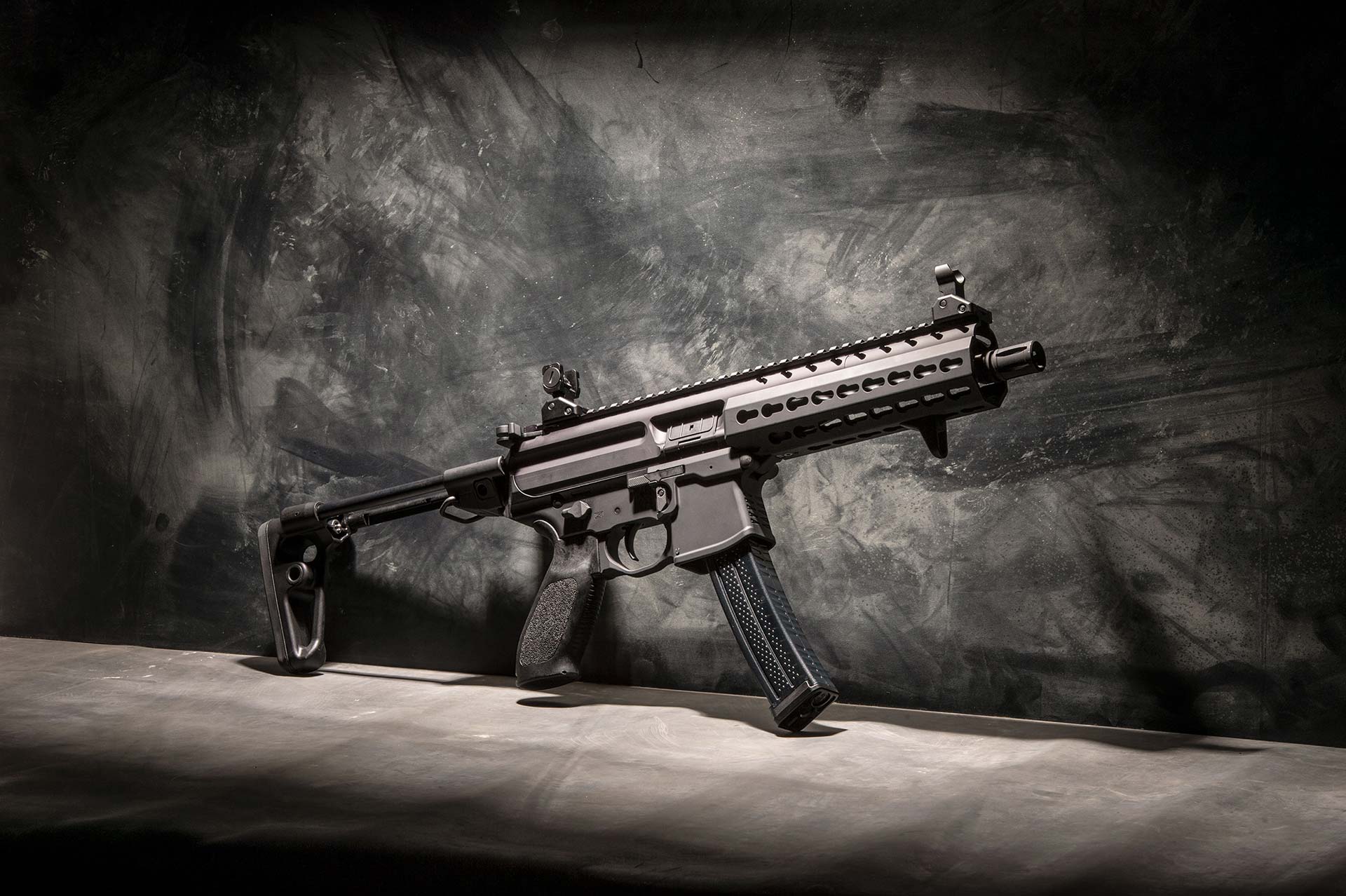
Short-barreled rifles (SBRs) and pistol versions of popular rifle platforms are interesting niche firearms that are designed to bridge the gap between your pistol and your rifle.


Traditional rifles provide excellent long-range accuracy and firepower, but are not as effective for use in close quarters. Conversely, pistols are not considered effective beyond 50 yards, and even that can be a stretch for most shooters. This middle ground is where SBRs and pistol variants shine. They are roughly the size of a sub-machine gun, giving the user greater magazine capacity and accuracy than their pistol, without the size and weight of a full-sized rifle.


What is legally considered a pistol, rifle or short-barreled rifle can be somewhat confusing to the uninitiated. In a nutshell, the standards are as follows:


  • A rifle has a total barrel length (including muzzle devices) of 16 inches or more, an overall length of 28 inches or more, and a stock.

  • A short-barreled rifle has a barrel length (including muzzle devices) of less than 16 inches, and a stock. SBRs are regulated by the National Firearms Act (NFA); they require a background check and tax stamp from the ATF to own. Not all states allow ownership of SBRs.

  • A pistol has a barrel length of less than 16 inches, and does not have a stock. If a stock is added to a pistol, it becomes a short-barreled rifle, and is subject to ATF regulations under the National Firearms Act. However, the use of a stabilizing brace is permitted on a pistol.

While an SBR is the ideal midpoint between a pistol and a rifle, not every state allows you to own one. Furthermore, the process of getting an SBR takes months to complete, and having to purchase a tax stamp for the weapon adds hundreds of dollars to the cost of ownership. Consequently, many people will buy a pistol version of a rifle as an alternative to an SBR. While it’s not quite the same thing, it’s close enough for most shooters.


The Self-Defense Weapon That Doesn’t Require A Firearms License!


When considering a SBR or pistol variant, barrel length and caliber are important deciding factors. Most AR platforms come chambered in .223 Remington or 5.56mm NATO, but there are some models available in pistol calibers such as 9mm, .40 S&W, or .45 ACP. Other platforms, including the Sig MPX, CZ Scorpion, and variants of the venerable H&K MP-5, are offered almost exclusively in 9mm.


You should select your weapon’s caliber and barrel length based on the maximum distance you may need to engage a threat. In terms of rifle calibers like .223 or 5.56mm, the shorter your barrel is, the less effective your bullet will be over great distances. Comparatively, pistol calibers are most effective inside of 50 yards. If you want a weapon that is effective out to 150 yards, a 5.56mm pistol with a 10.5-inch or greater barrel would be ideal, whereas a 9mm with a 7.5-inch barrel would be perfectly adequate for 50-yard engagements.


An SBR or pistol with stabilizing brace makes a great addition to any bug-out bag or 72-hour kit. They are ideal for maneuvering in confined spaces, such as the inside of a home or vehicle, and are easily stored in a bag or backpack when not in use. Many people keep a pistol variant as a trunk gun, just in case they find themselves in a hostile situation while on the road. When placed in a bag designed for concealed weapon transport, such as the 5.11 Select Carry Sling Pack or Blackhawk Diversion Carry Racquet Bag, a pistol variant or SBR can be stored discreetly while still being readily accessible when needed.


Before attempting to purchase a pistol variant or SBR, consult your local gun store to find out what is legal to own in your state. While pistol variants are technically pistols, open carry of this type of firearm is strongly discouraged, as it will likely cause concern among members of your community, result in unnecessary attention from local law enforcement, and identify you to criminals as a potential target. If you intend to carry this sort of firearm in a bag, you may need to obtain a concealed pistol license. When going on a road trip with this type of firearm, research gun laws in the states you will be crossing.


Have you ever owned a short-barreled rifle or pistol variant? What advice would you add? Share your tips in the section below:  

Friday, June 9, 2017

It May Be The Best Pistol You Can Buy For $300. And It’s Brand New.

Image source: YouTube screen capture / Mrgunsngear

Image source: YouTube screen capture / Mrgunsngear


Although popular gun culture in the U.S. doesn’t pay much attention, Turkey has long been a major producer of firearms, mostly for military use.


Historically, the country’s civilian handgun production included a 1911-based firearm made by a company once known as Canik 55. My sources say the brand is properly pronounced “JOHN-ick,” though I say it like the graduate of childhood phonics education that I am.


No matter how you say it, Canik eventually lost the “55” in their name, and has since claimed a stake in the big leagues of modern pistol production. The TP9 SA, their first striker-fired 9mm semiauto that I’m aware of in the U.S. market, became my choice of range gun four years ago. More than 6,000 rounds and with a few other Canik product experiences later, it remains my favorite handgun.


The TP9 SA emerged with apparent design influence from the Walther P99, but with an American magazine release. Canik wisely kept a low bore axis (hence low recoil) design, simple disassembly, and modular grip panels which are included with each gun. Other handy features include an accessory rail, lanyard hole in the grip, a highly visible three-dot sight system with a subtle vertical highlight on the rear sight, and a Serpa-style Kydex holster that can be used as a paddle or belt-borne. Color choices include black and desert tan. Magazines, now readily available for a reasonable price, hold an impressive 18 rounds in the same space a Glock mag holds 17.


The Self-Defense Weapon That Doesn’t Require A Firearms License!


There’s a bit of weirdness in the original TP9, in the form of a striker decocker located on the top of the slide just in front of the rear sight. Canik’s rationale was to allow for the striker to be released without pressing the trigger, as in preparation for cleaning. It’s an unnecessary, but innocuous, device that has never caused a problem, nor have I ever used it, in the years I’ve used the gun.


Other than fit for a variety of hands, which is becoming the norm for new polymer-lower pistols, is the quality of the TP9 trigger. Its moderate uptake, smooth break, and relatively short, crisp reset are as good as that on my HK VP9, which retails for twice the price. Though a great trigger is just part of what makes a satisfying choice of firearm, there’s no denying that this one is superb in its class.


The Downside


A downside does exist to the first couple years of production models of TP9 SA and its first successor, the TP9 SF. I have owned both. This issue is related to the trigger I just described as outstanding. After having cycled in excess of 5,000 rounds, the striker on my SA model was no longer functional. The trigger would activate, with no corresponding activity by the striker. The then-new (2015 model) SF worked well, but its trigger would reset in two subtle stages.


As I was the original owner and had registered the warranties on both pistols, Century Arms, the U.S. importer/distributor, agreed to fix them. I was given an ominous reminder upon sending them that repairs may take up to six weeks. In reality, both guns were returned in just nine days. Though the repairs were done quickly and well, Century’s customer service left much to be desired in terms of communication; they’re email-based only and managed to confuse the guns’ serial numbers during the repair process, finally creating an accusation that I’d confused the frames and slides. That’s hardly possible, especially when the SA has significant visible wear.


Despite the bizarre customer service experience, the guns were returned fully repaired and with the outstanding triggers I have by now come to love. It was after the repair experience that I learned that premature striker failures are common among TP9s made earlier than 2016. A gunsmith who knows the TP9 SA well showed me the seemingly minor difference in construction between the trigger on my repaired handgun and the original. Unfortunately, it was on a range setting where I couldn’t get a photo or take notes, and the names of the involved parts now escape memory. He bemoaned the fact that Century Arms doesn’t sell repair parts, nor are non-original owners or owners who’ve had their pistol for more than a year offered free repairs, though the premature wear is not the user’s doing.


But Still a Fan …


Despite the mixed experience with repairs, I remain a fan of the TP9 series. The SA is now offered in a V2 version that eliminates the decocker and has the improved trigger. The series has also added the SF, with aftermarket-friendly sights, a lower profile, and matte-finish magazines. The competition-grade SFx has a 20-round magazine, lightened slide, and large mag well. Rising in popularity this year are the two compact models, still with 15-round mags and slightly shorter, match grade barrels, called the TP9 SF Elite and SF Elite S.


Every one of these feature-rich pistols offer excellent handling at an astonishing price. Original SA models can still be purchased new for as low as $310. Other models range in price from $350-495, with the SFx being the highest.


Canik has had time to learn from early mistakes in the TP9 series. From my own experience and conversations with people in the industry, it seems those issues have been resolved. TP9 pistols deliver real value in terms of handling, trigger quality, customized features, and reliability. Based on my experience even with an older model, I believe there to be no better pistol available for the money.


Have you ever shot a Canik? What did you think? Share your thoughts in the section below:

Thursday, May 18, 2017

3 Pistol Problems That Could Ruin Your Range Time

3 Pistol Problems That Could Ruin Your Range Time

Image source: Eagle1Supply.com


As an instructor of many new shooters, I’ve come to expect certain equipment problems that crop up repeatedly. Here are some insights to help you not be that person whose enjoyment of shooting is diminished — or worse, injuries are sustained — as a result of gear issues on the range.


1. Inadequate pistol holsters.


Holsters, whether for open or concealed carry, come in two general types: rigid ones that stay open wide when the gun is drawn, and soft ones on which the opening collapses to some degree when empty.


There’s nothing wrong with a softer holster as a storage device for a gun that’s rarely used, or for uses in which you have lots of time to re-holster the gun after use.


Where problems arise is when people attempt to use non-rigid holsters for serious training, like rapid draws. Usually, they fail to position the gun in the same place every time, forcing the user to fumble around during the draw. If it’s a life-or-death situation, or a serious defensive shooting class you’re preparing for, soft holsters are a poor choice.


Fully collapsible holsters, like the soft one I wear in my waistband as a concealment aid, are great for comfort and everyday wear. For practice, I must remove the holster, safely re-holster the gun using two hands, and then put the whole business back in my waistband. There’s nothing fast about it. If I were in a situation where I had drawn my pistol for self-protection and the threat is still active, and I still had the gun out when police arrive on scene, I’m better off dropping my gun to the ground and trusting its drop-safe construction than fooling with a holster, gun in hand, and risking the appearance of being a threat to police.


The most frequent problems I see with soft-sided holsters, purses included, are safety issues. People often fail to realize they’re passing the muzzle over their own hand during the draw or re-holstering. On belt-mounted holsters that feature retention straps that cross over the backstrap and snap into place, risk of shooting oneself in the leg is presented by not making sure the holster opening is clear of the strap before inserting the gun.


The Self-Defense Weapon That Doesn’t Require A Firearms License!


There’s a time and place for soft-sided holsters, and a time to choose a rigid one. Although rigid holsters generally cost more, acceptable ones can be found for less than $45. That’s cheap prevention of a disabling injury.


2. Revolvers that aren’t maintained.


3 Pistol Problems That Could Ruin Your Range Time

Image source: Pixabay.com


Virtually every presentation geared toward new shooters touts revolvers as an easy, user-friendly choice. Yet they are by far the most problem-riddled firearms that show up in my classes. Why? Lack of maintenance. Most users pull out or borrow a revolver, or ammunition, that’s been in storage and neglected for years. Then it’s a surprise when the cylinder won’t rotate, or won’t open, or when bits of hot shrapnel are spewed back to the shooter’s face (one reason you MUST wear glasses when shooting).


Revolvers, like any firearm, require occasional maintenance. Lint and dust can build up around the extractor. Repeated firing can change the barrel-to-cylinder gap, or cause excessive side-to-side travel when the cylinder is closed, among other problems. Any of these can cause a revolver to malfunction. Attention to cleaning and lubrication, even when in storage, can go a long way to prevent frustrating or unsafe experiences with your revolver.


3. Handgun sights that aren’t up to snuff. 


Whether they’re an aftermarket add-on or factory-made, a loose, broken, or fallen-off sight can ruin your plans for practice. Regularly check your front and rear sights. Ensure they’re not cracked or broken, missing parts like the day-glow or tritium insert, or loose.


There are many advantages to high-visibility sights, especially for that all-important front sight. Many aftermarket front sights are elongated to accommodate light-collecting tubes or other features. Especially with those designs, but with all models, there will at some point be leverage exacted on those sights, usually during re-holstering. Knowing this may affect what sights you select to replace the stock ones.


Many times, it won’t be immediately obvious that there’s a problem with the sights. Often the first sign is when shot patterns on target begin to be uncharacteristically inaccurate and random, especially for experienced shooters. Choosing sights made of steel instead of plastic can increase the odds that your sights will remain solid over time. Installing sights according to manufacturer’s instructions, particularly those that screw in, is not to be overlooked. It’s tempting, but can be disastrous, to over-tighten screws, for example. Follow instructions, and be vigilant about inspecting sights at the beginning and end of your practice time.


It’s Not About the Money


Usually with firearm equipment, the least expensive choice of product delivers the most disappointing results. However, it’s almost never true that the priciest choice is superior, either. Choosing reputable guns and gear is important, but the biggest advantage is gained by paying attention to the condition and maintenance of equipment. The only investment needed is a little time.


What problems would you add to our list? Share them in the section below:

Monday, May 8, 2017

8 Dependable Pistols You Can Buy NEW For Under $300

8 Dependable Pistols You Can Buy NEW For Under $300

Image source: Bersa


A center-fire pistol is one item that every homesteader should consider owning.


Sure, shotguns and rifles may pack a greater punch, but they are larger and significantly heavier than a pistol. Unfortunately, pistols also can be fairly expensive, and not everyone has the disposable income to spend $600 on a new Glock, Sig Sauer or Springfield.


While buying a used gun is always an option, pricing and availability of used pistols are wildly inconsistent. Besides, you never truly know if a used gun will work until you take it to the range for the first time. Speaking from experience, I can tell you that there is nothing more disheartening than pulling the trigger on the used pistol you just bought and hearing “click” instead of “bang.”


If you buy a new gun, you can be much more certain that it will function properly out of the box. Sure, there will be a “break-in” period of several hundred rounds before it reaches peak performance, but that timeframe is essential for you to familiarize yourself with each nuance.


The Self-Defense Weapon That Doesn’t Require A Firearms License!


In this article, we will look at some pistols that you can purchase new-in-box for $300 or less. Note that this price does not factor in shipping, tax and transfer fees, so you’ll want to consider those items in your budget. You also will want to pick up a holster, spare magazines, and (of course) ammunition.


Semiautomatics:


Taurus 800 series


Taurus’ 800 series are full-sized, polymer-framed pistols chambered in 9mm, .40 S&W, and .45 ACP with 17-, 15- and 12-round capacities, respectively. They feature a “strike two” capability, which allows you to pull the trigger again to fire if the chambered round’s primer fails to ignite. These pistols have recently been discontinued by Taurus, but can still be purchased either online or at your local gun store.


1. Sarsilmaz CM9


The Turkish-made SAR CM9 is a full-sized, polymer-framed, double-action/single-action pistol chambered in 9mm. Based on the design of the CZ-75, it has an ambidextrous manual safety, adjustable sights, and a 17-round capacity, making it an excellent option to consider for your kit.


2. FMK 9C1 G2


This budget-friendly, striker-fired 9mm pistol is physically very similar in size and overall profile to a Glock 19; both feature a low-bore axis, similar grip angle, and trigger safeties. It also accepts Glock aftermarket sights, and has a 14-round magazine capacity. If you like the ergonomics of Glock pistols, you definitely should consider picking up an FMK 9C1 for your emergency preparedness kit.


3. Taurus 100 series


The 100-series by Taurus, also called the “Millennium Pro G2,” are compact polymer-framed pistols chambered in 9mm and .40 S&W. They feature moderate magazine capacity (12 rounds and 10 rounds, respectively), a manual safety, aggressive grip texturing, and adjustable sights.


4. KelTec P11


This compact, polymer-framed pistol might not have the polished look and feel of a more expensive gun, but it handles reasonably well, has a 10-round magazine capacity, low-profile 3-dot sights, and weighs less than a pound unloaded.


5. SCCY CPX-2


The SCCY CPX-2 is similar in overall profile to the KelTec P11 – they both feature a double-action trigger and a 10-round magazine capacity, although the CPX-2 is a bit more polished in terms of fit and finish, and comes with two magazines versus the P11’s single magazine. The CPX-1 is reported to have had some severe reliability issues, but CPX-2 owners have reported having few issues.


6. Bersa Thunder 380


If you want a compact pistol for your kit but dislike the heavier recoil of the 9mm round, check out the Bersa Thunder. This .380 ACP pistol is similar in style to a Walther PPK, featuring a single-stack 8-round magazine, a manual safety, and a double-action/single-action trigger system.


Revolvers


7. Rock Island Armory M200 and M206


If you prefer revolvers over automatics, Rock Island Armory has a pair of budget-friendly .38 Specials. Both have a 6-round capacity. The M200 has a larger grip, an exposed hammer, and a 4-inch barrel, while the M206 is a compact, hammerless model with a 2-inch barrel and smaller grip.


8. Taurus Model 85


The Model 85 by Taurus is a compact, 5-shot revolver; it has a 2-inch barrel, rubberized compact grip, and can accept +P ammunition. The Model 85 PFS can be found in the same price range; it features a polymer frame, a slightly larger grip, and a fiber-optic front sight.


What pistol would you add to our list? Share your tips in the section below:

Monday, April 10, 2017

3 Reasons To Carry A Full-Sized Pistol Instead Of A Compact One

3 Reasons To Carry A Full-Sized Pistol Instead Of A Compact One


Concealed carry is a big responsibility, but before you can begin “packing heat,” you first need to select the right pistol.


The decision, of course, can be intimidating. There are an abundance of different guns to choose from, ranging from tiny pocket pistols to big full-sized firearms.


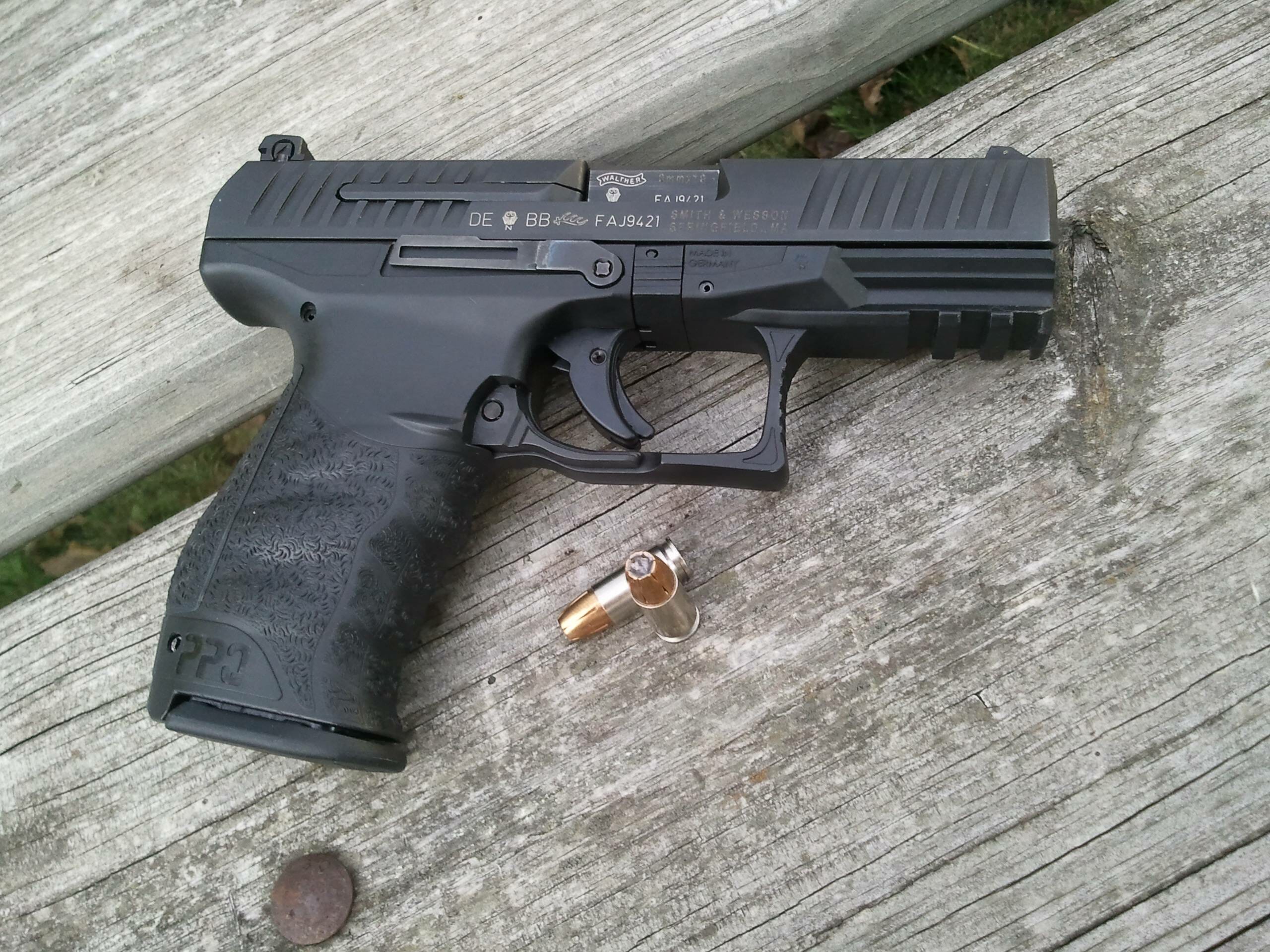
Most people will favor something small, such as a compact single-stack 9mm pistol or a pocket-sized .380. But I carry a full-sized pistol, specifically a Walther PPQ M2 in 9mm.


Why do I carry a full-sized pistol instead of something that would be smaller and easier to conceal?


Let’s examine that question.


1. Greater capacity.


The single biggest reason I favor conceal carrying a large handgun is the greater capacity in the magazine. The PPQ holds 15 or 17 rounds, depending on the magazine you use. Why is this important? The answer is that you may find yourself going up against multiple attackers, and in this scenario it’s always better to have more bullets than less. In contrast to full-sized 9mm handguns, the single-stack counterparts such as the Glock 43, S&W Shield, or Walther PPS hold 6, 7 or 8 rounds in the magazine.


2. Recoil control.


Another huge advantage to the full-size pistol is greater recoil control. Not only does the increased weight and size help dampen the recoil, but you will have improved control over the weapon, as well. It always will be easier to shoot a Glock 19 or 17 than it is a pocket pistol like a Ruger LCP or Kel-Tec P3-AT


 3. Versatility.


Finally, I also prefer a full-sized pistol for its overall versatility. While I can conceal carry the PPQ, I also can strap it to my hip for open carry for a sidearm when I venture out into the woods, such as for camping, hunting or motorcycle/ATV riding. In other words, I don’t have to buy one pistol for concealment and another for general purpose use. I can use one gun for both purposes.


The Self-Defense Weapon That Doesn’t Require A Firearms License!


Now, could you technically also carry a smaller pistol such as S&W Shield in this fashion? Sure, but most people would agree that a larger pistol is more preferable for general purpose outdoor use than a smaller one.


Next, let’s go over a couple of tips you can use to make conceal carrying a full-sized pistol as easy as possible.


Invest in a quality belt and holster


Quality holsters almost always cost more money, but they are well worth the investment. Factors to look for in a holster include rigidness, touch stitches or rivets, and the ability to hold the pistol tightly while also permitting a clean drawn. High-quality leather or Kydex works great for this; nylon or anything cheaply made will not suffice.


In addition, don’t forget to buy a high-quality belt. Avoid some dress belts, as they may not be able to support your holster, firearm, spare magazine(s), and whatever else you have for the whole day and could end up breaking. Instead, go with a thicker leather belt made specifically for supporting the increased weight of your gun and equipment.


Be conscientious about what you wear


A major goal of concealed carry, regardless of which firearm you are carrying, is to minimize or prevent printing. The best way to prevent printing of a full-sized pistol is to wear loosely fitted outer layers, such as a long and loose T-shirt, jacket or sweat shirt. In addition, the darker the color of the garment, the less the pistol will show. Remember: You don’t want to draw attention to yourself, so wear something that looks as casual as possible.


What do you prefer for concealed carry – a full-sized pistol or a compact one? Share your observations in the section below:

Monday, March 27, 2017

How To Build A Survival Gun Cache On A $500 Budget

How To Build A Survival Gun Cache On A $500 Budget

Image source: MossbergOwners.com


Survivalists who find themselves on serious budgets always will be faced with the problem of accumulating the gear they want within a price point that they can afford. Putting together a survival armory of guns is no exception.


Let’s say that you only have $500 to spend on guns. Many would say that with this budget, it’s A) impossible to build a complete armory that covers your bases, and, B) the guns that you do buy for your armory will be cheaply made or of low quality.


Both of these are absolute nonsense. While $500 is certainly not going to buy you as many guns as a $2,000 or $3,000 budget will, it’s still not impossible to gather the guns you need for this amount.


In fact, you will be able to acquire the three most important guns that you need for just $500.  The specific models that you can buy may not be the fanciest examples on the market, but they are still reliable and will work well enough.


Let’s outline what the three most important categories of guns to have are, and then list an example of a make and model of gun that you can have in that category.


12 GA SHOTGUN – MAVERICK 88 ($180)


It’s hard to say no to a 12-gauge shotgun being the first gun that you own. The 12-gauge round is highly versatile. You can use buckshot for home defense, birdshot for target shooting and bird/small game hunting, and slugs for hunting bigger game such as deer or wild boar.


You also should ideally make your shotgun be a pump-action model over a single shot or semi-automatic, the reason being that you have more capacity than a single and greater reliability with feeding different types of rounds over the semi.


We’re going to cap off the price of a budget shotgun at $180, and the best model that you can buy for this price is going to be the Maverick 88 shotgun, which is the budget model of the world-renowned and highly popular Mossberg 500. While the Maverick doesn’t come with a lot of the same features as the 500, it is still highly reliable and more than adequate for defensive or hunting use.


The Self-Defense And Hunting Weapon That Doesn’t Require A Firearms License!


Although the Maverick 88 usually costs around $200 for a new model, you can very easily find used ones for $180 or even a little less on online auction sites such as Gunbroker.com.


.22 RIFLE – MOSSBERG 702 PLINKSTER ($100)


No gun collection of personal battery of arms is complete without a .22 rifle, even if you only have $500 in total to spend. .22 ammunition is very small, meaning you can store and carry lots of it on you. It’s also a perfect round for small game hunting, plinking, general homestead use, and for introducing new people to the sport of shooting. If necessary, it could be used for self-defense, as well.


Normally, the three .22 rifles that I would recommend first would be the Ruger 10/22, Marlin Model 60, or Smith & Wesson M&P 15-22. Unfortunately, none of these options is going to work, since I’m capping off the price for a .22 rifle at $100.


At this price point, your best option will be the Mossberg 702 Plinkster, which can be found used for even $80 or $90 if you look hard enough online. The Mossberg 702 is available in a wide variety of configurations and comes standard with a 10-round magazine, although higher capacity 25-round magazines also are available.


9MM PISTOL – TAURUS PT111 G2 ($220)


We’re now left with $220 to spend on our final firearm, which absolutely must be a pistol. The pistol is the gun you will have strapped to your side at all times during a disaster scenario. You want it to be easily concealed. I also recommend in this case that your pistol be a 9mm, simply because it’s the cheapest and most plentiful pistol caliber there is.


The specific pistol that I am going to recommend at this price point is going to be a pistol I wrote about recently, the Taurus PT111 G2. While it normally sells for around $250 new at most sporting goods stores, a quick perusal on Gunbroker shows that it can be purchased new or used in good condition for the $200-$220 range.


The PT111 G2 is a compact firearm, which makes concealment easy, but is also large enough so that you can get a full grip on the weapon. It holds 12 rounds in the magazine plus an additional round in the chamber, which is plenty of firepower for defending yourself against multiple attackers. Reviews of the PT111 G2 have been mostly very positive, and owners applaud its reliability, ergonomics and overall value. And besides, it looks much better than a Hi-Point.


Conclusion


So, there you have it. For $500, give or take a few dollars, you should easily be able to acquire a solid survival armory. And they cover your bases: target shooting, home defense/personal protection, and small-game or big-game hunting.


What do you think? What would be in your $500 survival gun armory? Share your thoughts in the section below:


If You Run Out Of Ammo, What Would You Do? Learn How To Make Your Own! Read More Here.

Saturday, March 25, 2017

The New, Super-Low-Maintenance Ruger 9mm That Conceals Easily

The Super-Low-Maintenance Ruger 9mm That Conceals Easily

Image source: Ruger.com


Ruger caught up with the times in 2015 when the company released a full-size polymer frame, striker-fired, easy-maintenance 9mm. In late 2016, the compact version of the Ruger American was unveiled, and it does everything its big brother can do — while doubling as a concealable handgun.


Last fall, I got to handle and fire the new Ruger American Compact 9mm at the Blue August gun writers’ conference. Factory reps explained the method behind Ruger’s seeming madness of delaying their foray into the striker-fired pistol market: customers who use modern pistols now know exactly what they want, and Ruger sought to provide it on the first try.


The Self-Defense And Hunting Weapon That Doesn’t Require A Firearms License!


Ruger American pistols incorporate common requests the company collected in its extensive pre-design market research. Here are ways in which the company says design is wrapped around customer demand:


  • Modular grip system. Three choices of grip panel that wrap around the rear and sides come with every gun. Grip can thus be customized for different hand sizes.

  • Quality trigger with clear reset. The trigger features a safety lever, a common feature on many mass-market, striker-fired handguns. It has moderate travel, about 4.5 pounds of pull, and a clear reset that’s comparable to triggers in the Springfield XD series. I think it’s a great trigger for both defensive use and range practice.

  • A prominent magazine release. The mag release is easy to feel and operate. Operation is ambidextrous with no changes required. This is my only criticism of the firearm. Too many people have reported that an exposed mag release caused the magazine to unseat as a result of pressure from a seatbelt or an attacker.

  • A no-cost optional slide safety. The Pro model of the Ruger American Compact Pistol has no safety lever other than the passively operated one on the trigger. The standard model has a sizeable safety lever on both sides. People feel strongly one way or another about having a safety. With the Ruger American, folks on both sides of that argument can have it their way.

  • Easy racking. The recoil spring is tensioned to ensure both dependable operation and light racking action. Although this is mostly an appeal to folks who haven’t learned good technique, it is a common complaint among novice gun owners, and Ruger is to be commended for aiming to encourage entry-level shooters.

  • Recoil reduction. Slide and frame design increases the time from striker hit to return of the slide. Though there is no perceivable delay while shooting, this reduces muzzle rise, ultimately making fast follow-up shots easier.

  • Accessory-friendly. A Picatinny rail allows installation of a light or light/laser combo.

  • +P-rated. Use +P ammo if you want, and the Ruger American Compact will handle it.

  • Easy takedown. The gun breaks down quickly with no trigger activation, and is easy to clean and reassemble.

  • Tough. Ruger reps swear the company didn’t design the American platform with the intent of competing for the coveted U.S. Army contract. Nevertheless, the gun meets or exceed U.S. Army modular handgun standards.

  • User-friendly sights. Ruger was wise to choose Novak’s Lo-mount sights. This snag-resistant, highly visible, durable sight set adds real value. Ruger’s custom shop allows buyers to upgrade to tritium sights if they want.

  • Pinky rests. The shorter magazine has a pinky rest, which some shooters feel is necessary for comfortable firing.

  • Big capacity. The Compact’s mag holds 12 rounds. It accommodates the standard Ruger American 17-round magazine. One of each is included with a new 9mm pistol.

  • Caliber choices. The popular, affordable 9mm was the first to roll out in 2016. It’s also available in 45 ACP.

Here are the specs:


Barrel length: 3.25 inches.


Slide: 1.05 inches of stainless steel with black Nitride finish.


Overall length: 6.65 inches.


Height: 4.48 inches.


Weight, unloaded: 28.7 ounces.


MSRP: $579. Real prices are in the mid-$400s.


The Ruger American Compact is a superb choice for anyone seeking low-maintenance, dependable mileage from their carry gun. It fits just about anyone and is easy to operate, but has none of the oddball features some other “easy” guns have. Those features often punish the muscle memory of experienced shooters. It’s great for families who share a pistol for home defense. For the money, it’s as good or better than similar choices on the market.


What do you think about the Ruger American Compact? Share your thoughts in the section below:


If You Run Out Of Ammo, What Would You Do? Learn How To Make Your Own! Read More Here.