Showing posts with label handgun. Show all posts

Monday, January 22, 2018

5 Guns Not To Be Without During Trying Times

5 Guns Not To Be Without During Trying Times


Let’s imagine for a moment that the world of tax-funded public safety and well-stocked grocery stores are a thing of the past and you, perhaps with a handful of family and friends, must fend for yourself in a tough and hostile environment. Among the considerations for survival are, of course, firearms. Which would you choose?


The most critical consideration for firearms in this scenario would be reliability. Does it go “bang” with every trigger press? Does it cycle the widest possible spectrum of ammo available in that caliber? Is it simple to maintain? What ammunition is likely to be found in the area? It’s a given that one of each major civilian classification of firearms will be needed—a handgun, a rifle, and a shotgun. Our task here is to pick an ideal group of five.


THE TOP THREE


Handgun


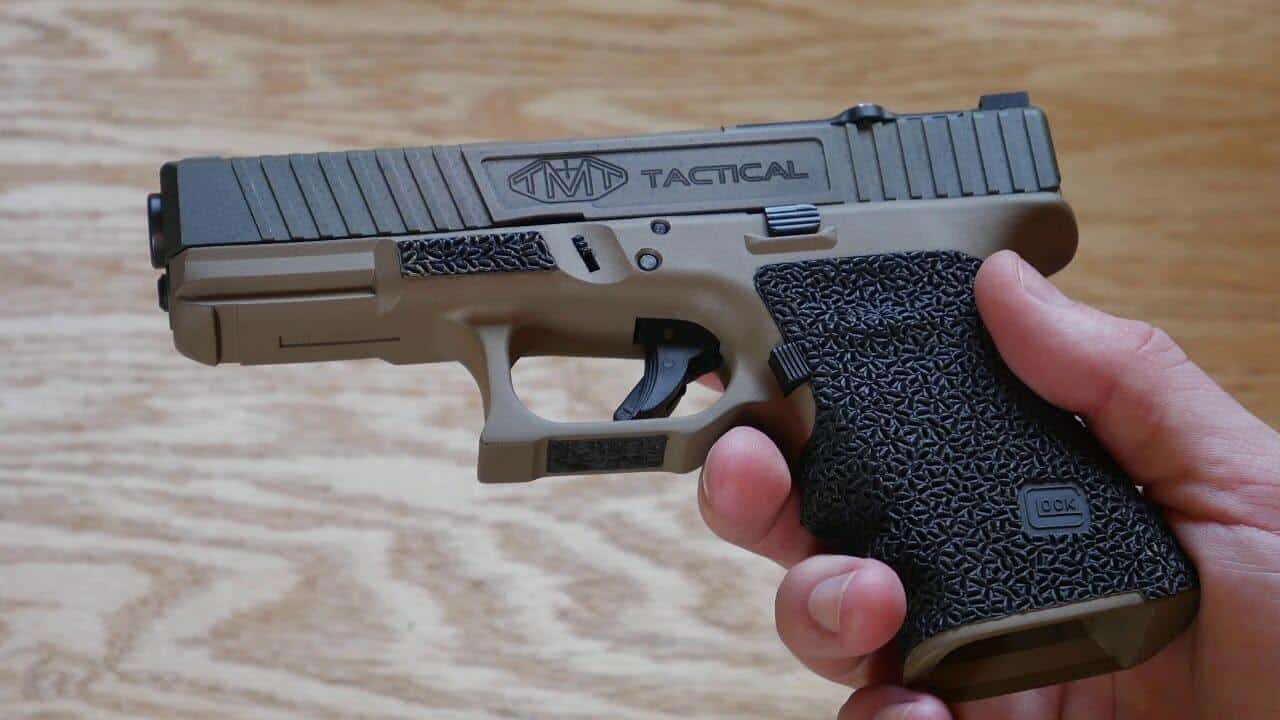
The Glock 17/19 has a long track record of reliability and the other criteria here. While Glock offers a wide variety of calibers and models, the 9mm is a commonly available cartridge worldwide, and less pricey. Like the AR-15, parts are currently ubiquitous, and many are interchangeable between models/calibers.


As a true admirer of the 1911, it’s hard to think of turning my back on that old standby. Indeed, it’s more accurate. But it falls behind, quickly, where ease-of-maintenance and magazine capacity are concerned. Newer models are, in my experience, less reliable than Colt originals


Concealability, which may or may not be a consideration in this scenario, isn’t easy with the G17 but the Glock 19 can bridge this gap effectively.


Carbine


A carbine, with its shorter barrel, offers ease of maneuverability as well as the capability of reaching out to larger game, within limited range, to provide for food. Larger capacity magazines and quick reloading capability may be necessary to defend against attackers of the two-legged variety.


My choice for a long-term carbine partner is the AR-15. The platform is proven as reliable, and most owners have accumulated a supply of spare parts. Ammunition and magazines as of this writing are readily available, but that can change on a moment’s notice, of course!


The .223/.556 cartridge is admittedly not the most ideal for down-range energy. Thanks to the other virtues named here, though, it garners top billing on the list. I have personally taken deer-sized game with the .223/.556.


Shotgun


This was the easiest choice. A shotgun in general has nearly endless applications based on the variety of loads available, especially if one has reloading equipment. The Remington 870 pump action, chambered in 12-gauge, has endured as one of the most reliable shotguns in history. It’s inexpensive, made for utility, and rugged. Semi-auto shotguns abound on the market today, but none have the track record of reliability and simplicity as does the 870. The gauge selection is due to the wide range of loads available in 12-gauge.


The Mossberg 500 was a close runner-up, but the 870 edged it out thanks to personal experience both in the field and in law enforcement. It’s capable of earning its keep by obtaining large and small game and is an effective defense weapon.


Traditional hunting models are probably the most common 870s in civilian homes. The police model, with its shorter 18-inch barrel and larger magazine capacity, offers more practicality. Either one will serve the owner well, with greater reliability than most semi-auto shotguns. I have taken everything from birds to varmints to big game with a 12-gauge 870. Not to mention the shotgun is an effective deterrent against two legged pests.


TWO MORE


Now imagine for a moment that we have the luxury of two other guns at our disposal. To me, the ideal ones are—


A Bolt-Action Rifle


As with the AR-15, the brand and model are less important as there are many choices with legendary track records. It’s comforting to know that, with the assistance of an optic, the little arsenal includes something that can be effective at long distances for most game and any precision shooting needs. The ideal caliber could be the .270, .308 or 30-06, all of which are more or less commonly available. All can effectively take any game in North America and, of course, provide greater long-range precision capabilities.


Rate of fire and weight are potential drawbacks with this firearm. In comparison to others here, this platform requires greater knowledge and time investment on the part of the operator to accomplish the long-range feats it’s capable of.


A .22 Rimfire


There’ll be plenty of nay-sayers for this cartridge as a final choice, but the .22 has been a ballistic tool of choice for hunters, assassins, farmers and housewives for over a century. It’s eliminated countless barnyard varmints and more good and bad guys than I care to count. If we as consumers discount the memory of the days when .22 was three cents per round, the cost and availability factors aren’t as dire as it once was just a mere year ago.


Notice there’s no make and model named in the subheading—that’s a reflection of how difficult it is to choose among the many candidates. In the end, utility is king. Some of my favorites are the Ruger 10-22 Takedown, Ruger 22 Bearcat and S&W Model 17 Revolvers or the KelTec PMR and CMR 30 in 22 Magnum (if you have a good supply of 22 mag ammo). Choices in this category are endless and should boil down to what you have experience and confidence in. Another consideration: 500 rounds of .22 is portable in comparison to the same amount in other calibers.


Many will likely argue that a .22 rifle is preferable to a .22 handgun. And I’d not argue back much, especially when discussing a firearm for a beginner to use effectively. In a world where the return on investment of both resources and calories may be critical, perhaps a .22 should be at the top of this list.


Bottom line: I want a “survival” gun that is reliable, simple to operate (including maintenance issues), in a caliber that ammunition can easily been obtained and that I have confidence and ability with. The picks listed here are one person’s opinion … but the choices are endless.


What would you put on your list? Share your thoughts in the section below:

Wednesday, October 4, 2017

"The 'Ghost Gun' Threat Is Real & Growing" - CA Senator Warns Weapon Can Be 3D-Printed In An Hour

Via StockBoardAsset.com,


The story starts with Cody Wilson, an American crypto-anarchist, free market anarchist, and gun-right activist. He is the founder of Defense Distributed, a non-profit organization that develops and publishes open source gun designs.


The about section on Defense Distributed describes the company as an ‘anti-monopolist digital publishing’. 


Back in 2013, Defense Distributed gained international attention after it published the world’s first fully 3D-printed gun called the Liberator. Almost immediately, the Statement Department under the Obama administration demanded Mr. Wilson takedown the 3D-printable gun files for possible export control violations. In the first two days, downloads for the 3D-printable gun exceeded 100,000.


Wilson argued that he’s legally protected, and says Defense Distributed “is excluded from the ITAR regulations under an exemption for non-profit public domain releases of technical files designed to create a safe harbor for research and other public interest activities”.


Mr. Wilson eventually had to remove the Liberator files from the internet, due to State Department pressure.


Jumping to 2014, Mr. Wilson received the title as ‘Ghost Gunner’ and was described as a gun manufacture by some for creating AR-15 frames without serial numbers. Defense Distributed offered the internet a package including a CNC milling machine that can turn an aluminum block into an AR-15 lower receiver, the components regulated  by state and federal authorities. The machine called ‘Ghost Gunner 2’ (3D-printer) and 80% AR-15 lower receivers are still being sold on Defense Distributed’s website.


Under the Gun Control Act of 1968, it is illegal for an unlicensed person to make a firearm for sale or distribution. But in Defense Distributed case producing blueprints or just manufacturing 80% of the component is perfectly legal.  


In 2015, Fedex and UPS refused to ship a digital CNC milling machine out of Defense Disturbed. Fedex spokesman told WIRED, “this device is capable of manufacturing firearms, and potentially by private individuals. We are uncertain at this time whether this device is a regulated commodity by local, state or federal governments. As such, to ensure we comply with the applicable law and regulations”.


The Spectre of homemade firearms prompted California in 2016 to ban ‘Ghost Guns’ but there is no law on the federal level prohibiting anyone from downloading gun blueprints.


On Sunday, Mr. Wilson’s group announced a new software for his computer-controlled milling machine to carve out the aluminum frame of an M1911 handgun. According to WIRED, “the latest model of the milling machine can finish a handgun’s frame in about an hour, with minimal human interaction”.


In a pistol, the frame is the only regulated part and anything else can be purchased online without questions. Defense Distributed has decentralized the entire process of assembling a workable weapon without identification, background check, and serial tracking number. Let’s assume the State Department has read this article and is now in a full blown panic.


Anyone in America now has the ability to own a handgun thanks to Defense Distributed. Highlighted above, California is the only state that has outlawed ‘Ghost Guns’ and it shows how the federal government and even state governments are failing to keep up with technological advances.


Per WIRED,


“The ghost gun threat is real and growing,” says Kevin De Leon, the California state senator who introduced the statewide ghost gun ban.


“Are they being made by gang members? Are they being manufactured to sell to individuals who are prohibited from possessing firearms? Technologies that make it possible for the general public to manufacture guns raise serious questions.”


Mr. Wilson’s passion to let every American build an industrial quality gun at home is nothing new. Gun part vendors have been selling 80 precent frames and unfinished parts for quite some time.


But its the method of creation through 3D-printers, which has the United States government in a panic.


Gun control talk will once again become a national subject with Class 3 weapons in focus following today’s tragic mass shooting in Las Vegas. Reports of 58 deaths and 515 injured marks the worst mass shooting in US history.

Monday, September 11, 2017

What Is The Best Caliber For Self-Defense?

What Is The Best Caliber For Self-Defense?

Image source: Pixabay.com


Few topics can light up a range-side or gun store discussion like handgun caliber. Most every long-time handgun owner feels strongly about one caliber or another being the best. When speaking of defensive use, the term “stopping power” almost always enters the discussion. Is there a best caliber for self-protection? This article looks at both professional opinion and conventional thinking to answer that question.


For purposes of framing the discussion, we’re talking primarily about the differences between two common choices for a defensive handgun: 9mm Luger and 45, whether it be the ACP, Long Colt, or any other sub-category of 45.


What Is the Goal of Defensive Shooting?


To defeat a common myth from the start, defensive shooting does not have killing as its purpose. The sole purpose of a lawful self-defense shooting is to stop the attack. Despite what movies and TV would lead us to believe, only one in six people who sustain gunshot wounds die. Also counter to typical media portrayals, a single round fired from any caliber handgun has less than a 25 percent likelihood of stopping an attack. Odds go up substantially—to about 63 percent—with two shots.


Bullet Selection


It’s important to distinguish defensive ammo—including hollow point, jacketed hollow point, and newer variants (HP)—from target ammo, typically with full metal jacket (FMJ) bullets. In any caliber, FMJ is made to penetrate and cruise on in as straight a line as its speed and mass will permit. HP is made to expand in size, and sometimes fragment into smaller projectiles, after a certain distance after impact with solid tissue. The wider the expansion, the more dramatic the fragmentation, the greater the would channel and the more “stopping power” might be conferred upon the round, under ideal conditions. By ideal conditions, I’m referring to a center mass shot on a typical 12-14-inch thick critter, whether two-legged or four. Miss slightly, and that round may sail through muscle and exit the other side, perhaps not even slowing down the subject.


Performance of the smaller calibers like 9mm and .380 ACP HP has come a long way in recent years. Loads once considered insufficient for penetration of clothing and fat are better dialed-in for personal defense. Lots of shooters like 45 for the confidence-producing big hole it makes. But in some cases, this slower-moving projectile (typically around 850 feet per second as compared to in excess of 1,000 fps or more from 9mm), can produce less penetration and fragmentation.


You Don’t Need A Firearms License For This Weapon!


It could be said that HP is a responsible selection of ammunition for the self-defense handgun as compared to FMJ. It’s been made to expend its energy on the first thing it meets, and is less likely to sustain velocity and cause damage beyond the intended target (need I say again under ideal conditions, which only exist in the laboratory?).


A good strategy is to check out your ammo manufacturer’s website where ballistic data can often be found, or even YouTube videos where some producers have gone to the trouble to re-create FBI protocol gel block tests.


What Matters More Than Caliber?


We’ve established that a handgun is a relatively weak weapon against a mammal like the typical human being. Permanently etched in my own memory are two grown men whom I met with in the emergency department in connection with my work, both of whom had been shot in the skull—one with 40 S&W and one with 9mm. Both had wounds that started on the side of the head and, rather than penetrating, the bullet had followed the curve of the skull until it got around the side, behind the ear, and simply went on its way. Both individuals had nothing more than minor scalp wounds. A look at war photos online will show an astonishing (but gruesome) selection of photos of soldiers who survived shots to the lower half of the face.


Anyone who’s studied defensive shooting much knows that it is only a round through the brainstem or upper spinal cord that guarantees an instant stop. In all other cases, including an eventually round right through the heart, the continuation of the attack depends on the determination of the attacker.


Shot placement, followed by a sufficient number of rounds to deflate the assailant’s determination or physical capability, is far more important than caliber.


Decide What’s Right for You


Knowing the above, I prefer to carry something that offers more rounds in the gun, as well as an extra magazine, discreetly riding in a pocket. For me, navigating daily life, that means 380 or 9mm. While I admit there is greater “oomph” in the 40 and 45 loads, the former of which I carried for years and still do on occasion, it is my present and usual choice to carry something that holds more ammunition and is instantly accessible in my waistband.


When you’ve learned how your selected rounds perform in terms of expansion, penetration, and so on, compare that to your likely defense scenario. For example, if you’re being stalked by a 350-pound behemoth or live in a region where people wear heavy layers of clothing most of the year, the .380 may not have sufficient penetration to be effective. Comfort will play a factor, as well. If you can fit your favorite 45 into a concealment rig, have at it. Many people can’t make that work. Choose something you’re confident about in terms of performance, as well as something that is wearable. The coolest or most beloved handgun, left behind because it’s too big, can’t help you defend your life.


What is your favorite caliber for self-defense? Share your advice in the section below:

Thursday, August 17, 2017

4 Shooting Drills Every Carbine Owner Should Perfect

4 Shooting Drills Every Carbine Owner Should Perfect

Combat Focus Carbine course in Gypsum, Colo. Right: Rob Pincus. Photo by: Terry Nelson


Most serious students of home defense have a handgun or two prepped and ready around the house. I know many that also have a good shotgun at the ready. But fewer folks I know and train with seem to consider the carbine for home and vehicle defense. Aside from some legal issues while carrying in your car (know your state and local laws), I routinely carry a carbine in my vehicle and have the same placed strategically in my home.


Recently I had the opportunity to attend a Combat Focus Carbine course in Gypsum, Colo. This class is part of a series of courses sponsored by Personal Defense Network (PDN) and Rob Pincus, executive director of PDN. Although there are numerous instructors working nationwide for PDN, Pincus was the on-site instructor for this class.


Aside from a discussion of safety and responsibility concerning firearms inherent to any good firearms course, the emphasis of Combat Focus Carbine was the defensive use of your carbine (both AR and AK platforms were present in this class) in and around your home and vehicle. If you have watched training videos or read any of Pincus’s work, then you know that his approach is focusing on the threat when firing from about 10 yards and closer, rather than a focus on the front sight. Hence his “Combat Focus” trademark. This carbine course, as the name suggests, was no exception.


Pincus led the class through a series of drills and shooting techniques designed to enhance the shooters’ manipulations of the carbine. I wholeheartedly agree with that priority. Four baseline drills from the class are listed below.


1. Extend/touch/press


This drill started out the day at the five-yard line. The distance is realistic to defensive actions taken within your home or around your vehicle. While in a good stance, (squarely facing the target with feet placed shoulder-width apart) and the toe of buttstock in the pocket of the shooting shoulder, the student would extend or bring the carbine into the cheek weld while beginning trigger touch, and then press the trigger as the muzzle was on the threat/target. All the while the focus is on high-center mass of the target, looking into the desired strike zone.


This technique is very fast and more than combat accurate at the five to 10-yard line. This drill was repeated several times while increasing rounds fired from two up to six.


After several reps of extend-touch-press, Pincus added lateral movement while moving into the shooting position … a very realistic tactic.


2. Flow drill


After having discussed and demonstrated a variety of shooting positions, including standing, kneeling and sitting, Pincus had students commence with what he calls the Flow Drill. At about 12 to 15 yards, students would flow through all three of these shooting positions (as physical abilities allowed) while engaging the target with multiple shots. The realization that as distance increases, one must start using the iron or red-dot sights, became obvious. This exercise forced students to maintain good muzzle awareness and finger discipline while moving between positions and attempting to make good combat accurate shots. It also made the point to maintain good physical fitness within your own capabilities.


Also introduced were the squat or “rice paddy prone” position and the supine (flat of back). Both are excellent positions if the shooter’s body and joints will allow.


3. Front, middle and back  


This drill also required some physical movement and exertion. Shooters would start on about the 30-yard line. On the command “move,” shooters would run to a certain yard line, say the 10-yard mark, and fire multiple rounds into target center mass. A command would then be given to move forward or back to another called yard line and turn to fire multiple shots again. This drill got heart rates up and created a bit of stress with movement. In my opinion, this provides a real-world application because few confrontations are static. Safety protocols were, of course, in place so that no shots were fired until all shooters were on the same yard line and facing downrange.


4. Target ID


The target used for this course was the PDN-trademarked “Balance of Speed and Precision.” This target is a silhouette and provides a center mass zone that is slightly blurred, along with a head zone, plus eight-inch “A” and “B” squares at the bottom. In addition, there are numbered and colored circles on the outer margin of the target.


The instructor called out different colors or numbers, or puzzles with numeric answers. Shooters would move laterally, find the correct colors and or numbers, then fire at those specific targets. It’s a good exercise that incorporates movement, multiple threats and target ID. This drill was conducted from around the five- to seven-yard line.


Many other shooting skills were addressed during this course including transition to and shooting from support-side shoulder, use of cover and cornering, assessing surroundings after shots fired, shooting through small ports or openings, and shooting from supine both left and right positions around and under a vehicle. Total rounds fired for the day approached the 400 mark.


Overall, the course was very thorough and well-conceived. You could categorize the course as a home and close quarter’s defense with your “fighting carbine.”


If you’re interested in upping your skill set with a carbine, check out the Personal Defense Network online for a list of training and course locations nationwide.


What carbine advice would you add? Share your self-defense tips in the section below: