Showing posts with label rice. Show all posts

Tuesday, October 24, 2017

The "Safest Home In America" Is Back On The Market

A simmering nuclear crisis, series of devastating natural disasters and a resurgence of drug-fueled crime are inspiring more Americans than ever before to buy up “doomsday prepper” gear – everything from gas masks to fallout shelters – a trend that we’ve observed time and time again.


While most Americans will need to settle for a small backyard bunker stocked with canned goods and water filters because of cost constraints, anybody looking for something slightly more stylish need look no further: A home in the Atlanta suburbs that has been described by architects as “the safest home in America” just hit the market – and it can be yours for the bargain price of $15 million.


The home, known as Rice House, is located inside a gated community in Alpharetta, Georgia, about 30 minutes northeast of central Atlanta.


The cream-colored, colonnaded facade of the Rice House, situated on 3.5 acres just outside Atlanta, hides far more than a private theater, bowling alley, and infinity swimming pool.


The master and guest bedrooms have ballistic doors that can withstand fire from an AK-47 assault rifle. The car vault is large enough to hold 30 vehicles and has an entrance designed to be concealed by a waterfall. Secret doors lead to a 15,000-square-foot bunker  in which an embattled owner could conceivably hole up for years, with off-grid power and water drawn from three artesian wells drilled 1,000 feet into the ground. The house had its own security architect who spent two decades designing secure buildings for the DOJ.


Listing materials boast that it is “one of, if not the, safest home in America.”


“This is a home where you could put a $20 million painting on the wall and sleep comfortably at night,” said listing broker Paul Wegener, of Atlanta Fine Homes Sotheby’s International Realty. “The same goes for your family.”


The unnamed entrepreneur who owns Rice House spent six years and some $30 million to build the 36,000-square-foot fortress – a project that Bloomberg claims was “mostly for kicks.”


“He said to me, ‘If anyone wants to get me, they can find me at Chick-fil-A,’” the real-estate agent tasked with selling the home said. “It was something of an intellectual exercise to create an impenetrable home, a personal Batcave that the owner could peel his Bugatti Veyron out of.”


The home was just relisted for $14.7 million, a drop from the original $17.5 million. The estate also needs to be finished, a project that cost an additional $3 million to $5 million. The owner planned the Rice House as a family legacy, but decided to sell when he learned his son didn’t want to live there. The main house has been completely built, with eight bedrooms, 14 bathrooms, three kitchens, a private museum, a wine cellar, an indoor shooting range, and commercial-grade elevators.


“The mandate was the best of everything,” Wegener said. To construct the foundation, workers dug down to bedrock and then bored down into it. The walls are made from extra-strength concrete reinforced with rebar. The car vault originally was designed with 18 columns, but the owner pushed back until engineers figured out a way to use custom-made bridge beams, so no pillars would be needed to support the ceiling. The Rice House is highly energy-efficient, with geothermal heating and cooling and a solar energy system.


Though it’s not included in the listing—to maintain that hush-hush feel—the Rice House is in Country Club of the South, a location popular among athletes and other famous individuals. Retired Atlanta Braves pitcher Tom Glavine, Usher, Whitney Houston, and NBA Hall of Famer Allen Iverson have all lived there. The neighborhood has 19 tennis courts, an 18-hole, golf course designed by Jack Nicklaus, basketball courts, a concert venue—and, of course, 24-hour security.




Friday, August 18, 2017

American Homesteaders Are Growing Rice. Here’s How They Do It.

American Homesteaders Are Growing Rice. Here’s How They Do It.

Image source: Pixabay.com


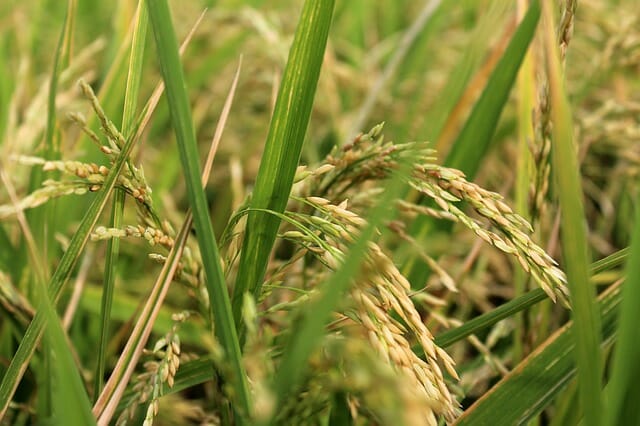
In the western part of the world when people consider growing their own staple grains, they generally think of wheat or oats. Rice is predominantly grown in eastern countries, but that’s largely due to historical preference. Rice can be easily grown on a small homestead, even in cold climates.


While rice is typically thought of as a tropical plant, there are actually two sub-species, one of which is hardy in cold climates. Long-grain rice varieties such as jasmine or basmati can only be grown in warm southern regions. Some varieties of short-grain rice, however, are cold tolerant and can be grown in short-season cold areas, all the way up to zone 4. It’s currently grown in cold climates such as northern Japan, Romania and the Ukraine.


Cold-climate rice strains thrive where average summer temperatures are as low as 68 degrees, though it’s ideal is 68 to 86 degrees. Still, farmers in areas where the average summer temperatures only hits the low 60s are having some success and harvesting adequate crops, even in the northernmost parts of New England.


This New All-Natural Fertilizer Doubles Garden Production!


Farmers in the Northeastern United States are beginning to cultivate rice on a small scale, and selecting for cold-tolerant strains.  At this point, the primary selection criteria are quick maturity and disease resistance. As more strains become available, farmers will eventually have the option to select for high yields and better taste.


To aid the plants’ survival, a few cold-climate adaptations have been developed, and cold-climate rice producers must take extra steps to ensure a harvest.  Rice is soaked to stimulate germination before being started in greenhouse flats well before the last frost date. At four weeks before the last frost, the rice is transplanted outside into paddies. Water levels are kept high during times of increased frost risk to provide extra protection for the plants.


While rice is grown semi-submerged in patties, it cannot be successfully grown in wetlands. Wetlands are protected areas in most places, and not available for cultivation. Beyond that, the water level needs to be carefully controlled, which is generally not an option in a wetland. The ideal soil is poorly drained, but not an actual wetland, like a soil that has a clay hardpan under layer that prevents full drainage. From there, runoff is controlled and a series of ponds are created to help manage water levels.


American Homesteaders Are Growing Rice. Here’s How They Do It.

Image source: Pixabay.com


Before the water gets to the paddy, it flows through a series of warming ponds that are shallow, dark bottomed and exposed to the sun. This pre-heated water prevents cold snow melt and rain runoff from cooling the growing ponds and helps accelerate the growth of the plants while at the same time buffering them for cold nighttime temperatures.


Quarter-Acre Patch Equals 1,000 Pounds Of Rice


Rice grown in marginal poorly drained agricultural soils that currently grow second-class hay can yield as much as two tons per acre. A small homestead quarter-acre patch could yield as much as 1,000 pounds of rice in a good year, or enough rice to supply a family of four with about half of their calories in a year.


In many parts of the world, rice is still tended and harvested by hand, making it ideal for a small homestead without specialized equipment. For harvest, the rice is cut and bundled by hand, and then threshed against logs to dislodge the grains.


Rice paddies also can be beneficial in other ways, by preventing flooding and managing runoff. With a series of ponds, water is held on the land, which prevents erosion, rather than quickly running off and damaging the topsoil.


Ducks are often incorporated into rice paddies to increase yields and add a harvest of meat and eggs from the same land. Ducks cannot consume rice or rice plants because they have too much silica for the ducks to digest. Ducks can, however, consume insects that infest the rice and weeds that compete with it in the paddy. Their droppings help to enrich the paddy and add fertility.


Most duck species are capable of feeding themselves and raising young independently in this environment, even without supplemental feed. By adding ducks to the operation, most farmers reduce their workload, increase their rice yields and add meat and eggs to their table. Ducks tend to fare better than chickens in cold climates, which is an added bonus.


If you want to grow rice on your land, try starting with a series of plants in 5-gallon buckets. This will allow you to monitor the progress of your rice and test viability before investing in creating a series of ponds and patties.


Have you ever grown rice? What advice would you add? Share it in the section below:

Friday, May 12, 2017

Condoleeza Rice: Bush Administration Lied, Iraq Invasion Was Never About Spreading Democracy


(RT) — The primary US objective during the 2003 invasion of Iraq was not bringing democracy to the Middle Eastern country, but to oust Saddam Hussein, touted as “a threat to the region,” says a secretary of state under President George W. Bush.


“We didn’t go to Iraq to bring democracy to Iraq,” Condoleezza Rice told a meeting at the Brookings Institution on Thursday, stressing that the aim was simply to eliminate a security challenge.


“We went to Iraq to overthrow Saddam Hussein, who we thought was reconstituting weapons of mass destruction, and who we knew had been a threat in the region. It was a security problem.”


Bringing democracy to Afghanistan by removing the radical Taliban wasn’t a US goal either.


“We overthrew them [Taliban] because they were harboring Al-Qaeda in a safe haven after 9/11,” Rice said.


“Once we had done that, it was a separate decision as to whether or not to try to advocate for a post-Saddam or a post-Taliban Iraq or Afghanistan that would be democratic, or that it would be given a chance for democracy. And we actually debated whether that ought to be the case. But we felt, particularly in the Middle East, we had done enough of support authoritarians because they are stable, and then watch them ultimately not be stable…”


Rice, who served as national security adviser to President George W. Bush from 2001 to 2005, denied that the United States was ready to use its military power to impose democracy on Iraq in 2003 or on Afghanistan in 2001.


“I would never have said to President Bush: ‘Use military force to bring democracy to Iraq and Afghanistan,’” she added.


It’s not the first time Rice has owned up that Washington’s top priority in Iraq was to eliminate a Saddam, labeled as “cancer in the Middle East.”


“We didn’t go to Iraq to bring democracy to the Iraqis,” Rice told ABC News in 2011, saying Saddam Hussein was a threat that “needed to be dealt with.”


In 2003, Bush authorized a US-led invasion of Iraq, claiming that Hussein possessed weapons of mass destruction (WMD) and was working with terrorists who had attacked the US in September 2001.


Neither of those claims turned out to be true. In his recently-published book, ‘Debriefing the President: The Interrogation of Saddam Hussein’, former CIA officer John Nixon, who interrogated Hussein in 2003, argued that Islamic State (formerly ISIS/ISIL) could not have arisen under his rule. “It is improbable that a group like ISIS would have been able to enjoy the kind of success under his [Hussein’s] repressive regime that they have had under the Shia-led Baghdad government,” Nixon said.


He noted that “Saddam felt that Islamist extremist groups in Iraq posed the biggest threat to his rule” and did his best to eradicate any such threats.


“In hindsight, the thought of having an ageing and disengaged Saddam in power seems almost comforting in comparison with the wasted effort of our brave men and women in uniform and the rise of Islamic State, not to mention the £2.5 trillion [US$3.2 trillion] spent to build a new Iraq,”Nixon wrote.


The recently-published Chilcot report, by eminent Britons on their country’s involvement in the 2003 Iraq War, supported Nixon’s assumption on IS. The documents show that by 2006 – three years into the occupation – UK intelligence chiefs were increasingly concerned about the rise of Sunni jihadist resistance.


Those radicals and parts of the disbanded Iraqi military later joined radical jihadist groups, including IS, the report said.


By 2013, Al-Qaeda in Iraq – established only after the US invasion and the insurgency against the occupiers – had been transformed into Islamic State of Iraq and the Levant (ISIS) and exploited the discontent of Iraq’s Sunni Muslims under the Shia-dominated Al-Maliki government to seize much of the north and east of the country.


In June 2014, IS was able to take the city of Mosul after some 30,000 Iraqi troops trained and equipped by the US simply fled the battlefield, leaving much of their weapons and gear behind. Iraqi operation aided by the US-led coalition is now engaged in an operation to liberate the city.


Some 5,000 US troops have returned to Iraq since, to “advise and assist” the reconstituted Iraqi military in its struggle against IS.


Sunday, April 23, 2017

6 Healthy Foods that Cause Inflammation

6 Healthy Foods that Cause Inflammation | raspberries-and-yogurt | General Health Special Interests


Most of us try to incorporate healthy foods into our diet. Lean proteins and healthy fats are good additions; added sugar, and processed foods are best avoided. Although the nutritional value of food, in that respect, is important, it’s also important to understand that different foods contain different compounds that can cause other results within our bodies beyond the typical conversion to energy. Specifically, inflammation can be caused by a number of foods. Although it may not surprise you to know that “unhealthy” food can cause inflammation, it might shock you to learn that a number of healthy foods can be inflammation-causing-culprits as well.


1. Yogurt


Yogurt is often thought of as a healthy breakfast option, and it certainly can be, but it’s important to check the label. Many yogurts are nutritionally equivalent to ice cream and full of fat with lots of sugar. Sugar can cause inflammation and other obvious health consequences such as weight gain. Choose a yogurt that doesn’t have added sugar. Greek yogurt tastes great and can be a good choice, although it tends to have less calcium. Also consider yogurts with probiotics, as these can have digestive benefits.


2. Tomatoes


What? Really? Well, sometimes. Tomatoes belong to a group of plants known as nightshades, which also includes white potatoes and red and green peppers. Tomatoes are a beautiful, delicious, and seemingly harmless fruit, unless you have a sensitivity to solanine. For those folks, eating tomatoes can lead to inflammation that makes arthritic joints sore, encourages the growth of tumors, and increases the risk of developing heart disease.


3. Wheat


It’s been hammered into our lexicon that wheat is the healthy alternative to white bread, and that can be true, but usually isn’t. Wheat comes with its own set of health concerns. Why? Because it’s been engineered that way. In an effort to increase wheat production, scientists have genetically modified the wheat we eat so that 5 percent of its proteins are completely unique. Consequently, this unnatural tampering with nature has resulted in many people suffering from wheat allergies and associated inflammation.


4. Citrus fruits


Most people don’t have a problem with citrus fruits; in fact, they enjoy their many benefits. However, for those who have what’s known as a citrus allergy, citrus fruits can cause inflammation and contribute to the development of chronic diseases. If citrus allergies affect you, try tart cherries instead, which have the highest anti-inflammatory content of any food, according to research from the Oregon Health & Science University [1].


5. Nuts


Nuts are full of good fats and can be one of the healthiest and most nutritious food choices available. But if you suffer from osteoarthritis, the histamine in nuts can actually attack your joints and cause painful inflammation. If you find yourself hurting while doing simple tasks after eating nuts, you may want to cut them out of your diet!


6. Rice


A number of varieties of rice are extremely healthy and offer many benefits. However, highly processed white rice, and refined carbohydrates in general, is void of nutrition and can cause inflammation since it quickly turns into sugar within the body.


References:


  1. Oregon Health & Science. Researchers say tart cherries have the highest anti-inflammatory content of any food. PR Newswire. 2012 May 30.

Saturday, April 22, 2017

6 Healthy Foods that Cause Inflammation

6 Healthy Foods that Cause Inflammation | raspberries-and-yogurt | General Health Special Interests


Most of us try to incorporate healthy foods into our diet. Lean proteins and healthy fats are good additions; added sugar, and processed foods are best avoided. Although the nutritional value of food, in that respect, is important, it’s also important to understand that different foods contain different compounds that can cause other results within our bodies beyond the typical conversion to energy. Specifically, inflammation can be caused by a number of foods. Although it may not surprise you to know that “unhealthy” food can cause inflammation, it might shock you to learn that a number of healthy foods can be inflammation-causing-culprits as well.


1. Yogurt


Yogurt is often thought of as a healthy breakfast option, and it certainly can be, but it’s important to check the label. Many yogurts are nutritionally equivalent to ice cream and full of fat with lots of sugar. Sugar can cause inflammation and other obvious health consequences such as weight gain. Choose a yogurt that doesn’t have added sugar. Greek yogurt tastes great and can be a good choice, although it tends to have less calcium. Also consider yogurts with probiotics, as these can have digestive benefits.


2. Tomatoes


What? Really? Well, sometimes. Tomatoes belong to a group of plants known as nightshades, which also includes white potatoes and red and green peppers. Tomatoes are a beautiful, delicious, and seemingly harmless fruit, unless you have a sensitivity to solanine. For those folks, eating tomatoes can lead to inflammation that makes arthritic joints sore, encourages the growth of tumors, and increases the risk of developing heart disease.


3. Wheat


It’s been hammered into our lexicon that wheat is the healthy alternative to white bread, and that can be true, but usually isn’t. Wheat comes with its own set of health concerns. Why? Because it’s been engineered that way. In an effort to increase wheat production, scientists have genetically modified the wheat we eat so that 5 percent of its proteins are completely unique. Consequently, this unnatural tampering with nature has resulted in many people suffering from wheat allergies and associated inflammation.


4. Citrus fruits


Most people don’t have a problem with citrus fruits; in fact, they enjoy their many benefits. However, for those who have what’s known as a citrus allergy, citrus fruits can cause inflammation and contribute to the development of chronic diseases. If citrus allergies affect you, try tart cherries instead, which have the highest anti-inflammatory content of any food, according to research from the Oregon Health & Science University [1].


5. Nuts


Nuts are full of good fats and can be one of the healthiest and most nutritious food choices available. But if you suffer from osteoarthritis, the histamine in nuts can actually attack your joints and cause painful inflammation. If you find yourself hurting while doing simple tasks after eating nuts, you may want to cut them out of your diet!


6. Rice


A number of varieties of rice are extremely healthy and offer many benefits. However, highly processed white rice, and refined carbohydrates in general, is void of nutrition and can cause inflammation since it quickly turns into sugar within the body.


References:


  1. Oregon Health & Science. Researchers say tart cherries have the highest anti-inflammatory content of any food. PR Newswire. 2012 May 30.

Tuesday, April 4, 2017

Tucker Carlson: 'Our Laws Provide No Serious Protection From Being Spied Upon for Political Reasons'

Tucker Carlson tackled the subject of Susan Rice and privacy this evening -- drawing a red line in the sand -- proclaiming that "our laws provided no serious protections from being spied on for political reasons."


Can anyone make an argument proving this to be a false statement?


All too often, lazy thinkers conclude that it is the right of government to spy on its citizens. Perhaps that is the case in Saudi Arabia or Canada, but it"s not supposed to be that way here. Either the promotional propaganda that lauds America"s democracy as being the ideal for representative forms of government are true or they aren"t. Providing the latter prevails, as it is now, no one will ever believe in the dream that was democracy -- thanks to a cadre of corrupt mountebanks who"ve abused the goodwill of the American people and its systems for purposes of self-aggrandizement and a prevailing bias that wantonly eschews the liberty of its citizens -- superseded only by a craven and insatiable appetite for power.


Content originally published at iBankCoin.com

Thursday, February 23, 2017

Mexico Prepares Plan To Ditch U.S. Grain Imports As NAFTA Showdown Looms

America"s Midwest farmers can"t seem to catch a break.  First, an epic collapse of grain prices over the last couple of years have threatened to wipe out family farmers (see "Midwest Farm Bubble Continues Collapse As Farm Incomes Expected To Crash In 2017") and now, thanks to the pending NAFTA showdown threatened by President Trump, Mexico, the single largest importer of U.S.-grown corn, has announced plans to find alternative grain sources in South America.  Per Bloomberg:


The Consejo Coordinador Empresarial, one of the nation’s top business chambers, is examining countries such as Brazil and Argentina to add new sources for soy, corn and wheat, according to Juan Pablo Castanon, the group’s president. Exports from those countries could help Mexico adjust to the difficulties that a Nafta renegotiation might present, he said.


“The renegotiation might bring increased costs to imports, and our own exports might be hurt, so we need to find new markets,” he said in a phone interview, adding that the group’s efforts are still in the initial stages. The chamber, established in 1976, represents the country’s main agricultural, industrial and financial industry organizations, among others.


"We’d like to keep the trade deal as it is, but right now we have to look for alternative producers and Brazil and Argentina could work,”
Castanon said.


Of course, any move by Mexican businesses to import raw materials from other countries could hit U.S. farmers hard. Mexico is the largest buyer of U.S.-produced corn, spending $2.5 billion in the 2015-2016 season, ahead of Japan’s $1.8 billion, according to the U.S. Grains Council. Moreover, Mexico has spent $800 million on U.S. corn so far in the current season. 


Corn


Of course, grain imports aren"t the only raw materials for which Mexico is actively looking for alternative sources as Sigma Alimentos SA, Mexico"s meat-packing conglomerate, is also looking to Brazil and Chile as alternative supply sources.


The push is not limited to grains, Castanon said. Other imports such as meat are also being considered. “An economy as important as Mexico’s needs to have secure supply sources on many fronts,” he said.


Sigma Alimentos SA, the meat-packaging unit of Mexican conglomerate Alfa SAB, is looking into countries such as Brazil and Chile as new sources of raw materials, Chief Financial Officer Eugenio Caballero said on a call with investors last week.


Switching suppliers isn’t as easy as flipping a switch. Mexico depends heavily on rail for imports from the U.S. and Canada, which wouldn’t work for goods from South America. But Mexico’s ports could handle imports from the south, and the benefits would outweigh the costs, Castanon said.


“We need to open new doors,” he said. “As the trade talks progress, we’ll see how we need to make use of them.”


So where does that leave the American farmer? Well, not in a great spot given the already dire position they"re in.  For those who missed it, below are some stats from the USDA detailing the financial condition of the American farmer.


* * *


Real farm incomes in 2017 are expected to sink below 2010 levels which represents a 36% decline from the recent peak and a 14% decline since 2015.


Farms


Meanwhile farm debt continues to rise at an astonishing rate...


Farms


While farmer leverage has spiked to the highest level since at least 1960.


Farms


And of course, lower incomes means less money to spend on shiny new John Deere tractors with equipment capex expected to decline 35% compared to 2015.


Farms


And finally, farmer returns have crashed to the lowest levels ever.  We"re not sure about you but a 2.1% ROIC seems a "little low" even in our current rigged interest rate environment.  So, there"s only a couple of ways to fix that problem...either commodity prices have to recover quickly or farmland prices need to come down substantially.  Which do you think will happen first?


Farms