Showing posts with label grandparents. Show all posts

Monday, February 12, 2018

55 Things Your Grandparents Lived Without — Can You?

55 Things Your Grandparents Lived Without -- Can You?


I once heard a story about a young woman proudly showing off her new kitchen to her grandmother.  The kitchen had the latest and greatest of everything—high-end range, refrigerator with water and ice through the door, gentle-glide drawers, and granite countertops.


As the older woman admired the kitchen, her granddaughter asked her, “Grandma, what is the thing you like most about it?”


“Running water,” the grandmother replied.


For me, that story has always reminded me to keep my blessings and challenges in perspective. Many of our grandparents grew up with what we would likely consider privation by today’s standards. Depending upon the ages of you and your grandparents, and on your family’s geography and lifestyle, it’s possible there is a wide gap between that which you take for granted and what your grandparents once lived without.


Assuming your grandparents were born somewhere between the end of the 19th century and the middle of the 20th, here are a few of the things many of us consider to be necessities today that our grandparents probably lived some or all of their lives without.


  1. Personal computers. Actually, most people old enough to be parents today have lived at least part of their lives without home computers.

  2. Laptops. There’s a good chance that anyone born before the year 2000 has not always had one.

  3. Smart phones. We all remember life without smart phones.

  4. Tablets and other modern devices. Most of us remember when the word “device” didn’t have anything to do with communication.

  5. Voice-activated devices. Hey Alexa, how long ago were you invented?

  6. Mobile phones of any kind. Lots of us grew up without one.

  7. The Internet. Our grandparents probably grew up using encyclopedias, if they were lucky.

  8. Google. Most of us remember the teacher telling us to look words up in the dictionary.

  9. Cloud storage. Some of our grandparents might have thought humanity had gone ‘round the bend if someone told them they were storing photos in a cloud.

  10. YouTube. Mindblowing, when you think about it.

  11. Credit cards. The rule of thumb was once that if you didn’t have the money today, you didn’t buy it today.

  12. Debit cards. Our grandparents probably grew up on just cash and checks.

  13. Big houses. Homes are much larger than they once were.

  14. Multiple bathrooms in one home. Your grandparents likely got by with just one bathroom for the whole family to share.

  15. Indoor plumbing. Your grandparents might have even had to use an outdoor privy and lug water for washing.

  16. Electricity. Although urban areas had electricity for most of the last century, it was not available to many rural residents until decades later.

  17. Central heating and air conditioning. Many of our grandparents might consider this a real luxury.

  18. Online shopping. Once upon a time, in a galaxy not all that far away, people had two choices:  they bought from the local store, or else they pored over a print catalog and filled out forms with pens and put money in an envelope and waited for weeks for the thing they ordered to arrive.  Now, we can lie on the couch in our pajamas and buy just about anything—the world of shopping is literally at the tip of our fingers.

  19. Cheap airfare. Buying an airplane ticket was once a really big deal, mostly reserved for very special occasions or for wealthy people.

  20. Uber rides. Call some stranger and ask them to come pick you up?  Sure, strangers helped people out in the good old days.  But it wasn’t Uber.

  21. Online financing and mortgages. For most of our grandparents, seeking a loan was a lot harder process than it is today.  It included a long paper application, at least one face-to-face interview, and a multiday wait.   The last time I took out a mortgage, I entered a few facts and figures on my home computer and got an answer within minutes.

  22. Medical test results available almost immediately. In the old days, people got blood drawn at the hospital and waited for two weeks for the results to arrive in the mail.  Nowadays, your doctor often gets the results later the same day.

  23. Huge closets full of clothing, shoes, and accessories. I don’t know how many purses or pairs of shoes my grandmother had, but I bet I have more.  Way more.

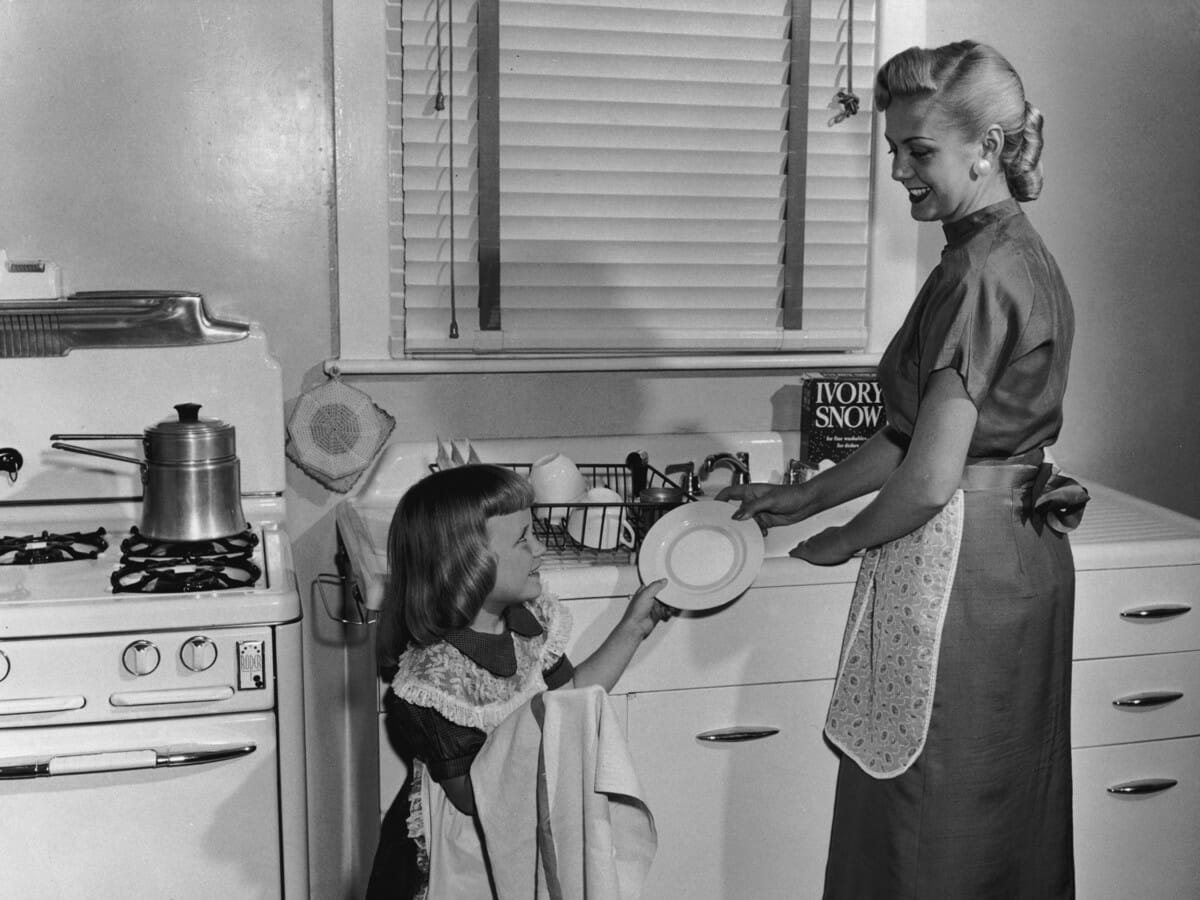
  24. Dishwashers. Many of us alive today have lived part or all of our lives hand-washing dishes.

  25. Kitchen electrics. Our grandparents might have had a toaster or a stand mixer, but probably didn’t have the wide range of small electrical appliances available to us today, from smoothie machines to stick blenders to juicers to expresso makers to spiralizers.

  26. Automatic icemakers. Filling ice cube trays and setting them in the freezer without spilling them and then busting the ice out of them is hard.  Especially if they’re those old-fashioned aluminum kind. Reaching into the freezer and grabbing a few ice cubes that your freezer made and dumped into a container for you is easy.

  27. Overnight mail delivery. Some of our grandparents lived in a time when a letter took several days just to cross a few state lines, and people spent extra on “air mail” when it was urgent.  But even air mail didn’t arrive the next day.

  28. Reliable weather forecasts. Meteorology wasn’t as precise as it is today.  They didn’t have access to radar and other modern tools, and it was often a guess at best.

  29. Warnings for natural disasters. Scientists and officials still don’t get it right all the time, but warnings for blizzards, tsunamis, and floods are far more efficient than they were in our grandparents’ day.

  30. Comfortable passenger cars. Some of our grandparents could never even have imagined the creature comforts in modern cars.  Power windows and mirrors, heated seats, air conditioning, state-of-the-art sound systems, cruise control, lumbar support, navigation systems—wow!

  31. Fast food. The ability to zip in, order, pick up, and zip out with a bag of food in your hand is a relatively modern concept.

  32. Drive-up windows. We can do a lot without getting out of our cars these days.  We can buy food, do our banking, pick up prescription meds, grab a few groceries, and in some regions even do convenience-store shopping.

  33. Live-saving vaccinations. A world where diseases like polio, diphtheria, pertussis, influenza, tuberculosis, and smallpox threatened lives and caused irreparable disability existed in many of our grandparents’ lifetimes.

  34. Life-changing medications. From antibiotics to statins to antipsychotic drugs to hormone replacements to synthetic insulin to pain relief to cancer chemotherapy, our grandparents had far fewer choices.

  35. Surgeries and other medical advancements. Our grandparents might not have had the option of knee- or hip-replacement, or prosthetic limbs, or cataract surgery, or even cutting-edge diagnostic procedures like MRIs and mammograms.

  36. Food imported from all over the globe. Our grandparents probably couldn’t walk into the produce section and choose from hundreds of different fresh vegetables and fruits 365 days a year.  Buying local is important, but it’s nice to be able to occasionally indulge in fresh produce on a cold winter day.

  37. Replacement formula for babies. Our grandparents had far fewer choices when it came to infant nutrition.  Mother’s milk is not always possible, and cow’s milk by itself is incomplete.

  38. Television. Many of our grandparents grew up without TV.  And even those who did have a television often had just one, in the living room, with just black-and-white pictures and limited selections.

  39. TV on demand. Today’s viewers can choose between cable, Netflix, Amazon, Hulu, and dozens of other channel choices.  Our grandparents?  Not so much.

  40. Remote controls. I have one for my TV, one for my Roku box, and one for my internet radio.   That’s not a lot of remote controls by today’s standards, but it’s three more than my grandparents had.

  41. Power tools. Anyone who has ever used a cordless impact driver or a table saw or a belt sander can testify to how much easier and faster and more efficient they are than their manual counterparts.  Our grandparents did it the hard way.

  42. Plastic. The amount of plastic most of us use in our everyday lives is staggering.  Very little of our lives is untouched by plastic, from sandwich bags to house siding to toothbrush handles to storage totes to snow sleds to rakes to water buckets to trash bags to lawn furniture to car dashboards to dishware to children’s toys to zippers.  Our grandparents had products made out of wood, pottery, glass, metal, and natural materials.  But they might not have grown up with much plastic.

  43. Disposable diapers. Many people alive today spent their early years in cloth diapers, or possibly even used them for their own children.  The convenient remove-and-toss method was not an option a few generations ago.

  44. Disposable tissues. Many of our grandparents used reusable handkerchiefs.

  45. Paper towels and napkins. People used reusable cloth for cleanup jobs far more often in our grandparents’ day.

  46. Disposable tableware. Plates, cups, and flatware were items which our grandparents bought once, used every day, and washed over and over.

  47. Microwave ovens. When I told my young children that I had not had a microwave in my childhood home, they asked me in hushed astonished tones, “How did you live?!” I got by, it turns out.  Just like most of our grandparents did.

  48. Synthetic fabrics. A lot of garment labels today list fibers I’ve never even heard of.  Our grandparents had far fewer choices of materials for clothing, outerwear, accessories, and home décor.

  49. Ready-made foods at the grocery store. In our grandparents’ day, the grocery store carried mostly whole foods.  Heat-and-eat options are a relatively recent phenomenon.

  50. Ready-made coffee. Our grandparents made their own coffee at home.  Without a Keurig machine, and possibly even without an electric drip coffeemaker.  Going out to the local coffee shop, or even the corner gas station, for a cup of coffee, hasn’t always been a thing people do.

  51. Automatic laundry machines. Many of our grandparents didn’t have dryers.  And if they had a washer, it was probably a lot less user-friendly than the ones we have today.

  52. If our grandparents did have refrigerators, they were not like the ones we have today.

  53. Riding lawn equipment. Our grandparents probably used a walk-behind mower, with or without a gas-powered engine, to mow their small lawn.

  54. Electric heating pads and chemical heating patches. Our grandparents probably used hot water bottles and poultices instead.

  55. Paid time off work. Paid vacations have not always been common, and maternity/paternity leave didn’t always exist.


This list could truly go on forever, and I have barely scratched the surface. Such a lot has changed in just a few generations that it must be difficult for some of our grandparents to even recognize the planet we inhabit today as the same one they grew up on. Some of the changes truly represent advancement, while others make us all wonder if modern-day goods and services might have gone too far. But most of us embrace the things we’ve grown accustomed to, and we may find it challenging to live without the things our grandparents didn’t have.


What would you add to our list? Share your thoughts in the section below: 

Saturday, October 28, 2017

Our Great-Grandparents Were Less Stressed. Here’s 10 Reasons Why.

Our Great-Grandparents Were Less Stressed. Here’s 10 Reasons Why.

“Family Grace.” Norman Rockwell


Life in the 21st century can get pretty hectic. Most people fill their days to the overflowing with jobs, commuting, kids’ activities, fitness goals, food preparation, home and garden maintenance, house chores, and more. Sometimes it almost feels like there is barely any time left to enjoy our families, and that can feel like a real loss.


If you are like me, you might wish you could just take a deep breath and slow things down a little. I am often inspired by the kind of life depicted in books and movies set in days gone by, and by stories told aloud about generations past – our grandparents and great-grandparents.


It seems that family life simply was different in the days of our ancestors, and that they even were less stressed. There are plenty of things they did back then that we do not do anymore, but maybe we should.


Let’s take a look:


1. Families ate meals together. Today’s helter-skelter schedules often make family mealtimes difficult to achieve, but just imagine the benefits of doing so. Spending time together, practicing social and conversational skills, and learning about one another’s passions and challenges might strengthen family bonds and help members grow as individuals.


2. Reading was a common pastime. Consider the benefits of reading — literature, pulp fiction, how-tos, classics, non-fiction, newspapers, westerns, mysteries, romances, memoirs and biographies — as an alternative to other forms of entertainment. Reading almost anything is useful for developing and maintaining language and critical thinking skills.


Discover 1,147 Tips & Tricks Of Successful Off-Grid Living!


3. Neighbors got to know neighbors. The people next door, down the block, the next farm over, and around the corner all have distinct personalities, strengths and quirks. We might become lifelong friends or we might keep them at arm’s length. They could turn out to be courteous and neighborly, or thorns in our side. But whatever they are like, we will never know if we do not give them more consideration than a cursory nod while we’re setting trash out by the curb once a week.


4. Families and friends played games together. A game of Monopoly, chess or crazy eights is a rewarding way to spend time with a loved one. Children learn about strategy, good sportsmanship and decision-making. Adults of all ages keep their wits sharp and their focusing abilities strong. And games are just plain fun!


5. People spent time with extended family. Getting to know a great aunt or a second cousin once removed is a great way to learn about family history and feel a sense of belongingness. Connecting with family members old and young enhances connectedness, instills familial pride, and creates valuable memories. Families are more geographically scattered than they were in days gone by, but that challenge can be offset by the ready accessibility of modern transportation.


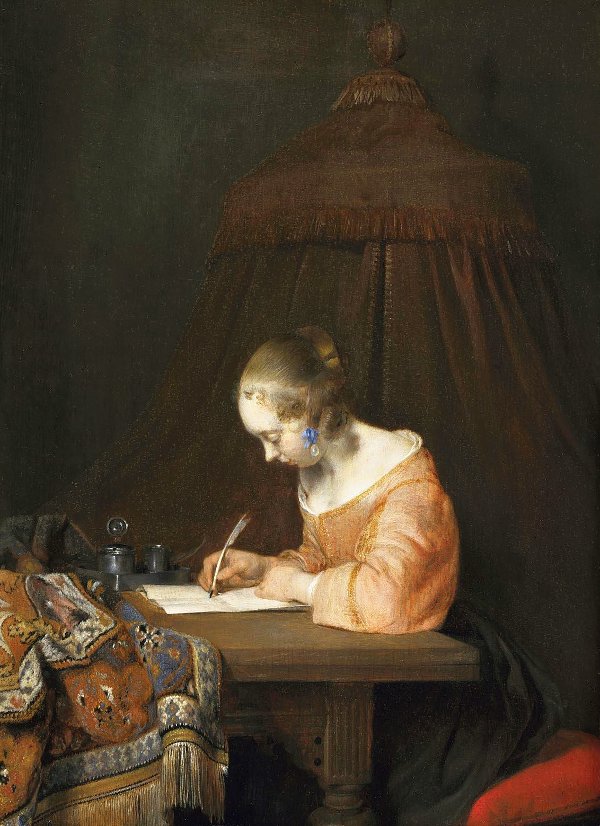
Artist: Gerrit ter Borch

Artist: Gerrit ter Borch


6. People wrote and received letters. Letter-writers of all ages could benefit from the practice of language arts, from spelling to composition to story-telling. How uplifting it would be to find something besides bills and junk mail in the mailbox, and what joyous anticipation in awaiting a reply from a cherished friend!


7. Families worked together. Group endeavors like raking leaves, tending a garden, washing dishes, cleaning the house, preparing meals, washing cars, caring for pets and livestock, and even doing errands all can turn into a win-win situation. Shared effort and goals can teach kids about the satisfaction of achievement and can give parents and older siblings the opportunity to serve as partners, leaders and mentors.


8. Active outdoor recreation took place in backyards and neighborhood parks. Long-distance destinations and cruise ships and theme parks are enjoyable. But in between those opportunities, it is an excellent idea to throw a ball or a Frisbee around on the lawn, play hopscotch on the sidewalk out front, ride bikes, play tag, fly kites and swing at badminton birdies.


9. Families were friends with whole families. When my mother and father went visiting, I went along. Sometimes the kids there were older or younger than me, but I made do. Looking back, I realize that the adults had to make do when their spouse’s best friend wasn’t married to their ideal friend, either. Of course, every family member should have the opportunity to spend time with their own choices of friends, but the social flexibility learned from spending time with a wide variety of people can be an enriching experience.


10. People talked face-to-face. In this day of social media and texting, imagine how refreshing a sit-down conversation now and then would be. Taking the time to focus on the person or people in the room, hearing their unique voices and accents and manners of speaking, seeing their body language, and sharing a physical presence, all adds up to a deeply personal method of communication with others.


We live in the modern age and cannot return to the days of old. Perhaps we would not even want to. But it might not be a bad idea to pull over into the slow lane every once in a while, try doing some of the things we do not do anymore, and enjoy life the way our ancestors once did.


What would you add to this list? Share your thoughts in the section below:


Harness The Power Of Nature’s Most Remarkable Healer: Vinegar

Friday, September 1, 2017

10 Survival Tips That Kept Your Great-Grandparents Alive

10 Time-Tested Survival Tips, Straight From Your Great-Grandparents


Unless you are fairly young, chances are your great-grandparents already have passed on. But if they were around in today’s tenuous times, our great-grandparents might have a few words of advice for us.


Survival was something most of our ancestors did well, and a few tips from their success could make a real difference in our lives today.


Our great-grandparents probably survived hard times due to a combination of the right skills and knowledge, the right priorities, and the right attitudes. Here is what they might say to us if they could:


Skills and Knowledge


1. Be able to acquire food by multiple means. Learn to grow vegetables, tend fruit and berry orchards, milk dairy cattle and goats, keep laying hens, raise meat animals, and hunt for wild game.


2. Know how to preserve food for leaner seasons by way of canning, smoking, drying and root-cellaring.


3. Learn to make all of your food from scratch, from bread to butter to noodles to jerky to cheese. Even if you do not do all of it annually, develop and keep up the skills.


4. Be able to repair and maintain what you use. Furniture, buildings, engines, equipment, shoes, toys, kitchen utensils—you name it. It is important to take meticulous care of your belongings and fix whatever needs fixing until it is beyond repair. Buy less, fix more.


Just 30 Grams Of This Survival Superfood Provides More Nutrition Than An Entire Meal!


5. Know how to treat minor injuries and illnesses at home. Sometimes seeking professional medical advice is the best course, but in a survival situation it is valuable to be able to assess and treat problems yourself if needed.


10 Time-Tested Survival Tips, Straight From Your Great-Grandparents6. Learn to provide as many of your own basic needs as you can. Hiring a pro might be the most sensible way to go nowadays, but it does not need to be the only option. If tough times come along, knowing how to clothe yourself and your family, heat your home, care for sick animals, provide home defense, and use alternative means for transportation will be useful skills.


Priorities


7. On most days, put work before play. There is one caveat: It works well to combine work and socializing. In days of old, people worked together with their households and communities on projects like construction, food preservation, quilting and livestock management. Putting work first in a way that builds, creates and nurtures camaraderie is still a great idea.


8. Focus on goals that make a tangible difference in your life and in the lives of those around you. Remember that in a survival scenario it will be more useful to be able to feed, shelter and protect your loved ones than it will be to chase imaginary electronic characters.


Attitude


9. Develop mental toughness. Tell yourself you can do what you have to do to get by. Even when you want to curl up in a corner and let the world pass by without you, know that it is not an option.


10. Be independent. Do not rely upon the government or wait for some other entity to take care of you. Do not let others make decisions for you about whether or not a place or activity is safe — but do not assume that there will always be someone to rescue you if you make poor decisions. Be smart, and be in charge of yourself.


Whether or not your great-grandparents are still around to cheer you on, use these words of advice along with your own image of what they were like to live a life that would make your ancestors proud of you every day. And if you ever find yourself in a survival situation that may or may not be similar to what they went through, remember to heed their sage words to help you survive and pass along the wisdom to another generation.


What time-tested survival advice would you add to our list? Share it in the section below:   


Harness The Power Of Nature’s Most Remarkable Healer: Vinegar

Saturday, August 26, 2017

Landrace Gardening: The Forgotten (And Better Way) Your Ancestors Grew Vegetables

Landrace Gardening: The Forgotten (And Better Way) Your Ancestors Grew Vegetables


Farming food for the homestead is a labor-intensive and time-consuming process, and you can’t afford to get it wrong.


The truth, though, is that every region has its own challenges to which those plants may not be perfectly adapted.


The solution? Annually selecting and saving seeds to breed a locally adapted landrace for the crops you want to grow can significantly increase your yields. This traditional method for growing food – used by our ancestors — establishes better food security and easier production. Plants that are adapted for the local growing season, local sunlight and precipitation patterns, and local pest and disease resistance will produce more food.


The seeds for landrace gardening come from the “survival of the fittest” – that is, the best-producing individual plants which also possess other desired qualities (like a good flavor!).  Landrace varieties are adapted to thrive in a very local region; in fact, they’ll do best on the property where they are developed.


Looking For Non-GMO Seeds To Start Your Landrace Garden? Get Them From A Company You Can Trust!


Developing the landrace variety takes a few generations, but is well worth the effort. Follow these steps to start the process of breeding locally adapted landrace crops:


1. Plant several varieties of a crop close to one another. This ensures genetic diversity among the plants that grow, which will make a more sustainable landrace variety. Seeds from neighbors, if you can get any, already will be partially adapted, so plant them if you can.


2. Do not pamper your plants, but offer them mainly benign neglect. The plants that fare best despite weeds, local pests, and dry, wet, hot, or cold spells are the ones you want the most. The more you care for the plants, the harder it becomes to see which are really the fittest. That being said, some equal-opportunity watering or weeding to ensure you have a yield in early years is not a problem.


Landrace Gardening: The Forgotten (And Better Way) Your Ancestors Grew Vegetables3. Eat your fruits and vegetables and save seeds from the best plants. Make notes of why they were chosen and what the conditions were in your garden. Save seeds from multiple plants to preserve a variety of adaptations.


Seamazing: The Low-Cost Way To Re-mineralize Your Soil


4. Maintain the genetic diversity of your plants in the following year by planting saved seeds alongside seeds from other sources. Even after landrace gardening is well-established, maintaining the garden in this way can ensure you don’t wind up with a single-allele crop (i.e. no diversity) which could result in a total crop failure if conditions change.


5. Continue to plant and save seeds yearly and update your records. It is crucial to understand the process by which you develop your landrace varieties, in case you need to go back a step and add the genetics of a different variety into the mix.


There’s a bit of the scientific method in landrace gardening, but don’t get intimidated. Continuous experimentation and careful selection will mean a sustainable future for your food crops. Within two to three years you will begin to notice the hardiness, resistance and productivity of your locally adapted varieties. Your garden will be easier to tend and will produce more. How can you argue with that?


What advice would you add on landrace gardening? Share your ideas in the section below:


Every Year, Gardeners Make This Stupid Mistake — But You Don’t Have To. Read More Here.


Friday, August 25, 2017

7 Things Our Grandparents Handmade (That We Waste Money On At The Store)

7 Things Our Grandparents Handmade (That We Waste Money On At The Store)

Image source: Pinterest


People say life is expensive nowadays, and I admit I would be among the first to agree. There are a few ways we could all tighten up our budgets, however.


For the answers to how we all could save money on everyday things, many of us need look no further than our own grandparents. There are plenty of items they made themselves which we routinely purchase ready-made — and that habit costs us money.


Here are seven things our grandparents (or great-grandparents) made that we waste money on at the store:


1. Food from scratch. Depending upon how long ago your grandparents lived and what kind of lifestyle they embraced, they might well have made everything from scratch — even their own sausages, hams and aged cheeses. There is a good chance most of our grandparents, or at least our great-grandparents, made bread, butter, noodles, simple dairy foods such as yogurt and soft cheeses, jams, jellies and pickles. They probably made homemade sauces from whole ingredients, like tomato sauce or white sauce or cheese sauce. Our grandparents may have made condiments and spreads such as mayonnaise, mustard, ketchup or hummus. They very likely made their own everyday foods, too, such as preparing and cooking vegetables a variety of ways, creating soups and stews out of whatever they had on hand, and turning out delectable treats such as donuts and pies and cakes and puddings and muffins.


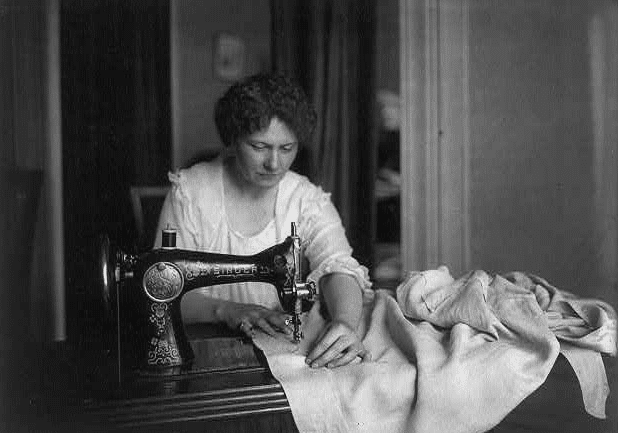
2. Clothing. In generations past, most women, and some men, were handy with a sewing machine or a needle and thread. It is not unusual to find people today who grew up wearing clothing their mother made for them, or even people who learned to sew their own garments while in junior high or high school. From everyday skirts to slacks to Sunday suits to wedding dresses, it was not unusual for clothing to be made at home.


Many of our grandparents knit or crocheted, as well. Sweaters, vests, socks, scarves, hats, gloves and mittens were often created at home at the hands of a skilled needle worker. These accessories were often treasured by their owners, so much so that they used them until they wore out. In this way, they made one or two garments for every six or eight that we might buy at the store today, resulting in even more savings.


3. Home goods. People in our grandparents’ day often hand-crafted items for their home. Blankets, afghans, quilts, curtains, draperies, rugs, placemats and pillows were made by needlework experts. They sewed, knit, crocheted, hand-quilted, wove, cross-stitched, embroidered and needlepointed many of the textiles used in the house. Ceramic and clay vessels and decorative items were homemade in our grandparents’ day too.


Discover More Than 1,100 Homesteading Tips And Tricks!


There were other home necessities created by hand. Spoons and other kitchen utensils were carved out of wood or wrought from metal. Additional home décor was created using a wide variety of materials as well, depending greatly upon their needs at the time and what they had available to them.


7 Things Our Grandparents Handmade (That We Waste Money On At The Store)

Image source: Wikimedia


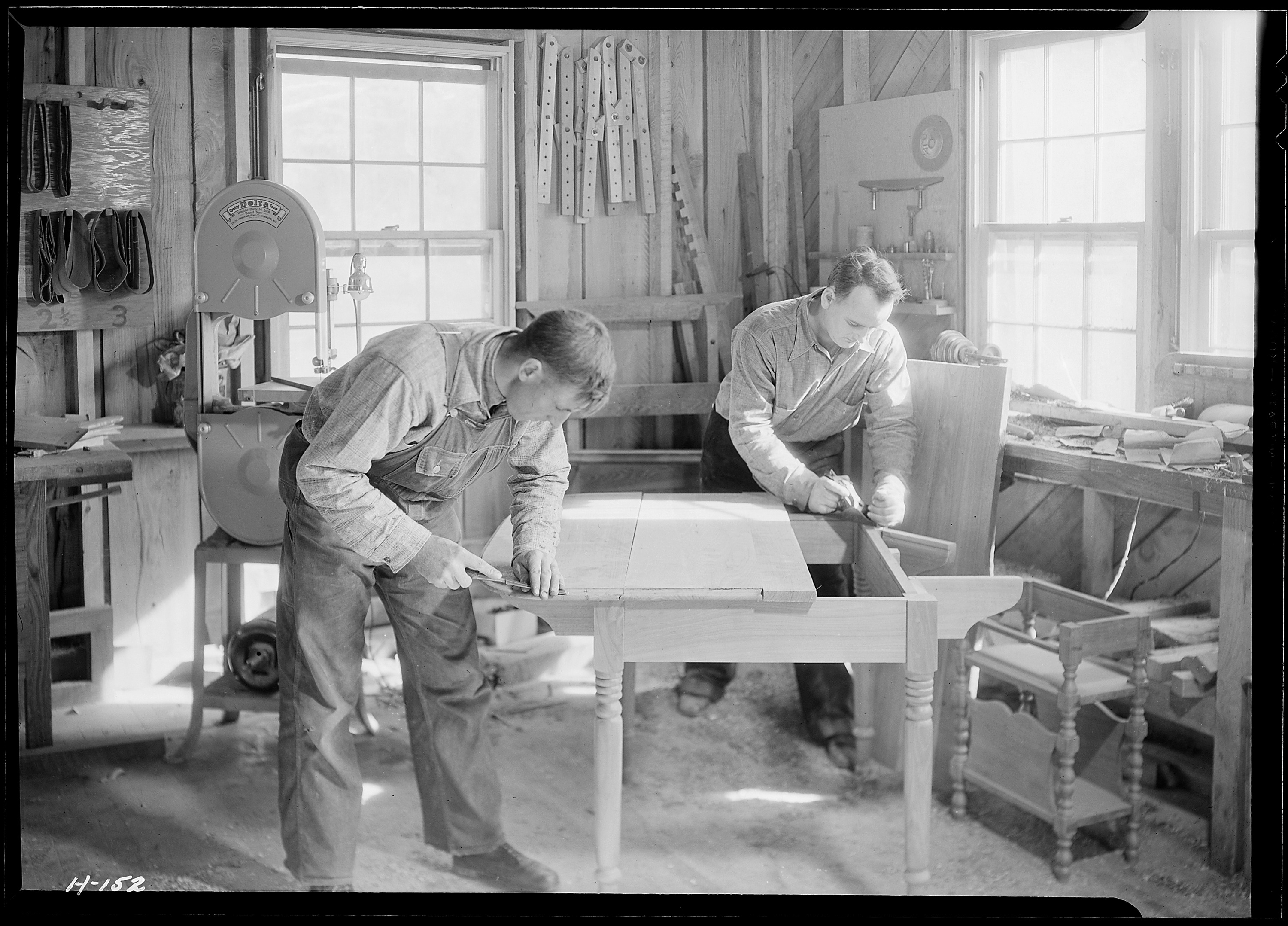
4. Furniture. Most old-fashioned homes I have seen contain at least one piece of homemade furniture, from a crude three-legged footstool made out of a cross-section of log, to a simple straight-back chair, to works of finely crafted finish carpentry.


Our grandparents did not make all of their furniture — few of them even made the majority of it — but many people in their generation did dabble in do-it-yourself projects. Most people tried to make things themselves before running to the store for them, and it was common to find homemade items such as simple shelves, potato bins and kids’ booster seats in those days.


5. Toys and dolls. Dolls were often crafted out of fabric or yarn, as were stuffed animals, from teddy bears to bunnies. Faces were painted or embroidered, hair was made from rug yarn or unraveled rope, and clothing was knit or crocheted.


Many people in our grandparents’ era made toys out of other materials as well — wooden cars and trucks for imaginary play, carved pull-along toys for toddlers, and wagons and other ride-on toys made from a combination of wood and metal and other materials.


6. Landscaping and outdoor structures. Stone walls, rock walls and many kinds of retaining walls were handmade by people in past generations. Decorative borders were made from various kinds of wood, metal and masonry. Patios, gazebos, lawn ornaments, walkways, window boxes, grape arbors, archways and trellises were frequently made at the homes where they were used. Not only that, but kids’ swings, porch swings, and lawn gliders were sometimes homemade.


7. Home health remedies and prevention. This may be one area where our grandparents’ skill at making things for themselves shone most brightly. They could treat cold and flu symptoms with homemade medications, steams and rubs. They could soothe wounds with poultices and herbal treatments. They knew what to do for headaches and upset stomachs and general malaise. They used regular diet, plants and herbs, and creative concoctions for everything from illness prevention to toothaches to energy boosting. Pharmaceuticals, both prescription and over-the-counter, were nowhere near as plentiful even a few generations ago, and people had to make their own. It is possible that they might have done a better job using home treatments than anything we can get at the pharmacy.


By trying our hand at making some of these items ourselves, we may be able to honor the memory of our grandparents, preserve old-fashioned ways of acquiring goods, and save some money in the process.


What would you add to this list? What are your best memories of your grandparents or great-grandparents making something? Share your ideas and memories in the section below:


If You Like All-Natural Home Remedies, You Need To Read Everything That Hydrogen Peroxide Can Do. Learn More Here.

Tuesday, August 15, 2017

10 Ways Your Grandparents Stayed In Shape Without A Gym

10 Ways Your Grandparents Stayed In Shape Without A Gym


If you are anything like me, you tend to go to the gym a few times a year. Usually right around New Year’s Day, so you can look good at the beach, and then again about September, when you realize you didn’t look good at the beach, but you want to look good for the holidays.


This got me thinking the other day: How was it that my grandparents, and even my parents, stayed in such good shape all year without ever going to the gym or running a marathon?


A close look at their lives told me a great deal. We have too many distractions and too many conveniences to do the everyday things our ancestors did to stay in shape naturally.


I want to share with you the simple lifestyle changes that can help you stay strong and slim your entire life. It has nothing to do with diet; my father ate anything and everything, but he remained slim right up until the last few years of his life. It’s all about exercise, friends, and I don’t mean spin classes.


1. Walking


When I say walking, I do mean walking … everywhere! My grandmother never knew how to drive and didn’t even know how to ride a bicycle, but she literally walked everywhere! She made sure that everything was in walking distance, which for her meant about two miles. She carried bags of groceries to and from the store, had a pharmacy down the street, and walked to visit her children by walking there. My mother, also, walked everywhere. She even took a (temporary) cut in pay to take a position at a company she worked for because the new office was about four blocks from home! Get a pedometer and aim for 10,000 steps every single day.


2. Sunlight


Our ancestors often had to work (or walk) outdoors. Everything from hanging laundry in the sun to picking vegetables, our ancestors knew and appreciated the sun. They had no idea, at the time, that they were getting healthy doses of vitamin D and vitamin E. Exposure to natural sunlight (in reasonable amounts) strengthens the bones, uplifts the spirits, and gives you a healthy-looking glow.


Beet Powder: The Ancient Secret To Renewed Energy And Stamina


Some studies even suggest that higher levels of vitamin D can prevent some types of cancer. Please don’t misunderstand me. I’m not talking about spending two hours a week in a tanning booth, but in our world of UV-resistant clothing, commuting in cars, and working at desks, very few of us get the natural vitamin D and E that the sun provides. Best of all? It’s completely free.


3. Outdoor fun


Some of my best memories are times when my grandmother, my brothers, and I would play games of hide and seek or Red Rover, Red Rover out in the backyard. Even though she was in her 70s at that time, she had very little trouble keeping up with us and playing games. Find ways to play with your children or grandchildren that involve moving and motion, not screens and sitting.


4. Standing, not sitting


Every time I hear the theme song from “The Twilight Zone,” I can picture my mother, ironing or folding clothes. My mother never sat if she could stand. She was known to pace the floor for an hour, talking to my grandmother, on the phone. Remember those super -long phone cords?! I realize now that she was getting exercise and keeping her metabolism revved up, simply by doing the simple things mentioned above.


5. Doing things by hand


10 Ways Your Grandparents Stayed In Shape Without A GymI really do appreciate not having to do laundry by hand (if you have ever tried to wash a blanket or a pair of jeans by hand, you know what I’m talking about), but the fact is that we have so many “modern conveniences” that we don’t get up off the sofa anymore! Follow your grandparents’ lifestyle and hang laundry outside whenever possible, wash those few dishes by hand, walk to the store rather than order online, wash your car yourself, cook from scratch, rather than order delivery service, and don’t forget to walk the dog!


6. Cleaning one room each day


This is a trick passed down from my great grandmother. Every day, clean at least one room. My mother used to do two rooms: the bathroom and one other room. She had a little list memorized and I knew it by heart. In addition to the bathroom, the bedrooms were cleaned on Mondays, the living room on Tuesday, the kitchen on Wednesday (because we went grocery shopping Wednesdays) and the dining room on Thursday. Fridays were a general “what didn’t get done” day, laundry day was Saturday and my mother “rested” on Sunday (which means she didn’t cook). I have adopted a similar cleaning plan, with bigger cleaning jobs squeezed in here and there. Sweeping, vacuuming, mopping, dusting, changing sheets and other types of housework equals a good workout!


7. Grow a garden


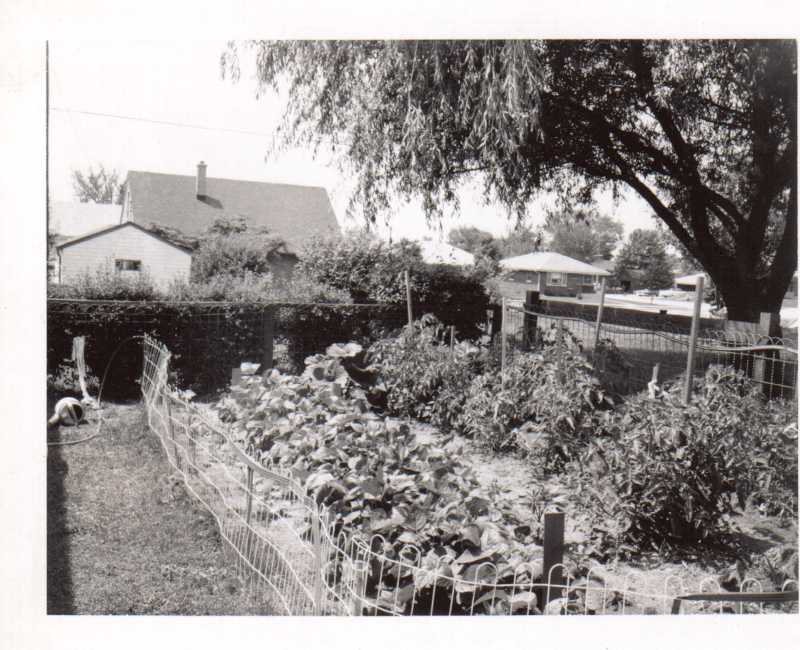
Many families had gardens to help cut their grocery bills. I’m not saying you need to get out and plow the lower 40 acres, but even a few pots of vegetables on your patio will help increase the amount of nutrition at your table, while burning a few calories as you pull weeds, water the vegetables, and pinch off excess flowers.


8. Sports and fun


Almost everyone has a hobby of some sort, including my father. He was a bit of a strange man as he didn’t like typical sports the way most men do. He did, however, love fishing and hunting. My dad was famous for eating just about anything, except what he called “rabbit food” (salad). Many people wondered how he managed to stay so slim all his life, but I knew the answer. He went fishing or hunting probably twice a month. This involved walking for miles or standing for hours. My father would have NEVER considered going walking for “exercise,” but he would walk all day in hopes of catching a pheasant. Both of my parents loved to dance, and we used to dance to the music on the radio either on the patio or in the living room. Time flies when you’re having fun and you never noticed that you got some serious exercise.


9. Old-fashioned calisthenics


My mother would often spend 30 minutes out of her day (before she went back to work) with a kitchen chair and Jack LaLanne on the TV. (Google him if you don’t know who he is). Plain old isometric exercises, occasionally a few books to use as weights, and a chair for balance was all it took to keep my mother feeling and looking good. You don’t need an expensive gym membership to keep muscles taut and strong.


10. Don’t say no


Although many of us have very busy schedules, one of the things I loved about my grandmother was that she rarely said no. No matter if we wanted to walk to the store to get a popsicle or play hide and seek, or if a friend called and they wanted her to walk over and have coffee, my grandmother almost always said yes. This kept her active and involved right up until her last two or three years of life. Don’t be so quick to say no because you might miss that marathon of your favorite show; say YES and enjoy life!


What would you add to our list? Share your thoughts in the section below:
Wednesday, May 3, 2017

20 Amazing Facts About What Happens Every Single Minute Of Every Single Day In Our Rapidly Changing World

20 Amazing Facts About What Happens Every Single Minute Of Every Single Day In Our Rapidly Changing World | Clock-movement-time-earth-Public-Domain | Sleuth Journal Society Special Interests World News


Our world is changing at a blinding pace that is accelerating with each passing day.  Thanks to the Internet, information travels at a speed that would have been unimaginable at other times in human history, and our technological capabilities are advancing at a rate that is exponentially increasing.  What all of this means is that seismic cultural shifts that used to take decades can now be accomplished in a matter of months or even weeks.  So will all of this change lead to a wonderfully positive future for humanity, or will it result in a dystopian nightmare?  Only time will tell, but what everyone can agree on is that our world is rapidly becoming a much different place than the world that our parents and grandparents grew up in.  The following are 20 amazing facts about what happens every single minute of every single day in our rapidly changing world…


#1 250 babies will be born, and 113 of them will be born into poverty.


#2 500 hours of video will be uploaded to YouTube.


#3 The Earth will travel 1,118 miles around the sun.


#4 McDonald’s will sell 4,500 hamburgers.


#5 Lightning will strike our planet about 6,000 times .


#6 28,500 trees will be cut down.


#7 51,000 applications will be downloaded from Apple’s App Store.


#8 65,000 barrels of oil will be used used.


#9 People will watch 64,444 hours of content on Netflix.


#10 120,673 pounds of edible food will be thrown away in the United States.


#11 $203,596 worth of products will be sold on Amazon.com.


#12 448,800 tweets will be posted on Twitter.


#13 527,760 photos will be shared on Snapchat.


#14 3.3 million posts will be made to Facebook.


#15 3.8 million Google searches will be conducted.


#16 5 million pounds of garbage will be generated.


#17 6 million chemical reactions will happen in each one of our cells.


#18 20.8 million messages will be sent using WhatsApp.


#19 25 million Coca-Cola products will be consumed.


#20 204 million emails will be sent.

Thursday, October 27, 2016

8 Obvious-But-Overlooked Ways Our Grandparents Survived Tough Times

8 Obvious-But-Overlooked Ways Our Grandparents Survived Tough Times

Image source: Mast General Store


Hard times are nothing new. They have come and gone throughout the centuries, and people have dealt with difficulties as best they can.


Amid catastrophic weather, crop failures, job loss and personal injuries—all of which often lead to economic disaster—our ancestors made it through some of the worst of times. Here are a few money-saving tips our grandparents might give us for getting through hard times.


1. Work harder. It might seem laughably obvious at first glance, but hard work really is the answer to a lot of struggles. If you have a job, ramp up your efforts. If you do not have a job, make it your full-time endeavor to look for one. Either way, consider devoting some of your free time to per diem work such as raking leaves and shoveling roofs and walking dogs. Money is out there, just waiting for you to earn it.


2. Tighten your belt. This is another tip that is so obvious that it can be overlooked. Meals out, new clothes, new vehicles, furniture, accessories for both the home and for personal use, and many other luxuries which people routinely purchase can be forgone during hard times. If it isn’t truly necessary, you can do without it until your cash flow improves.


‘Miracle Oil Maker’ Lets You Make Fresh Nut Oils Within Minutes!


3. Limit entertainment. If you are spending your time working hard, you will have less time and energy for entertainment. And tightening your belt means saying no thanks to things like cable television, the latest electronic gadget, a hobby upgrade such as a new cycle or camera or snowmobile, or a vacation trip. This is not to suggest it is healthy to go without entertainment and leisure for a lifetime, but focusing instead on work and thriftiness for a period of time to get you over a rough patch is wise.


4. Buy second-hand. Even if your livelihood requires that you dress in brand names and drive a nice car, you can still do it wisely by purchasing pre-owned. Consider shopping at thrift shops, online resale outlets, and social media buy/sell groups, not only in lean spells but also in times of plenty. It is a great way to support local businesses and help out your friends and neighbors who may need the cash your purchase brings in.


8 Obvious-But-Overlooked Ways Our Grandparents Survived Tough Times

Image source: Rustins


5. Have a yard sale. Selling your unnecessary goods can kill two birds with one stone. Not only will you scoop up a little cash from the sale, but you will help declutter your home and garage in the process. Having things clean and organized can be energizing, which helps you stay focused and get other things done.


6. Fix items instead of replacing them. In this world of disposable everything, it feels almost automatic to toss stuff in the trash and go buy another one. But in our grandparents’ youth, goods were thrown out less and repaired more. Consider having jacket zippers replaced at a repair shop instead of buying a whole new garment, or sewing on buttons and stitching up seams yourself. Glue broken knickknacks, tighten window blind strings, and don’t be afraid to tinker with tools and equipment to get them back into smooth running condition. Buy parts and replace them yourself or pay a professional—which is still less costly than buying new.


Crazy Gadget Makes Every Window A Cell Phone Solar Charger


7. Grow your own food. Backyard gardening is never completely free, but it is always a better value in the long run than buying less healthy and more chemical-laden foods in the store. During hard times, even a few patio pots filled with tomatoes and summer squash can ease up a straining budget, and a couple of laying hens can make a real difference.


8. Shop wisely. If chicken is on sale, buy chicken. Even if that was not what you had in mind for your current menu or if it comes in packages bigger than you need, you can always repackage and freeze it for later. Buy seasonal items on clearance and store them for next year. Buy in bulk for items you use a lot. Avoid brand names when it does not make a difference, and use coupons for the brand names you prefer when it does matter.


By following these few simple tips all the time, you will be able to build money-saving habits so that when hard times come around, you will be better prepared. It may be possible to become so skilled at pinching pennies that your practices will either help deflect economic difficulties in the first place or will help you glide right through them with barely a hiccup in your routine. Either way, engaging in money-saving behavior is always a win-win.


What advice would you add? Share your tips in the section below:


Discover The Secret To Saving Thousands At The Grocery Store. Read More Here.