Showing posts with label hunting. Show all posts

Thursday, November 16, 2017

The Silent ‘Stealth’ Survival Rifle That’s Compact And Lightweight, Too

The Silent ‘Stealth’ Survival Rifle That’s Compact And Lightweight, Too

Image source: TheTruthAboutGuns


Air rifles have been around for quite some time. The Austrian army equipped some of its units with air rifles in the early 1800s, and the Lewis and Clark expedition carried one on its westward journey. Back then, a huge flaw of the air rifle’s design was that it was delicate and had to be pumped over 100 times to fill its air reservoir.


I fondly remember my 10th birthday. It was the day I opened up that beautifully wrapped box to find a Crossman pump action air rifle. The rifle was capable of not just firing your standard BB, but also .177 pellets in single shot mode. I was given a carton of BBs, and a box of wad cutter pellets.


For that glorious summer I was Wyatt Earp, or a big game hunter in the Yukon. Many mourning doves fell to my deadly aim, as did a great many tin cans and hornet’s nests. The rifle was joined that winter by a pellet pistol and now I was armed for whatever situation boyhood could throw at me.


Be Prepared. Learn The Best Ways To Hide Your Guns.


Today, the pellet rifle is starting to come into its own among survivalists and hunters, and is seen as more than just a child’s tool before they own a real firearm – for a host of reasons.


The pellet rifle has proven itself to be a fine small game implement, and can feed a man lost in the woods on squirrel, grouse and rabbit. The pellet rifle is compact, and can allow the carrying of more ammunition than even a .22 long rifle, especially if it is pump-operated and does not employ C02 cartridges. And a pneumatic air rifle can deliver velocities within a range equal to that of many big game rifles.


It is not uncommon to see Internet photographs of hunters who use air rifles posing with their big game kills such as a wild boar or deer. No, I don’t recommend you take even the most powerful air rifle with you on your next Alaskan brown bear hunt. But a proper air rifle is suited to most game found in the lower 48 states and much of Canada.


Story continues below video


As a survival tool, an air rifle equipped with a pump rather than a CO2 cartridge is a fine choice to provide food in a desperate situation. In fact, as long as you have pellets, your air rifle can keep supplying you with needed protein. Pellets, being as small and light as they are, can be easily carried in large amounts in a pocket or backpack. The amount of pellets carried can easily be in access of several hundred, and an equal amount of standard ammunition would be a weight too great for most wilderness travel. In fact, just 100 rounds of ammunition can weigh several pounds.


An air rifle, while not being as long ranged as many rifles, can certainly provide you with more range than a sling shot. An air gun is also silent, a trait that you will not find with your .30-06 or even a .22. Often, an air gun will allow for a follow-up shot if you miss a game animal, since they won’t be spooked by noise.


The Right Air Rifle


Picking the right air rifle is just as important as picking the correct hunting rifle or your home defense weapon. It should come from a reputable manufacturer, and should work every time you need it. I strongly recommend that you pick a rifle that utilizes an air pump system rather than CO2, simply for the fact that if you run out of CO2, you are carrying a giant paperweight. You will not be running out of air to pump into your rifle anytime soon.


There are two manufacturers I really count on for a quality air rifle – Gamo and Benjamin. Both have been in the market for a long time, and both build quality products. They offer rifles in .22 or larger calibers, and their prices are affordable. It will not cost much more for one of their air rifles than if you were to go out and buy a new .22LR rifle.


Depending on your needs, you may even want to put an optic on your air gun. I have done so before, and I use a decent .22 scope. I get around the same results as when I mount one on a rimfire.


So before your next wilderness trip or trip to the firearm store, consider an air gun.


Related:


The 5 Best Air Rifles For Off-Grid Survival


What advice would you add on air rifles? Share your tips in the section below:     


Pump Shotguns Have One BIG Advantage Over Other Shotguns. Read More Here.

Thursday, September 21, 2017

Media Continues Perpetuating VPC Machine Gun Deception

The lie depends on misrepresenting why the Founders admitted the right of the people to keep and bear arms. (Washington and Lafayette survey Valley Forge encampment — Library of Congress)


“The days are growing colder, and millions of American hunters will soon pursue a time-honored tradition,” Dana Milbank of The Washington Post sneers. “They will load their automatic weapons with armor-piercing bullets, strap on silencers, head off to the picnic grounds on nearby public lakes — and start shooting.”


Right off the bat this apparatchik lays in with the demonizing lies. The very title of the piece and the subject he launches from, “recreation” and “hunting,” have nothing to do with why the Founders included the Second Amendment in the Bill of Rights. And everybody’s up on where”sporting purpose” mandates originated, right?


But Milbank knows it’s not about hunting. His intent here is to spook the herd and incite the ignorant to demand government take away a right they never learned enough about to value or to use. From you who do.


He’s counting on them being unaware that states establish seasons year-round for specific game, as well as limits on what can be used, how many may be taken, and where. As for “armor-piercing bullets”, that’s sour grapes over the Obama administration’s failure, with cheerleading by Fourth Estate Fifth Columnists like Milbank, to ban M855 ammo, “the second most popular variety of ammunition used in the nation’s most popular rifle.” Such ammunition, by the way, does not meet the legal definition of “armor piercing.” The fact is popular rifles fire ammunition penetrates body armor rated for handguns.


Then again, there’s no ridiculous lie about ammo you can’t feed a crowd primed to swallow whoppers:


Yes, anyone who would vote for this … this thing … is that stupid.


Including the swipe at “silencers” is simply Milbank adding his voice to those attempting to gin up opposition to the SHARE Act. And to maintain that hunters will “star shooting” at “picnic grounds” is just an outright lie, which should not surprise anyone considering the character who wrote it.


Another lie, one that has been refuted so many times that for anyone to continue spreading it means they’re deliberately deceiving people, is using the term “automatic weapons.” Not once in his creed does Milbank use the word “semi-automatic,” and that’s straight out of a strategy originally laid out by Josh Sugarmann of the Violence Policy Center back in 1988:


“The weapons’ menacing looks, coupled with the public’s confusion over fully automatic machine guns versus semi-automatic assault weapons—anything that looks like a machine gun is assumed to be a machine gun—can only increase the chance of public support for restrictions on these weapons.”


Pravda’s got nothin’ on U.S. “Authorized Journalists.”


By bursting out of the starting gate with nothing but deception, Milbank kills any incentive to slog through the rest of his screed. If you do anyway, NRA has posted a comprehensive fisking of it that confirms it only goes downhill from the opening paragraph.


In a way, gun owner rights advocates should take heart from this, as it further demonstrates that the monopoly of violence lobby wants our guns so badly it’s willing to resort to such contemptible tactics to swindle them away. That gives us an opportunity – if we’ll only take it – to correct the record to those who have not pursued the issue beyond what they take in from the “mainstream media.”


If we don’t make the minimal effort to share the truth now, while things are relatively easy, it will only get more difficult later. An observation from Hosea 4:6 comes to mind:


My people are destroyed for lack of knowledge.


Milbank and subversives like him are counting on it. And they’re the ones with the major media amplifiers.


—–


If you believe in the mission of Oath Keepers, to defend the Constitution against all enemies, foreign and domestic, please make a donation to support our work.  You can donate HERE.


—–


David Codrea’s opinions are his own. See “Who speaks for Oath Keepers?”


Thursday, September 14, 2017

Would ALL Wildlife Be Wiped Out If Society Collapses? The Answer May Surprise You

hunter-2-publicdomainpicturesdotnet


All hunters complain, at least one, about having to buy a hunting license. For that matter, they’ve probably complained that they were limited to hunting only during a few short weeks a year. But in fact, there is a very good reason why we need hunting licenses and we need a hunting season. That is, that without the restrictions that hunting season and hunting laws place on “We the People,” there wouldn’t be any game.


The History


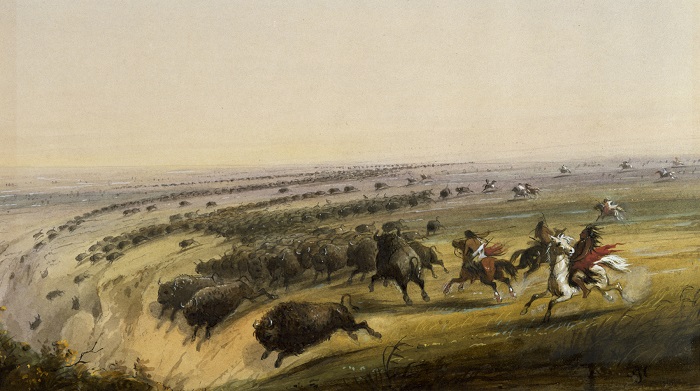
When this country was first settled, it teemed with game. Early explorers were unanimous in their praises for both the quantity and the quality of wild game, ready for harvest by European long guns. Who hasn’t heard the reports of buffalo covering the Great Plains? The herds were so vast that they went on for miles.


Yet where are those vast herds of buffalo today? What has happened to the deer? The truth is that there have been times in our nation’s history where the game were all but extinct due to overhunting. Without proper controls, it could easily happen again.


In the early days of our country, wildlife flourished, especially deer. Reports dating from the early 1800s indicate that there were more deer in Illinois than there were when the nation was founded. Wolves and other predators had been hunted ruthlessly by farmers in order to protect their livestock. This allowed deer populations to grow, as the predators which killed them were nearly hunted to extinction.


Learn The Secrets Of A Veteran Hunter As He Demonstrates How To Quickly Field-Dress Game


But by the late 1800s, the deer population in Illinois had dropped to the point where they were virtually eliminated. Hunters, who were allowed to hunt year-round, without a bag limit, had killed off the deer. [1]


It took a major conservation effort on the part of the state of Illinois to repopulate the deer in their state, including importing white tail deer from other parts of the country. Now, deer are plentiful once again and hunters are once again harvesting deer in the fall. But restrictions are in place to ensure that overhunting doesn’t happen again.


Illinois isn’t the only state where this happened. As settlers moved westwards, they cleared out much of the wild game population in state after state. This was the result of not only hunters harvesting the game, but also of farmers taking much of the game’s natural habitat. Time and time again, animals were killed nearly to extinction, before conservation efforts were put in place.


The Problem Today


Would Wildlife Be Wiped Out If Society Collapses? The Answer May Surprise You

Image source: Wikipedia


Many survivalists and preppers talk about living off the land, following a societal collapse. But the population of the United States is much higher than it was in the 1800s. In 1800, the entire U.S. population was only 5.3 million people. A century later, it had grown to 76.2 million people. But today, we have about 319 million people.


Less than two percent of our population has a stockpile of food in their home. So, it’s reasonable to assume that most people will be looking for whatever food they can find. Without their normal food sources to depend on, people will be looking for everything from stray cats to edible house plants. Many, having heard of our ancestors hunting for food, will naturally assume that they can, too.


Just 30 Grams Of This Survival Superfood Provides More Nutrition Than An Entire Meal!


To even think that the current game population could support the current population of people is somewhere on the far side of foolish. According to the U.S. Fish and Wildlife service, we have more than 13.7 million hunters in the United States (as of the 2013 hunting season). With that number of hunters, it wouldn’t take long at all to lower game levels to a near-extinction point once again; and that’s without everyone else out there trying to hunt for food as well. (This is why it is so important to grow and raise your own food.)


But we have to remember: Not all gun owners are hunters. With somewhere over 300 million privately owned guns in the United States, there are many more people who will be out there trying to hunt, than the “real” hunters in our society. Even if those people are ineffective hunters, their mere presence will make the game go deeper into the woods.


Let me throw one more monkey wrench in the works here. The vast majority of our population is concentrated on the East and West Coasts, especially the Northeast and Southern California. Yet those aren’t the areas of highest game density. In fact, the areas of highest game density are where the population is lowest. So, the people with the greatest need will find that they will have the least possibility of hunting for their food.


This means that if anyone in the country would have a chance of living off the land, it’s the people who live in the lowest density areas of the country, especially Idaho, Montana, Wyoming and the Dakotas. Perhaps those people can depend on game to help them survive, but the rest of us are going to need other sources for our food.


What is your reaction? Do you think there is enough wild game to support America, post-collapse? Share your thoughts in the section below:


[1] http://web.extension.illinois.edu/deer/historyofmanagment.cfm

Learn How To ‘Live Off The Land’ With Just Your Gun. Read More Here.

Wednesday, August 16, 2017

Lost In The Woods: 5 Tricks For Finding Your Way … Without A Compass

Lost In The Woods: 5 Tricks For Finding Your Way ... Without A Compass

Image source: Pixabay.com


After numerous fishing, hunting and backpacking trips, I’ve found myself lost more times than I’d like to admit. Over time I learned the hard way and spent a good amount of effort learning some basic techniques for those occasions when I simply assumed I wouldn’t need a compass.


We all know a compass points north. At least to magnetic north, which is close enough to true north to help you get where you want to go. But if you don’t have a compass, there are a few other ways to make sure you stay on course:


1. Know that the sun rises in the east. Or at least very close to true east. Figure out where the sun is rising and the opposite is west. If the sun is rising to your right then straight ahead is north. You should be able to figure out south and west from there. The same rules apply as the sun sets in the west, but if you’re still lost you’ll probably want to make camp rather than wondering around after sunset.


2. Know that the North Star is in the north. It’s actually true north. If it’s not cloudy, then you’ll find it at the tail end of the Little Dipper. Lay a stick on the ground with a couple of small sticks to make an arrow so you can wake up in the morning and remember the direction. The sun rising to your right in the east also will confirm that your arrow is correct.


Get The Essential Secrets Of The Most Savvy Survivalists In The World!


3. Drive a stick into the ground about 12 inches high. Assuming it’s sunny, it will cast a shadow. Put a small pebble at the end of the shadow. Wait about 15 to 30 minutes and the shadow will have moved. Put another pebble at the end of the shadow. Now draw a line through the two pebbles. You now have an east/west line. Look at which side the shadow is pointing over that east/west line. It will be pointing in a northerly direction given the sun favors the south side of the sky. Draw a line through the east/west line at a 90-degree angle and you’ve got your coordinates: north, south, east and west.


4. Make your own compass. You’ll need a needle, a piece of wool or silk, a leaf and a puddle of water. Rub the needle with the wool or silk about 100 times and the needle will actually acquire a magnetic charge. You also can (carefully) rub the needle through your hair. Place the leaf delicately on the pool of water and place the needle on top. If there is no wind, the needle should align with magnetic north. The thicker end of the needle (the side with the eye) will favor the northern direction. You also can use shadows (shadows tend to favor north) to determine which way your needle is pointing. From there, you can figure out your coordinates.


Story continues below video


5. Look for moss on (certain) trees. There are a lot of skeptics about this technique, but it can work if you find the right tree. Look for a solitary tree that is openly exposed to the sun. Moss likes shade, and the northern side of a tree is typically in shade most of the day. If the tree is deep in a forest, it will be a far less reliable source to base direction on, as shade is more common there and the appearance of any green or moldy growth could surround the trunk.


One Last Thing


Knowing which way is north, south, east or west has little value if you have no idea what lies in any direction. Before you depart for that casual walk in the wilderness, take some time to understand the general location of key landmarks like a road, river, lake or highway. If you know there’s a road to the north and a river to the south, you’ll at least have a chance of finding your way back when you arrive at that landmark.


What survival advice would you add? Share your tips in the section below:


Learn How To ‘Live Off The Land’ With Just Your Gun. Read More Here.

Friday, June 30, 2017

Yellowstone Grizzly Bears Lose Federal Protection After 42 Years

For the past 42 years, Yellowstone grizzly bears have been protected under the Endangered Species Act. But now the U.S. Department of the Interior, citing a rebound in the bear’s population, says it will end these protections and make the states responsible for tracking the animals’ numbers again. [1]


The agency says the rule, announced on 22 June 2017, will take effect 30 days after it is published.


Interior Secretary Ryan Zinke said in a statement:


“This achievement stands as one of America’s great conservation successes; the culmination of decades of hard work and dedication on the part of the state, tribal, federal and private partners. As a Montanan, I’m proud of what we’ve achieved together.” [1]


Since the federal protections were instituted in 1975, the Greater Yellowstone Ecosystem grizzly bear population climbed from 136 to roughly 700, according to the National Park Service. The bears, which typically make Wyoming, Montana, and Idaho their home, “have gradually expanded their occupied habitat by more than 50%,” NPS says. [1]


Source: National Park Service

In fact, the bears living inside Yellowstone National Park will remain protected, but bears roaming those three states will be managed by wildlife officials. This means that stray bears can be legally hunted, as long as the grizzly bear population remains above 600 for the next five years. Additionally, bears that harm livestock in ranching-heavy areas can be killed. [2]


Some are worried that it’s too soon to pull federal protections for Yellowstone grizzly bears. Derek Goldman of the Endangered Species Coalition sees a bleak future for the massive mammals. He said in a statement:


“Grizzly bears are the slowest reproducing mammal on the planet, and a population decline can take decades to reverse. Therefore, we have been calling on the Fish and Wildlife Service and the states to develop adequate management plans for grizzly bears before any delisting is finalized. We will closely review the final rule to ensure there are adequate protections for grizzly bears.” [1]


Seven hundred grizzly bears sounds like a lot if you’re planning on hiking through the national forests and hope to make it home in one piece. But that’s a small number when you consider these numbers released by the coalition:


“In the 1800s, approximately 50,000 grizzly bears roamed the lower 48 states. Today, fewer than 2,000 remain.” [1]


Source: The Humane Society of the United States

An attorney for the conservation group Earthjustice says the group may fight the move. Said Tim Preso:


“The government’s campaign to remove protections provided by the Endangered Species Act overlooked important conservation issues and denied public comment on key points. We will closely examine this decision, and are prepared to defend the grizzly if necessary.” [1]


In the months that President Trump has been in office, he has done many things to anger environmentalists and conservationists. But the Obama administration toyed with the idea of removing the bears’ federal protections, too, using similar language that Zinke adopted for his statement:


“The restoration of the grizzly bear in Montana, Wyoming and Idaho during the last three decades stands as one of America’s great conservation successes.” [1]


In 2007, the Fish and Wildlife Service tried to strip Yellowstone grizzly bears of their protected status,


“but was ordered by federal court decisions to reconsider its analysis because of a decline in white bark pine, a key bear food source that has been decimated by insects partly because of warmer temperatures in the region.” [1]


Conservation groups argue that Yellowstone grizzlies are an isolated group and that their routes to other bears in the region must be protected in order to maintain genetic diversity. [2]


In a statement, Matthew Bishop of the Western Environmental Law Center and Kelly Nokes of WildEarth Guardians, said they would challenge he decision to pull federal protections from the bears.


“If trophy hunting commences outside of Yellowstone and Grand Teton, the very bears critical to establishing connectivity with other isolated populations will be the first to die.” [2]


They added that the Endangered Species Act


“is not designed to make our National Parks into proverbial zoos, where only small, isolated subpopulations of species exist.” [2]


Bishop added:


“Why not just wait 10 years? I don’t know what the rush is.” [3]


Sources:


[1] NPR


[2] The Washington Post


[3] CNN


Western Wildlife


Image Sources:


National Park Service


Yellowstone Park (featured image source)


Storable Food


About Julie Fidler:


Author Image
Julie Fidler is a freelance writer, legal blogger, and the author of Adventures in Holy Matrimony: For Better or the Absolute Worst. She lives in Pennsylvania with her husband and two ridiculously spoiled cats. She occasionally pontificates on her blog.

Wednesday, March 8, 2017

The Backwoods Hunting Weapon You Can Make In 1 Hour (No, It’s Not A Bow)

The Backwoods Hunting Weapon You Can Make In 1 Hour (No, It’s Not A Bow)

Image source: YouTube/Nat Geo screen grab


When suddenly confronted with a wilderness survival situation, finding or building shelter from the elements should be your first priority. However, once you have either located or constructed suitable shelter and found a source of fresh water, obtaining enough food to maintain your heath is of paramount importance — and obtaining sufficient protein is essential. Thus, knowing how to construct and use primitive hunting tools, such as a sling or an atlatl and darts, is extremely beneficial, since they require very little construction time and can be easily made from the materials at hand.


Many if not most survivalists would say a self-bow — any simple bow made from a single piece of wood – should be constructed first. But this requires a significant amount of time to make, because you first have to find a straight sapling of an appropriate species and cut it down, and then you have to remove the bark and wait for the wood to dry before carving it to shape. Also, there is the issue of finding appropriate material from which to construct a bow string that does not stretch.


Consequently, constructing an atlatl (a “spear thrower”) and darts is often a far better strategy, because an atlatl can be built with as little as an hour’s work, and atlatl darts need not be nearly as sophisticated as arrows for a bow; atlatl darts are not subjected to the same stresses that firing an arrow from a bow produces. This is the weapon used by our ancestors to kill small animals, long before there were bows.


Let’s Get Started


In order to make an atlatl, start by finding a straight sapling, approximately 1 1/2 inches in diameter and preferably one that is of a very lightweight species of wood, such as poplar. Cut a section from it, approximately 24-28 inches in length. Use your camp knife and a baton to split the sapling down the middle, into two halves. You will need to choose the thicker of the two halves and proceed to use your bushcraft knife to flatten and smooth the split surface while leaving the other side half-round. Next, find an appropriate tree limb with a symmetrical fork, and then cut the fork from the limb, leaving approximately two inches below the fork and then cut each fork to a length of approximately one inch. Then cut a peg, approximately two inches in length.


Story continues below video


Next, drill one hole in the end of the flattened section of sapling using an auger or bow drill with sand for an abrasive and, once the hole is drilled, insert the peg firmly into the hole so that it extends approximately one inch above the flattened surface. Carve a handle on the other end of the sapling section by first rounding the edges and then carving shallow groves in either side for your index finger and thumb to help you retain your grasp on the atlatl when using it to launch a dart. Once you have the grip and finger grooves carved, drill a second hole in the flattened side, approximately one inch above the point where your thumb and index fingers meet when grasping the handle section of the atlatl, and then firmly insert the fork into that hole and you will have a completed (although very primitive), fully functional, atlatl.


Ultimate Tactical Self-Defense And Hunting Weapon That Doesn’t Require A Firearms License!


Now you need to make atlatl darts. They can be made as simple as cutting a reasonably straight section of sapling to approximately 36 inches in length, removing the bark, sharpening one end, and then cutting a nock in the other end that will mate with the peg on your atlatl. Then, to launch your dart at a prospective target, all you have to do is place the dart’s nock against the atlatl’s peg and then lay the shaft into the fork and hold it in place by positioning your thumb and index fingers over the dart’s shaft. Raise the atlatl over your shoulder, point the dart at your intended target, and then move the atlatl forward in an arc while releasing the dart’s shaft from your fingers. This will cause the dart to launch with great speed and momentum. If you’re confused, then watch the video below.


Story continues below video


With more time to work with, you can make much finer atlatl darts by cutting an appropriate sized sapling to length, removing the bark, and then straightening the shaft by suspending the dart over a fire for a short period in order to cause the moisture contained within the wood to heat. Also, you can harden the tip of the shaft by placing it in the coals of a fire for a short period and removing it. Then, sharpen it with your bushcraft knife.


So, although an atlatl and darts may not be as sophisticated a hunting tool as a bow, it requires significantly less time and effort to make it – and yet is every bit as effective at harvesting both small and large game animals. The range over which they can be cast is mainly dependent on the strength of the hunter, but the average person can easily cast a dart 50 yards using an atlatl and, with a little more effort, 100 yards.


What advice would you add on making an atlatl and darts? Share your tips in the section below:


If You Run Out Of Ammo, What Would You Do? Learn How To Make Your Own! Read More Here.

Saturday, January 28, 2017

Obama Issued A Massive Ammunition Ban Just One Day Before He Left Office

Submitted by Mac Slavo via SHTFPlan.com,


In early December SHTFplan contributor Jeremiah Johnson warned the inauguration was still a long way off and that we should never underestimate a Marxist with an army of oligarchs to lean on. It turns out that Johnson’s warnings were right on target, as we have learned over the last couple of weeks that President Obama and officials in his administration moved feverishly to implement new rules and regulations with last minute initiatives.


One such regulation, which seemingly disappeared within the hustle and bustle of inauguration day, was a new order issued by U.S. Fish and Wildlife Service Director Dan Ashe just 12 hours before our new President was sworn into office.


U.S. Fish and Wildlife Service Director Dan Ashe, an Obama appointee, ordered a new ammunition ban for certain federal lands on Thursday–his last full day in office.


The ban, which took effect immediately, eliminates the use of lead-based ammunition on federal lands like national parks and wildlife refuges, as well as any other land administered by the Fish and Wildlife Service.The ban is expected to have a major impact on much of the hunting that takes place on federal lands across the United States as lead-based ammunition is widely legal and used throughout the country.


Ashe said the order was necessary to protect wildlife from exposure to lead.


Source: The Free Beacon Via Survival Blog


That may seem like a big win for the anti-gun left, but The National Shooting Sports Foundation has already leapt into action:


“This directive is irresponsible and driven not out of sound science but unchecked politics,” said Lawrence Keane, the group’s senior vice president.


The timing alone is suspect. This directive was published without dialogue with industry, sportsmen, and conservationists. The next director should immediately rescind this and, instead, create policy based upon scientific evidence of population impacts with regard to the use of traditional ammunition.”


As we noted earlier, President Trump has a lot of work to do to reverse the damage caused by the Obama administration.


Reversing this asinine ammunition ban is a good start.