Showing posts with label citrus. Show all posts

Wednesday, November 1, 2017

7 Steps To Growing Citrus Indoors … No Matter Where You Live

7 Steps To Growing Citrus Indoors ... No Matter Where You Live

Image source: Pixabay.com


When skies hang low and gray, few things brighten an indoor corner quite like a citrus tree. Laden with camouflaged limes or unignorable lemons, modern dwarf varieties mean that growing citrus is no longer the exclusive purview of the fortunate few who make their homes in places like Florida.


Of course, while it’s possible to grow citrus almost anywhere assuming you have a warm, well-lit, place for it, coaxing indoor versions of these outdoor staples to thrive and fruit requires special attention. Here are some helpful tips for growing citrus in containers.


1. Opt for acidic


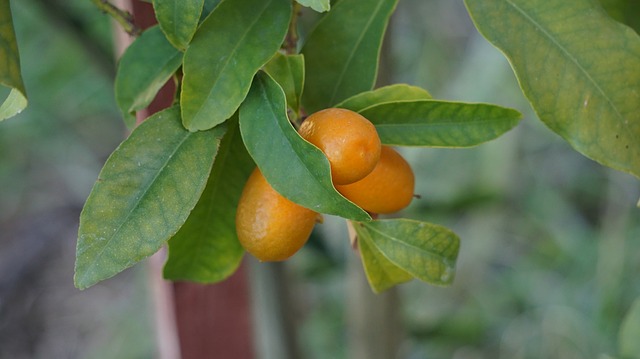
If your goal is to grow actual fruit, rather than simply a lovely flowering tree, then picking the right variety to start with will greatly improve your odds of success. For best results, stick with fruits that are decidedly acidic, such as improved Meyers lemons, kumquats, and ponderosa limes and avoid the sweeter citrus options like sweet oranges and grapefruits.


2. Pick the right pot


Even dwarf variety trees intended for growing in containers require a decent amount of room in order to thrive. Plants that are 2-3 years old will do OK in 12-inch diameter (5-gallon) pots. Four- to five-year-old plants will need something closer to a 24-inch diameter (15-gallon) pot.


Need Non-GMO Seeds? Get Them From A Company You Can Trust!


Although pots can be made of almost any material, note that plastic ones do tend to warm the roots more than other materials, potentially damaging them, while wood ones are more prone to rot.


3. Not all dirt is created equal


While at first glance soils may look similar, it’s important to give your new container-bound best friend a good place to put down roots by using quality potting soil. Potting soil is formulated to handle the increased demands of container plants, and it drains significantly better than even good caliber gardening soil.


When planting, keep the root crown just above the surface of the soil and the top of the leggy root mass just below the surface.


4. Keep dish soap around

7 Steps To Growing Citrus Indoors ... No Matter Where You Live

Image source: Pixabay.com


Few things are as important to your growing citrus tree as appropriate moisture. Make sure the bottom of the pot allows for good drainage, and then wait for the surface of the soil to dry out between watering. When watering, thoroughly soak the root ball.


Sometimes, you may notice that the water seems to go straight through the soil without actually soaking the root ball. This happens because, as it dries out, the root ball shrinks and pulls away from the edges of the container, allowing water to sneak through in the gaps. To remedy the situation, simply add a few drops of mild dish soap to the exposed root crowns before watering — it will help the water adhere enough to re-soak the root ball.


5. Fertilizer it, slow and steady


Citrus plants are strikingly susceptible to nutrient deficiencies, especially when it comes to iron, manganese and zinc. These deficiencies will cause leaves to yellow and the plant to suffer.


Get Out Of The Rat-Race And Make Money Off-Grid!


Potting increases the stress on citrus soils because the necessary amount of drainage can flush away soil nutrients even faster. To counteract these effects, select slow-release, chelated fertilizers to help keep your indoor citrus well-nourished.


6. Watch the lighting


Most homes are darker, warmer and drier (especially in the winter) when compared to a citrus tree’s natural surroundings. Keep your plant feeling right at home by upping the light levels and the humidity. Cool, well-lit spaces, like a partially heated sunroom, are especially well-suited for growing indoor citrus. Grow lights are another possible addition sure to be loved by lemons, limes and all their bright-flavored buddies.


7. Watch out for suckers!


Finally, keep an eye out for suckers. Most dwarf citrus varieties have been grafted onto borrowed root stock. Often, the root stock will try and send up growth of its own. Known as “suckers,” these little branches will steal away nutrients and energy from the rest of the tree and should be removed as soon as spotted. To preserve the health of the tree, carefully cut away any branches that appear below the graft scar, typically located just a few inches above the crown roots.


Few things taste better than fresh citrus, and a potted citrus tree is sure to add beauty and interest to any home. Use these tips to help get started growing container fruit that will make the grocer’s produce aisle jealous.


What advice would you add? Share your indoor growing tips in the section below:


Discover The Secret To Saving Thousands At The Grocery Store. Read More Here.


Thursday, October 12, 2017

Florida's Farmers Produce Smallest Orange Harvest Since WWII After Irma Wiped Out Half Of Crops

Hurricane Irma wiped out nearly 50% of Florida’s iconic orange crop when it buffeted the state with 160 mph winds and a massive storm surge last month, sending orange concentrate futures rocketing higher and stoking speculation that the state’s embattled orange growers – already struggling to fend off a worsening “greening” epidemic that’s constrained production over the past decade – might never recover.


And in a development that confirmed traders fears that this year’s crop could be the smallest in decades, which in turn increases the likelihood that prices will remain elevated for the time being (no doubt conferring some small boost to headline CPI), Bloomberg is reporting that the state’s 2017 orange crop was its smallest since 1942, with 31 million boxes harvested.


Oranges are also grown in California, but the drop in Florida orange stocks was largely responsible for the smallest national yield since 1964. In the season that ended Sept. 30, orange output was 68.7 million boxes, according to US Department of Agriculture data. The record low was 4 million boxes in 1918. The data go back to 1913.


While it ultimately bypassed the state, Hurricane Katia terrified farmers and traders when it briefly appeared set to deliver the second devastating blow to the industry in two weeks.


When it tore through the state in September, Irma caused an estimated $2.5 billion in damage to the state’s agriculture, the Florida Department of Agriculture and Consumer Services said on Oct. 4. Preliminary estimates showed $760.8 million in damage to the citrus industry.


But more importantly, if CPI climbs in the coming months, will Janet Yellen (or maybe her successor) credit the oranges, like she once blamed falling prices for cellphone data plans for a "transitory" decline?

Friday, September 29, 2017

Florida's Orange Growers May Never Recover From Hurricane Irma

Hurricane Irma destroyed half of Florida’s citrus crop when it tore through the state earlier this month, as we reported earlier this month. The state’s orange growers at the time described the damage from the storm as the worst they’d seen in their lifetimes, as we reported at the time.


Many of the affected groves of oranges and grapefruits were approaching harvest, too – and their destruction helped send the price of orange concentrate futures rocketing higher.


Unfortunately for Florida’s citrus growers, the damage caused by Irma exacerbated declining output caused by an epidemic of “citrus greening” that’s in its twelfth year. The state’s increasingly exasperated farmers are now facing an unprecedented squeeze, the Wall Street Journal reports, as damage caused by the storm disrupted research into a genetically modified, greening-resistant orange tree.


Farmers believe that modifying orange trees to make them resistant to greening is vital for the long-term survival of one of Florida’s most iconic industries (as WSJ points out, oranges appear on Florida license plates). Greening first emerged in the state back in 2015, and is believed to be caused by tiny disease carrying insects that were first introduced when farmers purchased orange trees from Asia back in 2004.


Against this backdrop is intensifying competition from orange growers in Brazil, who are trying to horn in on the US orange-juice market (most of Florida’s oranges are processed into orange juice, while Oranges grown in California are eaten.


“…Hurricane Irma this month hit a direct blow on Florida’s citrus groves, knocking 50% of developing oranges off trees across the state, according to the University of Florida Institute of Food and Agricultural Sciences. Trees with roots already weakened by greening were sitting in 4 feet of water in some of Florida’s southern areas earlier this month. During the storm, nurseries quarantined to keep out the disease lost roofs, and scientific laboratories working on anti-greening projects lost power, potentially compromising research years in the making.


A disease called “citrus greening” is pushing Florida’s orange juice industry toward the brink of collapse. Greening starts at the leaves and works its way through the tree like a hardening of the arteries, blocking nutrients and water. Oranges drop off branches unripe and unusable. This year’s crop will likely be the smallest since the 1940s.


So miserable is the condition of Florida’s orange industry that farmers are banking on inventing a genetically engineered orange that will be ready for sale—at the earliest—in 2022.”


The secret grove—1.5 acres of knee-high trees created with a spinach gene scientists hope can defend against the disease—is down an unmarked road and behind locked gates. Visitors are logged; the company requested photographs taken by a reporter offer no clues to the grove’s location.


“We’re a bunch of scientists sitting on 12,000 acres and a giant orange juice plant we need to use,” said Tim Eyrich, vice president of research and commercialization at Southern Gardens Citrus, the company developing the engineered fruit. “If this collapses, all your orange juice comes from Brazil.”


Greening, which affects all citrus fruits, has caused Florida’s orange output to decline by roughly half over the past decade, according to the US Department of Agriculture. Revenue and jobs in the citrus sector are each down by about a third in the past three years. The state’s industry recorded revenue of $9 billion in 2016. Falling production has helped drive a roughly 50% increase in the price of orange juice sold on grocery store shelves. Meanwhile. Brazil has stepped up orange production, threatening to crush the industry in Florida. Brazil’s larger groves and different practices have helped control the spread of greening. The USDA estimates that Brazil’s total output of orange juice will rise 55% this year from last year, with exports rising 28%. Brazil’s production lead over the US has doubled since around 2003.


The situation is growing so dire that Brant Schirard, a citrus grower along Florida’s eastern belt told WSJ that growers are already starting to give up on orange farming, choosing instead to diversify into blueberries, peaches, hops and pineapples, among other crops. Across the state, about 130,000 acres of citrus have been abandoned because of greening. Back in 1977, the state boasted 53 orange juice processing plants. Today there are only seven.


As if the intensifying foreign competition and rampant disease weren’t enough, sales of orange juice have weakened dramatically as Americans seek to avoid sugar, and increasingly don’t sit down for breakfast. Orange-juice sales have declined 48% since 2005.


Even as consumers have become increasingly wary of genetically modified foods, researchers in the state are experimenting with a few different methods to cultivate trees that are immune to greening.


“Since 2009, the USDA has invested more than $400 million to study resistant plants, pesticides and other chemicals to attack the disease.


The technology Southern Gardens is using, developed by Texas A&M University, inserts a gene that is a part of the immune system of spinach into the genetic structure of an orange. The modified cells grown in a lab eventually shoot out roots and are planted in soil and develop into trees. The project is among Florida’s most promising efforts for a cure, even though the trees are still five years away from producing fruit.


The company is also experimenting with adding a spinach gene to a harmless virus naturally living inside the “phloem”—the vascular system of the tree—without affecting the genes of the tree itself.


It’s a yearslong process. Scientists wait for psyllids to come to the grove naturally to infect the trees, and then see if they are resistant to greening. “All it takes is one hurricane and you’re back to square one,” said Michael Rogers, director of the Citrus Research and Education Center at the University of Florida Institute of Food and Agricultural Sciences.”


To summarize, farmers may one day look back on Irma as the storm that killed Florida’s citrus industry. But regardless of whether Brazil threatens to undermine domestic producers, it’s nothing that a 35% tariff approved by President Donald Trump - who, we imagine, would be eager to burnish his reputation as a friend to American industry, especially in a crucial swing state like Florida.
 

Friday, September 15, 2017

Florida Farmers Say Irma's Damage Is The Worst They've Ever Seen

Authored by Mac Slavo via SHTFplan.com,


Almost half of Florida’s citrus crops were destroyed during the hurricane and when Florida farmers survey the damage caused by Hurricane Irma, and most are saying it’s the worst destruction to their farms that they’ve ever seen.


When the worst of Irma’s fury had passed, Gene McAvoy hit the road to inspect the citrus groves and vegetable fields in Florida. McAvoy is a specialist on vegetable farming at the University of Florida’s extension office in the town of LaBelle. LaBelle is located in the middle of one of the country’s biggest concentrations of vegetable and citrus farms.


According to NPR, the storm made a direct hit to those fields. “The eyewall came right over our main production area,” McAvoy says.


Irma had destroyed almost half of the citrus crops in the central Florida area, meaning prices are likely going to go up sharply.


Many of the destroyed groves of oranges and grapefruit were actually approaching harvest too.


But after Irma blew through, it left “50 or 60 percent of the fruit lying in water [or] on the ground,” says McAvoy. Many trees were standing in water, a mortal danger if their roots stay submerged for longer than three or four days. About a quarter of the country’s sugar production comes from fields of sugar cane near Lake Okeechobee, just east of LaBelle.


Harvest season for the sugar cane crop is only a few weeks away, but Irma knocked much of the cane down, making it more difficult to harvest. “We won’t know the exact extent of the loss until it’s harvested,” McAvoy says.


Fortunately for the vegetable farms, most had yet to be planted, so the destruction was minimal.  But that won’t help the destroyed citrus produce. For example, the strawberry crops had not been planted when Irma struck. Some of the plastic laid in anticipation for planting was ruined, however,  growers can repair the damage that was done and plant the strawberries on schedule.


“It’s probably the worst hurricane that we’ve ever seen,” McAvoy says, although he says Wilma, in 2005, was nearly as damaging. “It’s just not a good day in Florida today,” says Lourdes Villanueva, who works with the Redlands Christian Migrant Association, which provides services for farm workers in the state. Villanueva says the storm destroyed many trailers and other houses where workers live. “The ones where the roof didn’t go, trees fell on them,” she says.


Farmers also worry that migrant workers won’t want to come to the farms if there is no housing, and many are just rubble now after the encounter with Irma. The crop damage will affect a large part of the United States and the price paid for citrus fruits at the grocery store is likely to go up.

Saturday, September 9, 2017

12 Natural Ways To Rid Your Home Of Spiders (No. 6 Will Do It FAST)

12 Natural Ways To Rid Your Home Of Spiders (No. 6 Will Do It FAST)

Image source: Pixabay.com


You probably have heard the statement that you are “always within a few feet of a spider.” Several Internet sources cite a 1995 article by arachnologist Norman Platnick as the origin of that statement, which is a myth.


Spiders simply do not thrive everywhere humans go, so there are plenty of times you are far away from the nearest spider. Additionally, people often mistake other bugs – including dust mites, fleas and lice – for spiders.


However, it is true that most of us frequently find spiders inside our homes. Spiders like to hang out in corners and other dark spots, behind or below furniture, in cabinets, in basements, in garages and in the cracks and crevices of our homes.


Although most spiders are not dangerous, most of us would prefer they not take up residence where we do, especially if babies or small children are in the house. Here is our list of time-tested natural ways to keep your home spider-free.


1. Clean up the clutter inside. One of the main reasons we find spiders in basements, garages and attics is because we tend to have boxes and other stuff there where they can easily hide.


Reduce the clutter and sweep up dust and debris to make these areas less attractive for spiders. Also, remove cobwebs when you see them.


2. Cut back vegetation outside. Keep shrubs and bushes trimmed away from the exterior of your home, especially near doors and windows, as they provide good places for spiders to hide.


In addition, keep woodpiles, leaf pikes and other debris away from your home. Spiders will often live in these areas and then make their way into your home if it is close by.


3. Seal cracks and holes. An effective way to keep spiders out of your home is to lock them out by sealing cracks and holes in doors, windows and siding. (This, of course, is essential for keeping other insects out, too.) Install weather stripping and secure screens.


4. Adopt a cat. Cats enjoy chasing, catching and even eating spiders. Maybe this is your opportunity to adopt a furry friend.


5. Essential oils. You can make a natural “spider spray” with water and a few drops of essential oil. Spiders detest the smell of peppermint, making it an excellent choice. Simply fill a spray bottle with water, add about eight drops of oil, shake to mix and then spray wherever spiders frequent.


Another idea is to add a couple of drops of peppermint oil to a cotton ball and place it in areas where you have seen spiders.


12 Natural Ways To Rid Your Home Of Spiders (No. 6 Will Do It FAST)

Image source: Pixabay.com


Not into the smell of peppermint? Other essential oils to try are lavender, citronella and eucalyptus.


6. Diatomaceous earth (DE). This is a natural powder-like substance that that comes from the fossilized remains of phytoplankton. Sprinkle it around the perimeter of your home to keep spiders out. It works on other insects, too.


Diatomaceous Earth: The Best Natural Way To Get Rid Of Spiders!


7. Vinegar. You may have read about amazing uses for white vinegar in your home. Here’s another one. Fill a spray bottle with a 50-50 mix of water and white vinegar and spray it in cracks, crevices and corners of your homes. It will do a great job of repelling spiders.


8. Citrus. Save your lemon, orange, grapefruit and lime peels and then place them along baseboards, in corners or along windowsills to repel spiders. You will need to replace the peels every few days for best results. You also can use essential oils in citrus scents to get rid of spiders.


9. Baking soda. Like white vinegar, baking soda is a powerhouse around the home. You can sprinkle it in corners, doorways and windowsills to keep spiders – and other bugs — at bay.


10. Chestnuts. Here is one you may never have heard before. The odor of chestnuts really bothers spiders, so you can deter spiders by placing chestnuts in trouble areas. Poke a few holes in the nut to release the scent more fully.


11. Turmeric. This fragrant spice, which is in curries and other Indian dishes, is repugnant to spiders. Mix two or three tablespoons of pure turmeric powder with water and stir to make a paste. Then apply the paste with a spoon to areas where spiders congregate. (Please note that turmeric can leave a yellow stain, so take care where you place it.)


12. Salt. Common table salt can get rid of spiders. Simply make a saltwater solution and spray it into cracks and crevices to keep the creatures from entering your home.


Most common spiders are not harmful to you, your family or your pets. However, if you are unsure if a certain spider is poisonous or not, check out the Centers for Disease Control website.


What advice would you add? How do you keep spiders and other bugs out of your home? Share it in the section below:


If You Like All-Natural Home Remedies, You Need To Read Everything That Hydrogen Peroxide Can Do. Find Out More Here.