Showing posts with label apples. Show all posts

Monday, January 29, 2018

12 Surprising Health Benefits Of Apples You Probably Didn’t Know

12 Surprising Health Benefits Of Apples You Probably Didn’t Know

Image source: Pixabay.com


We’ve all heard “An apple a day keeps the doctor away,” but just how much truth is there to the old adage?


First, let’s look at the origin of that popular saying. According to Caroline Taggart, author of An Apple a Day: Old-Fashioned Proverbs and Why They Still Work, the saying originated in Wales with a slightly different wording. ‘‘Eat an apple on going to bed, and you’ll keep the doctor from earning his bread” was the similar statement first recorded in the 1860s. During the 19th century, the adage changed to “An apple a day sends the doctor away,” and then it morphed again in the 20th century into the phrase we know today.


Although the saying may have originated in modern times, the health benefits of apples have been known since ancient times. Apples were part of traditional Ayurvedic medicine in Southern Asia, dating back some 1,500 years, and historians believe that the Ancient Anglo-Saxons and Romans prized apples for their nutritional benefits.


Harness The Power Of Nature’s Most Remarkable Healer: Vinegar


Apples are a good source of natural fiber, are low in calories and are a great source of vitamin C. Here are 12 healthy benefits of apples.


1. Dental care. When you bite and chew an apple, you stimulate saliva production in your mouth, lowering the levels of bacteria there and reducing the chance for tooth decay.


2. Brain power. Apple consumption can boost levels of the neurotransmitter acetylcholine in the brain, aiding your cognitive function.


3. Nerve protection. The high fiber content and antioxidants found in fruits like apples may help protect against nerve disorders such as Parkinson’s Disease, which affects the central nervous system.


4. Reduced risk for certain cancers. Cancer researchers recommend a high fiber intake to reduce the risk of colorectal cancer. In addition, apple peel contains compounds called triterpenoids that may help limit the growth of cancer cells in the colon, liver and breast.


5. Lower risk of diabetes. The soluble fiber found in apples helps regulate blood sugar swings and may help protect against the onset of type 2 diabetes.


6. Lower cholesterol. That same high quantity of soluble fiber in apples helps your intestines and lowers your “bad” cholesterol levels. Lower cholesterol is good for your heart and aids in the prevention of other health issues, such as gallstones.


7. Heart health. The fiber in apples also helps your arteries stay stronger and clearer of plaque, which can build up and lead to coronary disease.


8. Digestion. Dietary fiber, such as the healthy kind found in apples, aids the body’s digestive and elimination processes, helping the colon and bowls to work effectively.


9. Weight control. Foods that are high in fiber but low in calories – like apples — help you feel fuller longer, which can aid in weight reduction.


10. Detoxification. You can help your liver do what is supposed to do – cleanse your body of toxins – by eating fiber- and nutrient-rich apples


11. Immunity boost. The antioxidant called quercetin that is found in red apples can aid your immune system, helping you fight off infection, especially when you are stressed.


12. Eye health. People who have a diet rich in certain fruits – including apples – are less likely to develop cataracts as they age.


So, will an apple a day really keep the doctor away? There are no guarantees when it comes to health. However, a diet that includes delicious, inexpensive, portable and versatile apples certainly can’t hurt.


Sources


https://www.washingtonpost.com/lifestyle/wellness/history-behind-an-apple-a-day/2013/09/24/aac3e79c-1f0e-11e3-94a2-6c66b668ea55_story.html?utm_term=.d5a36f2fe361


http://usapple.org/wp-content/uploads/2016/04/Health-Benefits-Research-Summary_Feb2016-2.pdf


https://www.ncbi.nlm.nih.gov/pmc/articles/PMC442131/


http://www.ucdmc.ucdavis.edu/medicalcenter/healthtips/apples.html

Wednesday, January 10, 2018

The Amazing Healing Properties of Apples

The Amazing Healing Properties of Apples | apple_doctor_keep_him_away | Natural Medicine Special Interests


This commonly overlooked superfood protects the body from nuclear fallout, kills a wide range of cancers, and keeps the arteries unclogged — to name but a few, experimentally confirmed ways in which the apple awakens your inner physician.


“An apple a day keeps the doctor away.”


This age old saying has never rang truer with greater promise and authority than it does today. As in the modern era, doctors bring with them a battery of tests, drugs, and interventions, all of which carry unintended, adverse health risks that often outweigh their purported benefits, and are thereforebest avoided whenever possible.


While some might take this opening aphorism as mere folk medicine fantasy, the reality is that the medicinal properties of apple are well-documented within the biomedical literature.


For instance, apple consumption has been the subject of quite a few studies on colorectal cancer risk reduction. [i] [ii] [iii]  Other cancers that apple constituents have been studied to kill in pre-clinical research include:


  • Liver Cancer: apple juice, apple pectin and apple peel has been experimentally confirmed to kill liver cancer,[iv]

  • Breast Cancer: apples have been found to both prevent and to suppress mammary cancers in the animal model.[v]

  • Multi-Drug Resistant Cancer: carotenoids extracted from apple have been found to inhibit drug resistant cancer cell line proliferation.[vi]

  • Esophageal Cancer: An apple-derived procyanidin has been found to suppress esophageal cancer. [vii]

  • Stomach Cancer: One of the ways in which apple constituents prevent stomach cancer is through their inhibition of Helicobacter pylori, one of the main infectious agents linked to both ulcer and gastric cancer.[viii]  But apple procyanidin has also been studied for its ability to directly induce programmed cell death within stomach cancer cells.[ix]

It is likely that many of the fundamental processes involved in cancer initiation and promotion are inhibited by apples and their constituents, and therefore apples may protect against far more cancers than referenced above. It appears that no matter what part of apple is studied, it has anti-tumor properties. Apple cider vinegar, for instance, has been found to contain an anti-tumor compound which results from the acetic acid fermentative process known as alpha-glycan.


Another proven way in which apples reduce the risk of cancer is through their ability to remove carcinogenic radioisotopes that have accumulated in our bodies as a result of the fallout from nuclear weapons, depleted uraniummunitions, and nuclear energy and disaster-associated pollution, e.g. Chernobyl and Fukushima.


Post-Chernobyl, for instance, apple pectin was used to reduce Cesium-137 levels in exposed children, in some cases by over 60%.[x] From 1996 to 2007, a total of more than 160,000 “Chernobyl” children received pectin food additives. As a result, levels of Cs-137 in children’s organs decreased after each course of pectin additives by an average of 30-40%.[xi] Significant reductions were noted in as short a time period as 16 days.[xii]  Apple pectin has even been found to prevent the most deadly, and entirely man-made radioisotope, Plutonium-239, from absorbing in the gastrointestinal tract of animals fed it.[xiii]


We could, therefore, modernize our apple aphorism by saying “an apple a day keeps the nuclear fallout away.” And truly, there are very few other substances, natural or synthetic, that have ever been found to protect against plutonium exposure. Apples, therefore, are truly super-foods in this respect.


Other noteworthy “evidence-based” medicinal properties of apple include:


  • Diarrhea: Apple, in combination with chamomile, shortens the course of unspecific diarrhea in children.[xiv]

  • Hardening of the Arteries (Atherosclerosis): Preclinical research indicates that apple contains compounds which prevent the formation of plaque within the arteries.[xv] One rabbit study, for instance, found that apple juice was capable of preventing the progression of atherosclerosis in a high cholesterol diet induced model of atherosclerosis.[xvi]

  • Overweight: A human study found significant weight loss associated with a daily intake of three apples or three pears among overweight women.[xvii]

  • Anti-Aging (Brain): Apples have been found to prevent oxidative damage and impaired maze performance,[xviii]as well as decreases in cognitive performance in aging mice.[xix] Also, a study performed on mice found that apple juice actually reduced the production of pathological amyloid-beta levels (associated with Alzheimer’s disease) in the mouse brain.[xx]

  • Bowel Inflammation: Preclinical research has found that apple procyanidins [xxi]reduces bowel inflammation.[xxii]

  • Vaccine-Induced Toxicity: Many natural substances, including breast milk, have been found to decrease the synthetically-produced immune reaction associated with vaccines, and their adjuvants. Apple polyphenol counts among these, and has been found to prevent cholera toxin when used as an immune stimulant within vaccines from doing as much damage than it would otherwise do.

  • Periodontal Disease: We all know the sensation that follows eating an apple – that astringent property, where our gums feel squeaky clean. This is due, in part, to quercetin, which is found in apples, tea and onions, for example. It bears significant antimicrobial properties.[xxiii]Apple polyphenol also protects against periodontal ligament cell destruction associated with Porphyromonas gingivalis, a pathogenic anaerobic bacteria, infection.[xxiv]

  • Advanced Glycation End-products (AGEs): AGEs are associated with the oxidation of blood sugars, primarily. These sugars becomes caramelized when exposed to oxidants, and then binds to cell structures, e.g. fats/proteins, causing damage. Apple leaves have been found to have significant anti-AGE activity, including the vasoconstriction associated with AGE-induced endothelial dysfunction.[xxv]

  • Hair Loss: Remarkably, a procyanidin, labeled B-2, from apples promotes hair growth, in the cell model.[xxvi]

  • Staphylococcal Infections: Apple pectin has been shown to inhibit synthesis of types A and B staphylococcal enterotoxins, which can cause profound bodily damage.[xxvii]

  • Influenza Infection: Over 60 years ago researchers found that the complex carbohydrates that make up apple pectin inhibit the infectivity of influenza A virus in chicken blood, as well in embryonated eggs, indicating its potential anti-influenza properties.[xxviii]

The list of evidence-based therapeutic properties of apple is rather extensive. To view the full range of experimentally confirmed benefits view them here:Apple’s Health Benefits.


Ultimately, this research on apples indicates how important whole foods are to our overall health. Apples are not medicine, rather, they are the means by which medicines become unnecessary. It is through authentic nourishment and detoxification – both functions which are provided to us through most fruits – that we prevent and treat disease (note: these statements likely will never be evaluated or approved by the FDAbecause they are true). Also, fruit are archetypally beneficial foods for the human species; we have indexed over 300 experimentally confirmed health benefits of fruit on our database so far. Our evolutionary legacy (confirmed through modern genetic testing*) indicates that our pre-human ancestors lived in a jungle setting, where fruit would have been available year round.


This would, in fact, explain why we no longer synthesize vitamin c from glucose – we were so “spoiled” by the abundance of fruit available for so long that we gave up (via genetic mutation or atavism) our ability to provide it to ourselves.  Plants and animals live in symbiosis. For the same reason that our lungs take in oxygen and give off carbon dioxide (which is live-giving to plants), the fruits of these same plants provide a seed (which we help disperse), and a flesh to entice us to consume it. Fruit, therefore, is a food source that is as ancient as human origins itself. Could this be one reason why apples seem capable of these amazing feats of healing? Perhaps.


Next time you crunch into a crisp, fresh, organic apple, consider all that it has to offer, not theoretically, but viscerally. Experience the joy (the word fruit, etymologically, comes from the Latin word frui, meaning ENJOY), on a first hand basis. Also, if you have never done an apple mono-diet before, consider it. It is not so much a fruit fast, as a feast. Grab a bag of organic apples, and whenever you are hungry eat one. You will be surprised by how immediate you are satiated, and how cleansing and liberating on the body the exclusive consumption of such a simple, perfect food like the apple really is. One can easily go a day or two using this approach, often with the result of feeling completely renewed and refreshed.


Resources


*Note: It is a little known and under-appreciated fact that all humans are born with a serious, life-threatening genetic defect: namely, the inability to manufacture Vitamin C.


This defect occurred approximately 63 million years ago, when our haplorrhini (“simple nosed”) primate predecessors lost the gene (Gulnolactone oxidase pseudogene – GULOP), responsible for the manufacture of Vitamin C from glucose.


The ability to synthesize Vitamin C, in fact, has been lost several times in vertebrates, e.g. in guinea pigs, some bats, some fishes, passeriform birds and in primates of the suborder Haplorrhini, which includes monkes, apes and humans.


© January 9, 2017 GreenMedInfo LLC. This work is reproduced and distributed with the permission of GreenMedInfo LLC. Want to learn more from GreenMedInfo? Sign up for the newsletter here http://www.greenmedinfo.com/greenmed/newsletter.


The post The Amazing Healing Properties of Apples appeared first on The Sleuth Journal.

Friday, September 15, 2017

Apples 101: Which Varieties Store The Longest And Bake The Best

Apples 101: Which Varieties Store The Longest And Bake The Best

Image source: Pixabay.com


Apples are perhaps the most well-known and quintessential American tree fruit in existence today. They can be found on produce shelves from coast to coast—not to mention around the world—and are available year ‘round in most places, are widely enjoyed, and complement many types of cuisines.


It might be a little surprising to learn that apples are not indigenous to the United States, or even to the western hemisphere. The roots of the modern-day American apple tree, Malus sieversii or  Malus sievestris domestica, have been linked by DNA research to wild apples in the mountains of Kazakhstan.


Apple trees are said to have been in existence for thousands of years, and were brought to this continent from Europe by settlers. New cultivars were created—as many as 2000 today by some estimates. Appetizing varieties were used by early Americans for fresh eating and baking, while more bitter results were used by resourceful settlers for cider, vinegar and livestock feed.


Johnny Appleseed Was a Real Person?


Was Johnny Appleseed real, and was he really responsible for distributing apple seeds across the continent? Yes. While legend and hyperbole may paint him larger than real life by some accounts, he was indeed an actual person named John Chapman. He did travel across America in the early 1800s with the intent to establish apple orchards—perhaps at least in part as a commercial venture in hopes to make money in his nurseryman profession—and was fairly successful at that endeavor.


This New All-Natural Fertilizer Doubles Garden Production!


As with nearly all plants grown for food today, modern apple varieties have been bred for constant improvements and new varieties continue to be developed. There are a many types of apple choices available, both as ready-to-eat fruit and as tree rootstock for planting to grow your own.


Apples can be grouped by seasons: summer, fall and winter. Summer apples are ready as early as August, even in northern climates by the end of the month. They are generally sweet and crisp, but only fleetingly. It’s tempting to start stocking up on apples as soon as the earliest varieties come available, but don’t do it. Buy just enough summer apples for fresh consumption, because early varieties do not keep well, even in the refrigerator. There are many varieties of summer apples, including popular choices such as McIntosh, Gala, Zestar and Lodi. But remember that there are regional differences when identifying apples seasonally—McIntosh, for instance, is a fall apple where I live in northern New England, but a summer apple in much of the country.


Most apples in northern growing zones are fall apples. These are the classic, crisp, flavorful fruits that comes to mind for most people when they think of apples, and include many favorite cultivars, from classic supermarket choices like Red Delicious and Fuji to heirloom varieties like Grimes Golden and Blue Pearmain.


There are so many fall varieties, in fact, that further classification is useful. Apples that are bursting with fresh flavor and best eaten out-of-hand are often called “dessert” apples. Other types with a meatier texture and/or larger size are considered to be “baking” or “pie” apples. Apples which offer a twinge of bitterness are called “cider” apples.


Apples 101: Which Varieties Store The Longest And Bake The Best

Image source: Pixabay.com


Within and among those classifications, apples can be described by the degree of “russeting” they have, which is determined by a rough skin and sometimes a granular pear-like flesh. They are also often characterized as either sweet or “subacid”—meaning they are tart. Apples come in a wide assortment of sizes, from the enormous Wolf River which can be the size of a softball to the tiny Lady Apple, and every size in between. They ripen into colors from yellow and green to bright scarlet red to a deep plum color, and vary greatly in shape, from round to oblate.


These Keep Best in Cold Storage


Winter apples are those which keep well in cold storage. Many winter varieties, such as Ben Davis, Fireside, Honeygold and Fuji, last in home root cellars and refrigerators until Christmas and beyond. What’s more, many winter apples actually improve in flavor and texture after they are picked.


It may seem daunting to figure out which apples are best for what purposes and how long they will last, but there is a lot of help and advice to be had. If you buy from a local orchard, the sellers are likely to be very knowledgeable and willing to help you choose. Apples, after all, are likely their passion. If you do not get satisfactory advice at the orchard, you may want to reach out to your local cooperative extension service for advice about what apples grow best in your area. And if you are not buying local apples, many big chain supermarkets keep a handy reference book right in the produce department for use by customers. If all else fails, remember that the best keeping apples are typically the firmest, just about any apple can be used for baking whether it is marketed as a pie apple or not, and even those which turn out to be less palatable for fresh eating can be improved with a dab of peanut butter or a slice of cheese.


Whatever you buy, look for fruit of uniform texture—a soft spot could signify an unseen bruise or other irregularity—and free of other surface blemishes. Mostly ripe is good, too, even though apples will continue to sweeten after picking. Many people say apples keep better if the stem is on the fruit.


Apple orchards in many regions offer a “pick your own” option, a fun family activity which is often more economical than buying apples already picked. In addition to being cheaper, it affords the buyer the opportunity to choose exactly the apples they want. The orchard I go to usually has several different varieties ready to pick at any given time, all the same price, so it’s possible to mix-and-match.


Some pick-your-own—also known as “you-pick”—places provide containers, and others require you to bring your own. Some sell by volume, others by weight. If you are new to apple picking, it’s wise to call ahead or check their website before you go.


While apples do grow in most regions of the country, different apples thrive best in different climates. If you are fortunate, you live in an area which grows your favorites and can buy them locally without having to compromise on choices. Either way, there is sure to be an apple somewhere to please just about everyone.


What advice would you add about apples? Share your thoughts in the section below:

Friday, August 25, 2017

The Simplest And Quickest Way To Make Apple Cider Vinegar, From Scratch

The Simplest And Quickest Way To Make Apple Cider Vinegar, From Scratch

Image source: Pixabay.com


Apple scrap vinegar is a great way to get multiple uses out of your apples each fall. If you’re planning on canning applesauce or pressing your own cider, chances are you’ll have a lot of surplus apple material around that can be used to make apple scrap vinegar at virtually no cost.


Once the apples have gone through the press, the leavings may seem fibrous and dry, but there’s still a lot of sugar and apple flavor left to be extracted. Of course, you could just compost your scraps, but why not get one more use out of them?


Whether you’re practicing skills and planning for a time when every last calorie may count to save your life, or you just live a practical and frugal existence today, minimizing waste while producing useful and healthy cider vinegar seems like an obvious choice. It’s easy!


What to Do


For a small test batch, fill a quart jar with the peels and cores from 5-6 apples. That’s roughly the amount of apple you’ll need to make a pie, so now you have an excuse to practice your pie-making skills, as well.


Cover them with water, adding 1 tablespoon of sugar for each cup of water added. That converts to 1/4 cup of sugar per quart, or 1 cup per gallon for larger quantities. The sugar is necessary because while there is still plenty of sugar remaining in the pulp and peels, it’s not quite enough to get the vinegar going before the scraps spoil in other ways (mold, etc.). Once the vinegar culture gets working, the acidity will rise and they’ll no longer be a risk of contamination, but in the beginning stages, they need that extra sugar hit to get a head-start on the competition. Feel free to use alternative natural sweeteners such as brown sugar, honey or maple for more flavor in your final product, but keep in mind that those sugars are a bit more complex and your vinegar may take more time to mature.


Discover More Than 1,000 Off-Grid-Living Tricks!


The Simplest And Quickest Way To Make Apple Cider Vinegar, From Scratch

Image source: Pixabay.com


Once the sugar water has been added, cover lightly with a towel or cloth napkin, and secure the cover with a canning lid band or rubber band. Fruit flies love vinegar, and they’ll find it quickly if left uncovered. Vinegar need oxygen to develop, so a porous cloth covering rather than a solid lid is essential.


Making vinegar doesn’t require a culture, because there’s enough wild yeast and bacteria in the air and on the fruit scraps to accomplish the job. The wild yeast will first convert the apples and sugar into alcohol, and since the top is left exposed to air (rather than sealed with a water lock as in home brewing), the bacteria responsible for vinegar formation will take over and rapidly metabolize the alcohol to convert it into vinegar.


Place the jar at room temperature, out of natural sunlight. After 2-3 weeks, test your vinegar by giving it a taste. If necessary, allow another 1-3 weeks for the vinegar to strengthen. Once it’s as strong as you’d like it, filter out the fruit and bottle up the vinegar to store indefinitely at room temperature.


Once you’ve got the process down after your test batch, large batches are only a matter of scaling up. Planning to can 100 jars of applesauce or press a whole tree’s worth of cider? Consider making your vinegar in a clean trash barrel, plastic tote, food-safe 55-gallon drum or old bathtub. Just be sure that the top is completely covered by a cloth, held down around the edges with cordage, bungee cords or something similar to keep out the fruit flies.


How Much Can You Make?


A single semi-dwarf apple tree produces 6-10 bushels of fruit per year. That amounts to roughly 10-15 five-gallon buckets full of fresh fruit per year. Juice-to-pulp ratios for cider and flesh-to-core/skin ratios for applesauce vary based on the type of apple, but when pressing cider, a home press should be able to make 2-3 gallons per bushel, or 12-30 gallons of cider per tree. In my experience, each bushel should give you 2-3 gallons of pulp, as well. Each gallon of pulp will yield about half a gallon of cider vinegar, meaning that a single semi-dwarf tree in your backyard can yield as much as 15 gallons of cider vinegar in a single season.


What advice would you add? Share it in the section below:


Harness The Power Of Nature’s Most Remarkable Healer: Vinegar

Wednesday, August 23, 2017

How To Store Apples For 30 Years

How To Store Apples For 30 Years

Image source: Pixabay.com


While the taste of fresh apples can’t be beat, extending the shelf life of apples has been practiced for centuries as a method to have fresh fruit available when it is not in season.


Traditionally, whole apples (typically a variety bred for winter storage) are stored in a root cellar or a cool, dark and relatively humid location in order to preserve them for eating during the winter. Canned apple rings, canned applesauce, apple butter, and dried apples are other traditional ways to preserve apples even longer, for a year or more. So how would you store apples for up to 30 years?


If 30 years sounds like a long time to store apples, it might surprise you to know that “fresh” apples in the grocery store may be nearly a year old when you buy them. Modern developments in commercial food storage allow growers to store produce with a chemical named 1-methylcyclopropene, which blocks the ripening agent of apples (ethylene) and can extend the shelf life of other vegetables such as broccoli, lettuce and carrots. The result is a crop of fresh picked apples that can be stored for ten months or more.


Storing Apples for 30 Years


Dehydrated apple rings stored in an airtight container with an oxygen absorber packet have a shelf life of up to 30 years while maintaining nutritional value.


Discover More Than 1,000 Off-Grid-Living Tricks!


Some important considerations in storing apples using this method: 1) The apples should be dried to the point that they have 10 percent or less moisture content, so they will be somewhat “crispy.” The reason this moisture content level is important is that there is an increased risk of botulism when you use an oxygen absorber with a higher moisture content. 2) the shelf life will be longer if your storage location has a moderate temperature and reduced light. A cool basement would be ideal, while a hot attic or room which fluctuates in temperature will shorten the shelf life of any stored food.


Here’s how to do it, step by step:


  • A dehydrator with an electric fan is recommended.

  • Peeling is optional; we wash the apples and then slice into one-fourth of an inch slices without peeling.

  • We do not use any anti-browning agents. Without an anti-browning agent, the apple flesh will darken a bit; our apples once dry are usually a light tan or beige color.

  • Drying time will depend on the humidity and your dehydrator.

  • Once dry, let them cool for an hour, and then place temporarily into gallon-size plastic bags to “season” the dried slices for a week. Seasoning is not flavoring in this instance, but it accomplishes two things: 1) It distributes any remaining moisture evenly between slices, and, 2) It alerts you if there is too much moisture in your dried apples. If you have too much moisture, you will see condensation on the inside of the sealed bags (in which case you need to dry some more).

  • Once the apples are seasoned, pack into airtight containers. Sealed plastic bags are not ideal for long-term storage. We use glass jars.

Dried apples in a glass jar will last about a year in your kitchen cupboards. This is about the same time as canned apple product. However, in a cool dry and dark place like a cellar, these jars of dehydrated apples will last five or so years without any detectable change in taste. Your kitchen cupboards are simply too exposed to light and temperature fluctuations to be useful in storing items more than a year.


For REALLY long-term storage, up to 30 years, put an oxygen absorber packet in the airtight container when packing, and again, store in a cool, dark and dry place.


What advice would you add for storing apples long-term? Share your tips in the section below

Saturday, May 27, 2017

5 Food-Medicines That Could Quite Possibly Save Your Life

5 Food-Medicines That Could Quite Possibly Save Your Life | garlic | Natural Medicine


Though Mother Nature’s formulas are proprietary, she does not grant patents.


~ Sayer Ji


Some of the most powerful medicines on the planet are masquerading around as foods and spices. While they do not lend themselves to being patented, nor will multi-billion dollar human clinical trials ever be funded to prove them efficacious, they have been used since time immemorial to both nourish our bodies, and to prevent and treat disease.  So valued were these in ancient times that they were worth their weight in gold, and entire civilizations either rose to great power or collapsed as a result of their relationship to them.


What is even more amazing is that many of these “plant allies” are found growing in our backyards, and often sitting there in our refrigerators and spice racks, neglected and under appreciated.  In fact, many of us use these daily unaware that this is why we don’t get sick as often as those who do not incorporate them into their diet. Let’s look at a few examples….


1) Garlic – with the increasing prevalence of multi-drug resistant bacteria and the failure of the conventional, drug-based model to develop effective solutions against them (nor accepting responsibility for creating them), spices have regained their once universal reign as broad spectrum infection-fighters with sometimes life-saving power. Garlic, in fact, has several hundred therapeutic properties, confirmed by a growing body of scientific research, which you can view directly on GreenMedInfo.com.[i]  One quick example of garlic’s power, is in killing multi-drug resistant tuberculosis (MDR-TB), which the mainstream media has termed the “white plague,” roiling the masses with a fear of drug-resistant (but not plant-extract resistant) they are made to believe they are defenseless against.  Last year an article was published in a peer-reviewed scientific journal showing that garlic was capable of inhibiting a wide range of multiple drug resistant tuberculosis strains.[ii] The authors concluded “The use of garlic against MDR-TB may be of great importance regarding public health.”  Garlic’s anti-infective properties do not end with MDR-TB, as it has been demonstrated to inhibit the following pathogens as well:


  • Amoeba Entamoeba histolytica (parasite)

  • Cholera

  • Clostridium

  • Cytomegalovirus

  • Dermatophytoses (a type of topical fungal infection)

  • Haemophilus Influenzae

  • Helicobacter Pylori

  • Herpes Simplex Virus Type 1

  • Herpes Simplex Virus Type 2

  • Klebsiella

  • Methicillin-resistant Staphylococcus A. (MRSA)

  • Parainfluenza Virus

  • Peridontal Infection

  • Pneumococcal Infections

  • Pseudomonas aeruginosa

  • Streptococcus Mutans

  • Streptococcus Infections: Group A

  • Streptococcus Infections: Group B

  • Streptococcus pyrogenes

  • Thrush (oral fungal infection)

This amazing list underscores how important it is to keep a supply of garlic close by!


5 Food-Medicines That Could Quite Possibly Save Your Life | honey | Natural Medicine


2.)  Honey – bees produce a wide range of therapeutic substances beyond honey, e.g. propolis, bee venom, royal jelly, beeswax, bee pollen, etc., but this sweet, sticky stuff that we all love to dip our paw into occasionally, is the most well-known and most copiously consumed of them all – and for good reason, it tastes great!  But did you know that this sweet treat is one of nature’s most powerful healing agents, as well? Here is just a smattering of some of honey’s more scientifically researched health benefits and/or applications:


  • Aspirin-Induced Gastrointestinal Toxicity  (honey  coats the delicate linings of the stomach, preventing aspirin-induced lesions and bleeding)

  • Bacterial Infections

  • Burns

  • Candida infection (despite the fact that honey contains sugar it demonstrates anti-fungal properties)

  • Conjunctivitis

  • Dental plaque (a recent study showed that Manuka honey was a viable alternative to chemical mouthwash in dissolving dental plaque)[iii]

  • Dermatitis

  • Diabetic Ulcer

  • Herpes-related ulcers

  • MRSA (especially for Manuka honey)

There are many more uses for honey than covered here. Needless to say, replacing synthetic sweeteners or highly processed sugars or high fructose corn syrup with a moderate amount of honey may be a great preventative health step to take.


5 Food-Medicines That Could Quite Possibly Save Your Life | red-apples | Natural Medicine


3) Apples – an apple a day does in fact keep the doctor away, especially cancer specialists it would seem.  For instance, one of the most well-established health benefits of consuming apples is to reduce the risk of colorectal cancer. The more apples you consume, the less likely you are to develop this potentially fatal disease.  To view the 5 studies that reference this relationship, go to the GreenmedInfo.com apple research page where you will also find 50 other health benefits of apple or apple byproducts (e.g. apple vinegar) consumption which include:


  • Aging, Reduce Rate

  • Allergies

  • Allopecia (Hair Loss)

  • Diarrhea

  • Insulin Resistance

  • Liver Cancer

  • Radiation Induced Illness

  • Staphylococcol Infection

5 Food-Medicines That Could Quite Possibly Save Your Life | sunlight-palm-frawns | Natural Medicine


4) Sunlight – this one may throw some of you off, but sunlight possesses both energy and information with real, metabolic value and is therefore a source of usable energy for the body – and so, in a very real sense it can be considered a form of food that we consume through our skin by way of its built in, melanin-based “solar panels.”  Not only does adequate sunlight exposure result in the production of vitamin D, a hormone-like substance that regulates over 2,000 genes in the human body — and as a result prevents or ameliorates hundreds of vitamin D deficiency associated health conditions — but sunlight exposure itself has a unique set of health benefits not reducible to simply vitamin D production alone.  One of the more interesting studies performed on sunlight exposure, based on data gathered from over 100 countries and published earlier this year in the journal Anticancer Research, showed that there was “a strong inverse correlations with solar UVB for 15 types of cancer,” with weaker, though still significant evidence for the protective role of sunlight in 9 other cancers. Here are some additional benefits of sunlight exposure:


  • Alzheimer’s Disease

  • Depression

  • Dopamine Deficiency

  • Dermatitis

  • Influenza

  • Multiple Sclerosis

  • Psoriasis

5 Food-Medicines That Could Quite Possibly Save Your Life | turmeric-powder1 | Natural Medicine


5) Turmeric  – quite possibly the world’s most important herb. Named “Kanchani,” or literally “Golden Goddess,” in the ancient Indian healing tradition, its healing properties have been deeply appreciated, if not revered for countless centuries. Turmeric has been scientifically documented to have over 500 applications in disease prevention and treatment. It also has been shown to modulate over 150 distinct biological and genetic/epigenetic pathways of value in health, demonstrating a complexity as well as gentleness that no drug on the planet has ever been shown to possess.


As there are too many health conditions that turmeric may benefit to list, we are listing the top 10 as determined by the GreenMedInfo algorithm which calculates both the evidence quantity (number of articles) and evidence quality (human study valued higher than animal, and so on). Also, the number in parentheses denotes the number of studies on the database demonstrating the beneficial relationship.


  • Oxidative Stress (160)

  • Inflammation (51)

  • DNA Damage (48)

  • Lipid Peroxidation (34)

  • Colorectal Cancer (24)

  • Breast Cancer (60)

  • Colon Cancer (52)

  • Chemically-Induced Liver Damage (34)

  • Alzheimer’s Disease (34)

  • Tumors (23)

For a more in depth look at the 1500+ studies on our site on Turmeric (and its primary polyphenol Curcumin), watch the video below and please share it with others if you find the information compelling.


[i] GreenMedInfo.com, Garlic Research Page: http://www.greenmedinfo.com/substance/garlic


[ii] Pak J Pharm Sci. 2011 Jan;24(1):81-5. PMID: 21190924


[iii] Contemp Clin Dent. 2010 Oct ;1(4):214-7. PMID: 22114423


© May 26, 2017 GreenMedInfo LLC. This work is reproduced and distributed with the permission of GreenMedInfo LLC. Want to learn more from GreenMedInfo? Sign up for the newsletter here http://www.greenmedinfo.com/greenmed/newsletter.

Wednesday, March 29, 2017

Don’t Forget About the 2017 Dirty Dozen List: Most Pesticide-Tainted Produce

Every year the Environmental Working Group (EWG) puts out a list of the 12 types of produce that contain the most pesticides. The group analyzes tests by the U.S. Department of Agriculture for the list. The list was released in the beginning of the year, but it’s important to browse the list multiple times so the information is at your fingertips. [1]


This year, the EWG found that close to 70% of samples of 48 types of conventional produce contained residues of 1 or more pesticides. In all, USDA researchers found 178 different pesticides and pesticide breakdown products in the samples of produce, which numbered in the thousands. These chemicals remained on the produce even after they were washed and, in some cases, peeled.


In a news release, Sonya Lunder, an EWG senior analyst, says:


“If you don’t want to feed your family food contaminated with pesticides, the EWG Shopper’s Guide helps you make smart choices, whether you’re buying conventional or organic produce.


Eating of fruits and vegetables is essential no matter how they’re grown, but for the items with the heaviest pesticide loads, we urge shoppers to buy organic. If you can’t buy organic, the Shopper’s Guide will steer you to conventionally grown produce that is the lowest in pesticides.” [1]


Choosing produce with the least amount of pesticides is vital to the health of children, Lunder says.


“Even low levels of pesticide exposure can be harmful to infants, babies and young children, so when possible, parents and caregivers should take steps to lower children’s exposures to pesticides while still feeding them diets rich in healthy fruits and vegetables.” [1]


The “Dirty Dozen” List


Strawberries are at the top of the list because the USDA found that the most contaminated sample of the fruit had 20 different pesticides. [1]


New to the list this year is pears and potatoes, displacing cherry tomatoes and cucumbers from last year’s list.


At least one pesticide residue was found on nearly all of the strawberries, spinach, peaches, nectarines, cherries, and apples.


On average, the spinach samples contained twice as much pesticide residue by weight than any other crop. In fact, EWG says 3/4 of spinach samples were contaminated with residues of a neurotoxic pesticide banned in Europe for use on food crops. It is part of a group of pesticides that have been linked to behavioral disorders in young children in recent studies.


Read: Pesticides as Dangerous as Secondhand Smoke to Kids


You can find the full list of 51 types of produce on EWG’s website.


The “Clean 15”


Not every fruit and vegetable is coated in chemicals, fortunately, and the EWG also made a list of the types of produce that are least likely to contain pesticide residues.


Sources:


[1] Environmental Working Group


[2] Environmental Working Group


Storable Food


About Julie Fidler:


Author Image
Julie Fidler is a freelance writer, legal blogger, and the author of Adventures in Holy Matrimony: For Better or the Absolute Worst. She lives in Pennsylvania with her husband and two ridiculously spoiled cats. She occasionally pontificates on her blog.

Wednesday, January 18, 2017

Foraging During Winter: 7 Cold-Hardy ‘Survival Plants’ That Could Save Your Life

Foraging During Winter: 7 Hardy ‘Survival Plants’ That Could Save Your Live

Image source: Pixabay.com


Winter is obviously not the best season for foraging for wild plant edibles, but in a survival situation there are many plant-based foods you can use to keep you eating even when prospects for wild game come up short.


With a little work learning what’s edible in your area, you’ll be prepared should you find yourself hungry and on your own in the dead of winter. Here are a few options available throughout the United States:


1. Frozen or fermented fruit


Though by January, apple season has been over for months, many types of apples hold their fruit on the tree all the way through winter, especially native crab apples. Some heirloom varieties of apples have been selected for their ability to hold fruit without dropping them well into cold weather. One such variety is D’Arcy Spice, which is traditionally picked in November months after most apples have dropped, and then stored hung from bags off the tree in winter. The apples themselves will freeze, and slowly begin to ferment into calorie-rich hard cider within their skins when the temperatures rise above freezing. Scientists believe that our ability to digest alcohol stems from the ancient practice of harvesting fermenting fruit in winter and early spring, and needing to get as many calories from it as possible.


Just 30 Grams Of This Survival Superfood Provides More Nutrition Than An Entire Meal!


Foraging During Winter: 7 Hardy ‘Survival Plants’ That Could Save Your Live

Image source: Pixabay.com


Other fruits also hang on the tree or vine through the winter include grapes and hawthorn fruit (an astringent native fruit, similar in some ways to a crab apple). For grapes, many wild species ripen long after birds have already migrated, and hang on the vines to be eaten by returning birds in the spring.


2. Water plants


Water has a buffering effect on temperature, and in less extreme climates the ground near small ponds may be workable during warm spells. That’s a good time to go looking for cattails, which can be identified by their dry stalks sticking up out of the water. Their roots are similar to potatoes and are a rich source of carbohydrates. Watercress growing along banks is also high in nutrients, though unfortunately low in calories. Together, steamed cattail roots and watercress can keep you going until your prospects improve.


3. Tree bark


Foraging During Winter: 7 Hardy ‘Survival Plants’ That Could Save Your Live

Image source: Pixabay.com


The inner bark of many trees is easy to harvest and contains starchy calories that are easily accessed in winter with the use of a sharp knife or even a pointy rock or stick. Trees such as pine, aspen, beech, maple and linden are excellent choices, and some restaurants are jumping on the foraging bandwagon and making a pine bark bacon by marinating the inner bark in salt and spices before roasting it to a crisp in strips.


Though I’m sure pine bacon won’t fool a true carnivore, it’s something that might add a bit of comfort to an otherwise dire situation, and perhaps help you forget that you’re actually eating bark to survive.


4. Wild berries


While many softer fruits are long since eaten by birds or rotted away, some berries hang on through the winter and are a welcome calorie and nutrient source if you can locate them. Teaberries are the fruit of the wintergreen plant, a creeping forest ground cover. The berries remain edible all winter and can be found in melted patches of the forest floor. Cranberries, similarly, remain tasty all winter and can often be found as late as June of the following year still clinging to the low-trailing stems. Rose hips are a bit astringent, but generally hold on roses, wild or propagated, throughout winter and can help fight off vitamin C deficiency.


5. Nuts


Image source: Public Domain Pictures

Image source: Public Domain Pictures


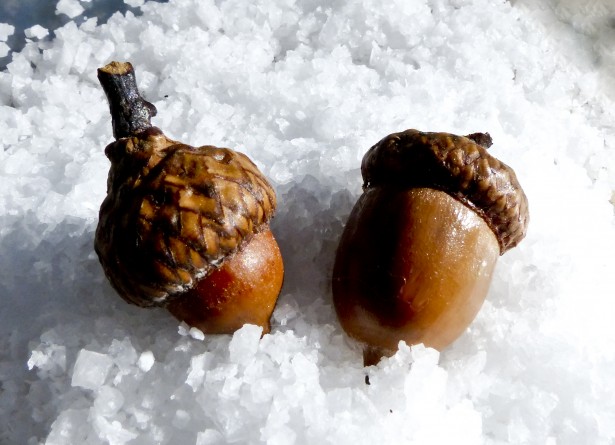
If you’re winter tree identification skills are decent, you can find acorns, butternuts and black walnuts by digging in the snow at the base of those trees. Take care to identify those trees ahead of time, noting the distinctive branching pattern of the butternuts and black walnuts, as well as the diamond bark pattern particularly prominent on butternuts.


Learn The Secrets and Tricks Of The Word’s Top Survivalists!


Once you know how to spot them, they’ll likely be a great high calorie mid-winter food source anywhere squirrel populations are not exceptionally high.


6. Biennial roots


Biennial roots, or the roots of plants that store energy in the first year for seed production in the second year, are a great source of calories in the winter in milder climates where the soil can be worked. Good examples include burdock, wild parsnip, wild carrot (also known as Queen Anne’s Lace), Jerusalem artichokes, thistle root and dandelion.


7. Winter hardy greens


Many nutrient-rich salad wild greens do not die back in winter. They keep their leaves and pause growth during cold and snow-covered spells only to continue growing when temperatures warm slightly or snow cover melts off briefly even in mid-winter. Good examples include sorrel, chickweed, miner’s lettuce and watercress. While they’re not calorie-rich, they can help to balance a diet based on starchy roots or meat by providing micro-nutrients, and help to boost moral by giving you a taste of spring even in the coldest parts of the winter.


What would you add to the list? Share your winter foraging tips in the section below:


Learn How To ‘Live Off The Land’ With Just Your Gun. Read More Here.

Saturday, October 22, 2016

The Health Benefits Of Pectinase

fruit, apples, bananas


Commonly found in many fruits such as bananas and apples, pectinase plays a key role not only in the digestive processes, but also, and perhaps more importantly, in total physical well-being and anti-aging.


Pectin is a type of fiber that makes up the cell wall of many types of fruits and vegetables. It is composed of long polysaccharides that form a gelatinous substance in the center of the plant cell wall and between plant cells. It occurs primarily in the non-woody parts of plants, which, of course, are the parts that most likely to be consumed.


Pectin is a part of our diet not only because of its presence in the fruits and vegetable, but it is also used extensively as a gelling and thickening agent in processed foods, particularly as a thickener in jams and jellies. Pectinase, along with cellulase and hemicellulase, helps with the digestion of plant-based foods, increasing their nutritional and prebiotic value.


During the ripening process plants generally use pectinase to hydrolyze (break down) some of the pectin in and between the cell walls making the cell walls weaker, and therefore soft and edible. This means that when you test an apple or tomato at the grocery store or, even better, before plucking it out of the garden, you are actually checking in part to see if pectinase has become more active indicating that the fruit is ripe and ready to eat.


Health Benefits of Pectinase


1. Promotes Growth and Health of Intestinal Microbiota


Animal research using apple pectin, a widely used type in food processing, demonstrated impressive affects on beneficial gut bacteria including an increase in production of specific short chain fatty acids that provide ideal pH conditions for these bacteria. This is particularly promising since the human gut contains the same type of beneficial bacteria as noted in the research.


2. Provides Fuel for Colon Lining


In addition to helping provide a hospitable environment for beneficial bacteria, fatty acids like butyrate help to provide a large percentage of the fuel necessary for the colon. This can positively influence mucosal blood flow, intestinal motility, and the permeability of the gut. Maintaining these aspects of intestinal health are paramount to guarding proper absorption and helping to reduce the threat of absorption of potential allergens through the gut.


3. Increases Digestibility and Absorption of Plant-Foods


Animals studies show that adding pectinase to livestock feed can aid the digestive process in animals, allowing them better access to nutrients and minerals.


How to Read the Units of Measurement for Pectinase


Pectinase is measured by the FCC in AJDU’s (Pectinase Unit/ml or g). This is a measure of the hydrolysis of various hemicellulose polymers into short-chain molecules and ultimately to 5-carbon sugars. One AJDU is based on the time needed to depectinize a 0.25% pectin containing buffered solution at pH 3.5 and 45°C. The FCC notation stands for Foods Chemical Codex and is a division of USP (United States Pharmacopeia). It sets standards for ingredients. In the case of enzymes, FCC is a standard assay used to accurately determine the activity of enzymes. The current compendium is FCC VI.


Where Can I Find The Best Source of Pectinase?


VeganZyme® contains a 100% vegan form of pectinase extracted from the fermentation of Aspergillus niger. It comes from all vegetarian, non-GMO sources, is kosher certified, gluten free, contains no animal product and is completely suitable for vegetarians and vegans.


VeganZyme is the most advanced full-spectrum systemic and digestive enzyme formula in the world and is free from fillers and toxic compounds. This formula contains digestive enzymes which help digest fats (lipids), sugars, proteins, carbohydrates, gluten, fruits and vegetables, cereals, legumes, bran, nuts and seeds, soy, dairy, and all other food sources.


VeganZyme may also be used as a systemic enzyme blend to break down excess mucus, fibrin, various toxins, allergens, as well as excess clotting factors throughout your body.


References:


  1. Dr. Umesh L. Apple pectin as a novel prebiotic substance, that helps the intestinal microbiota. Med-Chemist. 2010 January 25.

  2. Tine R Licht, Max Hansen, Anders Bergstrom, Morten Poulsen, Britta N Krath, Jaroslaw Markowski, Lars O Dragsted, Andrea Wilcks. Effects of apples and specific apple components on the cecal environment of conventional rats:role of apple pectin (PDF). Licht et al. BMC Microbiology. 2010. 10:13.

  3. Susan S. Lang. In flurry of studies, researcher details role of apples in inhibiting breast cancer. Cornell University. 2009 February 12.

  4. Sherry Baker. An apple a day keeps breast cancer away, six studies conclude. Natural News. 209 February 29.

  5. Leonard R. Johnson. The Physiology of the gastrointestinal tract. Elsevier Academic Press. 2006.

Print Friendly