
Image source: Pixabay.com
Apples are perhaps the most well-known and quintessential American tree fruit in existence today. They can be found on produce shelves from coast to coast—not to mention around the world—and are available year ‘round in most places, are widely enjoyed, and complement many types of cuisines.
It might be a little surprising to learn that apples are not indigenous to the United States, or even to the western hemisphere. The roots of the modern-day American apple tree, Malus sieversii or Malus sievestris domestica, have been linked by DNA research to wild apples in the mountains of Kazakhstan.
Apple trees are said to have been in existence for thousands of years, and were brought to this continent from Europe by settlers. New cultivars were created—as many as 2000 today by some estimates. Appetizing varieties were used by early Americans for fresh eating and baking, while more bitter results were used by resourceful settlers for cider, vinegar and livestock feed.
Johnny Appleseed Was a Real Person?
Was Johnny Appleseed real, and was he really responsible for distributing apple seeds across the continent? Yes. While legend and hyperbole may paint him larger than real life by some accounts, he was indeed an actual person named John Chapman. He did travel across America in the early 1800s with the intent to establish apple orchards—perhaps at least in part as a commercial venture in hopes to make money in his nurseryman profession—and was fairly successful at that endeavor.
This New All-Natural Fertilizer Doubles Garden Production!
As with nearly all plants grown for food today, modern apple varieties have been bred for constant improvements and new varieties continue to be developed. There are a many types of apple choices available, both as ready-to-eat fruit and as tree rootstock for planting to grow your own.
Apples can be grouped by seasons: summer, fall and winter. Summer apples are ready as early as August, even in northern climates by the end of the month. They are generally sweet and crisp, but only fleetingly. It’s tempting to start stocking up on apples as soon as the earliest varieties come available, but don’t do it. Buy just enough summer apples for fresh consumption, because early varieties do not keep well, even in the refrigerator. There are many varieties of summer apples, including popular choices such as McIntosh, Gala, Zestar and Lodi. But remember that there are regional differences when identifying apples seasonally—McIntosh, for instance, is a fall apple where I live in northern New England, but a summer apple in much of the country.
Most apples in northern growing zones are fall apples. These are the classic, crisp, flavorful fruits that comes to mind for most people when they think of apples, and include many favorite cultivars, from classic supermarket choices like Red Delicious and Fuji to heirloom varieties like Grimes Golden and Blue Pearmain.
There are so many fall varieties, in fact, that further classification is useful. Apples that are bursting with fresh flavor and best eaten out-of-hand are often called “dessert” apples. Other types with a meatier texture and/or larger size are considered to be “baking” or “pie” apples. Apples which offer a twinge of bitterness are called “cider” apples.
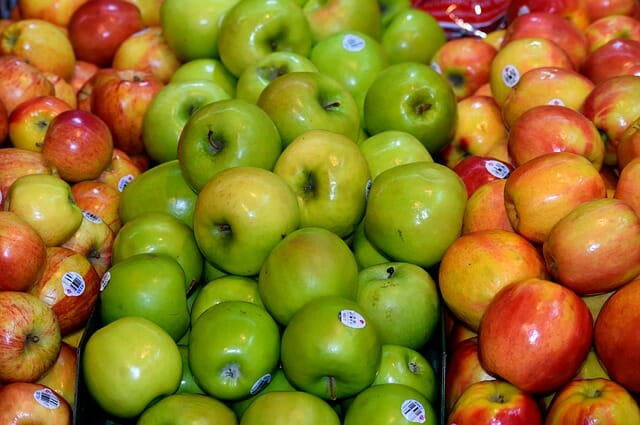
Image source: Pixabay.com
Within and among those classifications, apples can be described by the degree of “russeting” they have, which is determined by a rough skin and sometimes a granular pear-like flesh. They are also often characterized as either sweet or “subacid”—meaning they are tart. Apples come in a wide assortment of sizes, from the enormous Wolf River which can be the size of a softball to the tiny Lady Apple, and every size in between. They ripen into colors from yellow and green to bright scarlet red to a deep plum color, and vary greatly in shape, from round to oblate.
These Keep Best in Cold Storage
Winter apples are those which keep well in cold storage. Many winter varieties, such as Ben Davis, Fireside, Honeygold and Fuji, last in home root cellars and refrigerators until Christmas and beyond. What’s more, many winter apples actually improve in flavor and texture after they are picked.
It may seem daunting to figure out which apples are best for what purposes and how long they will last, but there is a lot of help and advice to be had. If you buy from a local orchard, the sellers are likely to be very knowledgeable and willing to help you choose. Apples, after all, are likely their passion. If you do not get satisfactory advice at the orchard, you may want to reach out to your local cooperative extension service for advice about what apples grow best in your area. And if you are not buying local apples, many big chain supermarkets keep a handy reference book right in the produce department for use by customers. If all else fails, remember that the best keeping apples are typically the firmest, just about any apple can be used for baking whether it is marketed as a pie apple or not, and even those which turn out to be less palatable for fresh eating can be improved with a dab of peanut butter or a slice of cheese.
Whatever you buy, look for fruit of uniform texture—a soft spot could signify an unseen bruise or other irregularity—and free of other surface blemishes. Mostly ripe is good, too, even though apples will continue to sweeten after picking. Many people say apples keep better if the stem is on the fruit.
Apple orchards in many regions offer a “pick your own” option, a fun family activity which is often more economical than buying apples already picked. In addition to being cheaper, it affords the buyer the opportunity to choose exactly the apples they want. The orchard I go to usually has several different varieties ready to pick at any given time, all the same price, so it’s possible to mix-and-match.
Some pick-your-own—also known as “you-pick”—places provide containers, and others require you to bring your own. Some sell by volume, others by weight. If you are new to apple picking, it’s wise to call ahead or check their website before you go.
While apples do grow in most regions of the country, different apples thrive best in different climates. If you are fortunate, you live in an area which grows your favorites and can buy them locally without having to compromise on choices. Either way, there is sure to be an apple somewhere to please just about everyone.
What advice would you add about apples? Share your thoughts in the section below:

