Showing posts with label Student Debt. Show all posts

Thursday, March 1, 2018

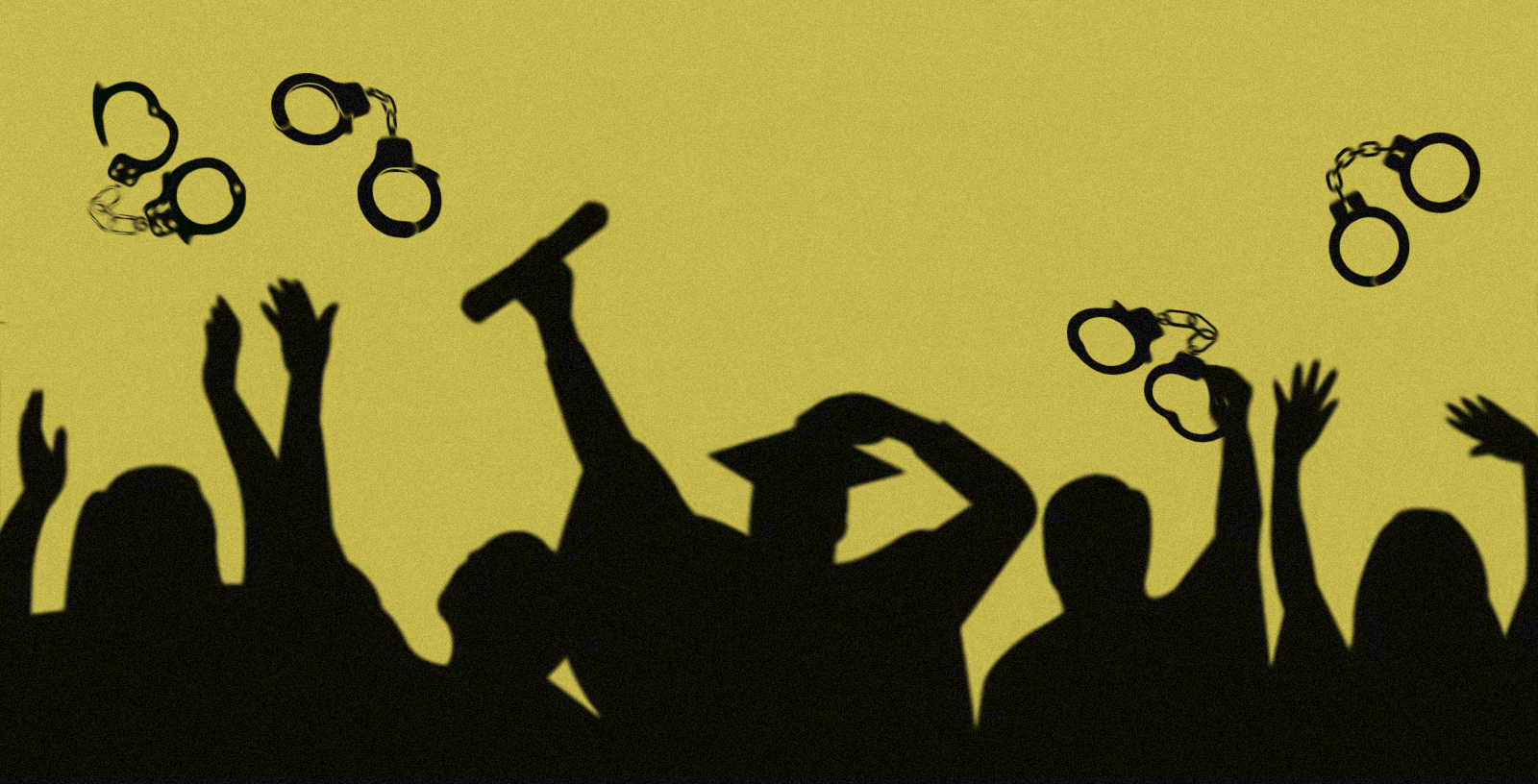
Revoking Work Licenses Over Student Debt Is Cruel And Senseless

By Caleb Trotter


Nearly one-third of Americans today must be licensed by the government in order to do their jobs.


Many of those people are among the 44 million Americans who have outstanding student loans. For that group of people, falling behind on student loan payments can mean that the state will strip them of their occupational license and their ability to earn a living in the job they were trained to do.


You Can’t Squeeze Blood from a Turnip


This shocking policy kicks people while they are down and is an abuse of the government’s licensing authority.


The New York Times recently reported on the troubling practice of some states revoking and suspending occupational licenses of workers who fall behind on student loan payments. According to the Times, at least 19 states, from California to Virginia, have statutes authorizing such heavy-handed collection practices.


These policies have a practical problem, noted by the Times: It’s difficult for a person to bring overdue loan payments current after removing his or her ability to work in his or her chosen field.


The phrase “you can’t squeeze blood from a turnip” comes to mind. But these laws may also be unconstitutional.


The “Rational Connection” Is Lacking


In the 1957 Supreme Court case Schware v. Board of Bar Examiners of the State of New Mexico, the court held that under the 14th Amendment’s due process clause, state licensing requirements “must have a rational connection with the [professional’s] fitness or capacity” to work in their chosen profession.


In that case, Rudolph Schware had applied for a law license but was denied when authorities accused him of lacking a “good moral character” on account of his pro-communist activism some 15-plus years prior.


The Supreme Court reviewed the evidence and held that Schware’s past political activism and resulting arrests were insufficient to call his character into doubt or have any bearing on his ability to practice law. Therefore, the court ordered that he be allowed to sit for the state bar exam.


Likewise, the ability to afford personal loan payments doesn’t appear to have much connection to one’s ability to do his or her job. There are numerous circumstances — from medical problems to divorce or temporary unemployment — that might cause someone to default on a student loan.


A Cruel Catch-22


It’s hard to see why that means someone should not be permitted to continue offering services as a licensed cosmetologist, for example. The license revocation or suspension only becomes a Catch-22, because if they can’t work, they can’t earn the money to pay back the student loan.


Moreover, it is unclear how much discretion licensing boards retain under these laws to pursue less-draconian collection measures before revoking or suspending someone’s license.


Because the vast majority of student loans are given or guaranteed by the federal government, enforcing these statutes often causes state licensing boards to function as little more than debt collectors for the Department of Education — hardly the consumer-protection role they are alleged to perform.


It’s tragic that so many people today have seemingly insurmountable student debt, and it’s appropriate to hold people accountable for the loans they take on, of course.


There are debt-collection laws and even bankruptcy laws that can be enforced. But unless a state can articulate a strong reason why a person with an occupational license is no longer competent to perform his or her job simply because he or she has defaulted on a loan, it makes no sense to take the license away.


At best, the laws are heavy-handed. More likely, they violate the well-established constitutional right to earn a living.


Reprinted from the Daily Signal.


Sourced from FEE.org

Wednesday, November 22, 2017

Defaulting on Student Loans Can Mean Loss of Jobs

Defaulting on Student Loans Can Mean Loss of Jobs | student-loan-debt | Economy & Business Sleuth Journal Special Interests US News


The following states have laws permitting suspension of professional or driver’s licenses of individuals defaulting on student loans – compounding a deplorable racket:


Alaska, Arkansas, California, Florida, Georgia, Hawaii, Illinois, Iowa, Kentucky, Louisiana, Massachusetts, Minnesota, Mississippi, New Mexico, North Dakota, Tennessee, Texas, Virginia and Washington.


Maybe others will join them, part of a great wealth transfer swindle, shifting it inexorably from most Americans to its privileged class, ongoing for years.


The student loan racket is a disturbing government/corporate partnership. Students are exploited for profit. Providers are enriched.


For many, rising tuition and fees make higher education unaffordable. Others need large loans to attend, forced into burdensome debt bondage. For many, it’s crushing.


For too many, it’s permanent, amounts owed unforgiven. Declaring bankruptcy doesn’t end the obligation.


Lenders thrive on defaults. Wages can be garnished. So can Social Security and disability income, along with other retirement benefits. Liens can be placed on property owned. Tax refunds can be seized.


A conspiratorial alliance of lenders, guarantors, servicers, and collection companies profit from debt service and inflated collection fees – a deplorable predatory system.


Principal, accrued interest, late payment and collection agency penalties create enormous burdens to repay.


Once entrapped, escape is impossible. Unless repaid, future lives and careers are impaired.


Outstanding student loan debt exceeds $1.5 trillion, second only to household mortgages – nearly equal to credit card and auto loan debt combined, the amount increasing by an astonishing $3,000 per second, $180,000 per minute, $10,800,000 per hour, over 259,000,000 daily, around $100 billion annually – why it’s so lucrative for lenders and collection companies.


The New York Times addressed the issue, saying “(f)all behind on your student loan payments, lose your job.”


“Firefighters, nurses, teachers, lawyers, massage therapists, barbers, psychologists…real estate brokers (and others) have all had their credentials suspended or revoked.”


Numbers of individuals affected aren’t known because states don’t keep records. Loss of jobs means lost income, for many desperation, many others unable to work in their chosen field, disrupting their lives and welfare.


Failure to make payments on time affects credit ratings, harming the ability to get future loans.


In 1990, the Department of Education urged states to deny professional licenses to student loan defaulters, or revoke them from individuals having them.


American Federation of Teachers president Randi Weingarten called suspending or revoking licenses “tantamount to modern-day debtors’ prison.”


Alaska, Hawaii, Iowa, Massachusetts and Washington aren’t using their laws. Oklahoma and New Jersey eliminated earlier ones enacted into law.


Where enforced, the livelihood of anyone failing to maintain repayments as required is jeopardized.


If out of work because of failure to keep up and having licenses suspended, how is future debt service possible without employment providing income?


Congress bears full responsibility for increasing debt bondage. It ended bankruptcy protections, refinancing rights, statutes of limitations, truth in lending requirements, fair debt collection ones, and state usury laws when applied to federally guaranteed student loans.


Millions of graduates and families are harmed, many relegated to years of debt bondage, for some a lifetime – through legalized wealth extraction, a congressionally sanction extortion racket.


The post Defaulting on Student Loans Can Mean Loss of Jobs appeared first on The Sleuth Journal.

Wednesday, September 27, 2017

Our Crazy-Making, Profiteering Education-Career Maze

Authored by Charles Hugh Smith via OfTwoMinds blog,


The answer is not another $1 trillion in student loan debt to pay for another raft of declining-value credentials.


So let"s say we want to set up a system to help students choose a career that fits their aptitudes and interests. What would we do? How about:


1. Give them zero (or superficial) aptitude and career-related tests.


2. Provide a few minutes with a counselor who knows nothing about them, their aptitudes or potential career-related interests.


3. Design the high school education system to provide near-zero knowledge of finance, debt, economics, how the economy functions and what the world of work demands of workers.


4. Denigrate (subtly or directly) non-college career options, channeling those who aren"t sure into 4-year colleges, higher education paid with student loans designed to maximize profiteering.


5. Force them to choose a major or field of study at 17 or 18 years of age, despite their lack of real-world experience and objective knowledge of how the economy functions and their own aptitudes/character traits.


6. Disconnect this higher education from real-world work places so they exit higher education with little actual knowledge of the skills employers need.


7. When the student graduates after borrowing a fortune and discovers their diploma has low value in the marketplace or is in a field they"ve found they loathe, then suggest the "solution" is to borrow another fortune and invest more years in obtaining another credential.


This is the American education-career maze--ineffective, self-defeating, wasteful, irrational, and apparently designed to maximize student confusion, poor choices and profiteering by higher education and the student-loan racketeers.


As if this wasn"t bad enough, what do we decide to teach our students if careers might be significantly different in 10 or 20 years? Yes, math, the basics of science and communication skills will remain useful as a foundation, but these basics aren"t enough to prepare students for a fast-changing emerging economy/4th Industrial Revolution.


Clearly, it would be enormously beneficial to teach the skills needed to learn on one"s own and adapt successfully to changing circumstances. The current system is a hierarchy of credentialing that enriches those dispensing and funding the credentialing.


Our system"s response to those left behind, those with inadequate skills and those who chose unwisely is always: get another credential, at enormous expense. Nobody tells students that credentials are in over-supply and are therefore losing their value.


Value and profits flow to what"s scarce and in demand. Trying to reach the top of the credential pyramid is a crowded race, and the losers are left with debt and wasted years they could have spent actually learning useful knowledge bases and skills--in effect, pursuing a self-directed path of accrediting yourself.


The education-career maze doesn"t have to be so self-defeating, costly, convoluted or ineffective. My book The Nearly Free University and the Emerging Economy lays out a model of higher education based on workplace apprenticeships in all fields, from carpentry to chemistry to sociology, from Day One, a structure that dramatically lowers costs while providing an education based on real-world acquisition and use of knowledge and skills in the workplace, not sitting in a chair watching a lecture.


Technology is a core part of improving results while lowering costs by 90%. Consider this article: Imagine how great universities could be without all those human teachers.


I describe the process of accrediting yourself in my book Get a Job, Build a Real Career and Defy a Bewildering Economy, which also details the eight essential skills needed to navigate the emerging economy.


What"s the emerging economy/4th Industrial Revolution? It"s not so much the replacement of human labor by robots as the augmentation of human skills with technology, and the focus on a simple but profound source of value creation: what"s scarce and in high demand? What"s abundant and not in demand?


The point of my book is to lay out a pathway of learning how to learn on our own and acquiring the soft skills needed to collaborate, communicate and manage teams/projects effectively, regardless of the field of endeavor.


How can we expect young students with little life experience to choose wisely when they don"t even understand how the economy works? The current education-career maze assumes that some basic math and science knowledge is all students need to figure out their role in a fast-changing economy that they don"t even understand.


The inadequacy of our crazy-making education-career maze boggles the mind. We need to do much, much better, not just for our students but for our society. The answer is not another $1 trillion in student loan debt to pay for another raft of declining-value credentials. We need a new system, and fast. Solutions abound, but not within the current crazy-making education-career maze.


Here"s a snapshot of the workforce"s education level:


Even the most credentialed workers" earnings have stagnated:


And here"s your wunnerful federal government, enforcing debt-serfdom on college students to maximize the profits of the student-loan racket:


If you found value in this content, please join me in seeking solutions by becoming a $1/month patron of my work via patreon.com. Check out both of my new books, Inequality and the Collapse of Privilege ($3.95 Kindle, $8.95 print) and Why Our Status Quo Failed and Is Beyond Reform ($3.95 Kindle, $8.95 print, $5.95 audiobook) For more, please visit the OTM essentials website.

Saturday, September 9, 2017

"The Math Doesn't Work" - Americans Are Losing Faith In College

Authored by John Rubino via DollarCollapse.com,


One of the hallmarks of a successful society is the widespread belief that education is a key to success.


For that to be true there have to be:


1) enough jobs farther up the food chain to make four more years of studying worthwhile, and


2) schools that are good and cheap enough to make the equation work.


The US is losing both:


(Wall Street Journal) – Americans are losing faith in the value of a college degree, with majorities of young adults, men and rural residents saying college isn’t worth the cost, a new Wall Street Journal/NBC News survey shows.


The findings reflect an increase in public skepticism of higher education from just four years ago and highlight a growing divide in opinion falling along gender, educational, regional and partisan lines. They also carry political implications for universities, already under public pressure to rein in their costs and adjust curricula after decades of sharp tuition increases.


Overall, a slim plurality of Americans, 49%, believes earning a four-year degree will lead to a good job and higher lifetime earnings, compared with 47% who don’t, according to the poll of 1,200 people taken Aug. 5-9. That two-point margin narrowed from 13 points when the same question was asked four years earlier.


The shift was almost entirely due to growing skepticism among Americans without four-year degrees—those who never enrolled in college, who took only some classes or who earned a two-year degree. Four years ago, that group used to split almost evenly on the question of whether college was worth the cost. Now, skeptics outnumber believers by a double-digit margin.


Conversely, opinion among college graduates is almost identical to that of four years ago, with 63% saying college is worth the cost versus 31% who say it isn’t.


Big shifts occurred within several groups. While women by a large margin still have faith in a four-year degree, opinion among men swung significantly. Four years ago, men by a 12-point margin saw college as worth the cost. Now, they say it is not worth it, by a 10-point margin.


Likewise, among Americans 18 to 34 years old, skeptics outnumber believers 57% to 39%, almost a mirror image from four years earlier.


Today, Democrats, urban residents and Americans who consider themselves middle- and upper-class generally believe college is worth it; Republicans, rural residents and people who identify themselves as poor or working-class Americans don’t.


Research shows that college graduates, on average, fare far better economically than those without a degree. For example, the unemployment rate is 2.7% among college graduates, compared with 5.1% among high school graduates who never attended college, and Labor Department research shows that bachelor’s degree recipients earn higher salaries than those who never went to college. But the wage premium of getting a degree has flattened in recent years, Federal Reserve research shows.


Student debt has surged to $1.3 trillion, and millions of Americans have fallen behind on student-loan payments.


“Costs have gone up considerably to the point that I think there are a number of people who maybe rightfully say, ‘I’m not in the league of Harvard and maybe not even in the league of really good state schools,’” said Doug Webber, a Temple University econimics professor. Many of those Americans are concluding that paying high tuition at less-prestigious schools isn’t worth it.


College is clearly still a good thing, just not at current prices.


Put another way, higher ed has been in a bubble fueled by government loans and deceptive marketing, and now that bubble is bursting. The old model of extended adolescence in which mom/dad/Uncle Sam cover five or more years of partying and sampling various majors is now beyond the means of more than half the population.


And the trend is just getting started, as soaring debts make it harder for future governments to subsidize higher ed and automation makes an ever-longer list of degrees pointless.


The result: The gap between educational haves and have-nots will continue to widen, as formerly middle-class kids find themselves with – at best – working class prospects. And the political and financial instability that flow from inequality will define the coming decade.

Thursday, August 17, 2017

Which College Offers The "Best Bang" For Your Tuition Buck?

Is making the investment in a college education still worth it? How much debt can you expect to have after you graduate, and how much money will you make in your career?


As HowMuch.net details, Nitrocollege.com crunched the numbers from the top twenty public and top twenty private schools in the country and created a visualization to find out. The data was extracted from the U.S. Department of Education and U.S. News & World Report


We ranked each school according to the median salary someone can expect to earn ten years after enrolling. We then looked at the median student debt graduates typically carry. Focusing on median debt and median earnings makes a lot of sense - half of all students fall above these numbers, and half fall below. We then color-coded each school in a floating bar chart, making the private schools blue and the public schools yellow.


Several things immediately jump out of this visualization.


First off, private schools dominate the top half of the list while public schools by and large fall to the bottom. Graduates from private universities simply earn more money, which suggests that attending a private school pays off in the long run.


Source: HowMuch.net


Top Five Universities by Median Salary 10 Years after Enrollment


  • Harvard - $95,500

  • MIT - $89,200

  • Stanford - $86,000

  • University of Pennsylvania - $$79,700

  • Princeton - $77,900

Something else stands out about our visualization: Harvard students take on significantly less debt compared to their peers from Ohio State. Nobody thinks Harvard is cheaper than Ohio State, right? More to the point, Harvard grads make more than twice as much money. From a financial perspective, it is by far and away the best school. In fact, the 11 universities with the lowest debt loads are all private. This suggests that many students come from wealthy families who can afford to pay the tuition without taking out loans. Perhaps this also affects their career outcomes.


Consider another way to look at the data. Suppose you want to find the best bang for your buck - you want the highest earning potential with the lowest possible debt, but you also want to avoid paying private school tuition. Where should you go?


The University of California, Berkeley offers the best opportunity. Graduates have the highest earning potential of all public schools at $60,800 with the lowest debt burden of $14,200.


There’s a lot that goes into picking the right school. You have to decide how much debt you are comfortable carrying, and ask yourself if the future earning potential is worth it. The most important factor you should consider, however, is how much you are willing to pay for the life-defining experiences that come with a college degree.

Thursday, July 6, 2017

It Takes Most Students Twice As Long As They Hoped To Pay Off Their Student Loans

About 70% of college students – equal to about 44 million Americans - owe a collective $1.4 trillion in student debt. And while the standard repayment plan for federal loans suggests that they should take no more than 10 years to pay back, in reality, it regularly takes twice that long.


“Research from Citizens Financial Group suggests that 60 percent of student debt borrowers expect to pay off their loans in their 40s. Data collected at the state level supports these findings. A study from the OneWisconsin Institute finds that it takes graduates of Wisconsin universities 19.7 years to pay off a bachelor"s degree and 23 years to pay off a graduate degree.”


Meanwhile, the Fed reports that there are 6.8 million student loan borrowers between the ages of 40 and 49 and that together, these graduates hold a collective $229.6 billion in debt. That means that Americans in their 40s with student loan debt each have an average balance of $33,765, according to CNBC.


Many predict that the long-lasting effects of student debt threaten US housing prices as fewer millennials will be able to afford a home, while also delaying retirement.


“The Federal Reserve Board of Washington, D.C. found that an increase in student debt has led to a decrease in home ownership, and a study from NerdWallet predicts that students who graduated from college in 2015 will have to delay retirement until the age of 75, in part because of the increasing burden of student debt.”


CNBC points out that students should plan out how long it will take for them to pay off their loans, but this is easier said than done: Today"s graduates face an uncertain job market, which is forcing more young Americans – members of the so-called millennial generation – to live with their parents for want of work.


Perhaps, more students should consider trade schools, which are cheaper and can often lead to steady career-track work. And as we reported last week, many manufacturing companies are recruiting heavily for well-paying management jobs that don’t require a college degree.

Sunday, June 25, 2017

These Are The US Cities Where Graduates Struggle The Most With Student Debt

With tuition at private colleges routinely eclipsing the $60,000 mark, it’s more important than ever for recent graduates to settle in cities where circumstances allow them to start paying down their massive debt piles as quickly as possible.


That means a city with strong job offers, but where the cost of living isn’t so high as to siphon off a young worker’s earnings.


To that end, Credible crunched the numbers for the country’s 23 most populous cities and ranked them according to how much younger workers struggle with student-debt payments. The lender, using data from 9,000 of its own borrowers, took the average income in each of those cities with the average monthly housing payment and their average monthly student loan payment, and found that the city where students struggle the most is San Jose, Calif., followed by Fort Worth, Texas and Boston, Mass.


In Dallas, Jacksonville, and Houston, the cities that topped Credible’s ranking for the most affordable cities for recent grads, borrowers have more of their income left over after paying their monthly loan and housing bills as compared to the other cities on the list. More than 70% of US students borrow money to attend college, with the average debt load among this cohort amounting to about $37,000.


But even in these cities, “nearly 27 percent of borrowers’ average monthly income is eaten up by their monthly housing payment and their monthly loan payment alone. That doesn’t even take into account other expenses such as taxes, food, or transportation," according to Credible.


It’s also not that far removed from the more than 30 percent of borrowers’ average monthly income dedicated to loan and housing payments in the cities at the top of the list.


But this isn’t that surprising. While monthly housing costs tend to be slightly higher in the least affordable cities compared with the other cities, the margin of difference isn’t large – suggesting that, while affordability might be one factor that grads take into account when choosing where to live, high rents don’t necessarily prevent people from flocking to certain cities.

Friday, June 23, 2017

Americans Are Dying With An Average Of $61,500 In Debt

According to a recent study, the average total household debt in America is just over $132,500, broken down as per the chart below...


... and thanks to the Fed"s recent and ongoing rate increases, the repayment of said debt will become increasingly more difficult. So difficult, in fact, that most Americans will be saddled with a sizable chunk of it at the time of their death.


Actually, most already are.


According to December 2016 data from credit bureau Experian provided to credit.com, 73% of American consumers had outstanding debt when they were reported as dead. Those consumers carried an average total balance of $61,554, including mortgage debt. Without home loans, the average balance was $12,875.


As credit.com reports, the data is based on Experian’s FileOne database, which includes 220 million consumers. (There are about 242 million adults in the U.S., according to 2015 estimates from the Census Bureau.) To determine the average debt people have when they die, Experian looked at consumers who, as of October 2016, were not deceased, but then showed as deceased as of December 2016.


Among the 73% of consumers who had debt when they died, about 68% had credit card balances. The next most common kind of debt was mortgage debt (37%), followed by auto loans (25%), personal loans (12%) and student loans (6%).


The breakdown of unpaid balances was as follows: credit cards, $4,531; auto loans, $17,111; personal loans, $14,793; and student loans, $25,391. And, as a reminder, debt doesn’t just disappear when someone dies.


What happens to that debt when you die, aside from it continuing to accrue interest until someone remembers to inform the creditors?


“Debt belongs to the deceased person or that person’s estate,” said Darra L. Rayndon, an estate planning attorney with Clark Hill in Scottsdale, Arizona. If someone has enough assets to cover their debts, the creditors get paid, and beneficiaries receive whatever remains. But if there aren’t enough assets to satisfy debts, creditors lose out (they may get some, but not all, of what they’re owed). Family members do not then become responsible for the debt, as some people worry they might.


That’s the general idea, but things are not always that straightforward. The type of debt you have, where you live and the value of your estate significantly affects the complexity of the situation. For example, federal student loan debt is eligible for cancellation upon a borrower’s death, but private student loan companies tend not to offer the same benefit. They can go after the borrower’s estate for payment.


To be sure, things can get messy. If your only asset is a home other people live in, that asset must be used to satisfy debts, whether it’s the mortgage on that home or a lot of credit card debt, meaning the people who live there may have to take over the mortgage, or your family may need to sell the home in order to pay creditors. Accounts with co-signers or co-applicants can also result in the debt falling on someone else’s shoulders. Community property states, where spouses share ownership of property, also handle debts acquired during a marriage a little differently.


“It’s one thing if the beneficiaries are relatives that don’t need your money, but if your beneficiaries are a surviving spouse, minor children — people like that who depend on you for their welfare, then life insurance is a great way to provide additional money in the estate to pay debts,” Rayndon said.


The best option, of course, is just to pay it all off while one is alive, however in a nation with over $15 trillion in household debt, that is increasingly unlikely. And, if the Fed normalizes rates as it promises, which for some odd reason means interest on savings accounts doesn"t budge even as the interest due on debt ticks up with ever move of the Fed Funds rate, it means that the only possible debt discharge for tens of millions of Americans, will increasingly be the most terminal one too.


It remains unclear if debt incurred in this life carries over into the next one.

Monday, May 22, 2017

Collecting $1 Of Student Debt Costs American Taxpayers $38


Your government at work with your tax dollars.


Loan billions to brain dead teenagers so they can pretend to get smart in college. When they fail miserably due to the fact after twelve years of public school government indoctrination they can’t read, write or add, the government pays slimy collection agencies to get these unemployed dolts to pay up.


Not only has $600 billion of your tax dollars been pissed down the drain on loans to dumbasses, you now get to spend billions trying to collect the billions that will never be collected.


College


Clusterfuck is too kind of a word to use for this program Obama initiated to pump money into the economy and fake the true unemployment rate.


I bet you can’t wait until the government has full control of your healthcare.


While Congress originally approved the IDR plans in the 1990s and 2000s, Obama used executive actions, starting in 2010, to extend the most-generous terms to millions of borrowers which is precisely when loan volumes under the program started to skyrocket.


Student Loans


Congrats, taxpayers...you"ll soon have the privilege of repaying $137 billion worth of debt spent by entitled millennials on binge-drinking trips Cancun and drugs...life, after all, is just a little bit better when we spread the wealth around...


As Bloomberg"s Shahien Nasiripour reports, the federal government has, in recent years, paid debt collectors close to $1 billion annually to help distressed borrowers climb out of default and scrounge up regular monthly payments. New government figures suggest much of that money may have been wasted.


Nearly half of defaulted student-loan borrowers who worked with debt collectors to return to good standing on their loans defaulted again within three years, according to an analysis by the Consumer Financial Protection Bureau. For their work, debt collectors receive up to $1,710 in payment from the U.S. Department of Education each time a borrower makes good on soured debt through a process known as rehabilitation. They keep those funds even if borrowers subsequently default again, contracts show. The department has earmarked more than $4.2 billion for payments to its debt collectors since the start of the 2013 fiscal year, federal spending data show.


The findings, gleaned from the bureau’s analysis of about 600,000 borrower accounts, come as the Trump administration weighs a shakeup of the government’s student loan program. For years, defaults have mounted despite the improving U.S. economy and the money invested in collecting education debt. Education Secretary Betsy DeVos pledged earlier this year to “do a better job” than the Obama administration at managing the department’s loan contractors. Last week, DeVos suggested that the feds should “start afresh.”


Officials at the CFPB say the government should reexamine whether the loan program, and the lucrative contracts it bestows on private firms, is working for the millions of Americans struggling to repay their taxpayer-backed student debt.


“When student loan companies know that nearly half of their highest-risk customers will quickly fail, it’s time to fix the broken system that makes this possible,” said Seth Frotman, the consumer bureau’s top student-loan official.


Debt collectors aggressively angle for new business from the Education Department because the contracts are among the most lucrative in the industry. The government values the latest round at $2.8 billion.


The government often pays debt collectors nearly 40 times what they bring in, federal records show. Take the government’s rehabilitation program, which targets people who have defaulted on their debt—meaning they missed nine months of payments. If a borrower subsequently makes nine on-time monthly payments of as little as $5 during a 10-month period, their loans are returned to good standing and the default is supposed to be wiped from their credit reports. But the CFPB found that more than 40 percent of these borrowers defaulted again within three years.


Even when borrowers don’t default, debt collection efforts often yield little. Close to 80 percent of borrowers who rehabilitate their debt make the minimum $5 monthly payment, according to a 2015 estimate by the National Council of Higher Education Resources, a lobbying group that represents student debt collectors and servicers. That means the Education Department is paying its debt collectors up to $1,710 per borrower to collect around $45, regardless of whether the borrower continues to make her payments.


The arrangement means that debt collectors “have no ‘skin in the game,’” Frotman wrote in an October report.


The consumer bureau estimates that the vast majority of borrowers who rehabilitate their defaulted debt with $5 monthly payments are eligible for $0 payments after they exit default, under an income-based repayment plan. But about 90 percent of debtors who rehabilitated their debt failed to enroll in these programs, according to the CFPB’s analysis. All that’s needed to enroll is some paperwork that enables contracted loan servicers to confirm borrowers’ annual earnings, but experts inside and outside the government say they don’t know why this step isn’t completed, and distressed borrowers are left stuck in debt collectors’ sights. The Education Department, which rewards its loan servicers with more business if the loans they service remain in good standing, excludes rehabilitated loans when grading its servicers’ performance.


The consumer bureau says slipshod loan servicing—the business of counseling borrowers on their options and sending them monthly bills—is largely to blame. NCHER President James Bergeron said the feds need to simplify the various repayment plans they offer and “do a better job” helping previously defaulted borrowers get into repayment plans. Calls and emails to the Education Department weren’t returned.

“I don’t see how anyone wins from this system other than the collection industry,” said Adam S. Minsky, a Boston-based lawyer who represents student debtors.

Bill Introduced Allowing Cancellation Of Over $1 Trillion In Student Debt Through Bankruptcy

Courtesy of Sov Man"s Simon Black, here are several of the most bizarre legal anecdotes to take place in the US and around the globe over the past week, staring with a bill currently making its way through Congress, which is seeking to wipe out over $1 trillion in student loans.


* * *


A Convenient Way to Cancel a Trillion Dollars of Debt


What happened:


Bankruptcy is like the ultimate get out of jail free card. You just get to wipe the slate clean, and even though your credit score and ability to borrow might suffer, you are free from all your previous obligations. But student loans have long been exempted from being erased by bankruptcy.


If this bill passes Congress however, hundreds of billions of currently delinquent student loans, potentially as much as $1.4 trillion worth of student loan debt...


.... would be eligible to be wiped out by declaring bankruptcy.


As the number of those defaulting on their student loans grows, this provision could be widely used by those seeking to escape their college debt.


What this means:


The government has helped raise the costs of college and basically scam people into accepting their loans, so it is easy to be sympathetic towards those with student loans. But still, it is messed up to allow people to discharge debts they agreed to pay.


There might be a little piece in most of us that doesn’t mind seeing what we consider a predatory lender get screwed and be left with the bill.


But apart from the overall immorality of failing to pay your debts, since the government owns most of the student loans, it would basically be the taxpayers getting screwed over once again. What a surprise.


Basically if massive amounts of debt were erased, it would be another bubble bursting, which would send the U.S. into a fresh round of economic instability.


The economy would spiral downward in relation to how many people took advantage of their get out of jail free card.


* * *


Criminal Consequences for Filming on Private Property?


What happened:


If you sneak beer into a football stadium, you have explicitly broken a stadium rule. You might expect to be kicked off their private property for this transgression. But what if instead you got a year in prison?


That’s what an Idaho “Ag Gag” law did; made it illegal to take photographs or videos on private property without permission from the owner. It also made it illegal to gain access to private property through misrepresentation, for instance an undercover reporter seeking a job. Violation of the law was punishable by a year in prison and/ or $5,000 fine.


The law was drafted and sponsored by The Idaho Dairymen"s Association after a video came out showing horrible abuse of cows at a dairy in Hansen Idaho. The video was taken by an employee of Mercy for Animals conducting an undercover investigation.


The bill quickly passed the legislature and was signed by the governor, but was then struck down on the grounds that it violated free speech, and equal protection for employees who may be ensnared attempting to document unsafe working conditions.


The state appealed, and now the the courts will decide whether or not to reinstate the law.


What this means:


Private property owners surely have the right to kick someone off their land or seek civil damages for having their rules broken. But it is going entirely too far when the government is used as a henchman to enforce rules on private property that prohibit actions which are otherwise legal.


Rarely is a law passed in such an obvious effort to stifle the public’s ability to see what is happening behind the scenes in food production.


The government claims it regulates these industries, yet private organizations were the ones who brought the abuse of animals to light. But the government was more interested in supporting the dairy lobby than doing their job.


So how does the government solve the issue of the public taking regulation into their own hands? Make it illegal!


It is important to respect private property, but the government has no business enforcing criminal code for the violation of private rules.


If you don’t want people to film your property, then don’t allow them onto it in the first place. Or maybe just behave in a way that you aren’t afraid of the public seeing.


* * *


Can’t Find an Investor? Force the Taxpayers to Fund Your Startup!


What happened:


Nothing screams success-in-the-making like failing to fund your startup in the private sector, and having to beg the government for money. This is especially true as America is at the peak of the startup bubble, on the heels of easy money pouring countless millions into less than spectacular business ideas.


What does the government do when it sees a good bubble? Blow it bigger! How could something so enchanting ever burst?


The feds want to get in on startups, and start investing in entrepreneurs. After all, they are the ones who created the artificially low interest rates on lending by printing all this money ever since their last major financial bubble popped.


The government’s latest shenanigans is a bill in Congress that would spend tax dollars on startups and entrepreneurship, pouring grant money into “resources and services” for the “formation and early growth stages” of a company.


For the taxpayers, you will get all the exciting risk of investing, without any possible returns!


What this means:


As if there wasn’t enough money pouring into silly businesses without any real potential. At least those in the private sector lose their own money when they invest in stupid businesses, but now the taxpayers could be robbed to do the same. But if a startup can’t get funding in the private sector, it is probably for a good reason.


For the politicians, they can say that they created jobs… even if the jobs only last six months. That’s the thing about government; they highlight the initial benefits of their actions, and somehow forget to report back later on the lack of sustainability or unintended consequences of these genius ideas.


And even if the government could pick winning companies, that literally amounts to stealing your money and handing it out to private businesses.


But they can’t, and so the money they take from the taxpayers will more likely be misappropriated into the next Pets.com style failure.


* * *


You Are Liable For Your Employees’ Actions in Australia


What happened:


It would make sense if McDonalds was responsible for making sure their employees don’t sell drugs on their premises. But what if the fast food chain had to make sure their employees weren’t dealing drugs once they clocked out, and left McDonald"s property? That would be a pretty huge liability for McDonald"s, which would basically have to hire a full on internal investigations police force to make sure they weren’t blamed when one of their employees got caught pushing drugs.


Sounds ridiculous, yet many governments shift their policing responsibility to companies, and simply threaten them with fines if the business does not perform the government’s investigatory job for them.


Australia is doing just that, putting the burden of policing on companies, with new proposals to expand laws against foreign bribery in business. Under the proposals, companies would be responsible for preventing their employees from bribing foreign governments, even if the employee is not acting in official capacity, and even if there was no specific gain for the company.


So this means Australian companies will need to somehow prevent employees not only from acting illegally on behalf of the company, but also from conducting any illegal activity in their own personal lives that involves foreign governments.


What this means:


Basically this is a huge disincentive to doing business overseas if you own an Australian company. The new proposals create numerous costly liabilities and add substantial risk to international operations.


Under the proposals the company who employs the person accused of bribing a foreign official would be automatically held accountable. The rules specifically say that the employee does not have to be acting on behalf of the company, and could be ensnared for bribing for the sake of personal gain.


The safest bet would be for Australian companies to simply not operate internationally.  Of course that seems like suicide in a modern global market.


Perhaps the proposed regulations are Australia’s way of disincentivizing foreign trade and promoting nationalism. But they risk crippling their worldwide competitiveness the more they burden Australian companies with doing the government’s policing duties.

Friday, April 14, 2017

Which Graduate Degree Gets You Out Of Debt The Fastest?

Via Priceonomics.com,


If you’re one of the 29% who feels their choice of major in college didn’t prepare them to secure the job they wanted after graduation, you may be considering graduate school as a shot at a do-over. Those seeking higher income may indeed find themselves better equipped after earning a graduate degree. But this second chance can come at a steep cost.


But is it worth it? And moreover, does it matter financially if you attend a prestigious graduate school or not?


One way of answering this question is to look at how much income you make after grad school compared to the amount of debt you"ve now accumulated. We decided to analyze data from Priceonomics customer Earnest, a financial services company, to see which advanced degrees produced graduates with the the most (and least) student debt and how that compared to their actual earnings after school. 


We looked at the following graduate degrees: MDs (medicine), DDS (dentistry), Pharm D (pharmacy), MBA (business administration), JDs (law), Masters in Science or Engineering, Masters in Arts, and other masters degrees.


We found that medical professionals take on the most debt - even when their high salaries are accounted for - while MBAs enjoy a low debt burden relative to their income.


We also looked at the question of does the prestige of the school matter.


We found graduate program prestige comes with tangible financial benefits: for all disciplines except medicine, graduates of top-100 programs enjoy lower debt relative to their income upon graduation. This trend continues after graduation, with the exception of engineering graduate students, where students from less prestigious schools have more favorable debt to income ratios six years after graduation than their counterparts from higher ranked schools.


***


We first asked how much debt the typical graduate degree holder carries. This data is supplied by respondents looking to refinance their debt, so while it is self-reported, users must be reasonably accurate if they wish to receive realistic rate estimates. Average student loan debt - which comprises debt accumulated in college and graduate school - is reported for each degree type below.


Data source: Earnest


Future medical professionals - a category that includes doctors, dentists, and pharmacists - can expect to take on the most debt to finance their degrees. Future lawyers, too, take on six-figure debt to finance their degrees. Masters programs of all stripes are the cheapest, though graduates’ debt still ranges from around $60,000 all the way up to nearly $90,000.


This ranking lines up with degree program duration: MD programs typically take 4 years to complete, JDs 3 years, and full-time masters programs 1 or 2 years. 


Even with a hefty price, a degree program may be worth it if it confers earning power to match. If we account for income, do doctors still have the highest debt compared to other graduate degree-holders?


To answer this question, we divided average debt by our respondents’ average self-reported income to calculate a debt-to-income ratio for each group of graduates. Debt-to-income ratios below 1 mean these degree-holders make more than they paid for their degree in one year. Values over 1 mean the degree cost more than what the typical graduate makes in a year.


Data source: Earnest


Even if we take income into account, medical professionals bear the greatest burden when it comes to paying for their degrees. These graduates make a solid income, but it’s not enough to balance out their formidable debt.


Graduates with Masters of Arts degrees take second place in our debt-to-income ranking despite paying the least for their credentials. These graduates can expect relatively low starting salaries that handicap their ability to pay down debt.


At the other end of the spectrum, MBAs enjoy the lowest debt-to-income ratio. These degrees are relatively affordable and confer high earning power. 


The relationship between income and debt changes over time as graduates climb the career ladder and pay down their loans. We wanted to see how debt-to-income ratio changes as graduates establish themselves in their careers, so we broke our sample down by years post-graduation to chart a debt-to-income trajectory for each degree type.


Data source: Earnest


Graduates with all degree types experience a decrease in debt-to-income ratio after graduation, but in some professions, those ratios come down faster than in others.


Medical professionals have the highest debt-to-income ratio immediately after graduation. This is likely because MDs begin their careers in residencies, which are essentially low-paid apprenticeships lasting 3 to 6 years. Once residents become practicing physicians, they can expect comfortable six-figure salaries and subsequently make fast progress on their debt. 


In contrast, MBAs have the flattest trajectories toward debt freedom. Though they have the lowest debt-to-income ratio across the entire post-graduation time period we considered, they  make the least progress between years 1 and 11 after graduation.


The chart below zooms in on the last data point in our chart, ranking debt-to-income ratio for midcareer professionals 11 years removed from graduation.


Data source: Earnest


Even in the middle of their careers, graduates with Masters of Arts degrees earn relatively little compared to their debt. Costly law and medical degrees hold debt-to-income ratios near 1 for lawyers and doctors, as well. 


Professionals with degrees in business, science, or engineering fare comparatively better, making comfortably more than the cost of their degree in one midcareer year.


Of course, all degrees aren’t created equal. Stanford’s Graduate School of Business, for example, grants its MBA recipients access to a higher-powered network than does the average public college. This advantage could translate to a real difference in earnings and, in turn, debt-to-income trajectory. 


To see the difference grad school reputation can make, we broke our sample down based on whether a graduate’s degree program landed in the top 100 for their field, then charted debt-to-income trajectory over 11 years post-graduation.


Data source: Earnest


School reputation matters. Across a variety of disciplines, professionals who graduate from higher-ranked schools begin their careers with less debt relative to their income. And for the most part, this trend is still apparent a decade after graduation. 


There’s one exception: medical professionals have more or less the same debt-to-income trajectory regardless of their school’s reputation. With respect to student debt, all medical degrees are created equal.


***


So if you’re seeking an affordable graduate degree that will boost your earning power, what should you do?


The “rich doctor” stereotype makes medicine look appealing, but it doesn’t do justice to the burden of financing an MD. Medical professionals take on an average debt near $200,000 to finance their degrees, and early in their careers, their income does little to offset their debt. Attending a more prestigious school doesn’t mitigate their high debt-to-income ratio; graduates of top schools pay just as much relative to their salary as grads from lower-ranked programs.


In contrast, the average MBA makes six figures after spending one or two years in graduate school. They typically take on around $90,000 in debt, but consistently enjoy a low debt-to-income ratio. This is doubly true for graduates of top-100 business programs, who enjoy the high income that comes with access to a high-powered alumni network.

Tuesday, March 14, 2017

Where Are America's Subprime Borrowers Located

The St. Louis Fed"s FRED Blog has released an interested piece showing the geographical distribution of America"s subprime borrowers.


As author Maximiliano Dvorkin writes, most economists agree the financial sector and high levels of household debt played an important role in the last recession. But since 2008, the levels of both household debt relative to income and debt service payments relative to income have fallen. The reasons for the fall appear driven by a lower demand for credit by borrowers or stricter lending requirements by lenders. Nonetheless, an important implication of lower levels of debt and lower debt payments is an improvement in borrowers’ credit scores, as these factors would translate into less debt and fewer missed payments, which have an important weight in how these scores are computed.


The two graphs show the percentage of the population with a credit score below 660 in each U.S. county in 2009 and 2016. A person with a score below 660 will have a harder time securing credit from a lender and may have to pay a higher interest rate if a loan is secured, then again as reported earlier today, adjustments to how the FICO score is being calculated will provide an artificial boost to some 12 million Americans in the coming months.


Comparing 2009 and 2016, we see that the percentage of the population with a subprime credit score has decreased, consistent with some of the recent changes described above.


2009


2016


In addition, the graphs show that counties in the south and southeast have a larger-than-average concentration of subprime population. That said, the graphs clear do not account for impaired student loans which do not for the most part affect FICO scores, and which at $1.4 trillion, have become by far the biggest burden on the US consumer, and whose adverse impact the government has been actively coverng up. A recent breakdown of average student debt per borrower by state from the Dallas Fed shows a rather different distribution. One wonders what the above maps would look like if they incorporated the amount of delinquent student debt as well.


Friday, March 10, 2017

31% Of College Students Spend Their Loans On Spring Break

As Washington D.C. liberals continue their fight for "free" college education for all (which, of course, is just a nicer way of saying largely useless community college education crammed down the throats of taxpayers) and student loan forgiveness programs, a new study from LendEDU reveals some of the shocking realities behind where college students are really spending their $1.3 trillion worth of student debt. 


Per a survey of 500 college co-eds, LendEDU found that 31% of students, or roughly 2.4 million kids, admitted to using student loan money to fund their binge drinking trips to Cancun and Daytona Beach for spring break.


According to the LendEDU poll, 30.60% of college students with student debt claim that they are using money they received from student loans to help pay for their spring break trip this year. For reference, you can use student loan funding for living expenses.


The National Center for Education Statistics calculated that 20.5 million students will be attending college this year in the United States. Orbitz reported that 55% of students will be going on spring break. Using this data, we can roughly calculate that 11,275,000 students will be going on spring break this year. And, it is estimated that 69% of all current college students use student loan debt by the time of graduation. By doing some additional arithmetic, we can calculate that roughly 7,779,750 student debtors are going on spring break this year.


Factoring in our data, and assuming the claims made in our survey are accurate, this means that 2.38 million students are using money received from student loans to pay for their spring break excursion this year.


But don"t worry yourselves you silly taxpayers...it"s only $1.3 trillion (and counting) of debt that you"ll soon have to cover.


Student Loan Debt


Adding insult to injury, 24% of students admitted to using their student loan money for alcohol and 7% use those federally-subsidized checks for drugs.


Nearly a quarter (23.80%) of respondents stated that they have used money received from student loans to pay for drinking some type of alcohol. This answer also included spending money at bars.


A third (33.40%) of students answered that they have used money received from student loans to pay for clothing and other accessories.


Similarly, the same amount (33.40%) of students said that they have used money received from student loans to pay for restaurants and take-out.


6.60% of respondents responded saying that they have used money received from student loans to pay for drugs.


Finally, 5.60% of students that participated in our survey stated that they used money received from student loans on gambling or sports betting.


“Students should minimize their borrowing during their college years and live a sparse lifestyle — but no one wants to hear that when their fraternity brothers or sorority sisters are packing up to Cabo for the week,” said Greg McBride, chief financial analyst of Bankrate.com.  “It’s like putting spring break on a credit card, but this one is subsidized by taxpayers,” McBride added.


Meanwhile, as we pointed out before (see "Obama Student Loan Foregiveness Plan To Cost Taxpayers $137 Billion, GAO Finds"), the GAO currently estimates that taxpayers will ultimately have to cover $137 billion of student loan debt outstanding...an obligation we"re certain will only grow over time.


Student Loans


So fight on, Bernie...and while you continue your crusade for "free college," America"s entitled millennials will be laughing all the way to Cancun. 

Monday, February 20, 2017

Visualizing The Stunning Truth About How Students Are Spending Loan Cash

Over the last 15 years the starting salary for recent college grads has declined about $4000. Unfortunately, as ValueWalk.com details, the amount of student loan debt most students are graduating with has skyrocketed. You can now expect to graduate into a worse job market and with more debt than just a decade ago, which is leading to a serious financial crisis- the average debt load upon graduation is $37,000, and many people can’t even make their minimum payments.


Nearly 60% of student borrowers have no idea when their student loans will be paid off. Over half of borrowers have no idea what their monthly payments will be when they graduate. When you combine these facts with declining wages and rising housing rates, many people will find they just can’t make ends meet.


There are a few things students can do before graduation to ensure they aren’t set up for failure. Find out what your total costs will be and only take out the amount you need- financing a pizza every Friday night for four years can easily turn an expense of $1800 into $2291 when you have to pay interest over time. Try to seek out alternative ways to cover at least a portion of your expenses- a work-study program or part-time job can be a big help!


Student loans can never be bankrupted, so it’s important to pay them off as quickly as possible. Make payments while you are still in school on order to minimize your debt load upon graduation, and once you graduate try to make additional principal payments whenever possible to help accelerate your payoff schedule. Stay on top of payments and set up automatic payments if necessary so you never miss a payment- penalties can keep you on the hook much longer than you need to be. Learn more about lightening the student loan burden from this infographic!


Thursday, February 2, 2017

Death Knell of Debt: “99.8% Data Manipulated to Cover-up” Insane Levels of Student Loans

collegedebtcollapse


This article was written by Shaun Bradley and originally published at The Anti-Media.


Editor’s Comment: No one can escape the larger reality. Society has been set-up for a hard fall; an entire generation has been roped into untenable debt – huge liabilities for education and college degrees that don’t translate into better jobs, or a better society. The same pattern of debt has been replicated across the market; houses costs are swelling, people are renters again, except for the millennials who are are largely dwelling in their parents’ basement and putting off the future that isn’t there waiting for us.


There’s an existential crisis for Americans, and a debt that – at least on paper – can no longer be paid. Either we can kick the can down the road indefinitely and live in bondage to the central bankers, or the system will crash, and a bad cycle must be accounted for. All the experts who’ve dared to face reality, and discuss the real factors at play, know that this cannot be avoided. Trump, or any president for that matter, even with the very best intentions cannot get us out of this hole. Only fixing the banking, monetary and financial system can; and there is no way it can be easy or quick.


The life of a debtor serf, until or unless reality is faced and confronted…


America’s Problem with Student Loans Is Much Bigger Than Anybody Realized


by Shaun Bradley


The Department of Education recently released a memo admitting that repayment rates on student loans have been grossly exaggerated. Data from 99.8% of schools across the country has been manipulated to cover up growing problems with the $1.3 trillion in outstanding student loans. New calculations show that more than half of all borrowers from 1,000 different institutions have defaulted on or not paid back a single dollar of their loans over the last seven years.


This comes in stark contrast to previous claims and should call into question any statistics provided by government agencies. The American people haven’t fully grasped the long-term implications of loaning a trillion dollars to young people who have no credit or assets.


Increases in tuition seen over the past two decades have become a point of controversy and angst for those who don’t fully understand the contributing factors. Between 1995 and 2015, the average cost of a public, four-year university skyrocketed by well over 200%. Although federal student aid programs are often championed as a necessity, they have been instrumental in making higher education unaffordable. The opportunity to pay for college by working a part-time job evaporated as soon as huge sums of money were handed out to anyone with a pulse. Since students no longer pay their tuition upfront, colleges are able to raise prices in perpetuity, knowing the government will step in and make credit easier and easier to obtain. As an added bonus, outstanding student loans account for 45% of the government’s financial assets.


Subsidizing the lives of an entire generation has turned personal growth and advancement into a choice instead of a necessity. After all, why take risks or work your way up from the bottom when with just a signature, the life you’ve always wanted could be laid at your feet? It’s not hard to figure out why so many people are tempted to take advantage of the instant gratification that comes from student loans, but like everything else in life, they have a price. The same safety net that delays the anxiety of the future also ensures that monthly payments will be owed for decades to come. Procrastinating when faced with pivotal life decisions is an instinct that used to be overcome as a teenager, but today it is worn like a badge of honor well into adulthood.


The policies of intervention haven’t stopped at federal aid, and loan forgiveness is now being offered to those willing to work in the public sector or at a non-profit for ten years. This perverse incentive only serves to drive those desperately in debt further towards government dependence. Productive jobs are created when the needs of others are met in the free market, not by joining the ranks of the state for self-preservation.


The idea that success comes exclusively through attending a university has created a stigma against some of the most valuable occupations. The lack of real skill sets has lead to a shortage of welders, electricians, carpenters, and other trade workers. Instead of learning through experience with apprenticeships, many students have embraced four years of sleeping in, drinking heavily, and getting an increasingly useless degree. While there are many fields that require specialized training, the surge in popularity of degrees like sociology, anthropology, and communications clearly illustrate a disconnect between the needs of the economy and the skills of the incoming workforce.


The normalization of this system has blinded individuals to their own potential. Some of the most successful entrepreneurs and thinkers are those who have bypassed traditional education. Mark Zuckerberg, Steve Jobs, Richard Branson, and hundreds of other innovators achieved greatness by breaking from predictable paths to knowledge. Instead, passion and experience were the foundations that gave them the confidence needed to make groundbreaking strides. What it means to learn and be educated is changing rapidly as technology develops, and it will eventually force the State to adapt with it.


Albert Einstein was able to spot the innate flaws in the education system even back in 1936, but it’s doubtful he could have fathomed how far things would go:


“I want to oppose the idea that the school has to teach directly that special knowledge and those accomplishments which one has to use later directly in life. The demands of life are much too manifold to let such a specialized training in school appear possible…The development of general ability for independent thinking and judgment should always be placed foremost.”


Those who do achieve their degrees often do so without developing important skills like critical thinking and individual discernment. The scariest part about this revelation is that almost 90% of outstanding private loans are co-signed by parents, making this an intergenerational problem. As the instability of pension funds, social security, and economic conditions continue, any additional burdens passed onto the baby boomers could have far-reaching ramifications. The vast distortions in information that this report exposes should motivate everyone to become an independent fact checker. The only way to reform this broken system is to shift the pursuit of knowledge towards the direction of each individual’s passion instead of creating more cogs for the machine.


This article was written by Shaun Bradley and originally published at The Anti-Media.

America’s Problem With Student Loans Is Much Bigger Than Anybody Realized


By Shaun Bradley


The Department of Education recently released a memo admitting that repayment rates on student loans have been grossly exaggerated. Data from 99.8% of schools across the country has been manipulated to cover up growing problems with the $1.3 trillion in outstanding student loans. New calculations show that more than half of all borrowers from 1,000 different institutions have defaulted on or not paid back a single dollar of their loans over the last seven years.


This comes in stark contrast to previous claims and should call into question any statistics provided by government agencies. The American people haven’t fully grasped the long-term implications of loaning a trillion dollars to young people who have no credit or assets.


Increases in tuition seen over the past two decades have become a point of controversy and angst for those who don’t fully understand the contributing factors. Between 1995 and 2015, the average cost of a public, four-year university skyrocketed by well over 200%. Although federal student aid programs are often championed as a necessity, they have been instrumental in making higher education unaffordable. The opportunity to pay for college by working a part-time job evaporated as soon as huge sums of money were handed out to anyone with a pulse. Since students no longer pay their tuition upfront, colleges are able to raise prices in perpetuity, knowing the government will step in and make credit easier and easier to obtain. As an added bonus, outstanding student loans account for 45% of the government’s financial assets.


Subsidizing the lives of an entire generation has turned personal growth and advancement into a choice instead of a necessity. After all, why take risks or work your way up from the bottom when with just a signature, the life you’ve always wanted could be laid at your feet? It’s not hard to figure out why so many people are tempted to take advantage of the instant gratification that comes from student loans, but like everything else in life, they have a price. The same safety net that delays the anxiety of the future also ensures that monthly payments will be owed for decades to come. Procrastinating when faced with pivotal life decisions is an instinct that used to be overcome as a teenager, but today it is worn like a badge of honor well into adulthood.


The policies of intervention haven’t stopped at federal aid, and loan forgiveness is now being offered to those willing to work in the public sector or at a non-profit for ten years. This perverse incentive only serves to drive those desperately in debt further towards government dependence. Productive jobs are created when the needs of others are met in the free market, not by joining the ranks of the State for self-preservation.


The idea that success comes exclusively through attending a university has created a stigma against some of the most valuable occupations. The lack of real skill sets has lead to a shortage of welders, electricians, carpenters, and other trade workers. Instead of learning through experience with apprenticeships, many students have embraced four years of sleeping in, drinking heavily, and getting an increasingly useless degree. While there are many fields that require specialized training, the surge in popularity of degrees like sociology, anthropology, and communications clearly illustrate a disconnect between the needs of the economy and the skills of the incoming workforce.


The normalization of this system has blinded individuals to their own potential. Some of the most successful entrepreneurs and thinkers are those who have bypassed traditional education. Mark Zuckerberg, Steve Jobs, Richard Branson, and hundreds of other innovators achieved greatness by breaking from predictable paths to knowledge. Instead, passion and experience were the foundations that gave them the confidence needed to make groundbreaking strides. What it means to learn and be educated is changing rapidly as technology develops, and it will eventually force the State to adapt with it.


Albert Einstein was able to spot the innate flaws in the education system even back in 1936, but it’s doubtful he could have fathomed how far things would go:


I want to oppose the idea that the school has to teach directly that special knowledge and those accomplishments which one has to use later directly in life. The demands of life are much too manifold to let such a specialized training in school appear possible…The development of general ability for independent thinking and judgment should always be placed foremost.


Those who do achieve their degrees often do so without developing important skills like critical thinking and individual discernment. The scariest part about this revelation is that almost 90% of outstanding private loans are co-signed by parents, making this an intergenerational problem. As the instability of pension funds, social security, and economic conditions continue, any additional burdens passed onto the baby boomers could have far-reaching ramifications. The vast distortions in information that this report exposes should motivate everyone to become an independent fact checker. The only way to reform this broken system is to shift the pursuit of knowledge towards the direction of each individual’s passion instead of creating more cogs for the machine.


Enter to Win 50 American Silver Eagles (Ad)


This article (America’s Problem with Student Loans Is Much Bigger Than Anybody Realized) by Shaun Bradley is an opinion editorial (OP-ED). The opinions expressed in this article are the author’s own and do not necessarily represent the views of Anti-Media. You have permission to republish this article under a Creative Commons license with attribution to Shaun Bradley and theAntiMedia.org. Anti-Media Radio airs weeknights at 11 pm Eastern/8 pm Pacific. If you spot a typo, please email the error and name of the article to edits@theantimedia.org.