Showing posts with label Internet culture. Show all posts

Wednesday, December 27, 2017

Feminist Professors Slam Selfies For "Perpetuating Classic Gender Roles"

Authored by Toni Airaksinen via Campus Reform,


A group of feminist professors recently discovered that Instagram selfies taken by women in college can reinforce “traditional gender roles.”


In a study led by Mardi Schmeichel, a University of Georgia (UGA) professor specializing in “feminist theory,” a team of professors analyzed 233 selfies that were posted in 2013 within 24 hours of the first UGA football home game of the semester.


Schmeichel and her team analyzed these selfies to see if they represented “the idealized symbol of the southern lady,” which they note is an aesthetic trope that “has had significant and enduring consequences on notions of femininity in the South.”


This symbol of the southern lady, they argue, is typified by students’ formal wear, soft and flowy dresses, a significant amount of jewelry, and clothes that emphasize “feminine curves without revealing what might be considered ‘too much’ skin.”


Bright red lipstick and white teeth are also considered emblematic of this southern aesthetic, Schmeichel argues.


After analyzing selfies posted in the time surrounding the first 2013 UGA home game, Schmeichel found that 25 percent of women who posted photos embody this harmful aesthetic.


“The clothing, makeup, posing and editing used in the southern lady images work together to achieve a hyperfeminine gender performance that differs significantly from the images of women in the other selfies,” Schmeichel laments.


“In the southern lady images, attention to a traditionally gendered performance has been emphasized,” Schmeichel writes, lamenting that “the southern lady images that circulate in these selfies reinscribe a traditional femininity organized around/on a binary.”


She also notes that students’ embodiment of femininity can be troubling.


“The celebration of traditional femininity has been is [sic] a vexing concern for some feminists, who have interpreted it as a rolling back of hard-won progress to eliminate women’s association with these rigidly gendered and often marginalized subject positions.”


“If we are committed to destabilizing gender binaries and working toward a world in which bodies, and images of them, are not traded as capital, then there must be some attention paid to ways in which women’s [Instagram] practices and behaviors can get in the way of these goals,” Schmeichel concludes.


Campus Reform reached out to Schmeichel and her team for comment, but did not receive a response in time for publication.


Friday, November 24, 2017

Addictions: Social Media & Mobile Phones Fall From Grace

Authored by Charles Hugh Smith via OfTwoMinds blog,


Identifying social media and mobile phones as addictive is only the first step in a much more complex investigation.


For everyone who remembers the Early Days of social media and mobile phones, it"s been quite a ride from My Space and awkward texting on tiny screens to the current alarm over the addictive nature of social media and mobile telephony.


The emergence of withering criticism of Facebook and Google is a new and remarkably broad-based phenomenon: a year or two ago, there was little mainstream-media criticism of these tech giants; now there is a constant barrage of sharp criticism across the media spectrum.


Even the technology writer for the Wall Street Journal has not just curbed his enthusiasm, he"s now speaking in the same dark tones as other critics: Why Personal Tech Is Depressing.


The critique of social media and mobile telephony, has reached surprising heights in a remarkably short time. Consider this article from the Guardian (UK) which compares Facebook and Google"s social media empire to world religions in terms of scale, and unabashedly calls them addictive and detrimental to health and democracy: How Facebook and Google threaten public health – and democracy.


A decade ago, social media was considerably different. One of the first social media sites to break into the mainstream was My Space, which began as a forum for bands to post new songs and interact with their fans. This was a great tool for thousands of musicians who had few ways to publicly post their songs and establish public communications with their fans. My Space was a useful idea, and even I posted a few songs my friends and I had recorded.


Around the same time frame, Facebook was limited to college students. I recall reading about FB and going to the site to see what it was all about: the splash screen asked you for your college affiliation.


Mobile telephony featured tiny little screens and an awkward double-click method of texting that only teens could master.


Keeping up on mass-media related technologies is part of my job as a blogger, as bloggers inhabit a little village of the mass-media world that seems to be shrinking as social media expands. I joined Twitter in June 2008, about two years after its initial launch, and Facebook in 2009.


I was struck by this quote from the above Guardian article:


"The term "addiction" is no exaggeration. The average consumer checks his or her smartphone 150 times a day, making more than 2,000 swipes and touches. The applications they use most frequently are owned by Facebook and Alphabet (Google), and the usage of those products is still increasing."


Wow! Do you check your mobile phone 100+ times a day? Even if this is an exaggeration, it still represents an addictive attachment.


I think we can safely call anything that people interrupt sex to do (like check their mobile phones) addictive.


What"s the source of social media and mobile telephony"s addictive power?


I think we can start with the innate attraction of distractions and novelty. The higher the density of inputs in our environment, the more quickly we become bored and fidgety. So we turn to our phones for distraction and novelty.


Being social creatures, we want to stay connected to our tribe, group, family, etc. Social media and mobile phones feed this desire directly.


But social media and mobile telephony have peculiar qualities that are unlike actual face-to-face interaction. They don"t require the same kind of commitment or engagement; it"s understood everyone can log off at any time.


It"s also easier to dump on people in the safety of anonymity.


While many people form longlasting online friendships, myself included, as a generalization social media tends to superficiality because it rewards being "liked", i.e. receiving positive feedback, even from those we don"t even know.


The broad reach of the dynamic of winning approval is explored in this Guardian article on the rise of "fake news": How did the news go ‘fake’? When the media went social.


As social creatures, we all desire a positive standing in our tribe, and the respect and approval of our peers. Social media is like a lens that can make us appear bigger, shinier and more deserving of respect than we might otherwise be.


The temptation to post self-congratulatory Christmas letters ("Josh just graduated with honors, Mia is on her semester abroad, my new painting won first prize, and we"re all meeting in Barbados for the holiday"), or divulge TMI (too much information) to elicit sympathy is strong; it"s also tempting to express righteous indignation to solicit "likes" from like-minded members of our ideological tribe.


I"ve commented previously on the relative poverty of opportunities to feel respected and admired in our society; most of us don"t have a lot of power or control over our lives, nor do we have the high-status positions and signifiers that automatically earn respect in our centralized, hierarchical social structure.


I think we should acknowledge the power of our natural desire to "be somebody" in our social circle, and in the world at large, and acknowledge the attraction of social media in furthering this desire.


So by all means, we should honor the accomplishments of our loved ones, and proudly display our winning painting, and post photos of our fabulous family holiday. But we also have to acknowledge that "likes" online are not substitutes for the recognition and respect of a real-world circle of peers, or for the self-respect we all desire.


Social media is real enough in its own terms, but it is not a substitute for real relationships and positive social roles. Perhaps this is the addictive pull of social media: the idea that we can substitute a carefully controlled social-media substitute (avatar) for our less-than-perfect real-world self.


If Facebook vanished, our "real" lives would still be intact. If we turned off our phones and social media, how much would we miss them in a week, or a month? How much "smaller" would we become? What would we lose, and how much of ourselves would we lose? What might we gain that"s been lost?


These are questions worth exploring, for identifying social media and mobile phones as addictive is only the first step in a much more complex investigation.


This essay was drawn from Musings Report 45. The Musings Reports are emailed weekly to subscribers and major patrons / contributors.


*  *  *


If you found value in this content, please join me in seeking solutions by becoming a $1/month patron of my work via patreon.com. Check out both of my new books, Inequality and the Collapse of Privilege ($3.95 Kindle, $8.95 print) and Why Our Status Quo Failed and Is Beyond Reform ($3.95 Kindle, $8.95 print, $5.95 audiobook) For more, please visit the OTM essentials website.


What Makes Google"s Eric Schmidt So Afraid? (And What Should He Be Afraid of?)

Authored by Jan Oberg via The Strategic Culture Foundation,


OK, it’s from Russia Today so you should of course not trust it but somehow this video and text and the man in it seems quite factual, not fake and obviously not omitted.


It documents that Eric Emerson Schmidt, the Executive Chairman of Alphabet – an American multinational conglomerate that owns a lot and among them Google – is working on “de-ranking” alleged propaganda outlets such as Russia Today, RT – the world’s third largest television network – and Sputnik.


Who is Eric Schmidt?


On the Wikipedia link you can read more about Mr. Schmidt, one of the richest person on earth, an advocate of net neutrality, a corporate manager and owner of a lot, a collector of modern art, etc. And you can read about his heavy involvement with Hillary Clinton’s recent campaign and the Obama administration and about Schmidt’s involvement with Pentagon, too.


Eric Emerson Schmidt’s name is associated with the world’s largest and most systematic data collecting search engine, Google, that millions upon millions use. School children, teachers, parents, media people, politicians and you and I all daily “google” what we need to know.


While we do that, Google tracks everything about us and if you are searching for a thing to buy, say a camera, be sure that camera ads will shortly after turn up on your screen. And they know everything we are interested in through our “googling” including political interests and hobbies.


Playing God


This very powerful corporate leader with a open political orientation has decided - as will be seen 58 seconds into the video – that the Internet and his hugely dominating search engine a) shall cave in to political pressure, b) de-rank at least these two Russian media organizations because c) he knows they are “propaganda outlets” (it isn’t discussed at all or compared with US or other countries’ media) and d) in the name of political correctness it is OK to limit the freedom of opinion-formation.


In fact, he says in a few words that he – well, not he himself but a computer program and mechanism called an algorithm – shall decide what you are I shall be able to find. Google as Good, Google as God.


Conspicuously, his de-ranking – read censorship – policy shall not hit media (as far as we can understand from this clip at least and not from this backgrounder either) that have, for instance, been using fake news and planted stories, omitted facts and perspectives and sources and told us propaganda and worse about, say, US wars around the world.


It’s Russia’s media. And naturally you ask: Whose next? And where does that end? (“Wherever they burn books, in the end will also burn human beings.” – Heinrich Heine).


Obvious human rights violation


This type of political paternalism is not only totally unethical and foolish, it’s a violation of human rights. It cannot be defended with the argument that other countries and media outlets also use propaganda. The Western world – the U.S. in particular – calls itself ‘the free world” and gladly, without the slightest doubts, fights and kills to spread that freedom around the world and has done so for decades.


We humans have right to information without interference – at least if international law counts. Article 19 of the Universal Declaration of Human Rights states states that “Everyone has the right to freedom of opinion and expression; this right includes freedom to hold opinions without interference and to seek, receive and impart information and ideas through any media and regardless of frontiers.”


You abuse power, Mr. Schmidt


Mr Schmidt, you are blatantly and clearly interfering in the rights of millions, if not billions, to know. To seek information. To shape their opinions.


With your few words you abuse your almost unlimited digital, political, economic and ‘defence’ power – much much worse than if you had sexually abused just one woman for which older men today are fired or choose to resign.


This has to be stated irrespective of whether we like or dislike Russia and its media. That is not the issue here. This has to be fought against because it is slippery slope, Mr Schmidt.


You ought to stand up and use your powers with principles and vision: To protect the Internet against every and each reduction of freedom. Freedom for all, also the fake news-makers however we define them. Yes, there is another solution for that problem and it is not your paternalism.


It just cannot be for you to decide what is good for others and collect data about us all which is only good for you.


Has the West really become so insecure about itself?


Censorship – de-ranking – and information warfare is not the solution to anything. A strong society or culture that believes in its own moral value and vitality does not censor. Dictatorships – “regimes” – do.


Mr. Schmidt has much more power than many state leaders but he is not up to it and how would he be able to re-rank themes and media again in the future.


Has the West, the US and Western culture become so weak, so trembling at the sight of the global future and so morally deranged that it cannot live with – does not believe it can compete factually and intelligently with – other views? With fake? With propaganda by others? If so, that is where the Soviet Union was in the early 1980s. And if so, watch the writing of the Western walls!


Education and trust


There are much better solutions – if you think. Mr. Schmidt may also google them…


It’s education – education of young and old to learn to identify what is trustworthy and what is not. Learning to learn on the Internet. It is dialogue and it is dignity – instead of succumbing to the lowest of levels that he accuses others of being at.


And there is more solutions.


Making democracy, freedom and human rights stronger – by believing in human beings, their intelligence and solidarity. When Google de-ranks, it de-humanises. It offends the intelligence of the world’s users of the Google search engine.


It sinks to the low level where fakers and liars are – devoid of morals but passionate about selling a particular message even if totally unfounded.


What are you so afraid of, Mr. Schmidt?


If I were Eric Schmidt, I think I would be afraid of being perceived as a “useful idiot” or an an evil operator on behalf of US militarism – since he is targeting Russia in a the new Cold War atmosphere.


After all is/was a member also of various US government security and Pentagon related boards. And after all, he spoke at the Halifax Security Forum filled with military defence people and hardliners who see only Russia, North Korea and Iran as problems, never the US itself. One of the panels deals with the “Post-Putin Prep”!


Regime change in Russia too in the future and with truthful news from Google?


Mr. Schmidt and his corporate fellows should also be afraid that millions will become more sympathetic to Russia Today, Sputnik and even Russia itself precisely because of his words.


There are no wars on the ground without information war. If Schmidt’s Google fights political wars with de-ranking, many of us will be de-parting to more peaceful, rights-respecting and ethical search engines than his. So until further:


#BoycottGoogleSearch


Thursday, November 23, 2017

The Real Winner In America"s Russia Crisis Is China

Authored by Leon Hadar via The Strategic Culture Foundation,


The continuing American obsession with Russia plays directly into Beijing"s hands and makes it less likely that Washington will develop an effective strategy to deal with China...


When thinking about male-pattern baldness, what comes immediately to mind? Genetics? Thanks for this, grandad.


But then I conducted my own scientific research and discovered the following: I started losing hair at the temples or the crown of the head when Vladimir Putin first held the position of president from 2000 to 2008, and my hairline receded big time after the Russian leader took office again in 2008.


Coincidence? Or is it possible that the balding Putin, resenting the hairy Dmitry Medvedev, not to mention those American presidents with their incredible full heads of hair, decided to do something about that? Isn’t that what you would expect from the Kremlin’s notorious alpha male, who was probably envious of my Fabio-like flawless hair in the late 1990s?

So did my hair loss have anything to do with the RT programs I started watching in the beginning of the new century? Or with the news reports on pravda.ru I was devouring daily? Or perhaps my bald spot was expanding as a result of paying more attention to the sexy Russian ads on Facebook? Or should I blame those Russian trolls on the social media who wanted to become my virtual friends and were posting videos of cats playing the piano on YouTube?


Well, after an extensive research of the topic, I am now more inclined to blame my late grandpa, not Putin, for my receding hairline.


But then surely we can still all agree that the Kremlin has been responsible for much the problems plaguing the world today, like the rising protectionist tide and the emergence of right-wing nationalist political parties in Europe. And of course, Putin was behind the election of President Donald Trump and the Brexit vote.


In fact, according to a study issued last week, one of the many research projects conducted these days about alleged Russian intervention in the electoral process of this or other country, more than 150,000 Russian-language Twitter accounts posted tens of thousands of messages in English urging Britain to leave the European Union in the days leading to last year’s referendum on the issue.


Similarly, the Spanish media have been accusing Russia of playing a major role in the Catalan independence crisis by employing its state-controlled media outlets, like RT and Sputnik, and its legions of trolls on Facebook and Twitter, as part of a strategy to encourage Catalan separatism. Much like the case of Brexit, Russia has been accused of trying to weaken the EU and NATO and devastate the West.


Many of these “the Russians did it” accounts assume that supporters of Brexit in England’s East and West Midlands and the pro-Trump voters in Ohio, Michigan and Pennsylvania, as well the backers of independence in Catalonia, were driven to the polls by a sophisticated propaganda campaign directed from Moscow, which is believed to have coordinated with candidate Trump and his aides.


Indeed, according to a report on the Russian electoral interference, released by America’s intelligence agencies on January 6, the coordinated activities of RT and the online-media properties and social-media accounts that make up “Russia’s state-run propaganda machine” have been utilized by Moscow to “undermine the U.S.-led liberal democratic order.”


Yep. Forget about the impact the German chancellor Angela Merkel’s immigration policy had on the British public, or the impact of presidential candidate Hillary Clinton’s bashing of the “deplorables,” or the rise of secessionist movements in Catalonia—not to mention the deep structural economic and political changes sweeping the West in response to the effects of unrestrained globalization and mass migration, and the backlash against the political and business elites. It’s the Russians, stupid!


We are supposed to buy into the notion that white blue-collar workers in deindustrializing areas of the Rust Belts of the United States and the UK spent the last days of the 2016 Brexit campaign and the American presidential race getting their news from RT and Sputnik while exchanging tweets with Russia-friendly trolls. We are supposed to believe that they just couldn’t get enough of those ads on Facebook, which induced them to switch their support from Hillary to Trump.


If Russian propaganda is to be blamed for Trump’s electoral victory, we might as well take seriously serial killer Ted Bundy’s explanation for raping and murdering women in the 1970s. Pornography drove his behavior, he insisted during an interview a day before his execution. Penthouse made him commit all those horrific crimes!


But contrary to communication scholar Marshall McLuhan’s quip, the medium is not the message or the massage. The same news story or political or commercial advertising would have different effects on different audiences of perhaps have no effect at all.


You probably won’t be able to convince an Eskimo to spend his or her vacation in Antarctica or to sell sand to Bedouins in the Arabian Peninsula. Nor would a billionaire financing an expansive campaign in support of polygamy have a major impact on the views of the large majority of Americans.


This explains why the extensive Soviet propaganda machine had almost no effect on American public opinion during the Cold War, and why it was mocked by those who were exposed to it.


That RT, which, according to a 2015 survey of the top ninety-four cable channels in America by Nielsen, a research firm, captured at one point just 0.04 percent of American viewers, suggests that today’s Russian global-propaganda apparatus, isn’t much more effective. It certainly has not had much impact when it comes to reaching British voters in the country’s rural areas who spend more time drinking in pubs than watching RT.


America’s spooks, who asserted in their much-cited report that RT videos get one million views a day on YouTube, didn’t bother to add that much of what it posts there consists of footage of natural disasters or dancing dogs.


But then how do you explain that the loser in the 2016 presidential race and her allies spent about $1.4 billion on their campaign, including on ads, compared to the roughly $1 billion spent by the winner’s campaign? How do you explain that some of the best media strategists on the planets were working on Clinton’s campaign?


If you watched the recent grilling of the heads of the social-media companies on Capitol Hill, then you might conclude that what turned the election outcome in Trump’s direction was a decision by “the Russians” to spend $100,000 on Facebook ads and the “Russian trolls” who posted disinformation or fake news online.


Recall that Mark Zuckerberg, the founder of Facebook was until recently considered by Democratic lawmakers to be a cross between Henry Ford and Albert Einstein, while liberal pundits celebrated Facebook as a leading force promoting democracy and freedom worldwide, not to mention its role in helping Barack Obama win two presidential elections.


But now that they conclude that Zuckerberg supposedly provided a platform to the disinformation campaign of the notorious Putin and his evil partner, Trump, Facebook is “too big” and it and the rest of the social media need to be regulated.


But as Democratic campaign consultant, Mark Penn, explained in the Wall Street Journal, there is no evidence that the Facebook ads and fake news had any effect on the election outcome.


“Even a full $100,000 of Russian ads would have erased just 0.025 percent of Hillary financial advantage in the campaign,” wrote Penn, who calculated that only half of the “Russian” ads went to swing states. In the last week of the campaign alone, Clinton’s Super PAC dumped $6 million on ads into Florida, Pennsylvania and Wisconsin.


If the Russians were indeed engaged in a propaganda campaign, it proved overall to be very inept and amateurish. Certainly there are no signs that RT has captured larger American television audiences than other foreign-media outlets, like the moribund Al Jazeera America, or similar operations launched by China and other foreign governments.


But don’t tell that to the Washington elites who, through media reports and a government investigation, have continued trying to convince themselves and the rest of us that Russia, in collusion with Trump campaign officials, was responsible for Clinton’s election loss.


Their efforts have gained steam thanks in part to the way that Trump and his close aides conducted their campaign. Boasting that they would not rely on the assistance of so-called Washington insiders and disregarding standard operating procedures, like the need to properly vet political advisors with or without ties to foreign governments and businesses, they made it easier for their adversaries to depict telephone conservations and brief conversations with Russian diplomats and businessmen as “collusion.”


It’s important to point out the obvious: the United States and Russia are not at war and the Americans maintain extensive diplomatic and economic ties with the Russians, much like they do with the Chinese communists or the Saudi theocrats. That China, Saudi Arabia, Russia, Israel and other friends and frenemies spend a lot of money recruiting political allies in Washington or expanding their business operations in the United States shouldn’t come as a big surprise to anyone. It would also explain why any big time lobbyist and political operator maintains some sort of ties to these countries.


The current demonization of Russia as a global threat to American interests and values, and of President Putin as the world’s leading arch-villain, can be explained as an extension of the Cold War, of auto-piloting a foreign-policy paradigm that Republicans and Democrats feel comfortable with. But that is intellectually dishonest, considering American partnerships with mass-murderers like Stalin and Mao, and runs contrary to U.S. interests.


First, the preoccupation with the alleged Russian threat makes it impossible to cooperate with Moscow in dealing with common interests in the Middle East and elsewhere, which was President Trump’s goal in reaching out to Moscow, hoping to work out a deal to end the civil war in Syria and reduce the costs of American intervention in the Middle East.


Moreover, the long-term challenge to U.S. global military and economic power is China, and not that second-rate power, Russia.


The continuing American obsession with Russia, like the never-ending military interventions in the Middle East, plays directly into Chinese hands and makes it less likely that Washington would be able to develop an effective strategy to deal with China, including through ad-hoc cooperation with Moscow.


Instead, keeping the Russia collusion story would only encourage China and Russia to further collaborate over and target U.S. interests. And unlike my receding hairline, that isn’t a funny joke.


Thursday, November 9, 2017

Are Journalists An Enemy Of The American People?

As usual, it depends who you ask...


Infographic: Are Journalists An Enemy Of The American People? | Statista


You will find more statistics at Statista


Statista"s Niall McCarthy notes that according to the Cato 2017 Free Speech and Tolerance Survey, 63 percent of Republicans agree with President Trump that journalists today "are an enemy of the American people".


During his presidency, Trump has taken to Twitter to call the national media "fake news" and in mid-February, he tweeted "The FAKE NEWS media is not my enemy, it is the enemy of the American people. SICK!"


Generally, 35 percent of Americans agree with Trump"s view while nearly two-thirds disagree.


Unsurprisingly, the share of Democrats considering the media an enemy of the people is very low at just 11 percent.


Among Independents, it rises to 38 percent.


Wednesday, November 8, 2017

Facebook Now Wants Your Nude Photos

To combat ‘revenge porn’, Facebook is now asking users to send in their nudes, to test a new anti-revenge porn technology.


A pilot program is currently underway in Australia, where one in five women aged 18-45 and one in four Indigenous Australians are victims. It appears, Facebook made the right choice to test out Australian users before a much wider and or global rollout occurs.


Australian Government, e-Safety Commissioner Julie Inman Grant said victims of “image-based abuse” would be able to censor images before posted on Facebook’s platform(s).


Grant further said, “we see many scenarios where maybe photos or videos were taken consensually at one point, but there was not any sort of consent to send the images or videos more broadly.”


According to the Daily Mail, sending your nudes to Facebook will stop the so-called ‘revenge porn’ phenomenon:


  • The trial requires users to send naughty pictures to themselves via Facebook Messenger.

  • Ms Grant said: ‘It would be like sending yourself your image in email, but obviously this is a much safer, secure end-to-end way of sending the image without sending it through the ether.’

  • Once the image has been sent, Facebook will then ‘hash’ the image – create a digital fingerprint or link.

  • Ms Grant explained: ‘They’re not storing the image, they’re storing the link and using artificial intelligence and other photo-matching technologies.

  • ‘So if somebody tried to upload that same image, which would have the same digital footprint or hash value, it will be prevented from being uploaded.’

  • If the technology works , the photo should never appear on Facebook.

Facebook announces measures against revenge porn


Antigone Davis, head of global safety at Facebook, said ”the safety and well-being of the Facebook community is our top priority”. And to provide such safety, Facebook wants your nude pictures.


She also added, “as part of our continued efforts to better detect and remove content that violates our community standards, we’re using image matching technology to prevent non-consensual intimate images from being shared on Facebook. These tools, developed in partnership with global safety experts, are one example of how we’re using new technology to keep people safe and prevent harm”.


* * *


We ask one simple question: What Rights Does Facebook Have to Your Photos?


In Facebook’s terms of service: “You own all of the content and information you post on Facebook”.


...but Facebook gets a “non-exclusive, transferable, sub-licensable, royalty-free, worldwide license” to your photos.


* * *


Conclusion- don’t take nudes and problem solved. Otherwise, some creepy techie in Silicon Valley along with artificial intelligence will be admiring what you do on a personal level. SkyNet called it wants your nude pictures.


Sunday, November 5, 2017

Will "RussiaGate" Result In Social Media Regulation?

Authored by Andrew Korybko via Oriental Review,


Whether preplanned or inadvertent, one of the most likely and far-reaching consequences of the fake news RussiaGate scandal is that Facebook and other social media giants might soon come under strict regulation by the state.


The artificially contrived and “deep state”-driven RussiaGate scandal has been inflated to epic proportions and has already resulted in the unexpected suicide of the US’ soft power, but this never-ending conspiracy theory is now poised to affect the rest of the world in a completely different way due to the likely “regulation” that Washington might soon impose on social media giants like Facebook. “Traditional” media has long been clamoring for the American government to do something about the astronomical rise of social media, which has poached millions upon millions of people away from newspapers and TV stations and redirected them to their smartphones instead. From the perspective of social media and many of its users, however, these people weren’t “poached”, but liberated from their prior status as a captive audience to conventional influence techniques and allowed to roam freely in cyberspace as they searched for alternative non-mainstream interpretations of current and past events.


The rise of social media coincided with that of Russia’s publicly funded RT and Sputnik media outlets, whose reporting and analyses soon went viral all over the internet because they satisfied the crucial information desire that so many people were craving for years. Their explosive popularity led to them gaining a sizeable following among Western audiences, who voluntarily shared their content online and contributed to what Facebook describes as “organic growth”, or the natural trending of non-advertised posts. While posing a challenge to Establishment narratives all across the world, neither RT nor Sputnik were seriously viewed as  “threat” by the US and its allies because they had yet to be blamed for affecting any real-life change outside of the internet “matrix” of clicks, likes, and shares.


That all changed during the 2016 US election, however, since the Mainstream Media’s monopoly on information was wielded in such a blatantly and obviously biased nature against Trump that countless Americans began countenancing what would have previously been unthinkable to many of them just a year prior, and that’s trawling foreign-based media outlets in order to get a more accurate sense of the truth that their own country’s media barons were suppressing. This certainly says a lot about the deep distrust that was already prevalent among many Americans towards their own government, but it hit its climax the more that the Mainstream Media began concocting openly fraudulent “news” stories about Trump in a bid to derail his candidacy, with this effort becoming unquestionably clear when compared with the flowery coverage given to anything that Clinton said or did. As is now known, Americans rebelled against the Establishment by voting Trump into office, and the “deep state” was left scratching its head about how this could happen.


The author explained the domestic dynamics at play in his November 2016 article right after the election titled “Dear Foreign Friends, Here’s Why Trump Won (From A Clevelander)”, but the general idea is that the Democrats’ weaponization of identity politics miserably backfired as Americans sought out a radical solution to bring balance to their “deep state”-destabilized country. Nevertheless, the Establishment couldn’t bring itself to recognize the obvious, take the loss, and move on to fight another battle later on, hence why they decided to continue pressing the cringe-inducingly ridiculous narrative that “Russian trolls” somehow swayed the election due to their social media activity, and hinting that there might even be a whiff of outright collusion between Presidents Trump and Putin in organizing this movie-like conspiracy.


This narrative is convenient for many geopolitical reasons that are outside the scope of this analysis, but the domestic benefit that was expected to be derived from this storyline is that “traditional” media and the Establishment finally had the pretext that they were looking for to “regulate” social media. Bringing Facebook, YouTube, Twitter, and others into compliance with already existing American laws about revealing the source of election-related advertisements is one thing, but pressing these platforms to restrict the activity of Russian publicly financed media outlets like RT and Sputnik, as well as speculatively “shadow banning” some of their staff and supporters, is a bridge too far into dystopia, as is doing so on the US governments’ double-standard FARA witch hunt which alleges that the two are “foreign agents”. As a result, it appears as though the “good ‘ole days” of “freewheeling” across Facebook and sharing whatever content one finds enjoyable is soon coming to an end as Washington begins to “regulate” social media on the basis of “safeguarding democracy”.


Of course, the real reason is that some vested power interests also have a stake in supporting their decades-long allies in the “traditional” media against their new social media rivals, to say nothing of the self-evident imperative in suppressing non-mainstream news and analyses through the US’ War on Russian Media. The forthcoming “regulation” might even go further than what’s presently being observed, as there’s a chance that Washington could seek to label social media platform like Facebook as being “media companies” in their own right, which would then instantly force them to comply with the existing legislation that their “traditional” media counterparts have had to contend with for years. In a sense, this would “level the playing field” between “traditional” and social media, but it could also destroy the very essence of social media itself. Not only that, but if the US comes to consider Facebook and Google as “monopolies”, then they could be broken up and “regulated” even further.


What’s terribly ironic about all of this is that the US government’s international stance has always been in favor of “internet freedoms”, routinely attacking Russia, China, and Iran for implementing national security-based legislation aimed at thwarting the risk that Color Revolutions and Hybrid Wars could dangerously recruit across social media, but now all of a sudden “the land of the free” is doing the same thing as the countries that it regularly smears as “dictatorships”, though without any convincing reason and depending solely on a trumped-up fake news conspiracy theory. As is typical, the ruling Establishment and their “deep state” supporters condescendingly believe that their true intentions are invisible to the naked eye because of their presumption that the populace is stupid and politically unaware, though the very fact that their “perfect candidate” was defeated by a “dark horse” like Trump totally disproves this notion.


The reality is that most Americans, and the rest of the world at large, see the US government’s “regulation” of social media for what it actually is, and that’s a dictatorial power grab which crushes any remaining doubt that “the land of the free” is anything but, and that the “freedom of speech” is only allowed if one is either supporting the Establishment or behaving as its “controlled opposition”. The number one thing that “American Democracy” can’t accept is the free flow of information and interpretations that challenge the prevailing state-supported narrative, which in and of itself negates the very basis of what the world always thought that “American Democracy” was supposed to be about, and this powerful revelation proves that the US government’s accusations that its geopolitical rivals are “authoritarian” was never anything more than a psychological projection of its own self.


Saturday, November 4, 2017

"It"s Okay To Be White" Signs Found At Maryland High School

The ‘Politically Incorrect’ thread on 4chan has done it again.


Sparking media attention surrounding a white nationalist movement to post signs in public areas including academic institutions that say, “It’s okay to be white”.


Readers of the blog, organized on social media and used the cover of Halloween to post “It’s okay to be white” across various academic institutions in the United States.


One of the most publicized stories is coming from a Maryland High school this morning of an unidentified man posting signage on numerous doors early Wednesday morning.


School officials at Montgomery Blair High School in Silver Spring, Maryland removed the signs before students arrived. Security footage from the school was released on Thursday showing someone in a grey hoodie and blue jeans posting the signs on as many as 10 exterior doors.


“We are taking this seriously and are investigating this incident. Our research so far has indicated that this may be part of a concerted national campaign to foment racial and political tension in our school and community,” Johnson said.


He also said, “I want you to know that Montgomery Blair is a very smart, diverse and inclusive community and we will not fall victim to attempts to divide us”.


Posted on 4chan, the call to action was to bait the politically correct leftist media...


Video shows someone who is triggered by an “It’s okay to be white” sign ripping it down from a pole.


“It’s okay to be white” signs showing up in Alabama


More signage at University of Maryland


Bottomline: The Divided States of America is heading for a very bad day, as the population continues to be fragmented. More evidence that social tensions have not abated, but are compressing and the next ‘Charlottesville event’ is around the corner.


Tuesday, October 24, 2017

Twitter To Crack Down On Revenge Porn Ahead Of Senate Intel Committee Hearing

Via StockBoardAsset.com,


Last week, Twitter Safety released ‘a calendar of our safety work’ in approach to make the social media platform a much safer place. Twitter’s blog indicates “far too often in the past we’ve said we’d do better and promised transparency but have fallen short in our efforts”. The timeline will include regular and real-time updates about safety changes and overall progress of the social media channel to provide transparency. The blog also indicates “this is the first time we’ve shared this level of visibility into our work”.


According to Ars Technica, Twitter’s transformation will begin this Thursday–


On October 27, Twitter will expand what types of “non-consensual nudity” (aka “revenge porn”) that it takes action against. The company will already act when a victim complains, but Twitter will soon act even in cases where the victims may not be aware images were taken, instances like upskirt photos and hidden webcams. “Anyone we identify as the original poster of non-consensual nudity will be suspended immediately,” 


What is Revenge Porn?


The term ‘revenge porn,’ though frequently used, is somewhat misleading. Many perpetrators are not motivated by revenge or by any personal feelings toward the victim. A more accurate term is nonconsensual pornography (NCP), defined as the distribution of sexually graphic images of individuals without their consent.


As of June 08, 2017, C.A. GOLDBERG, PLLC, who focuses in the areas of revenge porn, domestic violence, sexual assault, & public figure crises says about 38 US states have adopted ‘revenge porn laws’. Interesting enough, Alabama, Kentucky, Indiana, Ohio, Massachusetts, Missouri, Montana, Nebraska, New York, and South Caroline do not have ‘revenge porn laws’.


Here are various states and the penalties for revenge porn…


Revenge porn search term in the United States has been an explosive trend over the past 5-6 years. States such as Maine, West Virginia, and Kentucky have the highest interest by region.


Unfortunately, millions of Americans idolize Hollywood, who have been actively promoting revenge porn for the world to see. The latest story is Rob Kardashian posting nude pictures of Blac Chyna…


Back to the Twitter’s blog post, where the social media platform has outlined 4-months of proposed transparency in attempt to make the platform a much safer place. After Thursday, on November 03, Twitter will suspend organizations and groups who have a history for advocating violence . This will include banning hate imagery in profile headers and avatars, along with banning “hateful display names”.


Most social media channels are in damage control ahead of the Senate Intelligence Committee to testify in a public hearing November 01 about Russian interference in the 2016 election. Twitter has felt the need to become more ‘transparent’ and tackle revenge porn ahead of the meeting.


Here are questions we ask: 


  1. Why does Twitter suddenly care about revenge porn?


  2. Is it because of the Senate Intelligence Committee meeting?


*****


Are insiders attempting to transform Twitter <TWTR>  post -81% stock crash?


Friday, July 14, 2017

Visualizing The Dark Side Of The Web

The term Dark Web is evocative. It conjures up images of hitmen, illegal drugs, and pedophilia. One imagines a place where the dark side of human nature flourishes away from the eyes – and laws – of society at large.


Today’s infographic, from Cartwright King Solicitors, cuts through the mystique and provides an entertaining and practical overview of the Deep Web and the Dark Web.


Courtesy of: Visual Capitalist


LAYERS (PART 1)


Much like the ocean, the internet is divided into defined layers.


The internet most people are familiar with is called the Surface Web. Websites in this layer tend to be indexed by search engines and can be easily accessed using standard browsers. Believe it or not, this familiar part of the web only comprises less than 10% of the total data on the internet.


The next layer down, we encounter the largest portion on the internet – the Deep Web. Basically, this is the layer of the internet that is quasi-accessible and not indexed by search engines. It contains medical records, government documents, and other, mostly innocuous information that is password protected, encrypted, or simply not hyperlinked. To reach beyond this layer of the internet, users need to use Tor or a similar technology.


LAYERS (PART 2)


Tor, which stands for “The Onion Router”, is how the majority of people anonymously access the Dark Web. Tor directs internet traffic through complex layers of relays to conceal a user’s location and identity (hence the onion analogy).


In 2004, Tor was released as an open source software. This allowed the Dark Web to grow as people could anonymously access websites.


Since anonymity is sacrosanct in the deep reaches of the Internet, transactions are typically conducted using cryptocurrencies like Bitcoin or Ethereum. People making purchases in Dark Web markets are (understandably) concerned with privacy, so they often use a series of methods to transfer funds. Below is a common transaction flow on the Dark Web.


Tumblers are used as an extra step to ensure privacy. A conventional equivalent would be moving funds through banks located in countries with strict bank-secrecy laws (e.g. Cayman Islands, Panama).


WHAT’S GOING ON DOWN THERE?


The concept of the Dark Web isn’t vastly different from the Surface Web. There are message boards (e.g. 8chan, nntpchan), places you can buy things (e.g. Alphabay, Hansa), and blogs (e.g. OnionNews, Deep Web Radio). The rules, or rather a lack thereof, is what makes the Dark Web unique.


Anything that is illegal to sell (or discuss) on the Surface Web is available in the Dark Web. Personal information, drugs, weapons, malware, DDoS attackshacking services, fake accounts for social media, and contract killing services are all available for sale.


The Dark Web is full of criminal activity, but it’s also place where dissidents and whistle-blowers can anonymously share information. In countries with restrictive internet surveillance, the Dark Web may be the only place to safely voice criticisms against government and other powerful entities.


MEASURING IN THE DARK


Many .onion sites are only up temporarily, so determining the true size of the Dark Web is nearly impossible. That said, Intelliagg and Darksum recently attempted to map out the Tor-based Dark Web by using a script to crawl reachable sites. They found 29,532 websites; however, 54% of them disappeared during the course of their research. Another recent study found that 87% of Dark Web sites don’t link to any other sites.


It is more accurate to view the darkweb as a set of largely isolated dark silos.


– Graph Theoretic Properties of the Dark-web


Recent changes to Tor, such as 50-character hidden service URLs, have made the Dark Web an even more untraceable place, so we may never fully know what lies beneath the surface of the internet. Based on the parts we have seen, perhaps that’s for the best.

Friday, July 7, 2017

Will Horrendous CNN Ratings, Advertiser Boycotts, And 4Chan&#039;s Memetic War Destroy Billions In Time Warner Value?

Content originally published at iBankCoin.com


  • AT&T announced plans in October to purchase CNN parent company Time Warner for $85.4 billion, or $107.50 / share (currently $101.50 near 15 year highs).

  • According to Reuters, CNN is valued at roughly $10 billion - around 12% of the deal.

  • Since the deal was announced, however, CNN"s brand - and therefore it"s value to AT&T, has been significantly damaged.

  • In addition to recently firing three employees for publishing Fake News, ratings have been tanking, an undercover sting exposed CNN"s extreme bias, and the network blackmailed a Reddit user for which they"re now under intense memetic warfare.

  • Outraged citizens have begun to boycott CNN advertisers.

  • White House sources tell the Daily Caller that the AT&T / Time Warner deal, which requires White House approval, may be in jeopardy if CNN doesn"t fire CEO Jeff Zucker.

CNN is in the middle of a "Full Spectrum Dominance Attack" after three weeks of utter devastation to their brand - which has not been reflected in the share price of parent company Time Warner ($TWX). A week after firing three employees for peddling demonstrably false anti-Trump propaganda, CNN was exposed as a network of hate-filled shills in an undercover sting by James O"Keefe of Project Veritas. Then, the "Very Fake News" network went on a witch hunt to track down the identity of Reddit user "HanAssholeSolo" who they claimed was responsible for creating a video of Trump beating up a man with a CNN logo for a head, which the President tweeted on Saturday.


The result has been the collapse of CNN"s reputation while AT&T"s acquisition of parent company Time Warner hangs in the balance.


Ed Dowd, Former manager of BlackRock’s $15 billion Capital Appreciation Strategies points out the dollars and sense of CNN"s impact on the deal:


And after the last two weeks, it"s hard to imagine that AT&T hasn"t already begun to renegotiate with Time Warner - considering the fact that one of the flagship assets included in the deal is currently self-immolating.


A January Reuters article which described CNN"s pivotal role in the AT&T / Time Warner deal, placing the network"s value at around $10 billion - or just under 12% of the deal. This was written at a time when CNN was enjoying record ratings fresh off the election - despite Trump famously calling the network "Fake News" the day before.


Since then, it"s been all downhill for the "Very Fake News" network while CNN"s parent company, Time Warner, has risen to record highs.


TWX is clearly not reflecting the damage done to CNN - especially if the network violated the law when they threatened to reveal the identity of the Reddit user who posted the WWF Trump video.


CNN"s YouTube stats are cliff diving


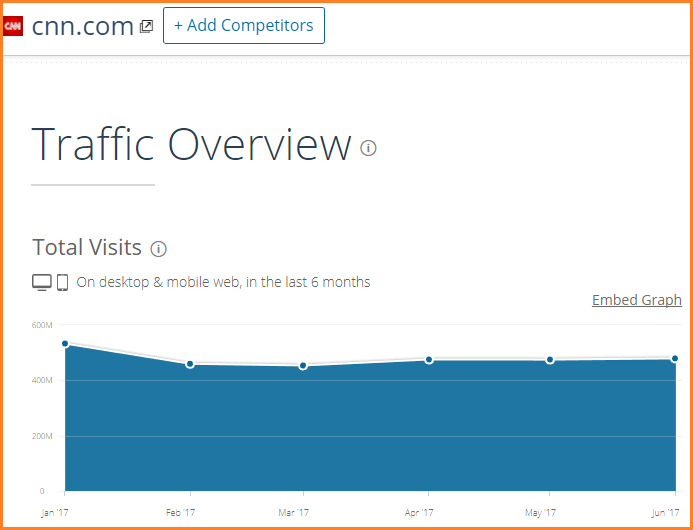
While CNN.com traffic appears to be steady - which can be bought - their YouTube channel has suffered a significant hit to both views and subscribers, down 15.8% and 28.9% respectively according to socialblade.com. While the network is certainly taking a financial hit from this, the real significance lies in the obvious damage to the brand. People have stopped taking CNN seriously.


Memetic Warfare


In response to CNN"s threat to expose a Reddit user"s identity, online researchers from 4chan who refer to themselves "weaponized autists" have declared war on the network. In a post made on the 4th of July, an "anon" (anonymous user) called fellow anons to arms" to create their best memes.


"Tonight, the enemy launched a surprise attack. Freedom of speech is under attack by the most powerful media outlet in the world. They"re threatening to dox and thus ruin the life of (and possibly get him harmed by leftists) a completely random person, purely because of the memes he posted. Unacceptable.


The war is back on. GamerGate was the tutorial, our war against the media reignites now. Do not allow this assault on our forces - even if he cucked out and said sorry - to go without a response."


4chan is an unstoppable force, by the way 


The "autists" at 4chan - perhaps the most formidable crowd-sourced research, entertainment, and redpill dispensary on the planet should not be underestimated, and new visitors to the site are advised not to post unless they"ve lurked for a significant period of time - or ever.


4chan users" Rain Man abilities to quickly connect dots, form theories, discard dead ends, and spread their findings like wildfire through social media giants Reddit, Twitter, and Facebook have led to such happenings as the time they called in an airstrike on ISIS, the "breaking" of beta-cuck Shia LaBeouf, and even got a bunch of Justin Beiber fans to shave their heads.


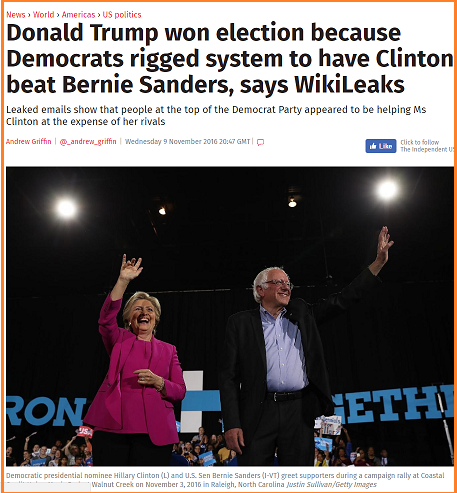
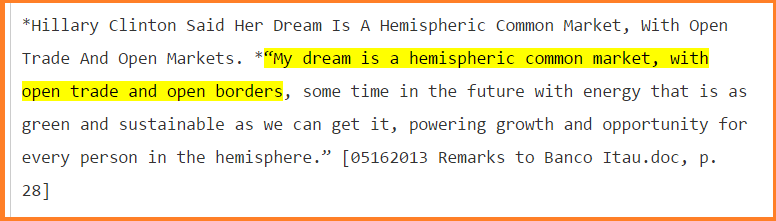
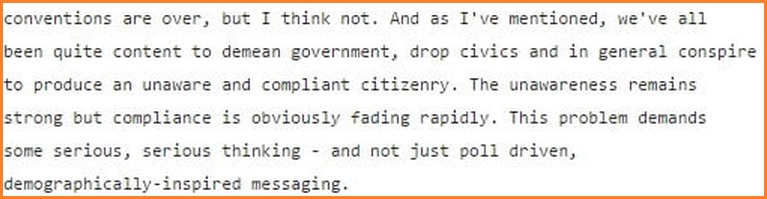
Not to be forgotten - while Reddit"s the_donald is the most popular pro-Trump forum in the world, 4chan was undoubtedly the dominant force doing deep digs to analyze the Wikileaked emails during the election - uncovering "Pay for Play" by Clinton Foundation donors who funded ISIS, DNC cheating against Bernie Sanders, MSM collusion, Hillary"s dreams of open borders, "unaware and compliant" citizens, and other significant finds.


InfoWars is holding a $20,000 contest for the best CNN Meme...


Boycotts


Adding to Time Warner"s woes is a "grassroots" boycott of CNN"s sponsors following the network"s threat to dox an individual. Lists of sponsors are now flooding both Reddit and 4chan - such as this one posted by Reddit user "jammich."


Let"s let CNN"s advertisers know how we feel. I"ve found a list of their advertisers and updated it to include links to contact them. I"ve done my best to find as direct a link as possible to save you from rooting around their site. -jammich


(list below)


THE PERFECT STORM...


In a nutshell: There"s no way CNN"s recent unlubricated buggering hasn"t negatively impacted parent company Time Warner"s valuation. Ownership of Time Warner stock is 80.99% institutional - meaning it"s largely held in mutual funds, pensions and 401(k) plans, with Vanguard and Blackrock being the top two holders of $TWX.


If I were AT&T, the only thing on my mind would be a renegotiation for Time Warner without CNN - or at minimum a battle plan to completely gut the Very Fake News network - from Jeff Zucker to Wolf Blitzer to Anderson Cooper. Don Lemon can stick around for comic relief.


Follow on Twitter @ZeroPointNow § Subscribe to our YouTube channel

Thursday, July 6, 2017

CNN Self Immolates: Deleted Tweets, Airport Shunning, Oh - And They Got The Wrong Guy


Content originally published at iBankCoin.com


One week after James O"Keefe destroyed CNN"s last shred of credibility, the network rife with ham-handed propagandists has doused itself in gasoline and lit a match - forever condemning themselves to irrelevancy and ridicule.


As you are now aware along with the rest of the world, CNN went on a witch hunt over the weekend to track down the identity of Reddit user "HanAssholeSolo," who they claimed is responsible for creating a video of Trump beating up a man with a CNN logo for a head, which the President tweeted on Saturday.


After discovering the man"s identity - through possibly illegal means, the network threatened to expose the Redditor"s identity, "doxing" him. In response, the internet exploded with rage - creating dozens of new similar CNN memes and receiving a formal declaration of war from 4chan users, who have begun "unmasking" CNN employees for the world to harass.


Deleted Tweets


After the immense public backlash over CNN"s witch hunt, CNN"s Chris "that sucks" Cuomo - a giant douche, deleted a tweet asking followers "Should CNN reveal name of Reddit user who made trump wrestling video?"


CNN journalist Andrew Kaczynski who went on the Witch Hunt for HanAssholeSolo also deleted a tweet from 2012 - and was promptly called out by Donald Trump Jr. (whose Twitter account has been on fire).


Airport Shunning


After a tweet from Mike Cernovich calling for airports to stop showing CNN, it"s been reported - with a crappy photograph, that Atlanta international airport has shut off the Very Fake News Network!


It appears that CNN GOT THE WRONG GUY


As Buzzfeed of all places points out "As Reddit was celebrating HanAssholeSolo"s victory, one user pointed out that what Trump tweeted wasn"t actually HanAssholeSolo"s GIF."


While Solo maintains it was his video with sound added, Buzzfeed also notes that HanAssholeSolo"s original GIF was shorter, had a different aspect ratio, and had a WWE logo in the corner.


Also - according to TweetDeck, Trump"s tweet was sent from an iPhone, so someone would have had to send it to the President via private message or emailed attachment, and was uploaded to Twitter via his camera roll.


Per Buzzfeed:


So what does this all mean?


"Someone downloaded the GIF that HanAssholeSolo originally posted to Reddit. Then that person cropped it to better fit a video player like Facebook or YouTube. Then they went through the effort of syncing it back up with audio from the original clip. Then that person put it somewhere where Trump or one of Trump"s people could see it and download it. Then whoever found the video version had to get it to Trump"s phone."


Lastlyan unverified 4chan user from Mexico claims to have created the GIF months ago...


Follow on Twitter @ZeroPointNow § Subscribe to our YouTube channel