Showing posts with label Propaganda techniques. Show all posts

Monday, December 18, 2017

Newsweek: “U.S. Government Planned False Flag Attacks to Start War”

Mainstream Media Admits that False Flags Are Real


Last month, Newsweek ran an article headlined (all caps in original Newsweek title):


U.S. GOVERNMENT PLANNED FALSE FLAG ATTACKS TO START WAR WITH SOVIET UNION, JFK DOCUMENTS SHOW


The article notes:


The U.S. government once wanted to plan false flag attacks with Soviet aircraft to justify war with the USSR or its allies, newly declassified documents surrounding the assassination of President John F. Kennedy show.


***


False flag attacks are covert operations that make it look like an attack was carried out by another group than the group that actually carried them out.


The mainstream media is finally catching up with what historians have long documented ...


After all, influential royal advisors have been advocating false flag attacks for more than 2,000 years ... and false flag attacks are so common that U.S. officials commonly discuss them.


Indeed, there are now so many admissions by government officials of false flag terror that only the willfully ignorant still doubt the reality of the concept.

Sunday, November 5, 2017

Will "RussiaGate" Result In Social Media Regulation?

Authored by Andrew Korybko via Oriental Review,


Whether preplanned or inadvertent, one of the most likely and far-reaching consequences of the fake news RussiaGate scandal is that Facebook and other social media giants might soon come under strict regulation by the state.


The artificially contrived and “deep state”-driven RussiaGate scandal has been inflated to epic proportions and has already resulted in the unexpected suicide of the US’ soft power, but this never-ending conspiracy theory is now poised to affect the rest of the world in a completely different way due to the likely “regulation” that Washington might soon impose on social media giants like Facebook. “Traditional” media has long been clamoring for the American government to do something about the astronomical rise of social media, which has poached millions upon millions of people away from newspapers and TV stations and redirected them to their smartphones instead. From the perspective of social media and many of its users, however, these people weren’t “poached”, but liberated from their prior status as a captive audience to conventional influence techniques and allowed to roam freely in cyberspace as they searched for alternative non-mainstream interpretations of current and past events.


The rise of social media coincided with that of Russia’s publicly funded RT and Sputnik media outlets, whose reporting and analyses soon went viral all over the internet because they satisfied the crucial information desire that so many people were craving for years. Their explosive popularity led to them gaining a sizeable following among Western audiences, who voluntarily shared their content online and contributed to what Facebook describes as “organic growth”, or the natural trending of non-advertised posts. While posing a challenge to Establishment narratives all across the world, neither RT nor Sputnik were seriously viewed as  “threat” by the US and its allies because they had yet to be blamed for affecting any real-life change outside of the internet “matrix” of clicks, likes, and shares.


That all changed during the 2016 US election, however, since the Mainstream Media’s monopoly on information was wielded in such a blatantly and obviously biased nature against Trump that countless Americans began countenancing what would have previously been unthinkable to many of them just a year prior, and that’s trawling foreign-based media outlets in order to get a more accurate sense of the truth that their own country’s media barons were suppressing. This certainly says a lot about the deep distrust that was already prevalent among many Americans towards their own government, but it hit its climax the more that the Mainstream Media began concocting openly fraudulent “news” stories about Trump in a bid to derail his candidacy, with this effort becoming unquestionably clear when compared with the flowery coverage given to anything that Clinton said or did. As is now known, Americans rebelled against the Establishment by voting Trump into office, and the “deep state” was left scratching its head about how this could happen.


The author explained the domestic dynamics at play in his November 2016 article right after the election titled “Dear Foreign Friends, Here’s Why Trump Won (From A Clevelander)”, but the general idea is that the Democrats’ weaponization of identity politics miserably backfired as Americans sought out a radical solution to bring balance to their “deep state”-destabilized country. Nevertheless, the Establishment couldn’t bring itself to recognize the obvious, take the loss, and move on to fight another battle later on, hence why they decided to continue pressing the cringe-inducingly ridiculous narrative that “Russian trolls” somehow swayed the election due to their social media activity, and hinting that there might even be a whiff of outright collusion between Presidents Trump and Putin in organizing this movie-like conspiracy.


This narrative is convenient for many geopolitical reasons that are outside the scope of this analysis, but the domestic benefit that was expected to be derived from this storyline is that “traditional” media and the Establishment finally had the pretext that they were looking for to “regulate” social media. Bringing Facebook, YouTube, Twitter, and others into compliance with already existing American laws about revealing the source of election-related advertisements is one thing, but pressing these platforms to restrict the activity of Russian publicly financed media outlets like RT and Sputnik, as well as speculatively “shadow banning” some of their staff and supporters, is a bridge too far into dystopia, as is doing so on the US governments’ double-standard FARA witch hunt which alleges that the two are “foreign agents”. As a result, it appears as though the “good ‘ole days” of “freewheeling” across Facebook and sharing whatever content one finds enjoyable is soon coming to an end as Washington begins to “regulate” social media on the basis of “safeguarding democracy”.


Of course, the real reason is that some vested power interests also have a stake in supporting their decades-long allies in the “traditional” media against their new social media rivals, to say nothing of the self-evident imperative in suppressing non-mainstream news and analyses through the US’ War on Russian Media. The forthcoming “regulation” might even go further than what’s presently being observed, as there’s a chance that Washington could seek to label social media platform like Facebook as being “media companies” in their own right, which would then instantly force them to comply with the existing legislation that their “traditional” media counterparts have had to contend with for years. In a sense, this would “level the playing field” between “traditional” and social media, but it could also destroy the very essence of social media itself. Not only that, but if the US comes to consider Facebook and Google as “monopolies”, then they could be broken up and “regulated” even further.


What’s terribly ironic about all of this is that the US government’s international stance has always been in favor of “internet freedoms”, routinely attacking Russia, China, and Iran for implementing national security-based legislation aimed at thwarting the risk that Color Revolutions and Hybrid Wars could dangerously recruit across social media, but now all of a sudden “the land of the free” is doing the same thing as the countries that it regularly smears as “dictatorships”, though without any convincing reason and depending solely on a trumped-up fake news conspiracy theory. As is typical, the ruling Establishment and their “deep state” supporters condescendingly believe that their true intentions are invisible to the naked eye because of their presumption that the populace is stupid and politically unaware, though the very fact that their “perfect candidate” was defeated by a “dark horse” like Trump totally disproves this notion.


The reality is that most Americans, and the rest of the world at large, see the US government’s “regulation” of social media for what it actually is, and that’s a dictatorial power grab which crushes any remaining doubt that “the land of the free” is anything but, and that the “freedom of speech” is only allowed if one is either supporting the Establishment or behaving as its “controlled opposition”. The number one thing that “American Democracy” can’t accept is the free flow of information and interpretations that challenge the prevailing state-supported narrative, which in and of itself negates the very basis of what the world always thought that “American Democracy” was supposed to be about, and this powerful revelation proves that the US government’s accusations that its geopolitical rivals are “authoritarian” was never anything more than a psychological projection of its own self.


Monday, October 9, 2017

Facebook Security Chief Lashes Out: "Censorship Is Easy If You Don't Worry About Becoming The Ministry Of Truth"

In a furious tweetstorm this weekend, Facebook"s Chief Security Officer warned interfering desperate politicians and triggered letfists that the fake news problem is more complicated and dangerous to solve than the public thinks.


As a reminder, we noted that Alex Stamos was seemingly pressured into "finding" Russian evidence after Senator Mark Warner paid the social media company a visit -


A few weeks after the French election, Warner flew out to California to visit Facebook in person. It was an opportunity for the senator to press Stamos directly on whether the Russians had used the company’s tools to disseminate anti-Clinton ads to key districts.


Officials said Stamos underlined to Warner the magnitude of the challenge Facebook faced policing political content that looked legitimate.


Stamos told Warner that Facebook had found no accounts that used advertising but agreed with the senator that some probably existed. The difficulty for Facebook was finding them.


For months, a team of engineers at Facebook had been searching through accounts, looking for signs that they were set up by operatives working on behalf of the Kremlin. The task was immense.


Warner’s visit spurred the company to make some changes in how it conducted its internal investigation. Instead of searching through impossibly large batches of data, Facebook decided to focus on a subset of political ads.


Technicians then searched for “indicators” that would link those ads to Russia. To narrow down the search further, Facebook zeroed in on a Russian entity known as the Internet Research Agency, which had been publicly identified as a troll farm.


“They worked backwards,” a U.S. official said of the process at Facebook.


The breakthrough moment came just days after a Facebook spokesman on July 20 told CNN that “we have seen no evidence that Russian actors bought ads on Facebook in connection with the election.”


And the rest is history as 3000 "Russian Ads" were suddenly discovered to enable Warner to keep the narrative alive - and more crucially demand social media companies crackdown on "fake news", on politically-sponsored and divisive ads, and on anything they decide is not really fitting their identity-politics-based narratives.


However, given this weekend"s tweetstorm by Stamos, we suspect he has finally snapped and been forced to shove some common sense down the throats of the vengeful politicians who see no unintended consequences in their demands for big-brother-esque newspeak. 


"It’s very difficult to spot fake news and propaganda using just computer programs," Stamos said in a series of Twitter posts on Saturday.


“Nobody of substance at the big companies thinks of algorithms as neutral,” Stamos wrote, adding that the media is simplifying the matter.


“Nobody is not aware of the risks.”


As Bloomberg reports, the easy technical solutions would boil down to silencing topics that Facebook is aware are being spread by bots -- which should only be done “if you don’t worry about becoming the Ministry of Truth” with machine learning systems “trained on your personal biases,” he said.


“A lot of people aren’t thinking hard about the world they are asking [Silicon Valley] to build,” Stamos wrote.


“When the gods wish to punish us they answer our prayers.”


Stamos’s comments shed light on why Facebook added 1,000 more people review its advertising, rather than attempting an automated solution.


The company sent a note to advertisers telling them it would start to manually review ads targeted to people based on politics, religion, ethnicity or social issues. The company is trying to figure out how to monitor use of its system without censoring ideas, after the Russian government used fake accounts to spread political discord in the U.S. ahead of the election.


The silver lining at least is that Stamos is aware of what a terrible idea the kind of censorship that Democratic politicians (and John McCain) are demanding... whether this means that, behind the smoke and mirrors of actively managing your news feed to provide you with your self-bias-perpetuating perspective, anything will change, is anyone"s guess.

Thursday, September 14, 2017

Facebook Promises To Censor All Material That Makes Zuckerberg Sad

Earlier this morning, Facebook Vice President of Media Partnerships shared a new blog post on the company"s website detailing precisely how they intend to censor content with which they happen to disagree.  Apparently all content providers who share "clickbait or sensationalism, or post misinformation and false news" will be deemed ineligible to monetize their efforts over Facebook.


To use any of our monetization features, you must comply with Facebook’s policies and terms, including our Community Standards, Payment Terms, and Page Terms. Our goal is support creators and publishers who are enriching our community. Those creators and publishers who are violating our policies regarding intellectual property, authenticity, and user safety, or are engaging in fraudulent business practices, may be ineligible to monetize using our features.


Creators and publishers must have an authentic, established presence on Facebook — they are who they represent themselves to be, and have had a profile or Page on Facebook for at least one month. Additionally, some of our features like Ad Breaks require a sufficient follower base, something that could extend to other features over time.


Those who share content that repeatedly violates our Content Guidelines for Monetization, share clickbait or sensationalism, or post misinformation and false news may be ineligible or may lose their eligibility to monetize.


Ironically, the biggest peddlers of "clickbait or sensationalism, or misinformation and false news" these days seems to be the largest, and "most respected" mainstream media outlets...presumably there is a carve out for the likes of CNN, NYT and Wapo?


Zuck


Of course, we first noted the efforts of Facebook to combat the spread of "fake news" over social media back in December 2016 when they first introduced a filter intended to flag "fake" content so that users wouldn"t have to go through the hassle of critically analyzing information on their own.  As we noted at the time, it was a genius plan, except for one small issue:  who determines what is considered "fake news" and how exactly do they draw those conclusions?  From our prior post (see "Facebook Launches Campaign To Combat "Fake News""):


The first problem, however, immediately emerges because as NBC notes, "legitimate news outlets won"t be able to be flagged", which then begs the question who or what is considered "legitimate news outlets", does it include the likes of NYTs and the WaPos, which during the runup to the election declared on a daily basis, that Trump has no chance of winning, which have since posted defamatory stories about so-called "Russian propaganda news sites", admitting subsequently that their source data was incorrect, and which many consider to be the source of "fake news".


Also, just who makes the determination what is considered "legitimate news outlets."


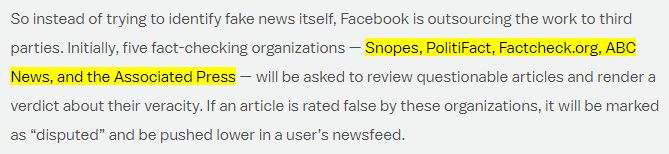
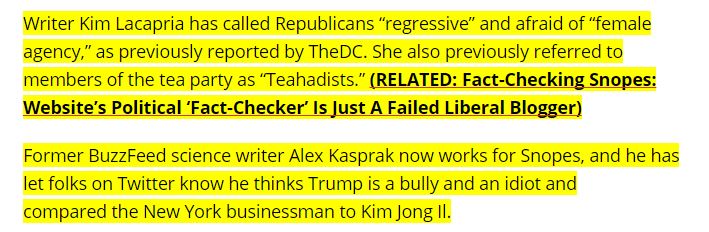
Luckily, Zuckerberg cleared up all the confusion in a subsequent post in which he basically admitted that all "fact-checking" would be outsourced to disaffected Hillary voters and the completely impartial, "myth-busting" website Snopes.com.


Historically, we have relied on our community to help us understand what is fake and what is not. Anyone on Facebook can report any link as false, and we use signals from those reports along with a number of others -- like people sharing links to myth-busting sites such as Snopes -- to understand which stories we can confidently classify as misinformation. Similar to clickbait, spam and scams, we penalize this content in News Feed so it"s much less likely to spread.


Keep in mind folks, this entire Facebook witch hunt has been prompted by $50,000 worth of ads that "MAY" have been purchased by Russian-linked accounts to run "potentially politically related" ads. 

Tuesday, July 25, 2017

Snopes.com Implodes, Resorts To GoFundMe

Via StockBoardAsset.com,


Snopes.com is a liberal blog from 1994.  The website claims to be the internet’s oldest and most popular fact-checking site. Last year, Snopes Co-Founder was accused of embezzling company money, and spending it on prostitutes.


Now you can find the blog begging for $500k in funding via GoFundMe. So, far the campaign has raised $18,000 in 3 hours via 710 people...


Another victim of the fake news campaign backfiring on the left.


* * *


Some additional "color" from iBankCoin:


A key member of Facebook’s ministry of truth, Snopes, has hit a major snag which may force them out of business. Apparently too cheap or stupid to run a contract for their primary source of income past an attorney, the ‘arbiters of truth’ appear to be in major financial trouble after claiming a vendor is holding ad revenues hostage, and have set up a gofundme page which has raised $130,000 of it’s $500,000 goal within hours.


We had previously contracted with an outside vendor to provide certain services for Snopes.com. That contractual relationship ended earlier this year, but the vendor will not acknowledge the change in contractual status and continues to essentially hold the Snopes.com web site hostage.


Unfortunately, we have been cut off from our historic source of advertising income. –savesnopes.com


That outside vendor was none other than San Diego based Proper Media, which bought out Snopes co-founder Barbara Mikkelson’s share in the company for $3.6 million following a nasty divorce.


According to the San Diego Union Tribune:


Established in 2003, Bardav, Inc. was the joint venture of Snopes creator David Mikkelson and his then-wife Barbara Mikkelson, who each owned one share and 50 percent of the company. The couple divorced in 2015. In July of 2016, Barbara sold her stake to Proper Media’s five equity holders for $3.6 million.


Prior to the sale, Bardav had contracted Proper Media for web development and advertising services on Snopes.com, with the companies agreeing to split revenue earned from advertisements.


In May, Proper Media filed suit against Bardav and Mikkelson with the San Diego Superior Court of California over ownership of the site, alleging that Mikkelson attempted to gain control over the business and block Proper Media from its share of profits. Snopes counter sued, arguing that Proper Media has not paid Snopes its share of advertising revenue since March. Motions by both the plaintiffs and defendants are scheduled to be heard on Aug. 4.


Who could have imagined that the biased ‘fact-checking’ website run by militantly liberal rabid anti-Trumpers and co-founded by a cheating, whore mongering, cat-abandoning, embezzling degenerate would sign a sloppy contract?


The arrangement with Proper Media follows revelations that David Mikkelson secret PayPal account to allegedly funnel advertising revenue from Snopes into his personal accounts so that he could travel around the world banging whores behind his wife’s back – according to court documents obtained by Wesearcher / Gotnews.


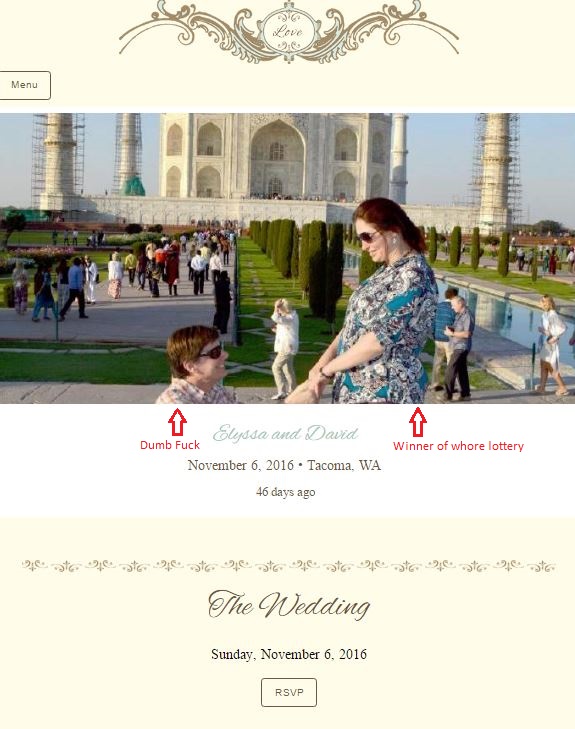
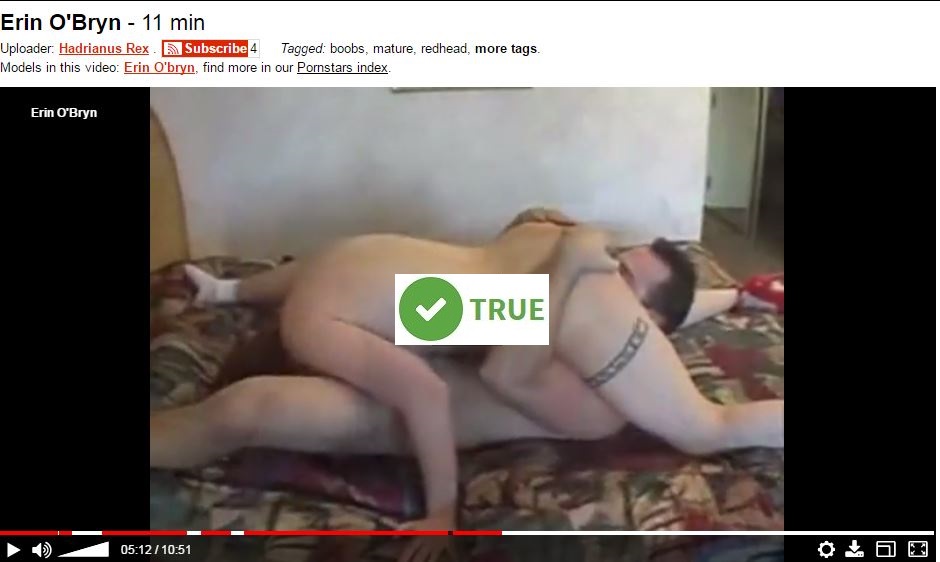
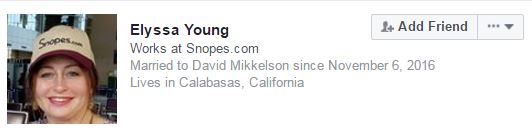
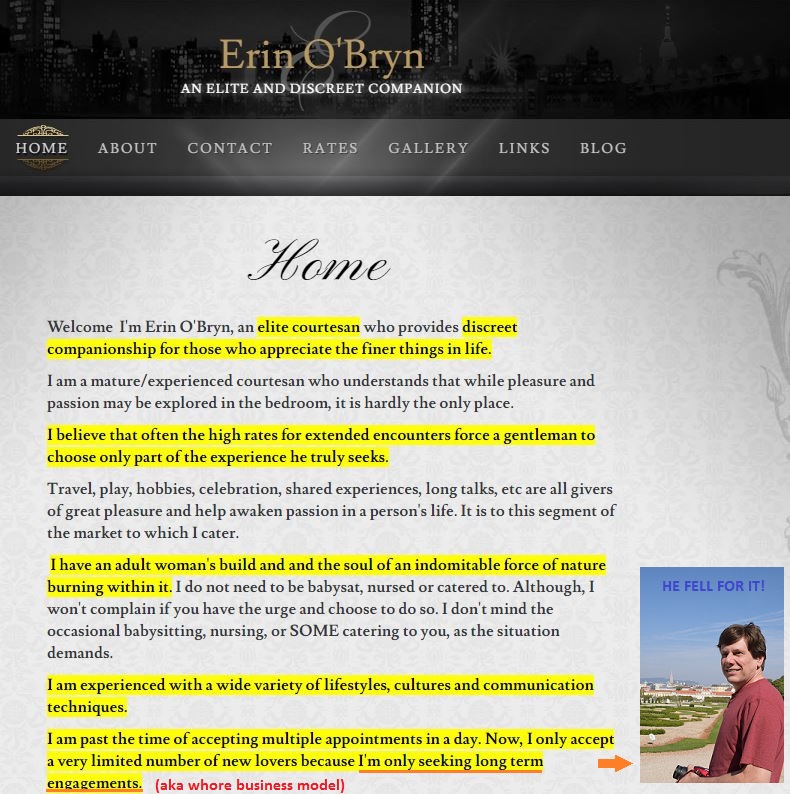
As iBankCoin reported in December, while engaging in debauchery behind his wife’s back, Mikkelson wrote off just about everything as a business expense, embezzling a reported $98,000. The Snopes co-founder has since settled down and married a [NSFW] part time porn actress, Snopes.com administrator (spicy!), and sex worker. As in, she has a website devoted to being a whore.  Apparently she’s a pretty good one despite being “past her time as an adult model.”


In the same divorce papers, David Mikkelson fired back, claiming his ex-wife Barbara took millions from their joint account and bought property in Las Vegas.


No word on whatever happened to the cat…


Monday, May 22, 2017

Centralized "Truth" - 13 Ways To Fight Fake News (And The Big Problem With All Of Them)

Will humans or computer algorithms be the future arbiters of “truth”?


The following infographic from Futurism sums up the ideas that academics, technologists, and other experts are proposing that we implement to stop the spread of fake news.


Below the infographic, Visual Capitalist"s Jeff Desjardins raises concerns about each of these methods.


While fake news is certainly problematic, the solutions proposed to penalize articles deemed to be “untrue” are just as scary.


By centralizing fact checking, a system is created that is inherently fragile, biased, and prone for abuse. Furthermore, the idea of axing websites that are deemed to be “untrue” is an initiative that limits independent thought and discourse, while allowing legacy media to remain entrenched.


CENTRALIZING “TRUTH”


It could be argued that the best thing about the internet is that it decentralizes content, allowing for any individual, blog, or independent media company to stimulate discussion and new ideas with low barriers to entry. Millions of new entrants have changed the media landscape, and it has left traditional media flailing to find ways to adjust revenue models while keeping their influence intact.


If we say that “truth” can only be verified by a centralized mechanism – a group of people, or an algorithm written by a group of people – we are welcoming the idea that arbitrary sources will be preferred, while others will not (unless they conform to certain standards).


Based on this mechanism, it is almost certain that well-established journalistic sources like The New York Times or The Washington Post will be the most trusted. By the same token, newer sources (like independent media, or blogs written by emerging thought leaders) will not be able to get traction unless they are referencing or receiving backing from these “trusted” gatekeepers.


THE IMPACT?


This centralization is problematic – and here’s a step-by-step reasoning of why that is the case:


First, either method (human or computer) must rely on preconceived notions of what is “authoritative” and “true” to make decisions. Both will be biased in some way. Humans will lean towards a particular consensus or viewpoint, while computers must rank authority based on different factors (Pagerank, backlinks, source recognition, or headline/content analysis).


Next, there is a snowball effect involved: if only posts referencing these authoritative sources of “truth” can get traction on social media, then these sources become even more authoritative over time. This creates entrenchment that will be difficult to overcome, and new bloggers or media outlets will only be able to move up the ladder by associating their posts with an existing consensus. Grassroot movements and new ideas will suffer – especially those that conflict with mainstream beliefs, government, or corporate power.


Finally, this raises concerns about who fact checks the fact checkers. Forbes has a great post on this, showing that Snopes.com (a fact checker) could not even verify basic truths about its own operations.


Removing articles deemed to be “untrue” is a form of censorship. While it may help to remove many ridiculous articles from people’s social feeds, it will also impact the qualities of the internet that make it so great in the first place: its decentralized nature, and the ability for any one person to make a profound impact on the world.

Friday, April 21, 2017

"We're At The Mercy Of The Algos"; More News Sites Say Facebook's 'Fake News' Filter Is Killing Traffic

Yesterday we highlighted an article written by the Chicago Tribune"s Deputy Editor for Digital News, Kurt Gessler, which provided a fairly compelling set of facts to suggest that Facebook"s "fake news" filter was suppressing the distribution of articles from media sources which undoubtedly consider themselves "legitimate new outlets" (with the definition of "legitimate" left solely to the discretion of Facebook execs, of course).


As it turns out, the Chicago Tribune was not alone as Gessler"s article prompted a whole host of digital publishers to come forward with similar stories of traffic destruction.  Per Digiday:


Facebook’s news feed algorithm changes have been part of publishing reality for many years. But to Matt Karolian, director of audience engagement at The Boston Globe, “last month was probably the worst we’ve had in reach in about a year. The fact everyone else is seeing it is a little bit troubling.”


Aysha Khan said Facebook reach has also been sliding at the Religion News Service, where she’s social media editor.


“Reach spiked in the summer, and we started hitting 15, 25K reach on bigger posts that were polarizing,” Khan said. “It wasn’t just political posts, but any kind of interviews. Anything that had potential to get a big reaction got a big reaction. But then we noticed that kind of stopped, and by January, it was just gone. Now we’re worse off than we were to start with.”


The change has happened even as RNS has been doing more video, including live video, and photos, things that Facebook has encouraged. Khan said RNS is still trying, though, with plans for more regularly scheduled live video and videos generally.


Meanwhile, Vocativ...


and Chicago Magazine also corroborated the Tribune"s data.


“In my mind, we’re kind of at the mercy of the algorithm,” Khan said. “But there’s a lot of stories that are getting underwhelming responses that readers can’t even see.


Of course, we would argue that any business model which relies on Facebook for distribution is fundamentally flawed.  That said, we have to admit that the irony of Facebook"s "fake news" crusade ensnaring some of the nation"s most recognizable, elitist mainstream media outlets is, to the say the least, humorous. 


* * *


For those who missed our original post on the topic, see below:


Back in December we wrote about the efforts of Facebook to combat the spread of "fake news" over social media with the introduction of a filter intended to flag "fake" content so that users wouldn"t haven"t to go through the hassle of critically analyzing information on their own.  As we noted at the time, it was a genius plan, except for one small issue:  who determines what is considered "fake news" and how exactly do they draw those conclusions?  From our prior post (see "Facebook Launches Campaign To Combat "Fake News""):


The first problem, however, immediately emerges because as NBC notes, "legitimate news outlets won"t be able to be flagged", which then begs the question who or what is considered "legitimate news outlets", does it include the likes of NYTs and the WaPos, which during the runup to the election declared on a daily basis, that Trump has no chance of winning, which have since posted defamatory stories about so-called "Russian propaganda news sites", admitting subsequently that their source data was incorrect, and which many consider to be the source of "fake news".


Also, just who makes the determination what is considered "legitimate news outlets."


Now, it seems as though the first confirmed victim of Facebook"s "fake news" crusade may be none other than the Chicago Tribune, a newspaper that undoubtedly considers itself a "legitimate news outlet."


The discovery was highlighted in an article written by the Chicago Tribune"s own Deputy Editor for Digital News, Kurt Gessler, who noted that a curious thing happened back in December when Facebook first changed up its algorithms to target fake news, namely their traffic crashed.  Per the chart below, the typical Tribune post went from attracting the interest of 30-35k people down to 15-20k people in a matter of months.


Meanwhile, the number of Tribune articles shared over Facebook that reached less than 10,000 viewers (i.e. the "duds") skyrocketed while the number of highly successful articles, those reaching 50,000+ people, simultaneously plunged.


So, either the Chicago Tribune suddenly started producing a lot of garbage that no one wanted to read, which just happened to coincide with the implementation of Facebook"s new "fake news" algo, or the media outlet was pumping out content that Facebook suddenly figured to fit the definition of "fake".


Certainly, the issue couldn"t be attributed to a loss of followers....


...or less content creation.


Perhaps Facebook"s algos are better at identifying "fake news" than we thought.

Thursday, April 20, 2017

Chicago Tribune Says Facebook's 'Fake News' Filter Is Killing Its Traffic

Back in December we wrote about the efforts of Facebook to combat the spread of "fake news" over social media with the introduction of a filter intended to flag "fake" content so that users wouldn"t haven"t to go through the hassle of critically analyzing information on their own.  As we noted at the time, it was a genius plan, except for one small issue:  who determines what is considered "fake news" and how exactly do they draw those conclusions?  From our prior post (see "Facebook Launches Campaign To Combat "Fake News""):


The first problem, however, immediately emerges because as NBC notes, "legitimate news outlets won"t be able to be flagged", which then begs the question who or what is considered "legitimate news outlets", does it include the likes of NYTs and the WaPos, which during the runup to the election declared on a daily basis, that Trump has no chance of winning, which have since posted defamatory stories about so-called "Russian propaganda news sites", admitting subsequently that their source data was incorrect, and which many consider to be the source of "fake news".


Also, just who makes the determination what is considered "legitimate news outlets."


Now, it seems as though the first confirmed victim of Facebook"s "fake news" crusade may be none other than the Chicago Tribune, a newspaper that undoubtedly considers itself a "legitimate news outlet."


The discovery was highlighted in an article written by the Chicago Tribune"s own Deputy Editor for Digital News, Kurt Gessler, who noted that a curious thing happened back in December when Facebook first changed up its algorithms to target fake news, namely their traffic crashed.  Per the chart below, the typical Tribune post went from attracting the interest of 30-35k people down to 15-20k people in a matter of months.


Meanwhile, the number of Tribune articles shared over Facebook that reached less than 10,000 viewers (i.e. the "duds") skyrocketed while the number of highly successful articles, those reaching 50,000+ people, simultaneously plunged.


So, either the Chicago Tribune suddenly started producing a lot of garbage that no one wanted to read, which just happened to coincide with the implementation of Facebook"s new "fake news" algo, or the media outlet was pumping out content that Facebook suddenly figured to fit the definition of "fake".


Certainly, the issue couldn"t be attributed to a loss of followers....


...or less content creation.


Perhaps Facebook"s algos are better at identifying "fake news" than we thought.

Monday, February 13, 2017

Apple's Tim Cook Urges "Massive" Government Crackdown On 'Fake News': "It's Killing People's Minds"

Just days after Trump-immigration-order-blocking Judge Robart was exposed for his "fake facts" about terrorist convictions, Apple CEO Tim Cook has dragged up another narrative calling for a "massive campaign" against fake online news stories. "It"s killing people"s minds," exclaims Cook who calls for governments to fund a Ministry of Truth-sounding "modern version of a public service announcement" in order to fight the epidemic (and education campaigns in schools).


Trust in the mainstream media is at a record low...


But Apple CEO Tim Cook knows who is to blame for "the epidemic of false reports that is a big problem in a lot of the world."


And in a frighteningly Orwellian interview with The Telegraph, Cook explains calmly how to fix "fake news"...


“It has to be ingrained in the schools, it has to be ingrained in the public,” said Mr Cook. “There has to be a massive campaign. We have to think through every demographic.


"We need the modern version of a public-service announcement campaign. It can be done quickly if there is a will.”


"We are going through this period of time right here where unfortunately some of the people that are winning are the people that spend their time trying to get the most clicks, not tell the most truth,” he said. “It’s killing people’s minds in a way.”


“All of us technology companies need to create some tools that help diminish the volume of fake news.


"We must try to squeeze this without stepping on freedom of speech and of the press, but we must also help the reader. Too many of us are just in the complain category right now and haven’t figured out what to do.”


So - exactly who will choose what is "stepping on freedom of speech"? Leave it to the liberal billionaires to decide, throttle, and choke off differences of opinion. Well Cook has another solution... start "em young...


“It’s almost as if a new course is required for the modern kid, for the digital kid.”


But he is optimistic. “In some ways kids will be the easiest to educate. At least before a certain age, they are very much in listen and understand [mode], and they then push their parents to act. We saw this with environmental issues: kids learning at school and coming home and saying why do you have this plastic bottle? Why are you throwing it away?”


Cook concludes naively that this crackdown would help providers of quality journalism (like CNN?) drive out clickbait...


"The outcome of that is that truthful, reliable, non-sensational, deep news outlets will win."


So to clarify Cook"s thoughts - tech firms should throttle newspeak from sources they deem "fake", so-called "high quality journalism" should be promoted, and kids should be indoctrinated from an early age to read what the government (or liberal billionaire tech CEOs) deems "proper"...


When will President Trump be shadow-banned from Twitter?

Tuesday, February 7, 2017

Facebook Launches Fake News Filter in France Ahead of Presidential Elections

Starting today, Facebook, in conjunction with Google, will be blocking unsavory news from their platforms in France -- thanks to the very generous and progressive assistance of 8 liberal news agencies -- including the far left Le Monde. Having learned his lesson during the US elections, CEO Mark Zuckerberg wants to ensure the people of France only get to see the right news and information -- generously shielding them from fake news and right wing disinformation campaigns -- like global warming is a hoax.


Effective immediately, users will get to mark news articles they deem to be fake. Partners will pass judgment upon them and also get to tag them with an icon -- all for the benefit of the 24 million idiot users in France who are, seemingly, unable to decipher the news themselves.
fake-news-sur-facebook-1-4


GENEROSITY WITHOUT BOUNDARIES.


Similar projects are being launched in Germany and the United States -- fettering out hoaxes and fake news -- with the help of ultra left wing Snopes, ABC News and Associated Press.


It"s "their" platform and can do with it as they like. If you do not like it, don"t use the platform.


Content originally generated at iBankCoin.com

Thursday, January 5, 2017

Washington Post Is Richly Rewarded For False News About Russia Threat While Public Is Deceived

Authored by Glenn Greenwald, originally posted at The Intercept,


In the past six weeks, the Washington Post published two blockbuster stories about the Russian threat that went viral: one on how Russia is behind a massive explosion of “fake news,” the other on how it invaded the U.S. electric grid. Both articles were fundamentally false. Each now bears a humiliating editor’s note grudgingly acknowledging that the core claims of the story were fiction: The first note was posted a full two weeks later to the top of the original article; the other was buried the following day at the bottom.


The second story on the electric grid turned out to be far worse than I realized when I wrote about it on Saturday, when it became clear that there was no “penetration of the U.S. electricity grid” as the Post had claimed. In addition to the editor’s note, the Russia-hacked-our-electric-grid story now has a full-scale retraction in the form of a separate article admitting that “the incident is not linked to any Russian government effort to target or hack the utility” and there may not even have been malware at all on this laptop.


But while these debacles are embarrassing for the paper, they are also richly rewarding. That’s because journalists — including those at the Post — aggressively hype and promote the original, sensationalistic false stories, ensuring that they go viral, generating massive traffic for the Post (the paper’s executive editor, Marty Baron, recently boasted about how profitable the paper has become).


After spreading the falsehoods far and wide, raising fear levels and manipulating U.S. political discourse in the process (both Russia stories were widely hyped on cable news), journalists who spread the false claims subsequently note the retraction or corrections only in the most muted way possible, and often not at all. As a result, only a tiny fraction of people who were exposed to the original false story end up learning of the retractions.


Baron himself, editorial leader of the Post, is a perfect case study in this irresponsible tactic. It was Baron who went to Twitter on the evening of November 24 to announce the Post’s exposé of the enormous reach of Russia’s fake news operation, based on what he heralded as the findings of “independent researchers.” Baron’s tweet went all over the place; to date, it has been re-tweeted more than 3,000 times, including by many journalists with their own large followings:


But after that story faced a barrage of intense criticism — from Adrian Chen in the New Yorker (“propaganda about Russia propaganda”), Matt Taibbi in Rolling Stone (“shameful, disgusting”), my own article, and many others — including legal threats from the sites smeared as Russian propaganda outlets by the Post’s “independent researchers” — the Post finally added its lengthy editor’s note distancing itself from the anonymous group that provided the key claims of its story (“The Post … does not itself vouch for the validity of PropOrNot’s findings” and “since publication of the Post’s story, PropOrNot has removed some sites from its list”).


What did Baron tell his followers about this editor’s note that gutted the key claims of the story he hyped? Nothing. Not a word. To date, he has been publicly silent about these revisions. Having spread the original claims to tens of thousands of people, if not more, he took no steps to ensure that any of them heard about the major walk back on the article’s most significant, inflammatory claims. He did, however, ironically find the time to promote a different Post story about how terrible and damaging Fake News is:


 Whether the Post’s false stories here can be distinguished from what is commonly called “Fake News” is, at this point, a semantic dispute, particularly since “Fake News” has no cogent definition.  Defenders of Fake News as a distinct category typically emphasize intent in order to differentiate it from bad journalism. That’s really just a way of defining Fake News so as to make it definitionally impossible for mainstream media outlets like the Post ever to be guilty of it (much the way terrorism is defined to ensure that the U.S. government and its allies cannot, by definition, ever commit it).


But what was the Post’s motive in publishing two false stories about Russia that, very predictably, generated massive attention, traffic, and political impact? Was it ideological and political — namely, devotion to the D.C. agenda of elevating Russia into a grave threat to U.S. security? Was it to please its audience — knowing that its readers, in the wake of Trump’s victory, want to be fed stories about Russian treachery? Was it access and source servitude — proving it will serve as a loyal and uncritical repository for any propaganda intelligence officials want disseminated? Was it profit — to generate revenue through sensationalistic click-bait headlines with a reckless disregard to whether its stories are true? In an institution as large as the Post, with numerous reporters and editors participating in these stories, it’s impossible to identify any one motive as definitive.


Whatever the motives, the effects of these false stories are exactly the same as those of whatever one regards as Fake News. The false claims travel all over the internet, deceiving huge numbers into believing them. The propagators of the falsehoods receive ample profit from their false, viral “news.” And there is no accountability of the kind that would disincentivize a repeat of the behavior. (That the Post ultimately corrects its false story does not distinguish it from classic Fake News sites, which also sometimes do the same.)


And while it’s true that all media outlets make mistakes, and that even the most careful journalism sometimes errs, those facts do not remotely mitigate the Post’s behavior here. In these cases, they did not make good faith mistakes after engaging in careful journalism. With both stories, they were reckless (at best) from the start, and the glaring deficiencies in the reporting were immediately self-evident (which is why both stories were widely attacked upon publication).


As this excellent timeline by Kalev Leetaru documents, the Post did not even bother to contact the utility companies in question — the most elementary step of journalistic responsibility — until after the story was published. Intelligence officials insisting on anonymity — so as to ensure no accountability — whispered to them that this happened, and despite how significant the consequences would be, they rushed to print it with no verification at all. This is not a case of good journalism producing inaccurate reporting; it is the case of a media outlet publishing a story that it knew would produce massive benefits and consequences without the slightest due diligence or care.


The most ironic aspect of all this is that it is mainstream journalists — the very people who have become obsessed with the crusade against Fake News — who play the key role in enabling and fueling this dissemination of false stories. They do so not only by uncritically spreading them, but also by taking little or no steps to notify the public of their falsity.


The Post’s epic debacle this weekend regarding its electric grid fiction vividly illustrates this dynamic. As I noted on Saturday, many journalists reacted to this story the same way they do every story about Russia: They instantly click and re-tweet and share the story without the slightest critical scrutiny. That these claims are constantly based on the whispers of anonymous officials and accompanied by no evidence whatsoever gives those journalists no pause at all; any official claim that Russia and Putin are behind some global evil is instantly treated as Truth. That’s a significant reason papers like the Post are incentivized to recklessly publish stories of this kind. They know they will be praised and rewarded no matter the accuracy or reliability because their Cause — the agenda — is the right one.


On Friday night, immediately after the Post’s story was published, one of the most dramatic pronouncements came from the New York Times’s editorial writer Brent Staples, who said this:


Now that this story has collapsed and been fully retracted, what has Staples done to note that this tweet was false? Just like Baron, absolutely nothing. Actually, that’s not quite accurate, as he did do something: At some point after Friday night, he quietly deleted his tweet without comment. He has not uttered a word about the fact that the story he promoted has collapsed, and that what he told his 16,000-plus followers — along with the countless number of people who re-tweeted the dramatic claim of this prominent journalist — turned out to be totally false in every respect.


Even more instructive is the case of MSNBC’s Kyle Griffin, a prolific and skilled social media user who has seen his following explode this year with a constant stream of anti-Trump content. On Friday night, when the Post story was published, Griffin hyped it with a series of tweets designed to make the story seem as menacing and consequential as possible. That included hysterical statements from Vermont officials — who believed the Post’s false claim — that in retrospect are unbelievably embarrassing.


That tweet from Griffin — convincing people that Putin was endangering the health and safety of Vermonters — was re-tweeted more than 1,000 times. His other similar tweets — such as this one featuring Vermont Sen. Patrick Leahy’s warning that Putin was trying to “shut down [the grid] in the middle of winter” — were also widely spread.


But the next day, the crux of the story collapsed — the Post’s editor’s note acknowledged that “there is no indication” that “Russian hackers had penetrated the electricity grid” — and Griffin said nothing. Indeed, he said nothing further on any of this until yesterday — four days after his series of widely shared tweets — in which he simply re-tweeted a Post reporter noting an “update” that the story was false without providing any comment himself:


In contrast to Griffin’s original inflammatory tweets about the Russian menace, which were widely and enthusiastically spread, this after-the-fact correction has a paltry 289 re-tweets. Thus, a small fraction of those who were exposed to Griffin’s sensationalistic hyping of this story ended up learning that all of it was false.


I genuinely do not mean to single out these individual journalists for scorn. They are just illustrative of a very common dynamic: Any story that bolsters the prevailing D.C. orthodoxy on the Russia Threat, no matter how dubious, is spread far and wide. And then, as has happened so often, when the story turns out to be false or misleading, little or nothing is done to correct the deceitful effects. And, most amazingly of all, these are the same people constantly decrying the threat posed by Fake News.


A very common dynamic is driving all of this: media groupthink, greatly exacerbated (as I described on Saturday) by the incentive scheme of Twitter. As the grand media failure of 2002 demonstrated, American journalists are highly susceptible to fueling and leading the parade in demonizing a new Foreign Enemy rather than exerting restraint and skepticism in evaluating the true nature of that threat.


It is no coincidence that many of the most embarrassing journalistic debacles of this year involve the Russia Threat, and they all involve this same dynamic. Perhaps the worst one was the facially ridiculous, pre-election Slate story — which multiple outlets (including The Intercept) had been offered but passed on — alleging that Trump had created a secret server to communicate with a Russian bank; that story was so widely shared that even the Clinton campaign ended up hyping it — a tweet that, by itself, was re-tweeted almost 12,000 times.


But only a small percentage of those who heard of it ended up hearing of the major walk back and debunking from other outlets. The same is true of The Guardian story from last week on WikiLeaks and Putin that ended up going viral, only to have its retraction barely noticed because most of the journalists who spread the story did not bother to note it.


Beyond the journalistic tendency to echo anonymous officials on whatever Scary Foreign Threat they are hyping at the moment, there is an independent incentive scheme sustaining all of this. That Russia is a Grave Menace attacking the U.S. has — for obvious reasons — become a critical narrative for Democrats and other Trump opponents who dominate elite media circles on social media and elsewhere. They reward and herald anyone who bolsters that narrative, while viciously attacking anyone who questions it.


Indeed, in my 10-plus years of writing about politics on an endless number of polarizing issues — including the Snowden reporting — nothing remotely compares to the smear campaign that has been launched as a result of the work I’ve done questioning and challenging claims about Russian hacking and the threat posed by that country generally. This is being engineered not by random, fringe accounts, but by the most prominent Democratic pundits with the largest media followings.


I’ve been transformed, overnight, into an early adherent of alt-right ideology, an avid fan of Breitbart, an enthusiastic Trump supporter, and — needless to say  — a Kremlin operative. That’s literally the explicit script they’re now using, often with outright fabrications of what I say (see here for one particularly glaring example).


They, of course, know all of this is false. A primary focus of the last 10 years of my journalism has been a defense of the civil liberties of Muslims. I wrote an entire book on the racism and inequality inherent in the U.S. justice system. My legal career involved numerous representations of victims of racial discrimination. I was one of the first journalists to condemn the misleadingly “neutral” approach to reporting on Trump and to call for more explicit condemnations of his extremism and lies. I was one of the few to defend Jorge Ramos from widespread media attacks when he challenged Trump’s immigration extremism. Along with many others, I tried to warn Democrats that nominating a candidate as unpopular as Hillary Clinton risked a Trump victory. And as someone who is very publicly in a same-sex, inter-racial marriage — with someone just elected to public office as a socialist — I make for a very unlikely alt-right leader, to put that mildly.


The malice of this campaign is exceeded only by its blatant stupidity. Even having to dignify it with a defense is depressing, though once it becomes this widespread, one has little choice.


But this is the climate Democrats have successfully cultivated — where anyone dissenting or even expressing skepticism about their deeply self-serving Russia narrative is the target of coordinated and potent smears; where, as The Nation’s James Carden documented yesterday, skepticism is literally equated with treason. And the converse is equally true: Those who disseminate claims and stories that bolster this narrative — no matter how divorced from reason and evidence they are — receive an array of benefits and rewards.


That the story ends up being completely discredited matters little. The damage is done, and the benefits received. Fake News in the narrow sense of that term is certainly something worth worrying about. But whatever one wants to call this type of behavior from the Post, it is a much greater menace given how far the reach is of the institutions that engage in it.