Showing posts with label Four Seasons. Show all posts

Sunday, April 8, 2018

Saudi Crown Prince visited ex-presidents, Clinton, Bush Sr., and Jr., pushed “Saudi Vision 2030,” during U.S. stay


(INTELLIHUB) — The Crown Prince of Saudi Arabia Mohammed bin Salman visited several American ex-presidents during his weeks-long stay in the U.S. where the Eastern leader pushed his “Saudi Vision 2030.”


The prince, a.k.a. MBS, traveled from the White House to other destinations across the country where he offered those he spoke with insight into his vision which vows to make the Saudi economy less reliant on oil while throwing a bone to the Saudi people by allowing them to diversify more freely in society.


During his visit to the U.S. the crown prince and his entourage met with former U.S. Presidents Bill Clinton, George H.W. Bush Sr., and George W. Bush Jr, along with several influential business moguls and deep state figureheads such as Rupert Merdoch.


mbs
Secretary of Defense Ash Carter renders honors as he stands with Saudi Arabia’s Deputy Crown Prince and Minister of Defense Mohammed bin Salman as the national anthem during an enhanced honor cordon to welcome Prince Salman to the Pentagon June 16, 2016. The two leaders met to discuss matters of mutual importance. (DoD photo by Senior Master Sgt. Adrian Cadiz)(Released)

An excerpt from the MBS-backed plan reads: “We are confident about the Kingdom’s future. With all the blessings Allah has bestowed on our nation, we cannot help but be optimistic about the decades ahead. We ponder what lies over the horizon rather than worrying about what could be lost.”


“We are determined to reinforce and diversify the capabilities of our economy, turning our key strengths into enabling tools for a fully diversified future. As such, we will transform Aramco from an oil producing company into a global industrial conglomerate. We will transform the Public Investment Fund into the world’s largest sovereign wealth fund. We will encourage our major corporations to expand across borders and take their rightful place in global markets. As we continue to give our army the best possible machinery and equipment, we plan to manufacture half of our military needs within the Kingdom to create more job opportunities for citizens and keep more resources in our country.”


MBS booked the entire Four Seasons Beverly Hills hotel in L.A. for his visit.


©2018. INTELLIHUB.COM. All Rights Reserved.

The post Saudi Crown Prince visited ex-presidents, Clinton, Bush Sr., and Jr., pushed “Saudi Vision 2030,” during U.S. stay appeared first on Intellihub.

Tuesday, November 7, 2017

Pepe Escobar: The Inside Story Of The Saudi Night Of The Long Knives

Authored by Pepe Escobar via The Asia Times,


Princes, ministers and a billionaire are "imprisoned" in the Riyadh Ritz-Carlton while the Saudi Arabian Army is said to be in an uproar...


The House of Saud’s King Salman devises a high-powered “anti-corruption” commission and appoints his son, Crown Prince Mohammad Bin Salman, a.k.a. MBS, as chairman.


Right on cue, the commission detains 11 House of Saud princes, four current ministers and dozens of former princes/cabinet secretaries – all charged with corruption. Hefty bank accounts are frozen, private jets are grounded. The high-profile accused lot is “jailed” at the Riyadh Ritz-Carlton.


War breaks out within the House of Saud, as Asia Times had anticipated back in July. Rumors have been swirling for months about a coup against MBS in the making. Instead, what just happened is yet another MBS pre-emptive coup.


A top Middle East business/investment source who has been doing deals for decades with the opaque House of Saud offers much-needed perspective:


“This is more serious than it appears. The arrest of the two sons of previous King Abdullah, Princes Miteb and Turki, was a fatal mistake. This now endangers the King himself. It was only the regard for the King that protected MBS. There are many left in the army against MBS and they are enraged at the arrest of their commanders.”


To say the Saudi Arabian Army is in uproar is an understatement.


 “He’d have to arrest the whole army before he could feel secure.”


Prince Miteb until recently was a serious contender to the Saudi throne. But the highest profile among the detainees belongs to billionaire Prince al-Waleed Bin Talal, owner of Kingdom Holdings, major shareholder in Twitter, CitiBank, Four Seasons, Lyft and, until recently, Rupert Murdoch’s Newscorp.


Al-Waleed’s arrest ties up with a key angle; total information control. There’s no freedom of information in Saudi Arabia. MBS already controls all the internal media (as well as the appointment of governorships). But then there’s Saudi media at large. MBS aims to “hold the keys to all the large media empires and relocate them to Saudi Arabia.”


So how did we get here?


The secrets behind the purge


The story starts with secret deliberations in 2014 about a possible “removal” of then King Abdullah. But “the dissolution of the royal family would lead to the breaking apart of tribal loyalties and the country splitting into three parts. It would be more difficult to secure the oil, and the broken institutions whatever they were should be maintained to avoid chaos.”


Instead, a decision was reached to get rid of Prince Bandar bin Sultan – then actively coddling Salafi-jihadis in Syria – and replace the control of the security apparatus with Mohammed bin Nayef.


The succession of Abdullah proceeded smoothly. Power was shared between three main clans: King Salman (and his beloved son Prince Mohammed); the son of Prince Nayef (the other Prince Mohammed), and finally the son of the dead king (Prince Miteb, commander of the National Guard). In practice, Salman let MBS run the show.


And, in practice, blunders also followed. The House of Saud lost its lethal regime-change drive in Syria and is bogged down in an unwinnable war on Yemen, which on top of it prevents MBS from exploiting the Empty Quarter – the desert straddling both nations.


The Saudi Treasury was forced to borrow on the international markets. Austerity ruled – with news of MBS buying a yacht for almost half a billion dollars while lazing about the Cote d’Azur not going down particularly well. Hardcore political repression is epitomized by the decapitation of Shi’ite leader Sheikh Al-Nimr. Not only the Shi’ites in the Eastern province are rebelling but also Sunni provinces in the west.


As the regime’s popularity radically tumbled down, MBS came up with Vision 2030. Theoretically, it was shift away from oil; selling off part of Aramco; and an attempt to bring in new industries. Cooling off dissatisfaction was covered by royal payoffs to key princes to stay loyal and retroactive payments on back wages to the unruly masses.


Yet Vision 2030 cannot possibly work when the majority of productive jobs in Saudi Arabia are held by expats. Bringing in new jobs raises the question of where are the new (skilled) workers to come from.


Throughout these developments, aversion to MBS never ceased to grow; “There are three major royal family groups aligning against the present rulers: the family of former King Abdullah, the family of former King Fahd, and the family of former Crown Prince Nayef.”


Nayef – who replaced Bandar – is close to Washington and extremely popular in Langley due to his counter-terrorism activities. His arrest earlier this year angered the CIA and quite a few factions of the House of Saud – as it was interpreted as MBS forcing his hand in the power struggle.


According to the source, “he might have gotten away with the arrest of CIA favorite Mohammed bin Nayef if he smoothed it over but MBS has now crossed the Rubicon though he is no Caesar. The CIA regards him as totally worthless.”


Some sort of stability could eventually be found in a return to the previous power sharing between the Sudairis (without MBS) and the Chamars (the tribe of deceased King Abdullah). After the death of King Salman, the source would see it as “MBS isolated from power, which would be entrusted to the other Prince Mohammed (the son of Nayef). And Prince Miteb would conserve his position.”


MBS acted exactly to prevent this outcome. The source, though, is adamant; “There will be regime change in the near future, and the only reason that it has not happened already is because the old King is liked among his family. It is possible that there may be a struggle emanating from the military as during the days of King Farouk, and we may have a ruler arise that is not friendly to the United States.”


‘Moderate’ Salafi-jihadis, anyone?


Before the purge, the House of Saud’s incessant spin centered on a $500 billion zone straddling Saudi Arabia, Jordan and Egypt, on the Red Sea coast, a sort of Dubai replica to be theoretically completed by 2025, powered by wind and solar energy, and financed by its sovereign wealth fund and proceeds from the Aramco IPO.


In parallel, MBS pulled another rabbit from his hat swearing the future of Saudi Arabia is a matter of “simply reverting to what we followed – a moderate Islam open to the world and all religions.”


In a nutshell: a state that happens to be the private property of a royal family inimical to all principles of freedom of expression and religion, as well as the ideological matrix of all forms of Salafi-jihadism simply cannot metastasize into a “moderate” state just because MBS says so.


Meanwhile, a pile-up of purges, coups and countercoups shall be the norm.


Friday, August 4, 2017

Meet Soccer's $600 Million Man (Or What Qatar Is Doing While Its Economy Collapses)

Brazilian superstar soccer player Neymar (yes one name... on the right in the image below), just smashed all previous records for crazy spending by European football soccer teams.


Dwarfing the money in America"s NFL, NBA, or MLB, the 25-year-old forward has agreed to join French side Paris St.Germain (PSG) for a stunning EUR222 million ($250 million).


As Statista"s Martin Armstrong notes, the previous record, set last season when Manchester United bought midfielder Paul Pogba from Juventus, was an already astronomical €105 million.


Infographic: 30 Years Of Soccer Transfers: Boy, That Escalated Quickly | Statista


You will find more statistics at Statista


How can a deal like this come about? The answer is release clauses. It is reasonably common practice for players, not just the elite, to have a clause in their contract which would force the club to sell if triggered.


Neymar"s is €222 million. While this is an obscene amount of money, it is by no means the highest release clause. Real Madrid and Portugal megastar Cristiano Ronaldo reportedly has a clause in his contract set at €1 billion.


The unprecedented scale of the deal also sparked rumours that Barcelona could make a complaint to European footballing organisation UEFA over a failure to adhere to Financial Fair Play rules. Introduced seven years ago, the rules are designed to stop clubs from spending more than they earn.


*  *  *


This year he was placed third on Forbes magazine’s list of the highest-paid footballers behind Ronaldo and Messi.


Born in Mogi das Cruzes, a small city east of Sao Paulo, Neymar da Silva Santos Junior is the only son of former professional footballer Neymar Santos and wife Nadine.


On the pitch, during his four seasons in Catalonia, Neymar has helped Barcelona win the Spanish league twice, the Champions League once, the Spanish cup on three occasions and the FIFA Club World Cup.


*  *  *


While the transfer fee itself is a record, the now-former Barcelona player will also be paid £595,000 ($780,000) a week, it was reported. This means PSG will have to fork out £31million ($41 million) a year in wages, taking the total cost of the deal to more than £350 million over five years ($450 million).


With bonuses also included if he plays well, it could reach more than £450million ($600 million)!


But, as The Daily Mail reports, money is no issue for the French side, which is one of the world’s richest clubs following their takeover by Qatar Sports Investments (QSi), an arm of Qatar’s sovereign wealth fund with access to £194billion.


QSI already has its own Masters golf tournament, sponsors the ‘Qatar’ Goodwood Festival and Royal Ascot, and is controversially set to host 2022 World Cup, a deal which has been surrounded by allegations of bribery and corruption.


The country - currently locked in a bitter diplomatic dispute with its neighbours who have accused its government of supporting terrorism - is seeing its economy collapse (and currency crash) as it is forced to import cows directly due to blockade shortages of milk, but is still willing to cough up all this money for one gifted young soccer player in the hope of winning Europe"s biggest soccer competition - The Champions League... which has so far eluded them.


Priorities...

Saturday, April 8, 2017

US Preparing Sanctions Against Syria

Just hours after unleashing a missile strike on Syria, Steven Mnuchin announced that the US will announce sanctions “in the near future” against the Assad regime. 


Joined by Secretary of State Rex Tillerson and Commerce Secretary Wilbur Ross in a briefing at Mar-a-Lago estate, the Treasury Secretary said the U.S. would impose sanctions on Syria “to stop this type of activity," according to a pool report and multiple media reports. It wasn"t clear what sanctions are under consideration: last time we checked the local Four Seasons had seen better days, as for the war-ravaged economy we very much doubt it relies on trade with the US, or has substantial cash deposits in US banks, although those regions of Syria still under ISIS control are surely regular beneficiaries of having their banks hooked up to SWIFT.


Mnuchin’s announcement was the latest sign that the Trump administration continues to escalate efforts against the Syrian President one week after Rex Tillerson said Assad"s fate would be in the hands of Syria"s people.


Ironically, Trump is taking yet another page out of Obama"s playbook: this January, as one of Obama"s last decisions, the US imposed sanctions on Syria in response to, you guessed it, chemical weapons use in 2014 and 2015. A report last year by the United Nations and the Organization for the Prohibition of Chemical Weapons accused the Syrian regime of using chlorine gas as a weapon on at least three different occasions in its six-year-old civil war.


As a reminder, Syria"s use of chemical weapons was the original "red line" that Obama warned in 2012 would draw the United States into military action against Assad. But when the Syrian dictator used sarin gas against civilians in 2013, Obama backed out, citing a lack of support from either Congress or the U.N. Security Council.


Syria then gave up its chemical weapons in a deal brokered by Russia and agreed to join the international Chemical Weapons Convention. In 2014, John Kerry hailed the achievement as a success.


Back in January, the US targeted a Syrian company, the Organization for Technological Industries, which the Treasury Department said was part of the Syrian government and responsible for deploying surface-to-surface missile and rocket programs and working toward a ballistic missile program. The department also moved to block the assets of 18 people associated with the company, and with related research, intelligence and military organizations.


It would appear that - if indeed Assad has continued to use chemical weapons despite knowing his every move is scrutinized by the US - those particular sanctions failed to work.


Then again, maybe the former UK ambassador to Syria is right:


"There is no proof that the cause of the explosion was what they said it was. But think about the consequences because this is not likely to be the end of it. It doesn"t make sense that Assad would do it.  Lets not leave our brains outside the door when we examine evidence.  It would be totally self-defeating as shown by the results...Assad is not mad."


Indeed, although the one thing that matters is for a majority of the population to be dumb enough to assume he is.

David Rosenberg: "This Is A Bubble Of Historic Proportions"

Shortly after we remarked most recently on the unprecedented Canadian housing bubble that has migrated from Vancouver to Toronto, Gluskin Sheff"s Chief Economist David Rosenberg joined the growing chorus of calls for government intervention into the Toronto housing market. In an interview on BNN, Rosenberg, who correctly called the U.S. housing bubble in 2005 when still at Merrill Lynch, said the massive deviation from historical norms has him drawing comparisons between the two situations.


“This bubble is on par with what we had in the States back in ’05, ’06, ’07,” he said. “We have to actually take a look at the situation. The housing market here is in a classic price bubble. If you don’t acknowledge that, you have your head in the sand.”


Rosenberg warned unchecked increases in home prices are becoming a social issue. “It’s not an equity, it’s not a bond -- it’s where people live,” he said. “Where home prices are in Toronto, they absorb 13 years of average family income. That is completely abnormal. We’ve never seen this before.”


“We’re out of equilibrium, and when we’re out of equilibrium, or there’s some sort of market failure, are there grounds there for government intervention? I think even the most ardent libertarian would say ‘yes"." Rosenberg said there are a trio of levers the government can pull to cool down the market. Authorities can address supply, which he said has already been “kiboshed.” Interest rates can be raised, but Rosenberg doesn’t believe the Bank of Canada will do that.  Or new policy can be drafted to address the prevalence of speculation.


“These are not prices driven by the local fundamentals -- this is the foreign buyer coming in,” Rosenberg said. “Toronto has really emerged as a first-class city, not just politically, not just culturally and economically, but also in terms of being a major financial centre. But if you’re going to ask me at this stage, ‘do we need to approach taxation of this capital coming in differently to curb the demand?’ [That’s] absolutely right.”


And just to make his position clear, Rosenberg also an op-ed in Canada"s Financial Post on the topic, titled simply enough:


"Make no mistake, the Toronto real estate market is in a bubble of historic proportions"


by David Rosenberg


The concerns about froth in Toronto’s housing market are not likely to subside given the sticker-shock from the latest report from the Toronto Real Estate Board.


As per the March report, the average single-detached house in the Greater Toronto Area (GTA) sold for $1,214,422 last month up from $910,375 in March of last year — that is a 33 per cent YoY surge, and follows a 16 per cent run-up over the prior 12 months.


Whatever the term is for an acceleration in an already parabolic curve, well, that is what we have on our hands today.


And it isn’t just detached homes seeing this degree of rapid price appreciation — the benchmark single-family home selling price was up 29 per cent YoY, the benchmark townhouse price was up 28 per cent and the condo/apartment composite was up 24 per cent.


This is a bubble of historic proportions.


Not only to have home prices in the GTA now absorb an unprecedented 13 years of median family income, but to have 30 per-cent-ish run-ups against a backdrop of a 2 per cent inflation rate, wages that are barely going up 2 per cent as well, and nominal GDP growth of around 4 per cent. This should put 30 per cent into some sort of perspective when we conclude that what we have on our hands is a near three standard deviation event.


That alone qualifies as a bubble — if you don’t like that term, then call it a giant sud. In the past, Toronto home prices went up at an annual rate of 4 per cent in real terms, in the past year they have surged by nearly 30 per cent.


Some context, however, is needed here.


First, this aggressive increase in home prices in Canada’s most populous city has come (at least in part) due to strong competition among potential buyers for comparatively scant homes for sale.


Active listings of homes available for sale in Toronto plunged 35.2 per cent YoY in March, which means that the months’ supply of houses on the market is a miniscule 0.65, down from 1.18 last March — for reference, a “balanced market” sees a months’ supply figure around 6.0. The average home that was put up for sale remained on the market for just 10 days, down from 16 days a year ago.


These measures of “tightness” in the market are without precedent — not even the red-hot late-1980s bubble experience could ever compete with today’s backdrop.


As well, the sales-to-new listings ratio sits well into “sellers’ market” territory at 70.8 per cent, which compares to 69.4 per cent a year ago — a ratio between 40 per cent and 60 per cent is considered indicative of a “balanced market.”


No wonder nobody wants to list their home! It’s become such a valuable asset.


But you see, this is where the danger comes in: when people start to view their house as some investment as opposed to a home — a place to raise the kids and play with them in the backyard.


A house is an asset indeed, but should never be compared to a stock or a bond or even other investable properties. It is a place to live.


Unlike a stock, which you can sell anytime and tuck away the winnings, if you sell your house, well, you still need a roof over your head. A stock with a dividend gives you an income stream, as does a fixed-income instrument. Unless you are a landlord, your house is burning cash (utilities, property taxes, maintenance), not bringing in cash.   


So there are indeed some supply and demand fundamentals that are underpinning prices. Insofar as the demand is rising because people think they are investing in something hot just because of the accelerating momentum, well, these people are going to end up being pretty big losers. For if the government catches a whiff that it is now speculative fever that is dominating the uber-hot housing market, well that could very well elicit a response (as in capital gains taxes for those who sell within a year or two).


At some point, a correction would be very healthy because on the other side, owners of homes will then realize that no, they did not win some lottery, and will finally be willing to start listing their property, especially those who deep down want to sell (it could well be that the move-up buyers would like to sell but can’t afford that mansion of their dreams).


Not to mention first-time buyers who do not have the income for a down payment that any lender would consider appropriate. After all, we have hit the bizarre stage where a typical home now (and we are talking about a bungalow in Pape Village, not exactly an estate on Warren Road) would absorb 13 years of median household income.


Not even in the late 1980s, did housing get this expensive on this basis, and we know all too well how the Bank of Canada ultimately reacted and what happened next. Stephen Poloz is definitely no John Crow — though things can always change.     


One caveat should be noted because what is different this time around (oh, how I hate using that phrase) is that Toronto has emerged as a world-class city and the foreign buyer is clearly having an impact.


So while Toronto residential real estate is indeed expensive for the locals, it is far less so for foreign investors, especially for Americans who can buy Canadian assets at a 25 per cent discount from a currency perspective.


In the mid to late 1980s, Toronto did not have the Rogers Center. It did not have the Raptors. It had no decent hotel outside of the Four Seasons and the Windsor Arms. Truly great restaurants were not to be found (unless you want to count Winston’s!). There was no Drake. And Toronto FC was not in existence. Not to mention there was very little in the way of a theater district.


While the separatist threat in Quebec gave Toronto the mantle of being Canada’s financial center back in 1976, the city was never seriously viewed as a global player in this respect until very recently. With more than 250,000 employed in the financial services sector, Toronto has very quietly emerged as the second largest financial hub in North America (after New York). Of the 84 cities surveyed in the 2015 Global Financial Centres Index, Toronto ranked 8th!


So while prices may seem a little nutty, it is important to note that Toronto is a major financial, economic and cultural centre, and when compared to its peers globally, prices appear far less crazy, too.


This doesn’t make the current price action justified based on local income fundamentals, but based on the foreign incomes of those wanting to establish a toehold in a stable Toronto amidst a sea of global instability, the prices are not that much out of whack.


As per data compiled by Global Property Guide, Toronto home prices on a U.S. dollar per square metre basis rank just 14th in the world, well behind the likes of London, New York, Paris and Tokyo.


And at the same time, if you are a family in say, Brooklyn Heights looking to buy property in Toronto it would only absorb six years of income; and if you reside in Santa Monica and feel like dipping your toes in the Toronto real estate market, it would only take up four years of your annual median take-home pay. The same (four years) holds true for those wealthy enough to be living in Knightsbridge.


You see, when Toronto home prices are measured against incomes in other places of the world, it is not nearly as onerous (especially in Canadian dollar terms).


In other words, many well-heeled foreigners can far better afford what the locals can’t afford here, and housing in recent years has truly become in internationally-traded asset class (though I wouldn’t recommend ripping out the foundation and exporting the structure anywhere).


So it goes without saying that if the name of the game is to tame the flame then have the foreign investor share the blame. A tax on foreign transactions, as was already done in Vancouver, seems like a pretty good idea. And the government can at the very least use the revenues to either provide greater tax incentives to build and/or provide tax relief for the low/mid income entry-level buyer who is struggling to cobble together the funds for a down payment.


So yes, in this sense, I would be advocating a Robin Hood style of economic policy.


Indeed, what may be needed is a very progressive tax on foreign buying of local residential real estate in the bid to cool demand and reverse the exponential surge in home prices — a surge that is creating tremendous social problems by crowding out young families (or individuals) from chasing the homeownership dream (a typical response is for these folks is to go out and buy a condo instead, but the reality is that average prices here have also skyrocketed 24 per cent in the past year and are in a bubble of their own).


Everyone says that the Bank of Canada cannot raise interest rates to curb the excess demand because of the deleterious effect this would have on the economy writ large (for example, taking the Canadian dollar back up to or above 80 cents which would thwart our export competitiveness which has become a longstanding role of the central bank).


Be that as it may, the home price surge in the GTA over the past year has impaired homeowner affordability to such an extent that it is basically the equivalent of the Bank of Canada having raised rates 150 basis points — actually a 200 basis point increase if you were to look at what home prices have done to affordability ratios over the past two years (so you can’t have it both ways; the price action is basically equivalent to having five-year mortgage rates closer to 5.75 per cent than the actual posted rate of 3.75 per cent).


Barring a bold move by the government to bring home prices to levels consistent with domestic economic fundamentals as opposed to income levels from well-heeled buyers from the U.S., China, and Europe, maybe it is time for the Bank of Canada to start playing a role and follow the Fed on a gradual rising interest rate path.

Thursday, April 6, 2017

Lee Stranahan: 'Ideological Coup' By Kushner-Linked Goldman Globalists Destroying Trump White House

After Wikileaks revelations that Citigroup picked Obama"s cabinet, it appears the Trump administration is succumbing to "same globalism, different bank."


Weeks after the Daily Mail exposed an internal struggle between Kushner-linked Goldman Sachs operatives and Trump advisor Steve Bannon, it has become clear that an "ideological coup" led by globalist bankers is well underway - claiming populist Steve Bannon as their latest victim. This ties in with Roger Stone"s warning that Trump"s son-in-law Jared Kushner has been leaking anti-Bannon information to MSNBC"s Joe Scarborough.


Well, it appears the Goldman globalists have won... for now. Wednesday evening, former Breitbart lead investigative reporter Lee Stranahan dropped an insightful Periscope video in which he laid out exactly what"s going on in the White House - pointing out who"s running the show, and imploring people to simply research the players for themselves.


In a nutshell: Weeks after meeting with Goldman Sachs CEO Lloyd Blankfein at the Four Seasons bar in DC, Jared Kushner-friendly Goldman alums have successfully maneuvered Trump"s top advisor Steve Bannon off the Natl. Security Council - further strengthening the globalist cabal"s influence over President Trump. Jared Kushner, it should be pointed out, has a well documented history of donating to Democrats; including Hillary Clinton, Chuck Schumer (D-NY), and Robert Mendez (D-NJ).


Let"s look at the ex-Goldman operators within the Trump White House:


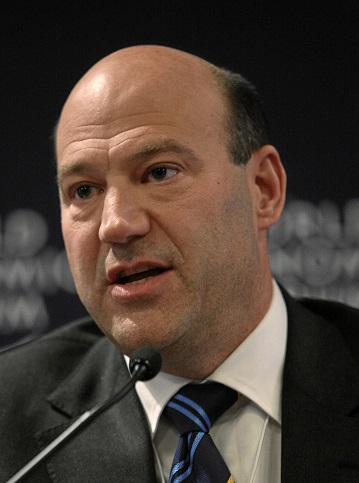
Gary Cohn - recently Goldman"s #2, is Trump"s chief economic advisor - who was granted an unprecedented accelerated payout of $285 Million in order to go work at the White House.


  • Staunch Democrat

  • Huge globalist, led Goldman delegation to restructure Greek debt during financial crisis, helping them hide debt from EU overseers in Brussels.

  • Head of the National Economic Council as of January 20th, 2017

  • Brought in Drew Quinn - lead negotiator of TPP


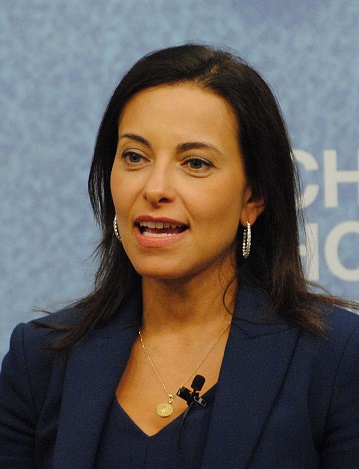
Dina Habib Powell, another top Goldman alum and former president of the Goldman Sachs foundation:


  • Promoted to Deputy National Security Advisor on March 15th

  • Worked in the Bush II administration

  • Managing director at Goldman Sachs, named partner in 2010

  • Dina"s husband Richard Powell is president at Clinton-linked Teneo


Instead of draining the swamp, Goldman alums Cohn, Powell, and Treasury Secretary Mnuchin are the swamp...


The populist, nationalist agenda that Donald Trump was elected on is getting pushed out of the White house.


The fact that Powell is in (who was in the Bush administration), as a Security advisor, is deeply troubling. She"s got Ben Rhodes" old job.


Goldman Sachs has taken over...


We voted for the working people who have been taken advantage of by companies like Goldman Sachs. You"ve been screwed by Goldman Sachs. Look up TARP. You didn"t vote for Goldman Sachs.


We did not vote for Globalism.


And before you say "Wait, Steve Bannon is from Goldman!" - full stop... Bannon addressed how the megabank has changed and no longer shares his values.


What can Trump voters do?


Stranahan has one request for any and all who oppose this ideological coup by Goldman Sachs: CALL THE WHITE HOUSE!


See entire Periscope here:


Content originally generated at iBankCoin.com * Follow on Twitter @ZeroPointNow

Wednesday, March 15, 2017

Saudi King Arrives In Japan: 10 Aircraft, 500 Limos, 500 Tons Of Luggage, 12,000 Hotel Rooms, 2 Golden Escalators

When Saudi King Salman bin Abdulaziz of Saudi Arabia visited Georgetown in September 2015, the Four Seasons hotel did some serious redecorating.  As we reported at the time, eyewitnesses at the luxury hotel had seen crates of gilded furniture and accessories being wheeled into the posh hotel over the past several days, culminating in a home-away-from-home fit for the billionaire Saudi monarch, who was in Washington then for his first White House meeting with President Barack Obama.


“Everything is gold,” said one Four Seasons regular. “Gold mirrors, gold end tables, gold lamps, even gold hat racks.” Red carpets were been laid down in hallways and even in the lower parking garage, so the king and his family never have to touch asphalt when departing their custom Mercedes caravan


The guests staying at the 222-room hotel for the next couple of days are all part of the 79-year-old king’s entourage of Saudi diplomats, family members and assistants, one source said; a full buyout of the entire property was reserved for the visit. Guests who had booked to stay at the Four Seasons during the royal visit have apparently been moved to other luxury hotels in town. A call to the Four Seasons confirmed the hotel is sold out Thursday, Friday and Saturday nights.


Fast forward to this week, when the same King Salman bin Abdulaziz al-Saud landed in Japan, leading to largely to the same reaction, namely people stunned at the size of his delegation and his 500 tons of luggage. The king made quite an entrance, descending from his plane on one of his two golden escalators. The four-day visit, which began Sunday, is part of the Saudi royal’s month-long Asia trip, as the kingdom looks to diversify its economy from oil dependency. Saudi Arabia is Japan’s largest oil supplier.


The king’s delegation arrived in Japan on 10 aircraft and according to the Japanese press, an entourage so large even Japanese government officials didn’t have an accurate number of how many people to expect. In preparation for the royal visit, 1,200 rooms in Tokyo’s best hotels were booked for the delegation.


King Salman appears to have upped his game since visiting the US and, most recently, Indonesia, where he brought two limousines with him. In Japan, an entire fleet of up to 500 limousines were sourced from around the country according to RT.  "Maintenance costs for luxury models are high and there is little constant demand for such vehicles," a limousine industry insider told Asahi Shimbun. "Because we are unable to secure the needed number only in Tokyo, we are gathering the vehicles from Kanagawa and Saitama prefectures as well as the Tokai region."


While he was in Indonesia, the king also had a special toilet built for him inside a mosque, and another inside the House of Representatives.


On Monday, King Salman met with Japanese Prime Minister Shinzo Abe. King Salman visited the country as a prince in 2014, but this is the first Saudi Arabian king to visit in 46 years. Salman told Abe that the Middle East is facing diplomatic issues involving the Palestinians, Japan Times reported, and cited humanitarian crises in Yemen and Syria. A Saudi-led coalition has been bombing Yemen for almost two years. “Unfortunately, those crises are now giving negative impacts to the region,” the king said.


The Saudi royal’s trip caused many on social media to react in anger, comparing the king’s lavish travel to the situation in war-torn Yemen.


But perhaps the most important part of King Salman"s trip has yet to come: his visit to China. As the SCMP reported in "Why King Salman bin Abdulaziz al Saud upcoming visit to China is important to Beijing ... and a worry for Washington", the trip by King Salman comes amid uncertainty in the kingdom’s ties with Washington, and Beijing’s push to strengthen its presence in the Middle East.


Oil and Beijing’s “One Belt, One Road” trade initiative are expected to head the agenda when the king of Saudi Arabia stops in China as part of his Asian tour.


Dates for the trip have yet to be announced, but diplomatic ­observers said the king’s agenda would probably include oil ­exports to China – the world’s ­second-biggest buyer of the fuel– infrastructure projects for Beijing’s trade initiative linking Asia, Africa and Europe.


The 81-year-old king embarked on his Asia-Pacific trip late last month and is travelling with 25 princes and 10 ministers. After stops in Malaysia and Indonesia, he is taking a break in Bali.


His 1,500-member delegation and 459 tonnes of luggage will go on to Brunei, Japan, China, the Maldives and Jordan.


Saudi Arabia’s alliance with the US has been overshadowed by issues such as the Iran nuclear deal, the war in Syria and Islamic extremism. US President Donald Trump’s policy on the region is also unclear.


China has boosted ties with the kingdom, with President Xi Jinping visiting Riyadh early last year before going to Tehran. Security ties between the two nations have also strengthened, with Saudi Arabia buying Chinese military technology and a Chinese naval fleet visiting the port of ­Jeddah in January.


In other words, if the Saudis want to pivot from the US and toward China, King Salman"s visit to Beijing will be the perfect opportunity.


Or maybe not, because while the king is courting Asian leaders, his son, Deputy Crown Prince, and Defense Minister Mohammed bin Salman are currently in the US meeting with President Trump, and as the WSJ reports, "seeking to reset ties as Trump meets the prince."