Showing posts with label Federal Communications Commission. Show all posts

Friday, April 20, 2018

Broadband Adviser Picked by FCC Chairman Ajit Pai Arrested on Fraud Charges

Broadband Adviser Picked by FCC Chairman Ajit Pai Arrested on Fraud Charges | ajit-pai-1 | Economy & Business Special Interests US News

[image: Ethan Miller/Getty Images]


By Nick Statt, The Verge | 


A broadband adviser selected by Federal Communications Commission Chairman Ajit Pai to run a federal advisory committee was arrested last week on claims she tricked investors into pouring money into a multimillion-dollar investment fraud scheme, according to The Wall Street Journal.


The adviser, Elizabeth Pierce, is the former chief executive of Quintillion, an Alaska-based fiber optic cable provider operating out of Anchorage. In her capacity as CEO, Pierce allegedly raised more than $250 million from two New York-based investment companies using forged contracts with other companies guaranteeing hundreds of millions of dollars in future revenue. Pierce resigned from Quintillion in August of last year, and she stepped down from her role in Pai’s Broadband Deployment Advisory Committee (BDAC) the following month.


“As it turned out, those sales agreements were worthless because the customers had not signed them,” US attorney Geoffrey Berman said in prepared remarks, as reported by the WSJ. “Instead, as alleged, Pierce had forged counter-party signatures on contract after contract. As a result of Pierce’s deception, the investment companies were left with a system that is worth far less than Pierce had led them to believe.” Pierce was trying to raise money to help build out a fiber optic system that would wire Alaska with high-speed internet and better help connect it to networks in other US states. Pierce was charged with wire fraud last Thursday and faces a maximum sentence of 20 years in prison.


Pierce was tapped by Pai in April of last year to be the chair of the BDAC, which he formed “to accelerate the deployment of high-speed internet access, or broadband, by reducing and removing regulatory barriers to infrastructure investment.” According to broadband industry news and advocacy website Stop the Cap, Pierce may have gotten on Pai’s radar by complaining about how cumbersome it was to bring internet access to parts of the country like Alaska.


In a statement issued last week, Quintillion says it began cooperating with the Department of Justice as soon as allegations against Pierce surfaced last year. “Quintillion became aware of the situation regarding the alleged actions of Ms. Pierce last year, took swift action and self-reported to the Department of Justice (DOJ). Quintillion has been cooperating fully with the authorities during this ongoing investigation,” reads the company’s press release on the charges. The company goes on to say that “the ongoing investigation has not impacted Quintillion’s operations nor the quality of its services,” and that it “continues to move aggressively to extend its network and provide world-class telecommunications to Alaska and beyond.”


The post Broadband Adviser Picked by FCC Chairman Ajit Pai Arrested on Fraud Charges appeared first on The Sleuth Journal.

Thursday, December 21, 2017

The FCC Needs To Abolish A Lot More Than Net Neutrality

Authored by Sam Estep via The Mises Institute,


The end of the Obama administration"s regulatory regime known as net neutrality has brought with it prophecies of impending doom from across the political spectrum. Leaving aside the hyperbole, most objections stem from concerns that Internet service providers (ISPs) will start “discriminating” by offering preferential speeds and bandwidth allocation to certain websites or companies that pay for a higher tier of service. ISPs would, therefore, start to throttle the Internet speeds of normal users. This may well be the result, however, imposing stifling regulations that cement the current dominant players is only going to make to situation worse.


The reasons ISPs might be inclined to engage in these practices are mainly twofold: one, ISPs lack any competition in many parts of the country. Two, Internet traffic is increasing and ISPs are looking for ways to raise capital in order to accommodate that growth.


Before we address these issues it is worth making an important distinction: so-called “net neutrality” isn"t simply a regulation, it is a total reclassification of the Internet from an “information service” to a “telecommunication service.” This may seem like simple semantics, but the latter classification has been around far longer, and has, consequently, accumulated a bevy of regulations and restrictions confining it.(In fact the classification “information service” was created specifically to help the Interet avoid the more stringent regulation of telephone and cable services.) The FCC’s goal in this reclassification was to bring the Internet under the purview of Title II of the Communications Act of 1934, specifically, SEC.202: 


It shall be unlawful for any common carrier to make any unjust or unreasonable discrimination in charges, practices, classifications, regulations, facilities, or services for or in connection with like communication service, directly or indirectly, by any means or device, or to make or give any undue or unreasonable preference or advantage to any particular person, class of persons, or locality, or to subject any particular person, class of persons, or locality to any undue or unreasonable prejudice or disadvantage.


However, this reclassification has far more implications than the above. One must only peruse a little further down Title II until they happen upon this passage from Sec 214:


No carrier shall undertake the construction of a new line or of an extension of any line, or shall acquire or operate any line, or extension thereof, or shall engage in transmission over or by means of such additional or extended line, unless and until there shall first have been obtained from the Commission a certificate that the present or future public convenience and necessity require or will require the construction, or operation, or construction and operation, of such additional or extended line.


Clauses like this have been particularly hard on Small ISPs, and were one of the main reasons for the FCC’s re-evaluation of net neutrality. Even though the Title II regulations no longer directly apply to ISPs, a lack of competition still thrives off the fact that the parent companies of most ISPs are telecommunication and cable firms, which are still covered under the act. Such “common carriers” are given benefits similar to public utilities, meaning their position is secured while prospective competitors must divert resources into lobbying the gatekeepers at the FCC for a certificate or waiver. But it isn"t just federal interference that hampers competition. Fees for so-called “rights of way,” in which local governments act as needless middlemen, are another impediment. Impositions such as these effectively give telephone and cable companies government granted monopolies over certain parts of the country.


Declassification of common carriers and public utilities, repeal of charters, as well as other government constructed barriers, would allow more regional providers to compete with national ones. Such a deregulation would force companies that have exceeded their ability to function effectively due to their size, but are still being protected from competition by regulations to fail. As Thomas Sowell describes in Basic Economics:


While there are economies of scale, there are also diseconomies of scale. There may be things that companies could do better if it were larger and other things it could better if it were smaller. Eventually, diseconomies of scale begin to outweigh the economies, so it does not pay a firm to expand beyond that point. This why industries usually consist of many firms, instead of one giant, super-efficient monopoly.


The idea of a dysfunctional economy of scale propped up by regulations isn"t just a theory.


Consider how regulatory reforms, such as the Airline Deregulation Act of 1978 and the Bermuda agreement (which allowed domestic airlines to compete internationally) exacerbated Pan-Am’s demise and opened the way for regional airlines that had previously been restricted to domestic flights, e.g. United Airlines and Southwest, to rise to prominence in subsequent years. Consequently, Airline ticket prices have been dropping ever since. More regulations, especially those imposed under Title II, only tighten the hold of already powerful businesses in the sector, as well as discouraging investment in the Internet all together.


Another similarity between ISPs and the airline industry is that ISPs overbook. Have you ever noticed that your files are not downloading as fast as your plan advertised, or that the Internet seems slow on some days? While many things can cause these issues, usually it"s down to the fact that most ISPs simply can"t handle all, or even most, of the data usage they have allotted their users. ISPs routinely throttle user speeds for this very reason. So, unless net neutrality were simply about the right of all internet users to be suppressed equally, allowing ISPs to create tiers of preferential service would afford users more control over the Internet, not less. 


Furthermore, due to the ever increasing demand for high quality streaming services, companies like Netflix and Youtube take up more and more bandwidth. Therefore, with increasing demand and supply decreasing in turn, ISPs will inevitably raise prices on data usage until supply can be increased. In a free market the high demand for internet services, coupled with the inability of the current lot of ISPs to fully provide the services they advertise, would lead to scores of startups and competitors. However, the innumerable amount of regulations and outright monopolistic grants of the status quo, only discourage investment exacerbating the problem. Likewise, the potential profits from a foray into the industry would have to be so high as to outweigh the capital and time wasted on convincing the FCC and local governments of the company’s benevolent intentions. Repealing regulations lowers the point at which entrepreneurs and investors are willing to startup invest in competitors that, in turn, increase supply, thus decreasing the incentive for ISPs to ration their limited capabilities by implementing higher tiers of service.


Perhaps most concerning is the claim is that, without net neutrality, ISPs will start splitting the Internet into packages as in Portugal. However, this neglects the important detail that Portugal is already under the jurisdiction of the EU’s net neutrality regulations. As well as the fact that the ISP accused of this was, in fact, offering extra data for specific content in addition to their standard plan, not as an exclusive service as was misleadingly claimed.


Many comparisons can be drawn between the current consolidation of ISPs and the monopoly power by enjoyed by AT&T until it’s dissolution via antitrust law. However, the most distinct similarity is the special relationship AT&T held with the US government, which culminated in AT&T"s nationalization in 1918. This uncannily mirrors the relationships that modern ISPs possess with local and state governments. Net neutrality was simply another government intervention to protect the “public interest” from “natural monopolies” despite the history of such pretenses being destruction of competition, consolidation, and eventual monopoly.


While it may be gone for now, unless a larger deregulation occurs, the increasing consolidation of the ISP industry will inevitably be blamed on net neutrality’s elimination.


Wednesday, December 6, 2017

Nationwide Net Neutrality Protests Planned For Thursday

Last Wednesday, the Federal Communications Commission (FCC) released its plan to reverse net neutrality regulations that were put in place under the Obama administration in 2015. Net neutrality is the concept that all internet traffic should be treated equally by internet service providers (ISPs), regardless of the content that is delivered or who it was created by.


Statista"s Felix Richter explains that the new proposal, named the Restoring Internet Freedom order, would no longer classify ISPs as public utilities but rather as information services, meaning that telecommunication companies such as Comcast or Verizon would be legally allowed to create so-called fast lanes for content by providers that either pay for preferential treatment or that the ISP itself has a financial stake in, such as Comcast has in NBC Universal. While the FCC argues that scrapping net neutrality rules would boost investments and innovation by limiting government regulation, advocates of net neutrality argue that the concept creates a level playing field for content providers and fear that getting rid of net neutrality would stifle competition and further increase concentration in the online media landscape.


As Statista"s chart below, based on a Consumer Reports survey, shows, the majority of Americans support the current net neutrality rules and don’t think that ISPs should be allowed to regulate what content their customers can access.


Infographic: Americans Voice Support for Net Neutrality | Statista You will find more statistics at Statista


Considering the Republican majority in the commission, it is expected to pass regardless of the vocal opposition from companies and consumers alike.


More than 600 demonstrations are planned at Verizon stores across the United States on Thursday amid the Federal Communications Commission’s (FCC) plan to kill net neutrality.


FCC Chairman Ajit Pai made it clear last month that the FCC will vote on the fate of net neutrality on December 14. The rules currently prohibit internet service providers from charging extra fees, censorship and throttling website speeds.


The rollback is expected to pass the FCC vote next week. However, that is not stopping Demand Progress, Fight for the Future and the Freepress Action Fund who have formed the coalition called “Battle for the Net”.


Evan Greer, campaign director of Fight for the Future said in a statement: “This is the free speech fight of our generation and internet users are pissed off and paying attention. Ajit Pai may be owned by Verizon, but he has to answer to Congress, and lawmakers have to answer to us, their constituents.”


Common Dreams, a non-profit news-oriented website claims, since Pai revealed his plan to kill net neutrality rules back in mid-November, public outrage has continued to expand– despite the lack of coverage from major media outlets. Since the phone lines opened on November 21, more than 774,325 calls have flooded congressional phone lines.


On Thursday, Americans will take to the streets outside their local Verizon stores and congressional offices to protest against rolling back net neutrality, exactly one week ahead of the FCC’s planned vote.


Mark Stanley, director of communications for Demand Progress said, “With what would be a catastrophic vote by the FCC to repeal net neutrality looming, people are ready to take to the streets in protest and to offer Congress one last chance to answer the question: ‘Do you stand for your constituents’ ability to communicate and connect, or do you stand for Verizon’s bottom line?”


Verizon stores were chosen as the premiere site for the demonstrations because  FCC Chairman Ajit Pai previously was the company’s associate general counsel from 2001 to 2003.


Below is a list of websites, companies, and organizations who are defending net neutrality:


Here are the companies who want to end net neutrality:


Common Dreams said 27 senators including Elizabeth Warren and Bernie Sanders have sent Pai a letter on Monday demanding the FCC to delay the vote. Also, 40 consumer protection groups have sent a letter to Pai asking for a delay as well.


Building on the outrage expressed by the American public, a group of 27 senators including Maggie Hassan (D-N.H.), Elizabeth Warren (D-Mass.), and Bernie Sanders (I-Vt.) delivered a letter to Pai on Monday demanding that the FCC vote be delayed in the face of evidence that the public “record may be replete with fake or fraudulent comments, suggesting that your proposal is fundamentally flawed.”


A coalition of over 40 consumer protection groups also called on the FCC to postpone its vote on repealing net neutrality in a letter to Pai on Monday, citing a pending court case that could ultimately “leave consumers at the mercy of internet service providers.”


The attempt seemed promising on Monday, but earlier on Tuesday the FCC rejected all calls to delay the net neutrality vote, according to The Hill.


The FCC said in a statement Monday that “the vote will proceed as scheduled on December 14.” In a separate statement provided to Ars Technica, the FCC hit back at those seeking a delay:


This is just evidence that supporters of heavy-handed Internet regulations are becoming more desperate by the day as their effort to defeat Chairman Pai’s plan to restore Internet freedom has stalled. 


With the delay thwarted by the FCC, and over 600 demonstration sites planned at Verizon locations across the nation on Thursday, and with the US already in a state of constant and belligerent outrage, one wonders what else could possibly go wrong on the day the US government itself at risk of being shut down.


Saturday, December 2, 2017

Paul Craig Roberts: "Can"t You See War On The Horizon?"

Authored by Paul Craig Roberts,


According to news reports in the British press, Russian President Vladimir Putin has instructed Russia’s industries to prepare themselves to be able to make a quick switch to war production.


Clearly, the Russian government would not make such an announcement unless it was convinced that the prospect of war with the West was real.


For some time I have emphasized in my columns that the consequence of years of hostile actions taken by Washington and its European vassals against Russia was leading to war.


It is easy to understand that the massive US military/security complex needs a convincing enemy in order to justify its enormous budget, that the crazed neoconservatives put their fantasy ideology of US world hegemony above the life of the planet, and that Hillary and the Democratic National Committee will do anything to overturn Trump’s presidential victory.


However, it is difficult to understand why the European political leaders are willing to put their countries at risk for Washington’s benefit.


Yet, they do.


For example, on November 13 UK PM Theresa May said that Russia was a threat to international security and was interfering in European elections and hacking European governments. There is no more evidence for these claims than there is for “Russiagate.” Yet the allegations continue and multiply. Now the European Union is organizing former provinces of the Soviet Union—Belarus, Moldova, Ukraine, Georgia, Armenia, and Azerbaijan—into an “Eastern Partnership” with the European Union.


In other words, the West is openly organizing former provinces of Moscow against Russia, declared by Prime Minister May to be a “hostile state.” Russia knows that there is no basis for the allegations against Russia and regards them as identical to the false allegations against Saddam Hussein, Gaddafi, and Assad in order to justify military attacks on Iraq, Libya, and Syria. Having convinced Russia that she is being set up for attack, Russia is preparing for war.


Think about this for a moment. The world is being driven to Armageddon simply because a greedy and corrupt US military/security complex needs an enemy to justify its huge budget, because Hillary and the DNC cannot accept a political defeat, and because the neoconservatives have an ideology of American Supremacy. What’s the difference between the detested White Supremacy and the American Supremacy that President Obama himself endorsed? Why is white supremacy terrible and American supremacy God’s gift to the “exceptional” and “indispensable” country?


The Russian government has openly shared its concern that Russia is being set up for military attack. As I, if not CNN, the New York Times, and the Washington Post, have reported, the deputy commander of the Russian military’s Operation Command stated publicly the concern that Washington is preparing a surprise nuclear attack against Russia. President Putin recently called attention to Washington’s collection of Russian DNA for a US Air Force weapons lab, which implies development of a Russian-specific bio-weapon. On many occasions Russia has called attention to US and NATO bases on its borders despite previous assurances from US administrations that no such thing would ever happen.


We have to ask ourselves why it is not the top item of public and political discussion that Washington has convinced Russia, a premier nuclear and military power, that Russia is going to be attacked. Instead, we hear of football players who kneel for the national anthem, fake news about Russiagate, a Las Vegas shooting, and so on.


We also must ask ourselves how much longer Washington is going to permit any of us via the Internet to report the real news instead of the fake news that Washington uses to control explanations.


The effort by the Federal Communications Commission chairman to destroy net neutrality and other efforts underway to discredit factual news as Russian propaganda indicate that Washington has concluded that in order to war on Russia Washington must also war on truth.


Washington will not survive its war, and neither will the American and European people.


Monday, October 16, 2017

Secret SpaceX Falcon 9 Launch With Mystery Payload Planned For November

Via StockBoardAsset.com,


Regulatory Filings Suggest Elon Musk Is Planning a Secret Rocket Launch In Mid-November. 


According to Spaceflight Now, federal regulatory filings suggest SpaceX will launch a mysterious payload on a Falcon 9 rocket mid-November. Mainstream media remains silent on the event considering the payload is top secret. Filings indicate the payload has no public claim of ownership– from any government or private corporation.


With-in the regulatory filing, the Federal Communications Commission says the flight will use a Falcon 9 booster launched from pad 39A at NASA’s Kennedy Space Center in Florida.


Further into the article, SpaceX is said to be submitting more filings to the FCC on the use of “telemetry transmitters and receivers to track the Falcon 9 rocket in flight”, and two other filings detailing launch plans. Here is what they had to say… 


SpaceX must apply for special authority from the FCC to authorize the company to use telemetry transmitters and receivers to track the Falcon 9 rocket in flight.  


Two filings concern the secretive launch next month, one for the Falcon 9’s liftoff and climb into orbit from Florida’s Space Coast, and another for the first stage booster’s planned return to Landing Zone 1 at Cape Canaveral Air Force Station for refurbishment and reuse.


Since the payload is a mystery. Here is an infographic of the Falcon 9 capabilities. In terms of weight, the rocket can lift about 10 Tesla Model Xs into a low earth orbit (LEO).


Further into the filing, the launch could occur as soon as November 10, 2017. The identity and purpose of the payload codenamed ‘Zuma’ remains a mystery. Over the years, U.S. government agencies have been the top player in launching secret spy satellites into low earth orbit.


The article states, Cape Canaveral has been the chosen site to launch secret spy satellites. Most recently in May, a Falcon 9 rocket launched a “secretive payload 250 miles above earth for the government’s spy satellite operator”.


Earth-imaging satellites that fly in lower orbits normally launch into polar orbits providing more global coverage.


Such payloads flying on Falcon 9 rockets usually take off from Vandenberg Air Force Base in California, but launch trajectories to the northeast from Cape Canaveral have been used for some NRO satellites in high-inclination low Earth orbits, most recently in May when a Falcon 9 rocket launched from Florida placed a secretive payload 250 miles above Earth for the government’s spy satellite operator.


In the meantime, the real test for SpaceX is for a successful launch of  Koreasat 5A communications satellite on October 30. The satellite is designed for “direct-to-home television broadcasts and maritime relay services in Asia”.


Last September, SpaceX Falcon 9 rocket managed to destroy Facebook’s $200 million satellite on launch. Over the years, Elon Musk via Space X has had a long list of failures:


Interesting enough, Elon Musk’s list of failures goes unnoticed with the mainstream media. Back in 2015, SpaceX Falcon 9 catastrophic error cost taxpayers $112 million.


Despite a checkered history of launch failures, SpaceX seems to be doing fine in 2017. The launch manifest states–13 successful missions.


US launch calendar through mid-November. Space X will conduct a launch on October 30 and November 10. 


As SpaceX gears up for a busy autumn, the next test for the Falcon 9 will come on October 30. Then shortly after, the mysterious payload dubbed ‘Zuma’ will launch on November 10 with the expectation of another spy satellite catapulting into low earth orbit.


The question we ask: can Elon Musk complete all space missions in 2017 without blowing up a Falcon 9?

Saturday, October 14, 2017

The NYTimes Asks Reporters To Stop Being Partisan On Social Media

Days after James O"Keefe released his latest undercover video which took direct aim at the New York Times" Audience Strategy Editor, Nick Dudich, who repeatedly admitted to promoting content that intentionally seeks to, among other things, damage President Trump"s businesses as a means towards forcing his resignation, The New York Times became the latest mainstream media organization to “clarify” its social media policy for journalists, reminding them that “partisan” posts (i.e. posts explicitly bashing President Donald Trump) will no longer be tolerated.


America’s paper of record joined the Wall Street Journal and Washington Post in gently reminding its journalists that abiding by stringent standards of the “unbiased” press, while occasionally uncomfortable when reporters are forced to swallow controversial opinions, is necessary to retain what little credibility the media has left in the eyes of the public.


Interestingly, the paper’s public disclosure of its standards – which Executive Editor Dean Baquet said was done “in the interest of transparency” -  comes amid an escalating feud between President Donald Trump and NBC which began after the latter published an anonymously sourced report claiming Secretary of State Rex Tillerson called Trump a “moron, and has most recently expanded to encompass a debate about whether the FCC should revoke television networks’ operating licenses for biased or unfair coverage.


“We’ve always made clear that newsroom employees should avoid publishing anything on social media that damages our reputation for neutrality and fairness. This memo offers more detailed guidelines.


Department heads will be responsible for ensuring that these guidelines are followed by all staff members in their departments. Violations will be noted on performance review.”


Here’s a summary of the new guidelines:


  • In social media posts, our journalists must not express partisan opinions, promote political views, endorse candidates, make offensive comments or do anything else that undercuts The Times’s journalistic reputation.

  • Our journalists should be especially mindful of appearing to take sides on issues that The Times is seeking to cover objectively.

  • These guidelines apply to everyone in every department of the newsroom including those not involved in coverage of government and politics.

  • We consider all social media activity by our journalists to come under this policy. While you may think that your Facebook page, Twitter feed, Instagram, Snapchat or other social media accounts are private zones, separate from your role at The Times, in fact everything we post or “like” online is to some degree public. And everything we do in public is likely to be associated with The Times.

  • On that same note, we strongly discourage our journalists from making customer service complaints on social media. While you may believe that you have a legitimate gripe, you’ll most likely be given special consideration because of your status as a Times reporter or editor.

  • Avoid joining private and “Secret” groups on Facebook and other platforms that may have a partisan orientation. You should also refrain from registering for partisan events on social media. If you are joining these groups for reporting purposes, please take care in what you post.

  • Always treat others with respect on social media. If a reader questions or criticizes your work or social media post, and you would like to respond, be thoughtful. Do not imply that the person hasn’t carefully read your work.

And the list goes on (you can read it in full here).


  • If a reporter is still unsure about posting, the Times recommends that they first ask themselves:

  • Would you express similar views in an article on The Times platforms?

  • Would someone who reads your post have grounds for believing that you are biased on a particular issue?

  • If readers see your post and notice that you’re a Times journalist, would that affect their view of The Times’s news coverage as fair and impartial?

  • Could your post hamper your colleagues’ ability to effectively do their jobs?

  • If someone were to look at your entire social media feed, including links and retweets, would they have doubts about your ability to cover news events in a fair and impartial way?

We’re glad the Times cleared that up. Its new guidelines can effectively be summarized as “don’t publish anything on twitter that you wouldn’t publish in the Times.” That said, the standard still allows ample room for the paper"s reporters to pass off partisan rhetoric as "impartial" fact. That is, if it"s enforceed. It"s likely many of the paper"s reporters will continue tweeting partisan attacks - the default subscriber boosting position - despite the new "guidelines."

Monday, October 9, 2017

Google Is Using Hot Air Balloons To Restore Cell Service In Puerto Rico

While Elon Musk is pretending that he can rebuild Puerto Rico’s power grid with solar-powered batteries, Google wants to deliver cell phone service using balloons.


Alphabet Inc., Google’s corporate parent, received permission on Friday from the FCC to begin providing emergency cellular service to hurricane-ravaged Puerto Rico using balloons. The effort appears to be a dry run for Google X’s “Project Loon” moonshot program, which ultimately aims to beam internet across the world using high-altitude balloons.


Pai is also waiving regulations on telecom providers operating in Puerto Rico for six months to allow them to focus on the recovery effort.


Pai said on Friday he was launching a Hurricane Recovery Task Force focused on providing aid to Puerto Rico and the U.S. Virgin Islands. The agency has also reportedly been working with private companies since the storm to devise ways to more quickly restore the island’s downed communications infrastructure, the Hill reported.


Eight-three percent of the island"s cellular sites remain out of commission, making communication on and off the island difficult, according to the agency.


One of Google X"s "Project Loon" balloons


After exchanging tweets about the possibility of Tesla rebuilding the island’s power grid (presumably after helping itself to a generous portion of federal government aid dollars) PR Gov Ricardo Rosselló and Tesla chief Elon Musk had a 25-minute phone conversation Friday night where the two discussed relief efforts as well as Tesla playing a leading role, Rosselló told USA TODAY. Teams from Tesla and Puerto Rico’s energy sector will continue the talks early next week, Rosselló said at the time.


As proof of a precedent, Musk cited Tesla"s work building a solar energy grid for the Hawaiian island of Kauai. However, Kauai"s population is only around 70,000 people, whereas Puerto Rico’s is 3.4 million. As Newsweek points out, the island"s aging power grid relies on fossil fuels that must be imported by the island, a costly expense. Solar batteries could help alleviate the financial strain on Puerto Rico as it struggles with $74 billion in debt, a large chunk of which is owed by Prepa, the island"s power authority.


However, it looks like Musk might find himself preoccupied trying to rescue his company from yet another embarrassing production fiasco. As WSJ revealed late Friday, the company has been assembling new Model 3s by hand because its production line remains inoperable. Earlier in the week, Tesla revealed that it had completed only a tiny fraction of the 1,500 Model 3s it had promised to deliver by the end of the third quarter, blaming unspecified “production bottlenecks”. To be sure, Musk has sent a team of engineers to oversee installations of Tesla"s "powerwall" home solar battery systems in the homes of Puerto Rican customers.


Here"s a video introducing Project Loon that was published by Google back in June 2013:


Monday, September 18, 2017

Are We Witnessing the Death Spiral of Cable Television?

Via The Daily Bell


Cable television has long been the coveted propaganda arm used to program American sentiments. But because of the internet, viewer choice for news, sports, and entertainment has proliferated. Content is becoming decentralized, and that makes it harder to control the attitudes of the masses.


Since 2013, pay tv subscriptions have been declining, losing more customers than they gain. Over one million people per year are fleeing from paying for cable TV from companies like Verizon, Time Warner, and Comcast.


For three straight years, the viewership of the Emmy’s has declined. Yet while cable networks broadcast the award show, original Hulu and HBO shows were winning the awards.


You don’t need a cable subscription to watch shows on Netflix, HBO Now, or Hulu. While Netflix and Hulu run some cable shows, they also produce their own content. This doesn’t automatically mean the content won’t be akin to the typical propaganda on cable. But it does mean that control over programming is more decentralized. This includes the FCC’s slipping grip, as they have thus far failed to seriously regulate online programming.


Now consumers have a choice. Youtube offers even more choices which allow independent and much smaller content producers to disseminate their shows. Owned by Google, there is plenty to criticize when it comes to Youtube. They arbitrarily remove certain content that they don’t like. But this will just bolster alternatives like Vimeo and DailyMotion.


Amazon also offers subscription programming that goes along with their Prime program. Like Netflix, they are investing in making their own TV shows and movies to better compete with all the alternatives. An Amazon Prime 30-Day Free Trial lets you see what they got before committing.


And whatever issues you may have with companies like Youtube and Amazon, there are now plenty other options available, with more coming.


An exciting new startup called BadMirror.tv will soon go live. The company aims to tackle programming from a community perspective. They offer “hyperlocal broadcasting” that is boosted based on popularity but always starts locally. BadMirror.tvseeks to reconnect people to their community so that a handful of big executives–and whoever is influencing them–can’t centralize control over content, and decide what will be popular.


Pride comes before the fall.


A user base can vanish quickly when customers no longer get what they want from a business, and have plenty of alternatives.


And we should expect viewers to go elsewhere as their favorite content starts leaving a bad taste in their mouth. For years, football has enjoyed tremendous ratings, insulated from the decline of other cable programming. But viewers have recently been turned off by excessive political correctness from the NFL, as well as protest displays from pro-football players which many view as unpatriotic and disrespectful to law enforcement.


Overall viewership for the 2016 NFL season was down 8% per game, an average of 1.4 million fewer viewers per game compared to 2015. So far in the 2017 season just beginning, there has been a 14% decline in viewership.


The kicker is that football has been counted on by Cable networks to save television. Sports games are still better watched live since hearing the score for a recorded game is a major spoiler. When you watch live, it is harder to get around the commercials. But people aren’t watching football as much, not even on alternative providers. The NFL has overplayed its hand in delving into politics.


The good news is, as an individual, you don’t have to be affected by Cable TV one way or the other. You have the power to simply choose alternatives that don’t play into the machine of manipulation, fear, and drivel.


Of course, another great alternative is to read books for entertainment. Go full Farenheight 451, reject the screens which take up whole walls of the living room, and become a literary outlaw.

Sunday, September 10, 2017

Outrage Grows After Stephen Colbert Gives Trump Nazi Salute

Comedian Stephen Colbert, host of the Late Show on CBS, twice flashed a Nazi salute on live television during a rant about US President Donald Trump earlier this week. During his first show after a two-week vacation, Colbert criticized Trump and his former chief strategist Steve Bannon, who resigned in mid-August.


At the end of the show"s opening monologue, Colbert joked about a remark Bannon made during an interview with Charlie Rose after he left the White House. When pressed to explain his reasoning for defending President Donald Trump’s initial response to the car attack in Charlottesville last month, Bannon said Trump was taking things “up to a higher level.”  


“Yeah, he’s definitely taking it to a higher level,” Colbert said.


“I’d say his support is about up there. Or right around here,” he said raising his arm in a Nazi salute. “Or over here,” he added, doing it again. “Or somewhere up there.”


While not the first celebrity to accuse Trump of being Hitler-lite, Colbert was the first to give a Nazi salute on national television. More importantly, it prompted conservative observers to wonder if CBS will apply the same standard as CNN did when it fired pro-Trump commentator Jeffrey Lord in early August.


Lord had tweeted “Sieg Heil!” – a Nazi slogan usually chanted with the salute – at a liberal critic in a manner that was obviously meant to be ironic. He first fired anyway.


“Nazi salutes are indefensible,” a CNN spokesperson told the network’s media writer Brian Stelter, at the time.


Of course, as Russia Today points out, the odds of Colbert getting fired are small, because what matters to the mainstream media is not the salute itself, but who does it.


This is not the first time Colbert has pushed the envelope of outrage in his coverage of Trump. In a tirade in May, he employed homophobic slurs to describe the relationship between Trump and Russian President Vladimir Putin. Despite a torrent of complaints, the FCC declined to penalize the show.
 

Sunday, August 20, 2017

5 Reasons Franklin D. Roosevelt was the WORST

Via The Daily Bell


Can you believe that there are at least three statues of Franklin D. Roosevelt in Washington DC? There is one in South Dakota too, another in Virginia, and even more in London.


It appears all these places are overrun by racists and fascist sympathizers. How can people put up with revering a man who:


1. Literally Rounded Up 120,000 Japanese Americans, and Put them in Concentration Camps!


That was authorized by executive order 9066, which Roosevelt signed February 19, 1942.


How is this fact so often left out of any discussion about how “great” FDR was? These people were American citizens, and they were arrested for no reason other than their heritage.


He imprisoned an entire race. How is he not widely accepted as the biggest American racist of the last century? He was certainly the most effective racist.


Two reports which Roosevelt commissioned in the years prior found that Japanese Americans posed little to no risk to the government. Since FDR ignored the reports’ recommendations, it seems his violation of the rights of Japanese Americans was motivated by racism.


2. He Actually Outlawed Gold!


FDR had absolutely no respect for the people’s rights. He had no respect for the rule of law. He was a tyrant!


With Executive Order 6102, signed on April 5, 1933, everyone living in America was given 25 days to turn in their gold. Yes, their property was confiscated without due process. The government set the price they paid to about $20 per ounce. Three months later, the price miraculously jumped to $35 per ounce.


The law wasn’t repealed until 1974!


3. FDR was Pen Pals With Mussolini, Whom he Admired.


It was a mutual love between FDR and Mussolini. The book, Three New Deals, shows how similar the movements of the 1930’s were in America, Italy, and Germany. It recounts how Roosevelt said:


“‘I don’t mind telling you in confidence,’ FDR remarked to a White House correspondent, ‘that I am keeping in fairly close touch with that admirable Italian gentleman"”


And Mussolini reviewed FDR’s book Looking Forward.


“Reminiscent of Fascism is the principle that the state no longer leaves the economy to its own devices.… Without question, the mood accompanying this sea change resembles that of Fascism.”


4. The Roosevelt Administration was Infested with Russian Spies.


Diana West described in her book, American Betrayal, just how well the Soviet Union infiltrated the White House. Top officials close to the President were supportive of the Soviet Regime to the point of suspicion.


In one sketchy encounter, soldiers were told to stand down when they witnessed American secrets being smuggled out of America on a plane bound for Russia, guarded by Soviet soldiers. This may be how the Soviet Union was able to make nuclear weapons.


And other policies were directly influenced by socialist sympathizers and possibly outright spies in the government during FDR’s tenure. Soviet troops were given precedence for American supplies over American troops during World War Two!


5. FDR Hated the Press and Suppressed Them.


Reason Magazine describes FDR’s War Against the Press:


Roosevelt warned in 1938 that “our newspapers cannot be edited in the interests of the general public, from the counting room. And I wish we could have a national symposium on that question, particularly in relation to the freedom of the press. How many bogies are conjured up by invoking that greatly overworked phrase?”


Roosevelt started the FCC and limited licenses for radio to six months.


It did not take long for broadcasters to get the message. NBC, for example, announced that it was limiting broadcasts “contrary to the policies of the United States government.” CBS Vice President Henry A. Bellows said that “no broadcast would be permitted over the Columbia Broadcasting System that in any way was critical of any policy of the Administration.” He elaborated “that the Columbia system was at the disposal of President Roosevelt and his administration and they would permit no broadcast that did not have his approval.” Local station owners and network executives alike took it for granted, as Editor and Publisherobserved, that each station had “to dance to Government tunes because it is under Government license.”


FDR’s government illegally intercepted telegraphs and used the ill begotten information to subpoena journalists, chilling any decent, and drying up the flow of information to reporters. A law was even proposed to give prison sentences for anyone who knowingly published false information: fake news.


Tear down this racist, fascist’s statues!

Saturday, June 3, 2017

Robocalling is out of control: End the robo call spam fraud virus attacks

(GLOBALINTELHUB.COM) - 6/2/2017 Robocalling is out of control.  Once the domain of sophisticated telemarketers, now it has spread to include cyber fraud, international telemarketing, and some unknown services that just "dial" numbers with no reason (this appears to be the most bizarre).


The spam phone calls have become so out of control, it"s even common now for people to get a landline or other number just to use as their phone number, in that case what"s the point of having a phone?  The issue here needs to be looked into at the network level, by telcos like ATT (T), Verizon (VZ), and others.  How spammers, fraudsters, and barely legal telemarketers (who often cross the lines of "regulation") use the networks to harass legitimate users needs to be stopped.  The "Do Not Call" list is a joke - it"s not enforced and not used.  Registration will stop a small percentage of legitimate telemarketers who use the lists and go through the compliance process, but the problem is that it doesn"t protect anyone from the "black" side of the robocalling industry, which is organized largely outside of the legal borders of USA.


Global Intel Hub interviewed our parent company about this issue, Elite E Services.  EES has many registered domains, for more than 15 years with a Godaddy reseller FX System Hosting (a brand).  Godaddy is now a public company Godaddy Inc (NYSE:GDDY), so they are subject to the same complaints and oversight as any public company.  And Godaddy needs to be careful, as this is a potentially toxic legal issue.


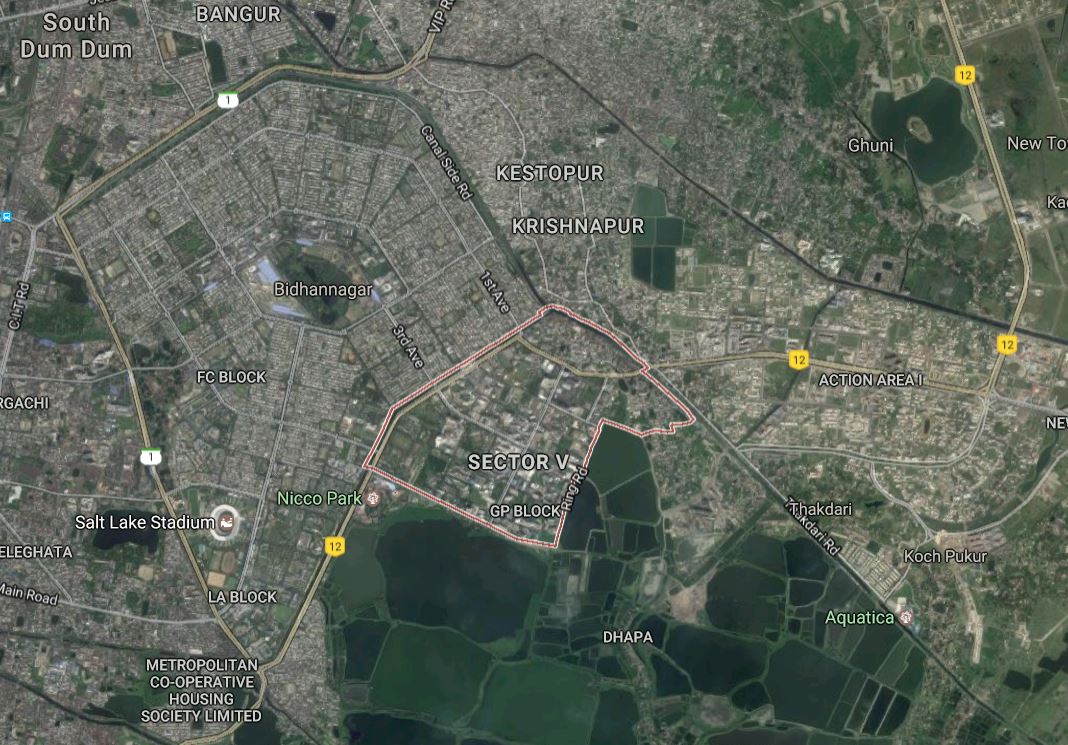
Godaddy sells "privacy" for each domain, making the owner of record "private" - showing only a proxy company operated by Godaddy "Domains by Proxy" - it"s possible to break this veil of privacy only in extreme cases such as a subpoena or matters of national security.  But why would the average domain owner want to keep their records private, especially since the idea of having a website at all is usually for the purposes of marketing (or at least, having your business information become public).  Recently, the answer has been in order to stop the spam calls and emails.  Godaddy makes the whois records public, which are somehow picked up by these foreign robocallers automatically, and the calls start.  They don"t know what is DNC and they don"t speak English.  Half of the time when you actually answer these calls they just disconnect.  Other times, a scratchy connection as one would hear when calling Afghanistan in the 80s from a phone booth, a man speaking broken English is asking if you need website design.  An agent of Elite E Services asked for this man"s name ansector 5d address to which he replied "Sector 5, Calcutta - Justin Smith" - with a little Google research at least Sector 5 really is a real place.  Justin Smith, doesn"t sound like an Indian name though.  When confronted with this fact he says "My fathers" name is Joseph Thomas Smith we are Christian" - maybe, but anyway who is to know?  And why are they calling a number that is on the Do Not Call list?


That"s not all.  Another "foreign" US caller, when asked that we be removed from their list, said "No, no no no.. no - NO .. no no no .. I WILL NOT remove you from my list (click)." at which point the really aggressive calls started, saying that we could be arrested due to an IRS issue, call this number immediately, 202 334 4562 (has been shut down).  "Sometimes we can get 20 or 30 spam calls a day," says an anonymous agent working for Elite E Services, "Sometimes, they will call 2 or 3 times in a row, you can"t block them - they use another number."


Supposedly, Trump"s appointee is doing something about this:


Ajit Pai, the FCC chairman appointed by President Trump, called robocalls a "scourge" in a blog post earlier this month. He noted that an estimated 2.4 billion robocalls are placed to Americans each month.


"There is no reason why any legitimate caller should be spoofing an unassigned or invalid phone number," Pai wrote. "It"s just a way for scammers to evade the law."


The FCC currently prevents phone companies from proactively blocking calls. The new rule would let phone companies block any robocaller that uses a number that has not been assigned to any customer or that has a nonexistent area code.


The FCC"s approach was developed in partnership with a "robocall strike force" of tech, cable and telecom companies formed last year. Members include Apple (AAPL, Tech30), Google(GOOGL, Tech30), Microsoft (MSFT, Tech30), Verizon (VZ, Tech30) and AT&T (T, Tech30).


The rules probably won"t be finalized and approved for at least a few months.


Meanwhile, the calls continue.  And since most of the callers are hiding behind the international wall of stupidity erected around the USA"s legal system, there"s little US phone users can do except turn off their phones.


This is a bad sign for the telecom sector and for Godaddy, at a time when the "telephone" struggles for its place in a busy digital world.  


If you would like a free consultation from a consumer rights law firm, visit Fortis Law Group @ www.fortisconsumerlaw.com


For all your online shopping needs, bookmark www.pleaseorderit.com YOUR STOP for Amazon orders with great savings and special offers!

Friday, May 26, 2017

The Inconvenient Truth Behind The Net Neutrality Movement

Via Disobedient Media


The control of private information on the internet has been a contentious for as long as the people have been online. It has long been the consensus that maintaining internet freedoms is essential for free expression, the exchange of ideas and the ability for proponents of democracy and human rights activists to mobilize and advocate for political, social, and economic reform. Currently, the debate about internet freedom is centered around the concept of net neutrality.


Net neutrality is the principle that internet service providers should enable access to all content and applications regardless of the source, and without favoring or blocking particular products or websites by offering different speeds of bandwidth to different service providers. While publications such as Forbes and The Heritage Foundation paint net neutrality as a principle which threatens internet freedoms in the long term and hurts consumers by reducing their ability to customize internet services offered to them, proponents argue that it ensures equal access to the internet. However, major supporters of net neutrality have created doubts about the concept due to their increasing support of censorship, violations of personal privacy and attacks against political opponents and journalists.


The most immediate issue with net neutrality is the fact that many of the groups supporting it are purportedly concerned with social issues which are totally unrelated. One such organization is the protest movement Color of Change. Color of Change"s website states that their mission is "design campaigns powerful enough to end practices that unfairly hold black people back." However, the group has increasingly begun to focus on advocating for net neutrality, a cause which does not appear to be related to their mission statement in any obvious manner. Color of Change claims that changes the FCC plans to make to net neutrality rules will "devastate black communities" without bothering to explain exactly how this might happen. In February 2015, the executive director of Color for Change Rashad Robinson published an opinion piece in The Hill where he claimed that securing the right to net neutrality victory would be "civil rights history in the making."


Despite their apparent support for the principle of net neutrality, Color for Change has primarily concerned itself with attacking journalists who report news with a conservative perspective, including Fox News personalities Sean Hannity and Bill O"Reilly. On May 18th, 2017, USA News reported that Color of Change and other protest groups planned a protest and meeting with FCC officials ahead of it"s intended vote to repeal Obama era protections requiring that all internet traffic be offered equally. Rather than focus on defending "information equality," the protest seemed to center around attacking alternative media. Signs photographed at the event demanded censorship of the Drudge Report, Breitbart News and conservative journalists. Video footage of the event shows Color of Change speakers stating that O"Reilly"s firing from Fox News was a result of net neutrality advocacy. The FCC ultimately ruled 2-1 to start the process of eliminating net neutrality rules and begin classification of home and mobile internet service providers as common carriers under Title II of the Communications Act.


Pro-net neutrality protestors carry signs advocating censorship


The focus on censorship of the media at an event purporting to focus on "information equality" is no surprise given Color of Change"s financial supporters. Data published by the Center for Responsive Politics shows that in 2016, billionaire George Soros made two payments totaling $400,000 to the group. The Washington Examiner has stated that Soros and the Ford Foundation have donated over $196 million to various net neutrality advocacy groups. Soros has spent hundreds of millions supporting various anti-government movements, including the Women"s March, the People"s Climate March, the Tax Day protests and far left Berkeley protest group Refuse Fascism. The ACLU also began actively organizing and training protest movements just one month after Soros sank $35 million into the group.


Other big name proponents of net neutrality have themselves been implicated in improper censorship and violations of personal privacy. In April, The Verge reported that Google, Netflix and Facebook were among a number of companies leading a group known as The Internet Association in efforts to lobby for retaining protections of net neutrality. The involvement of these tech giants in pushing for net neutrality raises troubling questions about who truly benefits from regulations which support the concept.


Since the end of the 2016 US presidential elections, Google has increasingly become involved in censorship of so-called "fake news." In spring of 2017, Google News Lab used its CrossCheck project to fight “fake news” prior to the French presidential election in collaboration with journalists, newsrooms, and social media companies alike. What CrossCheck appeared to act a function that took the liberty of appointing various groups to collaboratively decide what is true or false in real-time. Google"s push to become involved in censorship came after George Soros acquired stakes in Netflix as well as Google"s holding company Alphabet.


Facebook has similarly faced criticism for engaging in censorship and instances of improper access to user"s personal data. In February, Disobedient Media discovered that Facebook was self-censoring links to a story by CNBC which discussed comments picked up on a hot mic during a conversation between German Chancellor Angela Merkel and Facebook founder Mark Zuckerberg where Merkel asked Zuckerberg to censor speech critical of immigrants and Zuckerberg agreed to do so. The censorship came after Zuckerberg edited a manifesto to remove an admission that he supported monitoring private channels of communication. In February 2017, Zuckerberg released a 5,700 word essay warning about “isolationist” threats to globalism, stating that Facebook was there to help counteract popular trends towards nationalism and pro-soveriegn state ideologies. The original draft of the essay was “revised” to remove a reference which had revealed that Facebook actively monitored private conversations of individuals accused of plotting terror attacks.


In March 2017, BBC News conducted an investigation exposing a child abuse ring operating on Facebook which resulted in a four year prison sentence for one of the offenders. In response to the BBC"s report, Facebook left 80% of photos depicting child abuse online, then reported the BBC journalists to the police before cancelling plans for an interview. Facebook subsequently apologized for their behavior, but The Times reported in April that the social media giant may face criminal prosecution relating to the images of child abuse as well as pro-jihadist content which was being shared on the website. A May 2017 report by Heat Street has also revealed that Facebook has been continually shutting down "ex-Muslim" and atheist groups using its social media services.


While the debate may continue for some years to come, the open support by large sponsors for federal regulation raises serious concerns about net neutrality. The deep financial involvement of George Soros, the focus of protest groups on targeting free speech and the colored history of corporate sponsors of the principle makes it clear that "information equality" is likely much darker than it appears on the surface.

Sunday, May 14, 2017

Guilty by Investigation: Sentenced to Scrutiny

Via The Daily Bell


Innocent until proven guilty may be a thing of the past if an investigation itself is punishment.


An investigation by government authorities can be quite damaging, even if that investigation turns up nothing in the end.


Investigations can be used as a warning to the target and others that Big Brother is watching.


Investigations can insinuate guilt, serving as a punishment in the court of public opinion.


And each of these scenarios can cause economic damage to the target by making others (customers, partners, sponsors) flee because they are afraid to be associated with a targeted individual, whether because they think them actually guilty, because they don’t want to be targeted themselves, or because they fear the public backlash stemming from one of those two scenarios.


A perfect example is Hillary Clinton. Yes, she was probably actually guilty and only escaped due to corruption, but the investigation did officially turn up nothing. This means her prospects of becoming President were impeded by an investigation and not a conviction.


The same goes for Trump and the Russia probe. Again, regardless of the actual merit of the investigation, it alone damaged his public image and took the wind out of the sails of his first 100 days.


And last year, many called for gun control legislation which would disallow anyone under FBI investigation to own firearms. Since basically all civilians are under FBI investigation in some way, this would effectively outlaw guns. Clever.


Then there were the IRS audits of Tea Party groups, which were costly for the leaders’ businesses and chilled the movement. Why would you paint a target on your back if you are a business owner or wealthy? Better to not publicly express support for the Tea Party.


It is hard for the government to directly attack free speech. They need to come at it from the side. They need to attack “hate speech” and “fake news.”


Investigations which the government knows will turn up nothing, in the end, are one outlet for suppression of freedom of speech.


“I Disapprove of What You Say, But I Will Defend to the Death Your Right to Say It”


-Evelyn Beatrice Hall and/or Voltaire


Stephen Colbert is crude, not particularly funny, and deserves the freedom of speech to say crude unfunny things. He made a joke about Trump, meant to suggest he is a pawn of Putin, and now the FCC is investigating him.


The joke aired after 10 p.m. with certain words bleeped out. This time-frame is within when the FCC kindly allows free speech on the air. But not really. The FCC claims:


Obscene content does not have protection by the First Amendment.  For content to be ruled obscene, it must meet a three-pronged test established by the Supreme Court: It must appeal to an average person’s prurient interest; depict or describe sexual conduct in a “patently offensive” way; and, taken as a whole, lack serious literary, artistic, political or scientific value.


When the government gets to define words it doesn’t matter what rights are enshrined in the constitution. The ones who interpret the words will have dictatorial power.


Even when the FCC defines obscene content, it still could be debated endlessly the meaning of the definitions themselves! Basically, the government can always make the case that something is not free speech because it is obscene, fake news, hate speech, incitement etc.


It seems unlikely that anything will come of this investigation, officially. But unofficially, this sends a message to comedians and activists–Big Brother is watching and disapproves of your jokes about Trump.


Think twice about who you criticize.


Stephen Fry was also recently investigated in Ireland for a blasphemy law still on the books. The investigation was dropped, but again, the investigation alone is the message and slap on the wrist.


But in this case, where Fry made derogatory comments about God not being compassionate, the message seems to be: Your neighbors are watching.


Fry’s comments were reported to the Gardai by a man who claimed to be doing his ‘civic duty’, saying they breached the Defamation Act.


…’This man was simply a witness and not an injured party. Gardaí were unable to find a substantial number of outraged people.


‘For this reason the investigation has been concluded.’


The man who made the report told the newspaper he was happy the matter had been investigated, stating: ‘I did my civic duty in reporting it.


‘The guards did their duty in investigating it. I am satisfied with the result and I don’t want to comment further.’


He said he had not personally been offended by Mr Fry’s remarks.


It is one thing to be investigated by the government you offended; obviously, they are annoyed that you have stepped out of line and must be intimidated back into submission.


But it is actually more terrifying when a fellow citizen turns you in to the Gestapo, not because he wants to see you punished, but because he simply realizes you broke a law, any law.


And further horrifying is that had a mob been angered over Fry’s comments, he would have been lynched by the system. If they had found a substantial number of outraged citizens, the investigation would have continued. This means your fate is left up to the masses to decide if you can speak freely, or not.


Perhaps there should be more evidence of actual wrongdoing required to even open an investigation, since the investigations themselves have turned into the punishment, not for breaking the law, but for offending the ones with power, or the societal mob which has far too much say in your fate.


A good sign, however, is that each of these investigations only made the target more popular. As they say, there is no such thing as bad publicity.


The real problems come when it is not the famous targeted by these investigations.

Saturday, May 13, 2017

A "Mysterious Antenna" Emerges In An Empty Chicago Field; Billions Depend On It

Readers are familiar with the various microwave and laser arrays located at the real New York Stock Exchange in Mahwah, New Jersey, both of which we have written about in the past.


Microwave tower located next to the NYSE in Mahwah, NJ.


This article, however, is not about the familiar antennas off Route 17 in New Jersey. Instead, demonstrating to what lengths the high frequency traders will go for just a few millisecond advantage - which makes in the HFT world makes all the different between billions in profits and losses - Bloomberg reports that a mysterious antenna has emerged in an empty field in Aurora, near Chicago, and a trading fortune depends on it.


Strange? Of course: as BBG"s Brian Louis admits "it was an odd transaction from the outset: $14 million, double the going rate, for a 31-acre plot of flat, undeveloped land just west of Chicago. In the nine months since, the curious use of the space has only added to the intrigue. A single, nondescript pole with two antennas was erected by a row of shrubs. Some supporting equipment was rolled in. That’s it."


As it turns out, those antennas - as readers may imagine - were anything but ordinary. Same goes for the buyer of the property: anything but your typical land investor, although the name will be all too familiar to those who have followed our reporting on HFT over the years: it was Jump Trading LLC, "a legendary and secretive trading firm that’s a major player in some of the most important financial markets."


Equipment on land purchased by an affiliate of Jump Trading


Jump Trading affiliate World Class Wireless purchased the 31-acre lot for $14 million, according to county records. “They paid probably twice as much as it’s worth,” said David Friedlandof Cushman & Wakefield. “I don’t see anyone else paying close to that price.”


There was a reason why Jump overpaid so much: it was an investment into guaranteed future returns.


Because ultimately the purchase was all about the location: just across the street lies the data center for CME Group, the world’s biggest futures exchange. By placing its antennas so close to CME’s servers, Jump hopes to shave maybe a microsecond off its reaction time, enough to separate a winning from a losing bid in trading that takes place at almost the speed of light. Enough to make billions in profits if done successfully millions of times every minute for year.


As Bloomberg describes the land grab, "it was the latest, and perhaps boldest, salvo in an escalating war that’s being waged to stay competitive in the high-speed trading business."


The war is one of proximity -- to see who can get data in and out of CME the quickest. A company called McKay Brothers LLC recently won approval to build the tallest microwave tower in the area while another, Webline Holdings LLC, has installed microwave dishes on a utility pole just outside the data center.


“It tells you how valuable being just a little bit faster is,” said Michael Goldstein, a finance professor at Babson College in Babson Park, Massachusetts. “People say seconds matter. This is microseconds matter.”


It also tells you something else: at its core, modern trading is simply about being faster than your competition: no thinking goes into the trade, only reaction times matter. That, and frontrunning your competition. Some more details about this literal land grab:


In October 2015, McKay Brothers, a company that sells access to its microwave network to high-speed traders, leased land diagonal to the CME data center, under the name Pierce Broadband LLC, according to DuPage County property records.


Last month, the county gave McKay approval to erect a 350-foot high microwave tower that could be 600 feet closer to the data center than its current location, records show. Two trading firms, IMC BV and Tower Research Capital LLC, own minority stakes in McKay. Co-founder Stephane Tyc said his firm may never build the tower but it would be part of the firm’s continual efforts to speed transmission time.


Then there’s Webline Holdings. In November 2015, it was granted a license to operate microwave equipment on a utility pole just outside the data center, according to Federal Communications Commission records. Webline has licenses for a microwave network stretching from Aurora to Carteret, New Jersey, where Nasdaq Inc.’s data center is located. Messages left for Webline were not returned.


Back to the mysterious antenna: according to Bloomberg, the license for the transmission dishes is held by a joint venture between World Class and a unit of KCG Holdings, another HFT trading firm that was recently acquired by Virtu Financial. In other words, the "who is who" of HFT has been unleashed on an empty field near Chicago, and to the builder will go the spoils.


It could be billions in revenues.


* * *


After all this frentic building of microwave tower, who is closest to the CME servers? It is unclear. Trading data first leaves CME computers via fiber cable, and then to nearby antennas that send it by microwave to other towers until it reaches New Jersey, where all the major U.S. stock exchanges house their computers. The moves in Aurora are intended to reduce the time that the data is conveyed through cable; the practical impact is shaving off a millisecond or maybe even a few nanoseconds.


At its core, the race is about latency arbitrage, and not being the slowest firm on the block - a recipe for financial ruin. Sending data back and forth between the U.S. Midwest and East Coast allows high-frequency traders to profit from price differences for related assets, including S&P 500 Index futures in Illinois and stock prices in New Jersey. Those arbitrage opportunities often last only tiny fractions of a second.


Ironically, all the land grab and overpriced land purchases could be made obsolete with one simple decision: a microwave tower could be installed on the roof of the CME data center to eliminate the need for jockeying around the site, the same way the NYSE has a microwave tower next to its NJ headquarters. The exchange is indeed looking at allowing roof access, along with CyrusOne, the company that bought the data center last year, CME said in a statement. Traders being traders, however, they may continue to battle, this time for the most advantageous position on the microwave tower itself.


“We are confident the CME can provide an alternate and better solution which offers a level playing field to all participants," said McKay’s Tyc.


Which is ironic because at its core, modern High Frequency Trade is about everything but a level playing field: after all there are millions of traders to be frontrun, take that away, and the HFT parasites of the world have no advantage whatsoever.