Showing posts with label Copenhagen. Show all posts

Friday, November 3, 2017

Joy Villa: True MAGA Convert Or Trump Train Opportunist?

Content originally published at iBankCoin.com


Singer and songwriter Joy Villa made waves in February when she showed up to the 2017 Grammy awards in a controversial “MAGA” dress, shocking the music industry and gaining international attention as a Trump supporter. Villa’s sudden conversion from liberalism to the MAGA movement left many scratching their heads.


Last week, Villa teased a foray into politics – telling Fox News that she’s looking at a potential run for congress in Florida, California or New York.


Since her ‘coming out‘ as a Trump supporter, the 31 (or 26?) year old California native has been hard at work, releasing best-selling music such as her hit song “Make America Great Again,” while promoting herself through social media, talk shows, and a trip to Houston, TX to help with the Hurricane Harvey relief efforts. In September, Villa proudly announced her inclusion in an advisory board for the Trump campaign.


Given Villa’s seemingly overnight transition into a Trump supporting minority in the liberal-dominated music industry, many – such as the folks behind maga45pac.ml and musician Vinnie James who brought Villa’s contradictory positions to light over Twitter, have questioned the authenticity of her ‘conversion’ to the Trump train – pointing to a stack of evidence suggesting she’s actually a chameleon who reinvented herself as a conservative in order to capture a new demographic. The shift is indeed dramatic, and many suggesting she’s simply an opportunist have taken to Twitter with the hashtag #JoyVillaExposed.


Let’s take a look at some of the key points of contention with Mrs. Villa’s sudden shift to the right:


Election night liberal activism


Villa called Trump a “Crazy” candidate the night of the election, while retweeting President Obama and Democrat Congresswoman Karen Bass telling people, ostensibly Democrats, to go out and vote:


President Trump shot off a similar “go vote” Tweet on Nov. 8th which Villa could have also retweeted.


Villa called Trump supporters stupid in a deleted tweet


Villa loved Obama – even appearing in a video for his 2012 reelection campaign 


Villa deleted a March 2016 tweet accusing the Trump campaign of photoshopping a clothing model to look black: 


Intergalactic warlord Xenu or Jesus Christ?


Villa, an ardent Scientologist, tweeted On November 5, 2016 “I’m clear!!” – a reference to a level one can achieve within the religion’s complicated hierarchy.


In a nutshell, Scientology – created by Sci-Fi author L. Ron Hubbard, teaches that Xenu – dictator of the “Galactic Confederacy,” solved an interplanetary overpopulation problem by traveling around in his spaceship collecting souls called ‘thetans,’ which he then deposited in volcanoes on Earth 75 million years ago before blowing them up with H-bombs – releasing the souls. As a result, all humans born on Earth are ‘infected’ with thetans and must rid themselves of them through Scientology.


What Scientologists DON’T believe in, is non-approved beliefs – in any way, shape, or form – and followers are expected to give up other religions.  


Meanwhile, Villa has been making very pro-Christian comments all over the place, and held a prayer session at Trump’s hotel in DC.


Maybe her political strategist had something to do with it?


Some believe Villa’s MAGA transition was a ploy for the Church of Scientology to expand their reach: 


BLM or Blue Lives Matter?


Villa was using a #blm hashtag the day after the 2016 election, while she used the #blacktheblue hashtag on Halloween. She explained the shift in a Wednesday tweett, saying she supported Black Lives Matter “until they started killing Cops.


Except that Micah Xavier Johnson, who murdered five police officers at a Black Lives Matter protest, carried out his rampage in July, 2016 – four months before Villa endorsed the group. 


https://tinyurl.com/y9asp4bg


Nine days later on July 17, 2016, three Baton Rouge police officers were killed and three more wounded in an ambush said to have been ‘incited and encouraged’ by prominent BLM leaders.


Did Villa lie about her age?


Wikipedia lists Villa as 26 years old – born April 25, 1991, however Villa claims she’s 31:


What’s strange are several posts Villa made in 2016 featuring a picture of a birthday cake inscribed ‘Happy 25th’ – which would make her 26, the age Wikipedia lists. 


Villa’s husband is an eccentric liberal Scientologist
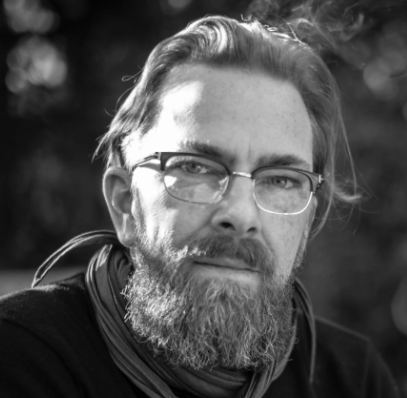

While opposites may attract, Villa’s husband – 52 year old Danish photographer and Scientologist Thorsten Overgaard is a giant liberal – flying out to the Faroe islands to chase Bill Clinton around in the hopes of a “Clinton coffee moment” – settling for a handshake.


The moment we all dream of is the “Clinton coffee moment,” because that was what he did when he visited Copenhagen years ago as the President.


Clinton looks at me, I look at him, I look at his hand. I shake hands with Clinton. His handshake is comfortable, professional. It’s not hard. It’s kind of soft but firm. Thorsten Overgaard


Apparently feeling the heat over her liberal past, Villa fired off a tweetstorm to tell the story of her Trump train transition in 26 tweets. 


To summarize: Villa was conservative, then she wasn’t, then she supported Bernie, then a friend turned her on to Trump. To cap it off, Villa says “I’m not a longtimer but Im loyal 


It’s been reported that Villa has been buying Twitter followers after losing support in recent days. 


What say you?


Follow on Twitter @ZeroPointNow § Subscribe to our YouTube channel

Friday, October 6, 2017

7 Independence Movements That Could Destroy The EU

Authored by Alex Christoforou via TheDuran.com,


Catalonia continues to press on with its independence movement, much to the dismay of Spain and the European Union. Catalonia is not the only region in the EU demanding more autonomy or independence.


Here are seven regions in the European Union that may seek separation, and cause more fragmentation in an already weakened Europe.


1. Scotland, Britain


In 2014, Scotland had a historic referendum on leaving the United Kingdom resulting in a narrow 55 percent vote against leaving the UK.


First Minister Nicola Sturgeon, head of the pro-independence Scottish National Party, is now calling for a second referendum once Britain’s exit from the EU becomes clear.


Scotland is home to 5.2 million people and has been semi-autonomous since 1998 with a devolved parliament that handles matters of education, health, environment and justice.


Diplomacy and defense remain under the control of London.


Sturgeon openly condemned the Spanish police violence during the Catalonia independence vote.


2. Flanders, Belgium


Housing the center of EU oligarchy, Belgium is anything but a unified state.


Created 1830 as an independent nation to act as a buffer between France and Germany, Belgium is a mix of a Flemish-speaking, conservative northerners and  French, left-leaning southerners.


The Flemish nationalist sentiment is more powerful than ever, and the separatist New Flemish Alliance (N-VA) is now one of the biggest party in Belgium, and a key partner in the coalition government.


The N-VA is pushing for the creation of a Flemish republic, and during the 2018 elections, it may have its chance.


Flanders’ Minister-President Geert Bourgeois called on the Spanish government to start talks with “the legitimate leaders of a peaceful people”.


3. Basques, Spain


Separatist group ETA was founded in 1959 to promote the interests of the Basque region. later turning into a violent independence campaign blamed for 829 deaths.


ETA carried out its last attack in 2010. It has since disarmed in April of this year.


ETA members have now joined a Franco-Spanish Basque political party called Sortu that is working for “full freedom” for Basque’s 2.2 million population.


40,000 people demonstrated in Bilbao in support of Catalonia’s referendum.


The regional president, Inigo Urkullu, called for the recognition of the Catalan and Basque nations.


4. New Caledonia, France


With a population of approximately 280,000 people, this South Pacific archipelago is set to hold a referendum by November next year on independence from France.


Under French rule since 1853, New Caledonia reached an agreement in 1998 with Paris for greater autonomy, although many activists say autonomy has not been fully granted.


New Caledonia has on-fourth of the world’s known resources of nickel, but as is the case with most colonial relationships, wealth is properly shared.


5. Corsica, France


Corsica is a Mediterranean island with a population of 330,000 people. It is part of France with its own language.


The separatist National Liberation Front of Corsica (FLNC) ended its armed struggle in June 2014, and has now pushed for a political solution to its demands.


Since 2015 nationalists have been leading the island’s assembly, as Corsica currently has a special administrative status that affords it certain powers, and retains strong autonomy.


The Corsica assembly highlighted “the indisputable legitimacy of the government of Catalonia”.


6. Faroe Islands, Denmark


With a population of 48,000, Denmark’s Faroe Islands will hold a referendum in April 2018 on a new constitution that would give the islands self-determination.


Faroe Islands have been autonomous since 1948.  Foreign affairs and defense are under the control of Copenhagen.


7. Lombardy and Veneto, Italy


These wealthy regions in northern Italy are set to hold non-binding consultative referendums on October 22, asking voters if they favor more autonomy from Italy’s central government.


Politicians in Lombardy and Veneto, which combined account for nearly a third of Italy’s economy, demand a bigger share of tax income.

Saturday, September 30, 2017

Armed Soldiers To Replace Cops On Danish Streets

Even as Europe"s political establishment professes its liberal ideals by accepting - or in the case of the ongoing spat between Brussels and Central Europe, forcing others to accept -  as many refugees as humanitarian virtue signalling will require, the true face of Europe is gradually emerging behind the scenes, and according to The Local.de, starting today armed soldiers from the Danish Armed Forces (Forsvaret) will replace police officers at both Denmark’s southern border to Germany and at potential terror targets in Copenhagen.


According to the Danish National Police (Rigspolitiet) and Copenhagen Police, 160 soldiers will patrol the border and take over guard duties at Jewish institutions including the Great Synagogue in central Copenhagen.


The synagogue has been under constant police protection since a Danish-born terrorist of Palestinian descent shot and killed 37-year-old Dan Uzan, a volunteer security guard, outside the building in February 2015. The gunman, Omar El-Hussein, had earlier in the night opened fire with an automatic rifle outside a cultural centre hosting a free speech event, killing 55-year-old Finn Nørgaard and injuring police officers. El-Hussein was later shot and killed by police.


The soldiers’ role at the German border was described as ancillary and will not entail actively checking the IDs of those entering the country. That role will still be filled by police officers and members of the Danish Home Guard (Hjemmeværnet), which has been active in border checks since April 2016.


The plan to put armed military soldiers at the border and potential terror targets has been under discussion for well over a year, or not long after Europe realized the consequences of the great welcome party thrown by Angela Merkel in 2015. The official explanation is that it is being implemented as a way "to ease the workload of an overworked and undermanned police force." The unofficial, of course, is that the police desperately need help against an ongoing influx of potential terrorists.


The 160 soldiers will relieve the police force of the equivalent of 128 full-time police officers. According to news agency Ritzau, police currently use the equivalent of 456 full-time officers on border controls and patrolling potential terror targets.


Meanwhile, Denmark has long since lost the idealistic illusion it is a noble, humanitarian home welcoming the world"s refugees. As the WaPo wrote last year,  "as Europe walls itself off, the continent is left to reckon with what’s become of its long- cherished humanitarian beliefs. And to many in Denmark, the chasm between reputation and reality looks particularly gaping.


“We’re losing respect for the values upon which we built our country and our European Union,” said Andreas Kamm, secretary general of the Danish Refugee Council. “It’s becoming very hard to defend human rights.”


This Scandinavian nation of compulsively friendly people is celebrated by U.S. presidential candidate Bernie Sanders as a ­social-welfare utopia, one that was recently judged the world’s happiest place. Ranking high in the country’s pantheon of heroes are those who protected Jews during the Holocaust or who helped the oppressed escape from behind the Iron Curtain during the Cold War.


But when it came to those fleeing 21st-century conflicts on Europe’s doorstep, Denmark went into overdrive to broadcast its hostility. While Germany continued to welcome asylum seekers, and other European countries such as Sweden held their doors open for as long as they could, Denmark took a hard line almost from the beginning. The government slashed refugees’ benefits, then advertised the cuts in Lebanese newspapers. It enabled police to confiscate refugees’ valuables, including cash and jewelry. And authorities made it far more difficult for those already here to reunite with their families, upping the wait time from one year to three.


And now, just in case the measures were insufficient, heavily armed soliders will be there to make sure there are no more casualties as a result of Angela Merkel"s "shared" generosity.

Wednesday, May 31, 2017

Meotti: Europe Fights Back With Candles And Teddy Bears

Authored by Giulio Meotti via The Gatestone Institute,


  • Europe still has not realized that the terror which struck its metropolis was a war, and not the mistake of a few disturbed people who misunderstood the Islamic religion.

  • We are apparently not ready to abandon our masochistic rules of engagement, which privilege the enemy"s people over our own.

  • It appears that for Europe, Islamic terrorism is not real, but only a momentary disruption of its routine. We fight against global warming, malaria and hunger in Africa. But are we not ready to fight for our civilization? Have we already given up?

This long and sad list is the human harvest of Islamic terrorism on Europe"s soil:


Madrid: 191. London: 58. Amsterdam: 1. Paris: 148. Brussels: 36. Copenhagen: 2. Nice: 86. Stockholm: 5. Berlin: 12. Manchester: 22.


And it does not take into account the hundreds of Europeans butchered abroad, in Bali, in Sousse, in Dakka, in Jerusalem, in Sharm el Sheikh, in Istanbul.


But after 567 victims of terror, Europe still does not understand. Just the first half of 2017 has seen terror attacks attempted in Europe every nine days on average. Yet, despite this Islamist offensive, Europe is fighting back with teddy bears, candles, flowers, vigils, Twitter hashtags and cartoons.


Candles and flowers left behind following an evening vigil on May 23, 2017 in Manchester, England, held after a suicide bombing by an Islamic terrorist who murdered 22 concert-goers the night before. (Photo by Leon Neal/Getty Images)


After 9/11 and 2,996 victims, the U.S. under George W. Bush rose to the fight. The United States and a few brave European allies, such as the UK, Italy and Spain, proved themselves "the stronger horse". Islamic warriors were thrown on the defensive; Jihadist recruits dropped off and dozens of terror plots were disrupted. But that response did not last. Europe quickly retreated into its own homefront, while the Islamists carried the war onto Europe"s soil: Madrid, London, Theo van Gogh...


Since then, the situation has only become worse: a simple calculation shows that we went from one attack every two years to one attack every nine days. Take just the last six months: Berlin, London, Stockholm, Paris and now Manchester.


Europe has still not realized that the terror which struck its metropolis was a war, and not the mistake of a few disturbed people who misunderstood the Islamic religion. Today there are more British Muslims in the ranks of ISIS than in the British Armed Forces. According with Alexandre Mendel, author of the book Jihadist France, there are more violent Salafists in France than regular soldiers in the Swedish army.


Thirteen years after the attack on Madrid"s trains, Europe"s leaders read from the same script: hiding the images of pain, so as not to scare anyone; concealing that the Islamist attackers are "made in Europe" insiders; repeating that "Islam is a religion of peace"; being prisoners inside our liberties; watching them removed one-by-one while we proclaiming that "we will not change our lifestyle"; and eradicating the fundamentals of our civilization -- freedom of expression, freedom of thought, freedom of movement, freedom of religion -- the entire basis, in fact, of the Judeo-Christian West.


Radical Islam is the greatest threat to Europe since Nazism and Soviet Communism. But we still have not been inclined to question any of the political or ideological pillars that have led to the current disaster, such as multiculturalism and mass immigration. Hard counter-terrorism measures, the only ones that could break the terrorists" plans and morale, have never been taken. These would include shutting down mosques, deporting radical imams, banning foreign funding of mosques, closing toxic non-governmental organizations, draining the welfare financing of Europe"s jihadists, refraining from flirting with jihadists, and stopping foreign fighters from returning home from the battlefront.


We treat war and genocide as if they are simply mistakes made by our intelligence agencies.


We dismiss radical Islam as the "mental illness" of a few disturbed people. Meanwhile, every week, two new Salafist mosques are opened in France, while radical Islam is preached in more than 2,300 French mosques. Thousands of European Muslims have gone off to wage jihad in Syria and Iraq, and fundamentalists are taking control of mosques and Islamic centers. In Brussels, all the mosques are controlled by the Salafists, who are disseminating radical Islam to the Muslim masses.


The sad truth is that Europe has never had the political will to wage a total war against ISIS and the other jihadist groups. Otherwise, Raqaa and Mosul would already have been neutralized. Instead, Islamists have been taking over Molenbeek in Belgium, the French suburbs and large swaths of Britain. We now should be celebrating the liberation of Mosul and the return of Christians to their homes; instead we are mourning 22 people murdered and 64 wounded by an Islamic suicide-bomber in Manchester, and 29 Christians killed in Egypt this week alone.


Serious fighting would require massive bombing to eliminate as many Islamists as possible. But we are apparently not ready to abandon our masochistic rules of engagement, which privilege the enemy"s people over our own. Europe also never demanded that its Muslim communities disavow jihadism and Islamic law, sharia. This silence is what helps Islamists shut the mouths of brave Muslim dissidents. Meanwhile, Europe"s armies are getting smaller by the day, as if we already consider this game done.


After every attack, Europe"s leaders recycle the same empty slogans: "Carry on"; "We are stronger"; "Business as usual". The Muslim Mayor of London, Sadiq Khan, tells us that we must get used to daily carnage! He says he believes that the threat of terror attacks is "part and parcel of living in a big city", and that major cities around the world "have got to be prepared for these sorts of things". Does he seriously mean that we are supposed to get used to the massacre of our own children in the Manchester Arena? Islamic terror has now become part of the landscape of so many major European cities: Paris, Copenhagen, Nice, Toulouse, Berlin....


Instead of concentrating on jihad and radical Islam, Europe"s leaders continue to talk about the "Russian threat". It would indeed be a mistake to neglect Russian expansionism. But did Vladimir Putin"s troops attack Westminster? Did Russian agents blow themselves up, taking the lives of children at a Manchester concert? Did a former Soviet spy massacre Swedes walking in Stockholm? For Europe"s leaders, talking about Putin appears a welcome distraction from the real enemies.


The French writer Philippe Muray wrote in his book, Dear Jihadists:


"Dear Jihadists! Quake before the wrath of the man in Bermuda shorts! Fear the rage of consumers, of travellers, of tourists, of holiday-makers, who rise from their caravans! Imagine yourselves like us, as we wallow in the joy and luxury that have weakened us".


It seems that for Europe, Islamic terrorism is not real, but only a momentary disruption of its routine. We fight against global warming, malaria and hunger in Africa, and for a global world of equality. But are we not ready to fight for our civilization? Or have we already given up?

Tuesday, May 16, 2017

Jihad In Denmark

Authored by Judith Bergman via The Gatestone Institute,


  • Danish Minister of Justice Søren Pape hopes to solve the issue by prosecuting the imam. However, Danish politicians appear to miss the critical fact that there is clearly a thirsty audience for sermons like this.

  • This sermon is a call to violence against Jews.

  • As the Quran cannot be changed, it is crucial to make more broadly known what is in it, so at least people can see the facts confronting them, to help them determine what choices they might care to make for their own future and that of their children.

In 2015, Omar El-Hussein listened to the imam Hajj Saeed, at the Hizb-ut-Tahrir- linked Al-Faruq-mosque in Copenhagen, decry interfaith dialogue as a "malignant" idea and explain that the right way, according to Mohammed, is to wage war on the Jews. The next day, El-Hussein went out and murdered Dan Uzan, the volunteer Jewish guard of the Jewish community, as he was standing in front of the Copenhagen synagogue. El-Hussein had also just murdered Finn Nørgaard, a film director, outside a meeting about freedom of speech.


Two years later, nothing has changed. A visiting imam from Lebanon at the Al-Faruq mosque, Mundhir Abdallah, is preaching to murder Jews:


"[Soon there will be] a Caliphate, which will instate the shari"a of Allah and revive the Sunna of His Prophet, which will wage Jihad for the sake of Allah, which will unite the Islamic nation after it disintegrated, and which will liberate the Al-Aqsa Mosque from the filth of the Zionists, so that the words of the Prophet Muhammad will be fulfilled: "Judgement Day will not come until the Muslims fight the Jews and kill them. The Jews will hide behind the rocks and the trees, but the rocks and the trees will say: "Oh Muslim, oh servant of Allah, there is a Jew behind me, come and kill him." ..."


The "words of the Prophet" are from a well-known hadith, number 6985.


Far from hiding this incitement, the mosque posted the sermon, delivered on March 31, on the YouTube page of Al-Faruq Mosque on May 7. The invaluable research organization, MEMRI, translated it.


A reporter from Danish TV channel TV2 news, who recently spent two hours around the Al-Faruq mosque, could not find a single Muslim willing to condemn the imam. "I don"t think he meant anything bad by it," said Bayan Hasan, a female student. Another Danish Muslim, Mohammed Hussein, incorrectly replied, "According to Islam, Muslims are not allowed to kill". The Quran verse 8:12, to mention one of many examples, says otherwise: "...I will cast terror into the hearts of those who disbelieved, so strike [them] upon the necks and strike from them every fingertip."


Denmark"s Minister of Integration, Inger Støjberg, called on the mosque and all Muslims in Denmark to condemn the sermon. "If this had happened in a Danish church, it would not have been necessary to ask people to condemn it. It would have been automatic", she said.


Muslim organizations and imams have, in fact, been completely quiet on the matter. One leading imam, Naveed Baig, from the Danish Islamic Center, simply dismissed the sermon: "Islam as a religion cannot be anti-Semitic, as Islam itself is a Semitic religion", he said.


The Quran and the hadiths are in fact brimming with anti-Semitism, not to mention exhortations to kill Jews and other "infidels", and calls for jihad (war in the cause of Islam) -- a fact of which Naveed Baig is doubtless well aware.


According to the Quran, people who refuse to acknowledge Allah as the one true god are unbelievers destined for hell: "Verily Allah has cursed the unbelievers and prepared for them a blazing fire" (Quran 33:64). Muslims therefore are superior to all others:


"Ye are the best of peoples, evolved for mankind... believing in Allah... If only the People of the Book had faith, it were best for them: among them are some who have faith, but most of them are perverted transgressors." (Quran 3:110).


"Soon shall we cast terror into the hearts of the unbelievers... their abode will be the fire: And evil is the home of the wrong-doers." (Quran 3:151).


As for specific passages about the Jews, the Quranic passages 5:60 and 7:166 talk of the Jews being cursed and transformed by Allah into apes and pigs: "...those who incurred the curse of Allah and his wrath, those of whom some he transformed into apes and swine, those who worshipped evil..." This is the reason Jews today in large parts of the Muslim world are commonly called apes and pigs. Furthermore, "Jews and pagans [are] among the worst of the enemies of the believers". (Quran 5:82).


The Jews are described as hypocrites (Quran 2:14), and "slayers of His [Allah"s] messengers" (Quran 2:61), who are "cunning" and "hate to see your success and rejoice if any misfortune befalls you" (Quran 3:120). These examples constitute only a part of the innumerable examples in the Quran and the hadiths, not to mention the writings of Islamic scholars.


Therefore, there is nothing unusual about imams calling for the murder of Jews in certain mosques, even in the West. In Canada, for example, in 2016, at Montreal"s Dar Al-Arqam Mosque, an imam recited the same hadith about stones and trees asking Muslims to come and kill Jews hiding behind them.


In Denmark, however, among politicians, news of the sermon generated the usual "shock". Minister of Justice Søren Pape said it is "insane" that people such as the imam "exist in Denmark": "It is deeply unsympathetic," he said. "These are medieval thoughts and it makes me very sad that in Denmark in 2017 there are still people who really have not evolved further."


Other Danish politicians reacted with similar degrees of "shock" -- appearing utterly surprised by basic tenets of Islam, which have only been public for 1400 years.


Søren Pape hopes to solve the issue by prosecuting the imam. In December 2016, Denmark introduced a new provision in the penal code aimed at religious preachers. It is known in Denmark as the "imam provision," as it is, in practice, mainly aimed at imams. According to the provision, speaking approvingly of terror, murder, rape, violence, incest, pedophilia, coercion and polygamy, whether at private or public events, is prohibited and punishable by fine or prison of up to three years. The "imam provision" exists in addition to the general provision in the penal code, according to which it is prohibited and punishable by fine or prison publicly to threaten, insult or demean a group of persons because of their race, skin color, national or ethnic origin, faith or sexual orientation.


However, even if a Danish court should succeed in convicting the imam, Danish politicians appear to miss the critical fact that there is clearly a thirsty audience for sermons like this.


The Danish Jewish Community reported the imam to the police. Jewish community leader Dan Rosenberg told the newspaper Politiken: "We are concerned that weak and impressionable people may perceive this kind of preaching as a clear call to violence and terror against Jews." This sermon, however, is not a question of "perception": This sermon is a call to violence against Jews.


Danish Jews also have more reasons to feel threatened. In October 2015, a Danish girl, then 15, converted to Islam and immediately planned to bomb the Jewish school in Denmark (in addition to a plan to bomb her own school). Her mother, who was concerned about the girl"s new behavior, desperately sought to alert the Danish authorities. The Danish police intelligence service (PET), told the mother not to worry, and assured her that her daughter would not "do anything", despite being told that her daughter was "desperate" to wage jihad. According to the mother:


"The only advice I got was to do with the food. They thought that if [my daughter] refused to eat pork and I insisted on making it for dinner, then I would have to make two separate dinners."


A few months after her daughter"s conversion, in January 2016, the mother found a stash of chemicals in her basement and a note where her daughter had written the name of the Jewish school and its opening hours, and the words "jihad" and "Allah is great". The girl also apparently looked up to Omar El-Hussein, the terrorist who killed Dan Uzan and Finn Nørgaard, and even took his name as her own. After finding the chemicals, the mother reported the girl to the police. The girl is considered so dangerous that she spent part of her detainment in solitary confinement. Her trial recently ended; sentencing is expected mid-May.


As the Quran cannot be changed, it is crucial to make more broadly known what is in it, so at least people can see the facts confronting them, to help them determine what choices they might care to make for their own future and that of their children.

Saturday, May 6, 2017

These Are The Most Expensive (And Best) Cities Around The World

Every year Deutsche Bank releases its fascinating index of real-time prices around the world which looks at the cost of goods and services from a purchase-price parity basis, to determine the most expensive - and in this year"s edition, best - cities. As have done on several occasions in the past, we traditionally focus on one specific subindex: the cost of "cheap dates" in the world"s top cities.


The index consists of i) cab rides, ii) dinner/lunch for two at a pub or diner, iii) soft drinks, iv) two movie tickets and a v) couple of beers. Deutsche Bank"s advice to those in Zurich is either to marry young or choose your blind dates carefully as its "cheap date" index continues to see Zurich as the most expensive place for courtship. Tokyo climbs to second and Oslo, Copenhagen and Stockholm make up the top 5. Indeed these 5 cities are also the most expensive for a haircut so the pre-date investment costs are also high!


If you"re in the Philippines, Indonesia, Malaysia, India and Mexico a date is around a quarter of the cost of that in Zurich and a haircut about a tenth of the price. So if you"re young, free and single in Zurich, depending on how much you date it might be profitable to migrate to parts of Asia even after the salary sacrifice, the German bank suggests.


And while traditionally we end it here, focusing merely on the most (and least) expensive cities part of the study, this year it is worth expanding because what started off as a pet project for Jim Reid back in 2011 has turned into a purchase-price parity masterpiece, as well as a crowdsourced "quality of life" index, which ranks some 50 of the world"s top cities on par with any of the rankings seen in various other, more popular rankings such as that by Mercer. As the London-based banker writes, "We continue to add new cities, refine our methodology and while it’s impossible to exactly match products and services around the world we try to ensure as much uniformity as possible and then convert prices back to USD."


Some further details:


This year Deutsche has added a few new series. In particular average after-tax salaries, average 2-bed apartment rental costs and finally a quality-of-life index that is the most subjective measure in the report and will probably cause most arguments, debates and disagreements. A lot of the data in the report is crowdsourced (including this new quality-of-life index). Wellington, NZ comes out on top out of the 47 cities we cover based on purchasing power, crime, healthcare, cost of living, house prices, commuting time, pollution and climate. Edinburgh, Vienna, Melbourne, Zurich and Copenhagen are next. Of our 47 cities, the "mega cities" like Tokyo (rank 27), NYC (28), Paris (30), London (33), Shanghai (37) and Mumbai (45) rank very low mostly due to high living costs, crime, pollution and commuting time. Megacity dwellers may also forsake short-term quality of life for aspirational reasons with these cities providing more upside rewards from the average for those most successful.


Looking simply at most expensive cities, Reid finds that Zurich remains the most expensive place to do and buy a lot of things but does have the highest average salaries, followed by several US cities and then Sydney. London has slipped out of the top 10 post the Brexit-FX fall.  


Rents are highest in San Fran, HK, NYC, London and then Zurich. Of note: the difference for a 2 bedroom rental between the most expensive city, San Francisco, and India"s Bangalore, when indexed in USD is a whopping 12 times.


Zurich is home to the highest ‘disposable income after rents’ and at the top of the purchasing power index.


However it might depend on how many dates and haircuts you have in a month (see top chart) as to how wealthy you feel. At the other end of the scale if you"re in Jakarta, Manila, Rio, New Delhi and Istanbul and a job comes up in Zurich then you could potentially increase your salary by ten-fold. Mind the cost of living increases though.


Global brands continue to be relatively cheaper in the US than across its DM peers. The top 10 most expensive regions across goods and services remain dominated by European cities. Swiss and Nordic/Scandinavian cities in particular require a tolerant bank manager to enable consumption. If you find yourself on holiday in Turkey, Brazil, Russia or Greece try to avoid the Apple store as iPhones are  25-50% more expensive than in the US - still the cheapest place to buy. Japan, Hong Kong, Malaysia and Canada only see a small premium over US prices.


The "weekend getaway" index reflects the general cost of living around the world but is perhaps biased by hotel costs.


Milan is the new number-one (very expensive hotels), followed by Copenhagen, Zurich, London, Stockholm, Vienna and NYC. Much lower hotel costs in Asia continue to keep these cities as attractive holiday destinations.


The "bad habits" index of cigarettes and beers is most costly in Australia, NZ and Singapore. At the opposite end of the spectrum it’s very cheap to indulge in such habits in the Czech Republic and South Africa.


If you relocate to Singapore, Copenhagen or Oslo consider a bike rather than a new car as duties etc. make the cost very prohibitive.


Avoid car rentals in Amsterdam and try not to get thirsty in Oslo (beer or coke)...


... and refrain from buying jeans and trainers in Copenhagen.


Petrol costs most in HK and public transport most in London.


Zurich also tops the rankings for most expensive movie tickets, while those who want to stay in shape will spend the most in Tokyo (with Zurich 2nd).


Hungry? A basic dinner will set up back some $73.70 in Zurich, while a full course dinner for two is most expensive in Oslo and costs just about $130.


Finally, new to this year’s study is a quality-of-life index of the 47 major cities DB collected prices for across the rest of this document. Figure 1 shows the overall index level plus the ranks for the individual components. The data has been collected by www.numbeo.com - a large crowd-sourced information database on global prices, quality of living etc. The data is based on the following 8 variables; purchasing power, safety, healthcare, cost of living, house prices/income, commuting time, pollution and climate.


Friday, April 21, 2017

WTI Crude Crashes Below $50 As Hedgies Lose Faith In OPEC

Oil is headed for its biggest weekly loss since early March as signs that OPEC will continue with output reductions are offset by growing U.S. production and inventory gluts. Having tried and failed to spark some momentum yesterday (via Saudi jawboning and Goldman confidence), WTI Crude just plunged below $50 for the first time since March.


"It all comes down to whether OPEC can deliver inventory cuts," Bill O’Grady, chief market strategist at Confluence Investment Management in St. Louis, said by telephone. "So far we haven’t seen a lot of evidence that they’re succeeding."


It seems Goldman"s muppets aren"t buying it this time.


Erasing 70% of the early April bounce...


“We are once again seeing the emerging stalemate between OPEC and non-OPEC cutting efforts on one side and rising U.S. production on the other,” said Ole Sloth Hansen, head of commodity strategy at Saxo Bank A/S in Copenhagen. “We are currently testing the lower end of the range. This market is unlikely to go anywhere for the foreseeable future.”


OPEC has lost the confidence of the hedge funds.

Thursday, April 13, 2017

Turkey's Barks And Bites

Authored by Burak Bekdil via The Gatestone Institute,


  • This is the first time that Erdogan is openly challenging a concerted European stand.


Turkey"s foreign policy and the rhetoric that presumably went to support it, has, during the past several years, aimed less at achieving foreign policy goals and more at consolidating voters" support for the Ankara government.


Self-aggrandizing behavior has predominantly shaped policy and functioned to please the Turks" passion for a return to their glorious Ottoman past.


Assertive and confrontational diplomatic language and playing the tough guy of the neighborhood may have helped garner popular support for President Recep Tayyip Erdogan and his Justice and Development Party (AKP), but after years of "loud barking and no biting", Turkey has effectively become the victim of its own narrative.


In 2010, Turkey froze diplomatic relations with Israel and promised "internationally to isolate the Jewish state", and never to restore ties unless, along with two other conditions, Jerusalem removed its naval blockade of Gaza to prevent weapons from being brought in that would be used to attack Israel. Turkey"s prime minister at the time, Ahmet Davutoglu, said Israel would "kneel down to us".


In 2016, after rounds of diplomatic contacts, Turkey and Israel agreed to normalize their relations. The blockade of Gaza, to prevent shipments of weaponry to be used by Gazans in terror attacks remains in effect.


In 2012, Davutoglu claimed that Syrian President Bashar al-Assad"s days in power were numbered, "not by years but by weeks or months". In 2016, Davutoglu had to step down as prime minister, but Erdogan"s and his worst regional nemesis, Assad, is in power to this day, enjoying increased Russian and Iranian backing. In 2012, Erdogan said that "we will soon go to Damascus to pray at the Umayyad mosque" -- a political symbol of Assad"s downfall and his replacement by pro-Turkey Sunni groups. That prayer remains to be performed.


In November 2015, shortly after Turkey shot down a Russian Su-24 military jet and cited violation of its airspace, Erdogan warned Russia "not to play with fire." As for the Russian demands for an apology, Erdogan said it was Turkey that deserved an apology because its airspace had been violated, and that Turkey would not apologize to Russia.


In June 2016, just half a year after Russia imposed a slew of economic sanctions on Turkey, Erdogan apologized to Russian President Vladimir Putin.


In July 2016, Erdogan apologized for downing a Russian plane, and in August he went to Russia to shake hands for normalization. Pictured: Russian President Vladimir Putin with Turkey"s then Prime Minister Erdogan, meeting in Istanbul on December 3, 2012. (Image source: kremlin.ru)


Erdogan and his government have countless times warned the United States not to side with the Syrian Kurds --whom Turkey views as a terrorist group-- in the allied fight against radical jihadists of ISIL"s Islamic State. In March 2017, Washington denied that Syrian Kurds were a terrorist group and pledged continued support for them.


Erdogan"s Turkey has done more than enough to show that its bark is worse than its bite. Yet it keeps barking badly. This time, the enemy to bark at, not bite, is Europe. This is the first time that Erdogan is openly challenging a concerted European stand.


In a recent row between several European capitals and Ankara over Erdogan"s ambitions to hold political rallies across Europe to address millions of Turkish expatriates, the Turkish president said he would ignore that he was unwelcome in Germany and would go there to speak to his Turkish fans.


In response, the Dutch government deported one of Erdogan"s ministers who had gone uninvited to the Netherlands to speak to the Turkish community there.


Germany launched two investigations into alleged Turkish spying on German soil.


Similarly, Switzerland opened a criminal investigation into allegations that Erdogan"s government had spied on expatriate Turks.


In Copenhagen, the Danish government summoned the Turkish ambassador over claims that Danish-Turkish citizens were being denounced over views critical of Erdogan.


The barking kept on. In Turkey, Erdogan warned that Europeans would not be able to walk the streets safely if European nations persist in what he called "arrogant conduct." That comment caused the EU to summon the Turkish ambassador in Brussels to explain Erdogan"s threatening language.


Farther east, in the rich European bloc, several hundred Bulgarians blocked the three main checkpoints at the Bulgarian-Turkish border to prevent Turks with Bulgarian passports, but who were living in Turkey, from voting in Bulgarian elections. The protesters claimed that Turkish officials were forcing expatriate voters to support a pro-Ankara party.


Meanwhile, at the EU"s southeast flank, Greece said that its armed forces were ready to respond to any Turkish threat to the country"s sovereignty and territorial integrity.


What happened to Erdogan"s promised "bite" that he could go to Germany to speak to the Turkish community despite repeated German warnings that he would not be welcome? "I will not go to Germany," he said on March 23.


Erdogan may be winning hearts and minds in Turkey with his neo-Ottoman Turkey "barks." But too few foreign capitals find his threats serious, too few politicians think that he is convincing and too many people tend to believe Turkey"s bark is worse than its bite.


The recent wave of European constraints against Erdogan shows that, for the first time in recent years, Europe does not seem to fear Erdogan"s bluffing and thuggishness.


At the moment, Erdogan"s priority is to win the referendum on April 16 that he hopes will change the constitution so that he can be Sultan-for-life. Picking fights with "infidel" Europeans might help him garner more support from conservative and nationalist Turks.


When the voting is done, however, he will have to face the reality that an alliance cannot function forever with one party constantly blackmailing the other.

Saturday, April 8, 2017

Sweden Truck Terrorist Arrested; Bomb Found Inside Truck

Swedish police have arrested the man they accuse of plowing a hijacked beer delivery truck into a crowd in central Stockholm on Friday, killing four people and wounding more than a dozen in what they called a terror crime.


After a five-hour manhunt on Friday, Swedish police apprehended the man who matched the profile of a person seen leaving the crime scene, but cautioned they had yet to ascertain whether he was the suspected perpetrator. Magistrates have until Tuesday to decide whether the suspect should remain in custody, and specify charges. “He is suspected of conducting an act of terror,” Swedish prosecutors’ spokeswoman Karin Rosander said.


Police in central Stockholm near the crime scene on April 08, 2017


"The person in question has been arrested as the culprit ... in this case the driver," police spokesman Lars Bystrom said of the attack, adding that the authorities were not ruling out the possibility that he had accomplices, although only one person had been taken into custody.


While police declined to comment on the identity or possible motive of the man, who was detained in a northern Stockholm suburb, the arrested suspect comes from Uzbekistan and is 39 years old, investigators said at a press conference. He was described as “a marginal character,” previously named in “security information” but not under any recent investigation. Officials did not provide any further information on the suspect’s identity or how he got into the country.


Police declined to comment on an earlier report by public broadcaster SVT that a bag containing a home-made bomb had been found in the truck used in Friday’s attack in Stockholm, but said that some sort of “technical device that should not be there” was uncovered from the driver’s seat. Investigators are not yet able to determine the nature of the device.


The Stockholm attack bears “clear similarities” to the March 22 Westminster attack in London, officials said at the press conference. Officials did not comment on reports of the suspect’s alleged links to Islamic State, but stated that the investigation team is screening phones and other electronic devices in his possession to check for possible links and potential accomplices. The officials did not make any comments on the matter, but stressed that they were in an “intensive part of investigation.”


People gather near the crime scene, near Ahlens department store on April 8, 2017,

the day after a hijacked beer truck plowed into pedestrians in central Stockholm


The attack might have long-term consequences as the authorities “cannot rule out that there are people who can be inspired by this,” said Jonas Hysing from Sweden’s National Tactical Council (NTR). “The main goal of the Security Service is to prevent future attacks and to find possible accomplices,” head of the Security Service Anders Thornberg said.


There was no immediate claim of responsibility for the attack and police said security at Sweden"s borders had been heightened and traffic restricted on the Oresund Bridge linking Denmark and Sweden.


The attack stunned Sweden, which has so far been largely immune from any major incidents of this kind. "I think it was just a matter of time, but still one doesn"t think it will happen," Cecilia Hansson, a 25 year-old nurse, said. "It"s still unreal when it happens this close."


As reported yesterday, the rampage took place on Friday afternoon, when a man hijacked a beer-delivery truck, and drove an estimated 500 yards through the crowded Drottninggatan pedestrian shopping street. The beer truck ploughed through crowds before ramming into the Ahlens department store. The driver escaped in the ensuing chaos, with people fleeing from the area.


As the WSJ notes, local authorities in the capital, where flags flew at half mast on buildings including the parliament and royal palace, said that 10 people including a child were still being treated in hospital on Saturday. Two adults were in intensive care.


The incident, which came a day after Sweden’s police, military and security services jointly practiced their terror-response capabilities, underscored the formidable security challenge posed by isolated attackers turning vehicles into weapons. It was the fourth major attack in Europe in less than a year in which a vehicle appeared to be used as a weapon of terror. In July, an attacker in Nice, France, plowed into revelers celebrating Bastille Day, killing 86.


According to Reuters, the attack was the latest to hit the Nordic region after shootings in the Danish capital Copenhagen killed three people in 2015 and put the country on high alert and the 2011 bombing and shooting by far-right extremist Anders Behring Breivik that killed 77 people in Norway. Although Sweden has not seen a large-scale attack, a failed suicide bombing in December 2010 killed an attacker only a few hundred yards from the site of Friday"s incident.


Swedish police said it was especially difficult to identify "lone wolf" attackers in an open, Nordic society. "It is very hard if it is a single individual who is not part of a wider conspiracy or a more organized planning," Anders Thornberg, head of the Sapo security police, told Swedish radio. "But we have to find these individuals as well."


Police in Norway"s largest cities and at Oslo airport will carry weapons until further notice following the attack.