Showing posts with label electronics. Show all posts

Monday, December 4, 2017

Amazon Awarded Patent For "Self-Destructing Drones"

Amazon has just been granted patent number 9,828,097 for drone technology that allows the unmanned aerial vehicle (UAV) to self-destruct in a sequence in the event of a catastrophic failure.


The abstract of the patent describes the process as “directed fragmentation of an unmanned aerial vehicle (UAV)”, which basically means the craft will strategically disassemble itself in the air during an emergency.


The patent describes how an onboard computer called the “fragmentation controller” would override the traditional flight systems in the event of a catastrophic failure.


The computer would then quickly analyze the future flight path, taking in calculations for weather conditions and terrain, before initiating a “fragmentation sequence.”


Amazon provides an illustration of the self-destructing drone in motion dropping the heaviest components of the craft on a tree and a body of water.


The abstract of the patent reads:


Directed fragmentation of an unmanned aerial vehicle (UAV) is described. In one embodiment, the UAV includes various components, such one or more motors, batteries, sensors, a housing, casing or shell, and a payload for delivery.


Additionally, the UAV includes a flight controller and a fragmentation controller. The flight controller determines a flight path and controls a flight operation of the UAV. During the flight operation, the fragmentation controller develops a fragmentation sequence for one or more of the components based on the flight path, the flight conditions, and terrain topology information, among other factors.


The fragmentation controller can also detect a disruption in the flight operation of the UAV and, in response, direct fragmentation of one or more of the components apart from the UAV. In that way, a controlled, directed fragmentation of the UAV can be accomplished upon any disruption to the flight operation of the UAV.  


The order in which components are discharged from the craft could be based on their value, said the patent. The process of detachment is said to use “springs, small explosive charges, compressed gas charges, or similar mechanisms”.  Even though Amazon has been granted the patent, it doesn’t make the development of a self-destructing drone inevitable.


According to The Verge, the company has applied for various patents including: “parachutes built into shipping labels, drone beehives for distribution in big cities, and drone-carrying blimps.” Further, the article believes Amazon’s style is to “aggressively throw ideas at the wall” in the form of patents and see what sticks.


Nevertheless, all these wild and wonderful inventions have yet to be approved by government regulators, thus making it a pipeline for now.


Perhaps in a preview of things to come, Amazon delivery drones self-destructing in the sky might not be the best idea, as per the video below:


Sunday, September 17, 2017

How The Wall Street Journal Turns the Truth On its Head

Via The Daily Bell


And the award for most misleading headline goes to the Wall Street Journal.


What do you think an article entitled, Unlike Most Industries, Drone Makers and Operators Clamor for Federal Regulation, is all about?


If you guessed it is about drone makers and operators clamoring for more regulations, you are wrong.


Exactly the opposite is true. The drone industry is being stifled by overbearing regulation. Because of one size fits all federal regulations, all across America, it is almost impossible to use drones for commercial purposes.


That is why drone makers, operators and many of their would-be customers are bucking the governmentwide trend toward looser oversight. Additional regulations are their sole means of getting a green light for a much broader array of promising uses.


…these contrarian voices argue that swift federal action is essential for the technology to flourish.


They want a green light. Who put up the red light?


…the Federal Aviation Administration has given limited approvals for small, remotely piloted aircraft weighing up to 55 pounds.


With some exceptions, the initial package of rules permits operations only during daylight hours, up to an altitude of 400 feet and within sight of operators on the ground.


Clearly trying to get rid of those regulations is still trending towards looser oversight. The swift federal action they are clamoring for is to undo previous federal action!


The Wall Street Journal says drone operators see more federal regulations as the only way to get rid of tough federal regulations.


That’s like reporting that the marijuana industry needs federal regulations in order to grow. Marijuana growers see federal regulation as the only way to move their industry forward! Yes, because the government made their industry illegal!


A more honest assessment would say that drone operators would prefer a higher number of less stringent regulations, to a handful of all-encompassing terrible regulations.


While the FAA, the Federal Bureau of Investigation and other agencies struggle with legal, technical and public safety challenges unlike any in the past, industry officials increasingly are frustrated. They worry that a prolonged regulatory stalemate threatens to stifle innovation, sacrifice potential American jobs and hand other countries the lead in evolving market segments.


The real story: federal regulations are so draconian that they are destroying an entire sector of business. People in the industry would likely prefer no regulations. That is clearly not a very likely reality, so instead, they prefer less strict regulations. The government is dragging its feet on repealing their old regulations and replacing them. Annoyed, people in the industry are putting pressure on the government to stop ruining their business.


The Wall Street Journal casts this as an industry excited to work with the government! They are just tickled pink to get more regulations, and that is why they are lobbying so hard!


It is absurd. Why are they framing this in a way that casts federal regulations as a solution when they are so clearly the problem?


It almost seems like the WSJ are trying to trick people into thinking more regulations mean more freedom.


What will people assume from this reputable news source if they only read the headline? It took some great journalist-gymnastics to frame an entire article about how regulations are stifling the drone industry as the drone industry being pro-regulation.


But this is the classic way that government operates.


They ban something, and then as they slowly loosen their restrictions, it seems like the government is handing out freedoms left and right.


A couple years ago gays across the country celebrated the Supreme Court decision which struck down gay marriage bans. The government was the only entity restricting them! And marriage wouldn’t even matter if the government didn’t give special privileges and tax incentives to married couples. The whole thing was a non-issue until the government made laws about marriage, and laws banning marriage, regulations about hospital visits, and regulations about financial partnerships.


It was the same thing with black slaves being freed. Then it was repeated with Jim Crow Laws. Is the government the great freer of slaves? No! The government simply reversed their own policy of giving legal protection to people to enslaved certain other people. Did the government give blacks more rights by repealing Jim Crow Laws? Nope! They simply undid the harm that was previously legally enforced.


Basically, all the “progress” society makes is simply undoing stupid things the government has implemented in the past. And they say we need government in order to move society forward. The only good thing government does is undo previous bad things the government has done!


Don’t get me wrong, it is great when the government reverses their terrible policies. But why are they given credit for moving society forward? All they do is reverse their own terrible policies!


Instead, the fact that governments so often have to undo their terrible laws and regulations should make us clamor for them to stop making them in the first place! We should be taking power away from the government to make sure they can never again legally protect slaveholders. We should be making sure the government cannot outlaw or incentivize certain types of consensual adult relationships.


Comparably, drones are a small issue. But the way the Wall Street Journal words the headline and makes their arguments is ridiculous.


Regulations are the problem, not the solution.


In a world where people can’t do their own thinking, the WSJ is handing them a thought pattern. Did you hear that more regulations are required in order to make drones more popular? Oh yes, if we want widespread drone usage, we need the government to regulate the hell out of the industry. Yay government! They are so progressive.


Don’t trust the media to give it to you straight. Even The Daily Bell should not be considered the final word on anything. We certainly hope to present a worthwhile perspective and useful information. But if an individual is not adding their own analysis they are better off not reading the news at all.


News can help you get information about the world outside your immediate knowledge. News can help give you another perspective to consider. It can provide intellectual exercise.


But it seems like too many people these days are simply taking in the unfiltered news–or headlines–as truth. The Wall Street Journal is a big respected name in news. But all they are doing with articles like this is serving up propaganda for the government.

Thursday, September 7, 2017

AAPL Stock Slips After Reports Of New iPhone "Plagued By Production Glitches"

AAPL stock is sliding this afternoon as The Wall Street Journal reports the new iPhone is said to have seen "production glitches."


Apple Inc.’s new iPhone, which is expected to be unveiled Tuesday, was plagued by production glitches early in the manufacturing process this summer, according to people familiar with the situation, which could result in extended supply shortfalls and shipping delays when customers start ordering the device later this month. New iPhones are typically in short supply when first released. But if shortfalls of the new phone extend beyond the initial sales period, which is expected to begin September 22, they could weaken analysts’ and investors’ projections for sales in the crucial holiday period.
... 


The production glitches led to a setback of about a month in the manufacturing timetable. Foxconn Technology Group, the Apple contractor that assembles iPhones, has been ramping up production at its manufacturing complex in Zhengzhou, China. The company is paying bonuses to employees who can help bring new hires on board at its Zhengzhou plant, which Foxconn said in June employs about 250,000 people.


Ironically, this was predicted three months ago by Citi analyst Jim Suva who warned that "based on industry-wide checks, we believe the significant enhancements to the iPhone 8 OLED could experience delays as it ramps to high volume production in order to meet strong demand" and as a result slashed his September iPhone delivery estimate from 47 million to 40 million.


Of course, having ignored the news in June, the stock is acting quite surprised now that the exact same story is back in the headlines. 


On the other hand, who knows: this could all be just another clever AAPL PR move to create scarcity and buzz ahead of the looming launch.

Thursday, August 10, 2017

LAPD Prepares To Unleash Drones Amid Public Outcry

The LAPD first toyed with the idea of ramping up its public spying safety program with the introduction of drones back in May 2014.  At that time, the LAPD announced it had acquired two "unmanned aerial vehicles" as gifts from the Seattle Police Department, Draganflyer X6 aircraft to be exact, after a public outcry in Seattle grounded the controversial program.  Unfortunately, or perhaps not, LA"s drone efforts quickly met the same fate as Seattle"s.  Per the Los Angeles Times:


The LAPD’s dance with drones began in 2014, when the department received two Draganflyer X6 drones from police in Seattle — drones the Washington agency unloaded after heavy criticism from the public. Although the LAPD said it would deploy the drones for “narrow and prescribed uses,” civil liberties advocates questioned their use in even a limited fashion.


Less than a week after getting the drones, LAPD Chief Charlie Beck said he would not fly the unmanned aircraft until the department had sought public feedback as well as approval from the Police Commission.


“I will not sacrifice public support for a piece of police equipment,” Beck said at the time.


The drones were then locked away in the office of the LAPD’s inspector general. Department officials said the move was a response to public perception and federal laws limiting use of the unmanned aircraft.


Now, some three years later, it seems that the LAPD is ready to give it"s mass public spying effort another try... 


On Tuesday, the LAPD will again wade into the heated debate, as department brass are slated to present details to the Police Commission about a possible pilot program for an “unmanned aerial system.”


The commission’s agenda said the pitch was for “limited tactical deployment” of a drone, but did not elaborate.


Earlier this year, L.A. County Sheriff Jim McDonnell announced his agency’s plans to use a $10,000 drone to help deputies responding to arson scenes, suspected bombs and hostage situations. McDonnell said the drone would not be used in surveillance but could provide critical information from previously inaccessible vantage points.


Drones


But, while populations do tend to become more comfortable with technology over time, apparently 3 years hasn"t been enough time for the citizens of LA to decide they"re now willing to give up their civil liberties.


Before the meeting, roughly three dozen activists from various groups — including the Stop LAPD Spying Coalition, Black Lives Matter and Los Angeles Community Action Network — stood outside the LAPD’s downtown headquarters, denouncing the use of drones by police.


The Police Commission should “completely reject LAPD’s latest attempt to revive its drone program,” said Hamid Khan, founder of the Stop LAPD Spying Coalition, an anti-surveillance group that frequently criticizes the LAPD.


”L.A. does not need further militarization by the LAPD,” said Paula Minor, an activist with Black Lives Matter.


Civil liberties advocates expressed concern over privacy as well as what they described as a lack of public input in the sheriff’s abrupt announcement. The Stop LAPD Spying Coalition staged a protest blasting the department’s use of drones.


Of course, as the LA Times notes, drones are already used by some 350 municipal agencies around the country...though we would be intrigued to know whether or not the public was asked for their opinion on those programs before they were deployed...


Drones have been hailed by law enforcement across the country as a crucial technology that can help find missing hikers or monitor armed suspects without jeopardizing the safety of officers. But efforts to adopt the unmanned aircraft have frequently drawn fierce criticism from privacy advocates for whom the devices stir Orwellian visions of inappropriate — or illegal — surveillance or fears of military-grade, weaponized drones patrolling the skies.


Almost 350 public safety departments in the U.S. have acquired drones, nearly half of them last year, according to a study Gettinger’s center published earlier this year. Many of those drones are no more advanced than those used by hobbyists, he said.


Some agencies have adopted the technology without much public reaction. Still, Gettinger said, skeptics have expressed apprehension not just about how police use drones today, but how they might use the technology in the future.


“We’ve just hit the tip of the iceberg,” he said. “The systems are going to evolve, and that’s going to bring with them questions about how they’re going to be used.”


But we"re sure it"s fine, people in positions of power rarely abuse their power...


Rice

Tuesday, August 8, 2017

Iranian Drone Flies Within 100 Feet Of U.S. F-18 In Persian Gulf

While the US government is busy deciding how to tag and track the millions of drones flying over populated areas, potentially jeopardizing aircraft as they take off and land, the US military just had a close encounter in the Persian Gulf, where Reuters reports that an Iranian drone came within 100 feet of a U.S. Navy warplane as it prepared to land on the USS Nimitz aircraft carrier off the coast of Iran in the Gulf. The officials said the drone forced the US aircraft to take evasive action.


As AP adds, the drone came within 100 feet below the aircraft and 200 feet to the side of the aircraft. The F/A-18 was in a landing pattern several thousand feet off the deck of the ship waiting to land.


The F/A-18 maneuvered repeatedly to avoid the Iranian QOM-1 drone. The drone did not appear to be armed.


The officials said the drone encounter was considered unsafe and
unprofessional. The US used an emergency radio frequency in the
immediate area to warn those operating the drone to back away. It did
eventually move off.


Since there is no rain over Bedminster, NJ today and Trump is out golfing, we will have to wait at least 3-5 hours before there is an official White House tweet response.

Friday, August 4, 2017

Secret Service Tests Security Drone For Use At Trump Properties

President Donald Trump’s frequent trips to his resort properties like Mar-a-Lago and the Trump National Golf Club in Bedminster, New Jersey are forcing the Secret Service to find creative new ways to safeguard a president who is spending more time away from the White House than most of his predecessors.


In a document released Wednesday, the agency revealed that it plans to test a small tethered unmanned aircraft system during Trump"s visit this month to his New Jersey golf club, one of his “favorite weekend spots” where he is expected to stay for an extended period later this month. While the Secret Service shared only a handful of basic details about the drone, it said the test this weekend in New Jersey would determine its effectiveness in helping guard the president, according to Reuters.


A “tethered” drone operates using a microfilament tether that helps power the unmanned aircraft. It will also be equipped with electro-optical and infrared cameras to look for potential threats.


“The drone will fly autonomously at an altitude of 300 to 400 feet (90 to 133 meters), focusing on the outer perimeter of the protection zone around the golf club. Any images or video recorded will be overwritten within 30 days or become part of a law enforcement investigation.”


In the past, the Secret Service has relied on manned aircraft provided by local, state and federal governments, but said they’re often “limited in scope, too loud and cannot provide consistent coverage” in the ways that a drone can.


Given that the aircraft will be deployed in a densely populated New Jersey suburb, privacy of area residents is something the agency needs to consider.


“The agency said the drone may be within range of private residences, which could lead to unintentional privacy violations. It will notify people at the club that the premises are being monitored by a drone.”


“The Secret Service said there is a risk that some people in range of drones may not be aware of their presence.”


According to Reuters, the government estimates that by 2021, the commercial drone fleet will increase tenfold to about 442,000. Regulations passed by the FAA during the Obama administration opened the skies to low-level small drones for education, research and routine commercial use. The Trump administration is considering expanding drone use for deliveries and other purposes where the aircraft would fly beyond the sight of the operator.


The Massachusetts State Police used a tethered drone to provide security during the Boston Marathon this year.
 

Monday, July 31, 2017

5 Things STILL Worth Doing Grandma’s Way (That Is, Without Gadgets!)

5 Things STILL Worth Doing Grandma’s Way (That Is, Without Gadgets!)

Image source: Pixabay.com


No matter how many fancy little electronic gadgets I get, sometimes there is just no substitute for doing things the way your grandmother did.


I’m not going to bash gadgets in this article. I am a big, big fan of anything that makes my life less complicated. (Yes, I am forever grateful for dishwashers, video doorbells and washing machines).


However, some things just don’t seem to work out as planned once they go electronic. I have found that there are a few things that simply work out better when you do them the old-fashioned way. Yes, it might take a bit more effort, but you will find it is well worth it.


1. Use a real camera.


Of course, having a camera on hand for those spontaneous videos or spur-of-the-moment pictures is a great thing, don’t get me wrong, but gathering the family around a cell phone or tablet to view Christmas photos just doesn’t cut it.


“The Big Book Of Off The Grid Secrets” — Every Homesteader Needs A Copy!


You don’t have to lug around an $800 camera and a box of lenses. A simple digital camera will do nicely for pictures you know you are going to take, including family photos, Christmas and other holiday photos, birthday parties, etc. Save your cell phone for times when you simply must send a picture of these shoes to your sister to see if they go with her new outfit.


2. Make a real photo album.


Again, there is nothing heartwarming about passing around a cell phone to view Susie’s first birthday party pics. It really is worth the effort to take pictures with a real camera (digital is great) and then order prints of the photos you think are the best. Put those photos (don’t forget to write who is in the photo on the back) in photo albums. When your family gets together, sitting around an album is much nicer than a cell phone. In addition, albums can be passed on to other family members throughout the years. I really cherish the pictures of my parents and grandparents, which would most likely be lost in a computer crash.


3. Keep a paper address book.


I only know three phone numbers now: my husband’s cell, my cell, and our home phone. Why? Because I don’t have to. My cell phone keeps track of all my phone numbers and addresses for me.


However, after losing my cell phone for a few hours one day, I realized that I would only have access to whatever backup I had as far as those names and addresses go. When was the last time you backed up your cell phone? Exactly! And what would we do if we had no way to access even our backup files?


For this reason, I now keep an old-fashioned paper address book in my home. I write in pencil and can make changes as often as needed. If I should lose all my contact information, even if it’s slightly out of date, my paper address book will still be there to help me out.


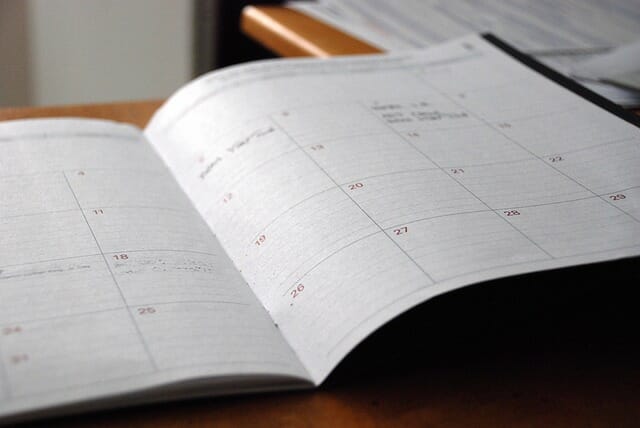
4. Use a paper calendar.


5 Things STILL Worth Doing Grandma’s Way (That Is, Without Gadgets!)

Image source: Pixabay.com


Phone calendars can be a great thing when you are on the road or away from home, but how many times have you relied on your Google or phone calendar, only to find that you forgot to set the alarm or that you put the appointment for 2 p.m., when it should have been 12 p.m.? It has certainly happened to me.


For this reason, I use a paper wall calendar in my kitchen to write big notes or achievements, as well as a small paper calendar in my purse, in addition to my electronic calendar. When I make an appointment, I write it in my paper calendar in my purse, first. Just a simple “John Dr. 12PM” will do the trick. Once I am home and not so rushed, I add it to my cell phone, then to the wall calendar. This way, my husband doesn’t have to ask me six times when his doctor’s appointment is and I have a backup I can check in an instant if my electronic calendar should fail, or if I should misplace my phone. Again.


5. Paper invitations and/or thank-you notes.


Yes, I’ve heard how e-vites and thank-you notes are all the rage because they are “greener” than using paper, but if you use sustainable paper sources, such as bamboo or hemp, that argument quickly falls by the wayside.


There is nothing more personal or sweet that you can send someone than a handwritten, paper invitation or thank you-note. If someone took the time to go to the store, buy a gift, have it wrapped, and show up at your event, is it too much to ask to write a three line thank-you note?! Invitations and thank-you notes are also great mementos to keep in your scrapbook or photo album.


There are plenty of other old-fashioned things that I like to do, but when it comes to electronic gadgets, I prefer my grandmother’s way to the Apple way.


What would you add to our list? Share your thoughts in the section below:

Thursday, July 20, 2017

DUI-E Law Now Makes It Illegal to Text, Smoke and Even Eat While Driving

driving


The charge of “driving under the influence” used to only apply to drivers who were under the influence of drugs or alcohol—but it will now apply to drivers who text, eat, smoke, read or groom while driving in the state of Washington.


The implementation of the Driving Under the Influence of Electronics Act was expedited from January 2019 to July 23 after Washington Governor Jay Inslee signed a partial-veto, and insisted that “public safety is better served by implementing this bill this year.”


When you are driving with a cell phone, you are a more dangerous driver than if you are driving drunk with a .08 blood alcohol level,” Inslee said during a press conference. “There’s hardly anything we’ve done in the last several years at the state Capitol to save more lives than this distracted driving law.”


Advertisment


Statistics from the Washington Traffic Safety Commission found that 171 of 568 road deaths in 2015 were “blamed on some form of driver distraction, not necessarily electronics.”


Although both texting and holding a cellphone to your ear while driving are already banned in Washington, the new regulations will outlaw composing or reading any message, taking pictures, and ultimately holding a phone for any reason other than calling 911—even when sitting at a stoplight.


Penalties under the new DUI-E law will include a $136 fee for first-time offenders, a $234 fee for second-time offenders, and a $99 fee for “grooming, smoking, eating or reading while behind the wheel.”


While the fines might not seem outrageous at first glance, Toni Matous, an agent with Magnolia Insurance Agency Inc. in Seattle, told Q13Fox that insurance companies were some of the top lobbyists for the new distracted driving law—and that is not by mistake.


READ MORE:  Survey Says.....One in Three Americans Believe Police "Routinely Lie to Serve Their Own Interests"


“The $136 ticket you get is going to be nothing compared to the insurance consequences,” Matous said, noting that tickets under the DUI-E law will count as primary offenses that will be added to drivers’ records.


Matous called the law the “new drunk driving,” and said that in the case of a family with a teenaged driver, if that driver receives a DUI-E ticket, it will affect the entire family by making their insurance skyrocket by up to thousands of dollars each year.


“The insurance industry is losing big, losing big in the personal auto insurance industry and they’re reeling, trying to find out how to find out how to solve the problem,” Matous said.


In order to cover the costs of implementing the new law, the state’s law enforcement agencies have spent $400,000 to add 6,000 patrol hours aimed at driver distraction.” While distracted driving offenses resulted in over 5,400 citations in Washington in April 2016, numbers are predicted to increase drastically with all of the new infractions that police will have the opportunity to cite.


While this new law in Washington may seem bizarre based on the fact that it makes things such as eating and smoking while driving illegal, it is not the first time a law has been introduced to fine Americans for being distracted. In May 2016, a Democratic assemblywoman from New Jersey introduced a bill to sentence individuals to up to 15 days in jail for the heinous crime of texting and walking.


Washington’s DUI-E law could set a precedent for future laws in other states, but it also allows for an abuse of power by police. It takes away the accountability that makes officers look for a legitimate infraction before pulling a car over, and it gives officers the ability to make their quotas by simply alleging that a driver was looking at an electronic device, even when their vehicle is not moving. As a result, the drivers pay a high price, and both the police state and the insurance companies who lobbied for the new law make a profit.

Tuesday, March 7, 2017

"The Reality Is, Half Of Americans Can’t Afford To Write A $500 Check"

The CEO of Assurant appeared on Bloomberg TV to explain why demand for his services is likely to increase: the chief executive of the mobile phone insurer said he expects a surge in demand as carriers charge customers more to replace their devices. “If you think back five years ago, you as a consumer didn’t know how much that phone cost, you thought it was free or close to free,” Assurant"s Alan Colberg said Monday. “Now you’re paying $600, that’s a lot. So we’ve actually seen the attachment rate, or the number of people buying the product, going up a little bit in the last couple of years.”


He then proceeded to give Bloomberg his traditional sales pitch: Assurant is counting on growth at its business covering phones and appliances to help counter a decline in the segment that insures foreclosed homes for lenders. While improvement in the real estate market has limited the number of vacant homes, Colberg said there are still many cash-strapped consumers.


It is what he said next that caught our attention: “The reality is, half of Americans can’t afford to write a $500 check,” Colberg said. He spun that stunning statistic by saying that when US customers sign up for a cellular plan, they’re willing to buy protection in case “they lose that phone or something happens to it.”


In other words, there are millions of Americans who don"t have $500 in the bank but are willing to dish out more than that on a cell phone, and then are stupid enough to make monthly payments that ultimately end up being far higher than $500 to protect their purchase... which they clearly couldn"t afford in the first place.


* * *


That said, we decided to look into the CEO"s claim about the woeful state of US finances. What we found is that according to a recent Bankrate survey of 1,000 adults, 57% of Americans don’t have enough cash to cover a mere $500 unexpected expense. Turns out the CEO was right. And while that may appear dire, it is a slight improvement from 2016, when 63% of U.S. residents said they wouldn’t be able to handle such an expense.


The survey"s findings have shed light on how the so-called recovery of the past 8 years has skipped about half of the US population, which literally live paycheck to paycheck, and reflects a country in which many households continue to struggle with their basic finances more than seven years after the official end to the recession.


Putting the numbers in context: despite steady job growth during the Obama administration - which have been focused on minimum wage industries - wages have been predictably slow to recover, with the typical American household still earning 2.4% below what they brought home in 1999, when income peaked. Meanwhile, costs for essentials such as housing and child care have surged faster than the rate of inflation, placing stress on household budgets and making the accumulation of wealth, i.e., savings, impossible.


The bottom line:  About four out of 10 Americans said they had enough in savings to cover a surprise $500 expense. Another 21% said they would rely on a credit card, while 20% said they’d cut back on other expenses. Another 11% said they’d turn to family or friends for the money.


What is even more striking is that among Americans who earn more than $75,000 per year - a third more than the typical U.S. household earns - almost half also said they wouldn’t be able to cover a $500 surprise expense. Ironically, Millennials represent the generation most equipped to handle an emergency cost, with 47 percent saying they have enough in savings to cover one.


The Bankrate survey findings echoed research published last year by the Federal Reserve, which found that 46% of respondents said they would be challenged to come up with even less, or $400, to cover an emergency expense, and would likely borrow or sell something to afford it. When the Fed asked what types of emergency expenses Americans had actually faced in the last year, more than one out of five cited a major unexpected medical expense. The average expense: $2,782, or almost seven times higher than the Fed’s hypothetical $400 surprise bill.


How do cell phones fit in all of this? When it comes to reducing spending, dining out is the first place where consumers would cut back, with 6 out of 10 respondents saying they would eat out less. What is the "stickiest" expense? According to Bankrate, the least likely expense to face the chopping block are mobile phone plans, with the survey finding that only 35% said they would cut back on their wireless plans to save money.


In other words, Americans would rather be hungry than cell phone free. In retrospect, it may turn out be that Assurant"s CEO, whose business model is a big bet on human stupidity, just may have a goldmine on his hands.

Thursday, January 12, 2017

NASA Reveals Vast Hole in the Sun That Could “Cripple Power Supplies”


solar-flare-1


NASA has released a graphic showing a rip in the fabric of the sun, so to speak, that is leaking solar radiation through a hole in its surface.


This is sending a bombardment of particles towards earth that could interfere with the electric grid and disrupt any technologies that are electromagnetic based.


The experts aren’t expecting a major storm this time – with only a G2 warning issued for the current onset of unusual solar activity. This will be enough only to heighten the aurora borealis effects and test the real world resilience of satellites and other sensitive equipment.


Here’s what it looks like:


But future solar eruptions – which could become more volatile if the sun is experiencing drastic changes or anomalies – could be much worse. If a G4 or G5 level solar storm or other space weather event impacts earth, there could definitely be a lights out scenario where supplies and communications reach a critical level, while desperation and unrest set in:


via Daily Mail:


An elongated coronal hole stretching across the face of the sun sent solar wind particles gushing toward Earth last week.


NASA’s Solar Dynamics Observatory has revealed a stunning animation of the phenomenon, showing the massive dark patch marring the surface of our star.
[…]


These are areas in which the magnetic field has opened, allowing solar wind particles to come streaming out.


[…]


Space-weather forecasters issued a ‘G2 alert’, the second lowest classification on the geomagnetic storm scale… the resulting geomagnetic storm, while minor, could have some effects on satellites and the power grid.


[…]


‘The principal users affected by geomagnetic storms are the electrical power grid, spacecraft operations, users of radio signals that reflect off of or pass through the ionosphere, and observers of the aurora,’ the NOAA said.


Stronger storms have taken place, and those who are paying attention are anticipating a major, crippling event:


This past fall, solar winds triggered a giant geomagnetic storm, raising fears that they could cripple power supplies. Warnings were issued by the operator of the biggest power grid in the US, PJM Interconnection LLC, as well as by Midcontinent Independent System Operator, which manages high-voltage power lines across North America…


The solar storms could potentially affect telecommunications and power infrastructures all over the globe.


Military and national security infrastructure has already taken precautions. Specialized cement has been invented and commercialized to shield both new and existing buildings from the harm that would be caused by an EMP event or similar disruption via the electromagnetic spectrum.


Man has adapted rapidly, and utilized technological progress over the many frequencies of the known spectrum. But nature still holds its power over this same band of frequencies, and can unleash some powerful forces that could potentially knockdown or wipe out human-made devices. Meanwhile, governments and rogue players also hold the power to initiate an EMP attack – it remains the most realistic, widespread scenario for a major disaster outside of economic collapse or a truly catastrophic earthquake or volcano.


Individuals can prepare for this eventuality by building or utilizing a Faraday Cage (a basic metal trashcan with a lid is the simplest way to go). Whatever goes inside is shielded from EMP or electromagnetic disaster. Backup computers, electronics and communications devices need to be stored in one or multiple locations, along with all other preps.


This one could really happen. It is just a question of when, and of what magnitude.


Read more:


EMP Attack Would Destroy Civilization: “A Nightmare You’ll Never Wake Up From”


A Step-By-Step Guide To Prepare For Any Disaster


Military Readies Mountain Fortress to “Shield Against EMP Attack”


Congressman Urges Protection for Power Grid: EMP Attack “Could Bring Our Civilization to a Cold, Dark Halt”


“Super EMP” Capable of Disabling Power Grid Across Lower 48 States


EMP Threat: ‘Within One Year 9 Out of 10 Americans Would Be Dead’


Click here to subscribe: Join over one million monthly readers and receive breaking news, strategies, ideas and commentary.

Advanced Tactical Gas Mask

Please Spread The Word And Share This Post


Author: Mac Slavo
Views: Read by 1,695 people
Date: January 12th, 2017
Website: www.SHTFplan.com


Copyright Information: Copyright SHTFplan and Mac Slavo. This content may be freely reproduced in full or in part in digital form with full attribution to the author and a link to www.shtfplan.com. Please contact us for permission to reproduce this content in other media formats.