 (ANTIMEDIA) — Google made headlines last month when it was announced it was partnering with the Pentagon to develop artificial intelligence for use in drones flown over war zones. The move divided the company, and this week, internal documentation of that conflict became available to the public in a petition signed by thousands of employees to the company’s CEO, Sundar […]
Showing posts with label drone. Show all posts
Showing posts with label drone. Show all posts
Wednesday, April 4, 2018
In Letter to CEO, 1000s of Google Employees Revolt Against Military Drone Project
(ANTIMEDIA) — Google made headlines last month when it was announced it was partnering with the Pentagon to develop artificial intelligence for use in drones flown over war zones. The move divided the company, and this week, internal documentation of that conflict became available to the public in a petition signed by thousands of employees to the company’s CEO, Sundar […]

Wednesday, March 7, 2018
War Is Breaking Out Between India And Pakistan: Pakistan Shoots Down Spy Drone

The world is watching the conflict in the Kashmir region of the India/Pakistan border with bated breath. Not receiving much attention in the mainstream media, is the war breaking out right now on the other side of the globe.
Just last week, Pakistan declared it was “worried” about India’s drone technology, and now the Pakistani military has declared they’ve shot down an Indian drone.
According to The Express UK, the Islamabad military issued a statement yesterday declaring that the craft had been shot down after violating Pakistan airspace. “Pakistan Army troops shot down an Indian spy drone while it violated LoC in Chirikot Sector. The drone has been taken over by Pakistan Army troops. This is 4th drone which has been shot down by Pakistan Army troops in last one year,” the statement read.
This comes just one day after Chinese president Xi Jinping flexed his military muscle in the area of Doklam, a retired lieutenant general from the Indian Army’s Special Forces has claimed. “But war is very much in the realm of reality, and India must be prepared to fight and can ill afford to let its guard down on either the Pakistani or the Chinese front. India must prepare for a two-and-a-half-front war,” said Prakash Katoch.
While Americans fight on social media over whose rights should be taken away and dope up on their antidepressants, other nations are gearing up for a horrific war. Mohammad Faisal, the Foreign Office spokesman for Islamabad, displayed heightened concerns in a weekly media briefing. “India’s development of drone technology is worrying when seen in the larger context of its buildup and expansion of military capabilities in the conventional and non-conventional domains, which are subjecting regional strategic stability to increasing strain.”
As confrontations between the two nuclear-armed nations continue to rise, Pakistan pointed the finger at New Delhi last week for committing 400 ceasefire violations in contested areas. Pakistan has vowed to seek revenge on India for their aggression, while New Delhi points the finger at Pakistan.
Saturday, January 13, 2018
DWI-Droning While Intoxicated: Drinking While Flying a Drone Could Land You in Prison
 Lawmakers have passed a bill to criminalize flying a drone while drunk and offenders could face up to $1,000 in fines and six months in prison.
Monday, December 4, 2017
Amazon Awarded Patent For "Self-Destructing Drones"
Amazon has just been granted patent number 9,828,097 for drone technology that allows the unmanned aerial vehicle (UAV) to self-destruct in a sequence in the event of a catastrophic failure.
The abstract of the patent describes the process as “directed fragmentation of an unmanned aerial vehicle (UAV)”, which basically means the craft will strategically disassemble itself in the air during an emergency.

The patent describes how an onboard computer called the “fragmentation controller” would override the traditional flight systems in the event of a catastrophic failure.
The computer would then quickly analyze the future flight path, taking in calculations for weather conditions and terrain, before initiating a “fragmentation sequence.”
Amazon provides an illustration of the self-destructing drone in motion dropping the heaviest components of the craft on a tree and a body of water.

The abstract of the patent reads:
Directed fragmentation of an unmanned aerial vehicle (UAV) is described. In one embodiment, the UAV includes various components, such one or more motors, batteries, sensors, a housing, casing or shell, and a payload for delivery.
Additionally, the UAV includes a flight controller and a fragmentation controller. The flight controller determines a flight path and controls a flight operation of the UAV. During the flight operation, the fragmentation controller develops a fragmentation sequence for one or more of the components based on the flight path, the flight conditions, and terrain topology information, among other factors.
The fragmentation controller can also detect a disruption in the flight operation of the UAV and, in response, direct fragmentation of one or more of the components apart from the UAV. In that way, a controlled, directed fragmentation of the UAV can be accomplished upon any disruption to the flight operation of the UAV.
The order in which components are discharged from the craft could be based on their value, said the patent. The process of detachment is said to use “springs, small explosive charges, compressed gas charges, or similar mechanisms”. Even though Amazon has been granted the patent, it doesn’t make the development of a self-destructing drone inevitable.
According to The Verge, the company has applied for various patents including: “parachutes built into shipping labels, drone beehives for distribution in big cities, and drone-carrying blimps.” Further, the article believes Amazon’s style is to “aggressively throw ideas at the wall” in the form of patents and see what sticks.
Nevertheless, all these wild and wonderful inventions have yet to be approved by government regulators, thus making it a pipeline for now.
Perhaps in a preview of things to come, Amazon delivery drones self-destructing in the sky might not be the best idea, as per the video below:


Thursday, August 17, 2017
The US Army Just Ordered Soldiers to Stop Using Drones from China’s DJI

An Aug. 2 memo cites "increased awareness of cyber vulnerabilities" with drones from China’s market-leading DJI
The U.S. Army has ordered troops to stop using consumer drones made by Chinese manufacturer DJI, according to an Aug. 2 memo seen by Defense One and confirmed by two Army officials.
“Cease all use, uninstall all DJI applications, remove all batteries/storage media from devices, and secure equipment for follow on direction,” reads the memo from Lt. Gen. Joseph H. Anderson, the Army’s deputy chief of staff for plans and operations.
Why? The memo cited “increased awareness of cyber vulnerabilities associated with DJI products.” Service officials declined to elaborate.
Via Defense One
Featured Image: DFSB DE/Flickr
Thursday, August 10, 2017
LAPD Prepares To Unleash Drones Amid Public Outcry
The LAPD first toyed with the idea of ramping up its public spying safety program with the introduction of drones back in May 2014. At that time, the LAPD announced it had acquired two "unmanned aerial vehicles" as gifts from the Seattle Police Department, Draganflyer X6 aircraft to be exact, after a public outcry in Seattle grounded the controversial program. Unfortunately, or perhaps not, LA"s drone efforts quickly met the same fate as Seattle"s. Per the Los Angeles Times:
The LAPD’s dance with drones began in 2014, when the department received two Draganflyer X6 drones from police in Seattle — drones the Washington agency unloaded after heavy criticism from the public. Although the LAPD said it would deploy the drones for “narrow and prescribed uses,” civil liberties advocates questioned their use in even a limited fashion.
Less than a week after getting the drones, LAPD Chief Charlie Beck said he would not fly the unmanned aircraft until the department had sought public feedback as well as approval from the Police Commission.
“I will not sacrifice public support for a piece of police equipment,” Beck said at the time.
The drones were then locked away in the office of the LAPD’s inspector general. Department officials said the move was a response to public perception and federal laws limiting use of the unmanned aircraft.
Now, some three years later, it seems that the LAPD is ready to give it"s mass public spying effort another try...
On Tuesday, the LAPD will again wade into the heated debate, as department brass are slated to present details to the Police Commission about a possible pilot program for an “unmanned aerial system.”
The commission’s agenda said the pitch was for “limited tactical deployment” of a drone, but did not elaborate.
Earlier this year, L.A. County Sheriff Jim McDonnell announced his agency’s plans to use a $10,000 drone to help deputies responding to arson scenes, suspected bombs and hostage situations. McDonnell said the drone would not be used in surveillance but could provide critical information from previously inaccessible vantage points.

But, while populations do tend to become more comfortable with technology over time, apparently 3 years hasn"t been enough time for the citizens of LA to decide they"re now willing to give up their civil liberties.
Before the meeting, roughly three dozen activists from various groups — including the Stop LAPD Spying Coalition, Black Lives Matter and Los Angeles Community Action Network — stood outside the LAPD’s downtown headquarters, denouncing the use of drones by police.
The Police Commission should “completely reject LAPD’s latest attempt to revive its drone program,” said Hamid Khan, founder of the Stop LAPD Spying Coalition, an anti-surveillance group that frequently criticizes the LAPD.
”L.A. does not need further militarization by the LAPD,” said Paula Minor, an activist with Black Lives Matter.
Civil liberties advocates expressed concern over privacy as well as what they described as a lack of public input in the sheriff’s abrupt announcement. The Stop LAPD Spying Coalition staged a protest blasting the department’s use of drones.
Of course, as the LA Times notes, drones are already used by some 350 municipal agencies around the country...though we would be intrigued to know whether or not the public was asked for their opinion on those programs before they were deployed...
Drones have been hailed by law enforcement across the country as a crucial technology that can help find missing hikers or monitor armed suspects without jeopardizing the safety of officers. But efforts to adopt the unmanned aircraft have frequently drawn fierce criticism from privacy advocates for whom the devices stir Orwellian visions of inappropriate — or illegal — surveillance or fears of military-grade, weaponized drones patrolling the skies.
Almost 350 public safety departments in the U.S. have acquired drones, nearly half of them last year, according to a study Gettinger’s center published earlier this year. Many of those drones are no more advanced than those used by hobbyists, he said.
Some agencies have adopted the technology without much public reaction. Still, Gettinger said, skeptics have expressed apprehension not just about how police use drones today, but how they might use the technology in the future.
“We’ve just hit the tip of the iceberg,” he said. “The systems are going to evolve, and that’s going to bring with them questions about how they’re going to be used.”
But we"re sure it"s fine, people in positions of power rarely abuse their power...

Tuesday, August 8, 2017
Iranian Drone Nearly Collides With U.S. Navy Jet; Comes Within 100 Feet
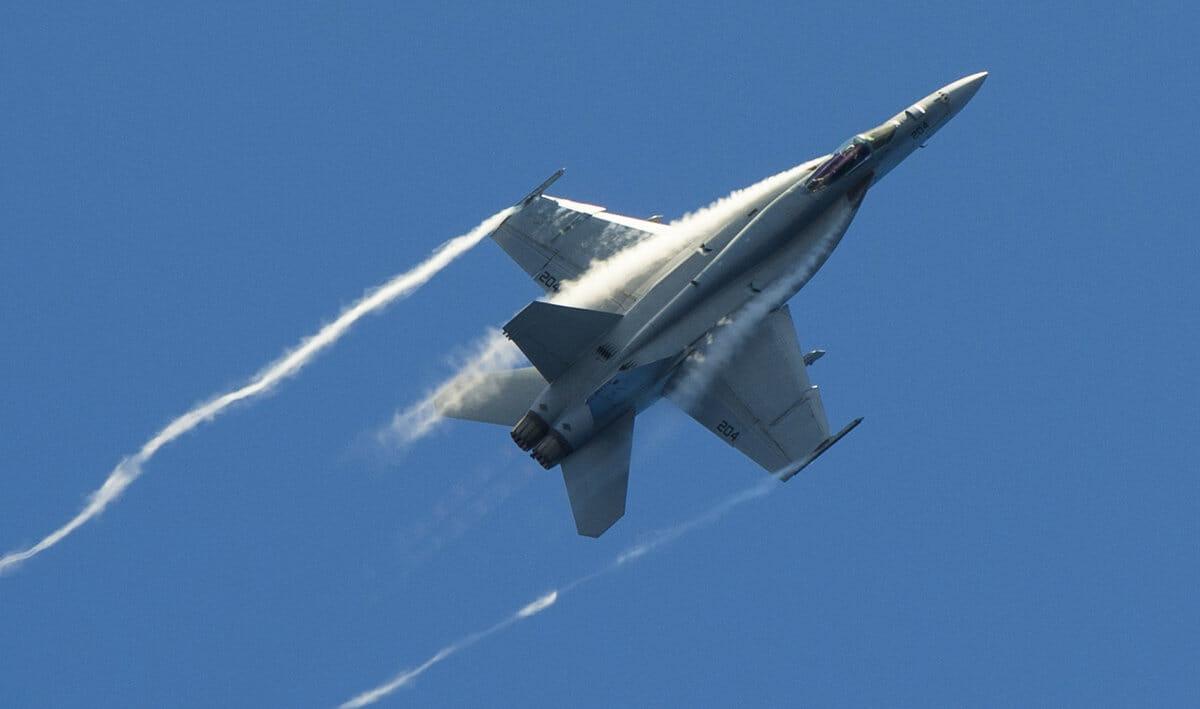
U.S. F/A-18E Super Hornet
An Iranian drone nearly collided with a U.S. F/A-18E Super Hornet fighter plane over the aircraft carrier U.S.S. Nimitz in the Persian Gulf Tuesday.
The QOM-1 drone flew within 100 feet of the Navy jet as the Super Hornet was preparing to land.
“The dangerous maneuver by the QOM-1 in the known vicinity of fixed-wing flight operations and at coincident altitude with operating aircraft created a collision hazard, and is not in keeping with international maritime customs and laws,” a U.S. Navy press release stated.
Get Backup Electrical Power In A Convenient, Portable Briefcase!
The fighter plane had to perform a “roll over” to avoid collision.
A Navy spokesman told The Navy Times that if the F/A-18E “had not done the maneuver,” the two aircraft would have collided, a Navy spokesperson told The Navy Times.
“There were repeated radio calls to stay clear of the active fixed wing operations,” the spokesman said.
The drone had apparently been flying around the carrier for some time before buzzing it.
The QOM-1 or Saqeh is an unmanned drone that looks sort of like a small fighter plane. A picture of the drone released by the Iranian military shows it carrying four rockets similar to U.S. Hellfire missiles.
A nuclear-powered carrier such as the Nimitz carries a crew of about 4,500 sailors and officers and around 75 aircraft. Only two nations — the United States and France — have nuclear-powered carriers.
Military experts believe that the Iranians back-engineered the Saqeh drones from a US RQ-170 drone manufactured by Lockheed Martin, the Voice of America reported.
What is your reaction? Share it in the section below:
Friday, August 4, 2017
Secret Service Tests Security Drone For Use At Trump Properties
President Donald Trump’s frequent trips to his resort properties like Mar-a-Lago and the Trump National Golf Club in Bedminster, New Jersey are forcing the Secret Service to find creative new ways to safeguard a president who is spending more time away from the White House than most of his predecessors.
In a document released Wednesday, the agency revealed that it plans to test a small tethered unmanned aircraft system during Trump"s visit this month to his New Jersey golf club, one of his “favorite weekend spots” where he is expected to stay for an extended period later this month. While the Secret Service shared only a handful of basic details about the drone, it said the test this weekend in New Jersey would determine its effectiveness in helping guard the president, according to Reuters.

A “tethered” drone operates using a microfilament tether that helps power the unmanned aircraft. It will also be equipped with electro-optical and infrared cameras to look for potential threats.
“The drone will fly autonomously at an altitude of 300 to 400 feet (90 to 133 meters), focusing on the outer perimeter of the protection zone around the golf club. Any images or video recorded will be overwritten within 30 days or become part of a law enforcement investigation.”
In the past, the Secret Service has relied on manned aircraft provided by local, state and federal governments, but said they’re often “limited in scope, too loud and cannot provide consistent coverage” in the ways that a drone can.
Given that the aircraft will be deployed in a densely populated New Jersey suburb, privacy of area residents is something the agency needs to consider.
“The agency said the drone may be within range of private residences, which could lead to unintentional privacy violations. It will notify people at the club that the premises are being monitored by a drone.”
“The Secret Service said there is a risk that some people in range of drones may not be aware of their presence.”
According to Reuters, the government estimates that by 2021, the commercial drone fleet will increase tenfold to about 442,000. Regulations passed by the FAA during the Obama administration opened the skies to low-level small drones for education, research and routine commercial use. The Trump administration is considering expanding drone use for deliveries and other purposes where the aircraft would fly beyond the sight of the operator.
The Massachusetts State Police used a tethered drone to provide security during the Boston Marathon this year.
Tuesday, June 6, 2017
Corporate Media Calls for Murdering Assange by Drone Bombing the Embassy

Unashamed, unhinged, and unafraid of calling for the extrajudicial murder of a reporter, the establishment-parroting media outlet, Mediaite, published a literal ‘hit’ piece on Julian Assange Monday. Without beating around the bush, John Levine, editor for Mediaite, let his and his sources violent opinions be known.
“We can drone Julian Assange.
In a controlled targeted strike, the United States can blow up the Ecuadorian embassy in London, where he currently resides, and put an end to Mr. Assange and Wikileaks.”
Levine begins his piece by praising the Trump administration for ‘getting tough’ with WikiLeaks. He then goes on to praise Jeff Sessions who noted that he was looking for ways to arrest and prosecute Julian Assange — for doing nothing more than exposing the crimes of the state. Citing, CIA director Mike Pompeo, Levine notes how the deep state refers to WikiLeaks as a “hostile intelligence service,” yet has no “quick fix” for stopping them.
Fret not, however, as Levine does have a quick fix — removal of due process, followed by taxpayer funded assassination. To back up his insanity, Levine cites his ‘expert’ in the matter — a former public defender turned DUI attorney, Robert Precht.
“If you accept the premise that drone attacks are appropriate in some situations where it is impossible to apprehend suspected terrorists, then a proposed drone attack against Assange seems permissible,” Robert Precht, a former public defender told Mediaite. “Giving the option of surrendering or being attacked actually seems generous.”
Precht then goes on to claim that Assange is a threat and Precht’s background in defending a terrorist over two decades ago gives him the street cred to advocate for state-sponsored assassinations.

“Having defended the lead suspect in the World Trade Center bombing case, I would say the evidence of conspiring to commit terrorist acts is greater in Assange’s case than the evidence against some of the World Trade Center defendants, who are all serving life sentences now,” he told Mediaite.
Levine then uses the rest of his article in a futile attempt to justify his call for murdering a journalist by falsely claiming — just like the Obama administration — that WikiLeaks put people in harm’s way, going so far as to paint Assange as an actual terrorist.
READ MORE: Corporate Media Admits to Publishing Viral Fake News After Independent Media Busted Them
Using several quotes from establishment mouthpieces in the mainstream media, who all parrot the narrative they are told, and who all serve to protect the status quo that WikiLeaks exposes, Levine failed embarrassingly at making his case.
As former president George W. Bush once said, the United States should make no distinction between terrorists and those harbor them. Ecuador is harboring a terrorist, and the United States should send a message that, that is still not okay.
According to Levine, the US government would be justified in launching missiles at a sovereign nation — who has done nothing to the US — all to take out a journalist who actually reports for the people.
The amazing thing about droning Julian Assange is that, once one accepts the premise that he is drone-worthy, the elegance and humanity of that option becomes readily apparent.
Levine would like you to believe that there is ‘humanity’ in murder. No wonder he quotes George Bush.
As Assange noted in an interview with Der Spiegel, WikiLeaks are not terrorists, they merely free information: “WikiLeaks is a giant library of the world’s most persecuted documents. We give asylum to these documents, we analyze them, we promote them and we obtain more.”
WikiLeaks has won more than a dozen awards across the globe for their journalism. Unlike any other news outlet in the world, however, WikiLeaks has never had to retract a story.
Aside from their perfect record, and contrary to the claims of Mediaite’s murder-loving editor, no one has ever been injured or put in harms way from the information released by WikiLeaks. The only people to face consequences for the release of this information are the ones whose crimes are exposed by it — hardly an act of terror.
READ MORE: BREAKING: Assange Will Not Turn Himself Over to US for Manning -- Claims Conditions Not Met
The good news about this man, and editor of an outlet which allows him to publish articles calling for the murder of innocent journalists, is that this piece will only discredit them.
For those that are unfamiliar, Mediaite is a news and opinion blog covering politics and entertainment in the media industry. It is the flagship blog of Abrams Media, a ring of blogs run by ABC legal analyst Dan Abrams.
Media outlets, like CNN and MSNBC — and now Mediaite — who attempt to fear monger about or try to discredit WikiLeaks, is that they only end up further discrediting themselves and showing their dedication to corruption and secrecy.
Welcome to shame, Mediaite, it suits you well.
Tuesday, April 4, 2017
Mom Horrified After Finding Police Drone Watching Her Children — In Their Backyard

Hurst, TX — For decades, in dystopian fictions, readers and watchers alike are very familiar with the idea of state-run drones spying on the entrapped population. Luckily, however, the scenes of drones chasing down or spying on those who dare dissent against authority have been restricted to fantasy — until now.
When Texas resident Bobbie Sanchez walked out in her backyard last week, the last thing she thought she’d see was a drone — hovering — watching her kids.
“Mommy there’s a drone over our roof,” said her children.
According to Sanchez, the drone hovered there long enough for her to take multiple photos and to call the police for help.
However, when Sanchez called the Hurst police department to inform them a drone was spying on her children, the Hurst police department said it was them.
“They’re watching my children play in the backyard,” said Sanchez. “I called the Hurst Police Department and was pretty surprised to hear that it was them.”
According to NBC DFW, Hurst police and fire started using drones earlier this year. They said the day they were over Sanchez’s yard was a training exercise.
The department claimed that the day they were over Sanchez’s yard, they were conducting ‘a training exercise.’
Training, in the land of the free, now involves police officers stripping citizens of their privacy and creepily watching their kids.
Dystopian, indeed.
After being caught spying on children, the department now promises that they will tighten down on when and where the drones will be deployed.
“We will not be doing any type of training exercises over houses and things like that,” said Hurst Police Assistant Chief Steve Niekamp.
READ MORE: Maryland Man Snaps, Uses Dump Truck to Demolish Two Police Cars
According to Niekamp, the department’s drones will now only launch of crime scenes, accident scenes, to find a suspect, an active shooter, or a missing person. The fire department may also use them to strategize on fighting fires.
“We’re working for our citizens, if they have concerns then we definitely need to address it,” said Niekamp in an obvious understatement.
When Sanchez’ neighbors got news of the drone they were outraged, naturally.
“It might be legal but it’s still creepy to think that police can be saying that they’re training or looking for a criminal and still be looking at you in your backyard,” said neighbor Casey Byrnes.
Others told NBC DFW that they feel betrayed and that their trust in police is damaged.
In a truly liberty-loving tone, Sanchez stated, “I am not a person who will give up privacy for safety.”
The use of drones in policing is a slippery slope. While fears of active shooters and missing children will be used to justify them, if history is any indicator, these drones will ultimately be used to further deteriorate what little semblance of privacy left in America.
Also, guns.
As the Free Thought Project reported last week, Connecticut may be the first state in the country to allow police officers to put deadly weapons on drones. Some states have discussed equipping drones with tasers but this is the first proposal to arm them with deadly weapons. What could possibly go wrong?
The good news is, in a recent ruling, a Kentucky man has prevailed in a lawsuit he faced over shooting down a drone that entered his property.
READ MORE: DEA Flakes on Promise to Reschedule Cannabis, Instead Calls Pot Growers "The New Meth Labs"
William Meredith became known as the “drone slayer” in 2015, after he used a shotgun to dismantle a drone operated by David Boggs, that he says was flying over his property in front of himself and his daughter. Meredith initially faced felony charges of endangerment and criminal mischief for shooting down the drone. The criminal charges were dismissed by Judge Rebecca Ward in Bullitt County District Court, citing recollections from witnesses who said that the drone was flying under the tree line. Ward also said that Meredith was within his rights to shoot down the drone.
According to Meredith, that drone, like the police drone in Hurst — was also watching his children.
However, we shouldn’t rely on this case to hold up against the blue privilege associated with shooting down ‘official police property’ — even if it is watching your kids in your own backyard.
Sunday, April 2, 2017
Connecticut Set To Become First State To Allow Deadly Police Drones
Connecticut could become the first US state to allow police to use drones equipped with deadly weapons if a bill opposed by civil libertarians becomes law. The bill, which was approved overwhelmingly by the state legislature"s judiciary committee on Wednesday, would ban so-called weaponized drones in the state but exempts police and other agencies involved in law enforcement, the AP reported. The legislation was introduced as a complete ban on weaponized drones but just before the committee vote it was amended to exclude police from the restriction. Connecticut Governor Dannel Malloy, a Democrat, was reviewing the proposal, "however in previous years he has not supported this concept," spokesman Chris Collibee wrote in an email.
"Obviously this is for very limited circumstances," said Republican state Sen. John Kissel, of Enfield, co-chairman of the Judiciary Committee that approved the measure Wednesday and sent it to the House of Representatives. "We can certainly envision some incident on some campus or someplace where someone is a rogue shooter or someone was kidnapped and you try to blow out a tire."
The bill now goes to the House of Representatives for consideration. Details on how law enforcement could use drones with weapons would be spelled out in new rules to be developed by the state Police Officer Standards and Training Council. Officers also would have to receive training before being allowed to use drones with weapons.
North Dakota is the only state that allows police to use weaponized drones, but limits the use to "less lethal" weapons, including stun guns, rubber bullets and tear gas.
Currently five states - Nevada, North Carolina, Oregon, Vermont and Wisconsin - prohibit anyone from using a weaponized drone, while Maine and Virginia ban police from using armed drones, according to the National Conference of State Legislatures. Several other states have restricted drone use in general. So far, 36 states have enacted laws restricting drones and an additional four states have adopted drone limits, according to the National Conference of State Legislatures.
Meanwhile, concerns are growing about potential unchecked police brutality and death raining from the robotic skies: civil libertarians and civil rights activists are lobbying to restore the bill to its original language before the full House vote Reuters adds.
"Data shows police force is disproportionately used on minority communities, and we believe that armed drones would be used in urban centers and on minority communities," said David McGuire, executive director of the American Civil Liberties Union in Connecticut. "We would be setting a dangerous precedent," McGuire added. "It is really concerning and outrageous that that"s being considered in our state legislature. Lethal force raises this to a level of real heightened concern."
"That"s not the kind of precedent we want to set here," McGuire said of the prospect that Connecticut would become the first state to allow police to use lethally armed drones.
Others echoed McGuire"s concerns: "We have huge concerns that they would use this new technology to abuse our communities," said Scot X. Esdaile, president of state chapter of the NAACP. Esdaile said he has received calls from around the country from NAACP officials and others concerned about the Connecticut legislation.
Three police departments in the state - Hartford, Plainfield and Woodbury - began using drones within the past year, according to the American Civil Liberties Union of Connecticut.
For now, however, the proposal is unlikely to unleash scenes out of some Robocop spinoff: The bill includes restrictions on drone use and reporting requirements that are supported by the ACLU.
It would require police to get a warrant before using a drone, unless there are emergency circumstances or the person who is the subject of the drone use gives permission. It also would require police to report yearly on how often they use drones and why, and create new crimes and penalties for criminal use of drones, including voyeurism.
Furthermore, final passage is not assured: although the bill overwhelmingly passed the Judiciary Committee, several members said they just wanted to see the proposal get to the House floor for debate. They said they had concerns about police using deadly force with drones. If Connecticut"s Democratic-controlled House passes the bill it will move to the Senate, which is split evenly between Democrats and Republicans.
"I think that police are taught one thing," said Democratic Bridgeport Sen. Edwin Gomes. "You put a weapon in their hand, they shoot center mass, they shoot to kill. If it"s going to be used, you"re going to use it to kill somebody."
Finally, for those wondering how a drone could possibly shoot, the following video of a drone shooting a gun - appropriately enough in Connecticut - should answer that question.
Friday, March 31, 2017
Apple Doesn’t Think You’re Mature Enough to Know Truth About U.S. Drone Strikes
(ANTIMEDIA) “At its core was a question: do we want to be as connected to our foreign policy as we are to our smartphones? My hypothesis was no. Americans don’t care about the drone war because it is largely hidden from view.”
That’s how Josh Begley, writing for The Intercept on Tuesday, described the concept behind an app he created five years ago. The app, he says, was a simple one. It merely sent users an alert every time a U.S. drone strike was reported in the news.
Apple rejected the app three times on the grounds that it was “excessively objectionable or crude content,” but Begley didn’t give up on the project.
“Over the years, I would occasionally resubmit the app, changing its name from Drones+ to Metadata+,” he wrote. “I was curious to see if Apple might change its mind. The app didn’t include graphic images or video of any kind — it simply aggregated news about covert war.”
He went on to tell how, after five rejections, Apple finally accepted the app in 2014. It remained in the App Store for a year and was downloaded by over 50,000 people. But then, the following September, Apple removed the app, once again citing “excessively objectionable or crude content.”
Begley persisted. The reason he was writing the post this week, in fact, was because that day — March 28, 2017 — Apple had once again accepted the app. He wasn’t writing to talk about his ordeal with Apple, though. He was writing about the issue that motivated him to create the app in the first place:
“As an artist who works with data, I think the story of this app is about more than a petty conflict with Apple. It is about what can be seen — or obscured — about the geography of our covert wars.”
He pointed out that over the past 15 years, people have worked tirelessly to document what’s happening on the ground where these drone campaigns are being waged. And that work is certainly praiseworthy. But Begley went further, pointing out what he calls the “difficult truth” of drone warfare — that at the end of the day, we don’t really know who these missiles are killing.
Again, rather than focusing on his spat with Apple, Begley stayed with the issue that inspired him and talked about the end product of that inspiration:
“Because the particulars of drone wars are scant, we only have ‘metadata’ about most of these strikes—perhaps a date, the name of a province, maybe a body count. Absent documentary evidence or first-person testimony, there isn’t much narrative to speak of.
“The name ‘Metadata’ has a double meaning: the app both contains metadata about English-language news reports, and it refers to the basis on which most drone strikes are carried out.”
The only time Begley questioned Apple’s earlier decisions to refuse his app was in his summation.
“Smartphones have connected us more intimately to all sorts of data,” he wrote. “Yet information about drone strikes — in Apple’s universe — had somehow been deemed beyond the pale.”
He used the past tense, of course, because Apple had, that very day, re-accepted Metadata. But as it turned out, the party was short-lived. Hours after Begley’s post ran at The Intercept, Apple pulled his app once more.
Highlighting the suddenness of Apple’s move, here’s how Reason opened its coverage of the news on Tuesday:
“This was supposed to be a post about how anybody who wants to easily keep track of U.S. drone strikes overseas can do so through an app on their iPhone. But never mind. They can’t anymore.”
Josh Begley chose not to go after Apple in his article when he easily could have. He took the high road and stuck to the far greater issues — the nature of drone warfare itself and how we, as a society, are responding to it in an age of instant communication.
This writer will follow Begley’s lead and not speculate on the myriad possibilities of why Apple seems afraid of his app. That’s the far less important aspect of what’s happening here. It all goes back to the core of the Metadata project and the question that drove Begley to get started: Given the option, would we really want to be as connected to U.S. foreign policy as we are to our smartphones?
Or, in other words, would we really want constant updates on all the killing?
Thursday, March 16, 2017
Overkill: $3 Million Patriot Missile Used to Take Down $200 Drone: “Not A Good Economic Ratio”

Talk about a mismatch of power, and use of excessive force.
An unnamed ‘ally of the U.S.’ apparently felt so picked on by the pesky tactics of the other side that it decided to fire off a $3 million Patriot missile to take down a small hobby-sized drone.
No details are released in this report about where the incident took place, or who was involved, because it was a story in an army presentation. However, Iraq was mentioned as an example, and mention was made that the drones were allegedly being used to deliver weapons across a threshold.
via BBC:
A Patriot missile – usually priced at about $3m (£2.5m) – was used to shoot down a small quadcopter drone, according to a US general.
The strike was made by a US ally, Gen David Perkins told a military symposium.
“That quadcopter that cost 200 bucks from Amazon.com did not stand a chance against a Patriot,” he said.
[…]
“Now, that worked, they got it, OK, and we love Patriot missiles,” the general said.
However, Gen Perkins suggested deploying large surface-to-air missiles as a defence was probably not economically wise.
“I’m not sure that’s a good economic exchange ratio,” he told an audience at the Association of the United States Army’s Global Force symposium in Alabama.
“In fact, if I’m the enemy, I’m thinking, ‘Hey, I’m just gonna get on eBay and buy as many of these $300 quadcopters as I can and expend all the Patriot missiles out there’.”
That’s the definition of overkill, for sure.
And it’s quite absurd.
Somewhere down the line, that was taxpayer money used to outgun the wrong target. And at home, tanks are used to SWAT raid American neighborhoods.
Here’s the video of what, if it actually happened, is a completely ridiculous military spending and scaling up of war everywhere.
U.S. Army Gen. David Perkins, Commanding General, U.S. TRADOC at the Army’s AUSA 2017 event, used it as a call to refine and improve military doctrine and strategy:
Read more:
“Something Terrible Is Brewing”: Psyop/False Flag to Label Patriots As ‘Domestic Terrorists’
New Patch for U.S. Troops Fighting ISIS… Looks Like ISIS Logo
ISIS Fires American-Made Missiles At Syrian Army: “U.S. Funding, Arming ISIS From the Beginning”
Propaganda War Exposed In Aleppo: “About To Die, Saying Goodbye… But Available for Interview”
Click here to subscribe: Join over one million monthly readers and receive breaking news, strategies, ideas and commentary.

Please Spread The Word And Share This Post
Author: Mac Slavo
Views: Read by 182 people
Date: March 16th, 2017
Website: www.SHTFplan.com
Copyright Information: Copyright SHTFplan and Mac Slavo. This content may be freely reproduced in full or in part in digital form with full attribution to the author and a link to www.shtfplan.com. Please contact us for permission to reproduce this content in other media formats.
Thursday, March 2, 2017
ISIS to use inexpensive micro-drone technology in future swarm attack?

(INTELLIHUB) — Now that micro-drones have become a household commodity — terrorists are seeking access to advanced swarming technologies to gain ground on enemy forces out in the field.
“It is conceivable that some day soon we will see someone’s otherwise capable military security force penetrated, defeated or even overrun by such technologies,” Lt. Michael Nagata, Director of Strategic and Operational Planning at the National Counterterrorism Center, said at a recent special operations summit.
Imagine a swarm of micro-drones outfitted with deadly neurotoxic gas dispensers or radioactive materials — such a scenario may soon be a reality.
Shepard Ambellas covered the U.S. Air Force’s version of such technology in an January 13 article he wrote for Infowars titled “Autonomous Micro-Drone Swarms Launched from F/A-18 Super Hornets Now a Reality.” In the piece Ambellas details how the $20 million Perdix drone program, which uses artificial intelligence (A.I.), is a success.
Ambellas wrote:
Perdix are designed in such a way that the operator need not “micromanage” the swarm’s behavior, but rather Perdix decides best how to run its own plays within the parameters of its mission.
Although Nagata didn’t specifically mention ‘micro-drones’ in his statement their mere accessibility on the consumer market has become worrisome.
While it’s true the Perdix drone program ran U.S. taxpayers a cool $20M, the costs don’t detour terrorists who have access to a local Radio Shack or Toy’s R Us. The end result, a micro-drone swarm, has been achieved by techies in both the public and private sector before.
Other Sources:
Counter-Terror Chief: Expect Terrorist Drone Swarms ‘Soon’ — Defense One
Featured Image: Sean MacEntee/Flickr
©2017. INTELLIHUB.COM. All Rights Reserved.
Comment Policy: Threats of violence, foul language, bullying, and spam will not be tolerated and may be flagged.
Monday, January 23, 2017
Upholding Tradition: Suspected Drone Strikes Continue as Trump Takes Office

January 23, 2017 | Darius Shahtahmasebi
(ANTIMEDIA) Just hours into Trump’s presidency, suspected U.S. drone strikes killed three alleged al-Qaeda operatives in Yemen’s southwestern Bayda province.
According to anonymous security and tribal officials, two strikes killed an area field commander by the name of Abu Anis al-Abi, along with two others. Considering the two others are identified merely as “alleged al-Qaeda operatives,” it seems more than apparent that Trump will continue Obama’s longstanding practice of classifying any military-age male in the strike zone as a combatant, whether or not they were actually al-Qaeda militants.
Before Obama left office last week, U.S. intelligence officials claimed 117 civilians had been killed in drone strikes in Pakistan, Yemen and elsewhere during his presidency. This was the second public assessment issued in response to mounting pressure for more transparency regarding Obama’s counterterrorism programs, and it was ludicrously inaccurate. Regardless, the program shows no signs of stopping.
According to CNN, the U.S. military carried out drone strikes on Friday, Saturday, and Sunday, killing a “handful of al Qaeda militants.” The strikes did not require Trump’s signature to be delivered, and in practice, the authority to order strikes has been passed down to a four-star commander.
Should Trump decide to allow these strikes to continue, he will be keeping Obama’s controversial program alive despite the fact the drone program has been documented as grounds for war crimes investigations, mostly due to its reliance on “signature strikes” and so-called “double tap” strikes. A “signature strike” is a strike that targets people suspected of being militants even when the exact identity of the target is unknown. The assessment is based on “behavioral characteristics” that could be classified as typical of militants. A “double tap” is where an initial drone strike is launched and followed by a second strike that targets those who come to aid and rescue the initial victims.
A signature strike is a clear violation of the international legal principle of distinction, namely that combatants and civilians are to be stringently distinguished to reduce the risk of civilian harm. If the identity of the individual is not known but an assessment is based solely on their behavior, almost any civilian could be killed as a result. A “double tap” would be illegal for the same reason; if the identities of those killed initially are unknown, those who jump to their rescue would also be unknown and could very well be civilians — or even aid workers.
So there we have it. The Trump administration appears to be continuing a highly controversial mode of warfare in Yemen — the poorest nation in the Arab world — at the same time the country faces a humanitarian crisis due to a brutal U.S.-backed, Saudi-led assault.
This article (Upholding Tradition: Suspected Drone Strikes Continue as Trump Takes Office) is free and open source. You have permission to republish this article under a Creative Commons license with attribution to Darius Shahtahmasebi and theAntiMedia.org. Anti-Media Radio airs weeknights at 11 pm Eastern/8 pm Pacific. If you spot a typo, please email the error and name of the article to edits@theantimedia.org.
Tuesday, January 17, 2017
Spotted In Davos: Anti-Drone Guns
By now we are used to images of snipers on hotel rooftops protecting the world"s great-est-and-good-est from the evils of average-joe-ness.

But this year it appears there is a new foe - the drone - and a new weapon to tackle it: the anti-drone gun.

h/t @alaashahine
While the shoulder-mounted anti-drone gun pictured above in Davos does not appear to be one we have seen before, as Engadget detailed previously, there are numerous systems built to take down wayward or dangerous drones, but they tend to have one big catch: you need to be relatively close to the drone, which could be scary if the robotic aircraft is packing explosives. DroneShield thinks it can help. It"s introducing the DroneGun, a jammer that disables drone signals (including GPS and GLONASS positioning) from as far as 1.2 miles away. Like most rivals, it doesn"t destroy the target drone -- it just forces the vehicle to land or return to its starting point. Anti-drone teams can not only disable threats from a safe distance, but potentially locate their pilots.
It"s not the lightest machine at about 13 pounds, but it"s portable enough to be usable by one person. You don"t need technical training, either, so it"s easy for security staff to use.
Whether or not you see the DroneGun in action is another matter. It"s not FCC-certified as we write this, so you can"t legally operate one in the US unless you"re with the government. Provided it"s approved, though, it could help take down drones at airports, protect soldiers against drone bombs and otherwise help in situations where it"s simply not possible to get close.
Friday, December 16, 2016
China Seizes Unmanned, Underwater US Navy Vehicle Off South China Sea
The escalating, so far mostly verbal conflict with China may have just heated up following a Reuters reports that China has seized an unmanned, underwater US navy vehicle inside off international waters in the South China Sea, and that the US has issued a formal statement demanding the return of the vehicle.
According to CNN, which has a slightly different take on events, a US oceanographic vessel Thursday had its underwater drone stolen by a Chinese warship literally right in front of the eyes of the American crew.

In the latest encounter in international waters in the South China Sea region, the USNS Bowditch was sailing about 100 miles off the port at Subic Bay when the incident occurred, according to the official.
The Bowditch (T-AGS 62) is a Pathfinder class oceanographic survey ship, a third ship in the class. The USNS Bowditch is a part of a 29 ship Special Mission Ship program and operates in the South China Sea. She is named after Nathaniel Bowditch. Bowditch was engaged in surveying at Tacloban shortly after typhoon Haiyan in advance of the Navy"s Operation Damayan in an area known for its shifting hazards to navigation using its multi-beam contour mapping system.
Bowditch had stopped in the water to pick up two underwater drones. At that point a Chinese naval ship that had been shadowing the Bowditch put a small boat into the water. That small boat came up alongside and the Chinese crew took one of the drones.
The US got no answer from the Chinese on the radio when it said the drone was American property, the official said cited by CNN. More details:
As they turned away, the Chinese did come up on the radio and indicated they were returning to their own operations.
US oceanographic research vessels are often followed in the water under the assumption they are spying. In this case, however, the drone was simply measuring ocean conditions, the official said.
The Pentagon has not officially commented on the incident.Although it"s unclear what the motivation was for the Chinese, the seizing of the drone comes on the heels of other provocative incidents that have happened since President-elect Donald Trump received a congratulatory call with Taiwan"s President, a violation of the US"s agreement with China"s "One China policy". China publicly voiced their disapproval of that incident and contacted the White House at the time.
This "seizure" takes place one day after China"s influential state-run tabloid, the Global Times, called for a plan to take Taiwan by force and make swift preparations for a military incursion. The article urged China to rebalance its stance towards Taiwan to "make the use of force as a main option" and carefully prepare for possible moves toward independence.
It also follows a series of warnings to the Trump administration by Chinese diplomats, in which they cautioned that China will not allow the "One China" policy to be used as a bargaining chip, something Trump hinted he was willing to do in a Fox News interview last Sunday.
Subscribe to:
Posts (Atom)