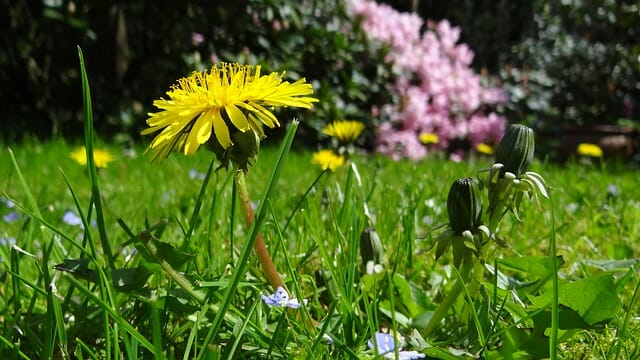
Showing posts with label dandelion. Show all posts

Monday, July 17, 2017

5 Old-Fashioned Arthritis Remedies Your Ancestors Used

5 Old-Fashioned Arthritis Remedies Your Ancestors Used


If you or someone you love suffers from arthritis, you know how debilitating the pain can be. Stiffness, loss of joint function, and swelling are some of the common symptoms.


Although doctors aren’t exactly sure why some people get arthritis and others don’t, it’s believed that both environmental factors, as well as hereditary, play a role. Environmental factors can include injury, obesity and overuse.


Most drugs fall short of our expectations. It makes you wonder about our ancestors and what they used for this common ailment. Believe it or not, besides just “toughing it out,” our ancestors relied on herbs to relieve their symptoms.


Here’s a closer look at the five most common herbs that our ancestors used to deal with the pain and swelling of arthritis:


1. Licorice


Not the candy, although real licorice candy does get its flavor from this herb. Licorice acts similar to cortisone, but with no unwelcome side effects. Studies have shown that this herb has anti-inflammatory compounds in its phytochemical makeup.


Fast, All-Natural Pain Relief With No Nasty Side Effects!


Like most herbal remedies, regular, continued use is needed to see results. Try drinking licorice tea two or more times per day. NOTE: If you have high blood pressure, avoid licorice.


2. Willow bark


Think of willow bark as nature’s aspirin. This extract reduces both pain and inflammation. Willow bark can be taken as a supplement or consumed as a tea. Most people find that 15 days of consumption, followed by seven days of rest, work best. If you have stomach problems, such as ulcers, this might not be the best choice.


3. Dandelion


This common “weed” really gets a bad rap. Dandelion is perhaps the best all-around herb for those suffering from arthritis. It has no known side effects and contains anti-inflammatory compounds that make it very effective when dealing with arthritis and other chronic joint problems. Even better, dandelion has tons of nutrients and vitamins and is high in antioxidants! Drink two to three cups of dandelion tea each day. Feel free to add some leaves to your salad as well!


4. Nettle


Who would go anywhere near stinging nettle?! The truth is that this is one of the most potent herbal remedies for arthritis. But don’t just take it out of the ground and eat it; instead, consume it via tea or supplements. This herb not only treats arthritis pain and swelling but also works for gout, eczema and urinary tract infections!


Scientists have found that the nettles actually reduce the amount of inflammation in the body, which can interrupt the transmission of pain signals.


5. Flaxseeds


Long used as a laxative, modern-day researchers are finding lots of other reasons to consume flaxseeds, including fighting the inflammation responsible for the pain of arthritis. Flaxseeds are loaded with a type of Omega-3 fatty acid called ALA (alpha-linolenic acid), which fights inflammation. In fact, 57 percent of the Omega-3 fatty acid in these small seeds are ALA. Numerous studies and researchers attest to their inflammation-fighting benefits. Flaxseeds need to be ground to release those inflammation fighters, so put your spice or coffee grinder to work and consume two to three tablespoons of ground flaxseed to keep inflammation, and arthritis, at bay.


In this uncertain world, it is always a good idea to empower yourself with knowledge that can help you not just survive, but thrive, if the need should arise.


What are your favorite all-natural remedies for arthritis? For all-around good health? Share your tips in the section below:  

Thursday, June 22, 2017

What Are the Health Benefits of Dandelion Root?


What Are the Health Benefits of Dandelion Root? | dandelion-root | Natural Medicine Special Interests


You may consider dandelion as a type of weed, but its root has a long history of therapeutic use. Dandelion has been used since ancient times for its healthful properties and support for liver complaints. [1] In Korean herbal medicine dandelion has been used to improve energy levels and health. [2] It is generally accepted by many people in Mexico, and elsewhere in the world, that beneficial effects are available in natural plants. Indeed, research has shown that compounds in plants have pharmacokinetic effects. [3] Dandelion, long speculated to have antioxidant activity and hepatoprotective properties, is one such plant


Powerful Antioxidant, Resistant to Swelling


Dandelion contains chemicals whose biological activities are actively being explored for roles in human health. In particular, evidence suggests that dandelion contains antioxidant and redness-resistant compounds. [4][5]


One study investigated the antioxidative effects of dandelion root in rabbits fed a high-cholesterol diet. Results showed that dandelion positively affected antioxidant enzyme activities and lipid profiles. Researchers believe this suggests dandelion could protect against oxidative stress related to certain circulatory disorders. [6]


Effect of Dandelion Root on the Digestive System and Gallbladder


The Institute of Agricultural Medicine in Poland tested therapeutic herbs for kynurenic acid, an amino acid that has generated interest for digestive system support, specifically bile production. The highest concentration of this compound was detected in dandelion. [7] Because dandelion helps to stimulate bile production and bile transport toxins out of the body, dandelion root may support your body’s
natural immune response
. A study devised to compare the activity of artichoke, dandelion, turmeric and rosemary found their antioxidant activity to support the rationale the traditional inclusion of these ingredients in gallbladder applications. [8]


Relation to the Liver


Acetaminophen toxicity causes oxidative stress in the liver. Could natural antioxidant compounds counteract it? A study designed to answer that question found that dandelion extract demonstrated antioxidant activity against free radicals to counteract acetaminophen liver toxicity. [9] Animal studies have been successful in finding beneficial links between certain liver problems and dandelion. [10][11]


Supplementing with Dandelion


Dandelion root can be found alone or combined with other herbs or supplements in liquid extracts, teas, tablets, and capsules. If you are looking into incorporating dandelion to your diet, I recommend Livatrex®, my superior blend of organic herbs that help detoxify and support the normal function of the liver and gallbladder.


We have received great feedback! Have you tried a dandelion supplement before? Please tell us about your experience below.


References (11)
  1. Schütz K, Carle R, Schieber A. Taraxacum–a review on its phytochemical and pharmacological profile. J Ethnopharmacol. 2006 Oct 11;107(3):313-23. Epub 2006 Jul 22. Review.

  2. Lee BR, Lee JH, An HJ. Effects of Taraxacum officinale on fatigue and immunological parameters in mice. Molecules. 2012 Nov 7;17(11):13253-65. doi: 10.3390/molecules171113253.

  3. Rodriguez-Fragoso L, Reyes-Esparza J, Burchiel SW, Herrera-Ruiz D, Torres E. Risks and benefits of commonly used herbal medicines in Mexico. Toxicol Appl Pharmacol. 2008 Feb 15;227(1):125-35. Epub 2007 Oct 12. Review.

  4. González-Castejón M, Visioli F, Rodriguez-Casado A. Diverse biological activities of dandelion. Nutr Rev. 2012 Sep;70(9):534-47. doi: 10.1111/j.1753-4887.2012.00509.x. Epub 2012 Aug 17. Review.

  5. Jeon HJ, Kang HJ, Jung HJ, Kang YS, Lim CJ, Kim YM, Park EH. Anti-inflammatory activity of Taraxacum officinale. J Ethnopharmacol. 2008 Jan 4;115(1):82-8. Epub 2007 Sep 15.

  6. Choi UK, Lee OH, Yim JH, Cho CW, Rhee YK, Lim SI, Kim YC. Hypolipidemic and antioxidant effects of dandelion (Taraxacum officinale) root and leaf on cholesterol-fed rabbits. Int J Mol Sci. 2010 Jan 6;11(1):67-78. doi: 10.3390/ijms11010067.

  7. urski MP, Turska M, Zgrajka W, Bartnik M, Kocki T, Turski WA. Distribution, synthesis, and absorption of kynurenic acid in plants. Planta Med. 2011 May;77(8):858-64. doi: 10.1055/s-0030-1250604. Epub 2010 Dec 14.

  8. Menghini L, Genovese S, Epifano F, Tirillini B, Ferrante C, Leporini L. Antiproliferative, protective and antioxidant effects of artichoke, dandelion, turmeric and rosemary extracts and their formulation. Int J Immunopathol Pharmacol. 2010 Apr-Jun;23(2):601-10.

  9. Colle D, Arantes LP, Gubert P, da Luz SC, Athayde ML, Teixeira Rocha JB, Soares FA. Antioxidant properties of Taraxacum officinale leaf extract are involved in the protective effect against hepatoxicity induced by acetaminophen in mice. J Med Food. 2012 Jun;15(6):549-56. doi: 10.1089/jmf.2011.0282.

  10. Domitrović R, Jakovac H, Romić Z, Rahelić D, Tadić Z. Antifibrotic activity of Taraxacum officinale root in carbon tetrachloride-induced liver damage in mice. J Ethnopharmacol. 2010 Aug 9;130(3):569-77. doi: 10.1016/j.jep.2010.05.046. Epub 2010 Jun 2.

  11. You Y, Yoo S, Yoon HG, Park J, Lee YH, Kim S, Oh KT, Lee J, Cho HY, Jun W. In vitro and in vivo hepatoprotective effects of the aqueous extract from Taraxacum officinale (dandelion) root against alcohol-induced oxidative stress. Food Chem Toxicol. 2010 Jun;48(6):1632-7. doi: 10.1016/j.fct.2010.03.037. Epub 2010 Mar 27.

Monday, May 8, 2017

5 Forgotten Things Grandma Did With Dandelions

5 Forgotten Things Grandma Did With Dandelions

Image source: Pixabay.com


In today’s world, people want everything to be neat, tidy and uniform – including their yards. The grass, we’re told, should be one smooth, green carpet.


But that’s easier said than done! Everyone knows that if you don’t pull them or spray them, “weeds” such as dandelions will be the first thing to pop up and ruin that lawn.


Perhaps the real problem here isn’t dandelions, but our unnatural expectations of what things “should” look like, as well as what constitutes a “weed.”


My grandmother loved picking dandelions out in the fields behind her home. She would collect them in her apron or a bucket and proceed to make the most amazing things.


Of course, there is no denying that dandelions can have a bitter aftertaste, especially if you aren’t accustomed to them, but given time and a few tweaks, they can be delicious.


When you consider that these “weeds” are chock full of vitamins, such as A, B, C and D, as well as minerals, including potassium, iron and zinc, it’s no wonder that our ancestors didn’t need multivitamins!


“The Big Book Of Off The Grid Secrets” — Every Homesteader Needs A Copy!


Here’s how our grandmothers used them:


1. Dandelions as food


Think of dandelions as you would other leafy greens, like lettuce or spinach. This means you can use them in:


  • Salads (fresh from the yard, but washed).

  • Soups or casseroles (fresh or dried).

  • Green juices

  • Stir fry (chopped up).

2. Dandelion tea


Yes, you can buy dandelion tea in almost every health food store, but why not learn how to make your own? My grandmother used both the greens and the root. Simply boil a little more than a cup of water, add about a tablespoon of dried leaves and/or root, and cover and allow to simmer for three or so minutes. Strain and add some honey. Speaking of honey……….


3. Dandelion honey


This isn’t actually a honey; this is more of a syrup. On occasion, when honey ran low, my grandmother would make this.


Start off by gathering a bunch (perhaps four cups) of dandelions, roots and all. Wash and place in a pot of boiling water. Allow to boil for about 3 minutes; cover, and turn off the fire. Allow to soak overnight. Strain out the dandelions, and put back on the stove under a very low flame. Add about a cup of sugar and the juice of one lemon. Leave the pot uncovered and simmer slowly for about 30 minutes or until it reaches a syrup-like consistency. Store in a glass jar and use like you would honey. This tastes so good, you won’t believe it! Try it on pancakes for a really different taste!


4. Dandelion wine


5 Forgotten Things Grandma Did With Dandelions

Image source: Pixabay.com


Everyone’s favorite, right?  If you really want to taste some homemade goodness, you simply must try dandelion wine. For this recipe, you will only need fresh flowers, no roots or leaves. Be sure to pull the green little stem at the bottom of the flower. All you want are the yellow petals (nothing green or the wine is very bitter)! There are dozens of recipes online, including this one.


5. Medicinal uses


These little yellow flowering plants have a wide variety of medicinal uses:


  • Lower blood pressure.

  • Calm an upset stomach.

  • As a mild laxative.

  • Remove warts.

Our ancestors used dandelions for many years before they had access to doctors or pharmaceuticals. If the unthinkable should happen, a little bit of knowledge about this important little plant will go a long way.


Keep in mind that dandelions are a natural diuretic, so if you are already taking diuretics or any other prescription medicines, you should check with your doctor or pharmacist.


Dandelions greens are at their most tender and delicious when you pick them before they start to flower. If they flower before you pull them, don’t worry! They will just need to be boiled or steamed a bit longer to make them softer. Or, you can still dry the leaves, flowers, and roots for later use.


And one last reminder: If you collect dandelions in the wild, or from a neighbor’s yard, be sure you aren’t collecting plants that have been sprayed with pesticides or where systemic pesticides have been applied.


How do you use dandelions? Share your tips in the section below: