Showing posts with label dandelions. Show all posts

Wednesday, May 17, 2017

Dandelion & Violet Jelly: It’s Delicious. Here’s The Recipe.

Dandelion & Violet Jelly: It’s Delicious. Here’s The Recipe.

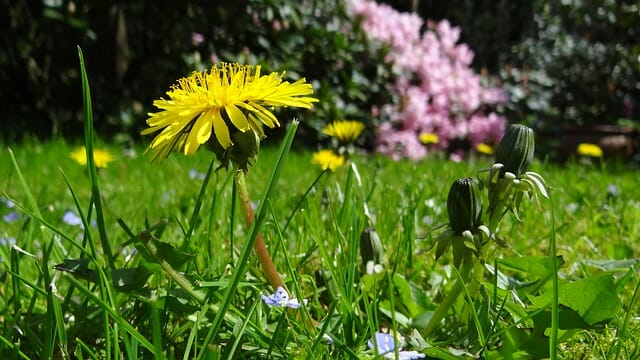
Image source: Pixabay.com


Jelly is a favorite food in our house. We eat it for breakfast, lunch and, yes, desserts. With three kids in the house, we could go through a lot of store-bought jellies. Instead, sourcing our front lawn for dandelions and violets give us a cheap jelly that I don’t mind giving away for gifts.


Dandelions and violets may not seem like the obvious choice for jelly, but as soon as you make them, you’ll love the beautiful colors. Dandelion jelly is a bright, golden yellow, and violet jelly is a bright, pink color. However, many people turn up their nose at the idea. Won’t it taste like you’re eating a mouthful of flowers?


Surprisingly, the answer is no, although there are floral hints to the jelly. After all, you are using flowers. Violet jelly does have a taste that will remind you of grape jelly, with hints of floral. Dandelion jelly, on the other hand, has a flavor that is similar to honey or chamomile. It’s like a delicious tea on top of your toast.


How to Make Violet Jelly


  • 3 cups of loosely packed violet blossoms.

  • Juice of large lemon.

  • 2 ½ cups of boiling water.

  • One package of pectin.

  • 3 ½ cups of sugar.

  • Jars, lids and rings.

1. The first step is to pick all of the violet blossoms. If you have kids, this activity will take them a long time and keep them occupied. Picking the flowers is the hardest part of making violet jelly, but if you have a nice day, it’s a great way to spend time outside.


“The Big Book Of Off The Grid Secrets” — Every Homesteader Needs A Copy!


2. Next, make a violet infusion. Pour 2 ½ cups of boiling water over the top of your violets. You need to leave this alone and let it infuse. Soon, you will notice the water turning a deep blue, then into a deep purple, depending on the shades of the violets used.


3. After it is infused, strain out the violets, leaving you with the infused water. Add the juice of one lemon.


4. Now, it is time to make the jelly just like you would with anything else. The pectin typically has instructions included. Mix the pectin with the flower and lemon mixture. Then, stir on the stovetop until it reaches a heavy boil. Jelly needs to boil for one minute; then you add the sugar required based on the pectin you used. Keep stirring until it reaches a boil again for one minute. Remove from heat and place it into the prepared jars.


5. For violet jelly, you just need to water bath the jars for five minutes. Let the jars sit for 24 hours to cool and solidify before using!


How to Make Dandelion Jelly


Dandelion & Violet Jelly: It’s Delicious. Here’s The Recipe.

Image source: Pixabay.com


Yes, those yellow flowers dotting your yard are good for more than just honeybees! Dandelions aren’t a well-loved flower, but they make a lovely jelly for your breakfast toast. When you go pick the flowers, try to remove the stems as best as possible. Stems are bitter and will infuse an unpleasant taste.


  • 1 quart of dandelion flowers.

  • 1 quart of water.

  • 1 box of pectin.

  • 2 tablespoons of lemon juice.

  • 4 ½ cups of sugar.

  • Jars, lids and rings.

1. Fill up your quart jar with dandelion flowers, not stems. It is better to stay away from chemically sprayed flowers. When you get them inside, rinse off the flowers first.


2. In a pot, add the rinsed flowers with a quart of water. Allow them to boil for three minutes to infuse the water. Then, drain the flowers from the water. Cheesecloth or coffee filters work best.


3. Put the strained liquid into the pot again. On average, you want to have about 4 cups of infused water. Add the 2 tablespoons of lemon juice into the mixture.


4. Read your pectin instructions. Add the pectin to the mixture and bring to a rolling boil. Make sure you keep stirring! Allow it to boil for one minute and then add in the sugar. Depending on the type of pectin used, you will add between 3 and 4 ½ cups of sugar. Stir this mixture well and allow to boil for one minute again, as you stir. Remove from heat.


5. Ladle the jelly into the jars. Process in a water bath canner for 5 minutes.


6. Jellies are a family favorite. From grape and blueberry to floral jellies, using what you have around you is the epitome of homesteading. In most areas of the country, violets and dandelions grow around you freely. The cost of these jars will be minimal, making them a lovely gift for Christmas, if you can keep some away from the kids!


Have you ever made violet or dandelion jelly? Share your tips in the section below:

Monday, May 8, 2017

5 Forgotten Things Grandma Did With Dandelions

5 Forgotten Things Grandma Did With Dandelions

Image source: Pixabay.com


In today’s world, people want everything to be neat, tidy and uniform – including their yards. The grass, we’re told, should be one smooth, green carpet.


But that’s easier said than done! Everyone knows that if you don’t pull them or spray them, “weeds” such as dandelions will be the first thing to pop up and ruin that lawn.


Perhaps the real problem here isn’t dandelions, but our unnatural expectations of what things “should” look like, as well as what constitutes a “weed.”


My grandmother loved picking dandelions out in the fields behind her home. She would collect them in her apron or a bucket and proceed to make the most amazing things.


Of course, there is no denying that dandelions can have a bitter aftertaste, especially if you aren’t accustomed to them, but given time and a few tweaks, they can be delicious.


When you consider that these “weeds” are chock full of vitamins, such as A, B, C and D, as well as minerals, including potassium, iron and zinc, it’s no wonder that our ancestors didn’t need multivitamins!


“The Big Book Of Off The Grid Secrets” — Every Homesteader Needs A Copy!


Here’s how our grandmothers used them:


1. Dandelions as food


Think of dandelions as you would other leafy greens, like lettuce or spinach. This means you can use them in:


  • Salads (fresh from the yard, but washed).

  • Soups or casseroles (fresh or dried).

  • Green juices

  • Stir fry (chopped up).

2. Dandelion tea


Yes, you can buy dandelion tea in almost every health food store, but why not learn how to make your own? My grandmother used both the greens and the root. Simply boil a little more than a cup of water, add about a tablespoon of dried leaves and/or root, and cover and allow to simmer for three or so minutes. Strain and add some honey. Speaking of honey……….


3. Dandelion honey


This isn’t actually a honey; this is more of a syrup. On occasion, when honey ran low, my grandmother would make this.


Start off by gathering a bunch (perhaps four cups) of dandelions, roots and all. Wash and place in a pot of boiling water. Allow to boil for about 3 minutes; cover, and turn off the fire. Allow to soak overnight. Strain out the dandelions, and put back on the stove under a very low flame. Add about a cup of sugar and the juice of one lemon. Leave the pot uncovered and simmer slowly for about 30 minutes or until it reaches a syrup-like consistency. Store in a glass jar and use like you would honey. This tastes so good, you won’t believe it! Try it on pancakes for a really different taste!


4. Dandelion wine


5 Forgotten Things Grandma Did With Dandelions

Image source: Pixabay.com


Everyone’s favorite, right?  If you really want to taste some homemade goodness, you simply must try dandelion wine. For this recipe, you will only need fresh flowers, no roots or leaves. Be sure to pull the green little stem at the bottom of the flower. All you want are the yellow petals (nothing green or the wine is very bitter)! There are dozens of recipes online, including this one.


5. Medicinal uses


These little yellow flowering plants have a wide variety of medicinal uses:


  • Lower blood pressure.

  • Calm an upset stomach.

  • As a mild laxative.

  • Remove warts.

Our ancestors used dandelions for many years before they had access to doctors or pharmaceuticals. If the unthinkable should happen, a little bit of knowledge about this important little plant will go a long way.


Keep in mind that dandelions are a natural diuretic, so if you are already taking diuretics or any other prescription medicines, you should check with your doctor or pharmacist.


Dandelions greens are at their most tender and delicious when you pick them before they start to flower. If they flower before you pull them, don’t worry! They will just need to be boiled or steamed a bit longer to make them softer. Or, you can still dry the leaves, flowers, and roots for later use.


And one last reminder: If you collect dandelions in the wild, or from a neighbor’s yard, be sure you aren’t collecting plants that have been sprayed with pesticides or where systemic pesticides have been applied.


How do you use dandelions? Share your tips in the section below: