Showing posts with label Nickel. Show all posts

Wednesday, November 22, 2017

Metal Toxicity: Health Dangers of Nickel

Metal Toxicity: Health Dangers of Nickel | nickel | General Health Special Interests Toxins


Nickel is a metal, commonly used to make coins, magnets, jewelry, stainless steel, electronics, and components of industrial machines. Most people are familiar with the attractive mirror-finish that can be achieved by nickel plating. However, despite the beautiful appearance, nickel exposure, especially in industrial and occupational settings, can present significant health hazards.


Effects of Nickel Exposure


Nickel is one of many carcinogenic metals known to be an environmental and occupational pollutant. The New York University School of Medicine warns that chronic exposure has been connected with increased risk of lung cancer, cardiovascular disease, neurological deficits, developmental deficits in childhood, and high blood pressure. [1]


Nickel exposure introduces free radicals which lead to oxidative damage and may also affect the kidneys and liver. [2] In 2012, Egypt’s Ministry of Agriculture administered liver function tests to 25 nickel-plating workers. Results showed they overwhelmingly suffered from compromised liver function. [3]


Researchers at Dominican University of California have linked nickel exposure to breast cancer. How? Well, nickel is believed to bind to estrogen receptors and mimic the actions of estrogen. It is well established that lifetime estrogen exposure is a breast cancer risk factor, and, unfortunately, even this “imposter estrogen” contributes to the risk. [4]


Additionally, nickel has been identified as a toxin that severely damages reproductive health and can lead to infertility, miscarriage, birth defects, and nervous system defects. [5] [6]


Why is Nickel Toxic?


Having toxic metals in your body is like having sugar in your gas tank. It’s simply not built to process the material and severe mechanical problems are going to result. No, they don’t just “pass right through.” According to the National Cancer Institute at the National Institute of Environmental Health Sciences, metals are not inert, they have biological activity. [7]


Nickel toxicity, specifically, was evaluated by researcheres at Michigan State University who found it presented a multi-tiered toxic attack. First, nickel causes essential metal imbalances. It severely disrupts enzyme action and regulation. Finally, it causes and contributes to a high amount of oxidative stress. [8]


Occupational Exposure to Nickel


Nickel is widely used in industry, primarily refining, electroplating, and welding. The National Institute for Occupational Safety and Health warns that workers who inhale nickel laced dust and fumes are at an increased risk for lung cancer and fibrosis. [9]


The increasingly common use of nanoparticles has introduced a new generation of health concerns… with good reason. South Africa’s National Institute for Occupational Health recently attributed the death of a 38-year-old man to respiratory distress caused by inhaling nickel nanoparticles during an industrial manufacturing process. [10]


Casual Exposure to Nickel


Did you know orthodontics (braces) may contain nickel? Because they are in contact with saliva, acidic fluids, and temperature changes, the United Kingdom’s Bristol Dental Hospital warns that corrosion and subsequent ingestion may be an item for concern. [11]


Additionally, people like shiny things and nickel is shiny, which is why a lot of jewelry contains nickel. Perhaps you have seen some jewelry selections that are “nickel free?” This supply exists to serve the 10-20% of the population who are sensitive to nickel and experience a rash when it touches their skin.


Mitigating Nickel Exposure


Tests can be performed to determine the presence of nickel in the body but the resulting adverse health effects cannot be predicted. Minimizing your exposure risks is a solid course of action. Most people can simply avoid jewelry that contains nickel but but if you work in an affected industry, you may want to seriously consider your potential health hazards.


There is one positive item to mention. A study out of Saudi Arabia confirmed the toxic effects of nickel nanoparticles on the airway and lungs. More interesting, however, is that researchers reported a reduction in toxicity and oxidative stress when curcumin was introduced. [12]


References (12)


  1. Chervona Y, Arita A, Costa M. Carcinogenic metals and the epigenome: understanding the effect of nickel, arsenic, and chromium. Metallomics. 2012 Jul;4(7):619-27. doi: 10.1039/c2mt20033c. Epub 2012 Apr 3. Review.

  2. Das KK, Das SN, Dhundasi SA. Nickel, its adverse health effects & oxidative stress. Indian J Med Res. 2008 Oct;128(4):412-25. Review.

  3. El-Shafei HM. Assessment of liver function among nickel-plating workers in Egypt. East Mediterr Health J. 2011 Jun;17(6):490-4.

  4. Aquino NB, Sevigny MB, Sabangan J, Louie MC. The role of cadmium and nickel in estrogen receptor signaling and breast cancer: metalloestrogens or not? J Environ Sci Health C Environ Carcinog Ecotoxicol Rev. 2012;30(3):189-224. doi: 10.1080/10590501.2012.705159. Review.

  5. Forgacs Z, Massányi P, Lukac N, Somosy Z. Reproductive toxicology of nickel – review. J Environ Sci Health A Tox Hazard Subst Environ Eng. 2012;47(9):1249-60. doi: 10.1080/10934529.2012.672114. Review.

  6. Apostoli P, Catalani S. Metal ions affecting reproduction and development. Met Ions Life Sci. 2011;8:263-303.

  7. Tokar EJ, Benbrahim-Tallaa L, Waalkes MP. Metal ions in human cancer development. Met Ions Life Sci. 2011;8:375-401.

  8. Macomber L, Hausinger RP. Mechanisms of nickel toxicity in microorganisms. Metallomics. 2011 Nov;3(11):1153-62. doi: 10.1039/c1mt00063b. Epub 2011 Jul 28.

  9. Zhao J, Shi X, Castranova V, Ding M. Occupational toxicology of nickel and nickel compounds. J Environ Pathol Toxicol Oncol. 2009;28(3):177-208. Review.

  10. Phillips JI, Green FY, Davies JC, Murray J. Pulmonary and systemic toxicity following exposure to nickel nanoparticles. Am J Ind Med. 2010 Aug;53(8):763-7. doi: 10.1002/ajim.20855.

  11. House K, Sernetz F, Dymock D, Sandy JR, Ireland AJ. Corrosion of orthodontic appliances–should we care? Am J Orthod Dentofacial Orthop. 2008 Apr;133(4):584-92. doi: 10.1016/j.ajodo.2007.03.021. Review.

  12. Siddiqui MA, Ahamed M, Ahmad J, Majeed Khan MA, Musarrat J, Al-Khedhairy AA, Alrokayan SA. Nickel oxide nanoparticles induce cytotoxicity, oxidative stress and apoptosis in cultured human cells that is abrogated by the dietary antioxidant curcumin. Food Chem Toxicol. 2012 Mar;50(3-4):641-7. doi: 10.1016/j.fct.2012.01.017. Epub 2012 Jan 18.


The post Metal Toxicity: Health Dangers of Nickel appeared first on The Sleuth Journal.

Thursday, November 2, 2017

Nickel Price Surging As Hype Escalates During LME Week

It’s LME Week and there’s cause for celebration in metal markets. European mining stocks rose to a 4-year high as the nickel price surged more than 5% intraday to a two-year high and rose by the daily limit in Shanghai trading today. Metals used in electronic vehicles, like lithium, cobalt, copper and nickel, are hot right now and a focal point of discussion at the LME gatherings. As Metal Bulletin noted, the 2017 event has seen record attendance.


The annual LME Dinner week kicked off in a positive note, with record numbers gathering for the exchange’s keynote metals seminar on Monday October 30. “We have over 900 people over the day here…which is a record attendance,” London Metal Exchange chief executive officer (CEO) Matthew Chamberlain said.


Despite relatively high inventories, big miners and metal traders are becoming increasingly bullish on nickel’s prospects. According to Bloomberg...


Glencore Plc and Trafigura Group Pte are often at loggerheads, but one thing they agree on: the nickel market will be transformed by the rise of electric cars. Nickel sulphate, a key ingredient in lithium-ion batteries, will see demand increase 50 percent to 3 million metric tons by 2030, Saad Rahim, chief economist at Trafigura, said in an interview. While other battery metals like cobalt and lithium have more than doubled since the start of last year, nickel prices have been subdued because of large inventories.


"When you look structurally, we should start to get bullish now,” Rahim said.


“Are you going to be able to meet that demand when the time comes, given underinvestment in the supply side?”


Glencore, which was devastated by the downturn in nickel, is also optimistic, as are some of the analysts, as Bloomberg notes...


(Glencore) told analysts recently that nickel production would need to increase 1.2 million tons by 2030, equal to more than half of current global output, to keep up with demand from the battery industry. Prices are currently more than double what it costs Glencore to mine the metal. It’s a surprising mood change for a market with a disastrous reputation. Nickel was long a thorn for Glencore, which was saddled with unprofitable operations following its takeover of Xstrata. It sold an Australian nickel mine, which Xstrata bought in 2007 for $2.4 billion, for just $19 million in 2015.


“The nickel industry’s been a bit of a dog since about 2007,” Oliver Ramsbottom, a partner at McKinsey & Co. in Tokyo, said by phone.


The battery industry could revive the fortunes of miners more than a decade after nickel collapsed from a peak of $51,600 a ton in 2007


Despite the hype, Bloomberg cautions that there are still naysayers highlighting elevated inventories and the potential for supply to ramp-up faster than currently expected.


Still, some analysts are skeptical that the bullish scenarios will play out. Electric cars are still a niche industry and nickel oversupply remains a threat, with current stockpiles four times bigger than since the start of 2012.


Indonesia has authorized its largest producer to export more nickel ore. The Philippines has also discussed ending a ban on open-pit mining, raising concerns that supply will spike.


“For years, the market has completely dismissed the idea that something positive could happen in nickel,” Ingrid Sternby, senior research analyst at Blenheim Capital Management LLP, said in an interview in London. “With the recent announcements about Indonesia and the Philippines, it’s easy to see why the market is still scary enough for people not to want to be involved…


“You can see the tightness ahead in the nickel market, but my concern is that we’re going to see a lot of value destroyed along the way,” said Colin Hamilton, managing director for commodities research at BMO Capital Markets Ltd.


“If the miners really believe in the EV growth story, the thing to do would be to keep the nickel in the ground until the deficit arrives.”


When assessing the prospects for nickel, it is really two separate markets, nickel alloyed with iron and nickel sulphate used in batteries. Bloomberg expects the latter to progressively trade at a premium to the former.


About half of global nickel production is in the form of ferronickel or nickel pig iron, which is nickel alloyed with iron, making it suitable for stainless steel. Battery makers, instead, use nickel sulphate, produced by dissolving pure nickel metal in sulphuric acid. One hope is that the pricing of nickel pig iron and the high-grade nickel sulphate will diverge in the coming years, improving the fortunes of miners that can produce battery-quality material.


The global nickel market is heading for a deficit once above-ground stockpiles of battery-grade metal are consumed, according to Wood Mackenzie. The question for miners is how quickly the premium for top-quality nickel will emerge.


The nickel alloy versus nickel sulphate certainly adds complexity to analysing nickel. However, while the fundamentals for the latter seem very positive, it makes us slightly nervous when record numbers of participants gather at industry jamborees.


Still, politicians and automakers are increasingly counting on a future of electric cars, attracting traders such as Trafigura.


“Will we see a real breakout in next 12 months? That’s hard to see, but beyond that, structurally this looks to be going up,” Rahim said.


Wednesday, November 1, 2017

Doc Copper/Gold ratio breaking 10-year support


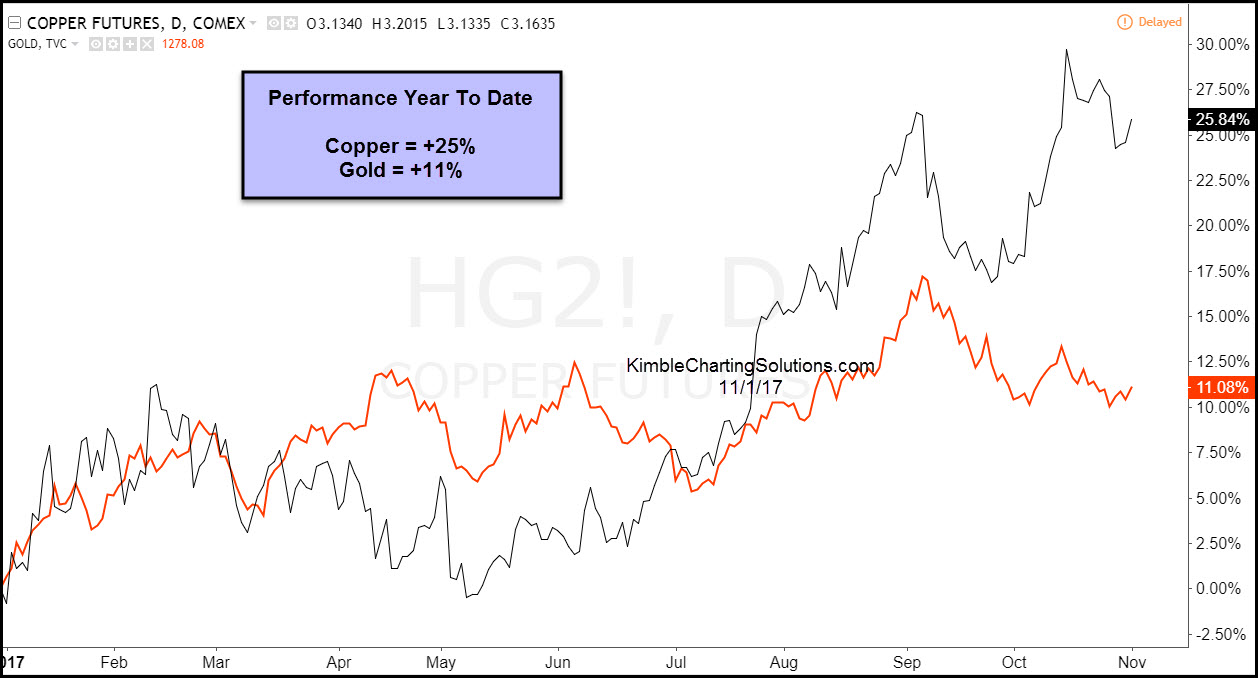
Doc Copper and Gold have both done well this year. Doc Copper has been the stronger of the two, reflected in the chart below-


CLICK ON CHART TO ENLARGE


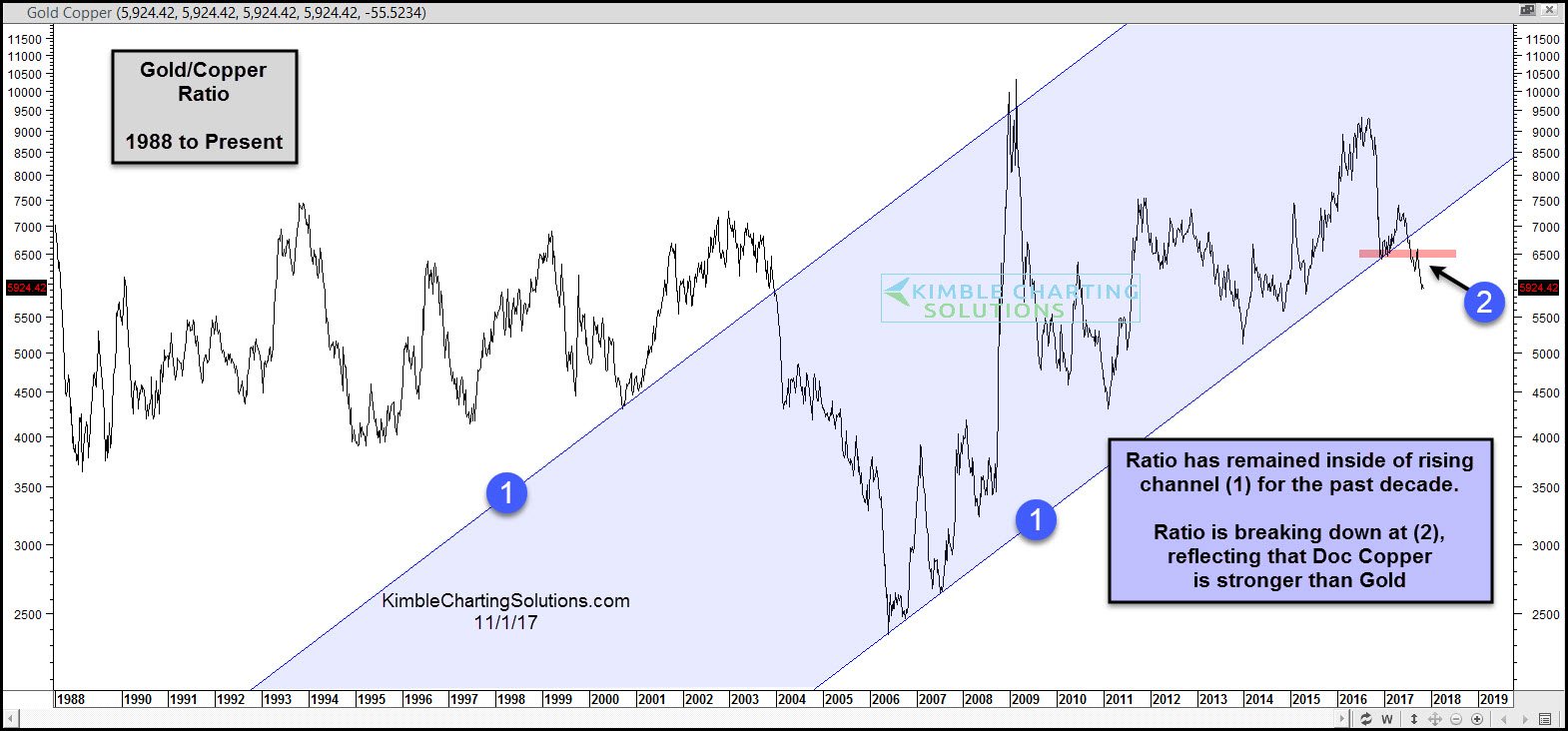
The strength in Doc Copper has the Copper/Gold ratio below doing something it hasn’t done in a long time!


CLICK ON CHART TO ENLARGE


The Doc Copper/Gold ratio has remained inside of rising channel (1) for the past decade. The ratio of late is now breaking below 10-year rising support at (2).


When attempting to decide on what metals to own, this break of 10-year rising support could be sending a very important message to the metals market and could be sending an important macro message as well.


Why you see chart pattern analysis with brief commentary:   There is a ton of news and opinions around markets and assets that make the decision-making process more difficult than it needs to be.   I believe the Power of the chart Pattern provides all you need to see what is taking place in an asset and determine the action to take.  This approach has worked well for me and our clients and I encourage you to test it for yourself.


Receive my free research posted on the blog daily here 


Or,  send an email if you would like to see sample research and take me up on a trial of my premium or weekly research where I provide actionable alerts on breakouts and reversals in broad market indices, sectors, commodities, the miners and select individual stocks 


Email services@kimblechartingsolutions.com  


Call us Toll free 877-721-7217 international 714-941-9381 


Website: KIMBLECHARTINGSOLUTIONS.COM 


Monday, September 25, 2017

Visualizing The Massive Impact Of EVs On Commodities

What would happen if you flipped a switch, and suddenly every new car that came off assembly lines was electric?


It’s obviously a thought experiment, since right now EVs have close to just 1% market share worldwide. We’re still years away from EVs even hitting double-digit demand on a global basis, and the entire supply chain is built around the internal combustion engine, anyways.


At the same time, however, as Visual Capitalist"s Jeff Desjardins notes, the scenario is interesting to consider. One recent projection, for example, put EVs at a 16% penetration by 2030 and then 51% by 2040. This could be conservative depending on the changing regulatory environment for manufacturers – after all, big markets like China, France, and the U.K. have recently announced that they plan on banning gas-powered vehicles in the near future.


THE THOUGHT EXPERIMENT


We discovered this “100% EV world” thought experiment in a UBS report that everyone should read. As a part of their UBS Evidence Lab initiative, they tore down a Chevy Bolt to see exactly what is inside, and then had 39 of the bank’s analysts weigh in on the results.


After breaking down the metals and other materials used in the vehicle, they noticed a considerable amount of variance from what gets used in a standard gas-powered car. It wasn’t just the battery pack that made a difference – it was also the body and the permanent-magnet synchronous motor that had big implications.


As a part of their analysis, they extrapolated the data for a potential scenario where 100% of the world’s auto demand came from Chevy Bolts, instead of the current auto mix.


THE IMPLICATIONS


If global demand suddenly flipped in this fashion, here’s what would happen:


Some caveats we think are worth noting:


The Bolt is not a Tesla


The Bolt uses an NMC cathode formulation (nickel, manganese, and cobalt in a 1:1:1 ratio), versus Tesla vehicles which use NCA cathodes (nickel, cobalt, and aluminum, in an estimated 16:3:1 ratio). Further, the Bolt uses an permanent-magnet synchronous motor, which is different from Tesla’s AC induction motor – the key difference there being rare earth usage.


Big Markets, small markets:


Lithium, cobalt, and graphite have tiny markets, and they will explode in size with any notable increase in EV demand. The nickel market, which is more than $20 billion per year, will also more than double in this scenario. It’s also worth noting that the Bolt uses low amounts of nickel in comparison to Tesla cathodes, which are 80% nickel.


Meanwhile, the 100% EV scenario barely impacts the steel market, which is monstrous to begin with. The same can be said for silicon, even though the Bolt uses 6-10x more semiconductors than a regular car. The market for PGMs like platinum and palladium, however, gets decimated in this hypothetical scenario – that’s because their use as catalysts in combustion engines are a primary source of demand.