Showing posts with label Jay Syrmopoulos. Show all posts

Saturday, October 21, 2017

Russia Triples Gold Reserves in Preparation for Full-Scale Economic War with the United States

By Jay Syrmopoulos


The Central Bank of Russia has more than doubled the pace of its gold purchases, and tripled its gold reserves—from around 600 tonnes to 1,800 tonnes—bringing its international gold reserves to the highest level since Putin became president 17 years ago, according to the World Gold Council.


The impetus for the massive increase in Russian gold reserves is their desire to break away from the hegemony of the U.S. petrodollar and dollar-based payment systems. Currently, over 60 percent of global reserves and 80 percent of global payments are denominated dollars, according to James Rickards, author of Currency Wars.


Additionally, the U.S. is the only country with veto power at the International Monetary Fund, known as the global lender of last resort. Thus, one of the most crucial weapons wielded by Russia, in its war to free itself from the hegemony of the petrodollar, is gold.


The reason gold is so critical is that it cannot be manipulated by U.S.-based economic warfare, as it cannot be frozen out as other forms of digital and paper fiat can be.


Gold can simply be loaded onto pallets and shipped to another state to make a payment, thus bypassing targeted economic sanctions that are often used by the United States as a means of attempting to force geopolitical compliance by Russia and other countries. The strategic significance of gold is so great, that even when oil prices and Russian financial reserves were collapsing in 2015, they continued to acquire gold.


In fact, during the second quarter of 2017, Russia accounted for 38 percent of all gold purchased by central banks. The massive increase in Russian gold reserves has taken place while simultaneously abstaining from purchasing foreign currency for more than two years.


Even as global demand for gold fell to a two-year low in the second quarter, Russia maintained its strong position due to gold being one of the most geopolitics-proof investments in the world. In a time of increased economic warfare, with the petrodollar being utilized as a weapon by the U.S., gold is a means of bypassing U.S. sanctions.


“Gold is an asset that is independent of any government and, in effect, given what is usually held in reserves, any Western government,” said Matthew Turner, metals analyst at Macquarie Group in London. “This might appeal given Russia has faced financial sanctions.”


In addition to being the largest international purchaser of gold, Russia is also one of the three biggest gold producers in the world, as the Central Bank of Russia purchases gold from domestic mines using commercial banks and not in the open market.


Russia’s accelerated pace of gold bullion purchases began in 2007, with Russian gold holdings now having quadrupled to 1,556 tonnes at the end of June. In terms of total reserves, Russian now comes in just behind China and has more gold reserves than India, Mexico and Turkey combined, with a total of nearly $427 billion in reserves.


Additionally, Russia is simultaneously pursuing other strategic dollar alternatives besides gold. Russia and China have built a non-dollar payment system for regional trading partners.


One of the most threatening uses of U.S. financial influence has been its utilization of the SWIFT payment system, which acts as a hub of global money transfer message traffic, as the U.S. threatens to cut other nations off from the system if they refuse to be subservient to U.S. hegemonic dictates.


Russia clearly understands its vulnerability to U.S. domination and has worked diligently to reduce that vulnerability. In turn, Russia has created an alternative to SWIFT.


“There was the threat of being shut out of SWIFT. We updated our transaction system, and if anything happens, all SWIFT-format operations will continue to work. We created an analogous system,” Elvira Nabiullina, head of Russia’s central bank, reported to Vladimir Putin.


Russia is also part of a reported Chinese plan to install a new international monetary order that excludes U.S. dollars. Under that plan, China could buy Russian oil with yuan and Russia could then exchange that yuan for gold on the Shanghai exchange.


Jay Syrmopoulos is a geopolitical analyst, freethinker, and ardent opponent of authoritarianism. He is currently a graduate student at the University of Denver pursuing a masters in Global Affairs and holds a BA in International Relations. Jay’s writing has been featured on both mainstream and independent media – and has been viewed tens of millions of times. You can follow him on Twitter @SirMetropolis and on Facebook at SirMetropolis. This article first appeared at The Free Thought Project.

Friday, September 15, 2017

Venezuela Just Stopped Accepting US Dollars for Oil As Countries Join Forces to Kill US Petrodollar

By Jay Syrmopoulos


In what is the latest move to undermine the imperial world order maintained by the United States, which is underpinned through use of the petrodollar as the world reserve currency, the Wall Street Journal reports that Venezuelan President Maduro has officially followed through on his threat to stop accepting US Dollars as payment for crude oil exports in the wake of recent US sanctions.


Last Thursday, President Nicolas Maduro said that if the US went ahead with the sanction, Venezuela would “free” itself from the US Dollar.


According to Reuters:


“Venezuela is going to implement a new system of international payments and will create a basket of currencies to free us from the dollar,” Maduro said in a multi-hour address to a new legislative “superbody.”


Unsurprisingly, Maduro noted that his country would look to the BRICS countries, and begin using the Chinese yuan and Russian ruble instead — along with other currencies — to bypass the US Dollar stranglehold.


“If they pursue us with the dollar, we’ll use the Russian ruble, the yuan, yen, the Indian rupee, the euro,” Maduro said.


Rather than work diplomatically with other nations, the United States often uses sanctions to force compliance. Due to the dollar being accepted as the world’s reserve currency, almost all financial transactions are denominated in dollars. This phenomenon gives the US a powerful weapon to wield against states that refuse to follow US directives, and underpins the unipolar model of global domination exercised by the US.


The Wall Street Journal reports that as a means of circumventing U.S. sanctions — Washington’s preferred weapon of choice to force compliance — Venezuela has told oil traders that it will no longer send or receive payments in dollars, according to people familiar with the new policy.


Oil traders who export Venezuelan crude or import oil products into the country have begun converting their invoices to euros.


The state oil company Petróleos de Venezuela SA, known as PdVSA, has told its private joint venture partners to open accounts in euros and to convert existing cash holdings into Europe’s main currency, said one project partner.


The new payment policy hasn’t been publicly announced, but Vice President Tareck El Aissami, who has been blacklisted by the U.S., said Friday, “To fight against the economic blockade there will be a basket of currencies to liberate us from the dollar.”


With Europe often acting as nothing more than a vassal to the United States, it’s not unthinkable that the American lapdog EU could impose sanctions on Venezuela, which would likely pave the way for the strategic Russia–China partnership to gain an even stronger foothold in the global economic battle, as it would likely precipitate the Yuan, Ruble, and gold being used to buy and sell Venezuelan oil.


Interestingly, the decision by Venezuela – the nation with the world’s largest proven oil reserves – comes just days after China and Russia unveiled an Oil/Yuan/Gold plan at the recent annual BRICS conference. This plan would strongly undermine the hegemonic control the US enjoys over the global financial system.


During the BRICS conference, Putin unveiled a geopolitical/geoeconomic bombshell as he forwarded the notion of a “fair multipolar world.” He emphasized a stance “against protectionism and new barriers in global trade” — a reference to the manner in which US operates its empire to maintain primacy.


Russia shares the BRICS countries’ concerns over the unfairness of the global financial and economic architecture, which does not give due regard to the growing weight of the emerging economies. We are ready to work together with our partners to promote international financial regulation reforms and to overcome the excessive domination of the limited number of reserve currencies.


“To overcome the excessive domination of the limited number of reserve currencies” is simply a nice way of saying that the BRICS will create a system to bypass the US dollar, as well as the petrodollar, in an effort to undermine the unipolar paradigm embraced by the United States.


As we previously reported, China will soon launch a crude oil futures contract priced in yuan that is fully convertible into gold.


What this means is that countries who refuse to bend to the imperial will of the United States, i.e. Russia, Iran, etc., will now be able to bypass US sanctions by making energy trades in their own currencies, or in Chinese yuan – with the knowledge that they can convert the yuan into gold as added incentive/insurance/security.


The yuan will be fully convertible into gold on both the Shanghai and Hong Kong exchanges. Typically, crude oil is priced in relation to Brent or West Texas Intermediate futures, both denominated in U.S. dollars.


“The rules of the global oil game may begin to change enormously,” said Luke Gromen, founder of U.S.-based macroeconomic research company FFTT.


This new paradigm of oil, yuan, and gold is, without question, an international game changer. The key takeaway here is that the US dollar can now be bypassed without so much as a second thought.


Russia and China – via the Russian Central Bank and the People’s Bank of China – have been steadily working on ruble-yuan swaps as a means of hedging against US hegemony.


There is a strategic movement to take these actions beyond the BRICS, first allowing aspiring “BRICS Plus” members, then entire Global South to divest themselves from dependence on the US dollar.


Essentially, Russia and China are working together to usher in a new paradigm of Eurasian integration, something that goes directly against US strategic doctrine – which dictates that Russia and China, the United States’ two main geopolitical rivals, should never be allowed to dominate Eurasia.


“In 2014 Russia and China signed two mammoth 30-year contracts for Russian gas to China. The contracts specified that the exchange would be done in Renminbi [yuan] and Russian rubles, not in dollars. That was the beginning of an accelerating process of de-dollarization that is underway today,” according to strategic risk consultant F. William Engdahl.


Russia and China are now creating a new paradigm for the world economy and paving the way for a global de-dollarization, and Venezuela is just the beginning.


“A Russian-Chinese alternative to the dollar in the form of a gold-backed ruble and gold-backed Renminbi or yuan, could start a snowball exit from the US dollar, and with it, a severe decline in America’s ability to use the reserve dollar role to finance her wars with other peoples’ money,” Engdahl concludes.


Make no mistake that the BRICS are not only working to integrate Eurasia, but to geo-economically integrate the entire Global South under a new multipolar framework that treats states as equals, regardless of their power stature globally.


The Neolibcons in Washington – bent on eventual regime change in Russia and China – are in for an extremely rude awakening. Although the BRICS have their own structural economic problems, they have created a long-term plan that will change the face of geopolitics/geo-economics and degrade the imperialist will of those that wish to dictate and order the world as they see fit.


The DC War Party’s petrodollar imperialism, which funds the US war machine and allows for a constant war footing, is quickly running out of allies to maintain its global hegemony.


Jay Syrmopoulos is a geopolitical analyst, freethinker, and ardent opponent of authoritarianism. He is currently a graduate student at the University of Denver pursuing a masters in Global Affairs and holds a BA in International Relations. Jay’s writing has been featured on both mainstream and independent media – and has been viewed tens of millions of times. You can follow him on Twitter @SirMetropolis and on Facebook at SirMetropolis.


Image Credit: The Anti-Media

Wednesday, August 30, 2017

Rothschild Just Dumped Massive Amounts of US Assets, Sending an Ominous Signal

By Jay Syrmopoulos


In what is a sure signal to oligarchs across the globe, Lord Jacob Rothschild, founder and chairman of RIT Capital Partners, has substantially minimized his exposure to what he views as a risky and unstable U.S. capital market. In the half-yearly financial report for RIT Capital Partners, Rothschild explained the company’s aggressive moves to significantly reduce exposure to U.S. assets.


“We do not believe this is an appropriate time to add to risk. Share prices have in many cases risen to unprecedented levels at a time when economic growth is by no means assured,” Rothschild said in his semi-annual report.


Additionally, Rothschild stated that he believes quantitative easing (QE) programs employed by central banks, such as the Federal Reserve Bank in the U.S. will “come to an end.”


Rothschild was quoted in the report as saying, “The period of monetary accommodation may well be coming to an end.”


Signaling a potential disaster in the making in the United States financial markets, Rothschild reduced the investments RIT Capital Partners has in the U.S. dollar by nearly fifty percent. On December 31, 2016, RIT Capital Partners reported a 62 percent net value asset investment in U.S. dollars. In the latest report released by RIT Capital Partners on June 30, 2017, the company has a 37 percent net value asset investment in U.S. dollars.


Over that same period of time, Rothschild increased RIT’s investment in the Sterling, Euro, and the Japanese Yen.


Just last year, the bond manager of what was once the world’s largest bond fund had a dire prediction about how “all of this” will all end. And by “all of this,” he means the propping up of financial markets by central banks.


When the U.S. stock market is trading at all-time highs, but Lord Rothschild is divesting RIT from those same markets, the central bank manipulation of market valuations becomes apparent.


Additionally, it’s worth noting that Rothschild’s RIT investment portfolio has returned roughly 2,000% since its formation – so he obviously understands how to position his assets to get big returns on investments, thus these recent moves should be a red flag to every American.


In explaining his recent investment moves, Rothschild, the RIT chairman stated:


We have a particular interest in investments which will benefit from the impact of new technologies, and Far Eastern markets, influenced by the growing demand from Asian consumers.


The report also noted that RIT had invested in Social Capital, a tech investment firm based in Silicon Valley, and that Francesco Goedhuis, Chief Executive of J. Rothschild Capital Management, will serve on the company’s advisory board. Social Capital provides seed funding for companies in the education, finance, and health care business sectors.


Rothschild also mentioned the advent of a fourth industrial revolution in the RIT Capital Partners report, noting, “As the ‘Fourth Industrial Revolution’ develops, it becomes increasingly important for your Company to be able to assess investment opportunities in the innovation driven changes which are affecting almost every business sector.”


The fourth industrial revolution will be driven by new technologies that work to integrate the digital, biological, and physical worlds. Rothschild indicated in the report that the fourth industrial revolution was a driving factor in his investment in Social Capital.


The latest report is simply a continuation of a narrative that was clearly seen in Rothschild’s last half-yearly RIT report when he stated:


The six months under review have seen central bankers continuing what is surely the greatest experiment in monetary policy in the history of the world. We are therefore in uncharted waters and it is impossible to predict the unintended consequences of very low interest rates, with some 30% of global government debt at negative yields, combined with quantitative easing on a massive scale.


To date, at least in stock market terms, the policy has been successful with markets near their highs, while volatility on the whole has remained low. Nearly all classes of investment have been boosted by the rising monetary tide. Meanwhile, growth remains anaemic, with weak demand and deflation in many parts of the developed world.


Many of the risks which I underlined in my 2015 statement remain; indeed the geo-political situation has deteriorated with the UK having voted to leave the European Union, the presidential election in the US in November is likely to be unusually fraught, while the situation in China remains opaque and the slowing down of economic growth will surely lead to problems. Conflict in the Middle East continues and is unlikely to be resolved for many years. We have already felt the consequences of this in France, Germany and the USA in terrorist attacks.


With global yields at their lowest in recorded history, and with $10 trillion of neg. rate bonds, there is likely only one way that this ends – with a massive global financial collapse, the likes of which would make the Great Depression look like the “good old days.” Make no mistake that when Lord Rothschild begins to move his assets out of the U.S., it is surely a sign of ominous things on the horizon.


Jay Syrmopoulos is a geopolitical analyst, freethinker, and ardent opponent of authoritarianism. He is currently a graduate student at the University of Denver pursuing a masters in Global Affairs and holds a BA in International Relations. Jay’s writing has been featured on both mainstream and independent media – and has been viewed tens of millions of times. You can follow him on Twitter @SirMetropolis and on Facebook at SirMetropolis. This article first appeared at The Free Thought Project.

Sunday, July 16, 2017

Russia and China Declare All Out War on US Petrodollar — Prepare for Exclusive Trade in Gold

By Jay Syrmopoulos


The formation of a BRICS gold marketplace, which could bypass the U.S. Petrodollar in bilateral trade, continues to take shape as Russia’s largest bank, state-owned Sberbank, announced this week that its Swiss subsidiary had begun trading in gold on the Shanghai Gold Exchange.


Russian officials have repeatedly signaled that they plan to conduct transactions with China using gold as a means of marginalizing the power of the dollar in bilateral trade between the geopolitically powerful nations. This latest movement is quite simply the manifestation of a larger geopolitical game afoot between great powers.


According to a report published by Reuters:


Sberbank was granted international membership of the Shanghai exchange in September last year and in July completed a pilot transaction with 200 kg of gold kilobars sold to local financial institutions, the bank said.


Sberbank plans to expand its presence on the Chinese precious metals market and anticipates total delivery of 5-6 tonnes of gold to China in the remaining months of 2017.


Gold bars will be delivered directly to the official importers in China as well as through the exchange, Sberbank said.


Russia’s second-largest bank VTB is also a member of the Shanghai Gold Exchange.


To be clear, there is a revolutionary transformation of the entire global monetary system currently underway, being driven by an almost perfect storm. The implications of this transformation are extremely profound for U.S. policy in the Middle East, which for nearly the past half century has been underpinned by its strategic relationship with Saudi Arabia.


THE RISE & FALL OF THE PETRODOLLAR


The dollar was established as the global reserve currency in 1944 with the Bretton Woods agreement, commonly referred to as the gold standard. The U.S. leveraged itself into this power position by holding the largest reserve of gold in the world. The dollar was pegged at $35 an ounce — and freely exchangeable into gold.


By the 1960s, a surplus of U.S. dollars caused by foreign aid, military spending, and foreign investment threatened this system, as the U.S. did not have enough gold to cover the volume of dollars in worldwide circulation at the rate of $35 per ounce; as a result, the dollar was overvalued.


Monday, July 10, 2017

Rothschild Controlled Media Outlet — “Get Ready for a World Currency by 2018”

By Jay Syrmopoulos


The Economist magazine published an article almost thirty years ago, discussing the prospect of a world currency that should be expected around the year 2018. The 1988 article foreshadows a methodical movement towards a centralized world currency that we have, in many ways, seen play out over the past few decades.


One must also keep in mind that the controlling interest of The Economist is held by the powerful Rothschild family, who regard themselves as the “custodians of The Economist magazine’s legacy.” In essence, the magazine operates as a quasi-propaganda arm for the Rothschild banking empire and related businesses and, is in many ways, meant to prime the pump of public opinion for the globalist agenda to be implemented.


The excerpt below appeared in the print magazine on January 9, 1988, in Vol. 306, pp 9-10.


Ready for the Phoenix


THIRTY years from now, Americans, Japanese, Europeans, and people in many other rich countries, and some relatively poor ones will probably be paying for their shopping with the same currency. Prices will be quoted not in dollars, yen or D-marks but in, let’s say, the phoenix. The phoenix will be favoured by companies and shoppers because it will be more convenient than today’s national currencies, which by then will seem a quaint cause of much disruption to economic life in the last twentieth century.

At the beginning of 1988 this appears an outlandish prediction. Proposals for eventual monetary union proliferated five and ten years ago, but they hardly envisaged the setbacks of 1987. The governments of the big economies tried to move an inch or two towards a more managed system of exchange rates – a logical preliminary, it might seem, to radical monetary reform. For lack of co-operation in their underlying economic policies they bungled it horribly, and provoked the rise in interest rates that brought on the stock market crash of October. These events have chastened exchange-rate reformers. The market crash taught them that the pretence of policy co-operation can be worse than nothing, and that until real co-operation is feasible (i.e., until governments surrender some economic sovereignty) further attempts to peg currencies will flounder.


The New World Economy


The biggest change in the world economy since the early 1970’s is that flows of money have replaced trade in goods as the force that drives exchange rates. as a result of the relentless integration of the world’s financial markets, differences in national economic policies can disturb interest rates (or expectations of future interest rates) only slightly, yet still call forth huge transfers of financial assets from one country to another. These transfers swamp the flow of trade revenues in their effect on the demand and supply for different currencies, and hence in their effect on exchange rates. As telecommunications technology continues to advance, these transactions will be cheaper and faster still. With unco-ordinated economic policies, currencies can get only more volatile.


Wednesday, May 31, 2017

Children Now Face Fines And Arrest If They Don’t Get a Permit To Mow Grass For Money


By Jay Syrmopoulos


Gardendale, AL — A regular summer right of passage for motivated teenagers across the United States in search of some extra spending money has always been cutting the neighbors’ grass. However, teens in Gardendale, Alabama, and many other cities across the United States, are about to get a rude lesson in how government overregulation stifles personal and financial growth.


Local officials and area law services have reportedly warned area teens that without a business license issued by the city, which costs $110, they are in violation of a city ordinance, thus violating the law, if they attempt to cut grass without a license.


It’s patently absurd that local teenagers can’t make a private agreement with a neighbor to mow a lawn without the government sanctioning the transaction by inserting themselves as the arbiter of who is allowed to legitimately cut grass.


Mowing grass in the summer is often one of the first jobs a motivated teenager will engage in during their summer break from school. But, with a business license costing $110 for a job that will likely be ongoing for a few short months in the summer, the cost will likely drive many ambitious entrepreneurial teens away from what would likely be a rewarding experience.


“I have never heard of a child cutting grass having to have a business license,” Elton Campbell, whose granddaughter, Alainna Parris, mows a few lawns around the neighborhood, told ABC-33/40.


“She charges one lady $20, and another lady $30, and another girl $40 besides what we pay her,” said Campbell.


The teen is disappointed as she felt like this was the perfect way for her to make some extra money during the summer.


“Just helping out and raising money for admissions and trips,” said Alainna Parris.


According to Campbell, Parris is allegedly being targeted by someone upset by the competition from the teen. That person is using the power of the state to eliminate his competition.


“One of the men that cuts several yards made a remark to one of our neighbors, ‘that if he saw her cutting grass again that he was going to call Gardendale because she didn’t have a business license,’” said Campbell.


Campbell called out the irony of trying to prevent a child from taking on a summer job, when they show an internal drive and take the initiative, as so many teenagers are not engaging in enterprising behavior, or taking on additional responsibilities, during their summer break.


“He’s coming after a kid when a kid is at least trying to do work. There’s kids at home on iPads and electronics and not wanting to go outside,” said Parris.


Mayor Stan Hogeland weighed in on the controversy, noting that when operating a business for pay within the city limits, you must have a business license. But, he also said that sending law enforcement after a child trying to earn extra money in the summer is not a priority. Unfortunately, however, if children do resist this tax on their entrepreneurial spirit — police force will most assuredly come. These children would most assuredly face at the very least, a fine, and possibly even arrest.


Hogeland stated he’s committed to finding a way to resolve this issue. But, of course, the government still wants its cut, so he will explore the possibility of a temporary license for summer months that targets entrepreneurial youth.


“I would love to have something on our books that gave a more favorable response to that student out there cutting grass. And see if there’s maybe a temporary license during the summer months that targets teenagers,” said Mayor Hogeland.


While it is heartening to hear Mayor Hogeland recognize that it’s unfortunate there are young people are complaining about the permits for cutting their neighbors grass for a few bucks and saying that he doesn’t want this to discourage kids from trying to earn money, the fact that he still believes that these kids should be licensed, speaks to the true insanity of government over regulation.


There is clear cognitive dissonance seen in Hogeland’s ability to recognize the foolish and petty nature of calling city authorities on these teenagers for trying to do something adults should be congratulating and supporting while at the same time failing to acknowledge that there is no legitimate reason for these kids to be licensed.


The formality of requiring teens to be licensed to cut grass is a simple revenue generation scheme, plain and simple. This type of regulation does nothing to keep anyone safe – and only serves to enrich the government coffers.


Once again the free market is being squeezed by unnecessary regulation, for the sake of revenue generation, which only serves to stifle competition and keep consumer prices higher.


Jay Syrmopoulos is an geopolitical analyst, freethinker, and ardent opponent of authoritarianism. He is currently a graduate student at the University of Denver pursuing a masters in Global Affairs and holds a BA in International Relations. Jay’s writing has been featured on both mainstream and independent media – and has been viewed tens of millions of times. You can follow him on Twitter @SirMetropolis and on Facebook at SirMetropolis. You can support his work at Patreon. This article first appeared here at The Free Thought Project.

Monday, March 20, 2017

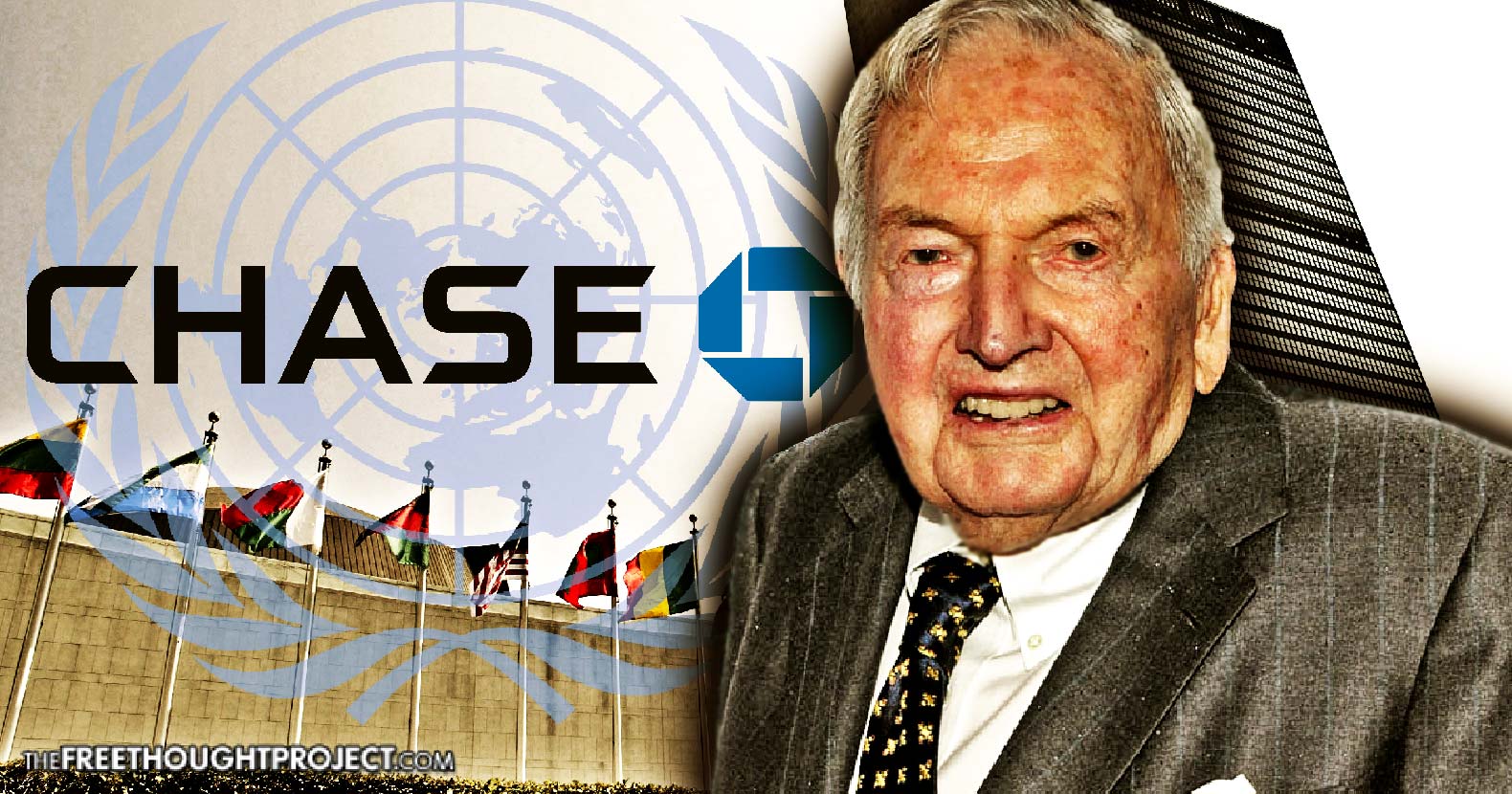
Billionaire Globalist David Rockefeller Dies At The Age Of 101


By Jay Syrmopoulos


Multibillionaire globalist David Rockefeller has died at the age of 101.


Rockefeller was the last surviving grandson of John D. Rockefeller, the founder of the Standard Oil Company, which he built into an oil empire that made him America’s first billionaire and transformed his family into one of the most powerful in the world.


David Rockefeller was a renowned banker and philanthropist who controlled Chase Manhattan bank for more than a decade. Rockefeller worked diligently to spread globalist neoliberal capitalism to the world, and in the process, wielded uncanny global political influence.


According to a report in The New York Times:


Chase Manhattan had long been known as the Rockefeller bank, though the family never owned more than 5 percent of its shares. But Mr. Rockefeller was more than a steward. As chairman and chief executive throughout the 1970s, he made it “David’s bank,” as many called it, expanding its operations internationally.


His stature was greater than any corporate title might convey, however. His influence was felt in Washington and foreign capitals, in the corridors of New York City government, art museums, great universities and public schools.

Mr. Rockefeller could well be the last of an increasingly less visible family to have cut so imposing a figure on the world stage. As a peripatetic advocate of the economic interests of the United States and of his own bank, he was a force in global financial affairs and in his country’s foreign policy. He was received in foreign capitals with the honors accorded a chief of state.


The businessman, who had an estimated fortune of $3 billion, retired as head of Chase Manhattan in 1981 after a 35-year career.


April 21 2017 – Trigger Event for the US Dollar? (Ad)


Rockefeller was known for his intimate embrace of international politics, as noted by The New York Times:


His forays into international politics also drew criticism, notably in 1979, when he and former Secretary of State Henry A. Kissinger persuaded President Jimmy Carter to admit the recently deposed shah of Iran into the United States for cancer treatment. The shah’s arrival in New York enraged revolutionary followers of the Ayatollah Ruhollah Khomeini, provoking them to seize the United States Embassy in Iran and hold American diplomats hostage for more than a year. Mr. Rockefeller was assailed as well for befriending autocratic foreign leaders in an effort to establish and extend his bank’s presence in their countries.


“He spent his life in the club of the ruling class and was loyal to members of the club, no matter what they did,” The New York Times columnist David Brooks wrote in 2002, citing the profitable deals Mr. Rockefeller had cut with “oil-rich dictators,” “Soviet party bosses” and “Chinese perpetrators of the Cultural Revolution.”


The billionaire died in his sleep at home in Pocantico Hills, New York, on Monday morning as a result of congestive heart failure, according to a family spokesperson Fraser P. Seitel.


In the statement from The Rockefeller Foundation confirming his death, he was described as “one of the most influential figures in the history of American philanthropy and finance, considered by many to be ‘America’s last great international business statesman’.”


Rockefeller is a prime example of the dominance of ruling elite oligarchy. He stood at the pinnacle of private/government collusion and was often used as an intermediary in diplomatic negotiations — a back channel.


Essentially, Rockefeller helped usher in an era of billionaire globalist domination over nation/state sovereignty. This influence is best summed up by David Rockefeller in a direct quote from his memoir:


Some even believe we [Rockefeller family] are part of a secret cabal working against the best interests of the United States, characterizing my family and me as ‘internationalists’ and of conspiring with others around the world to build a more integrated global political and economic structure – One World, if you will. If that’s the charge, I stand guilty, and I am proud of it.


Rockefeller did more to shatter the sovereignty of nations and push the world toward a one world globalist government than anyone else in history. Rather than allowing individuals to decide the trajectory of their own societies, men like Rockefeller have worked tirelessly to shape the world to operate by their own designs.


Jay Syrmopoulos writes for TheFreeThoughtProject.com, where this article first appeared.