Showing posts with label David Rockefeller. Show all posts

Wednesday, March 22, 2017

The True Legacy Of David Rockefeller

Via MintPressNews.com,


While often remembered for his philanthropy, the last surviving grandson of America’s first billionaire died today, leaving behind a dark legacy indicative of how American nobility often shape policy from behind the scenes.


No one person encapsulates the enduring legacy of the “robber barons” of the Industrial Age quite like David Rockefeller. Rockefeller, who died this week at the age of 101, was the last surviving grandson of John D. Rockefeller, the oil tycoon who became America’s first billionaire and the patriarch of what would become one of the most powerful and wealthiest families in American history. David Rockefeller, an undeniable product of American nobility, lived his entire life in the echelons of U.S. society, becoming symbolic of the elite who often direct public policy to a much greater extent than many realize, albeit often from the shadows.


Rockefeller made it clear that he preferred to operate out of public view despite his great influence in American – and international – politics. Due to his birthright, Rockefeller served as an advisor to every president since Eisenhower, but when offered powerful positions such as Federal Reserve chairman and Secretary of the Treasury – he declined, preferring “a private role.”


As evidenced by the numerous obituaries bemoaning the loss of the last of the Rockefeller’s grandsons, he was largely successful in hiding his most significant wrongdoings from public view, as evidenced by his characterization as a generous philanthropist and influential banker.


But as is often the case, Rockefeller’s true legacy is much more mired in controversy than major publications seem willing to admit. In addition to having the ear of every U.S. president for the better part of the last 70 or so years, Rockefeller – once again operating “behind the scenes” – was instrumental in shaping the more cringe-worthy aspects of U.S. policy during that time, as well as being a major force in establishing banking policies that led to debt crises in the developing world.


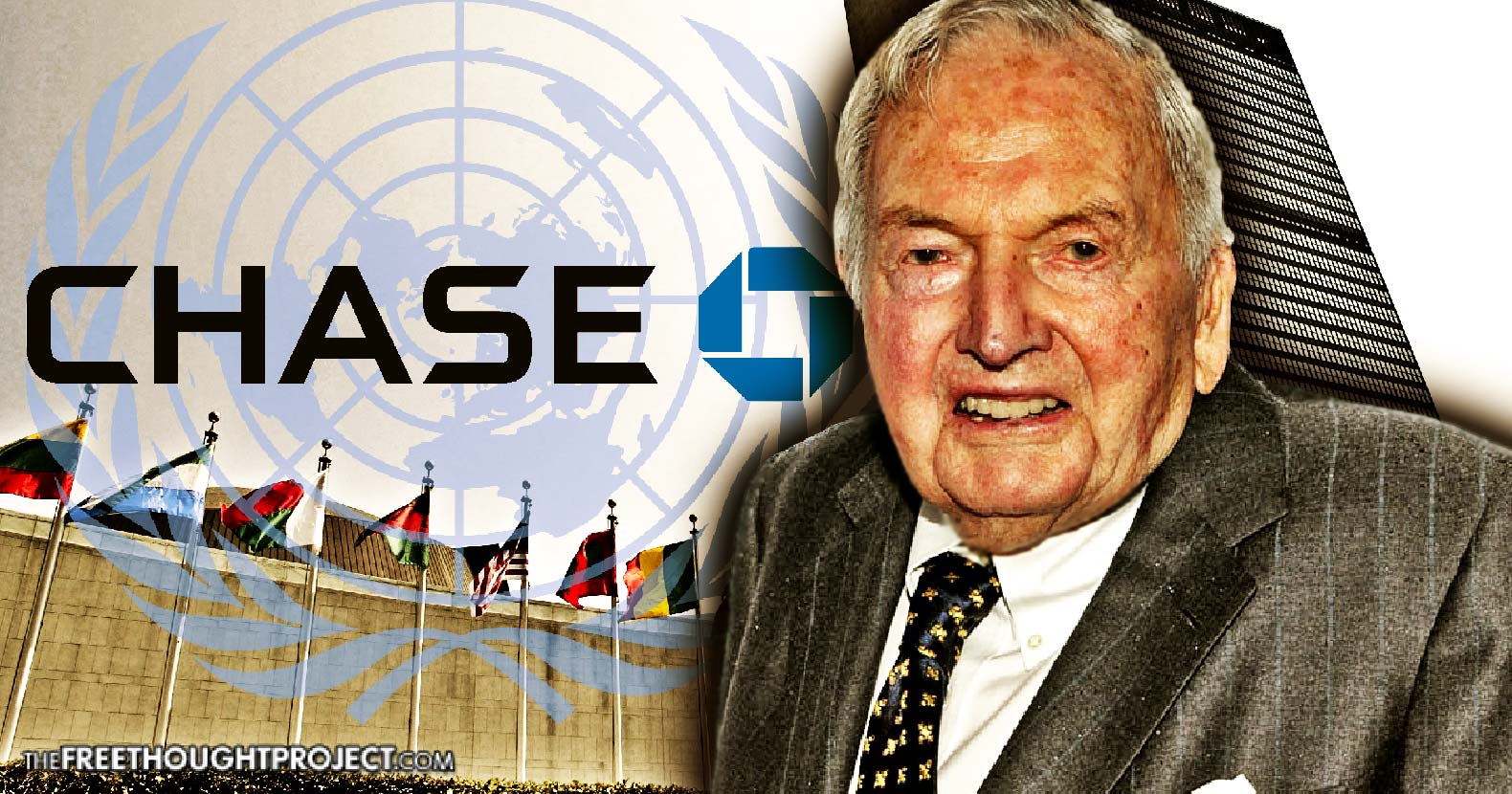
Rockefeller – as the head of Chase Manhattan Bank from 1969 to 1981 – worked with government and multinational corporations throughout the world to create a “global order” unequivocally dominated by the 1 percent, of which his family was a part. As the New York Times noted back in the 1970s, Rockefeller became embroiled in controversy when his constant trips overseas caused the bank to become less profitable, as he prioritized the bank’s influence on foreign politics over its actual business dealings.


During his time as Chase CEO, Rockefeller helped lay the foundation for repressive, racist and fascist regimes around the world, as well as architecture for global inequality. In addition, Rockefeller helped to bring the debt crisis of the 1980s into existence, in part by direct action through Chase Bank and also indirectly through his former employee-turned-Federal Reserve chairman Paul Volcker. Two years before the debt crisis erupted, Rockefeller, Volcker and other top bankers met at the International Monetary Conference in 1980s to argue for the establishment of a “safety net” for major banks – like Chase – that were embroiled in bad loans given largely to countries in the developing world.


David Rockefeller, center, then chairman of the Chase Manhattan Bank International Advisory Committee, receives the 1983 International Leadership Award presented by Dr. Henry A. Kissinger, left, and Ralph A. Pfeiffer, Jr. on, Dec. 9, 1983. (AP/Ron Frehm)


After the crisis brought financial ruin to Latin America and other developing areas throughout the world, Rockefeller – along with other bankers – created austerity programs to “solve” the debt crisis during subsequent IMC meetings, provoking inequality that still persists to this day. However, thanks to the “safety net” conveniently established years prior, Chase avoided the economic consequences for its criminal actions.


In addition, Rockefeller supported the bloody and ruthless dictatorships of the Shah of Iran and Augusto Pinochet of Chile while also supporting Israeli apartheid. Rockefeller then went on to found the influential Trilateral Commission while also serving as a major force on the Council on Foreign Relations that he, along with his close friend Henry Kissinger, would come to dominate.


Both of these organizations have come under fire for using their powerful influence to bring about a “one-world government” ruled by a powerful, ultra-wealthy elite – an accusation to which David Rockefeller confirmed as true in his autobiography. Far from the generous philanthropist he is made to be, David Rockefeller deserves to be remembered for his true legacy – one of elitism, fascism and economic enslavement.

Tuesday, March 21, 2017

The Real Story of David Rockefeller That the Media Isn’t Telling


(MPN) No one person encapsulates the enduring legacy of the “robber barons” of the Industrial Age quite like David Rockefeller. Rockefeller, who died today at the age of 101, was the last surviving grandson of John D. Rockefeller, the oil tycoon who became America’s first billionaire and the patriarch of what would become one of the most powerful and wealthiest families in American history. David Rockefeller, an undeniable product of American nobility, lived his entire life in the echelons of U.S. society, becoming symbolic of the elite who often direct public policy to a much greater extent than many realize, albeit often from the shadows.


We"re revolutionizing the news industry, but we need your help! Click here to get started.


Rockefeller made it clear that he preferred to operate out of public view despite his great influence in American – and international – politics. Due to his birthright, Rockefeller served as an advisor to every president since Eisenhower, but when offered powerful positions such as Federal Reserve chairman and Secretary of the Treasury – he declined, preferring “a private role.”


As evidenced by the numerous obituaries bemoaning the loss of the last of the Rockefeller’s grandsons, he was largely successful in hiding his most significant wrongdoings from public view, as evidenced by his characterization as a generous philanthropist and influential banker.


But as is often the case, Rockefeller’s true legacy is much more mired in controversy than major media outlets seem willing to admit. In addition to having the ear of every U.S. president for the better part of the last 70 or so years, Rockefeller – once again operating “behind the scenes” – was instrumental in shaping the more cringe-worthy aspects of U.S. policy during that time, as well as being a major force in establishing banking policies that led to debt crises in the developing world.


Rockefeller – as the head of Chase Manhattan Bank from 1969 to 1981 – worked with government and multinational corporations throughout the world to create a “global order” unequivocally dominated by the 1 percent, of which his family was a part. As the New York Times noted back in the 1970s, Rockefeller became embroiled in controversy when his constant trips overseas caused the bank to become less profitable, as he prioritized the bank’s influence on foreign politics over its actual business dealings.


During his time as Chase CEO, Rockefeller helped laid the foundation for repressive, racist and fascist regimes around the world, as well as architecture for global inequality. In addition, Rockefeller helped to bring the debt crisis of the 1980s into existence, in part by direct action through Chase Bank and also indirectly through his former employee-turned-Federal Reserve chairman Paul Volcker. Two years before the debt crisis erupted, Rockefeller, Volcker and other top bankers met at the International Monetary Conference in 1980s to argue for the establishment of a “safety net” for major banks – like Chase – that were embroiled in bad loans given largely to countries in the developing world.


After the crisis brought financial ruin to Latin America and other developing areas throughout the world, Rockefeller – along with other bankers – created austerity programs to “solve” the debt crisis during subsequent IMC meetings, provoking inequality that still persists to this day. However, thanks to the “safety net” conveniently established years prior, Chase avoided the economic consequences for its criminal actions.


In addition, Rockefeller supported the bloody and ruthless dictatorships of the Shah of Iran and Augusto Pinochet of Chile while also supporting Israeli apartheid. Rockefeller then went on to found the influential Trilateral Commission while also serving as a major force on the Council on Foreign Relations that he, along with his close friend Henry Kissinger, would come to dominate.


Both of these organizations have come under fire for using their powerful influence to bring about a “one-world government” ruled by a powerful, ultra-wealthy elite – an accusation to which David Rockefeller confirmed as true in his autobiography. Far from the generous philanthropist he is made to be, David Rockefeller deserves to be remembered for his true legacy – one of elitism, fascism and economic enslavement.


By Whitney Webb / Republished with permission / MintPress News / Report a typo

Monday, March 20, 2017

Billionaire Globalist David Rockefeller Dies At The Age Of 101


By Jay Syrmopoulos


Multibillionaire globalist David Rockefeller has died at the age of 101.


Rockefeller was the last surviving grandson of John D. Rockefeller, the founder of the Standard Oil Company, which he built into an oil empire that made him America’s first billionaire and transformed his family into one of the most powerful in the world.


David Rockefeller was a renowned banker and philanthropist who controlled Chase Manhattan bank for more than a decade. Rockefeller worked diligently to spread globalist neoliberal capitalism to the world, and in the process, wielded uncanny global political influence.


According to a report in The New York Times:


Chase Manhattan had long been known as the Rockefeller bank, though the family never owned more than 5 percent of its shares. But Mr. Rockefeller was more than a steward. As chairman and chief executive throughout the 1970s, he made it “David’s bank,” as many called it, expanding its operations internationally.


His stature was greater than any corporate title might convey, however. His influence was felt in Washington and foreign capitals, in the corridors of New York City government, art museums, great universities and public schools.

Mr. Rockefeller could well be the last of an increasingly less visible family to have cut so imposing a figure on the world stage. As a peripatetic advocate of the economic interests of the United States and of his own bank, he was a force in global financial affairs and in his country’s foreign policy. He was received in foreign capitals with the honors accorded a chief of state.


The businessman, who had an estimated fortune of $3 billion, retired as head of Chase Manhattan in 1981 after a 35-year career.


April 21 2017 – Trigger Event for the US Dollar? (Ad)


Rockefeller was known for his intimate embrace of international politics, as noted by The New York Times:


His forays into international politics also drew criticism, notably in 1979, when he and former Secretary of State Henry A. Kissinger persuaded President Jimmy Carter to admit the recently deposed shah of Iran into the United States for cancer treatment. The shah’s arrival in New York enraged revolutionary followers of the Ayatollah Ruhollah Khomeini, provoking them to seize the United States Embassy in Iran and hold American diplomats hostage for more than a year. Mr. Rockefeller was assailed as well for befriending autocratic foreign leaders in an effort to establish and extend his bank’s presence in their countries.


“He spent his life in the club of the ruling class and was loyal to members of the club, no matter what they did,” The New York Times columnist David Brooks wrote in 2002, citing the profitable deals Mr. Rockefeller had cut with “oil-rich dictators,” “Soviet party bosses” and “Chinese perpetrators of the Cultural Revolution.”


The billionaire died in his sleep at home in Pocantico Hills, New York, on Monday morning as a result of congestive heart failure, according to a family spokesperson Fraser P. Seitel.


In the statement from The Rockefeller Foundation confirming his death, he was described as “one of the most influential figures in the history of American philanthropy and finance, considered by many to be ‘America’s last great international business statesman’.”


Rockefeller is a prime example of the dominance of ruling elite oligarchy. He stood at the pinnacle of private/government collusion and was often used as an intermediary in diplomatic negotiations — a back channel.


Essentially, Rockefeller helped usher in an era of billionaire globalist domination over nation/state sovereignty. This influence is best summed up by David Rockefeller in a direct quote from his memoir:


Some even believe we [Rockefeller family] are part of a secret cabal working against the best interests of the United States, characterizing my family and me as ‘internationalists’ and of conspiring with others around the world to build a more integrated global political and economic structure – One World, if you will. If that’s the charge, I stand guilty, and I am proud of it.


Rockefeller did more to shatter the sovereignty of nations and push the world toward a one world globalist government than anyone else in history. Rather than allowing individuals to decide the trajectory of their own societies, men like Rockefeller have worked tirelessly to shape the world to operate by their own designs.


Jay Syrmopoulos writes for TheFreeThoughtProject.com, where this article first appeared.


BREAKING: Billionaire Globalist David Rockefeller Dies at the Age of 101

Multibillionaire globalist David Rockefeller has died at the age of 101.


Rockefeller was the last surviving grandson of John D. Rockefeller, the founder of the Standard Oil Company, which he built into an oil empire that made him America’s first billionaire and transformed his family into one of the most powerful in the world.


David Rockefeller was a renowned banker and philanthropist who controlled Chase Manhattan bank for more than a decade. Rockefeller worked diligently to spread globalist neoliberal capitalism to the world, and in the process, wielded uncanny global political influence.


According to a report in the New York Times:


Chase Manhattan had long been known as the Rockefeller bank, though the family never owned more than 5 percent of its shares. But Mr. Rockefeller was more than a steward. As chairman and chief executive throughout the 1970s, he made it “David’s bank,” as many called it, expanding its operations internationally.


His stature was greater than any corporate title might convey, however. His influence was felt in Washington and foreign capitals, in the corridors of New York City government, art museums, great universities and public schools.


Mr. Rockefeller could well be the last of an increasingly less visible family to have cut so imposing a figure on the world stage. As a peripatetic advocate of the economic interests of the United States and of his own bank, he was a force in global financial affairs and in his country’s foreign policy. He was received in foreign capitals with the honors accorded a chief of state.


The businessman, who had an estimated fortune of $3 billion, retired as head of Chase Manhattan in 1981 after a 35-year career.


READ MORE:  The Illuminati Were Amateurs -- The Facts Show These Five Families Rule the World


Rockefeller was known for his intimate embrace of international politics, as noted by the New York Times:


His forays into international politics also drew criticism, notably in 1979, when he and former Secretary of State Henry A. Kissinger persuaded President Jimmy Carter to admit the recently deposed shah of Iran into the United States for cancer treatment. The shah’s arrival in New York enraged revolutionary followers of the Ayatollah Ruhollah Khomeini, provoking them to seize the United States Embassy in Iran and hold American diplomats hostage for more than a year. Mr. Rockefeller was assailed as well for befriending autocratic foreign leaders in an effort to establish and extend his bank’s presence in their countries.


“He spent his life in the club of the ruling class and was loyal to members of the club, no matter what they did,” The New York Times columnist David Brooks wrote in 2002, citing the profitable deals Mr. Rockefeller had cut with “oil-rich dictators,” “Soviet party bosses” and “Chinese perpetrators of the Cultural Revolution.”


The billionaire died in his sleep at home in Pocantico Hills, New York, on Monday morning as a result of congestive heart failure, according to a family spokesperson Fraser P. Seitel.


In the statement from The Rockefeller Foundation confirming his death, he was described as “one of the most influential figures in the history of American philanthropy and finance, considered by many to be ‘America’s last great international business statesman’.”


Rockefeller is a prime example of the dominance of ruling elite oligarchy. He stood at the pinnacle of private/government collusion and was often used as an intermediary in diplomatic negotiations — a back channel.


READ MORE:  Rothschild Bank Now Under Criminal Investigation Over Missing $4 Billion in Global Corruption Probe


Essentially, Rockefeller helped usher in an era of billionaire globalist domination over nation/state sovereignty. This influence is best summed up by David Rockefeller in a direct quote from his memoir:


“Some even believe we [Rockefeller family] are part of a secret cabal working against the best interests of the United States, characterizing my family and me as ‘internationalists’ and of conspiring with others around the world to build a more integrated global political and economic structure – One World, if you will. If that’s the charge, I stand guilty, and I am proud of it.”


Rockefeller did more to shatter the sovereignty of nations and push the world toward a one world globalist government than anyone else in history. Rather than allowing individuals to decide the trajectory of their own societies, men like Rockefeller have worked tirelessly to shape the world to operate by their own designs.