Showing posts with label Flame Retardants. Show all posts

Friday, August 11, 2017

This Is Why You Should Always Find Out Where Your Tuna Was Caught

Scientists from Scripps Oceanography say in a new report that tuna caught in industrialized areas of the Pacific and Atlantic oceans contains 36 times more pollutants than tuna caught in remote parts of the West Pacific. [1]


For the study, published in June 2017 in the journal Environmental Health Perspectives, researchers looked at toxin levels in tuna caught around the world and found that the source of the fish can affect how safe it is to eat, as much if not more so than its species.


Lead author Sascha Nicklisch, a postdoctoral researcher at Scripps Institution of Oceanography at UC San Diego, said:


“The pollutant levels in seafood — and tuna in our case — can be heavily determined by the location where it was caught. It is important to know the origin of catch of the fish, to know the amount of pollutants in your fish.”


The researchers tested the tuna for the presence of pesticides, polychlorinated biphenyls (PCBs), and flame retardants. The 3 contaminants are part of a class of chemicals known as persistent organic pollutants, or POPs, which accumulate in body tissue and progress up the food chain. [1] [2]


Greater concentrations of toxic pollutants tend to exist in large fish and predators, so tuna is a decent way to track them. And since yellowfin is a fairly big fish and has a shorter range than other tuna species, researchers were able to use them to study regional pollutants. [1]


Nicklisch said:


“They stay in the location where they are born and hunt, so we tried to use these tuna to create a snapshot of local contamination.”


For the study, 10 types of fish were gathered from Tonga, Panama, Louisiana, Hawaii, Guam, and Vietnam. Researchers screened the fish for 247 toxic compounds and calculated concentrations of pollutants from each of the 8 regions.


On average, toxin levels in tuna sampled from the most heavily polluted areas were 36 times higher than those found in the least polluted areas. Among the individual fish, toxic levels in the most and least contaminated tuna samples varied by a factor of 180, the researchers found.


Some 90% of tuna caught in the northeast Atlantic Ocean and more than 60% of yellowfin samples caught in the Gulf of Mexico contained pollutant levels worthy of health advisories in pregnant and nursing women, not to mention young children. [2]


In January 2017, the FDA and the EPA released advice regarding eating fish. The guidelines state people can safely eat 2-3 servings of canned tuna per week, 1 serving of either fresh yellowfin tuna or canned, fresh, or frozen albacore tuna. Bigeye tuna should be avoided due to high levels of mercury.
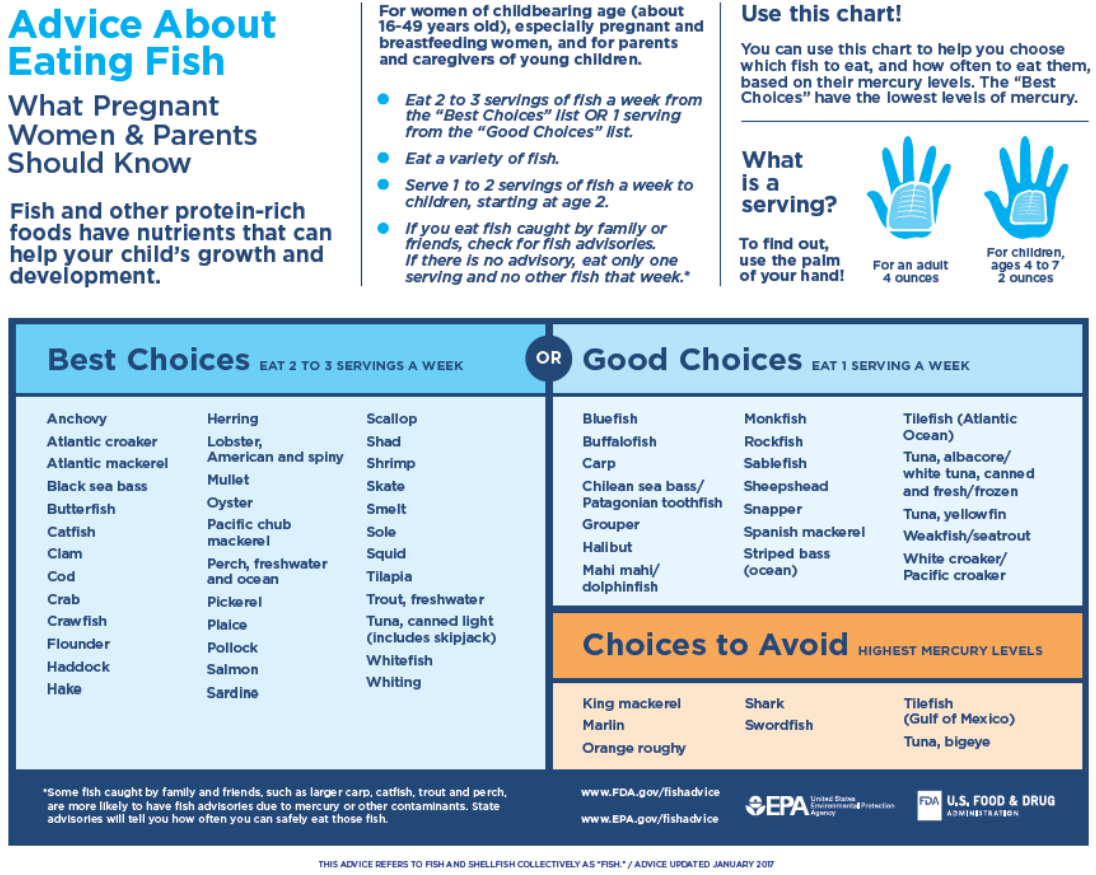

Click for larger version.

Most of the tuna the team looked at would be considered safe under current guidelines.


Read: How to Avoid BPA and Mercury in Your Fish


But each of the 10 samples of fish contained a particularly toxic set of compounds known to interfere with proteins which regulate cell membranes and defend against toxins, according to Nicklisch. [1]


He explained:


“These compounds might lead to accumulation of chemicals in these tuna, because the proteins usually block those compounds in fish, but also in us, in humans.”


The best way to protect yourself from toxins in tuna is to find out where it was caught, but that’s no easy feat.


Dick Jones, president of Ocean Outcomes, a non-governmental organization based in Portland, Oregon, that focuses on improving fisheries, said:


“At the retail level right now, it’s only country of origin that’s required. The only time we see a more detailed description of where the fish was caught is when [companies] want to take advantage of the marketing opportunity.” [2]


Seafood fraud also makes it difficult to know where your fish comes from. An Oceana report released in 2016 revealed that up to 1 in 5 seafood samples tested worldwide are mislabeled, and fraud can occur all the way up the seafood supply chain.


Human rights abuses, and illegal, unreported, and unregulated fishing also make seafood-traceability a challenge.


Nicklisch said he is hopeful the study will result in improved testing methods for chemicals in food, and improve public information and labeling of seafood.


“The most important part of the take-home message is that it’s important to know where your fish was caught.”


Sources:


[1] Los Angeles Times


[2] NPR


Storable Food


About Mike Barrett:
Author Image
Mike is the co-founder, editor, and researcher behind Natural Society. Studying the work of top natural health activists, and writing special reports for top 10 alternative health websites, Mike has written hundreds of articles and pages on how to obtain optimum wellness through natural health.

Wednesday, August 9, 2017

Prenatal Exposure to Flame Retardants Linked With Lower IQ in Children

A report in the journal Environmental Health Perspectives reveals that prenatal exposure to flame retardants may lead to lower IQ test scores in children. Further, the more of the chemicals a pregnant woman is exposed to, the more likely she is to give birth to a child with lower intelligence. [1]


In the meta-analysis, researchers calculated that every tenfold increase in exposure to flame retardants called polybrominated diphenyl ethers (PBDEs) was associated with a 3.7 point decline in kids’ IQ test scores.


Based on that calculation, PBDEs are even more detrimental to fetuses than lead – every tenfold increase in the neurotoxin is associated with “just” a 7-point decline in IQ scores, by comparison.


Study co-author Tracey Woodruff said:


“Even the loss of a few IQ points on a population-wide level means more children who need early interventions, and families who may face personal and economic burdens for the rest of their lives.” [2]


The meta-analysis summarizes and evaluates the full collection of relevant research on the safety of PBDEs. Ten of the studies the researchers included show a link between flame retardants and intelligence.


The team analyzed an additional 9 studies that searched for an association between exposure to flame retardants and attention-deficit hyperactivity disorder (ADHD). Juleen Lam, an associate research scientist at the University of California San Francisco, said the 9 papers don’t provide enough evidence of a connection between the chemicals and ADHD. [1]


However, the link between flame retardants and intelligence is undeniable, according to Lam.


“The evidence strongly suggests that PBDEs are damaging kids’ intelligence.”


Knowing this, Lam said, children should be protected from these chemicals to “prevent intelligence loss.”


She added:


“We’re really seeing this as a wake-up call to policymakers.”


Researchers are trying to tease out how PBDEs lower intelligence. So far, the evidence suggests the chemicals impair the activity of the endocrine system, the body’s systems of hormone-producing glands which play a role in the body’s circadian rhythm, sexual development, metabolism, and other functions. When a woman is pregnant, her endocrine system heavily influences the development of her fetus’ brain.


Read: Common Flame Retardant Chemical Found to Cause Brain Damage


There are multitudinous types of PBDEs, and several of them have already been banned in the United States. Most new furniture doesn’t contain those chemicals, said Arlene Blum, a scientist with the Green Science Policy Institute, who wasn’t involved in the study.


Nevertheless, Woodruff, a professor at UCSF, said that “everyone is exposed to PBDEs, so this means that there are potentially millions of IQ points that are lost across the population.” Moreover, “children can be affected for generations to come.” [2]


Banned But Still Prevalent


Source: Environmental Working Group

Another study led by Hurley, published in March, 2017, showed a gradual plateau in bodily levels of flame retardants – even an increase in some people. Hurley believes that’s likely because as people have disposed of or incinerated their old furniture, PBDEs have made their way into the environment. [1]


Now, Hurley theorizes, the chemicals are getting into the food supply, as old furniture and foams containing PBDEs have been tossed into landfills or incinerated, causing the chemicals to leach into runoff and/or spewed into the air.


Whether or not flame retardants actually make fires less deadly is up for debate. Bryan Goodman, a spokesman for the industry group American Chemistry Council, said that flame retardants help save lives by providing individuals with a critical layer of fire protection. He added that “the major manufacturers of flame retardants have spent millions of dollars on research both before and after their products go on the market.”


Read: How To Avoid Toxins In Flame-Retardant Household Products


Source: Environmental Working Group

However, some past studies seemed to suggest that flame retardants actually give rise to toxic fumes. Ami Zota, an environmental health scientist at George Washington University who studies flame retardants but wasn’t involved in the paper, said their efficacy is “not really backed up by well-supported data.”


Sources:


[1] Newsweek


[2] U.S. News & World Report


Environmental Working Group


Environmental Working Group


Storable Food


Sunday, October 30, 2016

Terrifying Toxic Chemicals To Avoid This Halloween

halloween-candy-toxic-poison-chemicals


Halloween is creeping near, are you prepared? Before you make a mad dash to the nearest costume shop, consider this—do you know what’s in your costume? Your masks and makeup?


Terrifying toxins! Catastrophic chemicals! Horrifying harbingers of–ok, alright. You probably get the idea. Festive Halloween accouterments can be loaded with harmful chemicals and toxic metals. It can be difficult to resist a low-price costume produced with cheaply-sourced goods, but there are a few good reasons why you should consider more than price when deciding which Halloween products to buy.


Chemicals in Costumes, Accessories, and Decorations


Costumes, accessories, and decorations from most major national Halloween retailers contain chemicals and additives that have been linked to health issues such as reproductive problems, developmental delays, and even cancer.[1]


PVC, Phthalates, and Dioxins


In one evaluation of nearly 150 Halloween products, one-third contained PVC (polyvinyl chloride), a known endocrine disruptor.[1] Additionally, PVC fabric is frequently treated with chemicals known as phthalates. Children are susceptible to the ill-effects of phthalates which include premature puberty, birth defects, liver problems, and testicular cancer later in life.[2] PVC products also contain dioxins, chemicals that are classified carcinogens and cause reproductive issues and learning delays.[3]


Lead Contamination


Lead is another toxin that often contaminates cheap foreign goods, especially Chinese imports, including food and children’s toys.[4] It shouldn’t be a surprise that lead’s insidious reach extends to Halloween products. In 2012, the US federal government seized over 1400 Halloween costumes of Chinese origin due to lead levels that were 10 times higher than the allowed maximum.[5] Many lead-contaminated costumes or props have a piece or two that will, at some point, find its way into a child’s mouth. The seized items included pirate costumes that had an eye patch that contained over 40 times the legal maximum limit for lead.[6]


Lead poisoning is exceptionally hazardous to children. It interferes with calcium, is toxic to proteins, and has a severely negative effect on nerve function. Exposure to lead is even linked to cognitive and hearing impairment. Lead exposure threatens fetal development as well. Pregnant women who have been exposed to lead may experience miscarriage, premature birth, or have undersized babies.[7]


Flame Retardants


Fabrics that have been treated with flame retardants are another concern with respect to Halloween costume safety. Such fabrics are often contaminated with antimony[8] and other dangerous chemicals. Exposure to antimony trioxide, a common flame retardant applied to fabrics, is linked to sharp increases in peripheral arterial disease (PAD),[9] which is a condition that causes atherosclerotic plaque to form in the arteries.[10] Some flame retardants are especially dangerous to children because their chemical structure is similar to developmental neurotoxins, like organophosphate pesticides, which affect brain development.[11]


Toxic Makeup and Glow Sticks


toxic-chemicals-makeup-2-300x200Many people don’t consider that the skin is their largest organ and one of the first contact points for toxins. Makeup, in general, is something to watch out for, as toxic metals frequently contaminate cosmetics.[12, 13] Some face painting kits for children also contain high levels of lead, arsenic, mercury, cadmium, and antimony, all of which are especially toxic to the kidneys and the immune, reproductive, and nervous systems.[14]


Glow sticks and glow jewelry seem like a harmless way to stay visible while trick-or-treating, but the chemicals in those plastic tubes do pose a threat. Dibutyl phthalate (DBP) and anthracene, two chemicals found in glow sticks, can be poisonous. But, to be fair to glow sticks, the amount contained is usually too small to cause problems in humans. A more likely scenario is a child or pet getting DBP in their eyes, mouth, or on their skin. For children, the effects range from skin irritation or mild chemical burns to nausea and vomiting if ingested.[15] Pets have a similar reaction—they may drool profusely, retch, vomit, or paw at their mouths if they made the mistake of chewing on a stray glow bracelet.[16] A sick pet or child can ruin your evening, so forego the glow sticks or make sure no one tries to cut (or bite) them open.


How to Have a Healthy, Happy Halloween


We’re not here to ruin Halloween for you—we want you to have the safest, healthiest, and happiest Halloween possible! There are safe alternatives that render the hazardous options completely unnecessary. Of course, you could perform a full body detox, but reducing your exposure to toxins in the first place is a better strategy. When assembling your costume, examine the labels before purchasing. Or, better yet, make your own costumes and accessories yourself with non-toxic materials.


The Top 5 Ways To Ensure a Toxin-Free Halloween


  1. Look for makeup kits labeled non-toxic, and make sure they are produced in a country with strict regulations on consumer goods. Wash off makeup before bed.

  2. Wear a wig instead of temporary spray-on hair color, as they often contain VOCs.[17]

  3. Avoid plastic teeth as they tend to be softened with phthalates.[18]

  4. Check labels on costumes and accessories for vinyl (polyvinyl chloride or PVC) and flame retardants.

  5. Limit candy consumption, avoid corn syrup and synthetic food dyes.

Healthy Treats Are Important, Tootoxic-chemicals-healthy-food-300x200


Toxic costumes aren’t the only potential problem. Conventional Halloween fare is too sugary, over-processed, and full of preservatives and stabilizers. It’s difficult to resist all the Halloween cakes, cookies, and candy, but you can easily find recipes that recreate the traditional treats with legitimately healthy ingredients like cashews, chia seeds, and dark chocolate. Autumn is a time to be indulgent — in a healthy way. Try our dessert recipes for great-tasting and good-for-you alternatives, like the vegan custard-stuffed pumpkin.


Do you have any tips for enjoying a happy, healthy Halloween? Leave a comment below and share your thoughts.


References


  1. “Halloween Study.” 2014. Web. 13 Oct. 2016.

  2. Johnson. PVC – a major source of phthalates. n.d. Web. 13 Oct. 2016.

  3. “Polyvinyl Chloride (PVC) – toxic chemicals and environmental health risks where you live and work – text version.” 27 June 2016. Web. 13 Oct. 2016.

  4. Berman, Barry, and Kunal Swani. “Managing product safety of imported Chinese goods.” Business Horizons 53.1 (2010): 39–48. Web. 13 Oct. 2016.

  5. International, Public Radio. Chinese-made Halloween costumes recalled for high lead content. Public Radio International, 13 Oct. 2016. Web. 13 Oct. 2016.

  6. “Lead-contaminated pirate costumes seized.” NBCNews.com, n.d. Web. 13 Oct. 2016.

  7. “Lead – toxic chemicals and environmental health risks where you live and work – text version.” 31 Mar. 2016. Web. 13 Oct. 2016.

  8. Cooper, Ross G., and Adrian P. Harrison. “The Exposure to and Health Effects of Antimony.” 13.1 (2009): n.pag. Web. 13 Oct. 2016.

  9. “The exposure to and health effects of antimony.” 13.1 (2009): n.pag. Web. 13 Oct. 2016.

  10. “What Is Peripheral Artery Disease? – NHLBI, NIH.” Google+, 22 June 2016. Web. 13 Oct. 2016.

  11. Grossman, Elizabeth. Are Flame Retardants Safe? Growing Evidence Says “No”. Yale environment 360. 2008. Web. 13 Oct. 2016.

  12. Troubling levels of toxic metals found in cosmetics. UC Berkeley School of Public Health, 2016. Web. 13 Oct. 2016.

  13. Bocca, B, et al. “Toxic Metals Contained in Cosmetics: A Status Report.” Regulatory toxicology and pharmacology : RTP. 68.3 (2014): 447–67. Web. 13 Oct. 2016.

  14. Schmidt, Sarah. Heavy metals found in kids’ face paints. www.canada.com, 1 Feb. 2009. Web. 13 Oct. 2016.

  15. Campbell, Olivia. Party Poopers: Are Glow Sticks Party Killers? 23 Sept. 2014. Web. 13 Oct. 2016.

  16. Coffin, Anna. 13 household items toxic to pets. 2016. Web. 13 Oct. 2016.

  17. “Volatile Organic Compounds (VOCs) in Commonly Used Products.” July 2013. Web. 13 Oct. 2016.

  18. Reports, 2016 Consumer. Ten tricks for a safe and “green” Halloween. 23 Sept. 2014. Web. 13 Oct. 2016.

Print Friendly