Turmeric powder. Image source: Pixabay.com
When I think about medical issues out on the homestead or any other off-grid lifestyle, my thoughts naturally drift toward a well-stocked first-aid kit and maybe a pair of crutches. I am immensely careless where and how I am walking and am prone to deeply entertaining — yet humiliating — falls.
But enough about me.
What is often overlooked are the minor (and not so minor) discomforts of daily life. Things like sore backs, pounding headaches, cramps and rashes. And let’s be honest with ourselves for just a bit; life on the homestead is not always a walk in the park.
Burns, sprains and poison ivy in less-than-ideal places are all things we face. If we are preparing for long-term sustainability or have made the off-grid choice a permanent lifestyle, it is wise to consider how we will handle all manner of medical care.
After all, the local pharmacy may be hours of travel away.
Learn How To Make Powerful Herbal Medicines, Right in Your Kitchen!
It is with this in mind that I have compiled the following four remedies that can easily be sustained on the typical homestead. In no way is this a complete list, but I feel that it addresses some of the most common maladies. If you don’t already grow them, then consider including them in your upcoming garden plans.
1. Turmeric
Latin name: Curcumae longae
What it’s good for: anti-inflammatory. Taken orally, turmeric has shown great potential for alleviating joint pain and has shown efficacy in slowing the progression of rheumatoid arthritis in rats. When transformed into an essential oil, it is effective against athlete’s foot and other fungal infections.
Where it grows: It is a tropical plant and thrives in warm, humid climates but will grow in any part of the world that has temperate summers. It will die in the winter if not brought inside.
What part to use: The root is dried and made into a powder. This is a component in the favorite spice of India — curry. Also, it can be used fresh if kept refrigerated or distilled into an essential oil for topical purposes.
2. Feverfew
Latin name: Tanacetum parthenium
What it’s good for: Headaches. Particularly migraines. It has also been traditionally used for reducing fever and aiding with digestive problems. So if you happen to be unfortunate enough to be experiencing a sour stomach and a migraine at the same time, this is your herb.
Where it grows: Native to Eurasia, it is now found across the globe, including North America and Europe. Given full exposure to the sun, it will grow to near weed-like status outside its native regions.
What part to use: The leaf, preferably dried and powdered. Although a common practice, chewing the leaves can lead to ulcerations in the mouth.
Note: May interact with blood thinners. This herb should not be used by women who are pregnant.
3. Aloe Vera
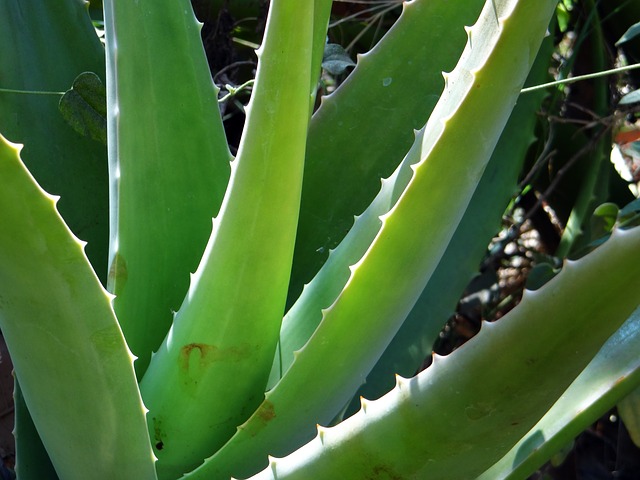
Image source: Pixabay.com
Latin name: Aloe Vera
What it’s good for: All manner of skin irritations and rashes. Although not in itself a cure, the gel that can be harvested from the inner part of the plant’s “leaves” or stalks is a natural and effective soothing agent.
Where it grows: The Arabian Peninsula and North Africa, although it can be grown indoors anywhere – and outside in many climates.
What part to use: The gel, which is found inside its stalks. Apply liberally to affected areas accordingly.
4. Honey (locally sourced)
What it’s good for: Cold and flu symptoms and immune system. Honey, particularly when it is local and raw, is a Swiss Army knife of medicinal remedies and preventatives. Honey possesses a wealth of antioxidants and has demonstrated antibacterial and antiviral properties. When it has come from local hives, it can actually assist in relieving allergies. This is due to the honey containing small amounts of local pollen. Sort of like a tasty, sweet allergy shot. It also has been the go-to remedy for sore throats and coughs for centuries. The fact that it is delicious just adds to its appeal.
Where it is harvested: Anywhere in the world where honeybees thrive.
What part to use: The liquid honey as well as the honeycomb are wonderful additions to your pantry. Remember those antibacterial properties we talked about previously? Well, those same medicinal qualities happen to make for a very long shelf life. The honey will likely crystalize over time, but the quality of it is not compromised. To return it to its original liquid form, simply place the jar in a warm water bath.
Final Thought
Remember that with herbal remedies, more is not always better and in some cases can even be dangerous. There are a wealth of easily cultivated and sustainable remedies that are available to the average homesteader. Take the opportunity to become educated on the various plants and their uses, and you will be on your way to a more healthy and sustainable medicine cabinet.
This article is for informational purposes only and is not intended to diagnose or cure any particular health condition. Please consult with a qualified health professional to determine which treatments are right for you and any individual health condition(s) that you may have.
What would you add to this list? Share your tips in the section below: