Showing posts with label Clint Siegner. Show all posts

Monday, April 30, 2018

The Least Known (and Best Performing) Precious Metal

By Clint Siegner


Gold and silver have risen substantially off the price bottom put in just 2-½ years ago, but the gains have yet to attract much notice. Gold has gained roughly 28% and silver is up 20%.


Meanwhile, another metal has more than doubled since bottoming. This performance should have been more than enough to catch the attention of metals investors, if only they were watching. The metal is palladium and, for those who haven’t paid much attention, it is time for a brief update.


Palladium is one of the platinum group metals (PGMs) and it has a lot in common with its higher profile brother.


Like platinum, palladium is a lustrous, silver-white metal. It has many of the same applications. The largest application is in automobile catalytic converters, but there are also uses in jewelry, dentistry, surgical instruments, and electronics.


Palladium also shares platinum’s troubled supply chain.


The top producers are Russia and South Africa. The latter nation has fallen deeper into turmoil in recent months.


Mines there have dealt with unreliable electricity and labor strife for years. Operators are now at great risk of the having mine properties seized by government officials.


PGMs represent a good way for bullion investors to diversify and gain exposure to different market fundamentals.


Diversification can reduce the volatility in any investment and can produce better results – particularly in weaker markets. Just consider the relative outperformance of palladium versus gold and silver over the past 30 months.


Investing in palladium makes sense for investors who anticipate rising demand for cars and trucks which produce lower emissions globally. If the economies of China and India continue to develop rapidly, demand for the metal should keep rising. It will not take a lot of additional demand to completely outstrip supplies.


One wild card is the adoption of electric vehicles, which do not have catalytic converters and require very little of the metal. For now, these types of vehicles are more costly and have severe limitations in terms of range and power.


Palladium Bullion Options


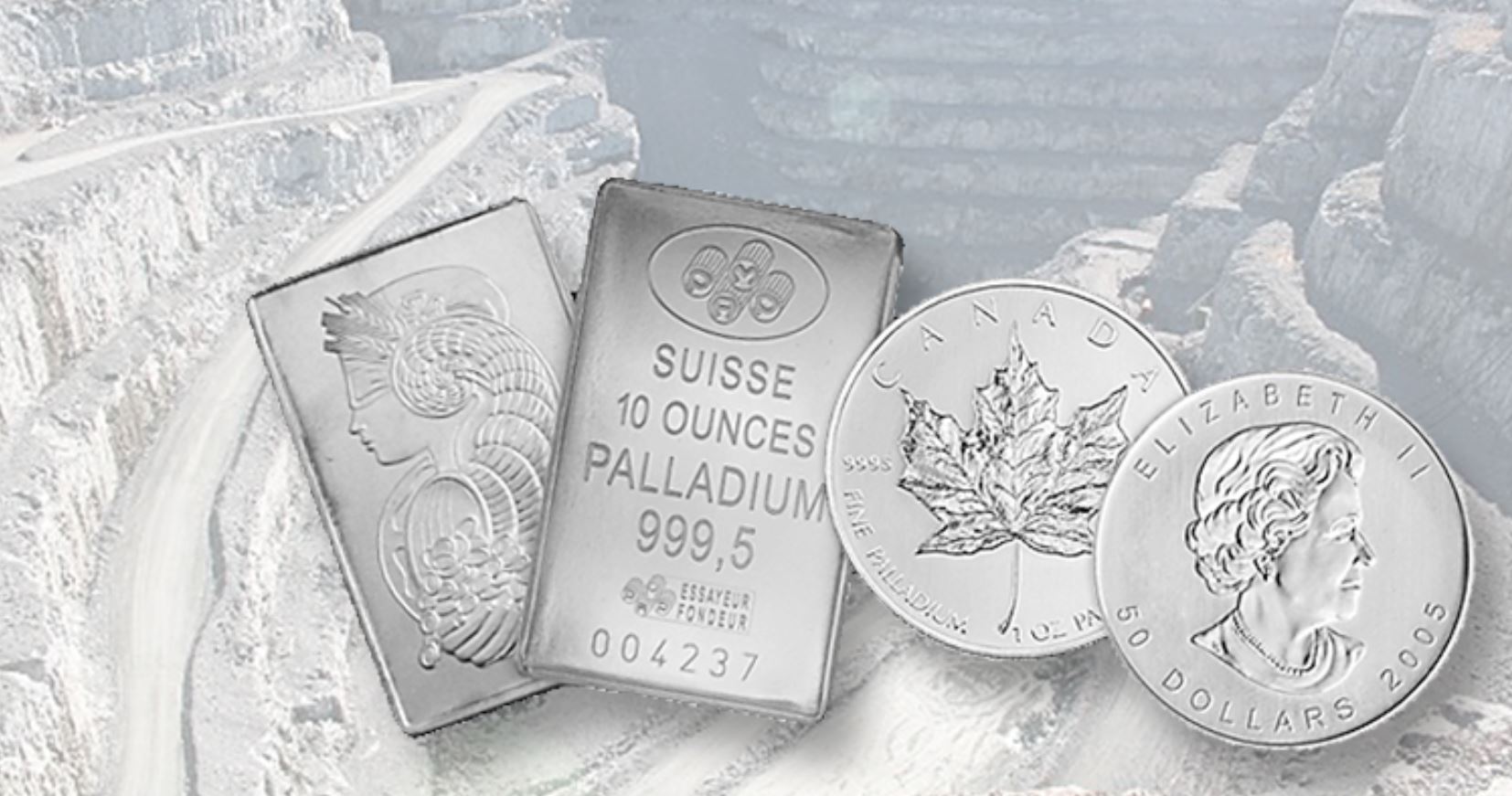
The number of product options available to bullion investors has grown. The U.S. Mint produced a 1 oz palladium American Eagle for the first time in 2017.


The small issuance of those coins sold out very quickly, but more are expected in 2018 and the number of coins minted will likely increase.


The Royal Canadian Mint has been producing a palladium Maple Leaf since 2005, though not consistently each year. Today, this is the best option for investors who want an official, government issue coin. They are almost always in stock and premiums are affordable.


Finally, investors can get palladium in bar form. Bars in assay packaging from Swiss refiners such as PAMP and Credit Suisse are comparably priced to the Maple Leaf. And there are more size options available – including 1-gram and 10-ounce.


Clint Siegner is a Director at Money Metals Exchange, the national precious metals company named 2015 “Dealer of the Year” in the United States by an independent global ratings group. A graduate of Linfield College in Oregon, Siegner puts his experience in business management along with his passion for personal liberty, limited government, and honest money into the development of Money Metals’ brand and reach. This includes writing extensively on the bullion markets and their intersection with policy and world affairs.


Image credit

Tuesday, March 27, 2018

Physical Gold Production May Be Peaking, But There Is No Shortage In Paper Gold

By Clint Siegner


Gold production numbers for 2017 are still being compiled but estimates call for the first annual decline in mine output since 2008.


The gold price fell dramatically in the months following the 2011 peak in prices. It has languished at, or near, the cost of production for years. Low gold prices are having a predictable effect on mine output.


Many projects with marginal ore deposits were rendered uneconomic. High cost operators went out of business. Exploration budgets got slashed dramatically. And all of these factors compound a larger underlying issue. It is increasingly difficult to find gold deposits that make sense to mine. New discoveries are less than a fifth of what they were in 2006.


Much higher gold prices will drive more exploration and should boost discoveries. Some projects which have been mothballed due to higher costs will become feasible once again. But the trend seems clear – the drought in discoveries, which began more than a decade ago, looks likely to persist regardless of the gold price. And the struggle to find economic deposits will translate to a serious decline in production in the years ahead.


Some forecasters believe 2016 represented peak gold production. To the extent that physical supply is a determinant in the price, gold investors have something to look forward to. However, and unfortunately, price discovery happens in the broken and rigged futures markets.


When it comes to trading in gold futures, the physical supply and demand for the metal is barely a consideration.


Practically no one trading contracts cares about getting delivery.


During periods of high speculative demand in the futures markets, the bullion banks stand ready to sell a virtually unlimited number of fresh new contracts. Physical gold may be scarce, but available paper gold has been limitless.


Someday the confidence in gold (and silver) futures is likely to collapse.


Some event will prompt traders to look at the shocking amount of leverage built into the contracts. They will suddenly be uncomfortable with how little physical metal there is supporting the enormous paper trade. When too many begin standing for delivery of bars, they will be handed cash instead, provided their counterparties are solvent.


The markets will wake up and find all of the paper which was supposed to represent gold actually does nothing of the kind. The peak in paper gold will have passed.


Diminishing mine output will definitely have ramifications for the gold price, but the metal won’t find fair market value until people stop demanding paper and start demanding the real thing. Gold investors should be encouraged by prospects of a peak in physical gold, but the real celebration will have to wait until the peak in paper gold is behind us.


Clint Siegner is a Director at Money Metals Exchange, the national precious metals company named 2015 “Dealer of the Year” in the United States by an independent global ratings group. A graduate of Linfield College in Oregon, Siegner puts his experience in business management along with his passion for personal liberty, limited government, and honest money into the development of Money Metals‘ brand and reach. This includes writing extensively on the bullion markets and their intersection with policy and world affairs.

Tuesday, February 13, 2018

Reckless Deficit Spending by Congress Set to Wreck the Dollar

By Clint Siegner


U.S. equities got a free ride on the Trump train after his election, even as Federal Reserve officials hiked interest rates. That ride may have ended last week.


If commentators are correct and the blame for recent selling in the stock market falls on the burgeoning fear of rising interest rates, it looks like Fed tightening is finally having the effect many predicted when the cycle began.


Most currently expect the FOMC to continue with hikes at about the same pace set in 2017. They have gotten away with several hikes, but attempting several more will be harder for them.


The question is whether the Fed’s tolerance for pain is any higher under new chairman Jerome Powell. We’d wager that it won’t take much in the way of flagging stock prices and slowing growth to have them reversing course and punching the stimulus button.


No one should bet that last week’s rally in the dollar means the bottom is in. The next few years look downright terrifying for the greenback. Here are some factors to consider:


  • Congressional Republicans embarrassed themselves last week by proving the lip service they pay toward fiscal conservatism is nothing but lies. The Republican leadership shepherded through $300 billion in additional spending. Furthermore, they once again completely suspended the limit on borrowing;

  • The Treasury will be issuing staggering amounts of new debt to fund the Congressional spending spree. Last fall’s tax cut may be good news for taxpayers, but it will also magnify federal deficits. Net new debt in 2018 is expected to be $1.3 trillion – the highest since 2010!

  • President Trump will soon begin the push for a trillion-dollar infrastructure program. That will almost certainly be paid for with additional borrowing.

  • The creditworthiness of the U.S. is once again back in the news. Rating agency Moody’s raised the idea of a downgrade for U.S. debt last week.


There is a tsunami of new Treasury debt coming to market in the coming years. Absent Fed intervention with a new bond purchase program and/or renewed stimulus, market forces are going to drive much higher yields. A whole lot of bond investors are going to need serious inducement to buy up all of the trillions in new debt that’s coming – probably more than either the markets or the federal budget can bear.


That’s why people should look for the Fed to soon start putting downward pressure on rates, not upward. And don’t let anyone tell you last week’s rally in the dollar has any kind of future. You can expect several trillion more dollars to roll off the printing presses over the next few years.


Clint Siegner is a Director at Money Metals Exchange, the national precious metals company named 2015 “Dealer of the Year” in the United States by an independent global ratings group. A graduate of Linfield College in Oregon, Siegner puts his experience in business management along with his passion for personal liberty, limited government, and honest money into the development of Money Metals’ brand and reach. This includes writing extensively on the bullion markets and their intersection with policy and world affairs.

Tuesday, January 30, 2018

Illinois’ Debt Crisis Foreshadows America’s Financial Future

By Clint Siegner


Those wanting a glimpse into the future of our federal government’s finances should have a gander at Illinois. The state recently “resolved” a high-profile battle over its budget. Taxpayers were clubbed with a 32% hike in income taxes in an effort to shore up massive underfunding in public employee pensions, among other deficiencies.


But, predictably, it isn’t working. People are leaving the state in droves.


In fact, Illinois now leads the nation in population collapse. Statistics show people leaving the state at the rate of 1 every 4.3 minutes and the state dropped from 5th place to 6th in terms of overall population.


Turns out that people with options aren’t planning to stand there and take the epic tax increase.


Illinois officials’ hands are tied. Decades ago, public employee unions successfully lobbied for an amendment to the state constitution which prevents cuts to pensions. The taxpayers are hostages.


Illinois officials are instead considering one final gambit, one well-tried by many insolvent governments through history. They will address the problem of too much debt by borrowing even more money. Specifically the plan under review calls for selling $107 billion in debt in the largest ever municipal bond offering.


Worse, the state would use the borrowed funds to invest in financial markets. The state would purchase stocks and other securities near their all-time highs.


The Illinois credit rating has suffered in recent years, so borrowing costs will be higher. That means the state will need to take on even greater levels of risk to generate returns. What could go wrong?


Illinois is demonstrating a universal truth which certainly still applies at the national level. Governments do not voluntarily shrink. They grow until they can no longer be sustained. Then they get desperate – just before the default.


Clint Siegner is a Director at Money Metals Exchange, the national precious metals company named 2015 “Dealer of the Year” in the United States by an independent global ratings group. A graduate of Linfield College in Oregon, Siegner puts his experience in business management along with his passion for personal liberty, limited government, and honest money into the development of Money Metals’ brand and reach. This includes writing extensively on the bullion markets and their intersection with policy and world affairs.

Tuesday, January 16, 2018

Swamp Lives On: Crooked Banks and Captured Regulators

By Clint Siegner


If officials at the Securities and Exchange Commission (SEC) are bothered by allegations of incompetence and capture by Wall Street’s bankers, it is hard to tell. The Commission recently hired Brett Redfearn to serve as Director of the Division of Trading and Markets. Redfearn left a 13-year stint at JP Morgan to assume a key role in regulating banks, investors and traders.


The SEC, and other regulators such as the CFTC and the Federal Reserve, aren’t worried about appearances. Redfearn looks like yet another fox being sent to guard the henhouse. His appointment undermines confidence even if he intends to serve with integrity.


Instilling confidence ought to be a priority at the SEC. The past decade has been a disaster when it comes to the agency’s credibility.


To date, not one high-level bank executive, has been prosecuted for misdeeds related to the 2008 Financial Crisis. This despite plenty of the shareholders SEC officials are supposed to be protecting having lost their shirts. SEC bureaucrats either bungled or turned a blind eye to Bernie Madoff’s Ponzi scheme.


To cap it off, a high-profile story which broke in 2010 uncovered agency staff and contractors spending an inordinate amount of time watching pornography on the job.


Office of Inspector General investigators looked at a 5-year period and found 33 people had violated policy by watching X-rated content on federal computers. During these years, Madoff’s con was reaching its peak and Wall Street banks were busily selling mortgage-backed securities stuffed with fraudulent loans to pension funds. You would think leadership there might be embarrassed.


Which brings us back to the appointment of Mr. Redfearn. It demonstrates the SEC remains tone deaf at a minimum, and completely captured at worst.


JP Morgan, Redfearn’s former employer, served as Madoff’s banker and has been involved in a number of questionable affairs. Laurence Kotlikoff from Forbes suggested the bank may be “America’s Most Corrupt.”


Until the SEC and its people prove they actually care about keeping the investment banks and financial insiders honest, they should probably do their hiring somewhere besides Wall Street. Otherwise, people will understandably assume federal regulators are there to protect powerful firms under their jurisdiction, and not Americans at large.


Clint Siegner is a Director at Money Metals Exchange, the national precious metals company named 2015 “Dealer of the Year” in the United States by an independent global ratings group. A graduate of Linfield College in Oregon, Siegner puts his experience in business management along with his passion for personal liberty, limited government, and honest money into the development of Money Metals’ brand and reach. This includes writing extensively on the bullion markets and their intersection with policy and world affairs.

Tuesday, January 9, 2018

Premiums on Coins, Bars, and Rounds May Finally Have Bottomed

By Clint Siegner


Gold and silver premiums have been following the demand for physical metal lower in recent months. As investor selling ticked up, popular bullion products poured back into dealer inventories. The result has been some of the lowest premiums we’ve seen in a decade for items like gold and silver American Eagles.


The “premium” is the amount over the market price for gold or silver commanded by a specific bullion product. It will include the dealer’s profit, but also incorporates the wholesale premiums and/or fabrication costs the dealer must pay to acquire the inventory.


Premiums are the best indicator of demand in the bullion markets.


Secondary market products – items that are being resold rather than sold for the first time as brand new – are just about always the best option for investors, provided they can be purchased at a discount. Unfortunately, that hasn’t been very often in recent years.


For most of the past decade, bullion investors have been less inclined to sell. Instead, mints and refiners had trouble keeping up with demand at times.


Buying resale may mean the lot of coins a buyer orders will be dated with one or more prior years. A batch of silver rounds could include more than one design. But as long as the product is in uncirculated condition and the designs are well-recognized and marketable, the resale value will be the same as for a new version of the same item purchased today and sold a year or two down the road.


The cost of manufacturing puts a floor on the pricing mints and refiners can offer. This is not the case in the secondary market, where manufacturing costs have already been borne by someone else. Buyers who aren’t insistent about getting brand new product can now get coins, rounds, and bars at a discount.


Metal prices bottomed in mid December, which discouraged some selling. Now prices are moving higher. Initially, this may drive another round of selling, leading to extra supplies of secondary market products. However, optimism about where metals prices are headed also appears to be on the rise.


Buyers might as well save money on premiums, while they can. There are some signals that the opportunity may not last too much longer.


Supplies of some secondary market items, such as silver American Eagles, can vanish at a moment’s notice. Buying demand has turned higher and these discounted items are always the first to go. If that trend continues over the next few weeks, look for premiums to rise from today’s extraordinarily low levels.


Thursday, January 4, 2018

Don’t Look Now, But Gold Just Finished Its Best Year Since 2011

By Clint Siegner


Metals investors may have missed it given the gloomy sentiment that plagued markets for much of 2017, but gold just finished its best year since 2011.


Perhaps in a year like the one just passed, 13% gains are simply not inspiring. U.S. stocks finished about 25% higher for the year, and crypto-currencies including Bitcoin left all other asset classes in the dust. Bitcoin gained roughly 1,400%.


Die hard gold bugs enter 2018 waiting for crypto-bugs and stock bulls to see the value of precious metals. Fortunately, precious metals have served reliably both as an inflation hedge and as a safe haven for most of recorded history. It looks less and less probable investors will get through another 12 months while ignoring both inflation and market risk simultaneously.


While other markets were finishing 2017 strong, the U.S. dollar ended the year with a whimper. The dollar fell 10%, its worst performance in more than a decade.


That weakness has yet to manifest itself as price inflation in consumer goods and services. It has instead shown up in asset prices.


Consumers have yet to feel their dollars getting weaker, which may explain much about why a traditional inflation hedge like gold isn’t getting a lot of attention. That may change in the months ahead, particularly if President Donald Trump can add his debt-financed infrastructure spending program to the tax cuts recently passed. Both initiatives represent fiscal stimulus for Main Street, and a shift from Wall Street oriented monetary policy including Quantitative Easing.


Fiscal stimulus programs should contribute to more weakness in the dollar, as deficits and borrowing increase. Yes, the Republican-led Congress could insist on spending reductions elsewhere to compensate for tax reduction and infrastructure spending, but only the most naive would consider that a genuine likelihood.


If the dollar loses another 10% in the year ahead, metals ought to be significant beneficiaries – even if most aren’t paying attention to that possibility.


The recent strength in precious metals may be signaling that price inflation is on the way.


The Federal Reserve has been raising the Fed funds rate for more than two years, thus far with very little impact on bond yields and interest rates on consumer loans. When dealing with markets as centrally planned as ours are, anything is possible … in the short term.


Yet, in our view, the most likely alternative to inflation as a driving force in markets over the coming months is asset deflation. If investors aren’t talking about rip roaring asset markets at this time next year, they may be talking about bubbles popping instead. There are certainly a number of bubbly markets, and a near total disregard for risk. That is a potent combination.


Either way, don’t expect the metals markets to go unnoticed in 2018.


Tuesday, December 5, 2017

When Will Quiet Metals Markets Get the Catalyst They Need?

By Clint Siegner


Fear and greed drive the precious metals markets, but there hasn’t been much of either pushing gold and silver prices lately. Investors have grown tired of worrying about geopolitical events, ever increasing federal debt ceilings and ever inflating equity bubbles.


Meanwhile, greedy trend traders continue piling in to hot markets.


With the exception of palladium, metals prices have been stagnant for most of the year. For the time being, gold and silver are looking pretty boring relative to the hefty gains in stock prices and the explosive rise in Bitcoin.


Goldbugs are still waiting for a catalyst to shift investor attention back to the metals markets. Let’s take a look at some of the possible near-term drivers for gold and silver…


The equity markets remain overdue for a significant correction, and that would definitely stir some safe-haven demand. Yes, we have been expecting a correction in stocks for some time and prices are still moving higher.


There is, of course, no telling when the next bear market in stocks will arrive. But price-to-earnings valuations have only moved higher into nosebleed territory and shares are truly priced for perfection. A good-sized hiccup could have investors heading for the exit.


Bitcoin prices may also correct, diverting some of that capital instead into gold and silver. Cryptocurrencies are an entirely different kettle of fish when it comes to valuation. If Bitcoin can deliver on its promise to revolutionize payments and finance, today’s prices will ultimately look cheap.


However, no one should expect Bitcoin to continue moving higher in a straight line, with price corrections measured only in days or hours. There are a couple of developments right now with the potential to derail the extraordinary bull run in Bitcoin – at least temporarily.


A number of major cryptocurrency exchanges have grown reliant on a token called “Tether.” The Tether token is supposed to be backed 1 to 1 with U.S. dollars held by the company behind the Tether. Traders swap Bitcoin and other coins into Tether, assuming it is akin to cash. However, there are serious questions about whether or not the backing exists.


If confidence is lost in the nearly $1 billion of Tether tokens floating around exchanges, much of which has been used to make leveraged purchases of Bitcoin, it could be a disaster rivaling the collapse of Mt. Gox.


Bitcoin is also getting a boost in anticipation of institutional money pouring into the markets. The CME Group (COMEX) will launch Bitcoin futures trading later this month and lots of people expect the influx of capital to be very good news for the price. Our perspective is a bit different given that the nearly unlimited supply of paper futures contracts has undermined precious metals prices.


We think Bitcoiners should be wary of the participation of establishment institutions, such as JPMorgan Chase, which are likely to heavily short Bitcoin. These banks have a record of defeating limited supply by selling paper contracts in unlimited quantity and profiting as prices fall. People should also understand that many of the institutions who will be playing in Bitcoin futures are not fans of Bitcoin.


There are also a couple other developments of particular interest for metals investors in the coming weeks. Tensions with North Korea and Iran are still escalating. And Michael Flynn, President Donald Trump’s former National Security Advisor, has taken a plea deal. The President’s many enemies in Washington DC are hoping Flynn will testify to some impeachable offense.


Should these players finally hang something serious on the President, we can definitely expect some turmoil in conventional markets.


It is quiet in the metals markets now, but there are plenty of ways for this quiet to be broken at any time.


Clint Siegner is a Director at Money Metals Exchange, the national precious metals company named 2015 “Dealer of the Year” in the United States by an independent global ratings group. A graduate of Linfield College in Oregon, Siegner puts his experience in business management along with his passion for personal liberty, limited government, and honest money into the development of Money Metals’ brand and reach. This includes writing extensively on the bullion markets and their intersection with policy and world affairs.


Image Credit

Monday, September 18, 2017

Most Investors Won’t Be Buying Gold & Silver until AFTER Big Gains Occur

By Clint Siegner


Physical demand for bullion rounds, coins, and bars remains somewhat soft in the U.S. This year’s run higher in prices as well as rising geopolitical tensions has whet the appetites of some investors, but it has not yet triggered broad participation.


With strong gains both this year and last, metals prices have been responding to a host of issues – from unrestrained federal borrowing to the prospect of nuclear exchange. But they haven’t moved up as much as many expect.


After advancing dramatically in the prior decade, gold and silver have not responded as strongly to the explosive money creation and debt of the last few years as stocks have. And while predictions of crisis have been plentiful, the “Big One” hasn’t yet materialized.


Some honest money investors have even been drawn to Bitcoin and other cryptocurrencies. This is, in part, because of the tremendous run-up in prices in recent months (notwithstanding last week’s crash), and because cryptocurrencies might prove beyond the reach of Wall Street and central bankers to control.


Unfortunately, many investors will be sitting on the sidelines until precious metals are proven outperformers again, and in doing so, they will miss a big move up in prices. While we expect to see much higher gold and silver prices, the catalysts for that aren’t anything to root for. Serious geopolitical strife, a major correction in stock prices, or the U.S. dollar in free fall all mean hardship and pain.


Change is inevitable, and the U.S. economic expansion is getting long in the tooth. Even artificial markets must ultimately yield to actual physics.


The good news for investors with a contrarian bent is that buy premiums on bullion products are the lowest they have been in a decade – and inventory is plentiful. Down the road the opposite may be true, i.e. high premiums and shortages of the physical gold and silver in minted form.


Clint Siegner is a Director at Money Metals Exchange, the national precious metals company named 2015 “Dealer of the Year” in the United States by an independent global ratings group. A graduate of Linfield College in Oregon, Siegner puts his experience in business management along with his passion for personal liberty, limited government, and honest money into the development of Money Metals’ brand and reach. This includes writing extensively on the bullion markets and their intersection with policy and world affairs.

Thursday, September 7, 2017

War on Cash Backfires on India’s Economy

By Clint Siegner


Indian Prime Minister Narendra Modi launched a surprise attack on cash in late 2016. He gave Indians a few days to convert the two largest denomination bills then circulating to bank deposits, after which point any undeposited notes would become worthless. The move was intensely controversial. Transactions completed using cash represented the vast majority of economic activity in the country.


In order to sell the program Modi employed a familiar strategy. He vilified the users of cash as tax cheats and criminals. He promised the measure would punish black marketeers, boost the Indian economy, and increase tax revenues. The latter may be true – forcing transactions onto the grid is good for nosy bureaucrats trying to impose taxes and controls.


But it now appears Modi’s claims about the amount of criminal activity tied to cash and promises of economic growth were nonsense.


The official argument was that cash is an indispensable tool for black marketeers. The reform would catch many of these “criminals” with piles of cash they would be unwilling to declare and deposit. That argument fell apart last week when the Indian central bank reported that 99% of the outlawed bills were converted to deposits. Turns out very few “criminals” were punished.


Meanwhile the Indian economy is paying the price. Growth has slowed significantly and some estimate as many as 5 million jobs have been destroyed by the demonetization of cash. More and more Indians are angry.


They didn’t enjoy the upside promised by Modi. Instead, they suffered massive economic disruption and loss of privacy. Perhaps India’s experience will provide an object lesson elsewhere in the world where bankers and the political elite are waging a similar war on cash.


Clint Siegner is a Director at Money Metals Exchange, the national precious metals company named 2015 “Dealer of the Year” in the United States by an independent global ratings group. A graduate of Linfield College in Oregon, Siegner puts his experience in business management along with his passion for personal liberty, limited government, and honest money into the development of Money Metals’ brand and reach. This includes writing extensively on the bullion markets and their intersection with policy and world affairs.

Monday, July 31, 2017

Preparing to Barter and Trade With Precious Metals Is NOT a Loony Idea

By Clint Siegner


Let’s start with this fact; fiat (paper) currencies die – often spectacularly. That is why precious metals may someday be needed for barter and trade. Anyone who thinks it is silly to worry about such a thing is putting blind faith in Federal Reserve Notes.


The U.S. dollar is having a great run, no question. It will soon be 50 years since Nixon closed the gold window, thereby converting the dollar to a purely fiat currency. Five decades is longer than most purely fiat currencies survive.


Humans carry a normalcy bias. That helps explain why so many assume the unbacked Federal Reserve Note, which has served so long as our currency, will continue to serve in the future.


If you test that assumption, it quickly gets hard to defend.


Point to the exponential growth in U.S. debt, the unrestrained government spending throughout both Republican and Democratic administrations, and the extraordinary monetary policies of the Fed (particularly in the past decade) and reasonable people should acknowledge that the reign of “king dollar” is unlikely to last forever.


Most people don’t know the first thing about the dark history of fiat currencies around the world. Governments use them to borrow and print without limits. Suffer no delusions – fiat currencies were invented for precisely that purpose. The gold in the treasury has never been sufficient for the wars, social programs, and graft which are the hallmarks of a growing government.


America is no exception. Nixon slammed the gold window shut because nations – France in particular – saw the U.S. spending beyond its means and devaluing the dollar. So our trading partners began swapping dollars for bullion. In order to stop the hemorrhaging of U.S. gold reserves, Nixon reneged on the commitment to redeem Federal Reserve Notes in gold.


Honest money in the form of gold, or currency redeemable in gold, imposes restraints that no expansionist government can abide – ours included.


The chart showing the growth of our national debt since Nixon broke the last remaining tie between the dollar and gold is hard to refute.


Federal Debt: Total Public Debt


Whether or not the federal government can be trusted to make good on its commitments over time is a serious question.


It would be silly not to prepare for a collapse in confidence, and, by extension, a collapse in the dollar. And nobody should wait. Currency crises through history catch most people by surprise, then it is too late to prepare.


Governments are like the Ernest Hemingway character:


“How did you go bankrupt?”


“Two ways. Gradually, then suddenly.”


History is full of nations and currencies rolling slowly downhill for awhile, then plummeting over the cliff.


You can show naysayers a picture of the recent hyperinflation in Venezuela:


Venezuela Inflation Rate


Venezuelans who entered 2016 with all of their savings in bolivars probably didn’t know it, but they were in serious trouble. Within weeks they would be searching for scarce food with nothing to exchange but devalued banknotes – slips of paper which merchants suddenly loathed.


The above chart is based on “official” data from the Venezuelan central bank. The reality is even worse.


Grocers can’t keep enough food on the shelves because suppliers don’t want bolivars. Instead, much of the food is bought and sold in black and grey markets where people offer something more compelling in exchange.


Once lost, it is extraordinarily hard to restore confidence.


The Venezuelan government, and their bolivar, are struggling to maintain any sort of legitimacy. Total collapse is all but assured.


Granted, the USA is not Venezuela. Our dollar is the world’s reserve currency and the U.S. is much larger and wealthier than that South American nation. But much of the difference boils down to scale and timing. Venezuela is simply ahead of the U.S. on the same road to national bankruptcy.


Absent a course correction, there is little reason to think we won’t arrive at the same destination – hyperinflation and disorder.


It is possible America can make reforms before it is too late. But even those who are optimistic about President Trump enacting change for the better, must admit it is very unlikely that he will ever get Congress to cooperate. And it is that august body which is responsible for spending and debt.


Federal debt and entitlement obligations have kept growing, regardless of which party is in control.


If the U.S. returns to honest money and limited government BEFORE a crisis, it may be the first nation in history to do so. Anybody who doesn’t like those odds would be wise to hold some gold and silver for a handful of good reasons. Having something to barter with is certainly one of them.


Clint Siegner is a Director at Money Metals Exchange, the national precious metals company named 2015 “Dealer of the Year” in the United States by an independent global ratings group. A graduate of Linfield College in Oregon, Siegner puts his experience in business management along with his passion for personal liberty, limited government, and honest money into the development of Money Metals’ brand and reach. This includes writing extensively on the bullion markets and their intersection with policy and world affairs.

Tuesday, June 13, 2017

Hell Freezes Over: CFTC Finds Trader Guilty Of Metals Price Rigging


By Clint Siegner


It must have been painfully awkward for the Commodity Futures Trading Commission (CFTC).


Last year, Deutsche Bank settled a civil suit involving blatant market rigging and turned over reams of information, including chat logs and voice recordings. The trove contained plenty of damning evidence which had gone overlooked by the CFTC.


CFTC investigators supposedly spent 5 years searching for illegal market manipulation, but somehow, managed to find nothing.


The cheating became hard to ignore after Deutsche Bank turned over voice recordings and 350,000 pages of documents which revealed bank trading desks being run like the back office of a crooked casino.


Here is one of the chat log gems between David Liew (Trader B) and an accomplice at UBS, where they coordinate trades and joke about it with a play on the timeless Ghostbusters song:


UBS [Trader A]: and if u have stops…


UBS [Trader A]: oh boy


Deutsche Bank [Trader B]: HAHA


Deutsche Bank [Trader B]: who ya gonna call!


Deutsche Bank [Trader B]: STOP BUSTERS


Deutsche Bank [Trader B]: deh deh deh deh dehdehdeh deh deh deh deh dehdehdeh


Deutsche Bank [Trader B]: haha16


This and records of many other similarly incriminating exchanges left CFTC officials little choice but to reverse themselves and finally take some action. On June 2nd, the Commission announced a settlement with a single trader named David Liew.


Nevertheless James McDonald, the CFTC’s Director of Enforcement, seemed proud. He announced, “Today’s enforcement action demonstrates that the Commission will aggressively pursue individuals who manipulate and spoof in our markets.”


Nowhere in his statement will you find him giving proper credit to the cheated bank clients who did the actual heavy lifting. After making complaints to the CFTC, they hired some attorneys and pursued the civil action which produced the mountains of evidence the CFTC relied upon.


In any event, more enforcement action may be on the way. A number of other traders and banks have been implicated in market rigging.


More stuff that will be hard for the bureaucrats and Wall Street job seekers at the CFTC to ignore.


The sanctions against David Liew do represent a small step toward more honest metals markets. We’ll get more excited if we see high-level executives being prosecuted and banks losing their licenses to trade. But we aren’t holding our breath.


The civil courts have a much better chance of making the crooked banks accountable than the captured CFTC.


Clint Siegner is a Director at Money Metals Exchange, the national precious metals company named 2015 “Dealer of the Year” in the United States by an independent global ratings group. A graduate of Linfield College in Oregon, Siegner puts his experience in business management along with his passion for personal liberty, limited government, and honest money into the development of Money Metals’ brand and reach. This includes writing extensively on the bullion markets and their intersection with policy and world affairs.

Tuesday, June 6, 2017

Government Insolvency Gets Harder To Ignore


By Clint Siegner


Several U.S. states and the federal government are hopelessly insolvent. It’s something many bullion investors have known for years.


The real question is when this reality will pierce the mainstream illusion that deficits, and the crushing pile of debt which accompany them, don’t matter. That moment drew closer last week when ratings agencies downgraded Illinois state bonds to one notch above “junk” status.


S&P and Moody’s dropped the state’s creditworthiness rating to BB+/Baa3 – the lowest ever for a U.S. state. Illinois currently has $14.5 billion in unpaid bills and a government deadlocked over forming a new budget.


That stack of bills represents a whopping 40% of the state’s operating budget. At the heart of Illinois’ problems are massive union pension obligations for retired government bureaucrats.


Sluggish economic growth, below par returns driven by zero interest rates, and the extravagant promises made to retirees created a funding gap that likely cannot be bridged. But the state looks like it will have to die trying.


Government union bosses and their supporters got pension obligations converted into a constitutional mandate in 1970. They made it so that certain benefits can only be adjusted in one direction – higher. Article XIII, Section 5 reads:


Membership in any pension or retirement system of the State, any unit of local government or school district, or any agency or instrumentality thereof, shall be an enforceable contractual relationship, the benefits of which shall not be diminished or impaired.


Adding that language was a neat trick, given the implicit mandate that the private taxpayers are permanently on the hook for these obligations – even as they enjoy no such guarantees in the face of their own impaired incomes and retirement benefits.


How this crisis gets resolved will be telling. Illinois is one of seven states where meeting pension obligations are constitutionally mandated regardless of the state’s solvency, and many of those aren’t in much better shape.


What happens when insolvency finally catches up to governments and they can no longer borrow to fund deficits? Entitlement benefits cannot be cut without a change in constitutional law. And that is a very difficult proposition.


More likely the political class will ask taxpayers, who already earn less than public employees on average, to pony up. Or, they will attempt to kick the can once more by seeking a bailout from their equally insolvent Uncle Sam and his magic money machine.


The days of borrowing cheap money are numbered. The Fed may keep rates artificially low. But lenders and the ratings agencies are already waking up to the notion profligate governments aren’t exactly AAA borrowers. It won’t be long until Americans at large are grappling with the reality that some promises can’t be kept. When the debt cycle ends, default is next – either outright or via the printing press.


Clint Siegner is a Director at Money Metals Exchange, the national precious metals company named 2015 “Dealer of the Year” in the United States by an independent global ratings group. A graduate of Linfield College in Oregon, Siegner puts his experience in business management along with his passion for personal liberty, limited government, and honest money into the development of Money Metals’ brand and reach. This includes writing extensively on the bullion markets and their intersection with policy and world affairs.

Friday, May 5, 2017

New Risk For Investors: Fed Considers Jacking Up Inflation Target


By Clint Siegner


Investors are underestimating inflation risk. As a consequence, they are under-pricing inflation protecting assets including precious metals.


The Federal Reserve has given itself the objective of engineering an inflation rate of around 2%. However, there are many ways in which real-world inflation can potentially outpace the Fed’s 2% target.


Firstly, the Fed’s preferred inflation gauges are flawed. The so-called “core” rate of consumer price inflation strips out food and energy costs. The core Personal Consumption Expenditures (PCE) index has also been criticized for underweighting housing and medical costs.


The PCE number for March, which came out on May 1st, shows the Fed’s favored inflation gauge running at 1.6% year over year. That’s down slightly from the previous month’s reading of 1.8% (2.1% for the headline unadjusted PCE).


Since 2012, the core inflation rate has been running below the Fed’s 2% target. That has caused investors to grow complacent toward inflation risk. They seem to be operating under the assumption that 2% is a ceiling.


That is a dangerous assumption – not only because of food and energy inflation not being properly accounted for, but also because even the official “core” number could rise well above target for extended periods.


Fed Insiders Call for 4% Inflation Target


The 2% target itself isn’t set in stone. In fact, some current and former Fed governors would like to see the central bank pursue a more flexible inflation objective. Peterson Institute economist Olivier Blanchard argues the Fed ought to raise its target to 4% in order to make up for several years of below-2% inflation.


Former Federal Reserve chairman Ben Bernanke recently wrote a piece for The Brookings Institution in which he proposed ways to re-jigger the Fed’s inflation target. According to Bernanke, “in a changing world of imperfect credibility and incomplete information, private-sector inflation expectations are not so easy to manage.”


In other words, the Fed lacks the knowledge and credibility to be able to directly control what businesses and individuals think future inflation rates will be. That’s a problem for the central bank to the extent that expectations for inflation can be self-fulfilling and fail to match up with the centrally planned target.


What’s a central planner to do? Bernanke suggests implementing a more flexible inflation target.


“Looking forward, it is likely that the determinants of the ‘optimal’ inflation target—such as the prevailing real interest rate, the costs of inflation, and the nature of the monetary policy transmission mechanism—will change over time,” he wrote.


Bernanke Proposes Targeting Higher Prices on Goods and Services


Rather than a fixed numerical target, Bernanke argues the Fed could target price levels. A 2% annual inflation rate implies that a basket of goods costing $100 today would, in 20 years, cost $148.59. If the Fed targets that particular price level, then years of undershooting 2% inflation would require years of overshooting to stay on target.


Ben Bernanke’s conclusion: “The adoption of price-level targeting would be preferable to raising the inflation target.”


Armed with novel justifications for letting inflation run higher, the Fed is far from being held down by its putative 2% inflation objective. The risk for investors is that inflation at some point does start running higher than 2% – perhaps significantly higher.


Once unleashed, inflation could prove hard for policy makers to keep a lid on. The Fed can try to manipulate mass psychology.


It can control short-term interest rates and try to restrain money supply growth. However, it cannot directly control money velocity or long-term interest rates.


Recent yields on 10-year (2.3%) and 30-year (2.9%) U.S. Treasury bonds reflect the widespread belief that the Federal Reserve will hold inflation at 2% and allow bondholders to eke out small real returns.


Yet with government debt at $20 trillion and rising… with forecasts for the debt to GDP ratio to rise well over 100% to Third World levels in the next decade… the government can’t afford to keep paying out positive real rates of interest on its bonds.


The world’s biggest debtor will have to default or (more likely) devalue the currency in which its debts are denominated. Maybe not this year or next. But in the foreseeable future, bondholders will face the prospect of staggering real losses as inflation rates outstrip low fixed yields on debt instruments.


Inflation Punishes Savers and Bails Out Debtors


Inflation serves as a sort of hidden tax. It punishes savers and consumers as it rewards and bails out debtors – the biggest of all being the U.S. government. The temptation for Congress to rely on the Fed’s printing press to finance its otherwise unsustainable deficit spending is simply too great.


Bonds and other dollar-denominated financial instruments are currently priced as if inflation won’t be a problem for the next three decades. Meanwhile, gold, silver, and other hard assets are selling at discounts because most investors aren’t concerned about inflation protection.


They should be. Now is the time to be concerned. By the time rising inflation rates are a full-fledged economic reality, you can bet precious metals prices will be far higher than where they sit today.


Stefan Gleason is President of Money Metals Exchange, the national precious metals company named 2015 “Dealer of the Year” in the United States by an independent global ratings group. A graduate of the University of Florida, Gleason is a seasoned business leader, investor, political strategist, and grassroots activist. Gleason has frequently appeared on national television networks such as CNN, FoxNews, and CNBC, and his writings have appeared in hundreds of publications such as the Wall Street Journal, TheStreet.com, Seeking Alpha, Detroit News, Washington Times, and National Review.

Wednesday, March 8, 2017

Sound Money Is Rising At The State Level


By Clint Siegner


Inflation is the most pernicious of taxes levied by our government. Officials systematically devalue the Federal Reserve Note “dollar,” then levy capital gains taxes on assets when their dollar price rises.


The “gains” are largely illusory. Rising asset prices over time reflect the fact that the dollar buys less of everything. But the tax obligations triggered by this inflation are very real.


Bills calling for the elimination of capital gains taxes on money, i.e. precious metals, have recently been introduced in both Idaho and Arizona.


Money Metals Exchange president Stefan Gleason testified at the hearing and pointed out that “by taxing so-called gains on exchanging precious metals for devalued Federal Reserve Notes, we’re adding another tax on top of the inflation tax.”


Idaho State Representative Ron Nate adroitly observed, “Citizens aren’t allowed to declare capital losses when the dollars they hold lose value. So, it isn’t fair to tax capital gains when the gold and silver they own rises in value.”


The Idaho bill – HB206 – passed the House Committee on Revenue and Taxation last Thursday and is expected to come up for a vote on the house floor in the coming days.


Money Metals President Stefan Gleason testified before the Idaho House last week.


The Arizona House of Representatives passed its own version of the Idaho bill, HB2014, in mid-February, sending it on to the state Senate which is holding a hearing this Wednesday. Former Congressman Ron Paul is scheduled to testify.


Meanwhile, the Sound Money Defense League is helping Alabama, Tennessee, Virginia, and Maine eliminate sales taxes on gold and silver bullion.


Supporters of sound money are working hard to reestablish gold and silver as money according to state law and to make sure it is treated as such in the tax code. Trading one form of money for another should not trigger any tax. There is no sales tax when customers swap their precious metals for dollars, so switching dollars to bullion should also be tax exempt.


Oklahoma, Utah, Texas, Idaho, and nearly 20 other states already exempt precious metals from sales tax. Utah and Oklahoma have gone one step further, reaffirming the U.S. Constitution’s designation of gold and silver as legal tender. As such the metals are free from all state taxes – including capital gains.


Texas and Tennessee have both approved measures to establish precious metals depositories in their states. Utah legislators are now considering a bill to authorize the same. The idea is to facilitate ownership of gold and silver bullion in state-run investment funds including pensions.


These funds are in desperate need of diversification. Most are stuffed with conventional paper assets which are at risk of going up in smoke in the event of hyperinflation in the U.S. dollar, or another 2008 style financial crisis.


State depositories will also open the door for citizens to more easily use gold and silver in transactions. Parties who have a metals holding in a state depository would be able to make payments to one another by simply and instantly transferring title to the bullion. This would avoid the expense and time delay required in transferring the physical bars.


The movement for honest money is alive and growing. And it is vitally important. The deficits, the mountains of unpayable debt and the metastasizing state and federal governments were all made possible using the black magic of fiat money.


Markets assume all obligations will be “met” when a government can print what is needed. It is simple for politicians to promise the moon and stars when they do not need to raise taxes to fund programs. They simply borrow or print what is needed.


The real prize will be sound money through federal reforms, or state nullification of federal laws and institutions including the Federal Reserve. With the groundwork being laid now, we are perhaps just one crisis away from a return to honest money nationwide.


Clint Siegner is a Director at Money Metals Exchange, the national precious metals company named 2015 “Dealer of the Year” in the United States by an independent global ratings group. A graduate of Linfield College in Oregon, Siegner puts his experience in business management along with his passion for personal liberty, limited government, and honest money into the development of Money Metals’ brand and reach. This includes writing extensively on the bullion markets and their intersection with policy and world affairs.

Monday, February 13, 2017

EU Bureaucrats Escalate The Global War On Cash: Will Precious Metals Be In The Crosshairs?


By Clint Siegner


The global war on cash rolls on. The cabal of bankers seeking more transaction fees, busybody political leaders, and central bankers who want to experiment with negative interest rates recently threw India into turmoil by eliminating the two largest denomination bank notes.


Now they are preparing a similar assault on Europeans’ ability to transact privately and without giving bankers a cut. European Union officials just published a “Proposal for an EU Initiative on Restriction on Payments in Cash.”


Predictably, the restrictions are being sold to citizens as a means of fighting terrorism – much like a host of other privacy and liberty-destroying power grabs in recent decades. This despite a telling admission contained in the proposal: “There remains the lack of readily available and solid evidence on legitimate versus illegitimate cash transactions.” Ban the use of cash first, ask questions later.


Officials may, however, come to regret the timing of their proposal. Many European citizens will have trouble reconciling why leaders are willing to clamp down severely on cash, but not on the flood of refugees pouring in from the Middle East. Can they really be serious about terrorism?


Anti-EU movements are surging across the continent, with important elections coming this year in both France and Germany. Anger and frustration is already threatening to tear the EU apart. Now EU officials are floating another measure that promises to be controversial.


In Germany, 79% of transactions are done in cash. Many there aren’t going to take restrictions lying down. Some see the war on cash for what it is – bureaucrats using the lever of fear to once again ratchet up controls and restrict privacy.


The EU bureaucrats may just see the day when citizens stop using paper euros to make payments, but not because of the restrictions they hope to impose. It could instead be the result of the EU and its common currency being dumped.


A European setback for the bankers and politicians behind the move to de-monetize cash would be good news for bullion investors everywhere, including the U.S. Attempts to regulate the trade of physical gold and silver will not be far behind any restrictions on cash. Precious metals are an obvious target because they are a premier form of private, off-the-grid, and portable wealth.


With these draconian proposals gaining momentum across the globe, you can bet we will continue to follow the war on cash carefully.


Clint Siegner is a Director at Money Metals Exchange, the national precious metals company named 2015 “Dealer of the Year” in the United States by an independent global ratings group. A graduate of Linfield College in Oregon, Siegner puts his experience in business management along with his passion for personal liberty, limited government, and honest money into the development of Money Metals’ brand and reach. This includes writing extensively on the bullion markets and their intersection with policy and world affairs.

Tuesday, January 24, 2017

The Latest On What Trump Means For Sound Money


By Clint Siegner


Here are some educated guesses of what to expect when it comes to sound money issues, based on what we know as Trump’s administration kicks off.


The Federal Reserve


Donald Trump became very critical of Janet Yellen and the Fed during the final months of the campaign. He accused the Fed of supporting the Obama administration and, by extension, Hillary Clinton by inflating a bubble in the stock markets and keeping interest rates artificially low.


That was before the election. Shortly after the election, Trump signaled he would be inclined to let Yellen finish her term as Fed chair. He must now wrestle with the same dilemma faced by everyone in a position to influence monetary policy. Removing the stimulus by allowing interest rates to float higher is a recipe for real economic pain in the short term. And politicians, in general, care most about winning their next election.


Trump is taking credit for the rally in stock prices since his election, and he has certainly stopped talking about bubbles.


On the campaign trail, Trump expressed support for auditing the Federal Reserve. Neither he, nor his people, have taken a public position on the latest incarnation of a bill to audit the Federal Reserve backed by Rand Paul.


Given the incoming administration is showing little inclination to take on the Fed since winning the election, odds are Trump and company will be hands off with regards to monetary policy – at least as long as the Fed keeps markets propped up.


Federal Deficits and Debt


Trump is advocating for tax cuts and increased spending on infrastructure and defense. He expects his plans will drive strong economic growth. He says growth along with reduced waste and fraud will allow government to avoid major deficit increases. We’ll find out soon enough if this is anything more than campaign rhetoric.


Tax cuts may well be on the way, and they would certainly be well received. We might even see higher rates of economic growth, though Trump has been handed a lousy hand. But we doubt Trump will put an end to deficits and metastasizing debt – and there is virtually no support in Congress for that in any event. Politicians have been finding a way to spend way beyond their means for decades – through good times and bad.


There is already evidence that Trump himself does not plan to balance the budget.


He has suggested now is an opportune time for government to borrow even more because interest rates are so low. His pick for Treasury Secretary, Steve Mnuchin, wants to take a look at issuing Treasury debt with durations as long as 70 years in order to make the most out of today’s historically low borrowing costs!


Ultimately, the proof will be in the pudding later this year when the new administration and the Republicans controlling Congress grapple with the debt ceiling. Americans will find out for certain whether or not there is any genuine commitment to controlling the explosion in debt we’ve witnessed in recent decades.


Our expectation is that Washington DC remains fundamentally unchanged in this regard. Politicians will opt for growth now and hope the consequences come later. The rising debt and ongoing deficits should weigh on the dollar, despite the rally we have seen in recent weeks. Gold and silver prices will, therefore, be underpinned.


Dishonest Markets


Trump has talked about scaling back a handful of regulatory agencies (including the EPA) and also reining in federal contractors. But he and his people have been largely silent when it comes to Wall Street banks and the federal agencies who provide cover for the cheating there.


We discussed the Federal Reserve, above. The central bank is privately owned by the nation’s largest banks and, perversely, tasked with regulating them. No one from the incoming administration is talking about that conflict of interest. Trump has not threatened to dismantle the CFTC or the SEC and end their cozy relationship with the banks and brokerages.


Prosecuting fraud and market rigging do not appear on the list of priorities. So it is hard to be optimistic when it comes to a Trump administration tackling the federal government’s role in fostering dishonest markets.


Notwithstanding his pick for Treasury Secretary and Commerce Secretary, at least Trump himself does not appear beholden to Wall Street. And he is certainly aware that banks lent most of their support to Hillary Clinton. So he may be the only president in recent memory who may be open to reforms given the right motivation – for instance, news of even more outlandish cheating.


Conclusion


Trump has had little to say about sound money issues since the election. That could change if he has to contend with a collapse in stock prices, a recession, or a resurgence of price inflation. In that event, he will almost certainly remember the Fed is not a force for good in the economy and may look to place the blame where it belongs.


For now, however, he and his people appear focused on other issues. Meaningful monetary reforms will probably have to wait.


Clint Siegner is a Director at Money Metals Exchange, the national precious metals company named 2015 “Dealer of the Year” in the United States by an independent global ratings group. A graduate of Linfield College in Oregon, Siegner puts his experience in business management along with his passion for personal liberty, limited government, and honest money into the development of Money Metals’ brand and reach. This includes writing extensively on the bullion markets and their intersection with policy and world affairs.

Wednesday, January 11, 2017

Gold Prices Are Being Hacked


By Clint Siegner


Major U.S. and international banks cheat their customers and rig markets. Revelations have been piling up since the 2008 financial crisis. Hundreds of billions have been paid in fines, penalties, and settlements. The fraud, price manipulation, lying, and theft – once considered conspiracy theories – are now incontrovertible conspiracy facts.


This reality is dawning now in the precious metals industry. GATA, the Gold Anti-Trust Action Committee, labored for years making the case for price manipulation in the markets. They, and others, made a powerful argument complete with price charts and trading patterns that simply could not be explained in free and fair markets.


But their argument was universally disregarded by regulators and largely ignored by major players inside the industry. Gold and silver miners, refiners, and users never took meaningful action to combat price rigging, even as price volatility wreaked havoc in their business. GATA lacked enough “smoking gun” evidence, and most people simply assumed their claims couldn’t be true.


The recent settlement deal in which Deutsche Bank handed over 350,000 pages of internal documents and more than 70 voice recordings is changing that. Attorneys behind class action suits against a handful of major banks say the trove of information is “smoking gun” evidence of a widespread and systemic campaign to cheat customers and rig markets.


It is one thing to look at trading data and surmise that someone is trying to manipulate prices. It’s another to see chat logs where traders laugh about actually manipulating prices and sticking it to unwitting market participants:


June 8, 2011


UBS [Trader A]: and if u have stops…


UBS [Trader A]: oh boy


Deutsche Bank [Trader B]: HAHA


Deutsche Bank [Trader B]: who ya gonna call!


Deutsche Bank [Trader B]: STOP BUSTERS


Deutsche Bank [Trader B]: deh deh deh deh dehdehdeh deh deh deh deh dehdehdeh


Deutsche Bank [Trader B]: haha16


The chat above, and a host of others like it, demonstrate what GATA has been saying for almost 20 years. The metals markets are a playground for unscrupulous bankers, and price discovery is completely dishonest.


It looks more and more like these phony markets are working just as officials in our government hoped. Here is an excerpt from a memo sent from London to the U.S. Treasury Department in 1974, compliments of WikiLeaks:


TO THE DEALERS’ EXPECTATIONS, WILL BE THE FORMATION OF A SIZABLE GOLD FUTURES MARKET. EACH OF THE DEALERS EXPRESSED THE BELIEF THAT THE FUTURES MARKET WOULD BE OF SIGNIFICANT PROPORTION AND PHYSICAL TRADING WOULD BE MINISCULE BY COMPARISON. ALSO EXPRESSED WAS THE EXPECTATION THAT LARGE VOLUME FUTURES DEALING WOULD CREATE A HIGHLY VOLATILE MARKET. IN TURN, THE VOLATILE PRICE MOVEMENTS WOULD DIMINISH THE INITIAL DEMAND FOR PHYSICAL HOLDING AND MOST LIKELY NEGATE LONG-TERM HOARDING BY U.S. CITIZENS.


The “expectations” were spot on. The futures markets have been plagued by extraordinary volatility, paper trading is hundreds of times bigger than physical trading, and ownership of bullion today is a tiny fraction of what it once was.


A conspiracy theorist might say our government has an interest in undermining gold as money, in favor of the fiat dollar.


Officials view the futures markets as an essential tool for achieving those ends.


Price volatility, concentrated short selling, and pain for metals investors serves to discourage ownership so regulatory agencies like the Commodity Futures Trading Commission (CFTC) turn a blind eye.


After all the CFTC spent five years investigating price rigging in silver and failed to prosecute a single case. One wonders how they managed to miss what appears to be overwhelming evidence of systemic cheating, and if the trove of documents and voice recordings now available will be grounds enough to reopen an investigation.


The civil courts, not the regulators, appear to be metals investors best shot at recovery of some of what has been stolen from them in these rigged markets, and for moving toward free and honest price discovery. The Deutsche Bank settlement and the evidence it produced is changing the game.


Last week, Keith Neumeyer of First Majestic Silver, one of the largest primary silver producers in the world, announced he hopes to join in the class action. He is also working to recruit other big players in the industry. Mr. Neumeyer will be our guest on the Money Metals podcast to discuss these issues Friday. Stay tuned.


Clint Siegner is a Director at Money Metals Exchange, the national precious metals company named 2015 “Dealer of the Year” in the United States by an independent global ratings group. A graduate of Linfield College in Oregon, Siegner puts his experience in business management along with his passion for personal liberty, limited government, and honest money into the development of Money Metals’ brand and reach. This includes writing extensively on the bullion markets and their intersection with policy and world affairs.