Showing posts with label no till. Show all posts

Thursday, September 28, 2017

The Crazy, Lazy Gardener’s ‘Fall Trick’ That Will Eliminate Spring Weeds

The Clever, Lazy Gardener

Image source: BackyardBountyFarming.blogspot.com


For many gardeners, growing a bounty of fresh fruit and vegetables for their family and friends to enjoy is a labor of love – but nevertheless still a labor. And when other activities and responsibilities start to mount up, it can be easy to let the garden suffer.


Wouldn’t it be great if there were a way to make gardening easier, with less work and perhaps an even greater bounty? If this sounds like fiction or wishful thinking to you, you may not have heard of lasagna gardening. But to do it right and reap the rewards come spring, you need to start on it during the fall.


When we talk about lasagna gardening (also known as sheet mulching or sheet composting), we are not talking about planting tomatoes, eggplant and zucchini – ingredients of lasagna (although you may certainly plant these and other vegetables in your lasagna garden). We are talking about a style of composting that can result in beautiful black soil, without tilling, very few weeds, and less need for fertilizer.


How to Start


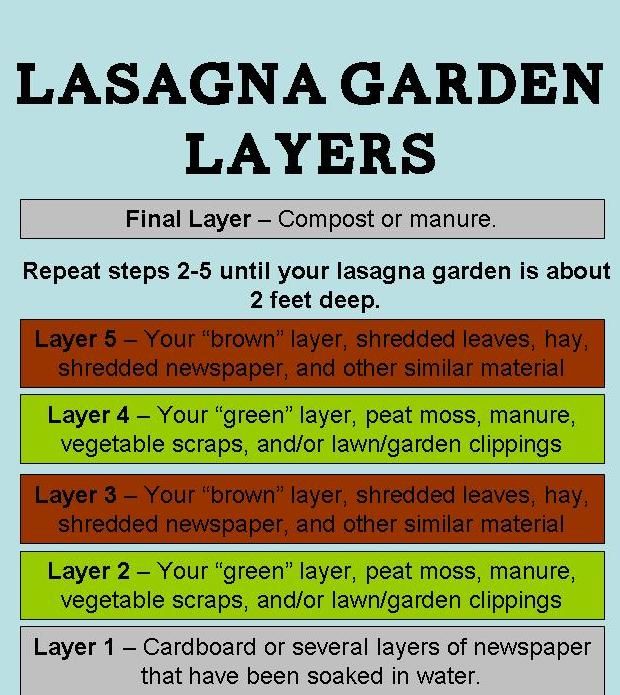
Starting a lasagna garden is very easy. In fact, it doesn’t even require the use of a shovel or the removal of existing weeds. Start with some simple brown corrugated cardboard or some newspaper (use three layers if you decide to go with newspaper) and lay them down right on top of the area that you’ve selected for your garden – right over the top of grass and weeds!


Looking For Non-GMO Seeds? Get Them From A Company You Can Trust!


Keep this layer moist so that it provides a nice cover that earthworms will be attracted to; that will allow them shelter to loosen up the earth below.


Just like the kind of lasagna that you eat, a lasagna garden consists of multiple layers. In the case of a garden, the layers consist of alternating between brown and green compost. Brown compost can be made up of items such as cardboard, shredded newspaper and dead leaves. Green compost may be items such as fruit and vegetable scraps, trimmings from the garden, etc.


As a general rule, you should make your brown layers about double the thickness of your green layers. Doing this by sight is fine, though, – there is no need to break out the tape measure. Keep building your layers until they reach about two-feet tall. This may sound like a lot, but remember that this is going to shrink down considerably over the next few weeks.


When to Start


You can start the process of building your lasagna garden any time of year, but fall is the most ideal time. This is for a number of reasons:


  • There is an abundance of dead leaves and other “brown” compost material available during the fall.

  • Autumn rain and winter snow will help to keep your garden materials moist, allowing rich workable soil to develop.

  • Your garden will be ready for planting by spring.
Lasagna Gardening: The Clever, Lazy ‘Fall Trick’ That Will Eliminate Spring WeedsPlanting in your lasagna garden is easy and quite similar to planting in a traditional garden. Just dig down with your spade or shovel as you normally would. If you used cardboard for your first layer, you may have to cut through it, but you should find nice workable soil underneath. If you used newspaper as your first layers, you’ll likely dig right through it without even noticing.


This New All-Natural Fertilizer Doubles Garden Production!


Plant whatever you like. Just be sure to follow the normal guidelines for each fruit and vegetable that you introduce to your garden.


It is also a good idea to add mulch to this garden once it is complete. This may be in the form of chopped leaves, straw, bark mulch, etc.


From that point on, you’ll care for your lasagna garden much like you would any other garden by watering, weeding, rotating crops and finally enjoying bountiful harvests at the end of the season.


Lasagna gardening has many advantages over traditional gardening, including:


  • Less weeds. Because of the newspaper or cardboard layer at the bottom, fewer weeds will be able to make their way to the surface.

  • Improved water retention. The layers of compost will be better at retaining water than plain garden soil. This is a great way to give new plants a strong and healthy start in your garden.

  • Nutrient-rich soil. Again, because of the layers of compost, your garden’s soil will be rich in nutrients. This means that there will be less need for fertilization.

  • Easy-to-work soil. Lasagna gardening results in soil that is soft and workable. This eliminates the need for tilling.

If you love gardening but are looking for a way to reduce your workload next season, then lasagna gardening may be just the answer you’ve been looking for. Why not give it a try this fall and see how much less work your garden can be next year?


What advice would you add for lasagna gardening? Share your tips in the section below:


Bust Inflation With A Low-Cost, High-Production Garden. Read More Here.

Monday, August 14, 2017

5 Simple No-Till Methods That Will Change How You Garden

5 Simple No-Till Methods That Will Change How You View Gardening


Planets partner with soil ecosystems to create conditions favorable to their growth. This includes everything from increasing organic matter in the soil, to creating soil structures ideal for holding water and exchanging nutrients, and making nutrients more bioavailable/useable to plants and animals.


Unfortunately, the common practice of tilling destroys that delicate balance of the soil ecosystem, and though it may provide a temporary boost in nutrients, what’s really happening (partly) is that the organisms in the soil are dying, releasing the nutrients held in their bodies, much of which will then wash away in the following rains, all the while oxidizing and solarizing (solar cooking) the soil to death. Of course, some organisms will always survive, but the more this is done, year after year, the more the soil suffers, and the more outside inputs of time and energy must be put into the garden to keep fertility and water content up.


Tilling also destroys the soil’s structure, which is built by earthworms, microbes, and other unseen garden helpers in the most active soil layer (the topsoil). Besides the soil life itself, this structure is partly what gives a soil its ability to hold nutrients and water.


This New All-Natural Fertilizer Doubles Garden Production!


In short, tilling creates structural and ecological devastation, leading to compaction (more on this below), erosion, nutrient leaching, oxidization, solarization (death by sun), and decreased organic matter. Add to that the fact that it stirs up weed seeds and encourages their germination, and hopefully by this point, you’re wondering what the alternatives are, and if they work.


No-Till Methods


Besides avoiding the pitfalls of tilling listed above, the methods below will increase bioavailability of nutrients, fertilize the soil, and increase nutrient cycling (reducing leaching and erosion).


1. Mulch, mulch, mulch


Mulch protects the soil and the soil food web from the drying winds, erosive rain and beating sun, among other things. It’s also a slow release fertilizer that breaks down into all important organic matter while providing food and habitat for your decomposer, predator (of pests), and microbe friends (especially fungi, which will greatly appreciate wood chips, leaves, and other mulch materials). Last but not least, mulch dramatically reduces water evaporation from the soil.


2. Diversify plants


Create more efficient nutrient cycling (with roots in all levels of the soil), while taking up all of the soil ecosystem niches that “weeds” would otherwise fill by simply adding more types of plants to the garden. Perennials and annuals can live quite harmoniously together, particularly when you don’t have to destroy the entire ecosystem every year, forcing it to rebuild from scratch time and time again. Perennials, with their deeper roots, will pull nutrients from deeper down, and will help cover and protect the soil with their bodies and their debris for all or much of the year. Make sure to throw in some nitrogen-fixing plants, as well (which literally extract the important nutrient out of thin air), and lots of flowers to encourage pollinators.


3. Till to prepare for no-tilling


Although ongoing tilling is unnecessary and destructive, it can be useful as a one-time method of preparing no-till beds. One method is to till, wait until a large number of weed seeds germinate and begin to grow, and then till again before they go to seed or have significant time to establish tap roots. This will deplete the seed bank, and after one or two times, it will be easier to establish no-till beds, particularly with the help of mulches and other methods. Adding organic fertilizers to the soil prior to the first till may encourage even more seeds to germinate.


4. Cover crops/green manures, living mulches/ground covers


5 Simple No-Till Methods That Will Change How You Garden

Image source: Pixabay.com


“Living mulches” (ground cover plants) have the benefits of mulch, but in the case of perennials, they never have to be reapplied. Cover crops or green manures, meanwhile, are plants that can be seeded, and once grown for sometime can be tilled into the soil during the initial (hopefully) one-time soil prep (along with the germinating weed seeds). This will add nutrients and organic matter to the soil. Good options include buckwheat, rye and legumes. Cover crops should be planted in the fall so that they are winter killed before seeding, or alternatively, you can use non-self-seeding annual plants, or till them in before they go to seed.


5. Permanent beds and paths to avoid soil compaction


Finally, since you won’t be continually tilling to give the soil the loft and aeration it needs, you must rely on natural means of maintaining this ideal soil structure for plant roots to thrive, and for new seeds to germinate. This simply means keeping off garden beds to allow the soil food web to do its work to create a healthy soil structure, with maximum water and oxygen infiltration. Meanwhile, simply sift mulch aside to plant your new seeds. If weed seed germination within your seed beds is an ongoing issue, you might try adding a layer of seed starting compost on top of the mulch (making sure it is well cooked seedless compost), along with some more mulch sprinkled lightly over the seeds, and more generously around the compost to contain it.


This is but a brief overview of some of the methods for no till gardening that in mine and many other peoples’ experience, can not only save you a significant amount of time in the garden, but will also create a more balanced and healthy soil ecosystem for your plants. If you liked this article, or have any other no till methods to share, please feel free to comment below!


What is your favorite no-till method? Share your advice in the section below: