Most of the meat, dairy and egg production in this country comes from monocultures — confinement operations raising only one type of animal. This is said to be “efficient,” and maybe it does make it easier to maximize short-term profits. But polycultures — farms that raise many types of animals and plants — are more resource-efficient and more practical for homesteaders looking to raise healthy food in healthy soil.
Often, waste products from the garden or the animals can supply the needs of other parts of the farm system. Called “farm symbiosis,” this can save lots of money on the homestead – and reduce our waste, too.
I’ll start with the model I know best, the farm I’ve worked for the last 16 years. We grow a big garden and a small orchard as well as goats, chickens, rabbits and pigs. These are all raised in separate spaces, but they use each other’s waste products.
Diatomaceous Earth: The All-Natural Livestock De-Wormer!
The garden is mostly fertilized with compost, which is rich and quick to break down because it contains plenty of animal manure. Our other main fertilizer is rabbit manure, which we apply directly to the garden beds. Rabbit droppings provide a rich slow-release source of nitrogen and phosphorus, and they don’t burn plants the way other uncomposted manures might. The garden also helps to feed the animals who feed it.
 When we have to pick bugs off the garden plants we collect them in a jar and feed them to our hens, who benefit from the protein boost. A substantial part of our rabbits’ diet comes from the garden. We grow carrots, radishes, turnips and kale for them. They also eat cover crops like clover, buckwheat and oats that we plant to keep the soil sheltered and active between crops, as well as nutritious weeds like dandelions, comfrey, purslane, pigweed, chicory, chickweed and prickly lettuce, which we have to clear out of the garden beds anyway.
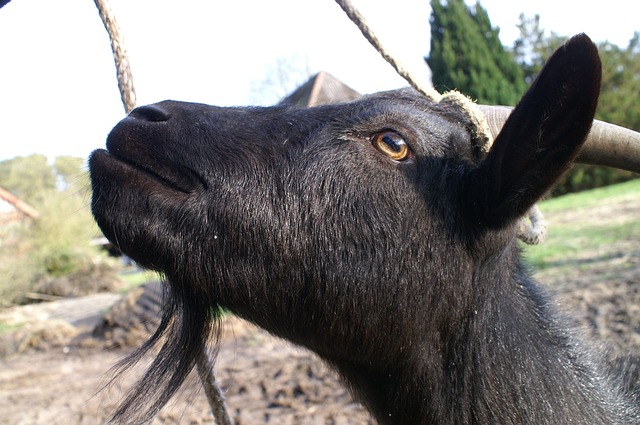
We keep two goats for milk. During the winter we get just enough milk for our daily use. During the growing season we have a lot more than we need, and sometimes more than we can give away to neighbors. Excess milk goes to the pig. So does some of the vitamin- and protein-rich whey from our cheesemaking. The chickens drink the rest of the whey.
We raise rabbits for meat (and manure, of course). They eat small amounts of store-bought whole grains and large amounts of roots and greens from our garden and pastures. When we butcher rabbits, the offal goes to feed our chickens.
We raise one pig each year as our other meat source. The pig eats milk and whey, spoiled apples from the orchard, and cracked eggs from the chickens as well as store-bought grain. We don’t butcher our own pig, but we ask to have jowls and all organs sent to us; we don’t eat these ourselves but we cook them up and feed them to the chickens.
Be Prepared! Store An ‘Emergency Seed Bank’ For A Crisis Garden
 The chickens get extra protein from all the other animals, as described. They also have constant access to a pile which we start with half-finished compost and weeds from the garden. They tear these up, add nitrogen-rich manure, scratch it in, and produce very rich compost.
Other farmers combine several types of livestock in the same space, although not necessarily at the same time. Joel Salatin has popularized a rotational pasturing system. First, cows are rotated intensively through small segments of the pasture using portable fencing. Then, chickens or turkeys are moved across the same pasture in tractors. The birds break up the cowpats so they’re more of an effective fertilizer. They also eat parasites and eggs which might otherwise re-infest the cattle on their next visit; this provides protein for the chickens as well as protection for the cows.
Grazing multiple species in the same space at the same time also can improve land and animal health. Cows tend to prefer grasses and clover, sheep forbs and weeds, and goats brush and browse. Grazing all three animals on mixed pasture ensures that the different types of plants are eaten back at roughly the same rate so that nothing gets crowded out. (You may sill have to manually remove those plants that nobody wants to eat, like thistle and horse-nettle.)
By raising several different kinds of livestock as well as gardening, homesteaders can greatly reduce the waste we produce and the purchased inputs we need.
What do you raise? How have you learned to generate resources and reuse waste? Write your tips in the section below: