Showing posts with label Remington. Show all posts

Friday, November 24, 2017

2nd Largest Gunmaker Nears Default As Americans Buy Fewer Firearms Post-Obama

2017 has seen the biggest drop in American firearms sales in history.


After 8 years of almost incessant rises in NICS Firearms Checks (a proxy for "legal" arms sales) under President Obama...


source: NICS


2017 has seen a considerable drop (year-to-date) - the biggest on NICS records...


source: NICS


This sudden drop in demand after President Trump"s election has meant Remington Outdoor, the second-largest U.S. gunmaker, has suffered a “rapid” and “sharp” deterioration in sales and a similar drop in profits since January, and faces “continued softness in consumer demand for firearms,” according to credit analysts at Standard & Poor’s Global Ratings.


As Philly.com"s Joseph DiStefano reports, S&P cut the company’s corporate credit rating - already at a junk-bond-level CCC+ - two full notches, to CCC- as:


...a backlog of unsold, unwanted firearms will force Remington to operate at a loss and “pressure the company’s sales and profitability at least through early 2018, resulting in insufficient cash flow for debt service and fixed charges,” unless Remington gives up cash to pay for ongoing operations.


S&P expects “a heightened risk of a restructuring” of Remington’s $575 million senior secured loan and asset-based lending facility, which it is supposed to pay back in 2019.


If Remington defaults on its payments, based on the company’s current value, S&P expects first-lien creditors may receive around 35 cents back from every dollar they have lent or invested. Lower-rated creditors would get back less, or nothing.


While the report said that default is not yet "a virtual certainty," judging by the collapse in Remington"s bond prices this week... the market is pretty sure.


And while Remington is not public, it is not alone in pain as shown below...


Thursday, October 12, 2017

Remington 870 Vs. Mossberg 590: Which Pump Shotgun Is Truly Better?

Remington 870 Vs. Mossberg 590: Which Pump Shotgun Is Truly Better?

Image source: YouTube screen capture


There are two flavors of pump shotgun that seem to dominate the market: the Remington 870 and the Mossberg 590. Each gun has its associated advantages and disadvantages when compared to the other, and fans and detractors seem almost evenly split into two camps, with a lot of us in the middle who shoot and own both types.


Let’s take a look at each design.


Remington 870


In 1951, Remington unveiled the Model 870 as the ultimate modern pump shotgun. Some 65 years and more than 10 million models delivered, it has proven itself to be the best-selling shotgun in history.


Remington 870 Vs. Mossberg 590: Which Pump Shotgun Is Truly Better?

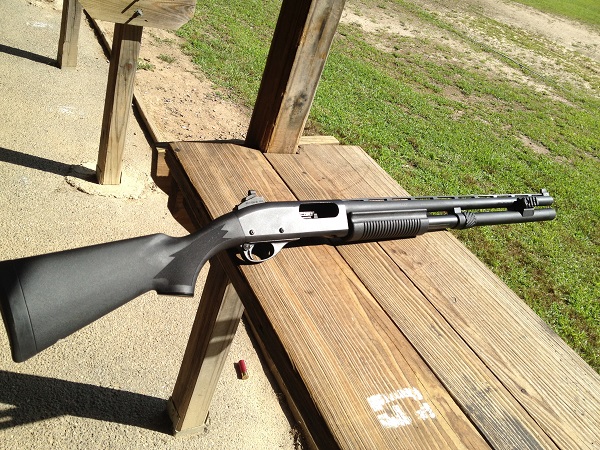
Remington 870. Image source: RifleShooter.com


Available in a variety of barrel lengths, finishes and furniture options, the Model 870 has a vigorous aftermarket dedicated to improving its performance.


One of our gripes about the 870 pertains to Remington going with a dimpled magazine tube that inhibits the installation of a magazine extension.


Be Prepared. Learn The Best Ways To Hide Your Guns.


Probably not a major concern to the millions of duck and deer hunters who cannot legally use them on their 870, it has plagued those of us in the competitive shooting and self-defense realms. There are a number of ways to circumvent this issue, but it is our only real gripe with the 870.


You can either pound the dimples out by inserting a socket head into the magazine tube, or simply drill them out.


I was first issued a 5-shot 18-inch barreled Remington 870 Wingmaster while serving guard duty at the armory during a stint in infantry training school at Camp Pendleton. I did not feel under gunned with it then, and still keep one in a safe with a magazine extension, Remington factory top-folding stock, Rem choke system and Magpul forend with a surefire light.


Mossberg 590


In 1961, Mossberg rolled out their Model 500. The 590 was an improvement upon this design that came about a few years later. The most significant change was the magazine tube that was closer in design to the Remington 870 by using a similar magazine cap that made maintenance easier.


Remington 870 Vs. Mossberg 590: Which Pump Shotgun Is Truly Better?

Mossberg 590. Image source: MossbergOwners.com


The design was further improved in the 590A1 by upgrading the plastic safety and trigger guard to metal versions and using a heavier barrel at the request of the US Navy and US Marine Corps.


Perhaps the most significant difference between the two is the placement of the safety. Remington uses a cross bolt type at the base of the trigger guard, whereas Mossberg places theirs at the rear of the receiver in line with the shooter’s sight.


Our gripe with Mossberg is that they offer very little in the way of a choke system on most factory models. A choke system gives the shotgun more versatility as a system. While it may be mostly negligible on shorter barrel home-defense guns, it is still the only way to attach a shotgun silencer like Silencerco’s Salvo.


In spite of my experience with the Remington, my first shotgun was a stainless Mossberg Marinecote 590. I chose this one because I felt its construction would inhibit rust while deploying for six-month Western Pacific tours with the Marines. That and despite being a Marine Infantryman for two years, I was still too young to legally purchase a handgun. I currently have two Mossbergs in my safe. One is a short-barreled 20 gauge that holds two rounds. The other a 9-shot 590A1 with a Speed Feed stock holding four extra rounds, a sidesaddle shell carrier holding six, a forend light and of course the ubiquitous bayonet lug that mounts either an M7 or M9 bayonet.


The Verdict


If World War III were to break out tomorrow and for some reason I needed a fighting shotgun, I might be more inclined to grab the 590A1 with its ghost ring sights, dedicated weapon light and advantages with capacity and on-board ammo storage.


My 870 is lighter and a bit nicer to shoot due to a better trigger and tends to be what I grab in the house most often when I hear a suspicious noise. It is simply easier to maneuver indoors than the bigger Mossberg. Fit and finish is slightly better than the Mossberg, but this is a shotgun that is over 30 years old and not representative of Remington’s current offerings.


As a gun writer, I have the luxury of shooting a variety of firearms, and placement of the safety is not a huge concern. I do urge new shooters or those who shoot less frequently to select a version where the placement of the safety is more comfortable for them, as that seems to be the only difference.


Both shotguns will serve you well as a self-defense weapon. In the end, it all comes down to personal preference.


Which shotgun do you prefer – the Remington 870 or Mossberg 590? Why? Share your thoughts on the weapons in the section below:


Pump Shotguns Have One BIG Advantage Over Other Shotguns. Read More Here.

Thursday, February 16, 2017

The Forgotten Handloading Cartridge You’ll Want When Society Collapses

The Forgotten Handloading Cartridge You’ll Want When Society Collapses

Image source: Wikimedia


Born in the early 1960s as the brainchild of Bill Jordan, Elmer Keith and Skeeter Skelton, there is a uniquely viable magnum cartridge that has stayed under the radar.


I’m talking about the venerable .41 Remington Magnum, which was designed with the idea of making a police service cartridge that was neatly balanced between .357 and .44 magnum, and also could be loaded hotter for hunting use.


What should have been the ultimate police revolver soon became a somewhat obscure hunting revolver, though, due to a poorly chosen introduction of heavy hunting guns paired with hot hunting ammo, while mostly ignoring the police and armed private citizen market. The end-result has been a cartridge that over the last 50 some-odd years has developed a cult-like following of skilled handgunners and knowledgeable handloaders.


While lacking the extreme high end of heavy bullets that the .44 magnum has, the .41 can be loaded anywhere from mild to wild, with heavy loads equal to most upper-end .44 magnum loads. But why should you want an obscure cartridge like the .41? The simple answer is ballistics and ease of shooting. The flat-shooting characteristics of the .41 make it a joy to shoot, and many gun owners find comparable .41 loads to be more pleasant to shoot than .44 loads.


The market has recognized this ongoing fascination with the .41 and, as of this writing, there are several single- and double-action revolvers from Ruger and Smith and Wesson being built, along with a lever-action rifle by Henry.  There certainly is no shortage of guns in which to shoot this round!


Learn How To Make Your Own Ammo! Read More Here.


If you are living off-grid or preparing for an uncertain future, you’ve probably got or are considering at least one big bore revolver. You also are hopefully wise enough to secure your ammo supply with sufficient supplies to load your own ammo for a long period of time. Much can be said for choosing a very common cartridge like the .44 magnum, but unless you are expecting a world where you are reduced to scrounging for production ammo (and at that point I’d say you’ve got greater problems than what revolver cartridge you chose), the prudent survivalist is not limited by common market demands, but rather his or her own personal stockpile of bullets, powder and primer.


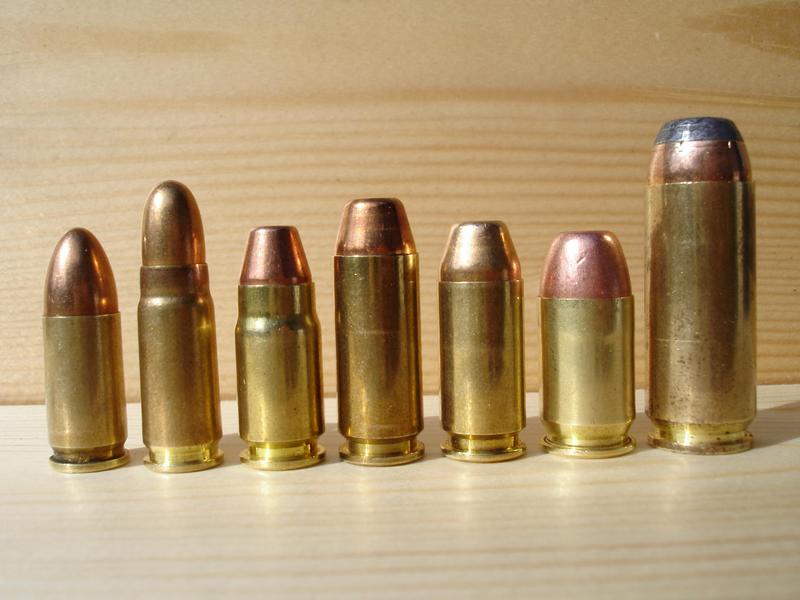
The Forgotten Handloading Cartridge You’ll Want When Society Collapses

Image source: Wikimedia


Revolver brass has a long lifespan if you don’t abuse it, and a few hundred pieces of brass and a couple thousand primers and bullets (and the powder to load with) should keep your revolver shooting for a lifetime during social collapse.


But that doesn’t really tell you why you should consider the .41. Remember: This is a round designed by three of the greatest combat handgunners of the 20th century, and certainly three of the last who understood in great detail the revolver as a hunting and fighting tool. The .41 isn’t just some sort of compromise cartridge; it is built from the ground up to provide exceptional performance. It shoots flatter and straighter than a similar .44, and a comparison of ballistic tables shows an uneasy superiority over the .44 in many similar loadings. Having been used to take everything from elephants and polar bears to deer-sized game, the .41 has proven its worth time and time again.


Be Prepared. Learn The Best Ways To Hide Your Guns.


Because it does not have the market penetration of the .44, the .41 has become something of a handloader’s cartridge, and also the mark of a sophisticated, or at least well-informed, shooter. As with any cartridge, handloading lets you develop highly effective cartridges for your own personal use, and the .41 is no exception. Revolvers such as those sold by Ruger with their long cylinders all but beg for heavier-than-factory bullets, and if you are handloading, you gain far more authority over the whims of markets and law than if you rely strictly on factory ammo.


In short, the .41 magnum is a hard-hitting, straight-shooting magnum that can kill almost anything walking on the face of the earth, and certainly in North America if you do your part. It is a pleasant-shooting round, a fantastic companion in the forest, and if you are concerned about a really grim future, it is possible obscure ammo stocks will be less of a target for theft than more popular rounds. However, no matter how you cut it, the .41 magnum does everything the .44 does, but with greater accuracy and without the irritating cultural connotations of a “Dirty Harry gun.” Check one out, and you might be hooked, too.


Have you ever shot or owned a .41 magnum? What did you think? Share your thoughts in the section below:


Learn How To Make Your Own Ammo! Read More Here.