Showing posts with label Rachel Blevins. Show all posts

Monday, April 30, 2018

Military Industrial Complex Stocks Sent Crashing as North and South Korea Achieve Peace

By Rachel Blevins


North and South Korea reached a historic peace deal this week, and as the leaders from the two nations met in person for the first time and agreed to pursue an end to the Korean War, it signaled an incredible breakthrough in diplomacy and sent the stocks of defense contractors in the United States crashing.


When North Korea’s Kim Jong-un shook hands with South Korea’s Moon Jae-in for the first time on Friday, they put thousands of people both at home and around the world at ease, as they agreed to a peace deal that has the power to break the tension that has been between the two countries for decades.


However, while peace may seem like the best possible outcome to the average person who is aware of how the ongoing war has hurt both North and South Korea over the years, it is a resolution that hurts the United States military-industrial complex, as can be seen by the results from stocks following the meeting.


On Friday alone, the five largest defense contractors in the U.S. lost more than $10 billion in value.


Lockheed Martin (LMT) started the week at $352.79 per share and ended it at $321.95 per share, falling 2.5 percent to a valuation of about $92 billion.


Northrop Grumman (NOC) started the week at $356.67 per share and ended it at $321.86 per share, falling 3.4 percent to a valuation of $56 billion.


General Dynamics (GD) started the week at $222.92 per share and ended it at $203.70 per share, falling 3.8 percent to a valuation of $60 billion.


Raytheon (RTN) started the week at $227.67 per share and ended it at $204.09 per share, falling $3.6 percent to a valuation of $50 billion.


Boeing (BA) lost less than 1 percent of its stock, ending the week with an evaluation of $200 billion.


When the United States invades sovereign nations, overthrows foreign governments and launches countless drone strikes that kill innocent civilians, the military-industrial complex profits by the billions. But the industry is so volatile that while a peaceful meeting between two leaders can send its stocks crashing, threats and angry Tweets from another leader can cause its stocks to soar.


President Trump vowed to meet North Korea with “fire and fury like the world has never seen” in August 2017, and as The Free Thought Project reported, the stocks of weapons manufacturers and defense contractors increased significantly in response:


Fear has infected the planet—so the fraught business of national defense is booming.‘


The level of dialogue around missile defense is now at the prime minister and minister of defense level,’ vice president of Lockheed’s Air and Missile Defense business, Tom Cahill, noted in an interview with Reuters, which added, ‘Some countries are putting missile defense at the top of their list of desired capabilities, Cahill said. Interest has increased over the last 12 to 18 months, as have threats, he said. Shares of Lockheed are up nearly 8 percent, to $300.10, since North Korea’s first long-range missile test on July 4. The stock is up 20 percent year-to-date.’


Of course, that was yesterday. Today, Lockheed Martin stocks continue to rise—just prior to publication, stocks hovered around $305 per share—and show no indications of falling to levels typical of a less charged global atmosphere.


The United State government accounted for around 70 percent of Lockheed Martin’s revenue in 2016, and when the Trump Administration began threatening to launch a full-scale war against North Korea, the company’s shares skyrocketed by 8 percent, marking a 20 percent increase in Lockheed Martin’s stock in the first 8 months of the year.


Now that lasting peace could be on the horizon between North and Korea and stocks are dropping, it raises questions about how defense contractors in the U.S. will recover. If there is no bear to poke and no war to threaten in North Korea, will the U.S. increase tensions in Syria, at the risk of provoking Russia? Or will it resume its propaganda campaign against Iran in an attempt to convince Americans that the country is in desperate need of “freedom and democracy,” when in reality the military-industrial complex is in dire need of high stocks and successful profits?


Rachel Blevins is an independent journalist from Texas, who aspires to break the false left/right paradigm in media and politics by pursuing truth and questioning existing narratives. Follow Rachel on Facebook, TwitterYouTube, Steemit and Patreon. This article first appeared at The Free Thought Project.

Sunday, April 29, 2018

Good Drivers are Creating a Budget Shortfall, Proving Gov’t Needs You to Break the Law to Fund Itself

By Rachel Blevins


The state of California is finding that the business model of relying on drivers to break the law in order to fund the state budget, fails miserably when drivers fail to break the law and cannot be slapped with exorbitant fees and fines.


California’s state budget currently relies on more than $450 million from penalties and fees collected from drivers who have been charged with both criminal and traffic violations. However, while trusting drivers to break the law at a rate that would sustain the state’s massive budget worked for a while, the strategy is now causing the state to go bankrupt.


A summary from the California State Auditor, as reported by Courthouse News, revealed that the revenue collected from citations “has decreased from 39 percent to 25 percent over the last three years as the number of criminal citations filed has decreased.”


The audit claimed that California is now facing a “significant financial burden,” which stems from a disconnected system that “lacks a systematic strategy.” In addition to drivers receiving fewer citations from police officers, the report found that a number of drivers who are cited never pay their fines, even when they accumulate substantial late fees.


As an Op-Ed from The Sacramento Bee noted in January, California is known to have some of the highest traffic fines and fees in the United States, and the drivers who are given citations often face a financial burden that can send them spiraling into debt:


California has among the highest traffic fines and fees in the country—and the steepest consequences for traffic violations are reserved for those who can’t afford the fines and fees. This results in crippling debt for the least fortunate Californians, from whom traffic courts have difficulty collecting any fees at all.


According to the Federal Reserve, nearly half of American households cannot afford $400 in unexpected costs. Yet in California, if a family misses a payment on a traffic fine, they can be slapped with a $300 late fee, raising the cost to as much as $500 for a ticket. That can be followed by a suspended driver’s license or jail time, even for non-safety related violations, such as late registration. Of course, this makes it less likely they can pay the fines.


Courthouse News reported that traffic cases represented the overwhelming majority, “approximately 82 percent on average, of all criminal case filings in the state from 2014 to 2016,” and that the audit report recommends “eliminating the use of penalty and fee revenue as funding sources for state and county programs,” based on the fact that the revenue collected through citations is often “unrelated to the needs of the state and county services.”


“The Legislature should reconsider the entire penalty and fee structure (criminal and traffic), decide whether to adjust or eliminate penalty and fee amounts, and whether to distribute the resulting revenue differently,” the report concluded.


If a business was facing the same problems the state government in California is facing right now, it would likely look for ways to cut its budget, in order to reduce the deficit from the decrease in revenue. However, because this is a state government—and a large, liberal state government, at that—California will likely look to increase the revenue it receives through taxes, in order to keep the same budget.


As a result, the residents of California who have followed the law and have not received any traffic citations will find themselves funding the state’s massive budget anyway, through increased taxes that are imposed upon them against their will.


The high taxes from the states, combined with recent changes to the federal tax law—such as putting a $10,000 cap on the deduction for state and local taxes—are likely to force some high-income residents in California and New York to seek refuge in states like Texas, Arizona, and Nevada.


An Op-Ed from The Wall Street Journal noted that California and New York have lost a total of 2.2 million residents since 2007, and that number is expected to grow by as many as 800,000 people within the next three years:


In places like California, where the top income-tax rate exceeds 13 percent, that tax could be deducted on a federal return. Now that deduction for state and local taxes will be capped at $10,000 per family. Consider what this means if you’re a high-income earner in Silicon Valley or Hollywood. The top tax rate that you actually pay just jumped from about 8.5 percent to 13 percent. Similar figures hold if you live in Manhattan, once New York City’s income tax is factored in. If you earn $10 million or more, your taxes might increase a whopping 50 percent.


While many Republicans celebrated the new tax bill and the mainstream media referred to it as “the most extensive rewrite of the tax code in a generation” when it was signed into law in December 2017, former Texas Congressman Ron Paul called out the government for celebrating tax cuts, without actually cutting taxes.


“Once again, under the guise of ‘tax cuts,’ everyday Americans will be hammered with even HIGHER taxes. Sleight-of-hand and slick marketing are about the only things that governments do very well,” Paul wrote on Facebook.


The current status of the state government in California serves as a reminder that the government’s ultimate goal is to extract revenue from you in order to fund its interests. When that cannot be accomplished by making you pay a large fine for running a red light, exceeding the speed limit, or possessing an “illegal” plant, the government will then turn to raising the taxes you are forced to pay on the goods, services, and housing that are necessities in your life, in order to achieve its original goal.


Rachel Blevins is an independent journalist from Texas, who aspires to break the false left/right paradigm in media and politics by pursuing truth and questioning existing narratives. Follow Rachel on Facebook, TwitterYouTube, Steemit and Patreon. This article first appeared at The Free Thought Project.
Saturday, March 3, 2018

Rothschild Passing Dynasty on to 7th Generation, Marking 200 Years of Banker Family Rule

By Rachel Blevins


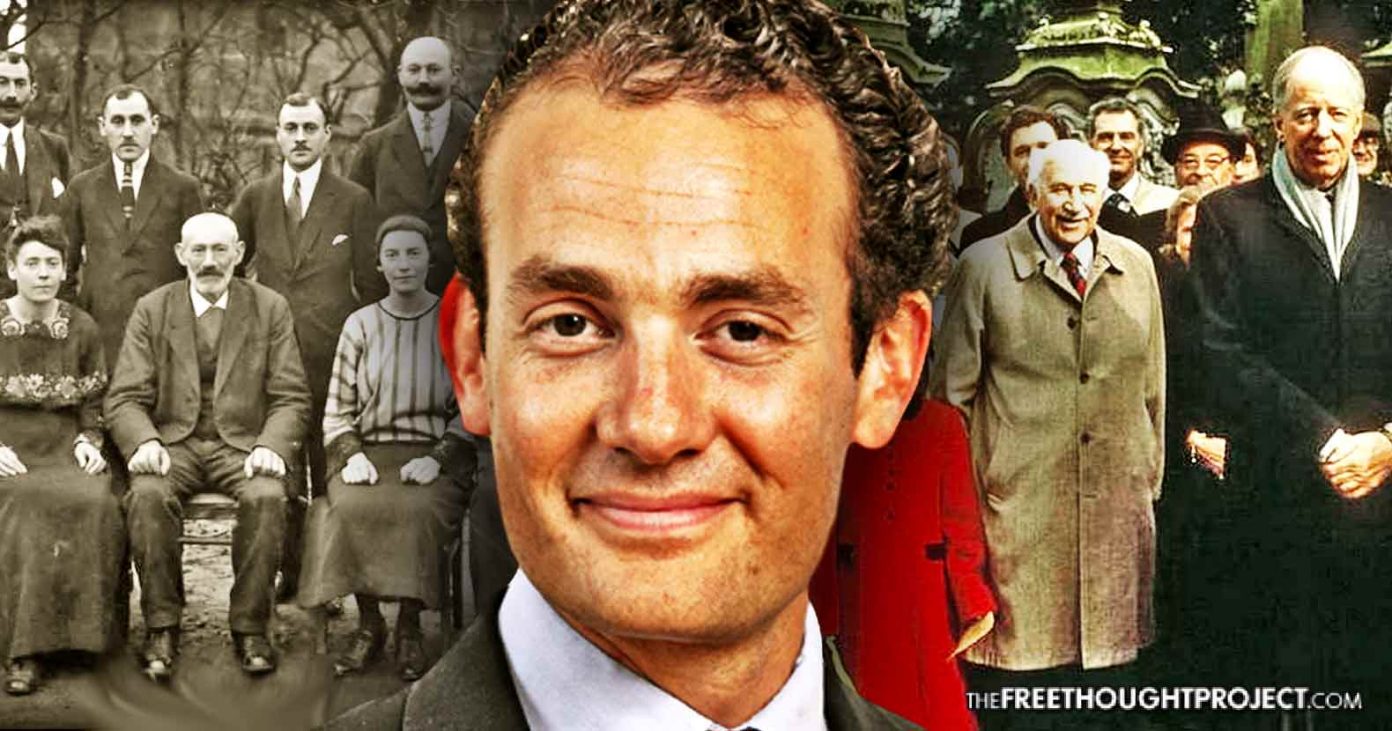
The Rothschild banking empire will ensure that its control continues to stay within the family for a seventh generation as David de Rothschild, 75, is set to hand the role of chairman over to his son, Alexandre de Rothschild, 37, in June.


The banking dynasty has been passed between generations for the last 200 years. It was started by Mayer Amschel Rothschild as a French railway company, and five of his sons went on to establish banking businesses across Europe. Financial Times reported that the investment bank is currently pushing to “diversify from its core French and British advisory business to help it ride out less buoyant periods in Europe’s mergers and acquisitions market.”


The new chairman joined the bank in 2008, and he has helped to set up and oversee the private equity business. As the group increases its investments in small U.S. operations, the Times noted that the overhaul of the corporate structure that occurred during the elder de Rothschild’s term allowed the family to “tighten control over the group by buying out minority shareholders.”


The Rothschild family has also shown its influence in “U.S. operations” by working closely with political figures such as failed presidential candidate, Hillary Clinton. WikiLeaks revealed that Lynn Forester de Rothschild was working with the Clinton campaign to formulate economic policy as early as January 2015.


“I think this blog overstates what Warren was doing, but we need to craft the economic message for Hillary so that Warren’s common inaccurate conclusions are addressed. Xoxo Lynn,” Lady Rothschild wrote in an email to top Clinton aide, Cheryl Mills.


Emmanuel Macron, the current French president, is also a former employee of Rothschild. He earned the nickname of “Mozart of Finance” at the company after he played a crucial role in advising Nestlé to invest $12 billion in the acquisition of a Pfizer unit in 2012.


The Rothschild family currently has 58 percent of voting rights and owns 49 percent of the company, and the Times noted that while revenue from its global advisory business fell 8 percent, private wealth and asset management and merchant banking divisions grew by more than 30 percent each and overall revenue rose by 6 percent in 2017.


As The Free Thought Project reported in August 2017, Lord Jacob Rothschild, founder and chairman of RIT Capital Partners, sent ominous signals internationally when he began selling U.S. assets because he viewed them as risky and unstable.


“We do not believe this is an appropriate time to add to risk. Share prices have in many cases risen to unprecedented levels at a time when economic growth is by no means assured,” Rothschild wrote in his company’s semi-annual report.


Rothschild also said he believes “The period of monetary accommodation may well be coming to an end,” and that quantitative easing programs employed by central banks, such as the Federal Reserve Bank in the U.S. will eventually “come to an end.”


Sunday, January 28, 2018

Study Shows One State Has Robbed Its Citizens of $42 Million Just to Cover Up Police Crimes

By Rachel Blevins


The results have been released in a two-year investigation into police conduct in the state of New Jersey, and it has revealed a system of rampant corruption that has cost taxpayers more than $42 million to cover up the actions of killer cops in the last decade.


The money was used to settle lawsuits from more than 200 citizens over things such as wrongful deaths, physical abuses, sexual misconduct and harassment. According to the investigation, which was conducted by the Asbury Park Press, not only did the majority of the officers never face charges for their actions—they often kept their jobs and were later promoted.


Nearly 65,000 internal affairs complaints have been filed since 2011, and only 226—which is less than 1 percent—resulted in the officers being charged with a crime.


The officers who resigned often received compensation, even when it was their deadly or corrupt actions that led to their resignation in the first place. The report claimed that taxpayers shelled out more than $700,000 to 68 officers as compensation for their quiet resignations. Three of those officers went on to become “gypsy cops,” a phenomenon documented by The Free Thought Project that occurs when officers commit heinous offenses, and then simply transfer to a new department.


The investigation is notable because the majority of the corruption has gone on behind closed doors. As the Asbury Park Press reported, “the damage is concealed by government officials who use a veil of secret settlements and nondisclosure agreements to silence victims.”


Investigations of rogue cops are routinely hidden from the public by police, elected officials and even the courts. The secretive payouts that keep abuses quiet are a vital part of a system that enables bad cops to do their worst. The secrecy starts at the police department and rises through the highest levels of government. Some of the state’s largest cities and insurance carriers refused to release government documents that are at the core of the rogue cop problem. But the tens of millions of dollars paid to settle hundreds of legal claims are not the worst part. Many of the bad cops remain on the street.


One of the officers highlighted in the investigation was MD Kahn. He was involved in a police chase on June 4, 2017, when the car officers were pursuing crashed into another car, causing it to catch on fire. Miguel Feliz, an innocent father who was in the wrong place at the wrong time, caught on fire along with his car after he was the victim in the crash.


When a bystander, who was filming the scene, saw Feliz scrambling to take off his burning clothes, he called out to the officers to help him. As TFTP reported, they did the opposite, and “after police rapidly approached the man, with guns drawn, they began kicking him in the ribs and head, apparently mistaking him for Pinkston. It was only after kicking and beating him that they then decided to drag him away from the flames of the burning vehicle.”


The investigation noted that Khan’s actions on that day could have been avoided if he had actually faced consequences for the incident that landed him in jail in February 2016. Khan was arrested for threatening to shoot his brother-in-law and punching him in the face so hard that he caused “serious facial injuries and a possible fractured” eye socket and jaw.


Khan has now been charged with 13 counts, including attempted murder, aggravated assault, official misconduct and possession of a weapon for an unlawful purpose. Feliz has filed a lawsuit for $25 million for excessive force after the incident left his body permanently damaged.


New Jersey is one of six states that does not require a license for its police officers, and that also does not have an official method to ban officers for breaking the law. The Park Press noted that the state is made up of 466 municipal police departments and each one has “a unique political culture and an internal affairs system that is rarely overseen by outsiders.”


In 2014, a study found that police officers in New Jersey were more likely to file lawsuits against police departments than the average citizen, and the lawsuits filed by officers were noticeably more expensive for taxpayers.


Rachel Blevins is an independent journalist from Texas, who aspires to break the false left/right paradigm in media and politics by pursuing truth and questioning existing narratives. Follow Rachel on Facebook, TwitterYouTube, Steemit and Patreon. This article first appeared at The Free Thought Project.
Friday, January 12, 2018

As No One Watched, Trump Pardoned 5 Megabanks For Corruption Charges

By Rachel Blevins


While Americans celebrated the holidays, President Trump followed in the footsteps of his predecessors by acting in the interest of Wall Street and using the distraction to do something that was not in the best interest of the American people. He pardoned five megabanks for rampant fraud and corruption, which is especially notable because of the amount of money he owes them.


Trump has been using Deutsche Bank since the 1990s, and Financial Times has reported that he now owes the bank at least $130 million in outstanding loans secured in properties in Miami, Chicago, and Washington. However, the report claimed that the actual number is likely much larger at $300 million.


Reports claimed that Deutsche was the only bank willing to lend Trump money after his companies faced multiple bankruptcies. The relationship has continued over the years, and an analysis from the Wall Street Journal claimed that Trump has received at least $2.5 billion in loans from Deutsche Bank over the last 20 years.


There have been concerns about Trump’s ties to the bank becoming a conflict of interest, dating back to the 2016 election, and the evidence to support those concerns is now becoming clear.


During the week of Christmas, the Federal Register announced that the Trump Administration had issued waivers to Citigroup, JPMorgan, Barclays, UBS and Deutsche Bank—all megabanks facing charges of fraud and corruption.


The banks were involved in the LIBOR Scandal, in which they colluded to deliberately depress the rate at which they paid out on investments. By suppressing the London Interbank Offered Rate (LIBOR) at the beginning of an economic crisis in 2007, the megabanks were able to boost their earnings and to give their customers a false sense of security.


Deutsche Bank pled guilty to wire fraud in a U.S. court in 2015, and it went on to pay $3.5 billion for its role in the LIBOR scandal—more than any other bank involved—before it reached a $7.2 billion settlement with the Justice Department in early 2017.


Then in June 2017, Deutsche Bank trader David Liew, who is based in Singapore, pleaded guilty to conspiring to spoof gold, silver, platinum and palladium futures in federal court in Chicago, confirming that the biggest banks in the world have conspired to rig precious metals markets.


While Trump granted 5-year exemptions to Citigroup, JPMorgan, and Barclays, and 3-year exemptions to UBS and Deutsche Bank, it should be noted that his administration is not the only one to have done this. As International Business Times noted, “In late 2016, the Obama administration extended temporary one-year waivers to five banks,” which just happened to be the same ones Trump has now extended the exemptions on—revealing the real rulers in DC.


Not surprisingly, the latest decision to pardon the banks comes in stark contrast to one of Trump’s most applauded campaign promises—that he would finally stand up against Wall Street and demand that the most powerful banks be held accountable to the public.


“I’m not going to let Wall Street get away with murder. Wall Street has caused tremendous problems for us. We’re going to tax Wall Street,” Trump said during a campaign rally in January 2016.


Rachel Blevins is a Texas-based journalist who aspires to break the left/right paradigm in media and politics by pursuing truth and questioning existing narratives. Follow Rachel on FacebookTwitter and YouTube. This article first appeared at The Free Thought Project.
Saturday, December 30, 2017

War on the Poor: Jeff Sessions Rescinds Legal Doc That Ended Debtors’ Prisons

By Rachel Blevins


In addition to his “War on Cannabis,” Attorney General Jeff Sessions recently revealed that he is also in favor of a “War on Poverty,” when he rescinded a legal guidance document that was meant to end illegal debtors’ prisons.


While debtors’ prisons are labeled as institutions to keep people from failing to pay fines and debts, they have been used to take advantage of impoverished, low-income individuals. A simple traffic ticket can turn into months in prison, which results in even greater fines. As defined by the American Civil Liberties Union:


Nearly two centuries ago, the United States formally abolished the incarceration of people who failed to pay off debts. Yet, recent years have witnessed the rise of modern-day debtors’ prisons—the arrest and jailing of poor people for failure to pay legal debts they can never hope to afford, through criminal justice procedures that violate their most basic rights.


The legal guidance rescinded by Sessions was one that was implemented by the Department of Justice in 2016. It states that courts are required to follow constitutional principles and to prohibit the imprisonment of poor individuals because they cannot pay court fines and fees.


Sessions rescinded the March 2016 “Dear Colleague Letter on Enforcement of Fines and Fees” last week, along with 25 other legal documents dating back to 1975. In a statement, he claimed that he was “ending 25 examples of improper or unnecessary guidance documents” that had been identified by a DOJ task force:


Last month, I ended the longstanding abuse of issuing rules by simply publishing a letter or posting a web page. Congress has provided for a regulatory process in statute, and we are going to follow it. This is good government and prevents confusing the public with improper and wrong advice. Therefore, any guidance that is outdated, used to circumvent the regulatory process, or that improperly goes beyond what is provided for in statutes or regulation should not be given effect. That is why today, we are ending 25 examples of improper or unnecessary guidance documents identified by our Regulatory Reform Task Force led by our Associate Attorney General Rachel Brand.  We will continue to look for other examples to rescind, and we will uphold the rule of law.


The guidance was originally put in place after a series of reports and lawsuits from the ACLU revealed that state and local courts were increasingly offsetting budget deficits by charging additional fees for “public defenders, prosecutors, court administration, jail operation and probation supervision,” and that the courts were using “aggressive tactics to collect these unpaid fines and fees, including for traffic offenses and other low-level offenses.”


As a result, the courts were then jailing people who fell behind on their payments, without holding a hearing to determine if the individual was able to pay the fines, or offering alternatives such as community service.


The ACLU argued that because the courts were imprisoning an individual based on the fact that he or she could not pay court-imposed fines or fees, the court was in violation of the Fourteenth Amendment, which guarantees due process and equal protection under the law.


In one case, a man undergoing chemotherapy for pancreatic cancer in Sherwood, Arkansas, spent 90 days in jail and ended up owing a court more than $3,000 after he wrote a series of bad checks for small amounts ranging from $5 to $41, and his medical condition prevented him from earning money to pay for the fines associated with the checks.


Another case involved a veteran battling homelessness in Grand Rapids, Michigan, who spent 22 days in jail because he showed up to court with $25 out of the $50 the judge wanted him to pay as the first installment for the $2,600 he owed in restitution, fines and court fees after he was found intoxicated, on the roof of a building.


Ultimately, the only ones who benefit from debtors’ prisons are the prisons themselves, and the people who suffer are the ones who find themselves facing jail time on top of the inflated fees and fines they already cannot afford to pay.


Rachel Blevins is a Texas-based journalist who aspires to break the left/right paradigm in media and politics by pursuing truth and questioning existing narratives. Follow Rachel on FacebookTwitter and YouTube. This article first appeared at The Free Thought Project.
Sunday, December 24, 2017

Since 9/11, The US Govt Has “Lost” $58,000 —EVERY SINGLE SECOND

By Rachel Blevins


When U.S. Defense Secretary Donald Rumsfeld revealed that the Pentagon was missing $2.3 trillion on Sept. 10, 2001, it seemed like a massive amount—little did the American people know that the events that would occur the next day would wipe the missing money from the headlines, and over the next 16 years, the amount of money the government is missing would increase at a rate in excess of $58,000 per second.


While $2.3 trillion may seem like a lot, another government agency admitted to losing triple the amount in 2009, when former Inspector General Elizabeth Coleman admitted that the Federal Reserve could not account for $9 trillion.


“I have a copy of the Inspector General Act here in front of me. It says, among other things, that it’s your responsibility to conduct and supervise audits and investigations related to the programs and operations of your agency,” Former Rep. Alan Grayson said during a special hearing.


“That’s correct,” Coleman replied.


“So I’m asking you, if your agency has, in fact according to Bloomberg, extended 9 trillion dollars in credit—which, by the way, works out to $30,000 for every single man, woman and child in this country—I’d like to know, if you’re not responsible for investigating that, then who is?” Grayson inquired.


“We have responsibility for the Federal Reserve’s programs and operations—to conduct audits and investigations in that area,” Coleman replied. She went on to claim that she could not comment about specific details while the Federal Reserve was in the middle of a review.


Even when Rep. Grayson specifically asked, “Are you telling me that nobody at the Federal Reserve is keeping track on a regular basis of the losses that occur on what is now a 2-trillion-dollar portfolio?” IG Coleman refused to give him a straight answer.


The Pentagon has only continued to lose money by the trillions since 9/11, and a recent report analyzing the budgets of the Department of Defense (DoD) and the Department of Housing and Urban Development (HUD) shows that the total is now more than $21 trillion.


The report attributes the missing funds to a series of “unsupported journal voucher adjustments” made to the departments’ budgets. These adjustments are not tied to specific accounting transactions, but they are often included in account summaries to cover for balances between systems that cannot be reconciled.


As The Free Thought Project has reported, not only is it likely that the actual amount of money the DoD and HUD cannot account for is much higher than $21 trillion, due to the fact that researchers did not have access to complete data, but the practice of creating counterfeit adjustments appears to be standard procedure.


Perhaps even more troubling than the total amount lost is the fact that fraudulent behavior from HUD and DOD seem to be the standard operating procedure. In fact, the accounting for these funds is so poor, that as Reuters notes, the Defense Finance and Accounting Services (DFAS) refers to the preparation of the Army’s year-end statements as ‘the grand plug’ — ‘plug’ is accounting jargon for the insertion of made-up numbers.


For every transaction, a so-called ‘journal voucher’ that provides serial numbers, transaction dates and the amount of the expenditure is supposed to be produced. The report specifies that the agency has done such a poor job in providing documentation of their transactions, that there is no way to actually know how $21 trillion has been spent.


When combining the $21 trillion lost by the DoD and HUD with the $9 trillion lost by the Federal Reserve, the grand total stands at more than $30,000,000,000,000 lost by the U.S. government since 9/11. 


When multiplying 60 seconds per minute, by 60 minutes per hour, by 24 hours per day, by the 5,947 days that have elapsed since Sept. 11, 2001, the result is approximately 513,820,800 seconds.


If the U.S. government has lost $30,000,000,000,000 in the 513,820,800 seconds since 9/11, then it has lost a total of $58,386 per second.


For the first time in its history, the Pentagon has announced that the Department of Defense is set to undergo a financial audit. However, as Audit the Pentagon Director Rafael DeGennaro noted earlier this year, the Pentagon has been promising to complete an audit for several years.


“Over the last 20 years, the Pentagon has broken every promise to Congress about when an audit would be completed,” DeGennaro told the Guardian. “Meanwhile, Congress has more than doubled the Pentagon’s budget.”


Rachel Blevins is a Texas-based journalist who aspires to break the left/right paradigm in media and politics by pursuing truth and questioning existing narratives. Follow Rachel on FacebookTwitter and YouTube. This article first appeared at The Free Thought Project.

Friday, June 30, 2017

Conspiracy Theory Confirmed: Federal Reserve Exposed Working as Arm of US Intelligence

By Rachel Blevins


While some may have called it a conspiracy theory at one point, a new report is shedding light on the United States Intelligence services’ cozy relationship with the nation’s central banking structure, and how they collaborate to spy on foreign banks.


Confidential accounts within the Federal Reserve have been used by the U.S. Treasury and other departments “several times a year to analyze the asset holdings of the central banks of Russia, China, Iraq, Turkey, Yemen, Libya and others,” according to a report from Reuters that cites more than a dozen current and former senior U.S. officials.


The U.S. central bank keeps a tight lid on information contained in these accounts. But according to the officials interviewed by Reuters, U.S. authorities regularly use a ‘need to know’ confidentiality exception in the Fed’s service contracts with foreign central banks.


The report claimed that the exception was used by U.S. federal officials “to glean information about the movement of funds in and out of the accounts.” That information was then used to help the U.S. “monitor economic sanctions, fight terror financing and money laundering, or get a fuller picture of market hot spots around the world.”


The Federal Reserve was established in 1913, and the current headquarters in New York houses around $3.3 trillion in assets from around 250 foreign central banks—which adds up to about half of the world’s dollar reserves.


In all, the people interviewed by Reuters identified seven instances in the last 15 years in which the accounts gave U.S. authorities insights into the actions of foreign counterparts or market movements, at times leading to a specific U.S. response.


Thursday, June 8, 2017

Questioning Government Is What Makes You an American

(RB) — Questioning your government does not make you Un-American. It shouldn’t be a hard concept to understand, but based on a lot of the messages and the comments I have received this week, it sounds like some of y’all need a little help…


The United States was founded on the principle that citizens should have free speech, and they should be able to question their government. Yet today, we live in a country where if you use your First Amendment rights in a way that people don’t like, they tell you that if you don’t like what is going on, you should leave the country.


Seriously? This is what it has come to? You just have to take everything you’re fed, and then thank your masters, because at least you’re a slave in the best country in the world?


It amazes me that even at a time when our shiny new Republican president is doing exactly what his Democratic opponent would have done, we still have a public that is brainwashed into believing there is actually a difference between the two parties.


I have been accused of being both a leftist liberal snowflake, and a right-wing conspiracy theorist, and I am often asked where I stand politically, and what party I align with. The answer is always, none of the above.


I believe that the government should be as small as possible, and it’s not my job to tell you which master should rule over you, or how you should live your life. As long as you’re not harming anyone, I believe you should be able to do what you want—it’s your life.


I believe that mass surveillance is unacceptable, and that citizens should turn to their communities when they need help, instead of waiting for government handouts. I believe that both police officers and politicians should be held accountable for their actions.


In a world filled with problems, I believe that we should take care of our own issues before pointing the finger at others. I believe that overthrowing governments in sovereign nations is wrong, war should be avoided at all costs, and absolutely nothing justifies killing innocent civilians.


Most importantly, I believe that questioning authority is what truly makes you patriotic—not the other way around.


By Rachel Blevins / Republished with permission / Report a typo