Showing posts with label Golan Heights. Show all posts

Thursday, May 10, 2018

Iran Claims Israel Attack Was A False Flag

This report was originally published by Tyler Durden at Zero Hedge


In the aftermath of one of the most severe Israeli attacks on Syria “in decades,” Iranian lawmakers said Thursday that Iran had no role in the attack, and that Shia nation doesn’t operate any bases in Syria.


Mohammad Javad Jamali Nobandegani, a member of the Iranian Parliament’s national security and foreign policy committee, said Israel’s claim that Iran had provoked Israel by firing first was “a lie,” adding that “Israel’s history of carrying out unprovoked attacks in Syria has been well-documented.


“Iran does not have military base in Syria,” Nobandegani added.


And while Iran maintains that last night’s skirmish between the Israeli Defense Force and Syrian Army forces was a false flag, and that the IDF struck first (continuing its pattern of airstrikes and other military assaults in Syria), the IDF boasted Thursday morning that Tehran “will need a lot of time to recover” from the most extensive Israeli attack in Syria since 1974.


Meanwhile, Israel said Iran paid a “heavy price” for its (nonexistent) aggression following multiple Israeli airstrikes against what Tel Aviv said were targets belonging to the Iranian Revolutionary Guard Corp’s Quds Force.


Unsurprisingly, the alleged Iranian attack resulted in no casualties or damage to Israeli infrastructure, with no rockets hitting Israeli-held territory (the Golan Heights border region is considered Syrian territory occupied by Israel).


“Iran will need a lot of time and resources to rehabilitate its operational, military and intelligence infrastructures we hit tonight,” an IDF spokesman said. The spokesman warned that “any other attempt” to hurt Israel will “pay even more.”


A map of the military targets published by the IDF shows multiple sites near Damascus and also near the Syria-Israel border.


Israeli Defense Minister Avigdor Lieberman claims “all the Iranian infrastructure” in the Arab republic was hit.


During the attack, Israeli jets and mortars struck intelligence sites and arms depots, among other military targets allegedly operated by the Iranian forces. Syria’s SANA state news channel said earlier that a Syrian radar installation was hit in the attack while “tens” of missiles were intercepted.


Though the IDF says it’s not seeking “further escalation,” the IDF says that “the Syrian regime will be held accountable for everything happening in its territory,” and has warned against any retaliatory attack.


“They must understand that if it rains here, it will pour there,” said Israeli Defense Minister Avigdor Lieberman, who spoke at the Herzliya security conference near Tel Aviv several hours after the skirmish began.


Lieberman added that Israeli forces remain on high alert, but said he hopes this “chapter” is finished.


Naturally, most Western media like the New York Times – which has repeatedly demonstrated a fervent pro-Israeli bias – opted to take the IDF at its word, a move that drew consternation from independent Syrian journalists.


Of course, in the aftermath of recent attacks on Syria over “chemical attacks” which were alleged but never actually proven, why even bother to verify Iran’s claims when it’s easier to just quote Israel.

WAR ALERT: Iran DIRECTLY ATTACKS Israel In Retaliatory Strikes, Israel Returns Fire


After reports surfaced the immediately after president Donald Trump announced that the United States would withdraw from the Iran nuclear agreement, Israel attacked Iran in an airstrike raid.  Now, Iran has retaliated sparking fears that this could be the beginning of another war.


The initial airstrikes against Iran by Israel were said to have killed 23 people, both Syrian and non-Syrian, but all military personnel.


According to The Daily Mail UK, Iran and Israel traded blows on the Syrian border overnight, marking the first time Tehran has directly attacked Israel. Last night, Iranian forces fired 20 rockets from Syria at Israeli front-line military positions in the Golan Heights, the Israeli military said.


Israel said the 20 Iranian rockets were either shot down by its Iron Dome air defense system or fell short of the Golan targets, claiming the Quds Force, an external arm of Iran’s Revolutionary Guards, carried out the launch.  And Israel has already retaliated to some extent. In retaliation, Israel launched dozens of missiles on Iranian positions in Syria, which hit a radar station, air defense positions, and an ammunition dump, Syrian state media said.


This exchange of fire came less than a day after US President Donald Trump pulled out of the 2015 Iran atomic agreement, which lifts sanctions on Tehran in exchange for a halt on its nuclear program. Israel has been on heightened alert in recent days, anticipating an attack from Iran following the Iranian regime’s vows to retaliate to what it says are recent Israeli strikes in Syria targeting Iranian outposts.


Iranian President Hassan Rouhani told a cheering crowd of thousands [last] Tuesday that if any country decides to betray the 2015 nuclear deal, there will be “severe consequences.”  Although Rouhani didn’t specifically name the United States, he did say that Tehran is “prepared for all possible situations.” –SHTFPlan


This was the heaviest artillery barrage by Israel against Iran since the beginning of the Syrian civil war in 2001. “We hit nearly all the Iranian infrastructure in Syria,” Israeli Defence Minister Avigdor Lieberman told a security conference on Thursday morning. “They need to remember the saying that if it rains on us, it’ll storm on them. I hope we’ve finished this episode and everyone understood.”


Sunday, December 24, 2017

Israeli Military Capabilities - Scenarios For The Third Lebanon War

Via Southfront.org,


The Current State of Affairs


At the present time, Israel’s top political leadership is in the state of outright hysteria regarding Lebanese Hezbollah.  Senior Israeli officials have repeatedly claimed that Israel will not allow Hezbollah and Iran to concentrate its forces in border areas and to expand their influence in the region, particularly in Syria and Lebanon.


The already difficult situation in southern Lebanon and Syria was further complicated by the series of events, which contributed to the growing tensions in the region in November and early December. It started with a resignation of Lebanese Prime Minister Saad al-Hariri announced from Saudi Arabia on November 7, continued with Saudi accusations of military aggression through missile supplies to Yemen against Iran and rose to a new level on December 6 when US President Donald Trump recognized Jerusalem as Israel’s capital sparking further escalation.


Some experts also said Israel, Saudi Arabia and the US are conspiring to start a new war in the region. In this light, “The Light of Dagan”, a major military exercise named in honour of the former Director of Foreign Intelligence Service of Israel, Mossad, Meir Dagan, was described as a part of the preparations for armed aggression against Lebanon.


The exercise lasted eleven days, from 4 to 14 September 2017, and involved tens of thousands of troops from all branches of service.


The exercise legend posited that terrorists attacked the village of Shavey Zion, fifteen kilometers from the Lebanese border and, together with hundreds of Hezbollah fighters from the Radwan units, carried out the invasion in the north, captured civilians and occupied the local synagogue. Their ultimate goal was to plant Hezbollah flag of the movement on Israeli soil and send a photo to Secretary General Hassan Nasrallah. In response, Israel carried out the evacuation of civilians, then units of the IDF conducted a large-scale operation in southern Lebanon, which was carried out in three stages. The first stage was defensive, including a counter-attack and the deployment of additional units to counter the Hezbollah movements. The second stage consisted of launching an assault on southern Lebanon. The third phase pushed Hezbollah forces back into Lebanon. The exercises were held in southern Galilee to the south from Highway 85 Akko-Carmiel. The goal of the exercises was the full capitulation of the Hezbollah movement, “depriving them of their ability and willingness to resist”. According to the IDF command, the IDF excelled at these tasks.


The IDF Today


Currently the IDF in the regional scale is a formidable force with the budget of 15.9 bn USD.


According to the yearbook Military Balance 2017, IDF numbers 176 thousand servicemembers, of which 133 thousand are in the Army, 34 thousand in the Air Force, 9.5 thousand in the Navy. In addition, there are 465 thousand troops in reserve. The border police (MAGAV) may provide 8000 troops to assist the military.


Land forces are organized into three regional commands (North, Central, South), two armoured divisions, five territorial infantry divisions, three battalions of Special Forces, and a team of special operations forces. Overall they command a number of separate reconnaissance battalions, three tank brigades, three mechanized brigades (consisting of three mechanized battalions, a combat support battalion and a signal company), a mechanized brigade (consisting of five mechanized battalions), a separate mechanized brigade, two separate infantry battalions, an airborne brigade (composed of three airborne battalions, a combat support battalion and a signal company), and a training tank brigade. Three artillery brigades, three engineering battalions, two military police battalions, a company of sappers, a chemical protection battalion and a brigade of military intelligence provide battlefield support.


The Navy consists of a surface ship group, a submarine group, as well as a battalion of commandos.


The Israeli Air Force consist of two fighter squadrons, five attack squadrons, six mixed fighter-attack squadrons (plus two squadrons in reserve), an ASW squadron, a maritime patrol and support squadron (patrol and transport aircraft, tanker aircraft), two EW squadrons, an AWACS squadron, two squadrons of transport and tanker aircraft, two training squadrons, two squadrons of attack helicopters, four squadrons of transport helicopters, an air ambulance division and three squadrons of UAVs. Additionally, on December 6, Israel officially declared its fleet of nine F-35I warplanes operational.


It is believed that Israel has nuclear weapons. The number of nuclear warheads is debatable, but its delivery vehicles include F-15 and F-16 fighter jets, the Jericho-2 ballistic medium-range missiles, and Dolphin/Tanin class diesel-electric submarines capable of carrying cruise missiles.


There are nine orbital military and dual-purpose satellites:


  • Three Amos-type satellites.

  • One reconnaissance satellite with remote sensing of the Earth of the EROS type, located on the sun-synchronous orbit.

  • Four optical reconnaissance satellites of the Ofeq type (No. 7, 9, 10 and 11), located in the low earth orbit.

  • One radar-reconnaissance satellite of the TecSAR-1 type, located in low earth orbit.

IDF Problems


The IDF at the moment is a unique and astounding combination of nuclear weapons with delivery vehicles, an arsenal of equipment produced in the 1960s and of modern weapons on par with the leading world powers. This combination has its drawbacks and they do not make themselves wait for long.


For example:


  • In September 2016, during the removal of the machine gun from a tank at the training base in Shizafon in the south of Israel several soldiers were severely injured.

  • On 5 October 2016 on the approach to the Ramon airbase in southern Israel the pilot was killed as a result of the ejection from the F-16.

  • In July 2017 during the course of an exercise, due to his own negligence Lieutenant David Golovenchick was shot dead by a soldier.

  • On 8 August 2017 an AH-64 helicopter crashed at the Ramon airbase, as a result the pilot was killed, and others sustained injuries.

  • On 9 August 2017 during IDF operations in the suburbs of Bethlehem, an Israeli soldier suffered wounds of moderate severity as a result of friendly fire.

  • At the end of August 2017 ten soldiers were lightly injured at the Shizafon base in southern Israel after a smoke grenade exploded.

  • At the beginning of September 2017 an Israeli soldier was severely injured by a grenade that exploded during military training on the base in the south of the country.

These incidents indicate that the Israeli military has serious shortcomings in the realm of personnel proficiency and equipment maintenance.


The Gideon Plan


In order to give the IDF the ability to confront modern threats from various armed groups, while implementing budget cuts and minimizing the number of accidents, Israel adopted the five-year Gideon Plan in 2015.


Main Provisions of the Plan:


  • Reduction of the number of professional soldiers and officers to 40,000.

  • Reduction of military service of male draftees from 36 to 32 months. (Reduction of military service of female soldiers from the draft is not considered so far).

  • Reduction of the age of commanders. If the average age of the regiment staff officers, including the commander of the regiment, was 35 to 37 years, now for these positions officers from the age of 32 will be appointed. The staff officers of the brigade, including the brigade commander, 40 to 42 years instead of 45 to 46 years respectively.

  • The reduction in the number of reservists to 100 thousand. The reservists who will remain in service will be trained and armed as support troops.

  • Reducing the number of artillery and light infantry brigades.

  • Eliminating two army divisions.

  • Structures such as the Education Corps, Military Rabbinate, Chief Reserve Officer, the Chief of Staff’s Advisor on Women’s Affairs, Army Radio and the Military Censor must undergo reduction and optimization. The command of the Northern District will be merged with the command of the land forces.

  • Creation of the cyber-troops. Jerusalem Post, citing a senior officer of the IDF, reported at the beginning of 2017 that it was decided to postpone establishing the cyber-troops center.

  • Bolstering of the Navy group through the procurement and construction of surface ships and a submarine.

  • Rearming the Air Force by purchasing the American F-35 and UAVs of American and local production. This includes the retirement of an air-force squadron, and the early retirement of F-16 multirole fighter aircraft.

  • Ending deferment to students in yeshivas (religious high schools) is not mentioned in this plan.

These provisions indicate IDF’s leaders had decided to focus on transforming it from conscript army to a professional one, staffed with a large number of trained soldiers as well as young and promising officers, capable to implement and employ in practice new ideas.  The fact that the command of the Northern District will be united with the command of the land forces indicates that this area (south of Lebanon and Hezbollah) is given special attention. The new army will be armed with more modern equipment and thus will be able to withstand modern threats.


The Israeli Missile Defence Systems vs. the Hezbollah Missile Arsenal


Knowing that Hezbollah will not invade Israel itself, its most capable units are involved in the fighting in Syria, and Hezbollah’s armored forces are in the development stages, for the Israeli military the biggest threat is Hezbollah’s missile arsenal.


Israel has a multi-layer missile defense network, which includes the following systems: Iron Dome, David’s Sling, Arrow and Patriot. Furthermore, a ship-mounted version of Iron Dome [Tamir-Adir] was declared fully operational for use on a gunship off coasts on November 27. However, so far, it has been installed only on one vessel, the Sa’ar 5-class INS Lahav.


Israeli Military Capabilities, Scenarios for the Third Lebanon War

Click to see the full-size image


There are 17 batteries of MIM-23 I-HAWK available for air defence but presumably due to their obsolescence they are not in active service.


For comparison purposes, the cost of Qassam type rockets of Palestinian production according to Israeli experts is in the neighbourhood of a few hundred dollars. Rockets for the BM-21 Grad cost few thousand. The cost of production of ballistic, anti-ship and medium-range missiles is unknown, but may be assumed that they do not exceed several hundred thousand dollars.


Of course, human life is priceless and the potential loss in this case from Grad rockets, not to mention Scud and Iranian missiles, exceeds the cost of the interceptor missile. While the Iron Dome control system will only launch missiles if incoming missiles are calculated to fall in residential areas, the cost balance is still not in Israel’s favor.


Scenarios for the Third Lebanon War


Over time, IDF’s military effectiveness had declined. Israel has won the 1967 fully and unconditionally. The Egyptian and Syrian armies were dealt a powerful blow, and the Golan Heights, the Sinai Peninsula and the western shore of the river Jordan were occupied. The war of 1973 was won by Israel with heavy human and material losses; however, neither the Egyptian nor the Syrian army was completely defeated. In the 1982 war, where the IDF had numerical superiority, it had won a tactical victory but the task of reaching Beirut to link up with the right-wing Christian Phalangists was not completed. In the Second Lebanon War of 2006 due to the overwhelming numerical superiority in men and equipment the IDF managed to occupy key strong points but failed to inflict a decisive defeat on Hezbollah. The frequency of attacks in Israeli territory was not reduced; the units of the IDF became bogged down in the fighting in the settlements and suffered significant losses. There now exists considerable political pressure to reassert IDF’s lost military dominance and, despite the complexity and unpredictability of the situation we may assume the future conflict will feature two sides, IDF and Hezbollah. Based on the bellicose statements of the leadership of the Jewish state, the fighting will be initiated by Israel.


The operation will begin with a massive evacuation of residents from the settlements in the north and center of Israel. Since Hezbollah has agents within the IDF, it will not be possible to keep secret the concentration of troops on the border and a mass evacuation of civilians. Hezbollah units will be ordered to occupy a prepared defensive position and simultaneously open fire on places were IDF units are concentrated. The civilian population of southern Lebanon will most likely be evacuated. IDF will launch massive bombing causing great damage to the social infrastructure and some damage to Hezbollah’s military infrastructure, but without destroying the carefully protected and camouflaged rocket launchers and launch sites.


Hezbollah control and communications systems have elements of redundancy. Consequently, regardless of the use of specialized precision-guided munitions, the command posts and electronic warfare systems will not be paralyzed, maintaining communications including through the use of fibre-optic communications means. IDF discovered that the movement has such equipment during the 2006 war. Smaller units will operate independently, working with open communication channels, using the pre-defined call signs and codes.


Israeli troops will then cross the border of Lebanon, despite the presence of the UN peacekeeping mission in southern Lebanon, beginning a ground operation with the involvement of a greater number of units than in the 2006 war. The IDF troops will occupy commanding heights and begin to prepare for assaults on settlements and actions in the tunnels. The Israelis do not score a quick victory as they suffer heavy losses in built-up areas. The need to secure occupied territory with patrols and checkpoints will cause further losses.


The fact that Israel itself started the war and caused damage to the civilian infrastructure, allows the leadership of the movement to use its missile arsenal on Israeli cities. While Israel’s missile defence systems can successfully intercept the launched missiles, there are not enough of them to blunt the bombardment. The civilian evacuation paralyzes life in the country. As soon IDF’s Iron Dome and other medium-range systems are spent on short-range Hezbollah rockets, the bombardment of Israel with medium-range missiles may commence. Hezbollah’s Iranian solid-fuel rockets do not require much time to prepare for launch and may target the entire territory of Israel, causing further losses.


It is difficult to assess the duration of actions of this war. One thing that seems certain is that Israel shouldn’t count on its rapid conclusion, similar to last September’s exercises. Hezbollah units are stronger and more capable than during the 2006 war, despite the fact that they are fighting in Syria and suffered losses there.


Conclusions


The combination of large-scale exercises and bellicose rhetoric is intended to muster Israeli public support for the aggression against Hezbollah by convincing the public the victory would be swift and bloodless. Instead of restraint based on a sober assessment of relative capabilities, Israeli leaders appear to be in a state of blood lust. In contrast, the Hezbollah has thus far demonstrated restraint and diplomacy.


Underestimating the adversary is always the first step towards a defeat. Such mistakes are paid for with soldiers’ blood and commanders’ careers.  The latest IDF exercises suggest Israeli leaders underestimate the opponent and, more importantly, consider them to be quite dumb. In reality, Hezbollah units will not cross the border. There is no need to provoke the already too nervous neighbor and to suffer losses solely to plant a flag and photograph it for their leader. For Hezbollah, it is easier and safer when the Israeli soldiers come to them. According to the IDF soldiers who served in Gaza and southern Lebanon, it is easier to operate on the plains of Gaza than the mountainous terrain of southern Lebanon. This is a problem for armoured vehicles fighting for control of heights, tunnels, and settlements, where they are exposed to anti-armor weapons.


While the Israeli establishment is in a state of patriotic frenzy, it would be a good time for them to turn to the wisdom of their ancestors. After all, as the old Jewish proverb says: “War is a big swamp, easy to go into but hard to get out”.


*  *  *


If you’re able, and if you like our content and approach, please support the project. Our work wouldn’t be possible without your help: PayPal: southfront@list.ru or via: http://southfront.org/donate/ or via: https://www.patreon.com/southfront,


Monday, November 13, 2017

US, Russia Agree On "Iran-Free Zone" In Syria

Multiple Israeli news outlets reported Saturday that the US, Russia, and Jordan have reached a ceasefire agreement over southern Syria which proposes to expel Iran-backed militias from the border with Israel in the Golan Heights. The reports came on the same day presidents Trump and Putin issued a joint statement on Syria after meeting on the sidelines of the APEC conference in Danang, Vietnam, which reaffirmed de-confliction efforts as both countries fight ISIS and underscored willingness to keep Syria"s territorial integrity intact while pursuing the Geneva process.


Though the joint statement references the "Memorandum of Principles concluded in Amman, Jordan", it doesn"t make explicit reference to Iran or Hezbollah, but more broadly to efforts for "the reduction, and ultimate elimination of foreign forces and foreign fighters from the area to ensure a more sustainable peace."


Image source: Getty images


But according to The Times of Israel, the Amman agreement is geared toward preventing a continuing Iranian presence in Syria:


Under the agreement apparently inked Saturday, all non-Syrian fighters, including Iranian proxies fighting on behalf of Syrian President Bashar Assad’s regime, would be required to leave the border area and eventually Syria, Hebrew media reports said Sunday, citing an American official.


Currently, there"s been no confirmation of whether or not the deal actually singles out "Iranian proxies" or if Israel had any influence within the negotiations. The deal is based on a previous ceasefire agreement reached in July in Astana, Kazakhstan - a deal which Israel blasted at the time as being too tolerant of Iran"s presence in Syria. 


As part of the Astana talks, Trump agreed to a southwest Syria "de-escalation zone" with Russia, which would necessarily involve Iranian cooperation. The agreement implicitly acknowledged Iran"s troop presence in Syria as legitimate, and as reported at the time further "ignored Israel’s positions almost completely." But analysts have been in general agreement that the US-Russia brokered deal has been relatively successful and a step in the right direction


A subsequent Reuters report covering a contentious Netanyahu-Putin meeting in August bluntly acknowledged Israel"s willingness to see the Iranian and Shia allies of Assad expelled from the region, even if that should mean the ascendancy of ISIS. According to the Reuters report


In parallel to lobbying Moscow, Israel has been trying to persuade Washington that Iran and its guerrilla partners, not Islamic State, pose the greater common threat in the region.


For this reason, Israel has blamed - seemingly without any pretense of an investigation - each and every border incident on Syria and its allies, to the point that even when anti-Assad groups fire mortars in the direction of Israeli territory, the Israeli military response targets Syrian government forces.  


This phenomenon has been long recorded by United Nations investigative reports. For example, in October 2014 the UN Disengagement Observer Force (UNDOF), which at that time still had a significant presence in the Golan area, reported to the UN Security Council:


On 23 June [2014], Israel targeted nine Syrian army positions with tank fire and air strikes after mortar fire from the Syrian side the previous day killed an Israeli civilian. Israel’s assessment is that most of these incidents are due to errant fire resulting from fighting in Syria. Israel said that armed opposition groups were probably responsible but that its forces fired on Syrian military positions to stress that Syria was responsible for security on its side of the ceasefire line.


Since then Israel has repeatedly struck targets inside Syria deemed to be Hezbollah weapons storage locations - and over the past year such airstrikes have occurred almost weekly - with Israeli jets often firing from over Lebanese airspace. 


And again over the weekend Israel Defense Forces (IDF) reportedly shot down a drone above the Golan Heights, which the IDF claimed was a "Syrian Spy drone" which originated with either Iran or Hezbollah. The incident prompted Israeli defense minister Avigdor Lieberman to once again threaten Syria. “The Syrian regime is responsible for every attack and violation of our sovereignty, and we will not allow the Shiite axis to be established in Syria as a base for action,” Liberman said.


On Friday Israel continued to escalate its rhetoric after a dubious report published by the BBC claimed that Iran has established a military base at a site used by the Syrian army outside El-Kiswah, 14 km (8 miles) south of Damascus. For Israel this would constitute the crossing of a "red line" by Iran: Israeli PM Benjamin Netanyahu recently warned that Iran wanted to establish itself militarily in Syria. "Israel will not let that happen," he said.


Though Israeli media appears to be reporting the latest "deescalation agreement" in southern Syria which would force the exit of Iranian proxies as an Israeli diplomatic victory, it is unlikely that Israel"s heightening war rhetoric will cease.


Tuesday, October 24, 2017

Buchanan Asks: "Are Our Mideast Wars Forever?"

Authored by Patrick Buchanan via Buchanan.org,


“The Kurds have no friends but the mountains,” is an old lament. Last week, it must have been very much on Kurdish minds.


As their U.S. allies watched, the Kurdish peshmerga fighters were run out of Kirkuk and all the territory they had captured fighting ISIS alongside the Americans. The Iraqi army that ran them out was trained and armed by the United States.


The U.S. had warned the Kurds against holding the referendum on independence on Sept. 25, which carried with 92 percent. Iran and Turkey had warned against an independent Kurdistan that could be a magnet for Kurdish minorities in their own countries.


But the Iraqi Kurds went ahead. Now they have lost Kirkuk and its oil, and their dream of independence is all but dead.


More troubling for America is the new reality revealed by the rout of the peshmerga. Iraq, which George W. Bush and the neocons were going to fashion into a pro-Western democracy and American ally, appears to be as close to Iran as it is to the United States.


After 4,500 U.S. dead, scores of thousands wounded and a trillion dollars sunk, our 15-year war in Iraq could end with a Shiite-dominated Baghdad aligned with Tehran.


With that grim prospect in mind, Secretary Rex Tillerson said Sunday, “Iranian militias that are in Iraq, now that the fight against … ISIS is coming to a close … need to go home. Any foreign fighters in Iraq need to go home.”


Tillerson meant Iran’s Quds Force in Iraq should go home, and the Shiite militia in Iraq should be conscripted into the army.


But what if the Baghdad regime of Haider al-Abadi does not agree? What if the Quds Force does not go home to Iran and the Shiite militias that helped retake Kirkuk refuse to enlist in the Iraqi army?


Who then enforces Tillerson’s demands?


Consider what is happening in Syria.


The U.S.-backed Syrian Democratic Forces, largely Kurdish, just annihilated ISIS in Raqqa and drove 60 miles to seize Syria’s largest oil field, al-Omar, from ISIS. The race is now on between the SDF and Bashar Assad’s army to secure the border with Iraq.


Bottom line: The U.S. goal of crushing the ISIS caliphate is almost attained. But if our victory in the war against ISIS leaves Iran in the catbird seat in Baghdad and Damascus, and its corridor from Tehran to Baghdad, Damascus and Beirut secure, is that really a victory?


Do we accept that outcome, pack up and go home? Or do we leave our forces in Syria and Iraq and defy any demand from Assad to vacate his country?


Sunday’s editorial in The Washington Post, “The Next Mideast Wars,” raises the crucial questions now before us.


[As The New York Times notes, the United States has been at war continuously since the attacks of 9/11 and now has just over 240,000 active-duty and reserve troops in at least 172 countries and territories. While the number of men and women deployed overseas has shrunk considerably over the past 60 years, the military’s reach has not. American forces are actively engaged not only in the conflicts in Afghanistan, Iraq, Syria and Yemen that have dominated the news, but also in Niger and Somalia, both recently the scene of deadly attacks, as well as Jordan, Thailand and elsewhere. An additional 37,813 troops serve on presumably secret assignment in places listed simply as “unknown.” The Pentagon provided no further explanation.]


Would President Trump be willing to fight a new war to keep Iran from consolidating its position in Iraq and Syria? Would the American people support such a war with U.S. troops?


Would Congress, apparently clueless to the presence of 800 U.S. troops in Niger, authorize a new U.S. war in Syria or Iraq?


If Trump and his generals felt our vital interests could not allow Syria and Iraq to drift into the orbit of Iran, where would we find allies for such a fight?


If we rely on the Kurds in Syria, we lose NATO ally Turkey, which regards Syria’s Kurds as collaborators of the PKK in Turkey, which even the U.S. designates a terrorist organization.


The decision as to whether this country should engage in new post-ISIS wars in the Mideast, however, may be taken out of our hands.


Saturday, Israel launched new air strikes against gun positions in Syria in retaliation for shells fired into the Golan Heights.


Damascus claims that Israel’s “terrorist” allies inside Syria fired the shells, to give the IDF an excuse to attack.


Why would Israel wish to provoke a war with Syria?


Because the Israelis see the outcome of the six-year Syrian civil war as a strategic disaster.


Hezbollah, stronger than ever, was part of Assad’s victorious coalition. Iran may have secured its land corridor from Tehran to Beirut. Its presence in Syria could now be permanent.


And only one force in the region has the power to reverse the present outcome of Syria’s civil war — the United States.


Bibi Netanyahu knows that if war with Syria breaks out, a clamor will arise in Congress to have the U.S. rush to Israel’s aid.


Closing its Sunday editorial the Post instructed the president:


“A failure by the United States to defend its allies or promote new political arrangements for (Syria and Iraq) will lead only to more war, the rise of new terrorist threats, and, ultimately, the necessity of more U.S. intervention.”


The interventionist Post is saying: The situation is intolerable. Confront Assad and Iran now, or fight them later.


Trump is being led to the Rubicon. If he crosses, he joins Bush II in the history books.


Tuesday, September 26, 2017

A Failing Empire, Part 1: Russia & China's Military Strategy To Contain The US

Authored by Federico Pieraccini via The Strategic Culture Foundation,


Looking at the global political landscape over the last month, two trends are becoming more apparent.


  1. The infamous military and economic power at America’s disposal is declining,

  2. whereas in the multipolar field, an acceleration has occurred in the creation of a series of infrastructures, mechanisms and procedures to contain and limit the negative effects of America’s declining unipolar moment.

This series of three articles will focus firstly on the military aspect of these ongoing changes, then the economics at play, and finally, how and why smaller countries are transitioning from the unipolar camp to the multipolar field.


One of the most tangible consequences of the decline of US military power can be observed in the Syrian conflict. Over the past few weeks, the Syrian Arab Army (SAA) and its allies have completed the historic and strategic liberation of Deir ez-Zor, a city besieged for more than five years by Islamists belonging to Al Qaeda and Daesh. The focus has now shifted to the oilfields south of the liberated city, with a frantic rush by both the US-supported Syrian Democratic Forces (SDF) and the SAA to free territories still held by Daesh. The final goal is to claim Syria"s resources and strengthen a weak US position (the US is not even part of the Astana peace talks) in future negotiations concerning the country"s future. To understand how much the US dream of partitioning Syria is failing, one only need note repeated US failures as seen in the liberation of Aleppo and then Deir Ez-Zor, and now the crossing of the Euphrates river. In spite of American intimidation, threats, and sometimes even direct aggression, the Syrian army continued to work against Daesh in the province of Deir Ez-Zor, advancing on oil rich sites. Thanks to the protection given by the Russian Federation Air Force during the conflict, Damascus has obtained a protective umbrella necessary to withstand attempts by the US of balkanize the country.


Further confirmation of Washington’s failed strategy to divide the country a la Yugoslavia appears evident from the strategic realignment of the most loyal allies of Washington in the region and beyond. In the course of the last few weeks, several meetings have taken place in Astana and Moscow between the likes of Putin and Lavrov with their TurkishSaudi, and Israeli counterparts. These meetings outlined the guidelines for Syria’s future thanks to Moscow’s red lines, especially regarding Israel’s desire to pursue regime change in Syria and an aggressive attitude towards Iran. Even the most loyal allies of the United States are beginning to plan a future in Syria with Assad as president. US allies have started showing a pragmatic shift towards a reconciliation with the factions that are clearly winning the war and are going to call the shots in the future. The long-held dreams and desires of sheikhs (Saudi-Qatar) and sultans (Erdogan) to reshape Syria and the Middle East in their image are over, and they know it. Washington"s allies have been let down, with the US incapable of keeping its promises of fulfilling a regime change in Damascus. The consequences for the US have just begun. Without a military posture capable of bending adversaries and friends to her will, the US will have to start dealing with a new reality that involves compromise and negotiation, something the US is not accustomed to.


An example of what can happen if Washington decides to go against a former friend can be seen with the Gulf Crisis involving Qatar. Since the beginning of the aggression against Syria, the small emirate has been at the center of plots and schemes aimed at arming and financing jihadists in the Middle East and Syria. Five years later, after billions of dollars spent and nothing to hold onto in Syria, the Gulf Cooperation Council, as expected, has plunged into a fratricidal struggle between Qatar and other countries like Saudi Arabia, Kuwait, UAE and Egypt. The latter accuse Doha of funding terrorism, an undeniable truth. But they omit to acknowledge their own ties to the jihadists (Egypt in this framework is excluded, fighting continually with terrorists inspired by the Muslim Brotherhood in the Sinai), showing a hypocrisy that only the mainstream media can rival.


The consequences of Riyad’s actions against Doha, backed up by a large part of the American establishment, seems, almost six months later, to have finally pushed Qatar and Iran together, reopening diplomatic ties. These are two countries that have for years been on opposite sides of many conflicts in the Middle East, reflecting contrasts and divisions dictated by the respective positions of Tehran and Riyadh. This seems to be no more, with Doha and Tehran coming closer and circumnavigating sanctions and blockades, overcoming common difficulties. This shift can only be described as a strategic failure by Riyadh.


Looking back six years, one of the reasons for the eruption of the conflict in Syria has everything to do with the famous pipeline that Iran intended to build connecting Iraq and Syria. Incredibly, the end of the conflict will see a new transport line emerging between countries that for years have had opposing and diverging strategic goals. Iran and Qatar are currently engaging in trade agreements, and rumors have it that a joint effort to build a new pipeline that should cross Iraq and Syria, to end in the Mediterranean, is in the making. The idea is to jointly exploit the world"s largest gas field, and in so doing become a new supplier for a Europe that is looking to diversify its energy imports. Riyadh and Washington will have to take full responsibility for this failure of epic proportions.


A clear sign of how fast things are changing in the region and beyond comes from Israel. Even the Jewish State has had to abandon any dream of territorial expansion into Syria, despite several attempts by Netanyahu to persuade Putin of the existential danger that Israel faces with Iran’s presence in Syria. A smart and pragmatic Putin is able to let Israel know that any request to impose conditions on Russian or its allies in Syria will be firmly refused. But at the same time, Moscow and Tel Aviv will continue to pursue good relations with each other. Russian political figures are far to smart to play double games with their long-standing allies in Syria or to underestimate the capacity that Israel has to disrupt the region and plunge it into chaos. Furthermore, Assad has invited Russia into Syria as well as Iran and Hezbollah. Even if Putin were willing to help Netanyahu, which is doubtful, international law prohibits this. If anything is clear, it is that Moscow respects international law as few nations do. All other foreign nations operating in Syria, or flying over Syrian skies, have no right to be there in the first place, let alone to impose decisions over a sovereign territory.


If Tel Aviv’s goal was to expand the illegal border in the Golan Heights and proceed with regime change, the situation has ended up totally different six years later. Iran has expanded its influence in Syria thanks to aid provided to Damascus in combating terrorism. Hezbollah has increased its battle experience and arsenal, as well as expanded its network of contacts and sympathizers throughout the Middle East. Hezbollah and Iran are seen as Middle Eastern peacemakers, playing positive roles in fighting the plague of jihadist terrorism as well as against Israel and Saudi Arabia, states that have tried in every way to assist terrorist organizations with weapons and money. Washington, Riyadh and Tel Aviv six years later find themselves in a totally different environment, with hostile neighbours, less collaborative friends, and in general, a Middle East increasingly orbiting around the Iranian and Russian spheres of influence.


Another indicator of American decline in military terms can be clearly seen on the Korean peninsula. The DPRK has obtained a full nuclear capability through a development program that has paid scant attention to American, South Korean and Japanese threats. The imperative for Pyongyang was to create a nuclear deterrent capable of dissuading the desire of many US policymakers enact regime change in North Korea. The strategic importance of a regime change in the DPRK follows the strategy of containment and encirclement of the People"s Republic of China, a failed doctrine well known as the Asian pivot.


Beside its nuclear deterrent, the US is unable to attack the DPRK because of the conventional deterrent that Pyongyang has patiently put in place. Trump and his generals continue the rhetoric of fire and flames, dragging Seoul and Tokyo into a dangerous game of chicken between two nuclear powers. Not surprisingly, Trump’s words worry everyone in the region, especially the Republic of South Korea, which would pay the heaviest price were war ever to break out. In light of this assessment, it is worth pointing out that the military option is simply unthinkable, with Seoul and perhaps even Tokyo ready to break with its American ally in case of disastrous unilateral action against Pyongyang.


Kim Jong-un, as well as Assad and other world leaders facing pressure from Washington, have fully understood and taken advantage of America’s declining military power. Trump and his close circle of generals are full of empty threats, unable to change the course of events in different regions around the world, from the Middle East to the Korean peninsula. Whether it is through direct action or through proxies, little changes and the results remain the same, showing a continuous failure of goals and intents.


The underlying rule guiding US policy makers is that if a country cannot be controlled, such as with a Saudi-style regime serving only American interests through something like the petrodollar, than that country is useless and ought to be destroyed in order to stop other peer competitors from expanding their ties with that country. The Libyan example is still fresh in everyone"s minds. Luckily for the world, Russia has stepped in militarily, and on more than one occasion has, together with her allies, sabotaged or deterred the US military from taking reckless actions (Ukraine, Syria and DPRK).


In this sense, Hillary Clinton"s defeat, more than Trump"s victory, seems to have instilled some sense into this declining empire, if one ignores the persisting strong rhetoric. One can only shudder on imagining a Clinton presidency in the current environment, with her predictably careening at full speed towards a conflict with Russia in Ukraine and Syria or a nuclear standoff with the DPRK in Asia.


Trump and his generals are slowly adapting to a new reality where it is not only impossible to control countries, but where it is increasingly difficult to destroy them. The old doctrine of wreaking chaos on the world, with a view to emerging once the dust settles down as the world"s hegemonic power, now seems like a distant memory. Just looking at the Middle East, even Syria, in spite of the unprecedented destruction, is on the road to reconstruction and pacification.


Russian military power and Chinese economic might have thus played an invaluable role in restricting the US war machine. The DPRK even took a further step by attaining a formidable nuclear and conventional deterrent, effectively blocking the United States from influencing domestic events by bringing about destruction and chaos.


While this reality is difficult for Washington to take, it must come to accept it. After almost seventy years of imperialistic chaos and destruction wrought all over the globe, America’s friends and enemies are starting to react to this situation. Washington is left with a president full of sound and fury, but a credible militarily posture is now but a thing of the past.


The financial mechanisms that have allowed for this indiscriminate military spending are based on an intrinsic bond between dollar, oil, and the role of American money as the world reserve currency. The transition of the world order from a unipolar reality to a multipolar one is deeply tied to the economic and diplomatic strategies of Russia and China.


The next article will explore the role of gold, investment, diplomacy and the petroyuan, which are all decisive factors that have accelerated the transformation and division of power on a global scale.

Thursday, September 7, 2017

Did Benjamin Netanyahu Just Panic?

Authored by Alistair Crooke via ConsortiumNews.com,


Is Israeli Prime Minister Netanyahu pushing the panic button over the collapse of the Saudi-Israeli jihadist proxies in Syria and now threatening to launch a major air war...


A very senior Israeli intelligence delegation, a week ago, visited Washington. Then, Israeli Prime Minister Benjamin Netanyahu broke into President Putin’s summer holiday to meet him in Sochi, where, according to a senior Israeli government official (as cited in the Jerusalem Post), Netanyahu threatened to bomb the Presidential Palace in Damascus, and to disrupt and nullify the Astana cease-fire process, should Iran continue to “extend its reach in Syria.”


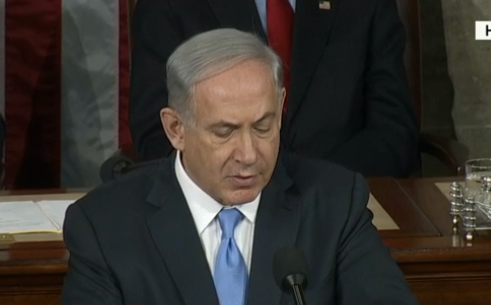
Israeli Prime Minister Benjamin Netanyahu speaking to a joint session of the U.S. Congress on March 3, 2015, in opposition to President Barack Obama’s nuclear agreement with Iran. (Screen shot from CNN broadcast)


Russia’s Pravda wrote, “according to eyewitnesses of the open part of the talks, the Israeli prime minister was too emotional and at times even close to panic. He described a picture of the apocalypse to the Russian president that the world may see, if no efforts are taken to contain Iran, which, as Netanyahu believes, is determined to destroy Israel.


So, what is going on here? Whether or not Pravda’s quote is fully accurate (though the description was confirmed by senior Israeli commentators), what is absolutely clear (from Israeli sources) is that both in Washington and at Sochi, the Israeli officials were heard out, but got nothing. Israel stands alone. Indeed, it is reported that Netanyahu was seeking “guarantees” about the future Iranian role in Syria, rather than “asking for the moon” of an Iranian exit. But how could Washington or Moscow realistically give Israel such guarantees?


Belatedly, Israel has understood that it backed the wrong side in Syria – and it has lost. It is not really in a position to demand anything. It will not get an American enforced buffer zone beyond the Golan armistice line, nor will the Iraqi-Syrian border be closed, or somehow “supervised” on Israel’s behalf.


Of course, the Syrian aspect is important, but to focus only on that, would be to “miss the forest for the trees.” The 2006 war by Israel to destroy Hizbullah (egged on by the U.S., Saudi Arabia – and even a few Lebanese) was a failure. Symbolically, for the first time in the Middle East, a technologically sophisticated, and lavishly armed, Western nation-state simply failed. What made the failure all the more striking (and painful) was that a Western state was not just bested militarily, it had lost also the electronic and human intelligence war, too — both spheres in which the West thought their primacy unassailable.


The Fallout from Failure


Israel’s unexpected failure was deeply feared in the West, and in the Gulf too. A small, armed (revolutionary) movement had stood up to Israel – against overwhelming odds – and prevailed: it had stood its ground. This precedent was widely perceived to be a potential regional “game changer.” The feudal Gulf autocracies sensed in Hizbullah’s achievement the latent danger to their own rule from such armed resistance.


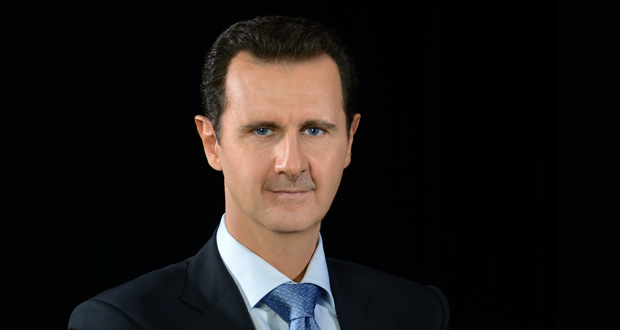
Syrian President Bashar al-Assad.


The reaction was immediate. Hizbullah was quarantined — as best the full sanctioning powers of America could manage. And the war in Syria started to be mooted as the “corrective strategy” to the 2006 failure (as early as 2007) — though it was only with the events following 2011 that the “corrective strategy” came to implemented, à outrance.


Against Hizbullah, Israel had thrown its full military force (though Israelis always say, now, that they could have done more). And against Syria, the U.S., Europe, the Gulf States (and Israel in the background) have thrown the kitchen sink: jihadists, al-Qaeda, ISIS (yes), weapons, bribes, sanctions and the most overwhelming information war yet witnessed. Yet Syria – with indisputable help from its allies – seems about to prevail: it has stood its ground, against almost unbelievable odds.


Just to be clear: if 2006 marked a key point of inflection, Syria’s “standing its ground” represents a historic turning of much greater magnitude. It should be understood that Saudi Arabia’s (and Britain’s and America’s) tool of fired-up, radical Sunnism has been routed. And with it, the Gulf States, but particularly Saudi Arabia are damaged. The latter has relied on the force of Wahabbism since the first foundation of the kingdom: but Wahabbism in Lebanon, Syria and Iraq has been roundly defeated and discredited (even for most Sunni Muslims). It may well be defeated in Yemen too. This defeat will change the face of Sunni Islam.


Already, we see the Gulf Cooperation Council, which originally was founded in 1981 by six Gulf tribal leaders for the sole purpose of preserving their hereditary tribal rule in the Peninsula, now warring with each other, in what is likely to be a protracted and bitter internal fight. The “Arab system,” the prolongation of the old Ottoman structures by the complaisant post-World War I victors, Britain and France, seems to be out of its 2013 “remission” (bolstered by the coup in Egypt), and to have resumed its long-term decline.


The Losing Side


Netayahu’s “near panic” (if that is indeed what occurred) may well be a reflection of this seismic shift taking place in the region. Israel has long backed the losing side – and now finds itself “alone” and fearing for its near proxies (the Jordanians and the Kurds). The “new” corrective strategy from Tel Aviv, it appears, is to focus on winning Iraq away from Iran, and embedding it into the Israel-U.S.-Saudi alliance.


President Donald Trump touches lighted globe with Egyptian President Abdel Fattah al-Sisi and Saudi King Salman and Donald Trump at the opening of Saudi Arabia’s Global Center for Combating Extremist Ideology on May 21, 2017. (Photo from Saudi TV)


If so, Israel and Saudi Arabia are probably too late into the game, and are likely underestimating the visceral hatred engendered among so many Iraqis of all segments of society for the murderous actions of ISIS. Not many believe the improbable (Western) narrative that ISIS suddenly emerged armed, and fully financed, as a result of former Iraqi Prime Minister Nouri al-Maliki’s alleged “sectarianism”: No, as rule-of-thumb, behind each such well-breached movement – stands a state.


Daniel Levy has written a compelling piece to argue that Israelis generally would not subscribe to what I have written above, but rather: “Netanyahu’s lengthy term in office, multiple electoral successes, and ability to hold together a governing coalition … [is based on] him having a message that resonates with a broader public. It is a sales pitch that Netanyahu … [has] ‘brought the state of Israel to the best situation in its history, a rising global force … the state of Israel is diplomatically flourishing.’ Netanyahu had beaten back what he had called the ‘fake-news claim’ that without a deal with the Palestinians ‘Israel will be isolated, weakened and abandoned’ facing a ‘diplomatic tsunami.’


“Difficult though it is for his political detractors to acknowledge, Netanyahu’s claim resonates with the public because it reflects something that is real, and that has shifted the center of gravity of Israeli politics further and further to the right. It is a claim that, if correct and replicable over time, will leave a legacy that lasts well beyond Netanyahu’s premiership and any indictment he might face.


“Netanyahu’s assertion is that he is not merely buying time in Israel’s conflict with the Palestinians to improve the terms of an eventual and inevitable compromise. Netanyahu is laying claim to something different — the possibility of ultimate victory, the permanent and definitive defeat of the Palestinians, their national and collective goals.


“In over a decade as prime minister, Netanyahu has consistently and unequivocally rejected any plans or practical steps that even begin to address Palestinian aspirations. Netanyahu is all about perpetuating and exacerbating the conflict, not about managing it, let alone resolving it…[The] message is clear: there will be no Palestinian state because the West Bank and East Jerusalem are simply Greater Israel.”


No Palestinian State


Levy continues: “The approach overturns assumptions that have guided peace efforts and American policy for over a quarter of a century: that Israel has no alternative to an eventual territorial withdrawal and acceptance of something sufficiently resembling an independent sovereign Palestinian state broadly along the 1967 lines. It challenges the presumption that the permanent denial of such an outcome is incompatible with how Israel and Israelis perceive themselves as being a democracy. Additionally, it challenges the peace-effort supposition that this denial would in any way be unacceptable to the key allies on which Israel depends…


The Palestinian flag is waved as relief ships arrive in Gaza in August 2008.


“In more traditional bastions of support for Israel, Netanyahu took a calculated gamble — would enough American Jewish support continue to stand with an increasingly illiberal and ethno-nationalist Israel, thereby facilitating the perpetuation of the lopsided U.S.-Israel relationship? Netanyahu bet yes, and he was right.”


And here is another interesting point that Levy makes:


“And then events took a further turn in Netanyahu’s favor with the rise to power in the United States and parts of Central Eastern Europe (and to enhanced prominence elsewhere in Europe and the West) of the very ethno-nationalist trend to which Netanyahu is so committed, working to replace liberal with illiberal democracy. One should not underestimate Israel and Netanyahu’s importance as an ideological and practical avant-garde for this trend.”


Former U.S. Ambassador and respected political analyst Chas Freeman wrote recently very bluntly: “the central objective of U.S. policy in the Middle East has long been to achieve regional acceptance for the Jewish-settler state in Palestine.” Or, in other words, for Washington, its Middle East policy – and all its actions – have been determined by “to be, or not to be”: “To be” (that is) – with Israel, or not “to be” (with Israel).


Israel’s Lost Ground


The key point now is that the region has just made a seismic shift into the “not to be” camp. Is there much that America can do about that? Israel very much is alone with only a weakened Saudi Arabia at its side, and there are clear limits to what Saudi Arabia can do.


Iraqi Prime Minister Haidar al-Abadi.


The U.S. calling on Arab states to engage more with Iraqi Prime Minister Haider al-Abadi seems somehow inadequate. Iran is not looking for war with Israel (as a number of Israeli analysts have acknowledged); but, too, the Syrian President has made clear that his government intends to recover “all Syria” – and all Syria includes the occupied Golan Heights. And this week, Hassan Nasrallah called on the Lebanese government “to devise a plan and take a sovereign decision to liberate the Shebaa Farms and the Kfarshouba Hills” from Israel.


A number Israeli commentators already are saying that the “writing is on the wall” – and that it would be better for Israel to cede territory unilaterally, rather than risk the loss of hundreds of lives of Israeli servicemen in a futile attempt to retain it. That, though, seems hardly congruent with the Israeli Prime Minister’s “not an inch, will we yield” character and recent statements.


Will ethno-nationalism provide Israel with a new support base? Well, firstly, I do not see Israel’s doctrine as “illiberal democracy,” but rather an apartheid system intended to subordinate Palestinian political rights. And as the political schism in the West widens, with one “wing” seeking to delegitimize the other by tarnishing them as racists, bigots and Nazis, it is clear that the real America First-ers will try, at any price, to distance themselves from the extremists.


Daniel Levy points out that the Alt-Right leader, Richard Spencer, depicts his movement as White Zionism. Is this really likely to build support for Israel? How long before the “globalists” use precisely Netanyahu’s “illiberal democracy” meme to taunt the U.S. Right that this is precisely the kind of society for which they too aim: with Mexicans and black Americans treated like Palestinians?


‘Ethnic Nationalism’


The increasingly “not to be” constituency of the Middle East has a simpler word for Netanyahu’s “ethnic nationalism.” They call it simply Western colonialism.


Round one of Chas Freeman’s making the Middle East “be with Israel” consisted of the shock-and-awe assault on Iraq. Iraq is now allied with Iran, and the Hashad militia (PMU) are becoming a widely mobilized fighting force.


The second stage was 2006. Today, Hizbullah is a regional force, and not a just Lebanese one.


Far-right militia members demonstrating outside Ukrainian parliament in Kiev. (Screen shot from RT video via YouTube video)


The third strike was at Syria. Today, Syria is allied with Russia, Iran, Hizbullah and Iraq. What will comprise the next round in the “to be, or not to be” war?


For all Netanyahu’s bluster about Israel standing stronger, and having beaten back “what he had called the ‘fake-news claim’ that without a deal with the Palestinians ‘Israel will be isolated, weakened and abandoned’ facing a ‘diplomatic tsunami,’” Netanyahu may have just discovered, in these last two weeks, that he confused facing down the weakened Palestinians with “victory” — only at the very moment of his apparent triumph, to find himself alone in a new, “New Middle East.”


Perhaps Pravda was right, and Netanyahu did appear close to panic, during his hurriedly arranged, and urgently called, Sochi summit.

Saturday, July 22, 2017

US Lawmakers Support Bill That Would Make it Illegal to Boycott Goods and Services from Israel

Content originally published at iBankCoin.com


The Israel Anti-Boycott Act, sponsored by Sen. Cardin, supported by 45 Senators and 237 congressmen, will criminalize the boycott of goods and services from the state of Israel.


Source: Congress.gov


If American citizens happen to defy this law, if approved, they will be fined a minimum of $250,000, and a maximum of $1 million plus 20 years in prison, designated for persons "engaged in interstate or foreign commerce."


The bill is said to be purposed to countermand a potential UN resolution that will prevent trade with East Jerusalem, the West Bank, and the Golan Heights. The idea behind the bill would be to prevent any American from joining the fray.


The ACLU takes exception to the bill, saying it"s a direct violation of the First Amendment.


“In short, the bill would punish businesses and individuals solely based on their point of view,” it wrote. “Such a penalty is in direct violation of the First Amendment.”


The bill, rumored to have been written by the American Israel Public Affairs Committee (AIPAC), has garnered widespread bipartisan support. Finally, Congress has found something they could agree on.


Here you can see an AIPAC infographic highlighting this bill as part of their top lobbying priorities for 2017.


Thus far, 45 US Senators and 237 congressmen (63 dems, 174 republitards) support the measure.


The ACLU is actively lobbying opposition to this bill. Thus far, zero lawmakers have sided with them.


Amusingly, the sponsor of this bill, Senator Cardin, doesn"t seem to know anything about the bill, when approached by a reporter at The Intercept.


The Intercept weighs in on the potential penalties that will be imposed on American citizens if passed.


That’s because, as Josh Ruebner expertly detailed when the bill was first unveiled, “the bill seeks to amend two laws — the Export Administration Act of 1979 and the Export-Import Bank Act of 1945,” and “the potential penalties for violating this bill are steep: a minimum $250,000 civil penalty and a maximum criminal penalty of $1 million and 20 years imprisonment, as stipulated in the International Emergency Economic Powers Act.”
 
Indeed, to see how serious the penalties are, and how clear it is that those penalties are imposed by this bill, one can just compare the bill’s text in Section 8(a), which provides that violators will be “fined in accordance with Section 206 of the International Emergency Economic Powers Act (50 U.S.C. 1705),” to the penalty provisions of that law, which state:


That the bill refers to the fine, but not the prison sentence, is not enough to prevent a judge from applying the statute’s prison term, because the bill brings the statute into play, said Faiz Shakir, the ACLU’s political director, who authored the letter to the Senate. “The referral to the statute keeps criminal penalties in play, regardless of what their preference for punishment might be,” said Shakir.
 
The bill also extends the current prohibition on participating in boycotts sponsored by foreign governments to cover boycotts from international organizations such as the U.N. and the European Union. It also explicitly extends the boycott ban from Israel generally to any parts of Israel, including the settlements. For that reason, Ruebner explains, the bill — by design — would outlaw “campaigns by the Palestine solidarity movement to pressure corporations to cut ties to Israel or even with Israeli settlements.”


Back in March, the State of Israel banned any persons from entering the country who supported the boycott of goods and services from Israel. However, unlike the American version of the bill, the bill does not apply to citizen of Israel or those with permanent residency.


Late Monday the Israeli parliament passed the bill 46 to 28 opposed. The ban will target individuals who publicly call for a boycott of Israel or Israeli goods, including goods made in West Bank or East Jerusalem settlements, which the majority of the international community considers to be illegal under international law. The law will allow exceptions and will not apply to Israeli citizens or those with permanent residency.
 
“In recent years calls to boycott Israel have been growing,” a statement on the Israeli parliament website said after the bill’s approval. “It seems this is a new front in the war against Israel, which until now the country had not prepared for properly.”


It"s worth mentioning, Sen. Cardin is one of dozens of US lawmakers who hold dual Israeli-American citizenships. Perhaps since we"re all so concerned about foreign meddling into our affairs, we should shed a light on all foreign meddling, not just Russian.


Here are the Senators who support the bill.


Sen. Portman, Rob [R-OH]* 03/23/2017
Sen. Nelson, Bill [D-FL] 03/27/2017
Sen. Rubio, Marco [R-FL] 03/27/2017
Sen. Menendez, Robert [D-NJ] 03/27/2017
Sen. Collins, Susan M. [R-ME] 03/27/2017
Sen. Blumenthal, Richard [D-CT] 03/27/2017
Sen. Graham, Lindsey [R-SC] 03/28/2017
Sen. Young, Todd C. [R-IN] 03/28/2017
Sen. Boozman, John [R-AR] 03/28/2017
Sen. Isakson, Johnny [R-GA] 03/28/2017
Sen. Peters, Gary C. [D-MI] 03/28/2017
Sen. Hatch, Orrin G. [R-UT] 03/30/2017
Sen. Perdue, David [R-GA] 03/30/2017
Sen. Roberts, Pat [R-KS] 03/30/2017
Sen. Wicker, Roger F. [R-MS] 03/30/2017
Sen. Hoeven, John [R-ND] 04/04/2017
Sen. Cornyn, John [R-TX] 04/04/2017
Sen. Fischer, Deb [R-NE] 04/04/2017
Sen. Heller, Dean [R-NV] 04/24/2017
Sen. Moran, Jerry [R-KS] 04/24/2017
Sen. Crapo, Mike [R-ID] 04/24/2017
Sen. Cantwell, Maria [D-WA] 04/24/2017
Sen. Grassley, Chuck [R-IA] 04/25/2017
Sen. Capito, Shelley Moore [R-WV] 04/26/2017
Sen. Schumer, Charles E. [D-NY] 05/01/2017
Sen. Ernst, Joni [R-IA] 05/01/2017
Sen. Hassan, Margaret Wood [D-NH] 05/08/2017
Sen. Gillibrand, Kirsten E. [D-NY] 05/09/2017
Sen. Lankford, James [R-OK] 05/16/2017
Sen. Burr, Richard [R-NC] 05/17/2017
Sen. Donnelly, Joe [D-IN] 05/23/2017
Sen. Scott, Tim [R-SC] 05/25/2017
Sen. Cruz, Ted [R-TX] 06/05/2017
Sen. Manchin, Joe, III [D-WV] 06/05/2017
Sen. Strange, Luther [R-AL] 06/05/2017
Sen. McCaskill, Claire [D-MO] 06/06/2017
Sen. Thune, John [R-SD] 06/12/2017
Sen. Wyden, Ron [D-OR] 06/12/2017
Sen. Sasse, Ben [R-NE] 06/15/2017
Sen. Coons, Christopher A. [D-DE] 06/26/2017
Sen. Bennet, Michael F. [D-CO] 07/12/2017
Sen. Sullivan, Dan [R-AK] 07/12/2017
Sen. Cassidy, Bill [R-LA] 07/18/2017
Sen. Tillis, Thom [R-NC] 07/19/2017
Sen. Cotton, Tom [R-AR] 07/19/2017

Monday, July 17, 2017

The US Deep State: Sabotaging Putin-Trump Ceasefire Agreement In Syria

Authored by Federico Pieraccini via The Strategic Culture Foundation,


The meeting between Trump and Putin at the G20 in Hamburg injects new hope into the complicated relationship between the United States and Russia. Only time can confirm whether there is any basis for this hope.


The most eagerly anticipated meeting of the year, that between Putin and Trump, lasted far more than the scheduled 20 minutes, extending past two hours. This is not too much of a surprise given the points of friction that needed to be discussed, the many outstanding issues in international relations, and the fact that this was the first official meeting between the two world leaders. The results achieved exceeded initial ambitions, and the personal chemistry between Putin and Trump seems to have been sufficient to reach an important agreement in Syria as well as to conduct discussions surrounding cyber security. Trump even asked Putin about the alleged Russian hacking in the US presidential election as a way of appeasing detractors back home. The statements of both presidents following their meeting underlined their positive intentions. Putin called Trump a very different person from the one portrayed in the media, mentioning that he was reflective and very attentive to details. Trump, for his part, praised the meeting with Putin, stating the importance of dialogue between nuclear-armed superpowers.


The most important agreement concerned a ceasefire in southern Syria along the border with Israel and Jordan. This is a very active area of fighting, and so the ceasefire obviates the possibility of dangerous confrontations between the United States and Russia, as well as between Syria and Israel, which could escalate out of control as seen when the US Air Force shot down a Syrian Su-22 jet as well an Iranian drone. Israel, from its position in the occupied Golan Heights, has repeatedly struck the Syrian Arab Army (SAA), in a desperate effort to halt its gains against al Qaeda and Daesh terrorists.


In their first meeting, within less than two hours, Putin and Trump came to an agreement on potentially the most volatile situation in the region, saving hundreds of civilian lives in the process. The agreement on Syria now has to run the gauntlet of the deep state and all the other interests arrayed against Trump. Just four days following a similar agreement reached in 2016 between Obama and Putin, everything was upended by the US Air Force bombing and killing nearly a hundred soldiers of the Syrian Arab Army in Deir ez-Zor, shredding the ceasefire agreement that had just been reached.


Trump is dealing with the same occult forces that sabotaged Obama’s ceasefire agreement. It is impossible to know how much strategic support the US deep state has for the ceasefire decision. Ever since the SAA reached the Iraqi border north of al-Tanf, the space available for the US and her allies to maneuver has been dramatically diminished. With al-Tanf isolated, Washington"s ceasefire does not change or shift the already heavily altered balance of power in that area of Syria. For all these reasons, the ceasefire does not appear to be a concession by either party but merely a commonsense move to lessen the possibility of a direct confrontation between super-powers.


The military apparatus seems to be focused on the situation in northern Syria, with Raqqa and Syrian Democratic Forces (SDF) being the central pivot for the US to reach Deir ez-Zor and its associated oilfields. The US State Department, as well as the US military wing involved in Syria, hope to balkanize Syria, dismembering it in different regions and putting Raqqa under the control of a puppet authority in Damascus. However, such American hopes of imposing a Brennan-style governorate as in Iraq is forlorn, as Damascus is the only authority recognized on Syrian territory, and once Raqqa is filled with returning Syrian citizens, such American plans will fall apart. Moreover, the Baghdad authorities have already made clear on two occasions how reluctant they are to support Americans in their military operations. In the case of Mosul, they reiterated that the US deployment and involvement be minimal, while the Iraqi authorities have already announced that they want to place under their full control their border with Syria, in effect hobbling Washington’s plan to leave chaos and instability along the borders of the two countries. The US deep state finds in chaos the ideal way to channel conflict and foment instability. One of the most important objectives of the Syrian and Iraqi armies is therefore to isolate the borders and control the flow of human traffic from one country to the other, nixing in the process what has hitherto been a strategic advantage for Daesh and other terrorist organizations, where they have been free to cross borders with weapons and whatever else they please.


Trump and all the actors involved in this negotiation are finally able to make an agreement between Moscow and Washington stand. Unlike with previous agreements, the US in Syria is now in a worse situation than it was 12 months ago, having failed to achieve many of its strategic objectives. Cooperation with Turkey in northern Syria was wrecked following the liberation of Aleppo and the clear US support for the Kurds (SDF). Similarly, areas of deconfliction in Syria agreed to in Astana (between Iran, Russia and Turkey) have stopped the gains of terrorists in many active areas of the conflict, leading to zero chances of occupying more towns. Such efforts have been important bargaining chips during the various peace negotiations.


The crux of this strategy seems to be a focus on the only possible solution that meets the interests of the deep state’s military wing, related to the original plan to dismantle Syria once the removal of Assad failed. From a certain point of view, it may make sense to focus on the situation in the north of the country in Raqqa, the only area where the US still has some influence. This may be the contorted vision drawn up by contending factions of American deep state. Certainly from the point of view of Moscow, the strategy in Syria is a mix of diplomatic solutions, seeking to reach multiple ceasefire agreements with major players like Turkey and the United States, but never setting aside the war effort carried out by Russia, Iran and Syria.


The agreement between Putin and Trump will firstly benefit Syrian civilians as well as widening the opportunity for the SAA to liberate more towns and villages from the grip of terrorism. It is a long-awaited agreement and solution that is now met by the predominant wing of the US deep state. In the event of a failure of the agreement, Trump will be obligated to point out to the world the subversion of the Washington establishment and its deep state, which works to frustrate his agenda and replace it with its own terrible policies.


Moscow"s confidence in deriving concrete benefits from this deal increases hour by hour, thanks to the truce continuing to hold. From the Russian point of view, any military sabotage would once again lay American intentions bare, regardless of Trump"s subsequent moves. However, one thing that is certain is that in the case of sabotage, Trump will be faced with having to make a definitive choice.


  • Either he will surrender to the deep state, returning the situation back to a state of hyper-conflict with a nuclear superpower; or

  • he will confront and overcome the deep state, thereby enabling him to implement his electoral promises.