Showing posts with label tide. Show all posts

Tuesday, January 23, 2018

People Are Now Vaping Tide Pods and I Don’t Want to Live on This Planet Anymore

(ANTIMEDIA Op-ed) — Amid all the actually crazy shit currently going on in the world, people are now vaping Tide pods.


The U.S. military just paid $642 million to a corporate welfare whore to conduct a missile test, the Trump administration has signaled its intent to occupy Syria indefinitely, civilians are dying by the thousands, the latest Fed chair appointee is an establishment banker who has long advocated raising the debt ceiling, the big banks were just given a free pass again, and Congress just approved an extension of warrantless surveillance in a rare show of bipartisanship.


But we’re too busy to worry about any of that. Americans would rather eat Tide pods to get attention on social media. YouTube is taking down Tide pod challenge videos in an effort to slow the trend, and stores are now locking the forbidden fruit in anti-theft cabinets.


The problem is so severe that mainstream media outlets are having to break off chunks of time normally allotted to sowing societal division and fearmongering the public about nuclear war and terrorism to advise people they should not ingest toxic chemicals produced by a massive global conglomerate that spends millions of dollars lobbying the government every year and is no stranger to toxic products.


All this time the #McResistance thought Trump and nuclear war would be the death of us all. But, no, it’s fucking tide pods. Even Idiocracy only went as far as sports drinks. And we thought fidget spinners and people pouring buckets of water on their heads was bad? The president is trying to start wars with North Korea and Iran but people are too busy eating laundry soap to care. In Yemen, 130 children starve to death every day because of a U.S.-backed siege, and Americans kids are over here eating Tide fucking laundry detergent.


People are too busy watching Tide pod challenge videos to push the right “BALLISTIC MISSILE THREAT INBOUND” button in Hawaii.


The tiki torch whites are raging, the pussy hat-wearing liberals are gearing up to throw another tantrum in the streets, American police have already killed 62 people so far this year, and all the while, America’s youth are dabbing a household cleaner.


Bats and antelope are dropping dead in heat waves. Wind storms are blowing people down streets. “Bomb cyclones” are apparently a thing. Places are getting so cold the thermometers are literally breaking. Fires, floods, and ice are wreaking havoc throughout America. But by all means, let’s talk about Tide pods.


If our apathetic youth would rather sell themselves out for some cheap social media “likes,” and so-called politically engaged people would rather feign outrage over “shithole” words instead of “shithole” actions, I don’t want to live on this planet anymore.


I hear Mars is pretty fucking nice — and it has water that’s probably cleaner than planet Earth’s.


Op-ed / Creative Commons / Anti-Media / Report a typo

Sunday, January 21, 2018

Wednesday, November 22, 2017

Experts Issue 2018 Warning: Earth "Had It Easy This Year" With Only 6 Severe Earthquakes

Authored by Mac Slavo via SHTFplan.com,


Scientists are warning that 2018 won’t be as “easy” on us as 2017 was when it comes to the number of severe earthquakes they predict.


In 2018, Earth, and one billion of its inhabitants could face 20 severe earthquakes due to the slowing rotation of the planet.


Tiny changes in the speed of our planet’s rotation will trigger huge seismic activity by releasing vast amounts of underground energy causing severe earthquakes, experts claim. Although their research has been rejected by some scientists, they are intent on sounding the alarm. The slowing of Earth’s rotation could disrupt the crust of the Earth making it possible to see 20 severe earthquakes next year.


According to the Daily Mail, the planet’s rotation is slowing down because of tidal forces between Earth and the moon. The side of Earth closest to the moon feels its pull the strongest, while the side farthest from the moon feels its gravity less. That difference in gravitational pull stretches the Earth, which causes tidal bulges. These bulges pull the moon closer or farther away from Earth by around 4cm per year. The moon exerts the opposite force on them, pulling them back toward it, creating friction and slowing down the planet’s rotation. The time the Earth takes to make a complete rotation on its axis varies by about a millionth of a second per day. While the rotational rate hasn’t declined evenly,  the average day has grown longer by between 15 millionths and 25 millionths of a second every year.


Researchers found five periods in the past century when there were more earthquakes than other times. On these five occasions, there was a 25 to 30 percent increase in the number of earthquakes with a magnitude of 7 or above. These all coincided with a slowing in the rotation of the Earth. Scientists from the University of Colorado in Boulder and the University of Montana say that even fluctuations of a millisecond could increase seismic activity.


The minuscule variations in Earth’s rotation cause a shift in the shape of the Earth’s iron and nickel “inner core.” This, in turn, changes the liquid outer core on which the Earth’s tectonic plates rest. “The mechanism we’ve come up with is that as the Earth slows down it’s like a skater spinning on ice. As the Earth slows down its equatorial diameter reduces,” Dr. Rger Bilham of the University of Colorado told BBC Inside Science. “Its (the Earth’s) waistline gets smaller, but its clothes, the tectonic plates on Earth, remain the same size, which means they get rumpled up. These tiny changes to the overall shape of the Earth are enough, if there are faults that are already ready to go … to kind of kick them over into failure,” he said.


“The correlation between Earth’s rotation and earthquake activity is strong and suggests there is going to be an increase in numbers of intense earthquakes next year,” Dr. Bilham said.


This research comes just after a 7.3-magnitude earthquake struck Iran, leaving at least 400 people killed and more than 6,000 injured. The quake hit 19 miles southwest of Halabja in Iraqi Kurdistan at around 9.20pm on Sunday, when many people would have been at home. More than 100 aftershocks followed.


Friday, May 19, 2017

Fishing Skills Of The Native Americans: No Hooks, No Reels, No Problem!

Fishing Skills Of The Native Americans: No Hooks, No Reels, No Problem!


If you love to fish, you might have wondered how the indigenous people of the Americas managed to fish without all that expensive equipment so many people seem to use today.


When you think about it, many native tribes relied on fish as one of their main food sources, but without metal hooks, reels, rods or sonar devices, how did they manage to catch enough fish to not only survive, but to thrive?


My father was an avid fisherman, and although he liked his expensive reels, when he took my brothers and me camping, we rarely used any type of equipment other than the occasional net, which we actually brought for frogs. (I will tell you about my father’s favorite fishing method, the one he learned from his grandfather, later on.)


Let’s take a look at some of the forgotten or little-known ways that native people caught fish and other aquatic foods.


Spears and Other Obvious Methods


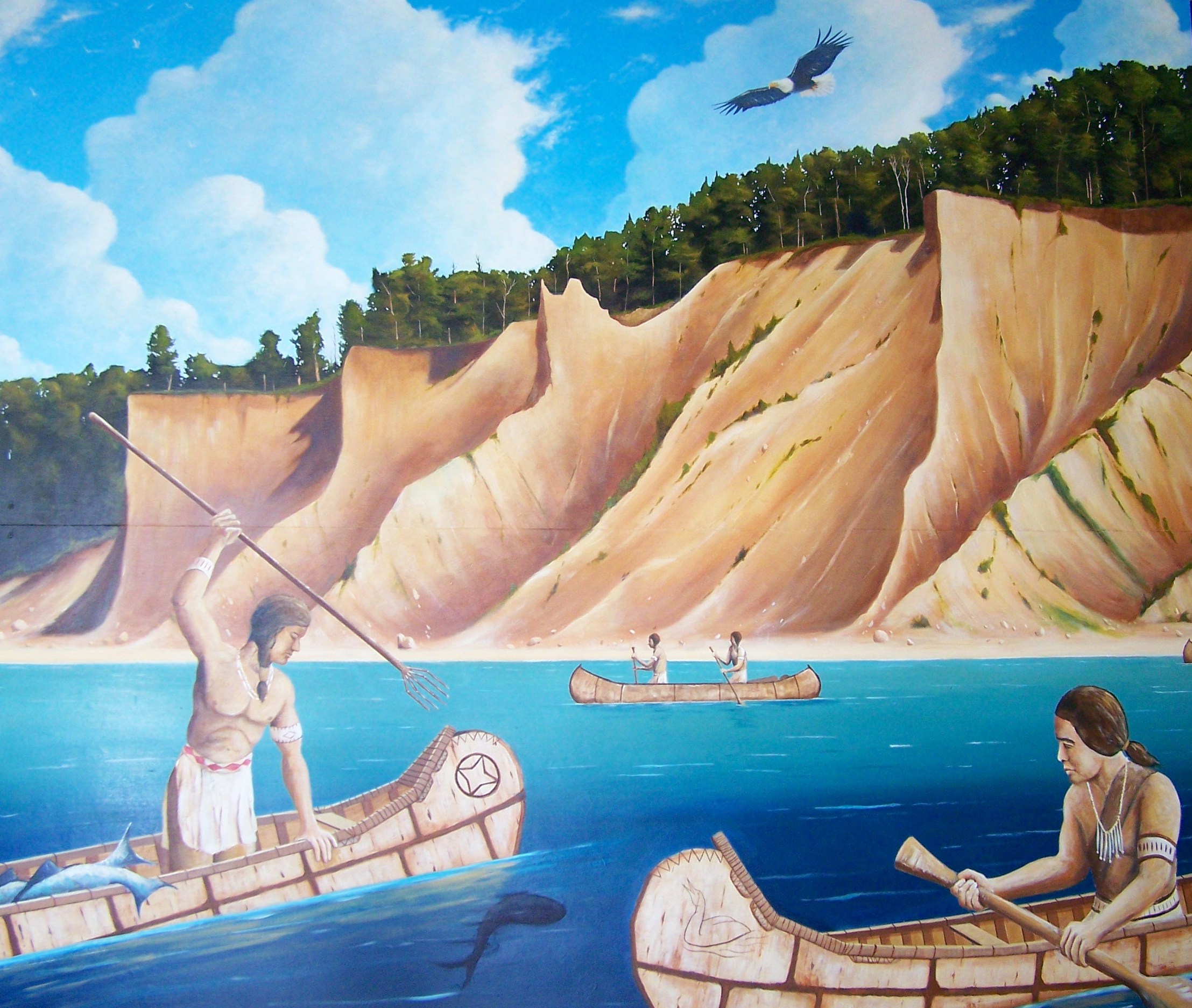
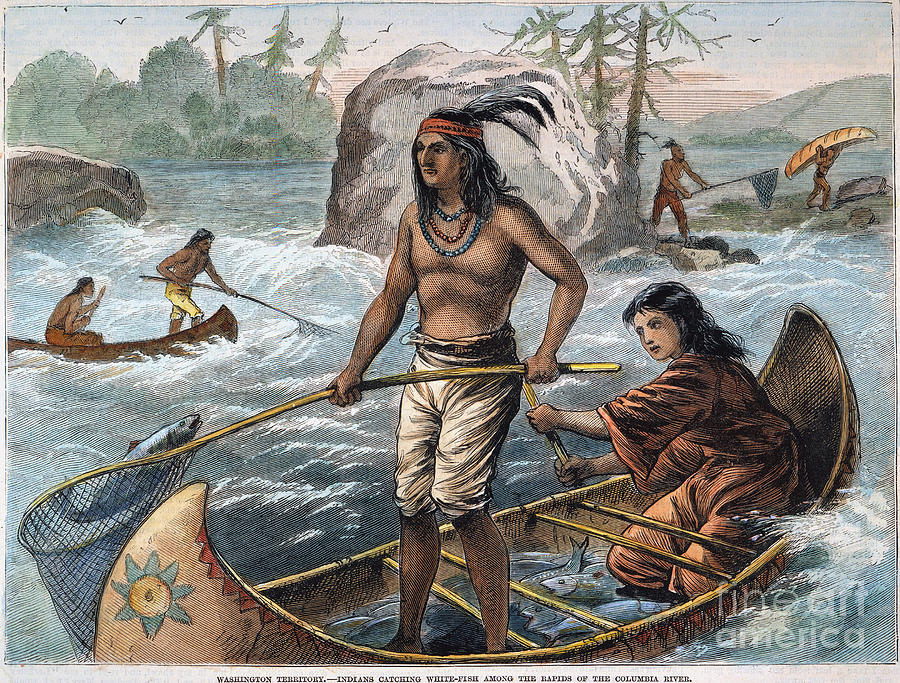
Most people think of spears as a means of catching fish — like Tom Hanks in the movie Castaway. While native people certainly did use this method, it isn’t always as easy as old Tom Hanks made it look like in the middle of the movie. If one was lucky, rocks provided a good platform from which to stand and wait for a fish, or a school of fish to pass. Canoes also were used, with one person navigating the canoe and holding it steady when they needed to, while two or more other persons would spear fish.


In a pinch, even the old bow and arrow could be used in shallow water. If the water was too deep, you could easily lose the fish, and your arrow, in the depths. A few tribes, such as the Powhatan, did make a type of line, called a “pemmenaw,” which was attached to arrows so they could be retrieved, along with the fish.


Get The Essential Secrets Of The Most Savvy Survivalists In The World!


During the winter, a common method to catch fish was the lure and spear method. A hole was cut in the ice, and then a white piece of bone was lowered into the hole on a piece of sinew. Fish would follow this “shiny” bone to the surface, then speared.


Nets or Obstruction Techniques


These methods remind me of my father’s favorite fishing method. He often referred to it as “the lazy way to eat.” Native people were known for making obstructions that worked like a net that they placed across the opening of streams or channels. These were made from woven reeds or other types of tough grasses, tied to stakes. These stakes were then placed on either side of a channel or part of a fast running stream, very much like a fence. Fish were held fast to this “fence” by the swift moving current.


Native people used similar types of traps as well. One method involved putting reeds or small twigs in the water, making a giant V. Rather than trying to swim back the way they came, the fish would congregate at the small part of the V, trying to find an exit. Fish could simply be pulled out by hand.


Fishing Skills Of The Native Americans: No Hooks, No Reels, No Problem!

Image source: FineArtAmerica


Another common trap, called a weir, was made from reeds. It formed a type of funnel that fish would swim in to, but found they could not escape due to either a fast current or multitude of fish behind them. These weirs were quite large, sometimes being three feet wide at the opening and about 10 feet in length!


Still other tribes used nets made from plant fibers. These large nets were then suspended between people standing in two canoes stationed on either side of a river. Once a few fish were caught, they were placed in the boat, then the net replaced in the water. Since the nets were not strong like nylon nets, they could only hold a few pounds of fish before they needed to be pulled in. Over the course of a day, however, this resulted in a bounty of fish. This also ensured that plenty of fish were left to replenish the waters.


Another type of net involved using a tree branch that made a large Y. Reeds or plant fibers were then tied and woven between the Y, making something like a very loosely woven basket. A person could stand in the river or ocean, or on a rock or in a canoe and scoop up fish, or wait patiently until the fish swam over the net, and then quickly pull up the net.


New Solar Oven Is So Fast It’s Been Dubbed “Mother Nature’s Microwave”


My father would employ us kids to get sticks for firewood. He would then select a few dozen sticks about 2 inches in diameter. He used these sticks to make a large U in the water, usually in front of a swift moving part of the stream. The fish we caught, usually rainbow trout, would become trapped in the U, unable to swim out due to the strong current. This worked remarkably well and we often had fish for dinner each night, as well as fish to take home to our mother.


Seasons and Tides


Native people understood the cycles of nature. Pacific Northwest tribes knew when the salmon were returning to spawn, and would wait for them to finish spawning, before taking their dead or dying bodies as meat. In the fall, tribes could collect, literally, thousands of salmon. Drying the meat would ensure that they would always have something to eat, no matter what happened that winter.


Atlantic salmon will return again and again to spawn, so native people would make traps or use nets to catch them on their return route, after they had spawned and lay eggs. Indigenous tribes knew that if they took salmon before they spawned, there would soon be no more salmon to catch.


Those who lived near the seas quickly learned to catch fish, crabs and other sea life in tide pools. Tide pools make natural traps for fish, leaving them in very shallow pools after the tide goes out. Some tribes would take nothing more than baskets to the tide pools and pull out fish and crabs by hand.


Native people learned to find other food sources by watching nature at work. They knew when they could collect turtle eggs, birds’ eggs, clams, frogs, crayfish, sea otters, seals and basketfuls of migrating anchovies.


What alternative fish-catching methods have you used? Share your tips in the section below:


Learn How To ‘Live Off The Land’ With Just Your Gun. Read More Here.