Showing posts with label mulberries. Show all posts

Friday, December 1, 2017

6 Health Benefits of Mulberries

6 Health Benefits of Mulberries | mulberry-tree | General Health Special Interests


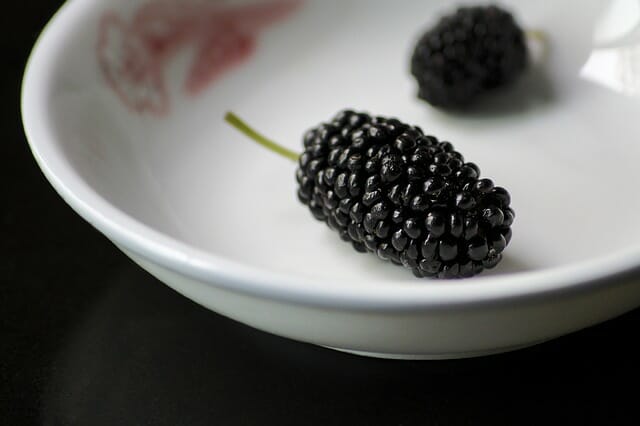
Mulberries are delicious and nutritious, people all over the world enjoy it. Mulberries are a product of the Morus alba tree. Its leaves, which also contain nutrients and are even used as food for silkworms, are thin, glossy and light green; the fruit, like grapes, is red or white and grows in bunches called “drupes.”


1. Source of Antioxidants


Antioxidants help lessen the damage caused by free radicals and the entire mulberry plant- leaves, stems, and fruit, contains antioxidants. [1] [2] One antioxidant in particular, resveratrol, has gotten much attention. Research published by the University of Texas Health Science Center credits resveratrol for positive effects on age and longevity. [3]


2. Immune System Support


Mulberries contain alkaloids that activate macrophages. Macrophages are white blood cells that stimulate the immune system, putting it on high active alert against health threats. [4]


3. Supports Healthy Blood Sugar


More formal research is appropriate, but mulberry is thought to contain compounds that support balanced blood sugar levels. [5] Traditional medicine in China, Trinidad and Tobago have all used mulberry leaves to promote balanced blood sugar levels. [6] [7]


4. Healthy Food!


Dried mulberries are a great source of protein, vitamin C and K, fiber, and iron. Best of all, they’re available in health food stores everywhere! Enjoy them as a great snack all by themselves or add them to your favorite trail mix. If you live in a warm climate and are lucky enough to have mulberry trees nearby, you can enjoy the fruit fresh off the tree. Not as tasty as the fruit, even the leaves contain protein, fiber, and nutrients! [8]


5. Resists Redness


Practitioners of traditional Chinese medicine have used mulberry as a remedy for swelling and redness. [9] A recent Romanian study discovered that a curcumin and mulberry leaf combination may be a new lead into natural remedies for this sort of irritation. [10]


6. Brain Protection?


Do mulberries offer anything to the brain? Researchers at Khon Kaen University in Thailand set out to answer that question by evaluating the effect of mulberry on male rats with memory impairment and brain damage. Although further investigation is required before mulberries can be declared a cognitive enhancer and neuroprotectant, rats that consumed mulberries had better memories and less oxidative stress. [11]


References (11)


  1. Wang W, Zu Y, Fu Y, Efferth T. In vitro antioxidant and antimicrobial activity of extracts from Morus alba L. leaves, stems and fruits. Am J Chin Med. 2012;40(2):349-56.

  2. Imran M, Khan H, Shah M, Khan R, Khan F. Chemical composition and antioxidant activity of certain Morus species. J Zhejiang Univ Sci B. 2010 Dec;11(12):973-80. doi: 10.1631/jzus.B1000173.

  3. Shankar S, Singh G, Srivastava RK. Chemoprevention by resveratrol: molecular mechanisms and therapeutic potential. Front Biosci. 2007 Sep 1;12:4839-54. Review.

  4. Kim SB, Chang BY, Jo YH, Lee SH, Han SB, Hwang BY, Kim SY, Lee MK. Macrophage activating activity of pyrrole alkaloids from Morus alba fruits. J Ethnopharmacol. 2013 Jan 9;145(1):393-6. doi: 10.1016/j.jep.2012.11.007. Epub 2012 Nov 16.

  5. Kimura T, Nakagawa K, Kubota H, Kojima Y, Goto Y, Yamagishi K, Oita S, Oikawa S, Miyazawa T. Food-grade mulberry powder enriched with 1-deoxynojirimycin suppresses the elevation of postprandial blood glucose in humans. J Agric Food Chem. 2007 Jul 11;55(14):5869-74. Epub 2007 Jun 8.

  6. Lans CA. Ethnomedicines used in Trinidad and Tobago for urinary problems and diabetes mellitus. J Ethnobiol Ethnomed. 2006 Oct 13;2:45.

  7. Wang HJ, Chiang BH. Anti-diabetic effect of a traditional Chinese medicine formula. Food Funct. 2012 Nov;3(11):1161-9. doi: 10.1039/c2fo30139c.

  8. Kandylis K, Hadjigeorgiou I, Harizanis P. The nutritive value of mulberry leaves (Morus alba) as a feed supplement for sheep. Trop Anim Health Prod. 2009 Jan;41(1):17-24. doi: 10.1007/s11250-008-9149-y. Epub 2008 Mar 15.

  9. Chen YC, Tien YJ, Chen CH, Beltran FN, Amor EC, Wang RJ, Wu DJ, Mettling C, Lin YL, Yang WC. Morus alba and active compound oxyresveratrol exert anti-inflammatory activity via inhibition of leukocyte migration involving MEK/ERK signaling. BMC Complement Altern Med. 2013 Feb 23;13:45. doi: 10.1186/1472-6882-13-45.

  10. Pirvulescu MM, Gan AM, Stan D, Simion V, Calin M, Butoi E, Tirgoviste CI, Manduteanu I. Curcumin and a Morus alba extract reduce pro-inflammatory effects of resistin in human endothelial cells. Phytother Res. 2011 Dec;25(12):1737-42. doi: 10.1002/ptr.3463. Epub 2011 Mar 28.

  11. Kaewkaen P, Tong-Un T, Wattanathorn J, Muchimapura S, Kaewrueng W, Wongcharoenwanakit S. Mulberry Fruit Extract Protects against Memory Impairment and Hippocampal Damage in Animal Model of Vascular Dementia. Evid Based Complement Alternat Med. 2012;2012:263520. doi: 10.1155/2012/263520. Epub 2012 Aug 16.


The post 6 Health Benefits of Mulberries appeared first on The Sleuth Journal.

Wednesday, March 29, 2017

4 Fruit-Bearing Plants You Can Grow In A Teeny-Tiny Yard

4 Fruit-Bearing Plants You Can Grow In A Teeny-Tiny Yard

Shiros plums. Image source: StarkBros.com


I first became interested in homesteading when my husband and I purchased a house on a small suburban lot. The yard was filled with typical city landscaping — a boxwood hedge, a couple of potentillas, a lilac, some overgrown evergreens and a lot of grass taking up the space in between.


The one bright spot in all of this was the fruit trees. Instead of the usual arbor vitae, the former owner had planted an apple and two cherry trees along the fence line — not decorative cherries but a real-life Bing and Rainier. When summer arrived, all three trees produced a prolific amount of fruit. So much so that the neighbors often stopped by and asked if they could join in on the harvest. We were happy to oblige.


It was then and there that my ideas about the “right” way to landscape changed. Since homesteading was a priority for us, why not tear out a few of the ornamentals that came with the house and replace them with fruit-bearing bushes and ground covers? The formal landscaping “look: would still be intact but it would also come with the added bonus of producing fruit.


Over time and with a lot of experimentation, I was able to determine a number of trees, shrubs, flowers and ground covers that behaved well in a suburban landscape but also took me one step closer to my ultimate goal of becoming more self-sufficient. Here is a list of some of my favorites.


1. Plums — The size of a fully mature plum tree varies depending on the rootstock. Smaller-sized trees use the semi-dwarf root stock Mariana 2624. This rootstock will produce a tree between 10-15 feet in height at maturity. It acclimates well to a variety of climates and soil types. My favorite plum is the Shiro.


Beet Powder: The Ancient Secret To Renewed Energy And Stamina


Shiros tend to be loaded with an outstanding display of white blossoms in the spring, an abundance of golden orb-shaped fruits in the summer and a fiery gold display of foliage in the fall. The plums themselves are tangy and sweet at the same time without the squishiness that can be a turn-off to non-plum lovers. They make excellent jam and can be dried for later use. These trees respond well to regular pruning and are fairly forgiving to individuals who are new to the art of bonsai.


4 Fruit-Bearing Plants You Can Grow In A Teeny-Tiny Yard

Image source: Pixabay.com


2. Mulberries — Mulberries are incredibly easy to grow and can reach a mature height of more than 30 feet with a spread of 35 feet. They have an open form when properly pruned during the first years of growth, and naturally exhibit generous, graceful spacing between branches. For this reason, Mulberries make excellent shade trees. The fruits are delicious and attract a variety of seasonal birds, such as cedar waxwings and tanagers. Mulberries can be eaten fresh, made into pies and jams, or dried for later use. Mulberry juice can be fermented into an excellent wine. Mulberries are rich in anthocyanins, iron, protein and a host of vitamins and minerals that combat cancer and premature aging. In the fall, mulberry leaves morph into a breathtaking display of canary yellow foliage that will be the envy of the neighborhood.


3. Honeyberries — Honeyberries are a small shrub native to Russia. At maturity they are loaded with elongated blue fruits that have a similar flavor and texture to blueberries. Honeyberries are hardy and easy to care for. Harvest often falls a week or two before blueberry season, which is ideal for individuals who are interested in having a continuous source of fresh fruit in their yard. In the fall, honeyberries exhibit a rainbow of red and gold foliage.


4. Strawberries — As a groundcover, strawberries can’t be beat. Over the summer, they produce a profusion of runners and can quickly cover a patch of abandoned ground. Strawberries require very little care once established, provided they are watered regularly. To propagate strawberries, transplant runners in the spring or fall. Occasionally remove older, woody plants to keep beds productive. One of the most flavorful strawberries for jams and fresh eating is the variety Shuksan. For long-term storage, strawberries can be frozen whole or in pieces. They also can be pureed and dried into fruit leather.


This list is by no means comprehensive. Edible landscaping is all around us, once you know where to look. Now is the time to start transitioning your yard into a homesteader’s oasis.


What would you add to our list? Share your fruit-growing tips in the section below:


Harness The Power Of Nature’s Most Remarkable Healer: Vinegar