Showing posts with label mulberry. Show all posts

Friday, December 1, 2017

6 Health Benefits of Mulberries

6 Health Benefits of Mulberries | mulberry-tree | General Health Special Interests


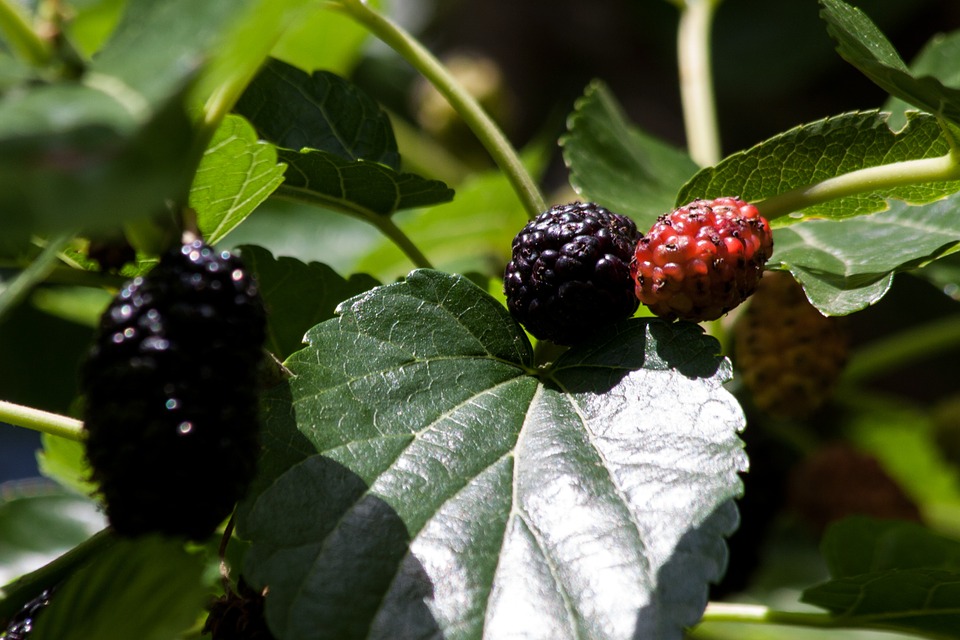
Mulberries are delicious and nutritious, people all over the world enjoy it. Mulberries are a product of the Morus alba tree. Its leaves, which also contain nutrients and are even used as food for silkworms, are thin, glossy and light green; the fruit, like grapes, is red or white and grows in bunches called “drupes.”


1. Source of Antioxidants


Antioxidants help lessen the damage caused by free radicals and the entire mulberry plant- leaves, stems, and fruit, contains antioxidants. [1] [2] One antioxidant in particular, resveratrol, has gotten much attention. Research published by the University of Texas Health Science Center credits resveratrol for positive effects on age and longevity. [3]


2. Immune System Support


Mulberries contain alkaloids that activate macrophages. Macrophages are white blood cells that stimulate the immune system, putting it on high active alert against health threats. [4]


3. Supports Healthy Blood Sugar


More formal research is appropriate, but mulberry is thought to contain compounds that support balanced blood sugar levels. [5] Traditional medicine in China, Trinidad and Tobago have all used mulberry leaves to promote balanced blood sugar levels. [6] [7]


4. Healthy Food!


Dried mulberries are a great source of protein, vitamin C and K, fiber, and iron. Best of all, they’re available in health food stores everywhere! Enjoy them as a great snack all by themselves or add them to your favorite trail mix. If you live in a warm climate and are lucky enough to have mulberry trees nearby, you can enjoy the fruit fresh off the tree. Not as tasty as the fruit, even the leaves contain protein, fiber, and nutrients! [8]


5. Resists Redness


Practitioners of traditional Chinese medicine have used mulberry as a remedy for swelling and redness. [9] A recent Romanian study discovered that a curcumin and mulberry leaf combination may be a new lead into natural remedies for this sort of irritation. [10]


6. Brain Protection?


Do mulberries offer anything to the brain? Researchers at Khon Kaen University in Thailand set out to answer that question by evaluating the effect of mulberry on male rats with memory impairment and brain damage. Although further investigation is required before mulberries can be declared a cognitive enhancer and neuroprotectant, rats that consumed mulberries had better memories and less oxidative stress. [11]


References (11)


  1. Wang W, Zu Y, Fu Y, Efferth T. In vitro antioxidant and antimicrobial activity of extracts from Morus alba L. leaves, stems and fruits. Am J Chin Med. 2012;40(2):349-56.

  2. Imran M, Khan H, Shah M, Khan R, Khan F. Chemical composition and antioxidant activity of certain Morus species. J Zhejiang Univ Sci B. 2010 Dec;11(12):973-80. doi: 10.1631/jzus.B1000173.

  3. Shankar S, Singh G, Srivastava RK. Chemoprevention by resveratrol: molecular mechanisms and therapeutic potential. Front Biosci. 2007 Sep 1;12:4839-54. Review.

  4. Kim SB, Chang BY, Jo YH, Lee SH, Han SB, Hwang BY, Kim SY, Lee MK. Macrophage activating activity of pyrrole alkaloids from Morus alba fruits. J Ethnopharmacol. 2013 Jan 9;145(1):393-6. doi: 10.1016/j.jep.2012.11.007. Epub 2012 Nov 16.

  5. Kimura T, Nakagawa K, Kubota H, Kojima Y, Goto Y, Yamagishi K, Oita S, Oikawa S, Miyazawa T. Food-grade mulberry powder enriched with 1-deoxynojirimycin suppresses the elevation of postprandial blood glucose in humans. J Agric Food Chem. 2007 Jul 11;55(14):5869-74. Epub 2007 Jun 8.

  6. Lans CA. Ethnomedicines used in Trinidad and Tobago for urinary problems and diabetes mellitus. J Ethnobiol Ethnomed. 2006 Oct 13;2:45.

  7. Wang HJ, Chiang BH. Anti-diabetic effect of a traditional Chinese medicine formula. Food Funct. 2012 Nov;3(11):1161-9. doi: 10.1039/c2fo30139c.

  8. Kandylis K, Hadjigeorgiou I, Harizanis P. The nutritive value of mulberry leaves (Morus alba) as a feed supplement for sheep. Trop Anim Health Prod. 2009 Jan;41(1):17-24. doi: 10.1007/s11250-008-9149-y. Epub 2008 Mar 15.

  9. Chen YC, Tien YJ, Chen CH, Beltran FN, Amor EC, Wang RJ, Wu DJ, Mettling C, Lin YL, Yang WC. Morus alba and active compound oxyresveratrol exert anti-inflammatory activity via inhibition of leukocyte migration involving MEK/ERK signaling. BMC Complement Altern Med. 2013 Feb 23;13:45. doi: 10.1186/1472-6882-13-45.

  10. Pirvulescu MM, Gan AM, Stan D, Simion V, Calin M, Butoi E, Tirgoviste CI, Manduteanu I. Curcumin and a Morus alba extract reduce pro-inflammatory effects of resistin in human endothelial cells. Phytother Res. 2011 Dec;25(12):1737-42. doi: 10.1002/ptr.3463. Epub 2011 Mar 28.

  11. Kaewkaen P, Tong-Un T, Wattanathorn J, Muchimapura S, Kaewrueng W, Wongcharoenwanakit S. Mulberry Fruit Extract Protects against Memory Impairment and Hippocampal Damage in Animal Model of Vascular Dementia. Evid Based Complement Alternat Med. 2012;2012:263520. doi: 10.1155/2012/263520. Epub 2012 Aug 16.


The post 6 Health Benefits of Mulberries appeared first on The Sleuth Journal.

Sunday, October 1, 2017

3 Lesser-Known, Super-Hardy Fruit Trees Every Homesteader Should Consider

3 Lesser-Known, Super-Hardy Fruit Trees Every Homesteader Should Consider

Image source: JustFruitsAndExotics.com


One of the ultimate lessons I have picked up in life is that some of the things that I find annoying are in actuality extremely useful.


Take, for example, the neighborhood fruit and nut trees, which make a mess on my property and attract hordes of birds and insects.


It wasn’t until I was a little older that I realized that these annoying facets of my local neighborhood in fact have a high potential for becoming a viable food source. Many times these plants come in the form of trees and overgrown bushes.


Let’s look at three trees we normally don’t think of when we hear the word “fruit.”


1. Mulberry tree


The beauty of mulberry trees is that they produce tons of fruit without much care needed, and they don’t seem to be bothered by yearly weather conditions. As evidence of this, I have a pear tree in my yard that only sporadically produces fruit due to erratic springtime weather. But no matter how cold the winter or how hot the summer, the mulberry tree continues to produce.


3 Lesser-Known, Super-Hardy Fruit Trees Every Homesteader Should Consider

Image source: Pixabay.com


My neighbors have had a half dozen of these trees on their property for years, and I have gratefully been allowed to reap their benefits right along. The fruit can be a variety of colors (from white to deep purple), depending on the variety.


Given the large amount of fruit produced by these trees, traditional picking methods aren’t that cost effective when it comes to the amount of time needed.


Discover More Than 1,000 Off-Grid-Living Tricks!


What I did to help speed up the process was to get a large tarp and place it under a targeted limb. Then I would ascend a ladder and grab the branch and give it a good shake. The ripe fruit then fell on the tarp, where I could safely harvest and process it.


2. Black walnut tree


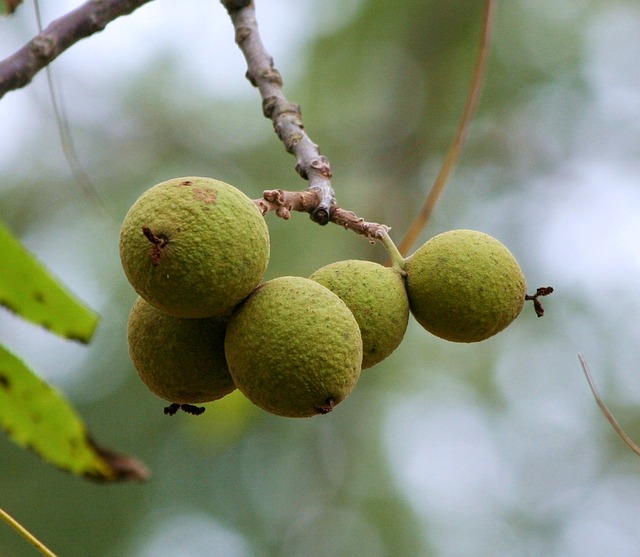
If you live in an area with these fast-growing trees – they grow in cold and hot climates — then you are undoubtedly aware of their fruit. The large green husked fruits drop from the trees throughout the summer months and are just waiting for you to come by on your lawnmower. While the fruit may have an unpleasant odor, the walnuts you find within are just as good as any walnut you’d get from a grocery store.


Growing up in the northeast, I have always had these trees around me. Harvesting them isn’t much of a concern for any small time forager, as the trees consistently produce tons of fruit no matter the weather. The trouble is that you need to know how to access the nuts within.


3 Lesser-Known, Super-Hardy Fruit Trees Every Homesteader Should Consider

Image source: Pixabay.com


The one way I have seen that makes it easiest to get the green hulls off the fruit is to gather them all on a tarp and then let nature take its course. The green exterior will eventually turn brown and will soften in the sun after only a few days of exposure to the elements.


From here, a little experimentation is needed to figure out how to get to the nuts within. (Click here for more details.) Traditional hand-held units don’t work. People employ just about any method: from placing the walnuts in a bag and rolling over them with a car or pounding a bag full of nuts with a hammer.


A word of caution concerning black walnuts is that they can be detrimental to the surrounding environment. They are extremely fast growing and can choke out other local fauna within only a very short time.


3. Sand cherries


I opted to add these fruits several years ago as a viable addition to my growing homestead. The variety I decided on growing is exceedingly hardy to the harsh winter conditions in my region. Another bonus is that they only require a little upkeep to get them producing year after year.


Most varieties tend to grow as a bush, although some can grow as large as a small tree when they reach full maturity. The fruits are smaller and can be tarter than the traditional cherries you may be familiar with from the store. In some cases, people will opt to grow these bushes for an ornamental purpose, as the multitude of flowers found on each branch can be very visually appealing.


Produce Boiling Hot Water, Anywhere, Anytime With Absolutely No Power Whatsoever…


In my experience, several of these bushes will produce an abundance of fruit that can be used for a variety of uses. They do have pits in them, so you will need to remove them before consumption. Picking these fruits requires much the same effort as picking raspberries or other fruits found on bushes. All you really need is a bowl, clothes you aren’t overly concerned about, and a bit of time.


Conclusion


There are other varieties of fruit and nut trees around that may be considered to be a pest – but have gift-giving abilities. Persimmons and elderberries are two varieties that I have never had extensive experience with, although I know they have great potential as a food source in the right region.


Other viable options to consider that may already be in your area are crab apples and blackberries. Crab apples do not deserve the bad rap they have gotten over the years, as the fruit produced by these trees, while smaller than traditional apples, are still just as good as any other local variety. And while blackberries may seem like a no-brainer when it comes to harvesting potential, they can be exceedingly invasive and have thorns that may make them seem like a nuisance unless you are prepared.


The addition of any of these plants will be of benefit to your ecosystem, as long as the surrounding environment can support their addition. A lot of times you will find that nature has a way of over producing, and will give you more than you can adequately harvest at one time. This isn’t an issue, though, as any local food source you add for yourself will likewise be of benefit to the local wildlife who rely solely on what they can forage for survival.


No matter the choice you make, if you have the space and are interested in adding additional variety to your own homesteading potential, then any of these plants would be an ideal option.


What lesser-known fruit trees would you add to our list? Share your tips in the section below:  


If You Like All-Natural Home Remedies, You Need To Read Everything That Hydrogen Peroxide Can Do. Find Out More Here.


hydrogen peroxide report