Instead of spending his last year in high school, Tim graduated early and spent that year building a 37’ wooden trimaran, and sailed all throughout the Pacific on it, eventually landing on the Big Island. That’s the traditional way of arriving here. One had to envision this place, and then plan for it, and then strive for it, without any degree of certainty of success.
-Susanne Friend, speaking of her husband and business partner, Tim Mann
We are just a few weeks away from the First ZeroHedge Symposium and Live Fight Club in Marfa, Texas, June 16-18. The theme is disintermediation. Below is an article written by Susanne Friend. Her husband, Tim Mann, is traveling from Hawaii to attend and participate as one of the many excellent speakers we have scheduled at the symposium. If you are thinking of coming, there may still be a couple of rooms left at the St George Hotel and some rentals on AirBnB. We filled up all three other hotels in town and El Cosmico! We hope to see you in Marfa!
Agriculture: Tim Mann, Make backyard and commercial aquaponics easy and inexpensive
What Is The True Value Of A Backyard Aquaponics Garden?
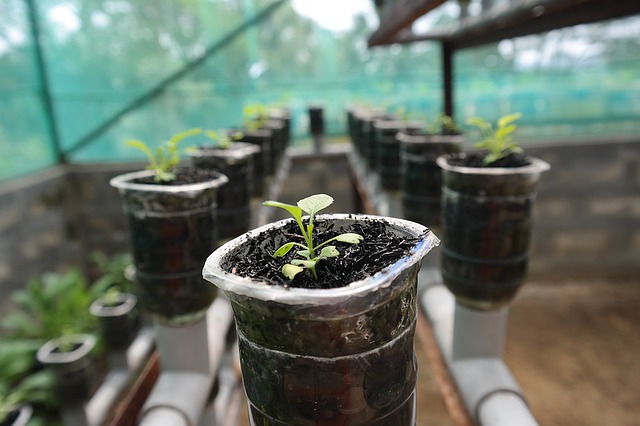
Aquaponics is an integrated food production system that combines raising fish in man-made containers (aquaculture) and growing plants without any soil or soil-like media (hydroponics).
What if there was a method to grow food that in your backyard that was stunningly more productive than growing in the ground? And at the same, what if this same food production system involved considerably less work from a human standpoint? Sounds too good to be true, right?

Tim Mann wearing the hat.
That"s what I thought when my husband, with great enthusiasm, told me about aquaponics in 2007. Although initially extremely skeptical, I could certainly see the value of becoming a farmer, as the Global Financial Meltdown had already begun to devastate our 20-year-old Hawaiian architectural design firm. We plunged in headlong, desperately seeking new financial start, and it turned out to be the best move we"ve ever made. As it turns out, not everyone needs a vacation home in Hawaii, but everyone needs to eat, so we felt confident moving into this relatively unknown field as new farmers, although neither of us had even managed to keep a houseplant alive!
2017 marks our tenth anniversary as primary food producers and teachers of aquaponics. In that decade, we achieved some notable success, simply by being unwilling to take "No" for an answer, especially from the government. We were the first aquaponics farm ever to be USDA Certified Organic in 2008 as well as the first to obtain USDA Food Safety Certification for Good Agricultural Practices in 2009. Our farm remains the only aquaponics farm to deliver to a "Big Box" store, from 2009-2011.
Out of sheer necessity, since we have been entirely self-funded, we"ve worked very hard to minimize both the cost of initial construction as well as the costs of ongoing operations. As such, the technological adaptations we"ve made have attracted a quite a bit of interest from others interested in the field, and we"ve developed a number comprehensive DIY manuals and AutoCAD plans (a skillset happily leftover from our defunct architectural design business). Our philosophy is simple. We believe in the transfer of information rather than the selling (and shipping!) of "stuff," so we"ve never sold kits. We also don"t want anyone else to make the same mistakes we have made, because some of those mistakes have come close to bankrupting us, one of which ended us up in Federal prison for a short, three-month stay!
Our experience over the past decade, combined with that of thousands of students all over the world, means I am no longer skeptical in the least. However, with my background in hard science, while I have personally experienced the real difference that an aquaponics system can make in the economy of a family, I was interested quantifying as much as possible how much more productive an aquaponics system is over that of a backyard dirt garden.
Of course, aquaponics shares many of the benefits of dirt gardening, which are well-researched and equally well understood:
• Stress relief
• More creativity
• Better mental health
• Increased vegetable consumption
• Sense of satisfaction and accomplishment
• More joy
• Increased sense of connection with nature
• Relationship building
• Greater sense of belonging
• Increased economic independence
• Greater feeling of ownership
• Better physical health: lower blood pressure, lowered need for pain relief, shorter healing time
• Greater opportunity for the elderly and people with physical limitations for involvement in something that matters.
• Increased skill sets that build confidence and brain power!
• And of course, growing even a small portion of your own food will save you money.
Of course, how productive any food production method you use ultimately depends entirely upon you - how hard you work, how much time and attention you pay to your food production method, the quality of the seeds you use, how much sun or artificial lighting your garden gets, what kind of vegetables you plant, and so on. There’s quite a large range involved in answering this question, because there are so many variables.
But how is aquaponics different? Is it more productive? If so, by how much? And how much does it cost to get started, compared to a dirt garden?
To help answer this question, we need more than just our experience - we needed detailed information for what a dirt garden costs and what it produces.
I was lucky to find some exceptionally detailed and specific results from an experienced backyard dirt gardener who kept meticulous records over a single growing season in Maine, Zone 5b/6, with only a five-month growing season. Roger Doiron is the power and passion behind Kitchen Gardeners International, a global nonprofit of 35,000 gardeners helping others to grow their own good food. Roger describes himself as a "Father, husband, son, brother and uncle. Garden activist, advocate, writer, speaker and photographer. Founder of KGI and certified garden geek. Growing lots of good stuff on the coast of Maine."
Roger"s March, 2009 blog post allowed us a very nearly perfect comparison between what a dirt garden and a backyard aquaponics garden can produce. It was this blog post that prompted Tim to write a spreadsheet based on our averages of ten different aquaponic-grown crops. This allows us an almost “apples-to-apples” comparison of what you can do with a Backyard Aquaponics Garden, in one-tenth the space of a dirt garden.
From Mr. Doiron"s blog post, on the results he and his wife produced in the ground, in a 1600 sq. ft. backyard garden:
By the time we had finished weighing it all, we had grown 834 pounds and over six months worth of organic food (we’re still eating our own winter squash, onions, garlic, and frozen items like strawberries, green beans, and pesto cubes). Once we had the weights of the 35 main crops we grew, we then calculated what it would have cost us to buy the same items using three different sets of prices: conventional grocery store, farmers’ market and organic grocery Store (Whole Foods, in our case). The total value came to $2196.50, $2431.15, and $2548.93, respectively.
After adjusting everything in the spreadsheet to reflect Mr. Dioron"s results as closely as possible (a 21.5-22 week growing season, and using the prices he used for what he would have had to pay at a Farmer"s Market, below is what the spreadsheet showed the results would be for a 128 sq. ft. backyard aquaponics system. I used our results in Hawaii to estimate average plant weight, average cycle time, and average wastage (because not all of what you grow is edible). The reality is, because of increased day-length in the summer in Maine (14-15.5 hours), the first two of these numbers are quite conservative, since Hawaii"s day-length is only 12 hours in the summer. Here is the entire spreadsheet, click to enlarge.
Below is the first part of the comparison spreadsheet, showing cultivars I selected that grow well in aquaponics, and with which I have a lot of experience. Of course, you"d have more variety for a home garden, as did Mr. Doiron, but this is just for the sake of comparison - and a spreadsheet with 35 cultivars would be tremendously cumbersome, and some of the things he grew (peaches, carrots, garlic, potatoes, artichokes, asparagus) could not be grown in an aquaponics system (but could be grown in the ground and watered with aquaponics water). Other than those six items, I have grown everything on his list in our raft systems, including root vegetables like onions, shallots, and rutabaga (turnip), all of which grew on top of the rafts, completely clean!
Following the spreadsheet over to the right, you will see a column that shows the plants per square foot. This seems to be an astonishing number that will seem completely impossible at first glance, but with the planting techniques we"ve developed, it"s very easy to achieve this planting density. This works by crowding the seedlings when they are very small in sprouting tables as well as in rafts with very close hole-spacings, then moving the plants to rafts with larger hole-spacings as they grow - all with no transplant shock whatsoever. Other columns to note are the cycle time (time in the main system, NOT in the sprouting table), and the estimated percentage of the plant is edible, which is based upon my direct experience here in Hawaii, where we have a mind-bending number of hungry insects, given we have no hard winter to kill them off.
Over to the far right, the last few cells show total pounds produced, and the price per pound that Mr. Doiron used in the middle column of his pricing list (the Farmer"s Market prices). This column, along with matching his growing season in weeks, is what allowed me this almost "apples-to-apples" comparison.
And from the top of the spreadsheet, the results:
So, Mr. Doiron and his wife harvested 834 pounds, for Farmer"s Market value of $2431.15. Our projections show a slightly lower poundage harvested (772), but for a much higher value ($4381.78) largely due to planting density, rapid cycle time, and selecting the most valuable vegetable varieties to grow instead of all of the ones Mr. Doiron used.
But what about expenses? From Mr. Doiron"s blog:
On the cost side, we had $130 for seeds and supplies, $12 for a soil test, and exceptional costs of $100 for some locally-made organic compost we bought for our “This Lawn is Your Lawn” front yard garden (normally, we meet most of our soil fertility needs through our own composting). I don"t have a scientific calculation for water costs, but we don"t need to water much and, when we do, water is relatively cheap in Maine. Also, I mulch my beds pretty heavily to keep moisture in and weeds down. Let"s say $40 in water. So, if we consider that our out-of-pocket costs were $282 and the total value generated was $2431, that means we had a return on investment of 862%. The cost of our labor is not included because we enjoy gardening and the physical work involved. If I am to include my labor costs, I feel I should also include the gym membership fees, country club dues, or doctors’ bills I didn’t have.
Depending upon where you in the world, a 128 sq. ft. DIY aquaponics system of our design (what we call a "MicroSystem 128") costs around $1,400 to build, or $1.70 per plant space, including the cost for the plans - ($99), with you sourcing most items locally from a building supply store. The time it takes to build is between 16-32 hours; total space required is 12 feet by 20 feet, or 240 sq. ft., and if it"s well-built and well-maintained, it will last for many years. (And in addition, it’s movable!)

The MicroSystem 128 uses 48 watts of electricity per month, which costs $3-4 in most places on the continental United States, but is between $12-15 in Hawaii; $2-4 of fish food per month ($4-6 in Hawaii); and $8-10 of seeds and potting media per month ($12-14 in Hawaii) for a monthly cost to operate of $13-18 ($28-35 in Hawaii - the price of living in paradise!).
Aquaponics uses only about 2% of the water that growing in the ground uses, and no water at all if you get 20-25" of rain with appropriate catchment. However, to keep things simple, let"s just say that our 128 uses half the water that Mr. Doiron did, or $20 for the entire growing season.
In addition, for an aquaponics system in a temperate environment will have to purchase fish at the start of the growing season, for a cost of around $50.
So, for the purposes of comparison, that gives us total costs for the entire 22 week growing season of $141.50-169.00 (mainland prices). Averaging these numbers gives us $155.25. Using the total value if we"d purchased all this produce from a Farmer"s Market, at the prices Mr. Doiron posted, $4381.78, we get an astonishing return on investment of 2822%, or about three times more value than gardening in the ground!
Things get even more interesting when we read a bit more of Mr. Doiron"s blog, where he says (emphasis mine):
If you really want to play around with the data, you can calculate how much a home garden like ours produces on a per acre basis. If you use the $2400 figure and consider that our garden is roughly 1/25th of an acre, it means that home gardens like ours can gross $60,000/acre. You can also calculate it on a square foot basis, which in our case works out to be roughly $1.50/sq.ft.
Keep in mind that these are averages and that certain crops are more profitable and space efficient than others. A small garden planted primarily with salad greens and trellised tomatoes, for example, is going to produce more economic value per square foot more than one planted with potatoes and squash.
So, we see that the value per square foot of a backyard aquaponics system is $34.23 per square foot! WOW!
In addition, in an aquaponics system, there is no fertilizing, no mulching, no weeding, no soil pathogens, no watering, no transplant shock when you move a plant to another location, and best of all, there"s no bending over, or kneeling, and you can even sit in the shade while you do your seeding, transplanting, and harvesting!
So, for about half the ongoing operational costs of Mr. Doiron"s 1600 sq.ft. dirt garden, in 240 sq. ft, or about 15% of the space, you can grow almost as much produce, but with a much higher value (~$2000 more), all for far less work. And it"s guaranteed organic!
In addition, Mr. Doiron did not have fish to harvest along the way from his in-ground garden! He could have had a big fish fry in the fall, and invited his friends! Or, he could have decided to move his aquaponics system indoors for the winter, into a warm garage or basement, or even build a MicroSystem Aquaponics Solar Greenhouse, and keep gardening all winter!
Here"s a link to the comparison spreadsheet, from which the above screenshots are taken. It"s an Excel file, so you must have MicroSoft Excel installed on your computer to open it.
Here is the link to a General Spreadsheet, which is also an Excel file. It will allow you to determine the viability of an aquaponics system in your location. It"s filled with numbers which are average for our location, but which are essentially meaningless for yours: to get honest results for your location, you"re meant to input real numbers based upon your experience, your growing season, and prices in your area. You add the length of your growing season, your cycling time, your favorite aquaponics crops, the weights of plants you"ve grown, and the prices at your local grocery store, Farmer"s Market, or Whole Foods. The only numbers you might want to keep are the plants per square foot, but only if you"re using our High Density Planting Techniques!
Important: If you’re not familiar with spreadsheets, they can seem a little intimidating, but they are such a powerful tool that we urge you to climb the learning curve – it’s totally worth it! Here is a Word doc that will assist you in understanding how to use the Comparison Spreadsheet.