Showing posts with label bleaching. Show all posts

Monday, December 4, 2017

San Diego Continues Desperate Attempt To Control Hepatitis A Outbreak

tentsandiego


San Diego is desperately trying to control a Hepatitis A outbreak brought on by the homeless problem plaguing the state of California. The city has now opened the first of three giant tents meant to contain the outbreak of the deadly virus.


The first of three industrial-sized tents to house the homeless as part of the city’s efforts to contain a hepatitis A outbreak.  The outbreak itself stems from the deplorable conditions people were living in on the streets – mainly, the fecal matter that is left from those who live on the street.  Of course, the government isn’t going to climb off the backs of their residents in California, instead, they will continue to raise taxes and create more homeless people while desperately and frantically trying to stop the problems that their overbearing government has caused.


About 20 people made their way to a bunk bed Friday in the tent that will house 350 single men and women. Two other giant tents will open later this month — one specifically for families and one for veterans. The tents will house a total of 700 people with an attempt to keep them from defecating on the street and spreading the Hepatitis A virus. 


More than 3000 people are homeless in San Diego, and risk contracting the disease which has killed 20 people so far.  The city had to divert $6.5 million budgeted for permanent housing to fund the operation of the tents for seven months. The tents will provide an array of services from mental health care to housing navigators. But the city still faces an acute housing shortage for the poor. Faulconer has earmarked more than $80 million in stolen (taxpayer) funds to address the problem. So the city wants to fix poverty by taking more from earners and creating more poverty.  Bravo, California.


Local residents are concerned that the homeless will simply bring their disease with them.  Gemma Librado lives a block away from the tent that opened Friday. Last Sunday, a homeless man high on drugs and with a bleeding hand ran into her apartment when she opened the door and locked himself in her bathroom. She and her 6-year-old son ran out of the apartment and called the police. The man broke things in her bathroom, left bloodstains on her floor, and scared her and her child. “If this makes things more orderly than I support this,” she said. “But I’m worried. I don’t want this to bring in more homeless to the area and people using drugs. There are families with children around here.”

 

Wednesday, October 19, 2016

Reports of Great Barrier Reef’s Death Have Been ‘Greatly Exaggerated’

New images of the Great Barrier Reef show that rising water temperatures have severely damaged the world’s largest reef system, which stretches for over 1,400 miles off the coast of Australia. [1]

How bad is it? Hmm. It depends on who you ask.

One scientist who visited the reef said that “if it was a person, it would be on life support.”


Last week, Outside Magazine reported that the Great Barrier Reef had “passed away in 2016 after a long illness.” Well, it’s not dead, but some researchers say it’s just barely hanging on. [2]


In May, researchers found that more than 1/3 of the coral in northern and central parts of the reefs was dead, and 93% of individual reefs had been affected by coral bleaching. [1]


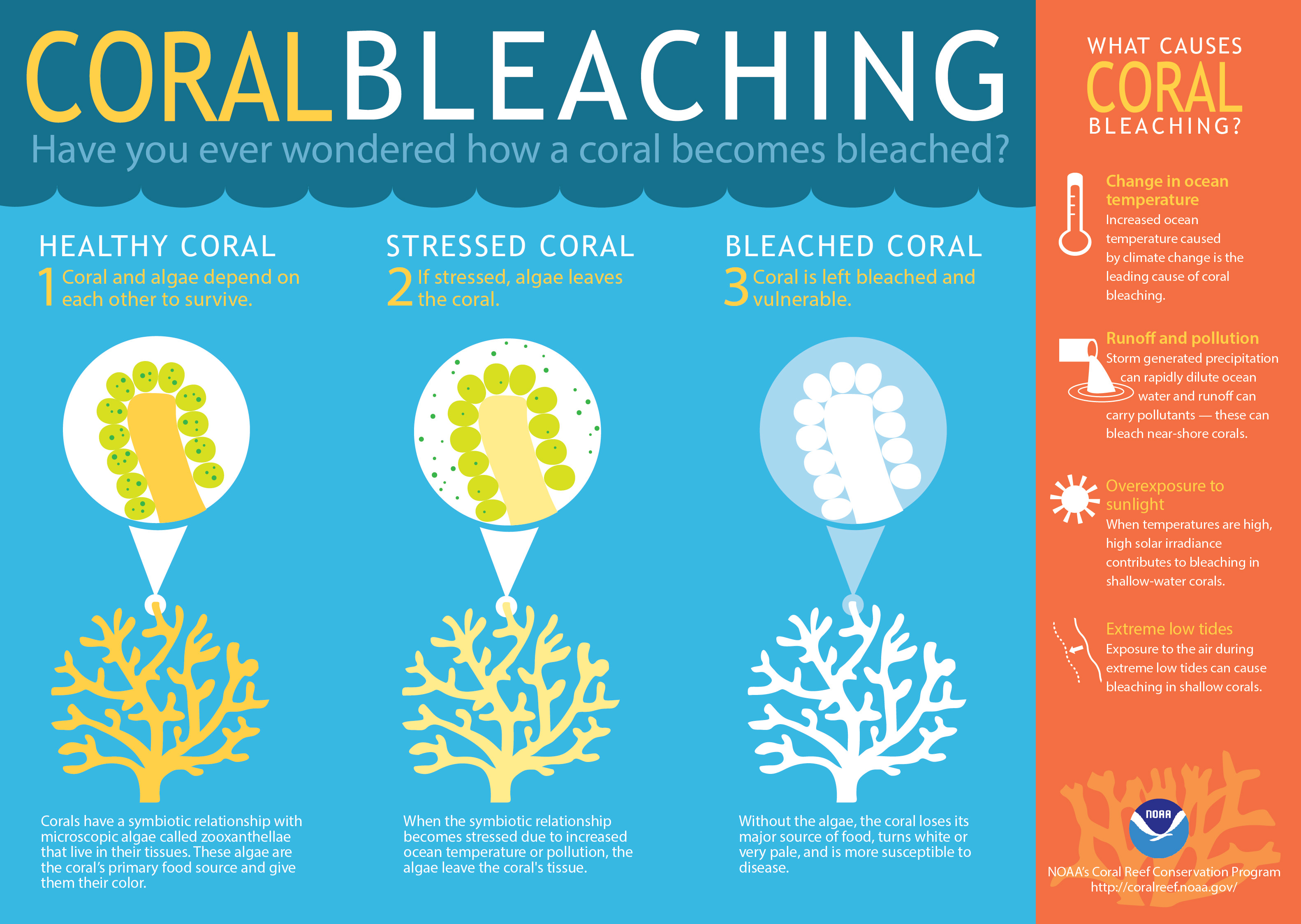
When the water gets too warm, corals expel zooxanthellae algae living in their tissues, causing the coral to turn completely white. Corals can survive bleaching, but it puts them under great stress and makes them more likely to die. [3]


The algae provide about 90% of the coral’s energy. Without it, the coral eventually starves to death. [2]


Scientists say the problem is getting worse.


Amanda McKenzie, CEO of the Australian Climate Council, said:


“After the bleaching event in May, 60 per cent of what we saw was bleached very white. Another 19-20 per cent was covered in sludgy brown algae. Even of what remained healthy, some looked a bit on edge.


When we went back a few weeks ago to see if they had recovered or died, quite a large proportion had died.” [1]


McKenzie estimated that approximately half of the bleached corals they visited had died, and that the bleaching had mostly affected delicate corals rather than the stronger “brain corals.”


McKenzie and her colleagues also found fewer species of fish around the reef.


Professor Tim Flannery said that coral he visited in September was “bleached and in danger a few months back has now mostly died.”


image-coralbleaching-large-710
Click for larger version.

He added:


“On top of that we’ve seen a whole lot of new damage, a whole lot of white coral out there that’s been killed by Crown of Thorns starfish because it was too weak to defend itself. If it [the reef] were a person, it would be on life support.”


Russell Brainard, chief of the Coral Reef Ecosystem Program at NOAA’s Pacific Islands Fisheries Science Center, said it’s unfortunate that Outside Magazine posted a premature obituary for the reef, because it can make people who don’t know any better lose hope and think that nothing else can be done. [2]


Terry Hughes, director of the ARC Centre of Excellence for Coral Reef Studies, agreed. He said:


“The message should be that it isn’t too late for Australia to lift its game and better protect the Great Barrier Reef, not we should all give up because the Great Barrier Reef is supposedly dead.”


More than Half is Still Living


But despite all the dire warnings and concerning discoveries by researchers who have visited the Great Barrier Reef, the truth is that more than half of it is still alive. Brainard said that “These natural systems do have some ability to be resilient and bounce back.”


Source: National Geographic - A healthy section of the Great Barrier Reef
Source: National Geographic – A healthy section of the Great Barrier Reef

In March 2015, the Australian government unveiled its Reef 2050 Plan to help save the Great Barrier Reef. The plan includes improving water quality to help corals recover from bleaching. Rerouting boats around the reef, limiting fertilizer and sewage runoff that damages coral, and avoiding overfishing key animals that eat excessive algae can also save the Great Barrier Reef.


The only drawback of the plan is that improving water quality will cost $8.2 billion in the next decade, 10 times what the local and federal governments currently spend.


Sources:


[1] The Telegraph


[2] The Verge


[3] National Ocean Service


National Geographic


Storable Food


About Julie Fidler:


Author Image
Julie Fidler is a freelance writer, legal blogger, and the author of Adventures in Holy Matrimony: For Better or the Absolute Worst. She lives in Pennsylvania with her husband and two ridiculously spoiled cats. She occasionally pontificates on her blog.