Showing posts with label Dmitri Alperovitch. Show all posts

Wednesday, November 1, 2017

North Korean Cyber Threat: ‘The Difference Between Theft And Destruction Is Often A Few Key Strokes’

northkoreacyberattack


Global banks are preparing to defend themselves against a potential North Korea hacking attack. Cybersecurity experts worry that North Korea will continue to embolden themselves as the threat of United State military action over the nuclear program looms.


The threat to banking institutions is very real. North Korean hackers have stolen hundreds of millions of dollars from banks during the past three years. A 2016 heist at Bangladesh Bank yielded $81 million, according to Dmitri Alperovitch, chief technology officer at cybersecurity firm CrowdStrike. “We know they attacked South Korean banks,” said security teams in the United States. They added that fears have grown that banks in the United States will be targeted next.


The North Korean government has repeatedly denied accusations of hacking by security researchers and several governments that it has carried out cyber attacks.  But Alperovitch told the Reuters Cyber Security Summit on Tuesday that banks were concerned Pyongyang’s hackers may become more destructive by using the same type of “wiper” viruses they deployed across South Korea and at Sony Corp’s Hollywood studio.


North Korean hackers could use what they have learned through previous cyber heists about financial networks gathered to disrupt banking operations, according to Alperovitch. He also said his firm has conducted “war game” exercises for several banks fearing a North Korean attack.


“The difference between theft and destruction is often a few keystrokes,” Alperovitch said.


John Carlin, a former U.S. assistant attorney general, told the Reuters summit that other firms, among them defense contractors, retailers, and social media companies, were also concerned. “They are thinking ‘Are we going to see an escalation in attacks from North Korea?’” said Carlin, chair of Morrison & Foerster international law firm’s global risk and crisis management team.


Some others say that it is highly unlikely North Korea will use cyber tactics to attack the US because the rogue regime fears retaliation. Jim Lewis, a cyber expert with Washington’s Center for Strategic and International Studies, is one of those persons. He said it is unlikely that North Korea would launch destructive attacks on American banks because of concerns about the reaction from the US.


The concerns appear valid when considering North Korea is defying the sanctions placed on them demanding they abandon their quest to obtain nuclear weapons.

Tuesday, June 6, 2017

Based Bilderberg Protester Lays Out Path To Dollar Destruction


Content originally generated at iBankCoin.com


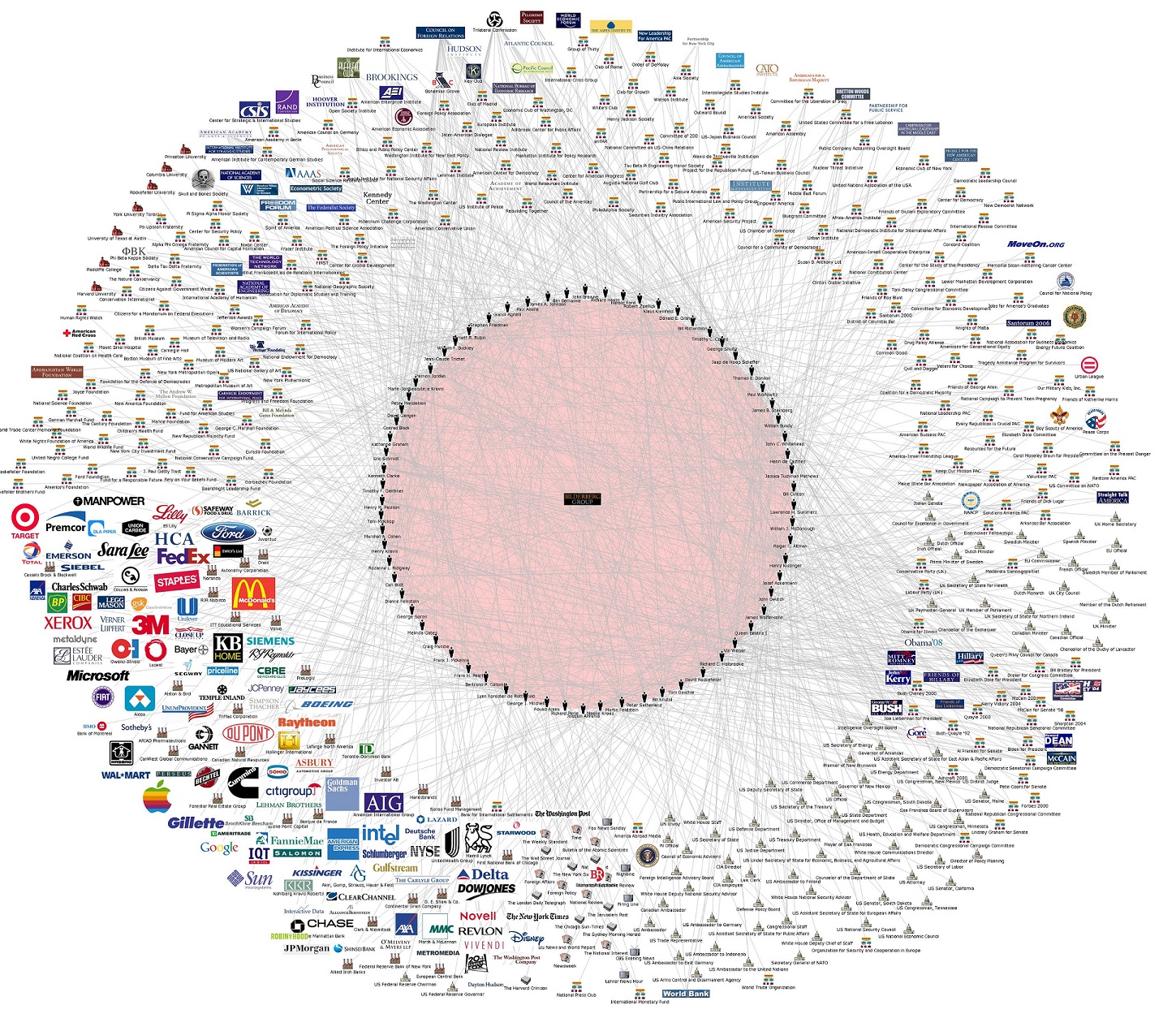
A secretive group of 131 elite power brokers met last weekend at the heavily guarded Westfields Marriott in Chantilly, Virginia for the highly secretive annual Bilderberg meeting.


Established in 1954 by Polish political advisor Józef Retinger - founder of the European Movement which gave birth to the EU, the informal meeting of over 130 of the world"s top bankers, politicians, spymasters, and titans of industry has been referred to as the world"s largest lobbying event. (guest list)


In addition to barring the press from the invitation-only meeting, participants are under strict rules regarding conduct:


“No minutes will be taken. No reporters will be allowed in. There will be no opening press conference, no closing statement, and participants will be asked not to quote each other,” -Independent.uk


Redpilled Nation


Thanks to the explosive growth of alternative media, the public has been able to educate themselves on topics such as high level collusion, MSM propaganda, the mechanics of debt, ISIS, globalism, the bottomless pit of ongoing conflict and regime change.


As a result of this "redpilling," a growing number of activists around the world have been making the journey to Bilderberg meetings to protest the meetings - which has even attracted the attention of the MSM in recent years. In fact, according to InfoWars, this year"s Bilderberg was the most covered in history.


Based Trump supporter


To that end, independent Journalist Jack Posobiec ran into a gentleman, identified only as a Trump supporter, who spoke his mind about the "70 year old regime" established after WWII which created NATO and standardized global trade to revolve around US Dollar as the reserve currency.


According to the man, the "Atlanticists" (a.k.a. Western globalists) are in big trouble - and so is the future of the US Dollar.


[an aside regarding Atlanticists: The DNC hired Crowdstrike to cobble together the Hacking report used as evidence in the Russian influence investigation. Notably, Crowdstrike founder Dmitri Alperovitch sits on the Atlantic Council along with loose-lipped DNC operative Evelyn Farkas and a Ukrainian oligarch who’s also a Clinton Foundation donor that apparently owns the Ukrainian gas company Joe Biden’s son is on the board of.]


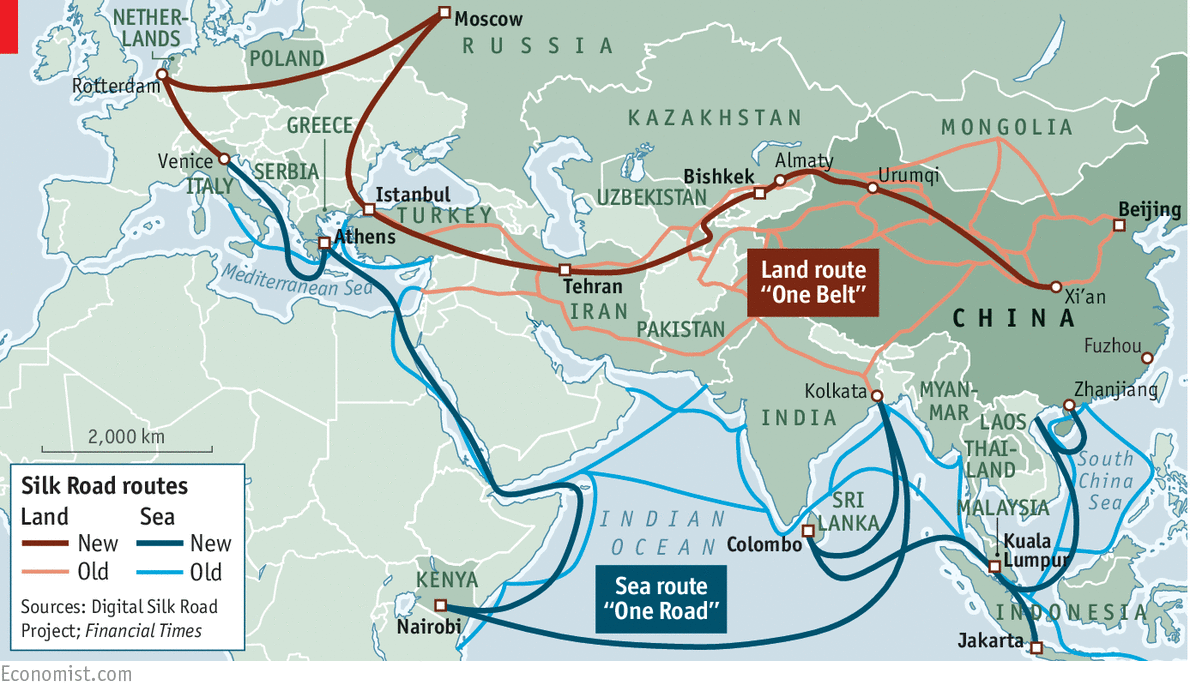
According to based Trump supporter, the West needs to get with the program and acknowledge "Eurasian Sovereignty" and China"s evolving trade agreements with nations around the world as part of their "One Belt One Road" (or OBOR) economic plan (Of note - the Trump administration sent a delegation to the OBOR summit held three weeks ago).


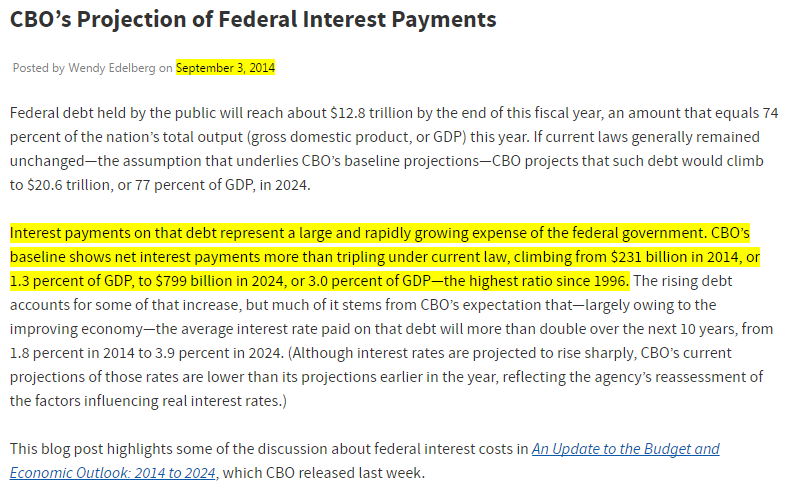
The man then discussed the USA"s immense national debt, and while he may have made a small mistake remembering CBO projections on interest paid to the Federal reserve - he"s absolutely right about several things which iBankCoin and ZeroHedge readers are no stranger to; Federal Debt is out of control and is set to become one of the Govt"s largest expenditures.


Furthermore, the US Fed has been able to print money with near impunity because of its enormous GDP, as well as an ongoing synthetic demand for US Dollars due to it"s status as the global reserve. With more and more canaries coughing and sputtering in the coal mine of Western finance, however, it"s obvious that debt-fueled economic expansion and the US Dollar are in big trouble.


So what can we do about it?


With the USD"s reserve status being actively undermined, and despite several attempts to maintain it"s luster - based Bilderberg protestor says the United States needs to get in on OBOR before it"s too late.


If the American people were smart, they would ask to get in on OBOR, and what would be the best way? President Vladimir Putin proposed a project digging a tunnel from Siberia to Alaska- and having a railroad and infrastructure and highways connecting the two. Then we"d be linked to OBOR. We would be part of that economy.


That project would be kind of like what the Panama Canal was 100 years ago that connected two great oceans....


And while joining OBOR may not solve the problems of insane Federal debt, systemic risk from derivatives, or an enormous budget deficit - exploring more efficient trade and strengthened Eurasian relationships may make for a smoother transition into a post Bretton-woods regime.

Wednesday, April 5, 2017

Cyber Firm Behind “Russian Hacking” Claims Has Ties To Soros-Supported Think Tank

Via Disobedient Media


The cyber firm Crowdstrike has been one of the main proponents of allegations that Russia interfered in the 2016 American presidential elections using their cyber capabilities. The analysis performed by Crowdstrike was relied on almost exclusively by the Democratic National Committee (DNC) to establish their claims of "Russian hacking."


It has subsequently been revealed that Crowdstrike has in the past both misrepresented data in an attempt to frame the Russian government for cyber attacks and also failed to account for known capabilities of third parties which enable them to impersonate Russian hackers. The founder of Crowdstrike is also tied to the Atlantic Council, a think tank supported by George Soros which has been accused of accepting funds in exchange for support of favored policy positions as well as promoting disinformation and propaganda attacks against anti establishment figures.


I. Crowdstrike"s Claims Of Russian Hacking Cannot Be Independently Verified By Government Agencies, Ignore Known Attribution Techniques


On June 14, 2016, Crowdstrike published a study commissioned by the DNC, in which they accused the Russian government of breaching the DNC"s computer systems. The DNC"s choice to rely on Crowdstrike exclusively was incredibly controversial. CNN reported that the DNC actually refused to grant the FBI access to their servers despite the agency"s explicitly stating that they could conduct a satisfactory investigation if they were forced to rely on third party data. The report by Crowdstrike stood as one of the first definitive authorities which has found evidence of Russian cyber infiltration or electronic meddling in the 2016 elections. Rather than confirm the notion that Russia interfered in American elections, a number of other developments since Crowdstrike"s report have cast increasing doubt on their claims and in fact have suggested that they may be part of a widespread attempt to push disinformation for financial gain and benefit to the groups clients and affiliates.


Alarming indicators that Crowdstrike may have been promoting the idea of "Russian hacking" out of ulterior motives began to emerge almost immediately after their report was released. On July 28th, 2016, The Washington Post reported that Crowdstrike was one of a number of cyber security firms making a large profit thanks to widespread fears about Russian hackers. Beyond running a report which would satisfy the DNC, the drumming up of fear about Russian cyber menaces meant created a blatant potential conflict of interest for Crowdstrike.


Crowdstrike"s analysis also ignored known capabilities, since publicized by Wikileaks in their Day Zero and Marble releases from the Vault 7 series, which have proven the existence of cyber capabilities that allow programmers mask the identity of their malware and masquerade it as belonging to foreign intelligence agencies and mimic their online attack methods. They have also shown that many programmers have the ability to create an appearance of ‘false attribution’ which gives the impression that the malware was created by another country, even mimicking the native language of the host country they intend to attribute the attack to.


II. Crowdstrike Has Misrepresented Data In Order To Push Anti-Russian Narratives


On December 22nd, 2016, Crowdstrike ran another report, alleging that Russians hacked into a Ukrainian artillery app, resulting in heavy losses of howitzers in Ukraine’s civil war with Russian-backed separatists. The report was intended to buttress its claims of Russian hacking in the presidential election. The report was immediately contested by Yaroslav Sherstyuk, maker of the Ukrainian military app in question, who called the company’s report “delusional.” On March 23rd, 2017, Voice of America (VOA) ran a damning piece citing British think tank the International Institute for Strategic Studies (IISS), who stated that CrowdStrike erroneously used IISS data as proof of the intrusion. Furthermore, the IISS disavowed any connection to the CrowdStrike report. The Ukrainian Ministry of Defense also claimed that the combat losses and hacking never happened, meaning that Crowdstrike had apparently fabricated facts and details in the report completely.


Crowdstrike told VOA that they stood by their findings. But the next day VOA noted that Crowdstrike had altered their report, deleting key assertions they had made in the report about Ukrainian army losses, claims that a malware infection contributed to artillery losses and a link to IISS data which they had cited. The humiliating redactions apparently came after Crowdstrike had spoken with an IISS research associate for defense and military analysis. The apparent misrepresentation of data which had been intended to support Crowdstrike"s claims of Russian hacking creates serious questions about the merits of their claims that Russia was behind alleged hacks of the DNC"s computer systems earlier that year.


III. Crowdstrike Has Ties To The Soros-Supported Atlantic Council


Further investigation has revealed that Crowdstrike has deep ties to a think tank which has a history of pay to play practices and a track record of seeking to foment confrontation between the United States and Russia. Crowdstrike founder Dmitri Alperovitch acts as a Senior Fellow for the Atlantic Council. In February, Disobedient Media reported that the Atlantic Council has a troubling history of taking money from foreign special interest groups and government agencies in return for pushing propaganda to support various initiatives around the globe. The New York Times has named the Atlantic Council along with the  Brookings Institution and the Center for Strategic and International Studies as being think tanks which have made undisclosed “agreements” with foreign governments. The article denounced the Atlantic Council for having “opened a whole new window into an aspect of the influence-buying in Washington that has not previously been exposed.”


In May 2016, a report by the Associated Press identified the Atlantic Council as one of a number of think tanks which had received funding from the Ploughshares Fund, which was a major player in efforts to sell the Iranian nuclear deal to the American public. The Ploughshares Fund is financed by George Soros’ Open Society Foundation. The Atlantic Council consistently promotes hostile, anti-Russian rhetoric. The organization has also promoted unsourced and unfounded claims that Russia was responsible for “hacking” the 2016 U.S. presidential elections despite the fact that this conspiracy theory has been resoundingly debunked by various authorities in the intelligence community and by multiple media sources. The Atlantic Council, unfazed by the evidence that their claims of hacking were false, have continued to promote these falsehoods in the aftermath of the election in what appeared to be a possible effort to undermine American democratic institutions.


IV. Conclusion


The tight relationship between Crowdstrike and a think tank which also has a long track record of promoting unproven claims about Russian hacking, their failure to account for false attribution techniques commonly used by programmers to frame other countries for hacking attacks and their history of making factually untrue and misleading claims about Russian hacking creates concerns about their ability to objectively report on whether or not the DNC"s servers were breached by a foreign actor during the 2016 elections. Their association with the DNC comes at a time when the party has been attempting to craft a narrative of alleged Russian hacking to support their election bids in the upcoming 2018 U.S. midterm elections and delegitimize the victories of their political opponents in 2016.


The Atlantic Council"s past relationship with George Soros is also problematic given that Soros has deep financial ties to groups organizing resistance movements as part of an attempt to enact regime change in the United States. As former CIA Director Michael MorellJames Clapper and the Office of the Director of National Intelligence have all clearly stated that there is not, nor has ever been any evidence that Russian hacking affected any election results in the 2016 U.S. Presidential Elections, the efforts of Crowdstrike to promote claims to the contrary raises serious questions about their research as well as the intentions of the DNC in preventing neutral federal regulatory agencies from examining their servers firsthand to verify the claims.

Wednesday, March 29, 2017

"Something Stinks Here" - CrowdStrike Revises, Retracts Parts Of Explosive Russian Hacking Report

Authored by Mike Krieger via Liberty Blitzkrieg blog,


Last week, I published two posts on cyber security firm CrowdStrike after becoming aware of inaccuracies in one of its key reports used to bolster the claim that operatives of the Russian government had hacked into the DNC. This is extremely important since the DNC hired CrowdStrike to look into its hack, and at the same time denied FBI access to its servers.


Before reading any further, you should read last week’s articles if you missed them the first time.


Credibility of Cyber Firm that Claimed Russia Hacked the DNC Comes Under Serious Question


What is CrowdStrike? Firm Hired by DNC has Ties to Hillary Clinton, a Ukrainian Billionaire and Google


Now here are the latest developments courtesy of Voice of America:


U.S. cybersecurity firm CrowdStrike has revised and retracted statements it used to buttress claims of Russian hacking during last year’s American presidential election campaign. The shift followed a VOA report that the company misrepresented data published by an influential British think tank.


In December, CrowdStrike said it found evidence that Russians hacked into a Ukrainian artillery app, contributing to heavy losses of howitzers in Ukraine’s war with pro-Russian separatists.


VOA reported Tuesday that the International Institute for Strategic Studies (IISS), which publishes an annual reference estimating the strength of world armed forces, disavowed the CrowdStrike report and said it had never been contacted by the company.


CrowdStrike was first to link hacks of Democratic Party computers to Russian actors last year, but some cybersecurity experts have questioned its evidence. The company has come under fire from some Republicans who say charges of Kremlin meddling in the election are overblown.


After CrowdStrike released its Ukraine report, company co-founder Dmitri Alperovitch claimed it provided added evidence of Russian election interference. In both hacks, he said, the company found malware used by “Fancy Bear,” a group with ties to Russian intelligence agencies.


CrowdStrike’s claims of heavy Ukrainian artillery losses were widely circulated in U.S. media.


On Thursday, CrowdStrike walked back key parts of its Ukraine report.


The company removed language that said Ukraine’s artillery lost 80 percent of the Soviet-era D-30 howitzers, which used aiming software that purportedly was hacked. Instead, the revised report cites figures of 15 to 20 percent losses in combat operations, attributing the figures to IISS.


Finally, CrowdStrike deleted a statement saying “deployment of this malware-infected application may have contributed to the high-loss nature of this platform” — meaning the howitzers — and excised a link sourcing its IISS data to a blogger in Russia-occupied Crimea.


In an email, CrowdStrike spokeswoman Ilina Dmitrova said the new estimates of Ukrainian artillery losses resulted from conversations with Henry Boyd, an IISS research associate for defense and military analysis. She declined to say what prompted the contact.


Dmitrova noted that the FBI and the U.S. intelligence community have also concluded that Russia was behind the hacks of the Democratic National Committee, Democratic Congressional Campaign Committee and the email account of John Podesta, Hillary Clinton’s campaign manager.


Here’s the problem. Yes, the FBI has agreed with CrowdStrike’s conclusion, but the FBI did not analyze the DNC servers because the DNC specifically denied the FBI access. This was noteworthy in its own right, but it takes on vastly increased significance given the serious errors in a related hacking report produced by the company.


As such, serious questions need to be asked. Why did FBI head James Comey outsource his job to CrowdStrike, and why did he heap praise on the company? For instance, back in January, Comey referred to CrowdStrike as a “highly respected private company.”


In a hearing with the Senate Intelligence Committee Tuesday afternoon outlining the intelligence agencies’ findings on Russian election interference, Comey said there were “multiple requests at different levels” for access to the Democratic servers, but that ultimately a “highly respected private company” was granted access and shared its findings with the FBI.


Where does all this respect come from considering how badly it botched the Ukraine report?


Something stinks here, and the FBI needs to be held to account.

Friday, January 6, 2017

DNC Refused FBI Access to Its Servers … Instead Gave Access to a DNC Consultant Tied to Organization Promoting Russia Conflict

CNN reports:


The Democratic National Committee "rebuffed" a request from the FBI to examine its computer services after it was allegedly hacked by Russia during the 2016 election, a senior law enforcement official told CNN Thursday.


"The FBI repeatedly stressed to DNC officials the necessity of obtaining direct access to servers and data, only to be rebuffed until well after the initial compromise had been mitigated," a senior law enforcement official told CNN. "This left the FBI no choice but to rely upon a third party for information.


***


The FBI instead relied on the assessment from a third-party security company called CrowdStrike.


As first reported by George Eliason, CrowdStrike"s Chief Technology Officer and Co-Founder Dimitri Alperovitch - who wrote the CrowdStrike reports allegedly linking Russia to the Democratic party emails published by Wikileaks - is a fellow at the Atlantic Council ... an organization associated with Ukraine, and whose main policy goal seems to stir up a confrontation with Russia.[1]


The Nation writes:


In late December, Crowdstrike released a largely debunked report claiming that the same Russian malware that was used to hack the DNC has been used by Russian intelligence to target Ukrainian artillery positions. Crowdstrike’s co-founder and chief technology officer, Dmitri Alperovitch, told PBS, “Ukraine’s artillery men were targeted by the same hackers…that targeted DNC, but this time they were targeting cellphones [belonging to the Ukrainian artillery men] to try to understand their location so that the Russian artillery forces can actually target them in the open battle.”


Dmitri Alperovitch is also a senior fellow at the Atlantic Council.


The connection between Alperovitch and the Atlantic Council has gone largely unremarked upon, but it is relevant given that the Atlantic Council—which is funded in part by the US State Department, NATO, the governments of Latvia and Lithuania, the Ukrainian World Congress, and the Ukrainian oligarch Victor Pinchuk—has been among the loudest voices calling for a new Cold War with Russia. As I pointed out in the pages of The Nation in November, the Atlantic Council has spent the past several years producing some of the most virulent specimens of the new Cold War propaganda.


It would seem then that a healthy amount of skepticism toward a government report that relied, in part, on the findings of private-sector cyber security companies like Crowdstrike might be in order.


The Atlantic Council is also funded by the U.S. military and the largest defense contractors, including:


  • United States Army

  • United States Navy

  • United States Air Force

  • United States Marines

  • Lockheed Martin

  • Raytheon

  • Northrop Grumman

  • Boeing

[1]  Here"s an example of the Atlantic Council"s bellicose rhetoric from July 2016:


Poland should announce that it reserves the right to deploy offensive cyber operations (and not necessarily in response just to cyber attacks).  The authorities could also suggest potential targets, which could include the Moscow metro, the St. Petersburg power network, and Russian state-run media outlets such as RT.