Showing posts with label Fukushima Daiichi. Show all posts

Thursday, July 20, 2017

Nuclear Waste From Fukushima to be Dumped into the Sea

Waste water produced by the 2011 Fukushima nuclear accident will be dumped into the sea, the head of TEPCO – the Japanese company responsible for cleaning up the mess – says. As you can imagine, fishermen and environmentalists are spitting mad. [1]


The Pacific Ocean will become home to about 580 barrels of water tainted with tritium, a radioactive form of hydrogen, which was used to cool the nuclear power plant’s damaged reactors. That’s nearly 770,000 tons of waste.


Local residents had no say in the matter, and they’ve expressed outrage at the plan.


Takashi Kawamura, chairman of the Tokyo Electric Power Company (TEPCO), said:


“The decision has already been made.”


Before TEPCO can dump the radioactive material, the government must first approve the decision.


Said Kawamura:


“We cannot keep going if we do not have the support of the state.”


Local fishermen are concerned the negative publicity over the proposed waste dump will harm their livelihoods.


Kanji Tachiya, head of a local fishermen’s cooperative, explained:


“Releasing (tritium) into the sea will create a new wave of unfounded rumors, making our efforts all for naught.” [2]


The European Union (EU) as well as dozens of other countries banned certain fish imports from Japan in the wake of the disaster, which occurred after a massive earthquake and tsunami struck Japan. The Fukushima Daiichi plant suffered multiple meltdowns, and reactor No. 1 spewed radiation that has plagued the region ever since. As of March 2017, 33% of the countries that originally banned fish imports still blocked shipments of certain seafood from Japan.


Read: 2012: Fukushima Fish Have 258 Times “Safe” Level of Radiation


Generally speaking, tritium isn’t dangerous to humans, unless they are exposed to high levels of the isotope. Shunichi Tanaka, chairman of the Nuclear Regulation Authority (NRA), claims that tritium is “so weak in its radioactivity it won’t penetrate plastic wrapping.” [1]


According to oceanographer Simon Boxall, the waste “will have a minimal effect on an ocean basin scale.” [2]


Read: Fukushima Radiation Detected on U.S. West Coast


But environmental activists don’t want nuclear-waste dumping to become the norm.


Aileen Mioko-Smith of Green Action Japan said:


“They say it will be safe because the ocean is large so it will be diluted, but that sets a precedent that can be copied, essentially permitting anyone to dump nuclear waste into our seas.”


She added:


“This accident happened more than 6 years ago, and the authorities should have been able to devise a way to remove the tritium instead of simply announcing that they are going to dump it in the ocean.” [1]


Unfortunately, the technology to remove tritium from water does not exist.


Sources:


[1] Newsweek


[2] Independent


Storable Food


About Mike Barrett:


Author Image
Mike is the co-founder, editor, and researcher behind Natural Society. Studying the work of top natural health activists, and writing special reports for top 10 alternative health websites, Mike has written hundreds of articles and pages on how to obtain optimum wellness through natural health.

Saturday, May 27, 2017

Scientists Warn Corrupt US Nuclear Industry Sitting On a Nightmare Worse than Fukushima

fukushima


A catastrophe far worse than Fukushima lurks in the United States, as the Nuclear Regulatory Commission used faulty data to estimate potentially ruinous risks of a nuclear-waste fire — one which could occur at any one of dozens of sites across the country.


“Published by researchers from Princeton University and the Union of Concerned Scientists,” the latter organization reports, “the article [in the May 26 issue of the journal Science] argues that NRC inaction leaves the public at high risk from fires in spent-nuclear-fuel cooling pools at reactor sites.


“The pools — water-filled basins that store and cool used radioactive fuel rods — are so densely packed with nuclear waste that a fire could release enough radioactive material to contaminate an area twice the size of New Jersey. On average, radioactivity from such an accident could force approximately 8 million people to relocate and result in $2 trillion in damages.”


Researchers warn darkly the NRC’s recalcitrant refusal to enact crucial safety measures — including the use of dry casks to house contaminated waste — could have cataclysmic consequences for millions of people living near reactor sites.


And the NRC — a government entity unironically tasked with ensuring “the safe use of radioactive materials for beneficial civilian purposes while protecting people and the environment” — managed to shirk civic, environmental, and, arguably, ethical safety precautions by flatly dismissing viable potentialities.


“Using a biased regulatory analysis,” the Union of Concerned Scientists continues, “the agency excluded the possibility of an act of terrorism as well as the potential for damage from a fire beyond 50 miles of a plant. Failing to account for these and other factors led the NRC to significantly underestimate the destruction such a disaster could cause.”


Unsurprisingly — and nonetheless a damning testimony to egregiously skewed priorities — this inexcusable negligence through omission comes down to penny-pinching anent the NRC’s slavish devotion to the nuclear power industry.


“The NRC has been pressured by the nuclear industry, directly and through Congress, to low-ball the potential consequences of a fire because of concerns that increased costs could result in shutting down more nuclear power plants,” paper co-author Frank von Hippel lamented, as quoted by the Union of Concerned Scientists.


Von Hippel, a senior research physicist at Princeton’s Program on Science and Global Security (SGS) at the Woodrow Wilson School of Public and International Affairs, sharply admonished the public not to ignore these potential nuclear holocausts-in-waiting, adding,


“Unfortunately, if there is no public outcry about this dangerous situation, the NRC will continue to bend to the industry’s wishes.”


Edwin Lyman, a senior scientist at the Union of Concerned Scientists and study co-author, noted the NRC has fecklessly permitted plant owners and operators “to pack spent fuel into cooling pools at much higher densities than they were originally designed to handle. This has greatly increased the risk to the public should a large earthquake or terrorist attack breach the liner of a spent fuel pool, causing the pool to rapidly lose its cooling water.


“In such a scenario the spent fuel could heat up and catch fire within hours, releasing a large fraction of its highly radioactive contents. Since spent fuel pools are not enclosed in high-strength, leak-tight containment buildings, unlike the reactors themselves, much of this radioactive material could be readily discharged into the environment.”


Sufficient supply of cooling water is, of course, imperative to prevent truly calamitous consequences from a meltdown, as happened in 2011 at Japan’s Fukushima Daiichi nuclear plant, when electronic systems operating reactor cooling systems failed.


But even that disaster would have been exponentially worse, had cooling water slipped low enough to expose reactor cores to the air — which very nearly occurred in Unit 4.


Fukushima experienced core meltdowns in three of six reactors, birthing a pernicious nuclear morass which scientists now estimate could take at least another four decades to resolve. A lesson for the world, the Fukushima disaster also forced the entire industry to examine safety programs and regulations with a fine-toothed comb.


Tellingly, the NRC indeed deliberated mandating several indispensable reforms — such as requiring plant owners to transfer waste from spent fuel pools to dry casks after five years, or prohibiting packing cooling pools as densely as in the past — but, in cost-benefit analysis, decided against any of the proposals.


In fact, researchers point out that in the NRC analysis, the impotent government agency also surmised “there would be no consequences from radioactive contamination beyond 50 miles of a fire. It also assumed that all contaminated areas could be effectively cleaned up within a year. Both of these assumptions are inconsistent with experience after the Chernobyl and Fukushima accidents.”


Lyman excoriated the NRC for its refusal to mandate relatively modest improvements — around $50 million per reactor pool — as well as the industry for rebuffing any suggestion of voluntary compliance with reforms found necessary in the study of the Fukushima fiasco.


“The consequences of a fire could be truly disastrous at densely packed pools, which typically contains much more cesium-137 — a long-lived, extremely hazardous radioactive isotope — than is present in reactor cores,” Lyman wrote.


“My Princeton University co-authors have calculated, using sophisticated computer models, that a spent fuel pool fire at the Peach Bottom nuclear plant in Pennsylvania could heavily contaminate over 30,000 square miles with long-lived radioactivity and require the long-term relocation of nearly 20 million people, for average weather conditions. Depending on the wind direction and other factors, the plume could reach anywhere from Maine to Georgia.


READ MORE:  After Leaking Radiation in New York For DECADES, Indian Point "Ticking Time Bomb" to Finally Close


“My co-authors estimate the financial impact on the American economy of such contamination could reach $2 trillion: ten times the estimated $200 billion in damages caused by the release of radioactivity from the damaged Fukushima Daiichi plant.”


Worse, many nuclear power plants in the United States have not aged well, some stand in disrepair or in desperate need of improvements to bring them in line with advancements made over decades, while others — like perpetually-troubled Indian Point Energy Center, thirty miles from the heart of New York City — must simply be shut down.


Von Hippel, Lyman, and Michael Schoeppner, a former postdoctoral researcher at Princeton’s SGS and third co-author of the paper, portend utterly disastrous consequences from the NRC’s astoundingly toothless — if not eminently reckless — stance with the nuclear power industry.


“In far too many instances, the NRC has used flawed analysis to justify inaction, leaving millions of Americans at risk of a radiological release that could contaminate their homes and destroy their livelihoods,” Lyman opined.


“It is time for the NRC to employ sound science and common-sense policy judgments in its decisionmaking process.”

Scientists Warn Corrupt US Nuclear Industry Sitting On a Nightmare Worse than Fukushima

fukushima


A catastrophe far worse than Fukushima lurks in the United States, as the Nuclear Regulatory Commission used faulty data to estimate potentially ruinous risks of a nuclear-waste fire — one which could occur at any one of dozens of sites across the country.


“Published by researchers from Princeton University and the Union of Concerned Scientists,” the latter organization reports, “the article [in the May 26 issue of the journal Science] argues that NRC inaction leaves the public at high risk from fires in spent-nuclear-fuel cooling pools at reactor sites.


“The pools — water-filled basins that store and cool used radioactive fuel rods — are so densely packed with nuclear waste that a fire could release enough radioactive material to contaminate an area twice the size of New Jersey. On average, radioactivity from such an accident could force approximately 8 million people to relocate and result in $2 trillion in damages.”


Researchers warn darkly the NRC’s recalcitrant refusal to enact crucial safety measures — including the use of dry casks to house contaminated waste — could have cataclysmic consequences for millions of people living near reactor sites.


And the NRC — a government entity unironically tasked with ensuring “the safe use of radioactive materials for beneficial civilian purposes while protecting people and the environment” — managed to shirk civic, environmental, and, arguably, ethical safety precautions by flatly dismissing viable potentialities.


“Using a biased regulatory analysis,” the Union of Concerned Scientists continues, “the agency excluded the possibility of an act of terrorism as well as the potential for damage from a fire beyond 50 miles of a plant. Failing to account for these and other factors led the NRC to significantly underestimate the destruction such a disaster could cause.”


Unsurprisingly — and nonetheless a damning testimony to egregiously skewed priorities — this inexcusable negligence through omission comes down to penny-pinching anent the NRC’s slavish devotion to the nuclear power industry.


“The NRC has been pressured by the nuclear industry, directly and through Congress, to low-ball the potential consequences of a fire because of concerns that increased costs could result in shutting down more nuclear power plants,” paper co-author Frank von Hippel lamented, as quoted by the Union of Concerned Scientists.


Von Hippel, a senior research physicist at Princeton’s Program on Science and Global Security (SGS) at the Woodrow Wilson School of Public and International Affairs, sharply admonished the public not to ignore these potential nuclear holocausts-in-waiting, adding,


“Unfortunately, if there is no public outcry about this dangerous situation, the NRC will continue to bend to the industry’s wishes.”


Edwin Lyman, a senior scientist at the Union of Concerned Scientists and study co-author, noted the NRC has fecklessly permitted plant owners and operators “to pack spent fuel into cooling pools at much higher densities than they were originally designed to handle. This has greatly increased the risk to the public should a large earthquake or terrorist attack breach the liner of a spent fuel pool, causing the pool to rapidly lose its cooling water.


“In such a scenario the spent fuel could heat up and catch fire within hours, releasing a large fraction of its highly radioactive contents. Since spent fuel pools are not enclosed in high-strength, leak-tight containment buildings, unlike the reactors themselves, much of this radioactive material could be readily discharged into the environment.”


Sufficient supply of cooling water is, of course, imperative to prevent truly calamitous consequences from a meltdown, as happened in 2011 at Japan’s Fukushima Daiichi nuclear plant, when electronic systems operating reactor cooling systems failed.


But even that disaster would have been exponentially worse, had cooling water slipped low enough to expose reactor cores to the air — which very nearly occurred in Unit 4.


Fukushima experienced core meltdowns in three of six reactors, birthing a pernicious nuclear morass which scientists now estimate could take at least another four decades to resolve. A lesson for the world, the Fukushima disaster also forced the entire industry to examine safety programs and regulations with a fine-toothed comb.


Tellingly, the NRC indeed deliberated mandating several indispensable reforms — such as requiring plant owners to transfer waste from spent fuel pools to dry casks after five years, or prohibiting packing cooling pools as densely as in the past — but, in cost-benefit analysis, decided against any of the proposals.


In fact, researchers point out that in the NRC analysis, the impotent government agency also surmised “there would be no consequences from radioactive contamination beyond 50 miles of a fire. It also assumed that all contaminated areas could be effectively cleaned up within a year. Both of these assumptions are inconsistent with experience after the Chernobyl and Fukushima accidents.”


Lyman excoriated the NRC for its refusal to mandate relatively modest improvements — around $50 million per reactor pool — as well as the industry for rebuffing any suggestion of voluntary compliance with reforms found necessary in the study of the Fukushima fiasco.


“The consequences of a fire could be truly disastrous at densely packed pools, which typically contains much more cesium-137 — a long-lived, extremely hazardous radioactive isotope — than is present in reactor cores,” Lyman wrote.


“My Princeton University co-authors have calculated, using sophisticated computer models, that a spent fuel pool fire at the Peach Bottom nuclear plant in Pennsylvania could heavily contaminate over 30,000 square miles with long-lived radioactivity and require the long-term relocation of nearly 20 million people, for average weather conditions. Depending on the wind direction and other factors, the plume could reach anywhere from Maine to Georgia.


READ MORE:  Govt Allows Power Company to Dump Radioactive Waste Directly Under Drinking Water Aquifer


“My co-authors estimate the financial impact on the American economy of such contamination could reach $2 trillion: ten times the estimated $200 billion in damages caused by the release of radioactivity from the damaged Fukushima Daiichi plant.”


Worse, many nuclear power plants in the United States have not aged well, some stand in disrepair or in desperate need of improvements to bring them in line with advancements made over decades, while others — like perpetually-troubled Indian Point Energy Center, thirty miles from the heart of New York City — must simply be shut down.


Von Hippel, Lyman, and Michael Schoeppner, a former postdoctoral researcher at Princeton’s SGS and third co-author of the paper, portend utterly disastrous consequences from the NRC’s astoundingly toothless — if not eminently reckless — stance with the nuclear power industry.


“In far too many instances, the NRC has used flawed analysis to justify inaction, leaving millions of Americans at risk of a radiological release that could contaminate their homes and destroy their livelihoods,” Lyman opined.


“It is time for the NRC to employ sound science and common-sense policy judgments in its decisionmaking process.”

Monday, May 15, 2017

Fukushima Radiation Contaminated EVERYONE on Earth – But How Much?

The Fukushima Daiichi nuclear plant in the Fukushima prefecture of Japan was hit by first a massive earthquake, then a devastating tsunami, on March 11, 2011. It was immediately recognized as one of the worst nuclear accidents in world history, alongside Chernobyl and Three Mile Island. According to a team of scientists, the radiation spewed by the crippled plant affected every person on earth. But don’t panic – you got only about a single X-ray’s worth. [1]


To be sure, the less radiation you have over your lifetime, the better. There is no “good” nuclear radiation. Still, considering how touch-and-go the situation has been and continues to be (fire crews finally extinguished a 12-days-long wildfire in Fukushima’s no-go zone, sparking fresh radiation fears), you and I are pretty fortunate to have gotten away with so little damage.


According to the results of a global survey of the disaster’s effects, conducted by a team of scientists from the Norwegian Institute for Air Research, the average person received about 0.5 millisieverts of radiation from the accident. Those who lived in the immediate vicinity of the Fukushima Daiichi plant received about 1 to 5 millisieverts. Radiation sickness develops at approximately 1,000 millisieverts. [2]


Thousands upon thousands of people died as a result of the earthquake and subsequent tsunami; but, shockingly, no one died as a direct result of the explosion in Reactor No. 1 and meltdown that occurred in a total of three of the plant’s reactors.


The main source of the radiation was the radioactive element cesium-137.


Nikolas Evangeliou, a member of the research team, said:


“More than 80 per cent of the radiation was deposited in the ocean and poles, so I think the global population got the least exposure. What I found was that we got one extra S-ray each.” [2]


On average, Americans get about 6.2 millisieverts per year, according to the U.S. Nuclear Regulatory Committee. The majority of that radiation comes from natural background radiation, or naturally occurring sources such as radon in the air and in cosmic rays. The rest comes from medical procedures, industrial sources, and other man-made sources. [1]


There is debate as to whether there has been a Fukushima-related increase in cases of thyroid cancer. It’s possible many of those cases are the result of over-diagnosis spurred by fears in the aftermath of the crisis.


It’s also possible that authorities are covering up the truth. The 3.11 Children’s Fund for Thyroid Cancer, a support group for children with thyroid cancer, discovered after auditing medical bills that a 4-year-old underwent thyroid surgery at a state-run university. The school claimed it had never treated anyone under 5 for thyroid cancer.


The damage done to plants and other animals is more visible to the naked eye, however. Evangeliou says increased levels of radiation around Fukushima have been linked to declines in bird populations there between 2011 and 2014. [2]


He warns:


“There have also been reports of declines in other species such as insects and some mammals.” [2]


Sources:


[1] Raw Story


[2] New Scientist


Storable Food


About Julie Fidler:


Author Image
Julie Fidler is a freelance writer, legal blogger, and the author of Adventures in Holy Matrimony: For Better or the Absolute Worst. She lives in Pennsylvania with her husband and two ridiculously spoiled cats. She occasionally pontificates on her blog.

Saturday, February 4, 2017

As Media Labels Fukushima a ‘Conspiracy Theory’, Radiation Soars to Record Level

Japan — Radiation levels inside Fukushima Number 2 have reached astronomical levels — experts describe the 530 sieverts per hour as “unimaginable” — yet the political establishment and its corporate media mouthpiece insist on deeming those concerned about the catastrophe ‘conspiracy theorists.’


March 11, 2011, saw a massive undersea earthquake spawn an equally formidable tsunami, and — as the world watched in horror — the wall of water slammed into the Japanese coast, knocking Tokyo Electric Power Company-operated Fukushima Daiichi nuclear power plant offline.


Anyone who watched the cataclysmic situation unfold on live TV surmised the dire consequences of having situated a nuclear facility in one of the world’s most active fault zones — and on the Pacific coast — but the cost in radioactive impact of the disaster has yet to be fully assessed.


That, for one, concerns Tepco’s notorious penchant for underreporting and misrepresenting the fiasco that has been the cleanup effort; and, for another, the unrelenting campaign to label anyone rightly concerned about the extent of damage a tinfoil hat-wearing lunatic.


Both of those conditions must be resolved — particularly with the discovery of astonishing radiation levels present in the Number 2 reactor — because the world deserves the truth about the catastrophe and to not be denounced when expressing fears information about Fukushima might not be as innocuous as we’ve been told.


Officials at the nuclear plant had been preparing to dismantle the paralyzed facility when they found levels of radioactivity inside the reactor’s containment vessel — where fuel rods originally generated power — to be more than seven times a previous high of 73 sieverts per hour, recorded by Tepco shortly after the fateful day. Gizmodo explains,


“Tepco made the readings by analyzing electronic noise caused by the radiation in video images. The company says this technique has a margin of error of plus or minus 30 percent (so even at the extreme low ball, the levels are no lower than 370 sieverts per minute — but possibly as high as 690!)


“Needless to say, this plant is not fit for human life. Just one dose of a single sievert is enough to cause radiation sickness and nausea. Exposure to four to five sieverts would kill about half of those exposed to it within a month, while a single dose of 10 sieverts is enough to kill a person within weeks.”


Obviously, this complicates matters quite a bit for workers tasked with containing radiation, assessing total damage, and ultimately decommissioning Fukushima Daiichi — medical personnel reportedly cannot handle the kinds of illnesses these levels would cause.


Alarmingly, officials can’t pinpoint a reason for the colossal spike — they don’t know if previous readings were incorrect, inadequate, or if something altogether unforeseen is taking place inside the eviscerated reactor.


In fact, Tepco has yet to find the radioactive fuel which melted through the bottom of the containment vessel not long after the tsunami crippled the plant’s backup cooling system — but it hasn’t been for lack of attempts.


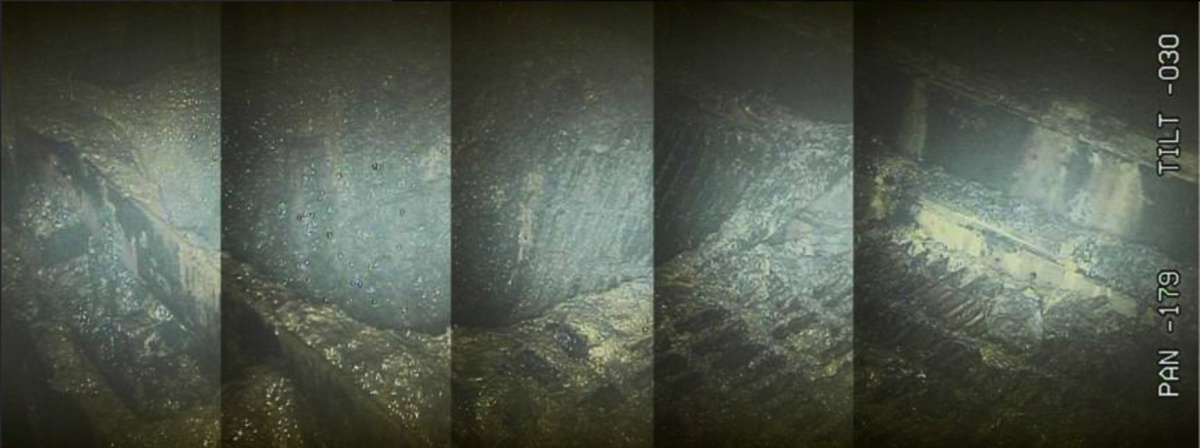
Highly-specialized, camera-equipped, remote control vehicles have explored the interior of reactors to determine what physically happened to the fuel, but — despite the ability to withstand conditions humans can’t — radioactivity has been so intense, it kills the robots.


When one of those remotely-operated vehicles explored the Number 2 reactor recently, it happened upon a 6.5-foot gash in the grating under the containment chamber’s pressure vessel, likely caused by nuclear fuel melting through — but Tepco officials aren’t entirely sure of that, either.


Fukushima


“It may have been caused by nuclear fuel that would have melted and made a hole in the vessel, but it is only a hypothesis at this stage,” Tepco spokesman Tatsuhiro Yamagishi told AFP on Friday. “We believe the captured images offer very useful information, but we still need to investigate given that it is very difficult to assume the actual condition inside.”


A new camera-toting remotely-operated vehicle — designed to endure up to 1,000 sieverts per hour — had been slated to explore the newly-troubled reactor, but doubts about what caused the spike forced Tepco to reschedule its March deployment for the Number 1 reactor.


Melted nuclear fuel is suspected to have wound up on the floor of the containment vessels of the three reactors which suffered core meltdowns at Fukushima — but radiation has been so acute, even that assessment has proven impossible.


A dark mass appeared in footage taken of the hole in Number 2, but Tepco officials could not say with certainty it was the missing, melted uranium fuel rods.


READ MORE:  After Leaking Radiation in New York For DECADES, Indian Point "Ticking Time Bomb" to Finally Close


In order to fully decommission Fukushima Daiichi — a process now projected to cost a whopping $190 billion and take no less than four decades — details surrounding the extent of destruction must be measured and quantified.


“Confirming the conditions inside the reactor is a first step toward decommissioning,” Japanese Minister of Economy, Trade and Industry Hiroshige Seko told the press Friday, as quoted by the Japan Times.


“While difficult tasks and unexpected matters may arise, we will mobilize all of Japan’s technological capabilities to steadily implement decommissioning work and rebuild Fukushima.”


Considering so little is currently understood about the catastrophe — from the location of melted uranium rods to the cause of the abrupt and troubling spike in radiation — perhaps so-called conspiracy theorists who doubt the ‘Fukushima is under control, don’t worry about it’ narrative are the only ones displaying a modicum of common sense.