Showing posts with label EDC. Show all posts

Monday, July 31, 2017

My EDC: 12 Survival Items I Carry Every Single Day To Stay Safe

My EDC: 12 Survival Items I Carry Every Single Day To Stay Safe

Image source: Flickr / Creative Commons


Every single adult in the world has an EDC – that is, an everyday carry. An EDC is simply the items that one carries on his or her person each day, particularly when they leave the house.


That being said, not all EDCs are equal. While there is no such thing as a “perfect EDC,” it’s still a good idea to carry around items with you that make you prepared for emergencies or other dangerous situations.


Here is what I carry:


1. WALTHER PPQ M2 9MM (IN GALCO SUMMER COMFORT IWB HOLSTER)


My primary carry pistol is the Walther PPQ M2 9mm, which I usually conceal in a leather Galco Summer Comfort IWB holster on my right hip. The PPQ disappears very nicely underneath a jacket, sweatshirt or even under just a normal T-shirt.


The only modifications I’ve made to my PPQ are replacing with the polymer factory night sights with Meprolight Night Sights and the plastic guide rod with a stainless steel one. I use Independence 115 Grain JHP ammunition.


2. SPARE PPQ MAG (IN GALCO MAG HOLDER)


I always like to have at least one spare magazine for my PPQ with me, which I carry on my left hip in a Galco single mag carrier. During the winter or when I’m wearing a heavier coat or jacket, I’ll carry two spare magazines in a double mag carrier.


3. RUGER LCP II .380 ACP (IN RUGER POCKET HOLSTER)


I believe it’s important to carry a secondary/back-up gun for a number of reasons, and my choice is the Ruger LCP II .380. I carry it in my left front pocket in a neoprene holster that shipped with the gun and that works very well at keeping the pistol secure in the pocket. The LCP II is very light and small, so I usually don’t even notice it on me.


You Don’t Need A Firearms License For This Weapon!


Note: I specifically chose to carry the LCP II in my left pocket rather than my right so I can access a pistol with either hand.


4. BUCK KNIVES REDPOINT KNIFE


My defensive knife is the Buck Knives Redpoint Knife. It’s a manual assisted model with a very ergonomic grip with a sharp serrated blade, and also comes with a window breaker and seatbelt cutter on the opposite side. I keep the Redpoint clipped into my right front pocket.


I’ve practiced with it extensively and am able to pull it out and flip open the blade very quickly despite the fact that you should manually do so rather than just push a switch.


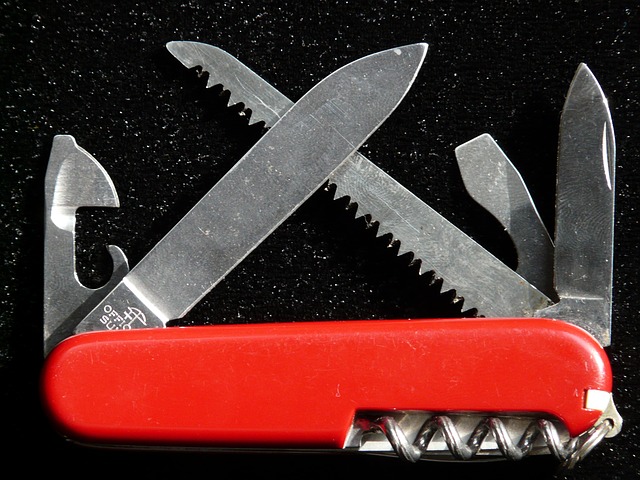
5. SWISS ARMY KNIFE


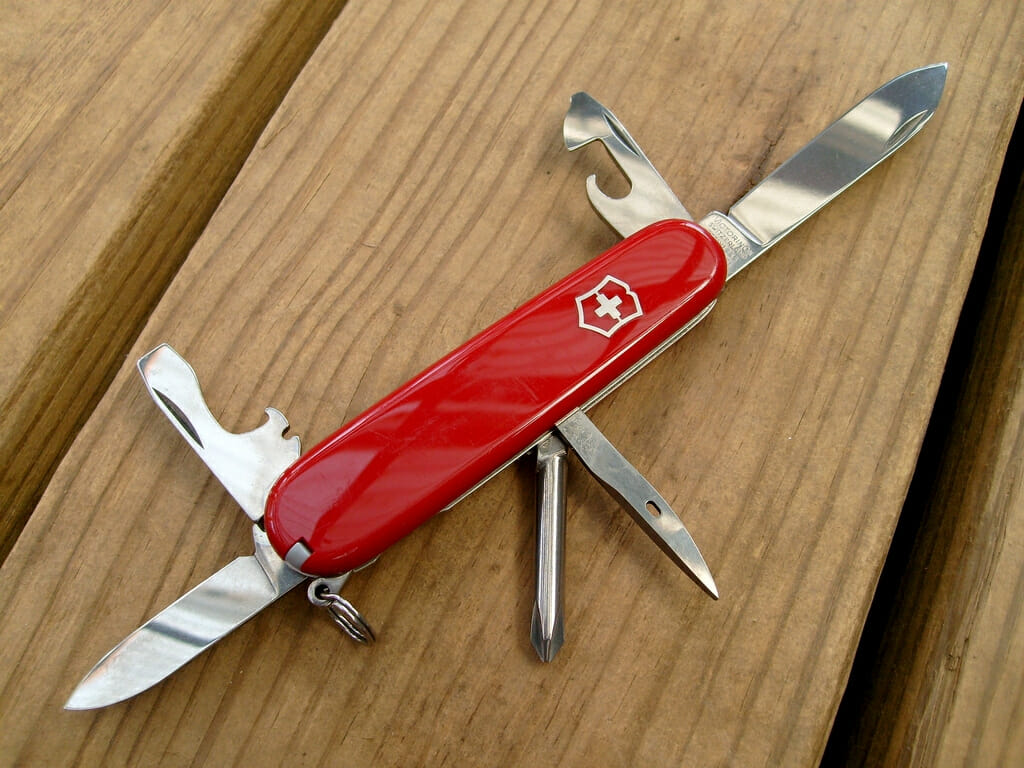
I also carry a Swiss Army-style knife for utilitarian purposes in my right front pocket. Mine comes with a knife blade, scissors, screwdriver, corkscrew and two saw blades.


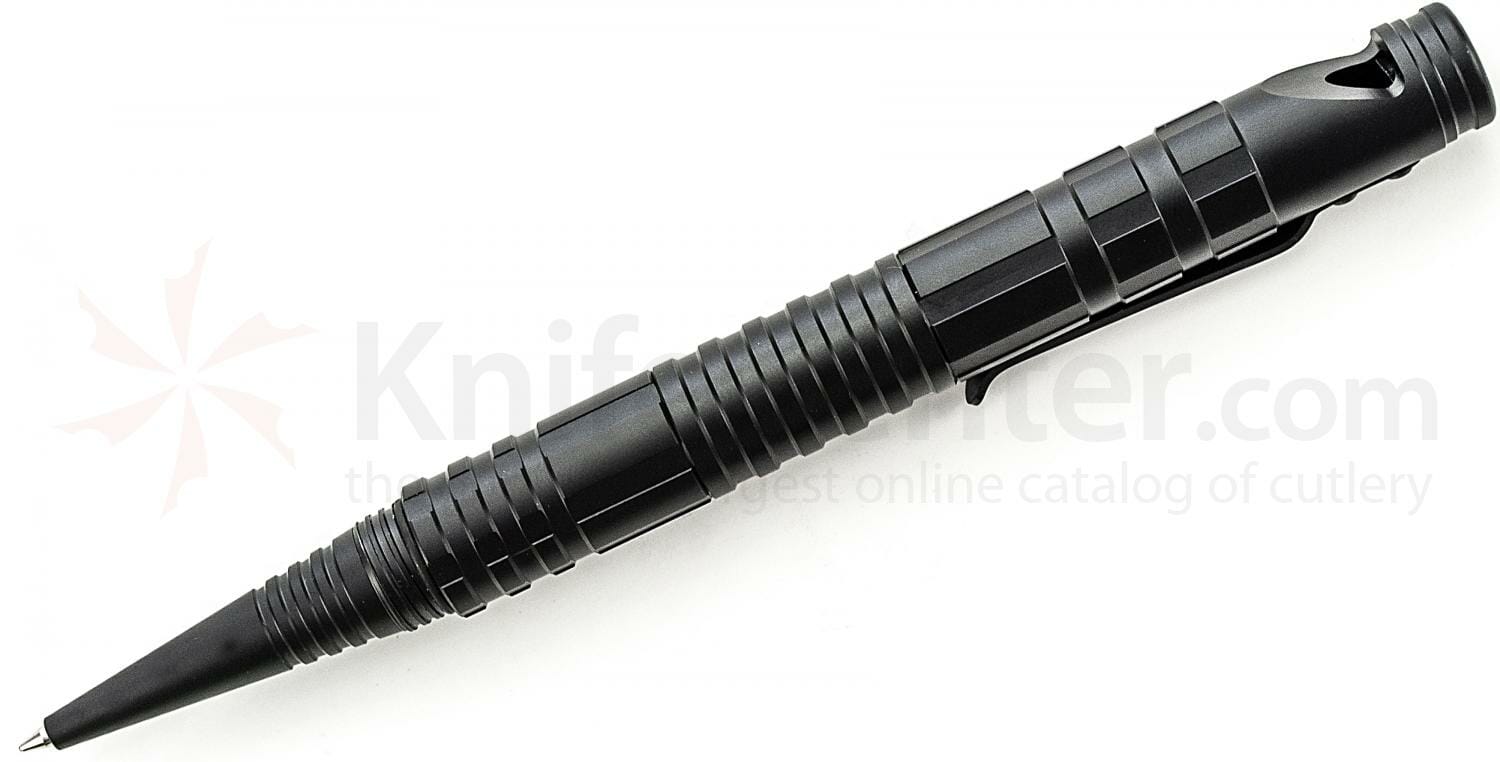
6. SCHRADE TACTICAL PEN


Image source: KnifeCenter.com


I keep a Schrade Tactical Pen clipped to my left back pocket, and while I normally use it for simply writing on paper, if I had to I could use it for defense, as well. Tactical pens really do deserve more credit than they receive; the pointed edge could easily puncture holes in an opponent with enough force.


7. CREE ULTRAFIRE FLASHLIGHT


In my right front pocket I also keep a Cree Ultrafire Flashlight. It comes with three different lighting modes (bright, low and strobe).


8. CHAP STICK


Not only do I hate chapped lips, but I also carry chap stick for the fact that it’s very flammable and could come in handy in a survival situation.


9. HAND SANITIZER


On days where I have a jacket or sweatshirt on me, I’ll carry a small bottle of hand sanitizer in one of the jacket pockets for both sanitation purposes and the fact that it’s very flammable should I need to get a fire going in a survival situation.


10. WALLET


Pretty standard, but in my back right pocket I carry a leather wallet with my various licenses, cards and cash. I try to keep cash on me at all times.


11. SMARTPHONE


My current phone is the iPhone 6S. I believe carrying a phone is critical for several reasons, the most important being to get in touch with your family members during a crisis.


12. KEYS


Last but not least, I carry my keys in my front right pocket. Not only do I need my keys to get into my car and my house, but you could also use them defensively by putting a key in between your fingers.


What is in your EDC? Share your list in the section below:

Wednesday, June 21, 2017

The Only EDC Fire Starter That Works In The Wind And Rain

The Only EDC Fire Starter That Works In The Wind And Rain

Image source: Pixabay.com


Ask any survival instructor for their favorite fire-starting method, and you may get an answer that’s pretty far out there. By “far out there,” I mean that it’s going to be something that most people won’t know about. Somehow, survival instructors tend to collect fire-starting techniques and like showing their students the most unusual.


I’ve seen many different fire-starting techniques in my years — many of which seem only to have been developed to allow the instructor to have something that nobody else has. That doesn’t mean that the idea is easy or even practical; but in the right circumstances, it might be the only thing you can do.


Of course, you never know what circumstances you might find yourself in and what materials you might have available. That’s why it’s useful to be able to start a fire with a bow drill, with the parabolic reflector of a car’s headlight, or by carving a lens out of solid ice. But to tell you the truth, I wouldn’t want to depend on any of those, unless I had no other choice.


The Problem With Most Fire Starters


For that matter, I really don’t want to have to depend on a ferro rod, a credit card-sized Fresnel lens or some of the other methods marketed as “survival fire starters.” As far as I’m concerned, they all have one thing in common: They’re too hard to use.


I’m not saying that because I’m lazy, no matter how much it seems that way, but because in a survival situation, I can’t afford to waste time. I might need that fire right now to keep myself from getting hypothermia; and even if I don’t, there are a lot of other survival tasks that need my time. Unless needed, I don’t want to waste the time it takes to make myself a bow drill or to carve that block of ice.


Goofy Gadget Can Recharge Your Laptop — And Jump-Start Your Car!


The other important issue, that goes hand-in-hand with time, is dexterity. As your body temperature drops, so do your fine motor skills. So, if you are depending on a method that takes too long to accomplish, you’re in a race against your own body. You’ve got to get it done while you still can, or it will be too late.


At the same time, there’s another thing to consider; that is the weather. Anyone who carries waterproof matches or even stormproof matches understands that you may very well be trying to start your fire in the rain or in the wind, both of which will work against you. Any method which doesn’t account for that is likely to fail you when you need it the most.


OK, so what’s the solution?


Let me start by laying out the basic criteria that I believe any primary fire starter much have:


  • It must be easy to use.

  • It must be fast.

  • It must work in the rain.

  • It must work in the wind.

  • It must be able to start a lot of fires.

At first glance, that list may hit you as impossible to fulfill with one single device.


It’s Not Matches …


Matches won’t fulfill that list, even though there are some absolutely excellent waterproof and stormproof matches. But the problem with matches has always been that they are a finite resource. No matter how many waterproof match containers you carry, you’re going to run out of matches, and I don’t know anyone who carries more than two.


The only thing that fulfills all the requirements that I laid out is a butane lighter. But not just any butane lighter will do. The average disposable light you can pick up at your local convenience store won’t do. While the average one fulfills several of those criteria, it won’t work when it’s windy. So, you must have some way of shielding it from the wind, which isn’t easy to do, or you must have something else to use when it is windy.


However, there are refillable butane lighters, which are known as “stormproof lighters.” These use a piezo-electric igniter which continues to strike as long as you are holding the gas valve open. So even if you use it in the middle of a hurricane, once it ignites, it can’t be blown out. It will just keep reigniting itself.


The Life-Saving Water Filter That Purifies River Water!


There are only two problems with these stormproof lighters.


But Will it Light in Cold Weather?


The first is that the ones designed for survival are a bit pricey, especially when compared to the one you can buy at the corner convenience store. But there are other piezo-electric lighters on the market, which sell considerably cheaper than the survival ones. The only real difference is that the case on these is much prettier, as they are intended to be carried and used for lighting cigars and pipes.


The second problem is that like any other butane lighter, the butane tends to liquefy in the cold. So, if you are out in the cold and needing to start a fire, the gas won’t flow and the lighter won’t light. That sounds like it disqualifies the lighter, doesn’t it? But not if you keep it inside your clothes, where it is kept warm by your body heat. In that case, the butane will flow just fine.


So, go ahead and keep collecting esoteric fire-starting techniques, just in case. But to keep yourself from having to depend on them, buy yourself a butane lighter with a piezo-electric striker. Make that one your EDC fire starter and you’ll be much more secure.


Do you agree or disagree? Share your thoughts in the section below:

Monday, May 29, 2017

14 Often-Overlooked EDC Items I Carry … Just In Case

14 Often-Overlooked EDC Items I Carry ... Just In Case

P-38. Image source: Wikipedia


We survivalists tend to think of EDC (everyday carry) as our own invention. But it is not. The reality is that everyone has an EDC — just look at any woman carrying a purse. That purse, filled with miscellaneous things, is her EDC.


Of course, only survivalists (male and female) have taken the step to make that EDC useful to help us out in a life-threatening situation.


Still, I find that most preppers don’t bother with much of an EDC. They work under the assumption that whatever happens, they’ll be at home, where they have access to all their survival gear and supplies. While that would be an ideal way to start out any survival scenario, rarely do things work out that well.


Being prepared must mean being prepared for anything at any time. Therefore, a good EDC is an essential part of being prepared. While it is possible to survive many situations without having the right equipment on hand, having the equipment makes a world of difference.


I break my EDC down into two general parts. First are the things that I carry on my person at all times. This includes things like my pistol, two spare magazines, a pocket knife, a multi-tool, my cell phone and a lighter. In some circumstances, I might add other items, such as bandages for emergency first-aid or even a small survival kit.


Then there’s my EDC bag. That’s kept in my car. Actually, there’s one in each of our cars. Since I don’t go anywhere without my car, I can count on always having that with me. This is essentially a combination survival kit (a thorough survival kit) and get-home bag. It has enough in it for me to survive several days (other than water), either in an urban or wilderness situation.


Between the two, I have found that I have enough with me to not only take care of those times when I’m caught in a survival situation, but also to take care of many of life’s inconveniences. To me, my EDC is not just a decoration, it’s something I use constantly. That means I’m also constantly maintaining and refilling it with consumables.


Along the way, I’ve found a number of items that were not originally included in my EDC, so I’ve added them. Perhaps these are things that you should have added to yours, but never saw the need.


1. Cash


Today’s society is gradually becoming more and more cash-free. We generally use credit or debit cards for almost everything – even small purchases. That means that when the lights go out, so does our purchasing power. If there’s a blackout and you have to buy gasoline to get home, you’re stuck.


14 Often-Overlooked EDC Items I Carry ... Just In CaseCarrying $100 in cash may seem like a waste of a good $100, but in such a situation it could mean being able to buy food, water and gasoline. But don’t carry it as one single bill. Rather, carry a number of smaller bills. If all you have is a $100 bill and you need five gallons of gas, you might just end up paying $100 for it.


2. Spare magazine


The number of people carrying concealed has been growing in recent years. Overall, that’s a good thing for society, increasing safety and reducing crime. But few people carry a spare magazine with their pistol. I suppose if your carry gun has a 15-round magazine, that’s OK. But most concealable pistols only have a 5- to 7-round magazine. That may not be enough.


Get Backup Electrical Power In A Convenient, Portable Briefcase!


While carrying a couple of spare magazines may be a hassle, it could be a lifesaver. I carry two extended capacity magazines, plus the normal capacity in my pistol. That gives me a total of 20 rounds. While not enough to fight a battle, I hope it will be enough for anything I face.


3. Lighter & accelerant


About the only other people who carry a cigarette lighter with them are those who smoke. I have one in my EDC kit in my car, but I also have a small one on my key ring. That way, I always have the means to start a fire. I also carry a small aluminum container, filled with magnesium powder. This burns readily and can be used in conjunction with the lighter to get a fire going, even when I’m having trouble finding dry tinder.


4. Rain poncho or umbrella


No, I’m not English and I don’t carry an umbrella around with me all day. But I have both an umbrella and a rain poncho in my EDC kit in the car. Even though I live in an arid climate, rain still happens at times. And because I live in an arid climate, when it does happen, it’s often a surprise.


While the human body is drip-dry, our clothing may not be. Besides, wet clothing will make you lose body heat considerably faster. If your clothes get wet toward sundown, when the temperature is dropping, this could set you up for hypothermia. Better to stay dry, rather than risk that.


5. Water


We all know that water is one of our top survival needs, but few of us carry water with us. I always have a gallon or more of purified water in my car, as well as a water bottle. Getting back to the arid environment I live in, it’s also hot here. Not having water with me can be dangerous, especially if I get stuck someplace where water is not readily available.


Granted, I’m not a big fan of drinking hot water on a hot day, but I’d rather do that than not have water to drink. Allowing one’s self to become dehydrated reduces the body’s energy and strength — two things that are essential to survival.


6. OTC medicines


Aches, pains and hay fever are realities of life. Carrying a few pain relievers and Benadryl in your EDC can make a huge difference on those days when your body just isn’t feeling up to par.


7. First-aid kit or supplies


Injuries are another reality of life. Whether it’s a paper cut in the office or skinned knuckles from changing a tire, I rarely get through a week without some minor cut or scrape.


While I’m used to ignoring minor scratches and scrapes, that can’t be done with larger injuries. Not only does the blood get all over everything, but the larger the injury, the greater the chance of infection. Properly treating an injury is an important part of maintaining your health.


Besides, you never know when you’ll encounter someone else that needs some first-aid. I was driving home from church one time and encountered a man who had just been struck by a car while crossing the road. I didn’t have a first-aid kit with me, so was limited in what I could do to help him. That was the last time I went anywhere without a first-aid kit.


8. Solar phone charger


Cell phone manufacturers love to brag about their products’ battery life. But I’m not sure how they calculate it. I rarely manage to get through a day without having to top off my battery, and I know I don’t use my cell phone as much as others do.


The Life-Saving Water Filter That Purifies River Water!


To mitigate this problem, I keep a solar phone charger on the dashboard of my car. That way, it’s constantly being charged, so that it is always full to charge my phone. While I could charge my phone off the car’s accessory connector, that requires leaving the phone in the car. With my solar charger, I can take the charge with me, then return it to its home, when I go back to the car.


9. Collapsible stainless steel cup


How many times have you had something to drink, but nothing to drink it out of? Trying to drink out of a five-gallon jug is difficult. Carrying a cup with you is an easy way to solve this problem, and using a collapsible stainless steel cup helps ensure that your cup takes up the least amount of space possible. Besides, it’s hard to break those cups.


10. Spork


Like the cup, carrying a spork with you gives you something to use when you find something to eat. You can buy stainless steel, titanium or plastic. The best ones have a spoon at one end and a fork at the other. Between this and your pocket knife, you’ll always be ready to eat.


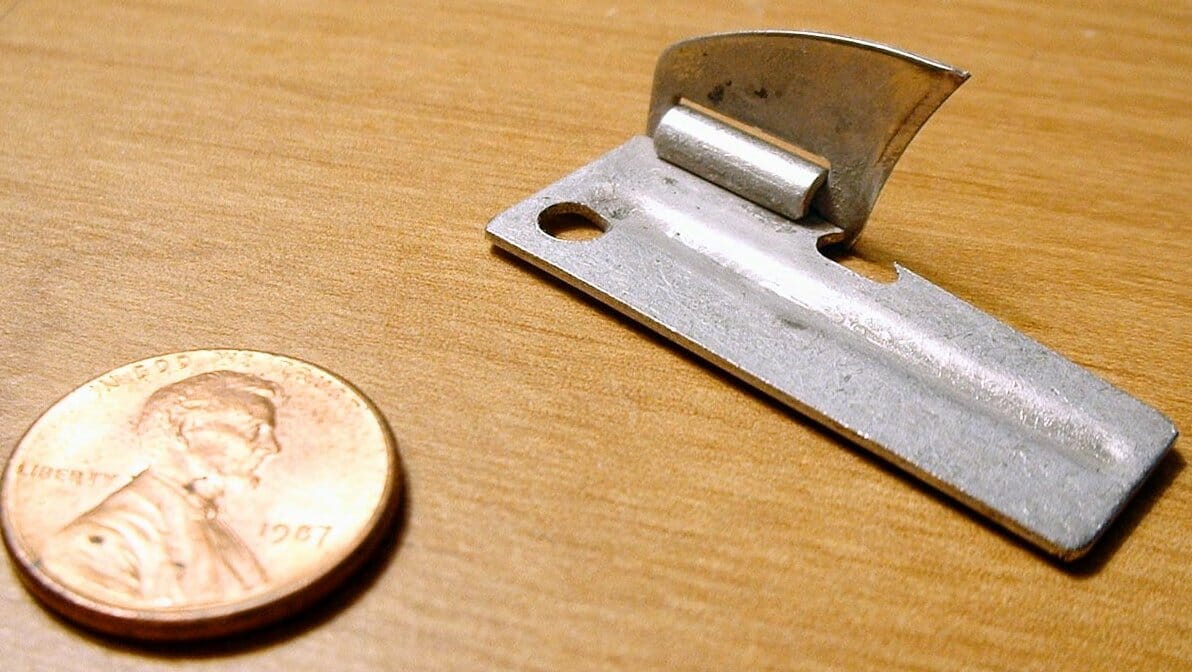
11. P-38 can opener


Speaking of eating, a military P-38 can opener — the type they used with C-Rations — is a great EDC item. I’ve carried one on my key chain ever since basic training, more than 30 years ago. While not as easy to use as a kitchen can opener, they are reliable. With one, you’ll never find yourself in a situation where you can’t open a can and eat the contents.


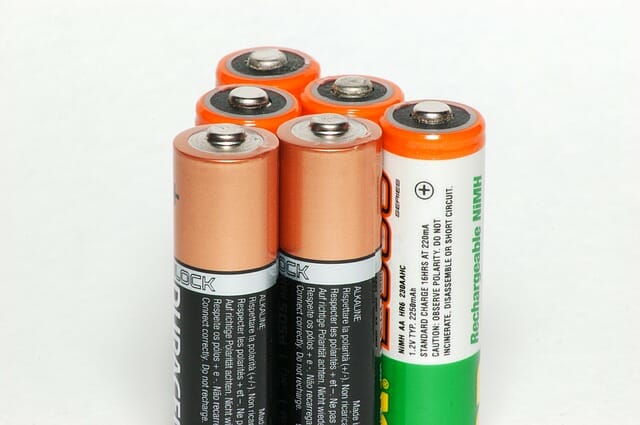
12. Spare batteries


14 Often-Overlooked EDC Items I Carry ... Just In CaseWe all carry and use a host of things that are battery powered. Today, we use more types of batteries than ever, including button cells that can be hard to find. Yet we act as if those batteries will last forever.


Carrying a few spare batteries along in your EDC bag will make it possible to continue using your portable electronics, long after the battery wears out. This is especially important for your flashlight, which I assume is already part of your EDC. The tactical flashlights we use today are great, but they go through batteries like crazy.


13. Copies of items in your wallet/purse


Ever lose your wallet or purse? Make copies of your driver’s license, concealed carry permit or passport. It doesn’t take much time, and it can save you a lot of trouble.


14. Emergency contact list


When I was a kid, we all learned phone numbers. Today, many people need to look up their own number, let alone those of family and friends. That means if they lose their phone, they can’t call anyone, even if they can find a phone to use. A simple laminated card, with important phone numbers on it, doesn’t take up much room in your wallet and can get you out of many a sticky situation, especially if you lose your phone.


What would you add to our list? Share your thoughts in the section below:
Saturday, February 4, 2017

7 EDC Items Every Person Should Carry EVERY DAY

7 EDC Items Every Person Should Carry EVERY DAY

Image source: Pixabay.com


The topic of everyday carry is not that popular on many survival blogs. I think the reason is that a lot of people worry too much about EMPs and other large-scale disasters and catastrophes — and too little about personal emergencies.


Yet there are a number of things that can happen to us … from getting mugged to getting stuck in the middle of nowhere because our car stalled. Avoiding all of these and more require not just knowledge and skills but also a number of essential items that you should at least try to carry with you every day.


No. 1. A folding knife


A folding knife fits in your pocket and, besides the infinite numbers of ways in which it can assist you, it has a great advantage: People won’t label you as a prepper for having one.


In fact, no small self-defense weapon (such as pepper spray) will get people to label you as such. You just tell them it’s for protection and they’ll leave you alone.


No. 2. A way to navigate


Whether you get lost in the wilderness or in a big city, you should always have means to find your way back. Leaving EMP events out of the equation, you should at least have GPS maps on your phone. Keep in mind that, even if the phone lines are down, satellites may still be working, showing you your location.


Another thing you should consider in your phone’s maps app is the ability to download them offline.


The Survival Water Filter That Fits In Your POCKET!


Lastly, it wouldn’t hurt to add celestial navigation skills to your “mental EDC,” as well as to practice the ability to orient yourself relative to various points of interest.


No. 3. A bandana


Bandanas are amazing survival items that have a huge number of uses. Besides the obvious one — to protect your head from extreme heat — you also can use them to:


  • melt snow.

  • pre-filter water.

  • hold a broken arm as a sling.

  • collect foraged food.

No. 4. Lighter


Not just to light a fire and keep yourself warm, but there are other situations it could be useful:


  • to melt a zip tie if someone ties you up.

  • to start a fire to use as signaling.

  • to light your way in absence of a flashlight.

  • to open a bottle.

No. 5. A multi-tool


7 EDC Items Every Person Should Carry EVERY DAY

Image source: Pixabay.com


Whether you opt for one of those micro multi-tools made by Leatherman or for one that’s credit-card shaped and fits in your wallet, you can carry with you at least 10 tools to aid in your survival: scissors, tweezers, screwdrivers, a ruler and many more.


No. 6. A “prepped” cell phone


When I say prepped, it should not only have a shock-absorbing case, but it also should be equipped with the apps and information you may need in an emergency. There are plenty of apps related to survival, and let’s not forget a maps application (with the option to download those maps for offline use).


No. 7. A mini-flashlight


I got the tiniest flashlight I could find on the market and attached it on my keyring. Sure, I can always use my phone, but what if I run out of batteries? Redundancy is never a bad thing.


Final Word


One last thing … don’t let anything stop you from expanding your EDC to your wallet and your pockets. Also, if you carry a laptop with you every day, don’t be shy about adding extra items in the laptop bag.


What would you add to our list? Share your tips in the section below:


Learn How To ‘Live Off The Land’ With Just Your Gun. Read More Here.

Monday, January 30, 2017

7 Concealed Carry Guns That Are Perfect For Range Training

7 Concealed Carry Guns That Are Perfect For Range Training

Image source: Glock


Many gun buyers new to concealed carry are eager to get out on the firing range. That’s great, but some subcompact guns suited for concealed carry are of limited usefulness for extensive practice. Low ammunition capacity and lack of outside-waistband holster and mag pouch choices mean the owner of the tiny gun may have to sit on the sidelines while his friends participate in a defensive pistol class or weekend match.


What’s more, a limited budget can put the purchase of two guns for these two roles out of the question. What to do? Fortunately, many companies are making guns that bridge the gap between range and everyday carry (EDC). These guns are truly jacks of many trades.


To keep the playing field somewhat level, all choices here are chambered in 9mm. It’s an affordable load that’s readily available in most locations. Due to cartridge size, capacity is generally higher, too, a factor I believe favors both range and self-protection use. Many are available in larger calibers and some are also offered in full-size versions of what’s listed here.


1. Glock 19


This compact, but not really small rendition of the Glock design, has a huge following among those who carry a gun for a living. Extraordinary reliability is its hallmark. With a generous 15-round, double-stack magazine and 4.01-inch barrel, it’s as easy to handle as a full-size range gun. It weighs in at 23.7 ounces unloaded. Glock’s Gen 4 rendition of this gun is more expensive, but the adjustable grips and improved texturing add value compared to past versions. Retail prices are around $550 for the Gen 4 model; sub-$500 for earlier editions.


2. Smith & Wesson M&P compact


Smith & Wesson’s popular design has undergone some updates over the years. Modular grip panels and an improved trigger are good upgrades to the 12+1 capacity striker-fired gun. Its low-profile rear sight on the 3.5-inch barrel serves the purpose of carry. This is one of two guns on the list available with or without a thumb-operated safety. At 21.7 ounces unloaded, it’s handy. Pricing hovers around $500.


3. Springfield Armory XD subcompact


With a three-inch barrel, this is one of the shortest guns on the list, but it’s big on capacity. The XD Subcompact 9mm ships with a 13- and 16-round magazine. Its chunky, 26-ounce frame soaks up recoil from the short barrel. Some prefer the XD line because of the passive safety device at the top of the backstrap. Priced below $450 and with a trigger that’s more forgiving of typical new-shooter mistakes, it makes an ideal starter handgun.


4. Ruger American compact


The folks at Ruger took their time and listened to customer feedback about their own and other brands before scaling down their relatively new, full-size American 9mm to a packable size. Their methodical approach directly benefits the consumer.


Be Prepared. Learn The Best Ways To Hide Your Guns.


Modular grip panels and an optional thumb safety help an owner make it their own. One of the larger guns on this list, the mag packs 17 rounds into a long grip balanced by a 3.55-inch barrel. Depending on options, it’s about 29 ounces unloaded. High-quality Novak three-dot, no-snag sights help make it a joy to shoot. Left-handed shooters could love this, as it is one of two fully ambi pistols on the list. Retail is in the mid- to high $400s.


5. Smith & Wesson SDVE


This is an older model that’s not been updated for some time. It’s earned my respect as I’ve seen two very different students have great success and enjoyment from this dependable pistol. With a 16-round mag and four-inch barrel, it’s not the smallest choice. It’s a modest 22.4 ounces. The SDVE is a very dependable choice for less money at around $390.


6. Heckler & Koch P30


Another ambidextrous choice is HK’s excellent P30. Modern polymer construction and features, combined with HK’s classic double/single action and a 3.85-inch barrel combine to make a packable and accurate shooter. HK’s luminescent sights and excellent trigger contribute to a gun that feels like an upscale choice, assuming the user is committed to the additional practice required to use a DA/SA platform effectively, especially under stress. The 15-round magazine capacity, 27- ounce pistol usually sells for upwards of $800.


7. REX Zero 1CP


This is a new release for the double/single action fans who want seriously solid construction. Made by major military arms producer Arex of Finland, the REX Zero 1CP is imported to the US by FIME Group of Las Vegas. It features a safety so it can be carried cocked and locked. The slide stop doubles as a de-cocker.  It comes in flat dark earth or black. The grip is rather thick, making the gun a good fit for medium to large hands. It has a 3.85-inch barrel and 15-round mag, and weighs in at 30.4 ounces. Though it’s not a mass-market gun like others listed here, holsters are available as it fits those made for the classic DA/SA Sig Sauer. MSRP is $650; real-world prices should come in at well under $600.


This is by no means an exhaustive list of concealable but range-friendly 9mm handguns. There are many folks who’ll also not consider them concealable for their body type. I’ve chosen them based on their track record as quality, dependable guns for myself and many friends and students.


What would you add to the list? Delete from it? Share your tips in the section below:


Pump Shotguns Have One BIG Advantage Over Other Shotguns For Home Defense. Read More Here.