Showing posts with label Added Sugar. Show all posts

Saturday, August 5, 2017

A Homesteader’s Shocking Lesson About ‘Added Sugar’

A Homesteader’s Shocking Lesson About ‘Added Sugar’

Image source: Pixabay.com


While making plans with a farm apprentice regarding her upcoming move to our homestead and discussing room-and-board details, she let me know that she did not eat any foods with added sugar. She wouldn’t mind fixing her own meals separately, she told me, but I assured her it would be no trouble for me to take the whole household off sugar. I thought eliminating sugar was just a matter of cutting out dessert foods, which didn’t seem like a big deal.


What never occurred to me was that sugar, in one form or another, is added to a great many common foods. While it is no surprise to find sugar in soda pop, candy, pastries, ice cream and other so-called junk food, it came as a bit of a shock to learn how many other prepared foods contain it. Even more so was the shock of learning how much I—as one who considers my cooking style to be mostly from whole foods—use it in meal preparation, as well.


Cutting sugar completely from our diet was far more difficult than I had imagined it would be. Like many Americans, I was so accustomed to using sugar in my everyday cooking that I didn’t even always notice how often I use it. After the apprentice’s arrival, I was amazed to realize how many of the recipes I’ve used for years contain sugar. Just a few tablespoons here or a teaspoon there had never seemed significant, but I began to become aware of how much it really was.


Even foods as basic as breads suddenly presented problems. I make a great homemade corn bread, for example—northern style, with yellow cornmeal and sugar. Most yeast breads contain sugar, too, along with many of even the healthiest muffins.


Homemade soups and sauces usually call for a little sugar, adding just the right touch or bringing out the flavor of everything from pumpkin soup to spaghetti sauce. And while I don’t put sugar in my beef or chevon stews, I do add a little browning sauce that includes—you guessed it—sugar.


One day when I was collecting ingredients in the pantry for a casserole that included store-bought cream-style corn, the apprentice reached for the can and read the label.


‘What?! No Way’


“It has sugar in it,” she told me.


“What?!” I was astonished. “No way.” I checked the label and saw she was right.


Once I started looking for it, I found sugar lurking everywhere. The round buttery crackers I usually crumbled on top of my macaroni-and-cheese are sugar-sweetened. So are canned soups. And all kinds of sauces—from barbecue, which you might suspect, to Worcestershire, which you probably wouldn’t. Ketchup too, along with pickles and relishes and other condiments. Even breakfast cereals billed as “regular” and “plain,” often contain added sugar.


Even simple sandwiches posed challenges. Regular peanut butter is sweetened, as of course are jams and jellies. Mayonnaise and most brown mustards contain sugar, as do some luncheon meats. Perhaps a salad instead—but wait, store-bought salad dressings and croutons are loaded with sugar!

A Homesteader’s Shocking Lesson About ‘Added Sugar’

Image source: Pixabay.com


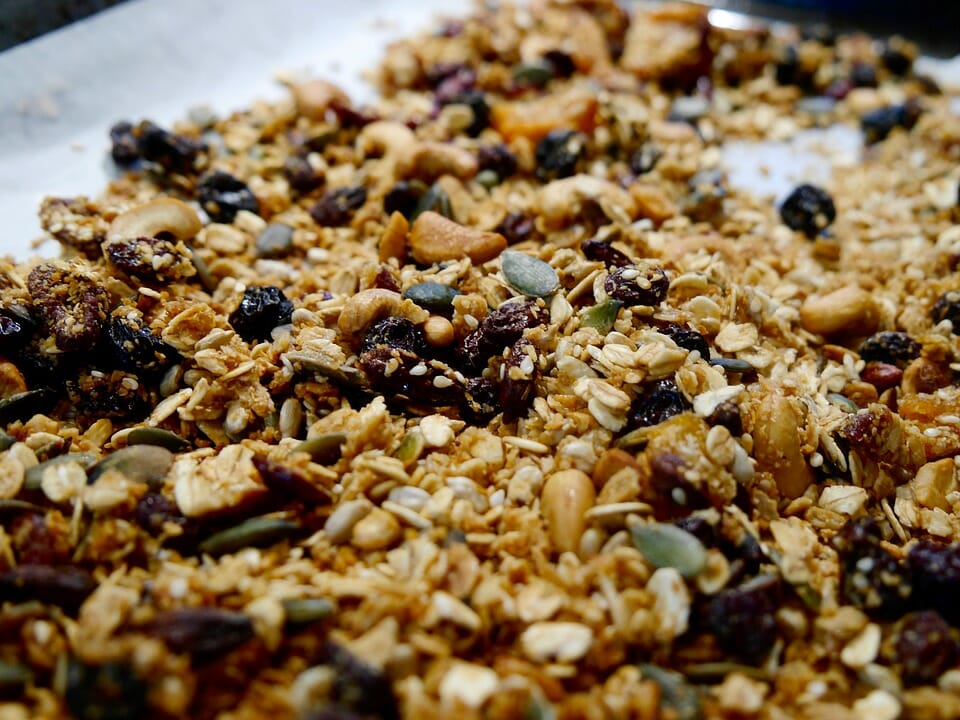
Even foods we often think of as healthy alternatives sometimes contain sugar. Items like granola, nutrition bars, fruit-based drinks, fruit rollups, and other foods marketed to children can be sugar-laden.


The Many Names of Sugar


One of the reasons many people use more sugar than they realize is that sugar disguises itself under many other names. Careful label-readers often don’t find “sugar” listed, but will instead see ingredients such as dextrose, maltose, cane juice or solids, fructose, high fructose corn syrup, glucose, and dozens of other words that all mean the same thing: added sugar.


By some accounts there are 40, 50 or even more different terms for added sugar. It can be derived from sugar cane, sugar beets, corn, coconut and other plants, and processed in a wide variety of ways into many forms. Often a packaged food label will list several sugar variations, the combination of which can result in an astounding total volume of sugar per serving.


Avoiding sugar can be tricky. It helps to become familiar with all the names it goes by in order to be able to pick it out of an ingredients list. Poring over labels can be tedious, but it gets easier with practice. The more important it is to avoid sugar—that is, the more serious the health consequences of eating it—the more crucial it is to read ingredients lists and know how to recognize sugar in all its various forms. The keys are diligence and determination.


Most people alive today grew up on a fairly steady diet of sugar. Even those of us who are health-conscious may well consume more sugar than we are aware of. To some of us, we are so used to everything from breads to canned fruits to breakfast staples being so chock full of sugar that these foods taste a little foreign to us without it.


Lessons Learned


My homestead underwent a radical change in eating habits when we began learning to accommodate a completely sugar-free person into our menu planning. Some of it was easy. We substituted natural sweeteners such as local honey and our own maple syrup into foods with a great deal of success. With other items, we tried simply omitting sweeteners altogether and learned to like them that way.


Although many people use popular sugar substitutes with satisfaction, we steered clear of them because none of us cared for the taste or didn’t want to add more processed ingredients to our diets. Using artificial sweeteners is a personal choice, but it is worth remembering that some fake sugars pose health threats of their own.


The apprentice was able to eat homemade breads with little or no negative reaction, probably because the sugar used in the dough was processed and transformed by the yeast organisms prior to baking. However, some bread recipes use more sugar than others, and I learned to tailor my bread-making by using less sugar, substituting natural sweeteners when practical, and using more whole grains to offset the sweetness.


After the apprentice moved on, we were glad to return to using sugar in some foods but found that we were perfectly content without it in others. But we now have a better understanding of the widespread pervasiveness of sugar in foods, both prepackaged and homemade, and this new awareness better equips us to make conscious choices to consume it or not.


Do you have advice for avoiding sugar? Share your advice in the section below:

Saturday, May 13, 2017

Could Eating Pasta Really Make You HEALTHIER?

Can eating pasta make you healthier and make you eat less saturated fat? According to a study presented at the Obesity Society’s annual meeting in November of 2016, the answer is “yes.” [1]


Researchers from Nutritional Strategies, Inc. compared data collected from U.S. adults between 2001 and 2012 and found that pasta lovers also tend to eat less added sugar. Wait, it gets better. Compared to people who avoid carbs, pasta-eaters were found to consume more essential vitamins and minerals including folate, iron, magnesium, and dietary fiber. [1] [2]


Diane Welland, a registered dietitian and Nutrition Communications Manager for the National Pasta Association, says:


“Pasta can be an effective building block for good nutrition, as it serves as a perfect delivery system for fruits, vegetables, lean meats, fish and legumes. This analysis underscores the nutritional importance of grains, such as pasta, as consistent with a healthy diet.” [2]


In the interest of full disclosure, it should be noted that the study was organized by the National Pasta Association. You could say they’re more than a little bit biased. [1]


But researchers have uncovered some positive things about pasta in the past. For example, last summer Italian researchers found that eating pasta as part of a Mediterranean diet might help people lose fat. The study’s lead author, George Pounis, said:


“We have seen that consumption of pasta, contrary to what many think, is not associated with an increase in body weight, rather the opposite. Our data shows that enjoying pasta according to individuals’ needs contributes to a healthy body mass index, lower waist circumference and better waist-hip ratio.”


A Mediterranean diet is rich in fruits and vegetables, grains, legumes, nuts, and olive oil. In the case of this study, pasta was eaten in small amounts, rather than as the focus of the meal.


If you’re going to eat pasta, opt for whole grain varieties. Carbohydrates are vital for energy, and whole grains are loaded with nutrients and complex carbohydrates that decrease insulin levels at the same time.


Source: Harvard T.H. Chan School of Public Health

The fiber in whole grain pasta can also improve bowel health, regulate your cholesterol, help you lose weight, and regulate your blood sugar.


So while pasta can fatten you up in large amounts, it should have a spot on your dinner plate from time to time.


Sources:


[1] Independent


[2] The Sun


Harvard T.H. Chan School of Public Health


Storable Food


About Julie Fidler:


Author Image
Julie Fidler is a freelance writer, legal blogger, and the author of Adventures in Holy Matrimony: For Better or the Absolute Worst. She lives in Pennsylvania with her husband and two ridiculously spoiled cats. She occasionally pontificates on her blog.

Thursday, May 11, 2017

Food Industry Study Slams Recommended Sugar Intake Limits

A study made headlines after stating that there is no way of knowing just how much sugar consumption is too much, and the methods used to create dietary sugar intake limits are flawed.


CNN’s headline reads: “How much sugar is OK? Paper adds to debate.” Hmm, not really. The study was funded by the North American branch of the International Life Sciences Institute (ILSI), a nonprofit with ties to Hershey’s, Coca-Cola, PepsiCo, McDonald’s, Mars, and Kraft Foods. [1]


There’s not much of a debate when the companies funneling money into research make soda, candy, and processed foods.


The Claims


The World Health Organization (WHO) and the U.S. Dietary Guidelines recommend that people consume no more than 10% of their daily calories from sugar. It’s much easier to consume that amount than you might think. Drinking just 1 can of soda can put you over the recommended limit. So it’s not surprising that Coca-Cola – yet again – has its tentacles in a study hinting that you might be able to consume even more of the sweet stuff.


Study author Bradley Johnston, a clinical epidemiologist at the Hospital for Sick Children in Toronto, says those recommendations “are not trustworthy.”


Johnston reviewed the studies and methodology used to create the guidelines. He doesn’t disagree that people should limit their sugar intake, but he says there is no solid answer to the question: “How much is too much?”


Johnston says:


“Sugar should certainly be limited in the diets of children and adults, no question.”


The epidemiologist argues that there is no convincing evidence to support cutting sugar intake to 10%, or even 5%.


He explains:


“There’s a lot of uncertainty about the thresholds that appear in guidelines. What’s happening is that guideline panelists are making strong recommendations based on low-quality evidence.”


Source: McMaster University Daily News – Bradley Johnston

The paper reviewed 9 sugar-intake guidelines from around the world, including the WHO’s guideline and the Dietary Guidelines for Americans, which were updated in 2016.


Furthermore, Johnston argues, current guidelines on dietary sugar do not adhere to standards set by the American non-governmental organization Institute of Medicine in 2011.


He says:


“Although our findings question the specific sugar recommendations from guidelines produced by leading authorities, the findings should not be used to justify high or increased consumption of sugary foods and beverages.


… results from our review should be used to promote improvement in the development of trustworthy guidelines on sugar intake.” [2]


What in the Hell is Going on Here?


Johnston and his colleagues seem to have arrived at some relatively benign conclusions. They don’t recommend that people start eating more sugar. They don’t even really suggest that eating more sugar might be safe.


So what in the hell is going on here?


If there is one thing the 2016 political season taught us, it’s that planting even the smallest doubt in people’s minds can have an overwhelming effect. That is what’s going on here.


The likes of Hershey’s, Coca-Cola, and Kraft are trying to plant doubts in people’s minds. And why wouldn’t they? It’s good for business. Inevitably, at least a few people will have that extra piece of chocolate, that extra glob of mac ‘n’ cheese, or 1 more can of soda because, after all, no one is sure how much sugar is bad for you.


Source: Business Insider

There will be people who get duped, but Johnston’s conclusions haven’t duped many scientists. They see what’s going on here, and they’re calling him out on it.


Read: PepsiCo Sued for Allegedly Misleading Buyers of Sugar-Laden Naked Juice


Marion Nestle, a nutrition professor at New York University who was written extensively about the soda industry, says:


“This is a classic example of industry-funded research aimed at one purpose and one purpose only: to cast doubt on the science linking diets high in sugars to poor health. This paper is shameful.” [1]


Dr. Dean Schillinger, a professor of medicine at the University of California, San Francisco who wrote an editorial accompanying the study in the Annals of Internal Medicine, says:


“In essence, this study suggests that placing limits on ‘junk food’ is based on ‘junk science.’ Studies are more likely to conclude there is no relationship between sugar consumption and health outcomes when scientists receive financial support from food and beverage companies.” [2]


Gosh, y’think? The sugar industry in the 1960’s paid Harvard scientists to downplay the link between sugar consumption and heart disease and promote saturated fat as the cause instead. It worked magically. Fat became the enemy of health, and the market was soon flooded with all sorts of low-fat and non-fat foods. And those foods generally contain about 20% more sugar than full-fat products.


In the study, the researchers wrote that “the rationale and evidence used to make each recommendation were inconsistent.” [2]


Baloney, says Schillinger. For one thing, he explains, the researchers reviewed guidelines published over a 20-year period. It’s no surprise that they found inconsistencies, as “science evolves over time.”


According to Schillinger, Johnston and his crew failed to even use proper research methods in their work. He says:


“In addition, their claims regarding the low quality of guidelines are based on the application of inappropriate metrics.”


He says that one of the methods the “scientists” used in the paper “is the wrong tool for the job and virtually guaranteed that they would falsely conclude that guidelines are of low quality.”


He also cites the sugar industry-fat debacle of the 60’s, calling it a “major limitation.”


In October, the American Journal of Preventative Medicine revealed how Coca-Cola and PepsiCo have sponsored national health and medical organizations. (In that case, even the American Diabetes Association, a government organization, took money from the companies.)


Schillinger says:


“Added sugars not only provide unnecessary and ’empty’ non-nutritious calories but also appear to affect unique and specific unhealthy metabolic pathways that contribute to obesity and diabetes and heart disease, irrespective of calories.


We are in a public health war against diabetes, and we need to create smart strategies to win this war and prevent needless suffering and death. This is serious business.”


There is no doubt that the added sugars pushed on buyers by Coca-Cola, Hershey’s, and Kraft, are causing disease, limb amputations, and deaths, Schillinger says.


“Nearly all experimental studies that examined whether eating added sugars contributes to obesity and [Type 2] diabetes-related outcomes show a cause-and-effect relationship.” [1]


Johnston swears that he, and ILSI, have good intentions:


“We hope that the results from this review can be used to promote improvement in the development of trustworthy guidelines on sugar intake.” [3]


If the spoonfuls of added sugar don’t make you sick, the veiled attempts at making more money off of the poor health of the average buyer just might.


Sources:


[1] NPR


[2] CNN


[3] Fortune


McMaster University Daily News


Business Insider


Storable Food


About Julie Fidler:


Author Image
Julie Fidler is a freelance writer, legal blogger, and the author of Adventures in Holy Matrimony: For Better or the Absolute Worst. She lives in Pennsylvania with her husband and two ridiculously spoiled cats. She occasionally pontificates on her blog.