Showing posts with label drug companies. Show all posts

Thursday, September 28, 2017

Fake Pharma — The Ghosts in a Very Big Machine


Another media outlet has been caught promoting the interests of Big Pharma under the guise of real news. This time, somewhat surprisingly, it was news outlet STAT, which otherwise has a solid reputation in reporting science and health news. The story was titled, “How Pharma Sales Reps Help Me Be a More Up-to-Date Doctor,” written, supposedly, by Dr. Robert Yapundich, an experienced neurologist. You can see where this is going.


The article praised drug reps for providing vital information to doctors. And why wouldn’t it offer such praise? Yapundich has received more than $300,000 from drug companies in recent years, a fact pointed out by numerous Twitter users and readers in the article’s comments section, who suggested the obvious conflict of interest ought to be disclosed.1 The problem was, it wasn’t, at least not at first.


The article remained untouched for at least four days, during which other commenters pointed out more problems, like the fact that Yapundich said he’d not heard of a drug (Nuplazid) until he had lunch with a drug rep, yet, it turns out, he was previously paid for consulting services regarding the same drug.2 Commenters soon started calling on STAT to disclose the ties, fix the seemingly false statement or retract the article. STAT chose the latter.


STAT Retracts Ghost-Written Piece


The controversial article now contains an editor’s note stating that it was retracted because “it did not meet our standards,” continuing:3


“As a matter of policy, we ask all our contributors to disclose payments from industry and other possible conflicts of interest. In this case, the author disclosed no conflicts other than his affiliation with an organization that supports expanding manufacturers’ ability to discuss off-label uses of drugs.


In response to reader questions, we contacted Yapundich and he told us he had received more than $300,000 in recent years from pharmaceutical companies, including one he mentioned in the article.


He also acknowledged that his organization was funded in part by pharmaceutical companies. We disclosed that information at the bottom of the article … We also asked Yapundich to address reader questions about the veracity of the central anecdote in the piece. He said the anecdote was accurate as written.


But Yapundich later told HealthNewsReview that the anecdote was not, in fact, accurate. After that interview was posted … we contacted Yapundich again and he conceded to STAT that the anecdote was inaccurate. We then retracted the article.”


The organizational affiliation that STAT speaks of is the Alliance for Patient Access (AfPA), a group that receives money from close to 30 drug companies; Yapundich sits on the board. Kevin Lomangino, managing editor for HealthNewsReview, reported that, when he spoke with Yapundich, he said the article was AfPA’s idea and was written by a ghostwriter.


Yapundich then made some changes and edits to the article prior to it being published by STAT. Reportedly, when he asked his contact at the AfPA what he needed to do in terms of conflict of interest disclosures, the person wrote, “Hold on financial info. Hopefully only needed for AfPA and not for you individually.”4


HealthNewsReview then revealed another layer to the story, which is that Yapundich was working in some capacity with Washington D.C.-based PR firm Keybridge Communications, who says their goal is to “brand thought leaders.” It’s unclear who was paying for their services, as well as who was ultimately responsible for the lack of financial disclosure in the article. “It seems that wherever the op-ed originated,” Lomangino wrote, “it received careful attention from PR messaging pros before it ever reached Yapundich’s desk.”5


‘Ghost-Written Puff Pieces From PR Companies’ Passed Off as Op-Eds


“While authors of op-eds may get more latitude than they would in a straight news piece, the boundaries shouldn’t be so wide as to include ghost-written puff pieces from PR companies,” Lomangino wrote. Industrial ghost writers first became popular when tobacco executives hired them to spin positive press about cigarettes and secondhand smoke, published in the name of various scientists, according to New York University journalism professor Charles Seife.


“Since then, ghostwriters employed by parts of the pharmaceutical industry have been busily tobacconizing the scientific literature. Gaze into the depths of PubMed for long enough, and they will materialize before your eyes, promoting Wyeth’s Prempro, Merck’s Vioxx, and Pfizer’s Neurontin, just to name a few,” Seife says.6


Even Monsanto has gotten into the mix, with glyphosate articles ghostwritten by Monsanto’s toxicology manager published using names of academic researchers, and the practice is well-known among peer-reviewed journals. For medical journals, ghostwriting usually refers to writers sponsored by a drug or medical device company, who make major but uncredited research or writing contributions.


The pharmaceutical company hires a medical education and communications company, which is a company paid almost exclusively by pharmaceutical companies to write articles, reviews and letters to editors of medical journals in order to cast their products in a favorable light. One cross-sectional survey found that more than 20 percent of articles published in six leading medical journals during 2008 were likely written by honorary and/or ghostwriters.7


With the STAT piece, however, we’re now seeing that industrial ghostwriting has come to the mainstream media, allowing corporate interests to spread their propaganda over an even wider audience. Seife continued that many news outlets, including STAT, are aware that some of their opinion pieces are ghostwritten, but when the ghost-writers are being sponsored by powerful people with powerful agendas, that’s where the problems begin:8


“Many opinion sections have a grudging acceptance of some degree of ghostwriting in their pages; after all, high officials and A-list celebrities have entire staffs hired to meticulously shape each public utterance.


But even if you accept that kind of ghostwriting, the industrial version of ghosting is an entirely different beast. Instead of putting the words of an unknown in the mouths of the powerful, it does just the opposite — it disseminates the words of the powerful by putting them in the mouth of the unknown.


Indeed, in this case, it used the trusted institution of a friendly doctor to spread the gospel of the pharmaceutical industry. It’s not the sheep in wolf’s clothing that’s to be feared, but the reverse … It may be a losing battle; the wealthy industries using these tactics are adept at harnessing the forces of capitalism to defeat any attempt at transparency. After all, it’s nigh impossible to see who’s really pulling the strings when the invisible hand gets involved.”


Another STAT Blunder: Patient Praising TV Drug Ads Connected to Drug Company


Yapundich’s now-retracted piece wasn’t the first time STAT published an op-ed without disclosing the author’s true affiliations. In 2016, an op-ed titled, “You Can Complain About TV Drug Ads. They May Have Saved My Life,” was featured, written by patient Deborah Clark Dushane. Suffering from chronic hepatitis C, Dushane wrote that drug ads on television prompted her to ask her doctor about new drugs to treat the disease, which “cured” her.


“I strongly believe that if I hadn’t seen TV ads about chronic hepatitis C and new drugs to treat it, I wouldn’t have done anything to protect myself against it. Those commercials raised my awareness of the disease and gave me the courage to try again to beat it. I’m sure I’m not the only person they have helped,” Dushane wrote in the STAT piece.9


Again, reporting by HealthNewsReview revealed that the author wasn’t operating totally independently. A PR firm for Gilead, a drug company that manufacturers drugs to treat hepatitis C, contacted Dushane and asked her to write the piece. The positive press was intended to offset another STAT article that had recently been published, outing the “$100 million ad blitz for a $1,100-a-pill drug for hepatitis C.”10


Dushane wasn’t paid to write the piece, but Gilead flew her to California to learn more about the company and its products, after which she appeared on local TV stations to talk about the drug. Dushane was coached by Gilead’s PR people on what message to relay in the article and on TV.


STAT added an updated disclosure to the article on September 13, 2017, after HealthNewsReview brought the conflict to their attention. Seife, meanwhile, described Dushane’s role as a sock puppet for the industry11 while HealthNewsReview quoted Dr. Carl Elliott, a professor at the University of Minnesota Center for Bioethics and an affiliate faculty member in the School of Journalism and Mass Communications:12


“Of course this is wrong, and it’s wrong because it’s deceptive. I think the editors need to explain just what their policy is about corporate influence on the editorials they publish … Do they permit editorials that are completely ghosted by pharma? By a PR company working for pharma? What if the author wrote it himself or herself, but was paid to do it by pharma or a PR company?


What if the author wasn’t paid directly to write the editorial, but was coached what to write and got other benefits from a company? All of these scenarios seem disturbing to me, and I’d like to know if they are disturbing to the STAT editors too.”


Drug Company Faked Cancer Diagnoses in Patients to Sell More Opioids


A federal indictment and congressional investigation by Missouri Sen. Claire McCaskill allege that Insys Therapeutics concocted a fraudulent scheme to sell more of Subsys, an expensive, highly addictive, sprayable form of fentanyl.13 Prior authorization was required from insurance companies before the drug could be prescribed by doctors, and a diagnosis of cancer was a requirement for prescription clearance.


Insys wanted to make it easier for patients to get the drug, even if they didn’t have cancer, so they had their own employees to talk to patients’ insurance companies, pretending they were working with their doctors. According to CNN, “The Senate report documented how beginning in 2014, when someone needed to obtain prior approval for a Subsys prescription, it was actually an Insys employee who called the insurer and its affiliates to persuade them.”14


The insurance companies would ask whether the patients had “breakthrough” pain caused by cancer. CNN reported, “Insys got around this by finding calculated ways for its employees to create the impression on the phone calls that the answer was yes, they did have cancer, without explicitly saying so, according to the report.” 15


Further, six former Insys executives were charged in 2016 with fraud and racketeering charges, alleging they paid kickbacks to bribe doctors to prescribe Subsys and defraud insurance companies. Another former Insys manager pleaded guilty to charges that she taught salespeople how to entice doctors with money, chocolate or spending time with them, and to look for “money hungry” doctors willing to “play ball.”16


Drug Reps Target ‘Thought Leaders’


Drug companies have long tried to influence doctors’ prescribing habits by giving them gifts, vacations, fancy dinners and the like. This practice has since become frowned upon, but paying them for research activities, speaking and other “consulting” gigs continues. In fact, it’s interesting that PR firm Keybridge Communications used the phrase “branding thought leaders,” because drug reps use this tactic too.


Speaking to NPR, pharmaceutical rep Mathew Webb said asking doctors to become speakers was a surefire way to get them to write more prescriptions. In particular, calling them “thought leaders” apparently has “incredible psychological power,” he said, continuing, “When you do say ‘thought leader’ I think it’s a huge ego boost for the physicians. It’s like a feather in their cap. They get a lot from it.”17


While doctors may think they’re being recruited because of their qualifications or know-how, former drug rep turned whistle-blower Angie Maher told NPR, “I think nowadays a thought leader is defined as a physician with a large patient population who can write a lot of pharmaceutical drugs. Period.”


Webb said that after paying a high-prescribing doctor $1,500 to speak, he might write an additional $100,000 to $200,000 worth of prescriptions for the company’s drugs. They know because they purchase data about each physician’s prescribing habits from companies like IMS Health, ensuring they get a good return on their investment.18


Is Your Doctor Being Bribed by Drug Companies?


What can you take away from the knowledge that Big Pharma’s ties run deep, perhaps to your local newspaper’s opinion pieces or even to your own doctor? It’s important to take what you read with a grain of salt, and do your own research if an “independent” source reeks of conflict of interest. This applies not only to what you read in the media but also what you hear from your doctor.


Drug companies have long tried to influence doctors’ prescribing habits, however it hasn’t always been possible to find out what gifts your own doctor might be accepting. The Physician Payments Sunshine Act, which is part of the Affordable Care Act, went into effect in 2013.


For the first time, the Act required drug and medical device makers to collect and disclose any payments of more than $10 made to physicians and teaching hospitals. The Centers for Medicare & Medicaid Services (CMS) is in charge of implementing the Sunshine Act, which it has done via its Open Payments Program.19 You can easily search the site OpenPaymentsData.CMS.gov to find out what (if any) payments your doctor has received, along with the nature of the payments.


ProPublica’s Dollars for Docs website is another great tool you can use to search for general payments (excluding research and ownership interests) made to doctors from August 2013 to December 2015.20 If you don’t like what you see, you can take the steps necessary to put your health care in the hands of someone with your best interests — not Big Pharma’s — at heart.

Thursday, July 20, 2017

Panel: The FDA Desperately Needs to Review its Approach to Opioids

In a report, the National Academy of Sciences, Engineering, and Medicine (NASEM) is calling on the U.S. Food and Drug Administration (FDA) to review the safety and effectiveness of opioid painkillers. The panel of experts says monumental changes are needed to the way in which physicians treat pain, their patients cope with pain, and government and private insurers support individuals’ treatment for chronic pain. [1]


However, the panel says in no uncertain terms that efforts to prevent future opioid addicts will unfortunately drive some current painkiller abusers to seek harder street drugs, including heroin and fentanyl.

The panel wrote that:


“It is therefore ethically imperative to couple a strategy for reducing lawful access to opioids with an investment in treatment for the millions of individuals [already addicted to opioids].


The FDA commissioned the panel in 2016 to shape advice for how the agency should tackle the nation’s opioid epidemic. Many experts, including those on the panel, say the answer to the problem lies in regulating drug companies, as well as prescribers.


As we speak, lawmakers in Washington are debating a healthcare bill that would reduce access to addiction treatment – the polar opposite of what the panel calls for in its comprehensive report. What is needed, panel members say, is for states and the federal government to provide “universal treatment to addiction in hospitals, community-based programs, jails, and prisons.


The topic is a bone of contention for many people who don’t believe taxpayers should have to foot the bill for such treatment. But according to the panel, it is the only way to bring an eventual end to the opioid crisis sweeping America. Make no mistake about it – it is going to take years to gain control over the situation.


Source: U.S. Centers for Disease Control

A member of the report committee, Dr. Aaron Kesselheim of Harvard Medical School said:


“Our recommendation is for a much more systematic approach, integrating public health decision-making into all aspects of opioid review and approval. It would be an ambitious undertaking.” [2]


While the panel stopped short of acknowledging that the war on drugs has not worked, it urged states to reject the current trend of cracking down hard on illicit drug use. This, it said, will reduce harm to opioid users who have turned to the streets to supply their habit.


Instead, the panel said that states should adopt needle exchanges, safe havens for those who inject drugs, and wider access to naloxone – a drug that reverses overdoses from opioids, including heroin. [1]


In deciding how to regulate opioids, the FDA should study how the drug will affect patients’ families, society at-large, and the black market for drugs, the panel continued.


Kesselheim said:


“This is in distinction to the traditional approach that the FDA takes when it evaluates products. But the particular characteristics of opioids, we believe, requires a certain amount of what we term ‘opioid exceptionalism’ from the regulator.


… Overzealous promotional and financial relationships between the pharmaceutical manufacturers of opioids and physicians through the ’80s, ’90s, and 2000s, I think, at this point, has been shown to be a contributor to overprescribing in this area.” [3]


Other recommendations by the panel include:


  • Requiring drug companies to follow stricter rules for marketing opioids than they would for other drugs.

  • Developing campaigns to inform doctors and patients about other was of managing chronic pain. These campaigns should not be run by drug companies, however, even though many drug companies sponsor ongoing pain-management education programs for physicians.

Source: U.S. Centers for Disease Control

In 2016, the CDC released fresh guidelines intended to limit the prescribing of opioids, though there is no legal mandate for physicians to follow them. The agency recommended, among other things, that:


  • Doctors don’t immediately prescribe opioids to treat pain. Instead, physicians should prescribe non-drug interventions first, such as exercise therapy and weight loss.

  • When a doctor does prescribe an opioid, he or she should start the patient on the lowest dose possible, and prescribe immediate-release opioids for short periods of time, rather than for weeks or months at a time.

  • Doctors should urine-test patients to make sure they are following the prescription’s directions.

Read: The DEA Will Slash Opioid Production 25% by 2017


Also in 2016, the FDA published draft guidelines outlining testing standards for harder-to-abuse generic opioids. Under those guidelines, the FDA can only approve a generic painkiller if the maker can prove it is the bioequivalent of a brand-name medication. Prior to that, generic drugs were not individually scrutinized for safety and efficacy the way that brand-name drugs were.


Additionally, the FDA required black-box warnings – the FDA’s most serious drug warning – on all fast-acting opioids concerning the risks for addiction, misuse, overdose, and death.


Sources:


[1] Los Angeles Times


[2] The Street


[3] Pacific Standard


U.S. Centers for Disease Control


U.S. Centers for Disease Control


Storable Food


About Julie Fidler:


Author Image
Julie Fidler is a freelance writer, legal blogger, and the author of Adventures in Holy Matrimony: For Better or the Absolute Worst. She lives in Pennsylvania with her husband and two ridiculously spoiled cats. She occasionally pontificates on her blog.

Monday, May 22, 2017

California Senate Passes Bill Banning Drug Company Gifts to Doctors

On May 18, the California Senate passed a bill that would ban pharmaceutical companies from giving gifts to doctors. The Senate voted 23-13 in favor of sending the bill to the Assembly. [1]


For the bill, SB 790, California lawmakers used a similar 2009 Vermont law enacted in 2009 as a template.


If the bill is signed into law, doctors would no longer be able to receive perks, such as airline tickets and lavish meals, from drug companies. According to Sen. Mike McGuire, the bill would lower healthcare costs, in part because doctors who receive gifts are more likely to prescribe costly drugs. [2]


Drug companies unload more than $1.4 billion a year on California doctors in the hopes they will promote and prescribe their products, said McGuire, a Democrat who represents a district west of Sacramento.


McGuire said that in 2014, doctors in his state received more gifts and payments from pharmaceutical companies than in doctors any other state. [3]


Read: Need a Link Between Federal Reps and Drug Companies? Here it is


“While we have witnessed the cost of drugs rise over the past decade, industry profits have also grown significantly. We should be all standing for seniors and taxpayers to drive down the cost of prescription drugs.” [1]


According to a recent study by researchers at UC San Francisco, doctors who receive gifts from drug companies are 2 to 3 times more likely to prescribe name-brand drugs over cheaper, generic drugs. [2]


An even more recent study found that doctors at teaching hospitals are more likely to prescribe generic drugs when pharma reps are kept at bay.


Source: Pro Publica

Others have a different take on SB 790. State Sen. Ted Gaines argued that drug company gifts “provide the funding for research, for cures.”


He added:


“Why would we do anything to diminish the ability of pharma companies to be successful in providing these new products?” [3]


Senate minority leader Patricia Bates said the bill would discourage physicians from participating in clinical trials or restrict California’s access to experimental drugs.


However, the bill would still permit doctors to receive salaries for participating in clinical trials, and would allow for the payment of meals up to $250 per year for individual doctors.


The bill is headed to the state Assembly, the California lower Legislature, for consideration.


Sources:


[1] Associated Press


[2] Daily Health Post


[3] RT


Pro Publica


Storable Food


About Mike Barrett:


Author Image
Mike is the co-founder, editor, and researcher behind Natural Society. Studying the work of top natural health activists, and writing special reports for top 10 alternative health websites, Mike has written hundreds of articles and pages on how to obtain optimum wellness through natural health.

Tuesday, October 18, 2016

The DEA Will Slash Opioid Production 25% in 2017

The U.S. Drug Enforcement Administration (DEA) announced on October 4th, 2016 that plans to reduce opioid manufacturing by 25% next year are underway, citing a shrinking market and the epidemic of abuse as primary reasons.

The official change, or Final Order, has been published in the Federal Register. And, as The Verge reports:


“The DEA reserves the right to change a quota based on reasons such as increased demand or new manufacturers entering the market.” [1]


Shrinking Demand, Shrinking Manufacture


From 1999 to 2014, sales of prescription opioids in the U.S. nearly quadrupled. Today, an estimated 20% of patients with non-cancer pain are prescribed the potent drugs. [1]


Since doctors are working to reduce the number of opioids they prescribe, the DEA is following suit by cutting down on the allowed quota.


Read: This NJ Hospital Will Do Anything to Avoid Prescribing Opioids


The DEA is making the move, even though pharmaceutical companies and advocacy groups spent $880 million on campaign contributions and lobbying initiatives from 2006 through 2015. That amount is 8 times what gun lobbyists spent, and 200 times more than advocates for stricter policies shelled out during the same time period.


The DEA sets a limit on the total amount of a drug that can be manufactured each year. Next year’s reduction in opioid medications will affect medications such as oxycodone, hydrocodone, morphine, hydromorphone, and fentanyl. [1]


Hydrocodone production will be cut by 34%.


In a press release, the DEA said:


“Earlier this year the CDC issued guidelines to practitioners recommending a reduction in prescribing opioid medication medications for chronic pain.


For years, DEA and others have been educating practitioners, pharmacists, manufacturers, and the public about the potential dangers of the misuse of opioid medications.” [1]


A Growing Crisis


Doctors wrote nearly 207 million prescriptions for narcotic painkillers in 2013 – a huge increase from about 76 million in 1991. This was in large part due to lobbying by the pharmaceutical industry and a PR campaign led by Purdue University to increase the use of the drugs. [3]


Purdue went on to plead guilty to misleading the public about the risk of addiction to the painkiller OxyContin, and paid a fine of $634.5 million.


CDC statistics show that more people died from drug overdoses in 2014 than in any year on record, and that opioids were involved in more than 6 out of 10 fatal overdoses. [1]


Sen. Richard Durbin of Illinois pointed out this past June that the DEA had approved enough opioid pills to be manufactured in 2014 “for every adult in America to have a bottle of pills.” [2]


Over the summer, a group of senators, including Durbin, called on the DEA to direct pharmaceutical companies to stem the supply of painkillers. Durbin wrote a letter to the administration, signed by a handful of his fellow lawmakers, which read:


“We urge the DEA to utilize its existing quota setting authority, to the fullest extent possible, to combat this epidemic.”


He went on to write:


“Fourteen billion opioid pills are now dispensed annually in the United States – enough for every adult American to have a bottle of pills.


Certainly, the pharmaceutical industry is at fault for decades of misleading information about their products and the medical community bears responsibility for its role in over-prescribing these dangerous and addictive drugs, but we remain deeply troubled by the sheer volume of opioids available – volumes that are approved by DEA.”


According to the 2015 National Survey on Drug Use and Health, upwards of 6.5 million Americans over age 12 have used opioids for non-medical use in the past month. Opioids are the second most popular drug after marijuana – and more popular than heroin, hallucinogens, and cocaine combined, in terms of use over the past month. [1]


Source: Business Insider

However, reducing the amount of prescription opioids can cause other problems. For example, in 2011, Florida Gov. Rick Scott started cracking down on pain-management clinics that were suspected of dispensing too many opioids.


The good news from Scott’s decision is that prescription-drug overdoses fell within the first year. The bad news is that heroin deaths climbed 39%, as people who couldn’t get their prescription painkillers turned to the illegal drug.


Meanwhile, the DEA decided in August 2016 not to reschedule marijuana from a Schedule I substance to a Schedule II substance. That means marijuana remains in the same group as heroin, LSD, peyote, ecstasy, quaaludes, and bath salts. Rescheduling marijuana would have made it legal for medical use nationwide.


Interestingly, cannabis has shown promise in studies in treating addictions to hard drugs, including opioids.


Sources:


[1] The Verge


[2] The Huffington Post


Business Insider


Storable Food


About Julie Fidler:


Author Image
Julie Fidler is a freelance writer, legal blogger, and the author of Adventures in Holy Matrimony: For Better or the Absolute Worst. She lives in Pennsylvania with her husband and two ridiculously spoiled cats. She occasionally pontificates on her blog.

Monday, October 17, 2016

Read What Happened When Healthy People Were Given Antidepressants

Antidepressants are supposed to ease symptoms of depression, but yet another study shows the drugs may actually increase suicidal feelings in users. According to Danish researchers, the new study wrecks “potentially lethal misconceptions” about the safety of antidepressants. [1]

Click for larger version.

Statistics About Antidepressants


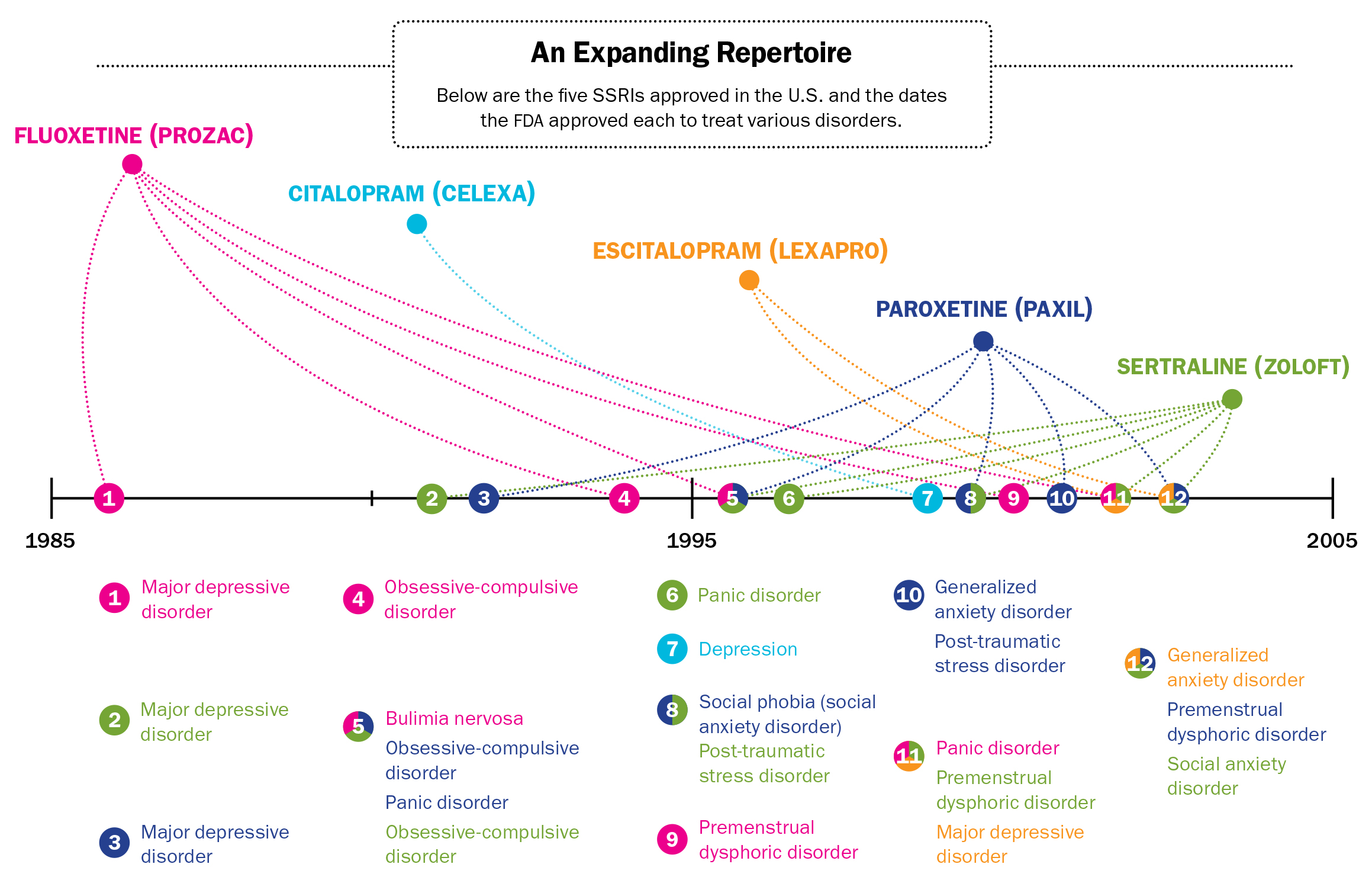
Researchers estimate that 8% to 10% of Americans take an antidepressant. Adults in the U.S. consumed 4 times more of the drugs in the late 2000’s than they did in the early 1990’s. [2]


Are more people depressed now than they were 20 years ago? Probably, yes. But that doesn’t necessarily account for the rise in antidepressant use.


You see, nearly 70% of people taking an antidepressant do not meet the criteria for clinical depression. That doesn’t mean they don’t feel sad, or they’re not going through hard times. It simply means that, from a purely diagnostic standpoint, they are not clinically depressed.


Not only that, but between 25% and 60% of antidepressants are prescribed for off-label purposes, including ADHD, autism, fibromyalgia, bipolar disorder, and even neuropathic pain.


Source: Mad in America

Findings of the Study


Danish researchers analyzed 13 trial studies, and conducted a study of their own involving 374 trial volunteers – all of them healthy – to see how antidepressants affected people who did not have depression. [1]


The researchers said they picked the patients that they did because earlier studies suggesting a link between suicide and antidepressants had been dismissed by those who blamed the deaths on the person’s supposed mental health condition and not the drugs.


Professor Peter Gøtzsche, of the Nordic Cochrane Centre, said:


“The drug industry always tries to blame the disease for these harms, never the pills. This is why our study is important. Healthy volunteers don’t have a disease — so we cannot blame the side effects of the pills on it.” [3]


When the participants were given antidepressant pills, levels of side effects nearly doubled, including suicidal feelings.


“Suicidal feelings” included anxiety, nightmares, and agitation.


Gotzsche said these feelings could be considered as “precursors to suicidality or violence.” [1]


Immediately, Detractors


misleading-lies-corrupt-stamp-full


However, Professor Guy Goodwin, past President of the European College of Neuropsychopharmacology and Professor of Psychiatry at the University of Oxford, called the conclusions “absurd.” He said:


“This manuscript claims to show that antidepressants double the risk of suicide and violence, but it does not. The methodology is fatally flawed and leads to conclusions that are highly misleading.


If ‘nervousness, anxiety, tremor, bad dreams and agitation events’ are risk factors for suicide or violence, then probably the majority of people in the UK would be at risk of suicide or violence, which obviously isn’t so.”


Phil Cowen, Professor of Psychopharmacology at Oxford University, agreed, saying:


“These side-effects are clinically significant, frequently distressing and an important topic for discussion between patient and clinician.


However, the notion that they are necessarily indicative of violence and suicide seems to me rather like arguing that transient annoyance with a colleague is much the same thing as attempted murder.” [3]


Drug Companies Seriously “Under-Report Harms of Antidepressants”


pills-medication-pharmacueticals-prescription-side-effects-cure-full


But Gøtzsche said that his findings are even more disturbing, considering drug companies seriously “under-report the harms of antidepressants related to suicide and violence, either by simply omitting them from reports, by calling them something else, or by committing scientific misconduct.” [4]


Gøtzsche is right about that.


It came out in 2005 that a Harvard psychiatrist and the pharmaceutical company Eli Lilly covered up a secret 1988 internal memo indicating that Lilly’s own controlled clinical trials of antidepressant drug Prozac had a significantly higher rate of suicide attempts, hostility, violence, and psychosis than 4 other commonly used antidepressants in the 1980’s and 1990’s.


Earlier this year, another study conducted by Gøtzsche and his colleagues found that SSRI antidepressants – the most common class of antidepressants – doubled the risk of suicide and aggressive behavior in teens under 18.


That study, a review of 70 clinical trials of SSRI antidepressants, which involved more than 18,000 people, also found that 1 drug company misreported 4 deaths in favor of its product. The company also chalked up over 50% of suicidal incidents to “emotional lability” or “worsening of depression.”


No mention that either problem could have been the result of taking the drug itself.


And let’s face it – there’s a reason why antidepressants list “suicidal thoughts” as a potential side effect on their labels.


Serotonin and Depression: Lacking a Link


serotonin


You’ve probably heard that depression is a result of a lack of brain chemicals, or an imbalance of them.


Researchers are still trying to figure out what causes depression, exactly, still arguing over whether a lack of the chemical serotonin is or isn’t actually the cause of depression.


And what do SSRI antidepressants do? They increase serotonin in the brain. SSRI stands for Selective Serotonin Reuptake Inhibitors. Well, there’s more to it than that. Maybe I’ll just let the Mayo Clinic explain:


“SSRIs ease depression by increasing levels of serotonin in the brain. Serotonin is one of the chemical messengers (neurotransmitters) that carry signals between brain cells. SSRIs block the reabsorption (reuptake) of serotonin in the brain, making more serotonin available. SSRIs are called selective because they seem to primarily affect serotonin, not other neurotransmitters.”


For years, doctors and patients alike have believed that depression is caused by a lack of serotonin, not because anyone told them so, but because they just assumed that because SSRIs improve the symptoms of depression, depression must be caused by not enough serotonin.


Antidepressants might make you feel better, but because they interfere with the delicate chemistry of the brain, they might also be causing you irreparable brain damage.


It’s like saying that eating pancakes might help you deal with the stress of an upcoming business meeting, but they’re still making you overweight and spiking your blood sugar.


Many scientists, including Dr. Turhan Canli of Stony Brook University in New York, have come to believe that depression might have more to do with gut microbes, viruses, or bacteria than brain chemistry. In fact, Cali believes depression should be reclassified as an infectious disease.


Only more research can prove or disprove this theory, which doesn’t offer the quick fix that so many people find in antidepressants. But this theory makes sense, because 80% to 90% of the serotonin in the body is located in the gastrointestinal tract.


But wouldn’t it be worthwhile to find and treat the cause, rather than just treat the symptoms?


No one should guilt you into or out of taking any medication. (And if you’re taking antidepressants, this is NOT my way of telling you to stop taking them! I know people who seem to experience much more benefit than risk.)


However, if you’re going through a divorce, you’ve just lost your job, or you’re grieving a loved one, counseling, yoga, and other methods for dealing with your pain may be a safer option for you.


Sources:


[1] The Telegraph


[2] Scientific American


[3] The Sun


[4] The Express


Mad in America


Storable Food


About Julie Fidler:


Author Image
Julie Fidler is a freelance writer, legal blogger, and the author of Adventures in Holy Matrimony: For Better or the Absolute Worst. She lives in Pennsylvania with her husband and two ridiculously spoiled cats. She occasionally pontificates on her blog.