Showing posts with label donner. Show all posts

Wednesday, July 12, 2017

CFPB Makes It Easier For Customers To Sue Banks

The Consumer Financial Protection Bureau just made it easier for ordinary citizens to sue banks by restricting how they can use mandatory arbitration to block class-action lawsuits, according to Bloomberg. But the decision – inspired by a 2015 investigative series in the New York Times about how US companies, particularly credit card companies and payday lenders, abuse the practice – likely won’t stay on the books for long. As the LA Times writes:


It"s all but certain that Republican lawmakers in control of the House and Senate will move quickly to overturn the rule as part of their ongoing efforts to cripple the consumer-watchdog agency and create a more business-friendly regulatory landscape.”


Clauses requiring arbitration to settle disputes are inserted routinely in contracts for credit cards, payday loans and other financial products. They typically prevent consumers from filing lawsuits or banding together in class actions.


"Arbitration clauses in contracts for products like bank accounts and credit cards make it nearly impossible for people to take companies to court when things go wrong," CFPB Director Richard Cordray said in a statement.


“These clauses allow companies to avoid accountability by blocking group lawsuits and forcing people to go it alone or give up. Our new rule will stop companies from sidestepping the courts and ensure that people who are harmed together can take action together.”


From the time they formally receive the ruling, lawmakers have 60 legislative days to overturn the bureau’s decision. Republicans have been using the Congressional Review Act, a little-known provision, to undo more than a dozen Obama-era regulations during the closing days of his presidency, including the CFPB’s plans to implement tougher standards for prepaid debit cards.


“As a matter of principle, policy and process, this anti-consumer rule should be thoroughly rejected by Congress,” Representative Jeb Hensarling, the Texas Republican who leads the House Financial Services Committee, said in a statement.


Congress isn’t the only body that’s skeptical of the ruling: In an unusual move, the head of a key banking regulator wrote to Cordray to raise concerns about it. Keith Noreika, the acting Comptroller of the Currency, asked that the CFPB share data used to develop its arbitration rule, according to a letter dated Monday that was obtained by Bloomberg.


“We would like to work with you and your staff to address the potential safety and soundness implications of the CFPB’s arbitration proposal,” Noreika said in the letter. “That is why I am requesting the CFPB share its data.”


Noreika cited a section of the Dodd-Frank Act that gives the Financial Stability Oversight Council - a panel of regulators headed by the Treasury secretary - power to set aside any CFPB rule that can be shown to put the safety of the wider financial system at risk.


However, studying the fairness of arbitration clauses appears to be well within the bureau’s remit: Dodd-Frank says the CFPB "may prohibit or impose conditions or limitations on the use" of arbitration clauses if it determines that restricting such provisions "is in the public interest and for the protection of consumers,” according to the LA Times.


During its study, the CFPB found that hundreds of millions of contracts include arbitration provisions and that companies have used the clauses to keep fights out of court almost two-thirds of the time. Very few consumers even consider bringing individual actions against financial-service providers in court or in arbitration.


Despite the rule’s near-certain erasure, Christine Hines, legislative director for the National Assn. of Consumer Advocates, told the LA Times that the CFPB isn’t thumbing its nose at Republican lawmakers who have insisted for years that the agency is a rabid regulatory pit bull in need of either a very short leash or a trip to a farm.


“The agency has to continue doing its job,” she said, “even though there are very anti-consumer people in power.”


Other consumer advocates echoed that sentiment.


“The rule will help to combat the culture of companies profiting from charging illegal fees and committing other crimes against their customers,” said Rohit Chopra, senior fellow at the Consumer Federation of America.


Said Lisa Donner, executive director of Americans for Financial Reform: “The consumer agency’s rule will stop Wall Street and predatory lenders from ripping people off with impunity, and make markets fairer and safer for ordinary Americans.”


The new rule will cover new agreements for products such as credit cards, auto loans, credit reports and even mobile phone services that provide third-party billing. Companies can still include arbitration clauses in contracts, but they must state that those can’t be used to stop individual consumers from joining class-action cases.


According to Bloomberg, it is also possible that industry groups will sue to overturn the CFPB rule. Groups including the US Chamber of Commerce have said arbitration is a valuable tool to prevent frivolous, expensive lawsuits that often don’t do much to benefit borrowers. Meanwhile, consumer advocates say restricting arbitration clauses will deter bad actors and force companies to reconsider certain activities because consumers will be more inclined to sue.

Wednesday, May 31, 2017

Starving And Dying, They Did The Unthinkable …

Starving And Dying, They Did The Unthinkable …


It was October 28, 1846, and the Donner Party was in trouble. Ahead of them towered the rugged Sierra Nevadas. White snow was falling all around, and from what they could see of the mountain pass ahead, much more blocked their path.


Already worn out from a long trail, the migrants decided to retreat. They backed out 12 miles to wait out the early storm at Truckee Lake. With supplies running low, and months on the trail beginning to show its toll, the group sat tight for a break in the storm. Had they known the fate that was to befall them, it’s likely the group would have exited the mountains altogether. As it was, they were running late and the permanent snows were setting in. However, running late was nothing new to the Donner Party.


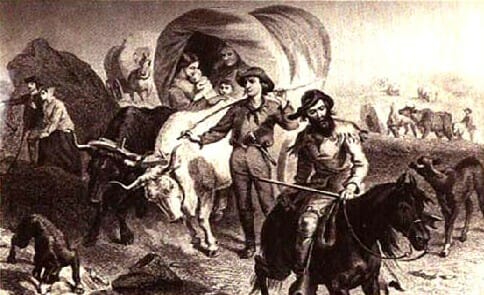
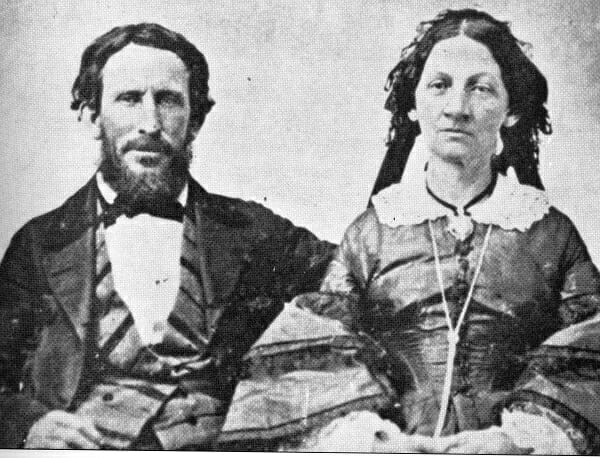
The “Donner Party” is the name given to one of the most haunting groups of Oregon Trail migrants. This group of pioneers originally came from Springfield, Ill., and were led by Jacob and George Donner, who had set their eyes west on the rich lands of California. In a time before the Gold Rush, these folks were looking for the golden soil California had to offer. In only a few short years, it would become precious metal that drove a wave of migration.


Their First Big Mistake


By the time the group had plodded down to Independence, Mo., and bought the necessary equipment, it was already May 12. This was considered exceptionally late to begin the trek west. Most of the big trains had been gone for two or three weeks at that point. In fact, the Donner Party was the last big party to leave Independence in the spring of 1846.


Just 30 Grams Of This Superfood Provides More Nutrition Than An Entire Meal!


Traveling across the plains went well enough for the group. Golden grass would have blanketed the expansive prairie, although no doubt most of the forage close to the trail was gone. Eventually they arrived at Fort Bridger in southeast Wyoming – at which point they made a disastrous decision. Rather than take the traditional route, the Donners decided to strike straight west out of the fort. They were seeking a new route that had been dubbed “The Hastings Cutoff” – a supposed shortcut named for Lansford Hastings, the man who had written about it in a new guidebook. Little did the group know, Hastings himself had never made the trip and was only speculating on the route. Rather than a shortcut, the Donner Party ran headlong into the Wasatch Mountains. In order to make it over, the group hacked their way through the timber and painstakingly made their way through the mountains. Eventually, they would exit the other side, but the “shortcut” had cost the group an extra 18 days.


At this point, their two biggest mistakes — a late start and 18 days going through a “shortcut” — were beginning to catch up. Had they either left earlier, or taken the traditional route, the group would have missed the Oct. 28 snow. But they did hit the snow, and what happened next is one of the most narrated stories of western history.


No Way Out


As soon as the group retreated down to Truckee Lake, the real problems began. Snow fell and fell, and soon the group had no way forward. Ominously, they had no possible exit, either. To protect against the falling snow and the dropping temperatures, the members constructed makeshift shelters and cabins from what they could gather around camp. They began to dig in for a long winter, and made the best survival preparations they could.


Starving And Dying, They Did The Unthinkable …Most of their food had been eaten on the trail, and most of their loose stock animals were run off not long before they became snowbound. With only 100 miles to the end of the trail, the group would have had enough supplies to last had the snows not caught them. Now the group faced a long winter in the high Sierras, and the supplies would certainly not last all winter.


Within just the first few weeks they had blown through what was left of their foodstuff. They then began slaughtering what stock animals remained. After that was devoured, the group was reduced to eating dirt, grass, tree bark and hides.


As supplies diminished by mid-December, 15 of the strongest group members decided to strike out over the pass in search of help. They fashioned snowshoes from the forest and began their trek. In later days, this search group would be called Forlorn Hope. The name suggests the party’s dire straits.


The Survival Lantern That’s Far Safer Than Candles


Soon, the Forlorn Hope group became lost in the white peaks of the high Sierras. They staggered around in the winter landscape, with no bearing as to where they were headed. After just a few days, several in the group were on the verge of death. The legend goes that on Dec. 25, Patrick Dolan went mad, stripped naked, ran into a storm, and collapsed dead in the snow. Imagine the scene.


A Shocking Decision


Towering pines encrusted in snow bent stubbornly to the howling wind. All around the Forlorn Hope lay a vast expanse of white. They didn’t know where they were going, where they had been, or how far they had to travel. The hunger pains that had begun cramping their stomachs weeks earlier were once again noticeably prevalent. They had been marooned in the high country for nearly 60 days, and no help had been contacted. This group was the only hope the Donner Party had of contacting somebody from the outside world. It was at that point, when Patrick Dolan collapsed, that members of Forlorn Hope made a decision that would become the focal point of the Donner story. They butchered and ate Patrick Dolan.


Starving And Dying, They Did The Unthinkable …Patrick Dolan was not the only group member who was eaten. Two Native Americans also happened to be traveling with Forlorn Hope in search of help. When they saw the cannibalized body, they separated from the group out of fear that they, too, might be eaten. After several days, the duo was found by the rest of Forlorn Hope. At that point, William Foster is reported to have shot the two Native Americans in order to cannibalize them. Eventually, the battered search group exited the mountains alive. They soon notified local residents that the majority of their party was still stranded at Truckee Lake.


With heavy snows in January and February, the search effort was not able to commence right away. By mid-February, the first relief effort punched through the deep snow to reach the stranded party. Unable to bring pack animals, they brought whatever supplies they could carry and ushered out those who could make it. Over the next two and half months, rescuers guided out what remained of the Donner Party. In mid-April, the final effort was made to save the last survivors. Legend says that Lewis Keseberg was the last to be rescued. When rescuers arrived, Lewis was surrounded by half-cannibalized people lying all around him. Some speculated he had murdered the remaining party members in order to eat them. In the end, no charges were ever proven against him.


The Donner Party is a well-known part of western history. Had the group arrived at the now aptly named Donner Pass just one day earlier, odds are all of them would have lived. But of the original 81 pioneers who started the winter at Truckee Lake, only 45 survived to tell the tale. More than 150 years later, their story still shocks those who hear it.


What do you think? Share your thoughts about the Donner Party in the section below: