Showing posts with label Tony Cartalucci. Show all posts

Saturday, November 18, 2017

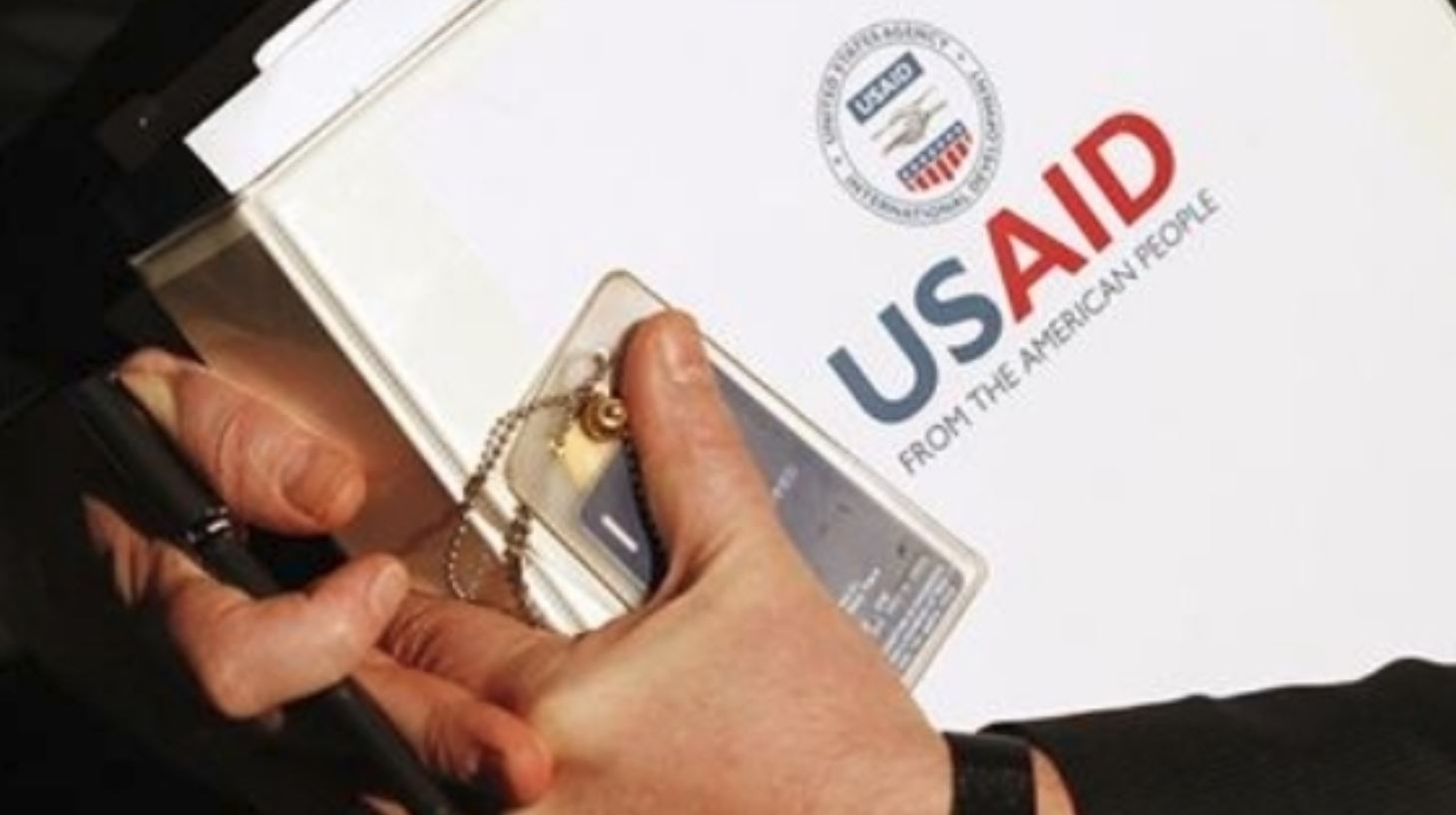
USAID and Wall Street: Conflicts, Coups, and Conquest

By Tony Cartalucci


In 1928 when the US-based United Fruit Company – now known as Chiquita Brands International – faced labor issues in Colombia, it had at its disposal Colombian troops which gunned down hundreds of strikers to maintain production and profits.


Ensuring that Colombia protected “American interests” was the US State Department who hosted company representatives at the US embassy in Bogotá, which in turn was in contact with Washington.


The United Fruit Company’s actions in Colombia was far from an isolated incident. US Marine Corps General Smedley Butler would write a book regarding his personal, first-hand experience in fighting wars on multiple continents for oil companies, bankers, and fruit companies.


Nearly a century ago large corporate interests already possessed full control over the mechanisms of American governance, determining its domestic and foreign policy, and readily using the nation’s military might for their own personal gain across the globe.


The arrangement has not disappeared over time. It has simply evolved.


The US Chamber of Commerce and USAID 


The US Chamber of Commerce on its own website admits it is a lobbying organization and while it claims it represents millions of businesses big and small – it is an organization dominated by, and existing solely for it largest members.


These include Chevron, Citi, Coca-Cola, Chevrolet, McDonald’s, Ford, Dow, Exxon, Honeywell, Proctor & Gamble, Visa, Yum, Monsanto, and many more.


And while there is nothing inherently wrong with a lobbying organization, or US companies doing business abroad, it is what this particular lobbying organization does with its immense, concentrated, and unwarranted influence.


Representing not only the largest corporations in the United States, but also some of the largest corporations on Earth, the US Chamber of Commerce today – just as United Fruit did nearly a century ago – has direct access to the levers of US governance.


The US State Department today – just as it did in Bogotá in 1928 – represents “American interests,” understood as being synonymous with corporate interests. It is through the US State Department that organizations like the United States Agency for International Development (USAID) and the National Endowment for Democracy (NED) receive their funding and directives.


These organizations are either chaired by or partnered directly with representatives not from humanitarian aid or democracy promotion circles, but from the very corporations they truly serve merely under the guise of “development” and “democracy.”


USAID – for instance – openly boasts of its joint partnership with US Chamber of Commerce member and agricultural giant Monsanto. With US State Department resources and tax money, Monsanto has used the cloak of development aid to spread into developing nations around the world from Africa and Asia to South America.


NED – on the other hand – is directly chaired by representatives from some of Wall Street’s largest  corporations including, Exxon, Goldman Sachs, Boeing, Ford, Citigroup, and Visa. While many of NED’s grantees pose as left-liberal activists fighting against corrupt and abusive special interests in their respective nations, they are in fact enabling the most corrupt and abusive special interests on Earth to simply remove obstacles so that they can dominate the markets, resources, and peoples of any given targeted nation.


And together, openly – as discussed by USAID’s administrator at a recent US Chamber of Commerce Foundation conference – that is what USAID and NED and their many subsidiaries do.


Conflicts, Coups, and Conquest 


Doing business overseas is not in and of itself necessarily a bad thing. However, US corporations through USAID, NED, and their subsidiaries do more than just business.


Ordinarily nations send representatives abroad to find common ground, mutual interests, and to negotiate prospective deals. The United States – instead – coerces nations through “soft power” and different degrees of covert and more overt military force.


Through their “development” and “democracy” programs, they systematically take over the infrastructure, media, and political order of targeted nations, eventually installing obedient client regimes into power – either through compromised elections, color revolutions, or US military-led regime change operations. These client regimes then serve “American interests” just as the Colombian government did in 1928 when “American interests” required strikers to be shot en mass.


It was USAID and NED-funded groups that helped fill the streets of Arab nations in 2011, tipping off years of war, the destruction of whole nations, and the edging of the entire region toward an even wider conflict in pursuit of long-standing, openly declared US foreign policy objectives. In the Middle East Wall Street seeks to eliminate its competitors, fuel its immense arms industry, and grant its energy firms, financiers, and the petrodollar they are both built upon a reprieve from an otherwise inevitable collapse.


Today, nations like Thailand face an “opposition” created and perpetuated entirely out of the US and European embassies and from the coffers of USAID and NED. So-called “activists” find their social media timelines filled exclusively with content produced by US State Department grantees. For decades US special interests have sought to dominate Thailand economically and geopolitically. With China’s rise, Wall Street sees a closing window of opportunity to use Thailand and other nations along China’s peripheries to box in this growing competitor and potential usurper of US hegemony in Asia Pacific.


While many imagine great conspiracies toward world domination driven by complex political ideologies – in reality American hegemony is driven by the same tropism of collective human greed that has fueled empire throughout human history.


USAID and NED often are used to provoke conflicts and even wars – including the current conflicts the US is waging in the Middle East and North Africa. Both organizations also play roles in the aftermath of conflicts and wars such as in Afghanistan, where they help overwrite destroyed industries, institutions, and infrastructures with a system that locks and pays directly into Wall Street and Washington’s.


Understanding why and on behalf of whom US foreign policy is directed helps policymakers and individuals alike look past the many political distractions offered to occupy the world’s attention while the US expands its grip. Understanding that US foreign policy is driven by corporate interests and a desire to dominate resources, markets, and people allows nations to focus on building resilient economies, institutions, and national security to deal with and defend against the many methods the US uses.


Tony Cartalucci, Bangkok-based geopolitical researcher and writer, especially for the online magazine“New Eastern Outlook”, where this article first appeared.

Sunday, October 1, 2017

Wall Street Vs. Kremlin: Who Really Runs The White House?

By Tony Cartalucci


Perhaps the only thing more incredible than quickly expanding conspiracy theories regarding the Kremlin’s influence over the White House is who is selling them and who is buying them.


Organizations popping up overnight with advisory boards lined with Neo-Conservatives who came to prominence during the administration of former US President George Bush and who became notorious for selling the 2003 US invasion of Iraq based on intentional fabrications, now find themselves building an audience of unlikely political allies – left-leaning liberals.


Who is Selling?  


The so-called “Alliance for Securing Democracy” recently accused Russia of manipulating news to target the US-based National Football League (NFL).  It claims in its mission statement that:


In 2016, American democracy came under unprecedented attack.


The government of the Russian Federation attempted to weaken the pillars of our democracy and undermine faith and confidence in our society’s most fundamental right — the ability to choose our own leaders.


The organization’s “Disinformation Dashboard” even includes a disclaimer admitting nothing about the information it presents constitutes evidence. Ambiguous terms like “Russia aligned” are never qualified. Instead, it claims (emphasis added):


Content is not necessarily produced or created by Russian government operatives, although that is sometimes the case. Instead, the network often opportunistically amplifies content created by third parties not directly linked to Russia. Common themes for amplification include content attacking the U.S. and Europe, conspiracy theories and disinformation. Russian influence operations also frequently promote extremism and divisive politics in Western countries. Just because the Russia-aligned network monitored here tweets something, that doesn’t mean everyone who tweets the same content is aligned with Russia.


An organization that accuses Russia and in particular, President Vladimir Putin for undermining US elections, inferring Russia’s responsibility for Hillary Clinton’s defeat, counts among its advisory council Michael Chertoff, a Bush-era Neo-Conservative who served as President Bush’s Secretary of Homeland Security.


There is also David Kramer who served in the US State Department under President Bush, served as president of the Neo-Conservative chaired State Department front, Freedom House, and currently serves as a member of the advisory council for the George W. Bush Presidential Center’s “Human Freedom Project.”


William Kristol, considered by many as one of the chief architects, or at least leading salesman of the 2003 Iraq War, also chairs the Alliance for Securing Democracy advisory board. He was a signatory of the Neo-Conservative Project for the New American Century and the pro-war Foreign Policy Initiative. He served the administrations of US President Ronald Reagan and George Bush Sr.


Michael Morell – who recently declared interest in killing Russians and Iranians in Syria as the armed forces of all three nations fight Al Qaeda and militants of the so-called Islamic State – also serves as an adviser. He has worked in the US Central Intelligence Agency (CIA) for over 30 years, and is currently a senior counselor at Beacon Global Strategies – an organization that appears to specialize in professional warmongering – alongside other former US State Department, Department of Defense, and CIA employees.


Kori Schake is described as having assisted with policy for the White House, Department of Defense, and the State Department as well as serving as senior policy adviser for John McCain and Sarah Palin during their 2008 bid for the White House


Michael Rogers, a former US Representative for Michigan and a Republican along with Admiral James Stavridis who helped wage President Bush’s wars and also serves as an adviser for the above-mentioned Beacon Global Strategies help round off the advisory board.


It is safe to say that the majority of this exclusively anti-Russian propaganda organization, eagerly promoted by American liberals, consists of Neo-Conservatives many of these same liberals at one point rightfully rejected, opposed, and vehemently condemned as they sold serial wars of aggression during the Bush administration.


A similar list of Neo-Conservatives and long-time warmongers fills out the “Committee to Investigate Russia” (CIR) who recently made headlines when they hired veteran actor Morgan Freeman to appeal to audiences’ emotions rather than their intellect.


CIR includes Max Boot, James Clapper, and Norman Ornstein who occupy various seats and positions at corporate-financier funded think tanks ranging from the Council on Foreign Relations to the Center for a New American Security, to the American Enterprise Institute all of which share sponsorship from big-oil, big-defense, big-banks, and big-industry – in other words – Wall Street.


Other pop-up anti-Russian fronts have similar boards of directors, representing similar interests, and are similarly and very ironically, finding fertile ground among American liberals who at one point in recent history opposed the very sort of war propaganda now being sold versus Russia.


Wall Street, Not Moscow Controls the White House 


The United States possesses over 800 military bases worldwide, with a military operating on a budget that eclipses the combined military budgets of the next 7 leading nations, including Russia and China. Of the top 10 Fortune 500 international corporations,  4 are American, none are Russian.


While the Russian Federation protects its interests with a formidable nuclear and conventional military, a respectable stake in the global energy sector, and strong diplomatic ties with other alternative centers of power, it lags far behind in military and economic clout, ranked 12 by GDP behind nations like South Korea, Canada, Italy, and Japan, and obviously behind larger emerging nations including Brazil, India, and China.


The Russian military budget, estimated at around $70 billion, when compared to the annual net sales of a single Wall Street defense contractor – like Lockheed Martin for example at around $50 billion in 2016 – helps further put the actual “reach” of Russia in perspective versus interests upon Wall Street.


In fact, US policy think-tanks like those chaired by the above-mentioned Neo-Conservatives, are sponsored by some of the largest corporate-financier interests on Earth, who with their combined resources and influence, eclipse even the most fantastic claims made regarding Russia.


Not only do US corporations and financial institutions possess an immense advantage in resources and influence in general, they also enjoy the benefit of proximity – many operating offices or employing lobbying services located directly in Washington D.C.


Wall Street also possesses immense influence over the Western media, often controlling media platforms on both the left and right of American politics, controlling narratives that safely divide Americans against one another and leave special interests on Wall Street in a convenient and well protected void of impunity.


The administration of current US President Donald Trump consists of representatives from these Wall Street corporations and financial institutions – many of them representing the same interests who composed former US President Barack Obama’s administration and who would have composed Hillary Clinton’s administration had she prevailed in the 2016 election.


These interests include large banking institutions, the defense industry and big-oil. While supporters of President Trump blame the “deep state” for his inability to make good on campaign promises, and opponents of President Trump blame “Russians” for his apparent disregard for America’s best interests – it is clear that Wall Street is responsible for both – as it was during President Obama’s administration before him and for decades before him- and as it would have been had Hillary Clinton won the election.


Who is Buying?


The notion that Russia holds more influence over the White House than the multitude of powerful, corrupt multinational multi-billion dollar corporations and financial institutions upon Wall Street is at face value absurd. These interests, however, see an opportunity to jettison responsibility for the most negative aspects of policy implemented under the Trump administration by implicating Russia.


They are able to do this by exploiting anger and frustration following the 2016 presidential election – regardless of the fact that virtually all of President Trump’s “decisions” including expanding wars in Syria, tensions with North Korea and Iran, as well as imposing crippling sanctions on Venezuela were all policies pursued by President Obama and promoted eagerly by Hillary Clinton both in her role as US Secretary of State and on the campaign trail.


Angry and frustrated Americans who might otherwise be tempted to trace the money and motivations underpinning the Trump administration’s flawed policies to Wall Street, are now being intentionally diverted with accusations of “Russian” interference.


Instead of exposing and condemning corrupt corporations like Lockheed Martin, Boeing, Raytheon, Exxon, and BP, or financial institutions like Goldman Sachs, Americans are looking for Russian influence that simply does not exist. Nearly a year after President Trump stepped into office, no significant evidence has emerged implicating Russia or even providing a cursory explanation as to how Russia has managed to eclipse Wall Street’s influence over the White House.


It is another unfortunate case of emotions and ignorance prevailing over suspicion and due diligence. Many are now genuinely concerned regarding “Russian influence.” Others are opportunistically joining this modern day witch hunt for notoriety and attention, while others still are simply paid lobbyist like those lining the advisory boards of  the “Alliance for Securing Democracy” and the “Committee to Investigate Russia.”


What Americans Should Really Be Doing 


The White House is supposed to represent the American people. Instead, it represents Wall Street. The corporations that constitute Wall Street enjoy the wealth and influence they currently hold because Americans are easily diverted from recognizing and addressing this unwarranted concentration of power. While Americans fight themselves and phantom Russians, they continue paying their monthly paychecks into these corporate-financier monopolies, enhancing Wall Street’s control over a White House that is supposed to belong to the people.


Should Americans put aside their witch hunt for “Russians” and recognize the true interests holding power over the White House, they may find common ground that transcends race, religion, and even politics long enough to expose and address the disparity of wealth and influence in America that has existed and divided the American people long before President Trump took office.


Emotional appeals to the public featuring Hollywood actors, graphs and articles laced with weasel words such as “likely,” “apparently,””allegedly,” and “possibly,” and even outright disclaimers admitting nothing resembling evidence underpins accusations should immediately provoke suspicion and investigation – not blind hysteria. The very same interests who sold lies regarding Iraq and “weapons of mass destruction” to American conservatives to initiate a war of aggression that left a million Iraqis dead along with thousands of US troops is now selling similar and equally baseless lies to America’s liberals regarding Russia.


Both conservatives and liberals find themselves the target of manipulation and exploitation by special interests who do not represent the best interests of either political group. In that alone, common ground exists.


Those who oppose the policies presided over by US President Donald Trump need not embrace them. Indeed, they should vehemently oppose them – however, they must identify the true special interests influencing these policies on Wall Street rather than chasing phantoms those who claim they exist know will never be found or caught in the far-off Kremlin.


Tony Cartalucci, Bangkok-based geopolitical researcher and writer, especially for the online magazine“New Eastern Outlook”, where this article first appeared.

Monday, December 26, 2016

4 Indications That 2017 Could Be A Year Of Transition And Trouble


new-world-orderBy Tony Cartalucci


Predictions aside, there are obvious trends, plots, and paradigm shifts that will continue onward into the new year, that geopolitical observers should be distinctively aware of.


1. The War in Syria is Not Over


The United States conspired as early as 2007 to overthrow the government of Syria through the use of armed militants – particularly those aligned to Al Qaeda and who enjoy state sponsorship from America’s Persian Gulf allies.


The goal of eliminating the Syrian government was not an isolated objective, but rather fits into a much larger geopolitical agenda – including the overthrow of the Iranian government and the movement of militant proxies back into southern Russia and even into western China.


Russia’s involvement in the Syrian conflict, and the duration of the conflict itself complicates, even sets back US efforts toward these ends, but Washington and Wall Street’s desire for global hegemony will simply see these plans attempt to adapt and overcome current setbacks.


According to the Brookings Institution’s 2009 policy paper, “Which Path to Persia? Options for a New American Strategy Toward Iran,” one option proposed includes the US arranging with Israel for Israeli forces to conduct what would appear to be a unilateral attack on Iran.


The paper states:


…the most salient advantage this option has over that of an American air campaign is the possibility that Israel alone would be blamed for the attack. If this proves true, then the United States might not have to deal with Iranian retaliation or the diplomatic backlash that would accompany an American military operation against Iran. It could allow Washington to have its cake (delay Iran’s acquisition of a nuclear weapon) and eat it, too (avoid undermining many other U.S. regional diplomatic initiatives).


For this to be convincing, the US and Israel would need to feign a diplomatic fallout, one the current administration of US President Barack Obama has been performing and just recently ratcheted up at the UN Security Council. With President-elect Donald Trump – undeniably and very publicly pro-Israel – coming into office in January, the window is closing for this option to be convincing.


One aspect of a covertly US-backed Israeli attack on Iran includes an opportunity for the US to subsequently intervene militarily if Iran were to retaliate. It is essentially a trap baited for Tehran. The trap could be sprung before President Obama leaves office, and US military intervention executed as President-elect Trump enters office.


Of course, Iran now possesses Russian S-300 anti-air defense systems, has a more formidable army today than when Brookings and other US policymakers first concocted war plans against Tehran, and the dynamics in the region have changed considerably as well. However, President-elect Trump has surrounded himself both during his campaign for president and amongst his incoming cabinet, with men who have promoted war with Iran for years.


This is perhaps one of the first, and greatest dangers that will need to be navigated around in 2017.


2. Economic Paradigm Shift, Driven by Technology


It could be easily said that alternative energy and electric cars are already creating shifting trends in global economics and the geopolitical power derived from it. The cost and proliferation of solar power continues to favor its use against traditional forms of power production, and electric cars are finally being taken seriously by traditional manufacturers in the face of stiff competition from newcomers like Tesla Motors.


Nations that depend on petroleum and other fossil fuels for a substantial fraction of their GDP will need to begin planning how they will navigate what will inevitably be a total transition away from these sources of energy.


Automation is also a growing economic trend. Jobs are being taken from workers from North America to Asia by increasingly capable robots and forms of computer-controlled manufacturing. However, another component of this shifting trend is a drastic drop in prices and an exponential climb in capabilities of these automated systems. This makes it possible for smaller companies to use automation to manufacture locally, disrupting industrial monopolies and distribute the wealth obtained through automation through local entrepreneurship.


An example of this is 3D printing – with some machines with price tags comparable to a desktop computer. People working as freelance designers can now also include – and profit from – physical prototyping services once only possible from larger firms. As automated systems drop in cost and improve in capabilities, local companies will be able to do more with less, decentralizing manufacturing from the current, globalized model that now defines it.


How nations manage this transition – from China to Europe to the United States – will determine how much social upheaval is created as automation continues to take over. Those nations with highly unskilled workforces and with weak, inflexible education systems will suffer most, while those who retrain their populations to be designers and local entrepreneurs will survive, even thrive.


3. The Rise of Artificial Intelligence


Science fiction horror stories aside, artificial intelligence (AI) in the form of machine learning, is already taking over a large number of highly specialized tasks – and doing them far better than traditional computers or human workers could ever do.


These tasks include everything from energy efficiency studies and automation, providing advice to doctors, and gaming financial markets, to providing protocols for advanced genetic engineering and image recognition and automatic tagging on social media websites like Facebook. Other possible applications include teaching AI systems to hack faster and more adaptively than any human could. AI systems are also being taught to write news articles and even manage social media accounts like Twitter.


While AI will not manifest itself as sentient machines seeking to usurp humanity yet, these highly focused uses of AI give their human operators uncontested advantages in whatever realm they are applied in. An AI arms race of sorts has erupted, and in 2017, AI will increasingly be used to provide world leaders in AI research and development economic and geopolitical edges over their competitors and enemies.


A balance of power must be struck between nations and within nations to prevent the very sort of technological disparity that left the United States in 1945 as the only nation wielding atomic weapons. With that uncontested advantage, the US dropped two atomic bombs on Japan, killing hundreds of thousands of people. It would use its advantage in the field of nuclear weapons as leverage geopolitically for years – threatening to use the weapons everywhere from the Korean Peninsula to Vietnam.


The sort of damage caused by such disparity in the field of AI cannot be predicted – but what can be predicted with absolute certainty, is that any advantage the world affords aspiring hegemons like the US, will be used and abused eagerly and without hesitation.


4. China and Asia Still Face American Designs for Regional Primacy


The United States’ “pivot to Asia” has turned into a second front in its global quest for hegemony. In order to encircle and contain the rise of China, the US has committed to series of economic, politically subversive, and military maneuvers throughout Southeast and East Asia.


In 2017, the US will continue cultivating proxy opposition fronts across the region in hopes of challenging or toppling increasingly Beijing-friendly governments everywhere from Malaysia and Thailand, to the Philippines and Indonesia. In Myanmar, the US and its Saudi allies appear to be inflaming the Rohingya crisis by arming militants to fight the very government the US spent decades putting into power.


The result will be an attempt to establish a US military presence in Myanmar under the guise of “combating terrorism,” just as the US did in the Philippines shortly after 2001. In reality, the US military presence in Myanmar will be next to impossible to remove – just as it has become in the Philippines. And while “fighting terrorism” will be the pretext, adding another point of pressure in America’s encirclement of China will be the main objective.


The prospect of direct military confrontation between the US and China is difficult to predict, but US policymakers have admitted that as time passes, the possibility of the US winning any confrontation against China in Asia Pacific diminishes. The temptation to provoke a conflict sooner than later will exist, and regardless, the decades-long efforts by Washington to maintain primacy in Asia at Asia’s expense will continue in earnest under President-elect Trump when he takes office.


The agendas of powerful special interests and the march of technological progress and its impact on human civilization are not divided into neat chapters as they appear in retrospect upon the pages of our history books. They transcend “New Years,” presidential administrations, popular culture, and even “eras” in our collective history. Understanding the actual motives, money, and machinations that drive those with wealth and power help us see what lies before us and gives us a chance to prepare ourselves and intervene rather than sit by as helpless spectators. This year, perhaps more people than ever will realize that our best interests, and even the fate of our future depends on us doing the former, and abandoning forever the latter.


Tony Cartalucci, Bangkok-based geopolitical researcher and writer, especially for the online magazine “New Eastern Outlook.”


Image Credit