Showing posts with label Goats. Show all posts

Friday, March 2, 2018

Goat Raising 101: Separating Fact From Fiction


Have you ever heard that goats stink? Or that they make poor pets? Or that they’ll eat anything – even aluminum cans?


What’s the truth?


On this week’s episode of Off The Grid Radio we discuss goat raising with Sara Thomson Bredesen, co-author of Storey’s Guide to Raising Dairy Goats and a licensed cheese maker and goat cheese promoter. She’s also a life member of the American Dairy Goat Association and an active member of the Wisconsin Dairy Goat Association.


Bredesen separates fact from fiction about goats and tells us what it is needed to get started in raising goats.


She also tells us:


  • Which breeds are best for milk and meat.

  • How much land is needed to raise goats.

  • Why goats make for great “weed eaters.”

  • How many goats one family needs.


Don’t miss this amazing show that will forever change your perspective on goats!


Thursday, September 7, 2017

Are Goats Better Than Cows For The Homestead?


Are goats better than cows for the homestead? Perhaps. And after you listen to this week’s edition of Off The Grid Radio, you might think so, too!


Our guest is Gianaclis Caldwell, a goat expert and the author of “Holistic Goat Care: A Comprehensive Guide to Raising Healthy Animals, Preventing Common Ailments, and Troubleshooting Problems.” She and her family operate Pholia Farm, an off-grid, raw milk cheese dairy in Oregon that specializes in goats.


Gianaclis tells us everything we’ve ever wanted to know about goats, including:


  • Why she is passionate about goats.

  • Which breeds are best for milk.

  • Which breeds are best for meat.

  • How to make extra cash on the homestead with goats.

  • Which plants are toxic to goats.

We even discuss how to make extra cash on the homestead with goats! If you own goats or are considering buying a few, then this is one show you don’t want to miss!


Save


Saturday, July 22, 2017

Is This The Best Low-Cost, Low-Maintenance Livestock You Can Own?

Is This The Best Low-Cost, Low-Maintenance Livestock You Can Own?

Image source: Pixabay.com


I cannot say enough good things about goats. They are economical, hardy, easy keepers, clean, and likeable. They are my favorite homestead animal, for many reasons. Read on to learn some great details about goats, and you might decide that they are your favorites, too.


This is not to say that other livestock choices are without merit. There is much praise to be sung for a wide variety of animals, from rabbits to emus and everything in between, and for the reasons homesteaders prefer them.


But around my homestead, goats are the greatest.


People have kept goats for centuries, in societies including agrarian and nomadic, from sub-Saharan Africa to the high steppes of Tibet.


The multidimensional quality of goats is probably one of their most attractive features. The way they can be used to fulfill so many different needs is a factor that makes them not only an excellent animal to keep in ordinary times, but also to have on hand as insurance against future hard times.


Learn What A Rewarding Experience Raising Goats Can Be!


Is This The Best Low-Cost, Low-Maintenance Livestock You Can Own?

Image source: Pixabay.com


First, they make excellent dairy animals. All goats can be milked, but some breeds have been specifically developed for this purpose. A good dairy breed, typically a medium-sized animal of European ancestry, produces between a half gallon and a gallon of milk a day. This is just the right amount for a homestead household, and will provide all a family needs for drinking, baking, and cheesemaking.


Another advantage of milking goats is that they can often be “milked through,” which means that they continue lactating for a year or more, instead of for only a short season. Fewer pregnancies means less work and expense for farmers and less stress and risk for animals, and less dry time between lactations.


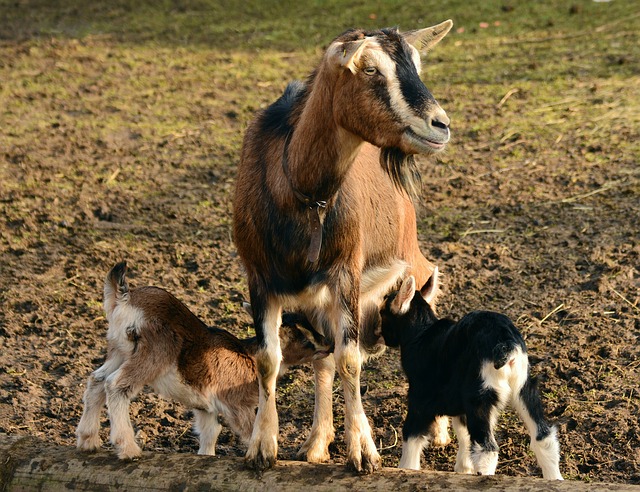
When they do breed, however, goats tend to give birth easily and to be superb mothers.


A cow often produces four or five times the volume of goats, which can be an overabundance and even a waste for some households. But that’s when she’s milking. Some cows are dry for up to half a year, every year, leaving the homesteader bouncing back and forth between way too much and none. Goats give a smaller supply of milk, with less fluctuation, over a longer time period.


But I don’t like goat’s milk — I hear that pretty often, and I always get a chuckle. Goat’s milk doesn’t have to taste, well, goaty. I call myself the “goat’s milk redeemer,” because I love to encourage people who are sure they hate goat’s milk to give it just one tiny sip. I watch people grimace in trepidation as they slowly lift the cup to their lips and force themselves to allow a few drops in. Suddenly, relief sweeps across their face.


“That tastes just like – like — milk!” they exclaim.


Indeed it does. It’s important to remember that there are many variables that contribute to the taste of any milk. Different breeds, and even different individuals among breeds, can make a difference. Sanitation and milk temperature matter, as does time of the year, as well as the diet and estrus cycle and overall health of the goat. The proximity of an unneutered male goat also can have an effect on the taste of the milk.


Goat’s milk is more agreeable for some human digestive systems, as well. Some who cannot tolerate cow’s milk can drink milk from a goat without side-effects or symptoms.


Goat cheese is delicious, healthy, and easy to make, and the whey left over is wonderful nutrition for chickens and pigs.


Another reason goats make excellent homestead animals is the meat. Some breeds have been developed with meat production in mind, but any goat can be used for food. Oh, I know. Many North Americans balk at the notion of eating goat. But did you know that most cultures consume goat meat, and it is in fact the most-eaten red meat in the world? Sometimes called chevon, goat is lower in fat, calories, and cholesterol than most of the other meats we eat.


As with any animal used for meat, it is best processed at a young age and with limited testosterone to maintain a mild flavor — think lamb versus mutton, and broilers versus stewing chickens.


The Best All-Natural Wormer For Your Livestock Is Right Here


Goats’ coats are useful, as well. Some breeds of goats produce fiber which can be harvested from a live animal, and goat skin can be used in lieu of lightweight leather for clothing and accessories.


Goats can be trained to work as beasts of burden, too. They can carry packs and negotiate rough trails better than many larger but less sure-footed animals, and can pull a cart or wagon.


Is This The Best Low-Cost, Low-Maintenance Livestock You Can Own?

Image source: Pixabay.com


Another important factor about goats is that they are exceptionally economical and easy keepers.   While many livestock species need high-quality pasture, goats prefer scrubby edge habitat and light forest. Goats will eat grass, but they are designed as “mid-level browsers,” meaning that their go-to is leaves and twigs from shrubs and low-hanging trees.


Not only does their browsing reduce feed costs, but it helps with control of brush and weeds, including noxious plants such as poison ivy, which they eat without ill effects.


They don’t need expensive hay, either, and often do better on coarse weedy choices. Grain and supplements are readily available and affordable, and treats are easy. Mine enjoy nibbling on softwood needles, helping dispose of garden scraps like carrot tops and discarded kale leaves, and keeping the maple and dogwood branches trimmed.


Goats are not only inexpensive, but are low maintenance and easy to handle. No calling a farrier for hoof work or hiring a professional shearer for grooming — you can do them yourself. Many goat owners also give shots and administer worming treatments themselves. Goats are small enough to be manageable and are tough and resistant to maladies.


They don’t require much in the way of shelter. In my northeastern location, they need an enclosed barn in winter and shelter from sun and inclement weather in summer. Depending on the breed and your particular geography, you might need more or less than that, but their needs are minimal.


I have heard it said that goats are escape artists and that it is challenging to find a fence that will hold them, but that has not been my experience. A small pen of woven wire, wood planks, or cattle panels suffices in winter, and a large area of portable electric mesh provides them plenty of browse in summer.


Image source: Pixabay.com

Image source: Pixabay.com


Goats are clean, too. Unlike some farm animals, the goats in my barn smell pleasant — unless there is an intact male around to stir up pheromones, but even that odor will dissipate when the male has left the premises. Otherwise, they are generally tidy and sweet-smelling.


If all those factors aren’t enough, here comes the trump card: Goats are a lot of fun. They have delightful personalities. They are charming and personable and make outstanding pets. They enjoy attention, are amiable and clever, and easy to train.


One word of caution about goats is that it’s not advisable to get just one. They are social animals and require the companionship of at least one other.


That said, you may not be able to stop at just one, or even two. Goats are such amazing animals, so useful and rewarding and entertaining to be around, that you will probably have trouble holding back from getting another, and another, and then still more.


Whatever your reason for considering goats, be it for dairy, meat, landscaping, packing or companionship, I hope you agree that they are a terrific choice as a homestead animal. Raise them, keep them, and love them, and goats will bring you joy for years to come.


Do you agree or disagree? Share your advice about goats in the section below:


If You Like All-Natural Home Remedies, You Need To Read Everything That Hydrogen Peroxide Can Do. Find Out More Here.
Saturday, March 11, 2017

The Hidden Worm That Can Kill Your Goats & Sheep

The Hidden Worm That Can Kill Your Goats & Sheep

Image source: Pixabay.com


I lived in ignorant bliss for years. Like many keepers of small ruminants up north, I was more complacent than I should have been about the possibility of parasites. As a general rule of thumb, these organisms have been more of a problem in southern locations for longer than they have in the north, but are gradually making their way to all regions of the country.


About six months after I purchased two doelings and integrated them into my herd, a visiting animal health expert noticed some worrisome symptoms in one of the young goats and took fecal samples back to her office to examine under a microscope. The next day, she called me with the results: the animal was loaded with barber pole worm.


I had never even heard of barber pole worms, and I set about learning all I could about it by asking other goat owners, seeking information from animal health experts, and searching online.


What Are They?  


Barber pole worm, or Haemonchus contortus, is a parasitic organism which thrives in the abomasum—or last stomach—of ruminants. It is highly contagious, often deadly, and once contracted is nearly impossible to eradicate.


Research revealed that my first order of business was saving the life of my goat. How-to’s varied widely among all the sources I consulted, many of them directly contradicting one another on everything from types of medications to frequency and dosage. It was scary and confusing, to say the least.


Diatomaceous Earth: The All-Natural Livestock De-Wormer!


A person in my goat network took the time to tell me the story of what worked for her, and I believe her help is the reason my goat survived. She recommended I use a specific type of anthelmintic—the scientific term for a chemical de-wormer—called levamisole hydrochloride.   The information I found online supported her advice. Levamisole is available only via mail order in my state, but the lady happened to have some on hand and offered it to me at her cost.


Lest the treatment described above sounds like a panacea, it most assuredly is not. Different drugs are more or less effective by region, by farm, by animal, and by a whole host of other factors. But if a treatment worked at a farm nearby, that is a good place to start.


Before continuing with information about barber pole worm, it is worth noting that I am not a veterinarian. Any knowledge I have of animal health and parasites is gained through my own research and experience as a goat owner, and should never be taken as advice in lieu of consulting an expert.


First, a few barber pole basics. It is the adult worms, striped like a barber pole, which take hold in the stomachs of ruminants. From there, they lay eggs which are passed out of the animal’s body through its feces. Once on the ground, the eggs develop into larvae and are ingested by ruminants as they graze. Back inside the digestive system, the larvae become adults and the life cycle continues.


Symptoms of Barber Pole Worm


The Hidden Worm That Can Kill Your Goats & Sheep

Image source: Pixabay.com


Visible symptoms of the possible presence of barber pole worms include diarrhea, hanging tail, dull coat, lethargy and depression. It is important to remember that these signs can be indicative of other maladies, as well, so while these symptoms indicate that something is wrong, it is not always barber pole worm.


If barber pole worm progresses, edema—fluid buildup in body tissues—sometimes becomes visible, particularly in the face and jaw.


An excellent way to diagnose the presence of stomach worms—of which barber pole worm is a likely candidate—is by determining whether the animal is anemic. This can be achieved using a diagnostic tool called “FAMACHA.” This is basically a chart showing how to compare the colors of the tissue under the lower eyelids of the animal—pink tissue means there is plenty of healthy blood flow and white means anemic—and providing guidelines of when to treat.


“The Big Book Of Off The Grid Secrets” — Every Homesteader Needs A Copy!


Another excellent diagnostic method is a fecal exam. Veterinarians typically offer this service, but it can be costly and cumbersome for multiple animals and follow-ups. For this reason, many people learn to do it themselves. Examining fecal content is not nearly as off-putting as it sounds.  Training can be attained for little or no money, often from another ruminant owner. My own microscope training was provided to me by the professor who first diagnosed my sick goat, but since that time my state cooperative extension has begun to offer quarterly microscope training workshops.


The expense of owning a good quality microscope can seem daunting, but groups and clubs can potentially share ownership in equipment, giving each member easy access without being solely responsible for cost or storage.


It is important to be aware that fecal exams do not always tell the full story. The presence of parasite eggs in fecal matter does not necessarily correspond exactly with the presence of adult stomach worms. When in doubt, always consult a veterinarian.


It is critical to catch barber pole early. Unchecked, it can be deadly. In late stages it is even possible for the treatment itself to be dangerous because the sudden die-off of parasites can render an animal too compromised to recover.


As with most things, an ounce of prevention is worth a pound of cure. It is wise to screen new animals for parasites before putting them in with your existing herd, even when buying high quality stock from a reputable dealer. Once barber pole was present on my farm, the only option from that point forward was to manage it.


Some livestock owners get desirable results by routinely administering anthelmintics to the entire herd or flock. However, current school of thought recommends treating only sick animals. The reason for this is to avoid the risk of creating a medication-resistant super-organism.


Hot to Prevent Barber Pole Worm


When my goat was first diagnosed, I treated my entire herd. It was important at that time to make a complete break in the life cycle of the parasite. I carefully monitored the fecal egg counts after the first dose and treated only sick animals from there on.


Parasite activity is minimal in winter in cold climates. It flares up most in spring and fall, so diligence is most crucial during those seasons. Some individual animals and certain breeds are naturally more resilient, and young stock is generally far more susceptible than are adults. Resilience—the innate ability to thrive in the presence of barber pole worm or avoid getting it at all—is an excellent trait to keep in mind when culling a herd.


Goofy Gadget Can Jump-Start Your Car — And Charge Your Smartphone!


The Hidden Worm That Can Kill Your Goats & Sheep

Image source: Pixabay.com


Some of the best ways to manage barber pole worm are really more about managing the livestock, pasture and infrastructure. Parasite eggs and larvae thrive best in warm humid conditions, multiply most easily in crowded conditions, are most plentiful close to the ground, and have a more profound effect on less healthy animals. With those facts in mind, good parasite management includes:


  • Keeping indoor quarters clean.

  • Allowing ample space in the most-used paddocks.

  • Rotating pastures and sticking to the highest and driest during damp seasons.

  • Keeping hay and feed up off the ground by using hay and grain feeders.

  • Hanging water buckets on walls to minimize spills and feces contamination.

  • Keeping feed and water containers clean.

  • Providing mid-level browse. Sheep tend to graze and goats prefer browse, but both will eat vegetation higher off the ground if browse is provided. This will help limit the likelihood of the larvae being ingested.

  • Maintaining overall herd health.

  • Staying abreast of any health changes in individual animals and within the overall herd, particularly during seasons when parasites are most prevalent.

  • Doing fecal exams often.

  • Being responsible regarding biosecurity: Use due diligence to prevent yourself and visitors from carrying barber pole worms to other farms.

Two other preventative treatments being increasingly recommended by veterinarians and farmers are copper and tannin. Many sheep and goat owners use copper boluses—capsules filled with copper pellets—as effective treatment. The drawback to these is that they can be challenging to administer, because they need to be shot with a special gun down the animal’s gullet in order to remain intact and not chewed. An easier yet arguably less effective method is to offer free-choice tannin. This is easily found in the bark of softwood trees, but comes with a warning: certain pine trees are toxic to goats and sheep. Pine trees native to my region pose no danger, but that is not the case in all areas of the country. The bark of other trees, most notably cherry, can be toxic, as well. If you are not certain, consult your veterinarian.


No small ruminant farmer wants to have barber pole worm show up in his or her herd, but it is becoming increasingly common in most areas. But with attention to self-education and adoption of careful practices, barber pole worm can be monitored, managed and mitigated.


Have your sheep or goats ever had barber pole worm? Share your advice in the section below:


Discover The Secret To Saving Thousands At The Grocery Store. Read More Here.

Tuesday, January 17, 2017

The Fast-Growing Meat Goat You Won’t Ever Have To Feed

The Fast-Growing Meat Goat You Won’t Ever Have To Feed

Image source: Turkey Nob Goat Farm


We homesteaders usually go for the Boers, Nubians and Spanish breeds when choosing the type of meat goats to raise. These varieties deliver the bulk and poundage we want when it’s time to sell them or use for our own consumption.


But we also know the challenges of keeping them healthy. Rising feed prices and veterinary costs, the need for green pastures, plus the special care required during kidding season – these all add up to the daily demands of keeping our herds happy.


The past decade in America, though, saw the increasing popularity of a lesser-known breed: the Kikos.


Kiko goats are originally from New Zealand, bred in the late 1970s by Garrick and Anne Batten. The Battens cross-bred feral does with domesticated dairy bucks of Anglo-Nubian, Saanen and Toggenburg varieties. They wanted to develop indigenous goats that were more muscular and productive, for purposes of commercial meat production. They aimed for four key qualities:   hardiness, survivability, rapid growth rate and minimum input from growers. After four generations of controlled breeding and rigorous culling, they established the Kiko breed in the late 80s. The breed came to be known as the “go anywhere, eat anything” goat because of its exceptional ability to thrive in less-than-ideal environments. In 1995, Kikos were brought to the United States and have since elicited a growing interest among goat enthusiasts and meat producers.


Diatomaceous Earth: The All-Natural Livestock De-Wormer!


Kikos are large-framed goats, lean but athletic in appearance. They’re usually all white or cream in color, but also can come in darker colors of camel, brown and black. They have short, slick hair in warm, sunny climate, but can grow thick flowing hair when ranged at high altitudes in the winter. They have erect ears and the bucks grow long, narrow horns if not disbudded.


If you’re looking to expand your livestock with little or no additional expense, Kikos would be your best choice. They can grow alongside cows and sheep without competing for pasture. That’s because Kikos are foragers — they will go for weeds on brush and ignore your cattle’s preferred grass. That’s what makes them excellent brush cleaners. With plenty of acreage, they will thrive and basically take care of themselves if there’s a good variety of plants. The American Kiko Goat Association (AKGA) says many ranchers note an increase in available grasses for their cattle after two to three years of running Kikos on their operations, because most of the undesirable and invasive plant species have been mowed. [1]


Story continues below video


While I totally adore the sweet, docile temperament of my Boers, I’m wary of and constantly having to address their susceptibility to disease. In our warm, humid climate, I have to annually battle the threat of parasitic infestation, respiratory problems and hoof rot, particularly during the rainy season. (Had I learned about Kikos earlier, and if they were easily available in our area, I would’ve chosen them first.)


Terry Hankins, who raises Kikos at Egypt Creek Ranch in Mississippi, says the breed thrives best in the Southeast, Midwest and the Deep South where there’s up to 50-60 inches of rain annually. Not surprising, since Kikos were developed in New Zealand, where annual rainfall can run up to 100 inches. [2] Whereas Boers were developed in South Africa, where no more than 20 inches of rain is experienced.


Be Prepared! Store An ‘Emergency Seed Bank’ For A Crisis Garden


Richard Johnson and Mia Nelson of Lookout Point Ranch in Lowell, Ore., give their Kikos only minimal supervision beyond the basic record-keeping. They provide no barns, no supplemental feed, no hoof trimming, no worming, not even any vaccinations. They supply only mineral supplements and protection from predators.


But the defining characteristic of Kikos, say enthusiasts, is their impressive growth rate. Although the breed doesn’t grow as large as other meat goats, they are known to grow and reach market weight faster than their counterparts.


Another outstanding quality is their kids’ survivability. Dams are not only prolific – able to produce at least twins each year – but they also have excellent maternal instincts. They deliver without assistance and quickly clean their newborns, staying by their side for the first 24 to 48 hours. Kids are known to be active and vigorous at birth. They’re normally up and suckling within 10 minutes of birth.


In 2004, a study conducted at Tennessee State University showed that Kikos weaned more pounds of kid per doe as compared with Boers. [3] Nevertheless, Boers are still preferred by buyers at many barn sales. Size, looks and gentleness still seem to matter most to them, I guess.  For this purpose, many breeders opt to cross a Boer buck with Kiko does. The resulting hybrids are vigorous and show the best characteristics of both breeds.


[1] http://www.kikogoats.com/index.php/why-kikos/[2]  egyptcreekranch.com/pdf/articles/Kikos%20vs%20Boers.pdf[3]  https://articles.extension.org/pages/19288/goat-breeds-kiko

hydrogen peroxide report