Showing posts with label Easter. Show all posts

Sunday, April 1, 2018

The Sunday Morning Tune-up ~ Born Again

By Chip Murray   April 1, 2018


Spiritually we never grow old; through the passing of the years we grow so many years young. The characteristic of the spiritual life is its unaging youth, exactly the opposite of the natural life. “I am…the First and the Last.” The Ancient of Days represents the Eternal Childhood. God Almighty became the weakest thing in His own creation, a Baby. When He comes into us in new birth we can easily kill His life in us, or else we can see to it that His life is nourished according to the dictates of the Spirit of God so that we grow “to the measure of the stature of the fullness of Christ.” The mature saint is just like a little child, absolutely simple and joyful and gay. Go on living the life that God would have you live and you will grow younger instead of older. There is a marvelous rejuvenescence when once you let God have His way. If you are feeling very old, then get born again and do more at it. ~ Oswald Chambers, Unaging Youth


In Mel Gibson’s Passion of the Christ, he captures the powerful and glorious victory on Calvary quite brilliantly. As Jesus Christ has finished His mission, taking on the weight of all unto the last of our sins upon Himself and commending His spirit, the camera becomes the single tear drop from the Father falling onto the work of his Son…and finally contrasting the spectacular light of Easter with the dark torment and pure anguish of the devil in his darkest hour.


So, this past week we witnessed three very interesting confessions from three very prominent Catholics. We have the two in New York; one who sadly acknowledges the “abandoning” of Catholics by the Democratic Party, and the other who proves his point by moving to expand the Murder of Innocents. And a third in Rome, who says of those who murder the innocents, “They are not punished, those who repent obtain the forgiveness of God and enter the rank of souls who contemplate him, but those who do not repent and cannot therefore be forgiven disappear. There is no hell, there is the disappearance of sinful souls.”


I don’t know about you, but I grew older reading words that read like the epitaph of humanity itself; the death of love…the death of the human soul. Look about you dear friend and tell me, what do you see? Look at the faces and into the eyes of we the people in our off-guard moments of quietude, the spaces between the burden of keeping-up-appearances we all slosh through. I see, in the New Jersey business complex of office spaces where I work, people aging before their time. From the outward appearance…the drained expressions and sluggish body language of the followers of the lie, to the ghoulish features and characteristics of the leaders of the lie. Study the portraits of the top Progressives alongside their Conservative counterparts and you will find my point very hard to argue. President Donald Trump is aglow with youthful energy and enthusiasm. Hillary Clinton, barely able to bathe herself, is being held together by a team of doctors, pharmacists, and (reportedly) a steady flow of alcohol and medications. The “Moral of the Story”? Lying (sin) kills the body slowly, day by day, piece by piece.


Oaths are made to God. There was a time when there were more Oath Keepers than Oath Breakers…we were so much younger then, we are older for that now. The founder of Oath Keepers just seconds ago texted me, “Easter is a good day for personal renewal and hope.” When enough of us realize the truth in his words, turn away from those telling and selling the things we want to hear, and begin living with purpose for the light, love, and truth of life…we will be young again as a blessed part of the great raising. Trust me when I tell you, it beats the Hell out of the alternative. Please join us in Body and Soul.


Wishing you and yours, a glorious Easter Sunday…bask in the smiles of your children.


And because Jesus is risen, there will be another resurrection when he returns at the end of the story—the first securing the second—the great raising of all humanity for the final chapter, the final resolution—where all brokenness is repaired, all evil is vanquished, and all beauty is restored. ~ Gregory Koukl, The Story of Reality


shutupnsing


From Stewart Rhodes, Founder of Oath Keepers: “Today is the celebration of Christ’s love for us and his triumph over death. Let it be a day for personal renewal, forgiveness, hope and joy.  Be renewed and go forth with love and joy. Remember, duty is ours, results are God’s.”


The post The Sunday Morning Tune-up ~ Born Again appeared first on Oath Keepers.

Easter’s Distinctive Worldview

Easter’s Distinctive Worldview


When there’s no one left in the living world who remembers you, you disappear from this world.  We call it the “Final Death.”


— Héctor, “Coco” (2017)


He’s not really dead, as long as we remember him.


—Dr. McCoy, “Star Trek II:  The Wrath of Khan” (1982)


The Worship of the Dead


From Asia to Rome, the ancient pagan world worshipped the dead.  More specifically, families worshipped their dead ancestors.  That’s because the ancients believed that man was by nature potentially divine.  In this scenario, when you die … you “fly away” from your earthly prison, land in a heavenly airport and then become a deity when you get off the plane (or something like that).  And so, at death every human becomes a god.  But these “family” gods had a narrow scope of influence and power.  They belonged, almost exclusively, to their own families, and that’s where they worked out their godhood.  They protected their own families, as well as any family property and family land.  They especially guarded the family home.


In order to maintain this protection and care, the still-living family had to render its ancestors due respect and worship.  The central ritual of that worship was a communion meal.  At stated times, each family (or its proper representative) had to bring a sacrificial meal to the tomb of its ancestors.  These meals metaphysically sustained the departed spirits in a relatively happy existence.  The dead would continue to look after the living.  But should the family ever fail in its duties, should they ever let the ritual meals lapse, the dead would become restless and grumpy.  If you agitated them enough, they might even leave their tombs and give you some trouble — haunting and terrorizing the negligent descendants.


Get Heirloom Audio’s Popular 2-CD Set, “Captain Bailey’s Heir,” For FREE! Use Coupon Code LTA2


We can see strong echoes of this worldview in Pixar’s Coco (2017).  The film uses the Mexican holiday Día de Muertos, the Day of the Dead, as its temporal setting and thematic backdrop.  In the story, we follow the young boy Miguel Rivera as he comes to terms with the meaning of the holiday and the spiritual reality that undergirds it.  The ofrendas … the images, memorabilia and food that families set up to remember the dead, loom large in the story, but Miguel and his family see them, not as worship, but merely as a means of showing respect for the departed and maintaining communion with them.  The dead, however, know that their own continued existence depends upon the memories of the living.


And so, it follows that if the living ever do forget a dead family member, that family member vanishes completely from all reality.  At the end of the closing titles, Pixar acknowledges the movie’s roots in Mexico’s “indigenous culture” in the various Mexican cultures that pre-date the coming of the gospel.  As you would expect from Pixar, there are very few references to Christianity in the movie Coco. 


The Gospel and the Soul


The Christian gospel destroyed ancestor worship in the West.  It’s easy to understand why.  The gospel rejects the deity of man and with it, the pagan concept of the continuity of being.  God is God, creation is creation and there is no point where the two blend.  Even in Christian doctrine, the Son’s incarnation, the human and divine remain absolutely distinct.  Jesus is truly God and truly man, but His two natures exist “without confusion, without change, without division, without separation.”


Easter’s Distinctive WorldviewThe soul, then, is part of creature-hood.  The human soul endures, not because of some innate deity or immortality quality of its own, but because the Creator God upholds its existence and insures its distinction and integrity until the Last Judgement.  But lasting until judgement day is not everlasting life or eternal blessedness.  Only those who trust in Jesus have everlasting life:


“He who believes on the Son has everlasting life: and he who does not believe on the Son shall not see life; but the wrath of God abides on him” (John 3:36).


Jesus Himself defines the nature of eternal life in His high priestly prayer to His Father: “And this is life eternal, that they might know thee the only true God, and Jesus Christ, whom thou hast sent” (John 17:3).  Eternal life is the true, loving and covenantal knowledge of God in and through His Son, Jesus Christ. The eternal alternative is hell for both soul and body. Serious business.


Enlightenment Soul Killers


The Enlightenment tried to restore the autonomy and immortality of individual soul while gently pushing God off to the side.  From Descartes to Kant, Enlightenment thought set the autonomous human personality at the center of all things.  “God” became the safety net and operational mechanism that guaranteed man’s self-knowledge and eternal blessedness.  But beyond that, man could pretty much run things as he or she sees fit.  Or so it seemed.


The world changed again when Darwin shredded the Enlightenment with tooth, fang and claw.  And with the emergence of postmodern thought, man has run out of answers and perhaps even forgotten what the big questions actually were.  Materialism reduces the soul to electro-chemical phenomena that end with the death of the body.  Pantheism dumps the individual soul back into the “undifferentiated sea of divine essence” and the individual personality is lost forever, absorbed completely like a drop of water into the shoreless ocean.


In other words, the dead are dead.  They are lost to the living forever.  We can’t call them back; we will never see them again.   This is a reality that humans avoid on both an instinctive and self-conscious level.  We don’t want to think about death, especially our own.


‘He’s Alive in Our Hearts’


We find it in greeting cards and on tombstones.  McCoy said it of Spock.  More recently, in the movie Black List (2016), Cooper said it of agent Elizabeth Keene: “But we haven’t lost Elizabeth.  We know exactly where she is.”  With that, Cooper placed his hand on his heart. And so we’ve come full circle.  The dead live as long as we remember them.  But we are no longer talking about reality.  We pretend that somehow our memories have some sort of mystical power to keep the dead alive, but it’s all metaphor, exaggeration and self-deception.  Interestingly, postmodern secularism doesn’t even have pagan metaphysics and magic to provide a ray of hope to the living.  Just the angst of existence and nothing more.


But it’s right here we must confess that Christians too, have often fallen short doctrinally in our understanding of the human soul and its salvation.  Ask a small child or teenager who has grown up in the Christian church, “What does it mean to be saved?”  and they likely will say, “I get to go to heaven and be with Jesus when I die.”  Salvation becomes equivalent with justification and nothing more.  Being “saved” means being dead first.  Sometimes even the reality of Jesus’ whereabouts falls under this same gnostic misconception: “You ask me how I know He lives?  He lives within my heart.”


Sorry, but that’s not the full gospel. And, at the end of the 20th century, “Ask Jesus into your heart” was the increasingly tired mantra that became a substitute for the very real gospel’s demand for repentance and faith in the living Lord, Jesus Christ.


The Gospel of Resurrection


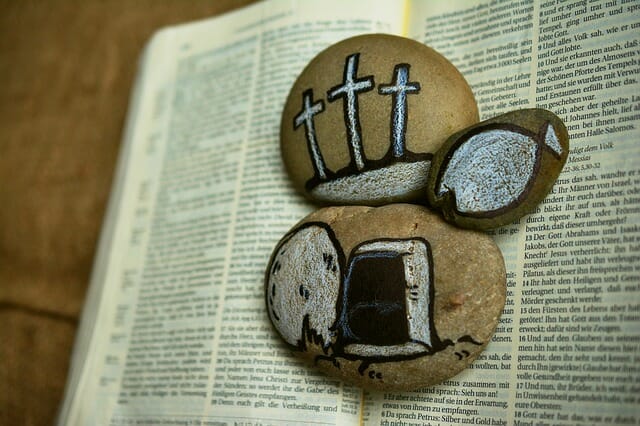
At Easter we celebrate the resurrection of Jesus Christ.  Jesus of Nazareth, who died in the place of guilty sinners, really did come back to life.  His brainwaves came back on line.  His heart began to beat.  His lungs filled with air.  Strength returned to His muscles and warmth to His flesh.  He got up and walked out of His tomb.  This is history, not fable or myth or some upper-story Platonic experience.  It is the basis of the true gospel.  The resurrection of Jesus Christ in space and time assures us that:


  • Jesus Himself kept God’s law perfectly. Of all Eve’s seed, He alone was without sin and guilt.  Death had no claim on Him.  And so He could become the Lamb, the innocent sacrifice, the just Man who could suffer in the place of the unjust.

  • Jesus’ resurrection meant that His work as a penal substitute was complete. The Father received Jesus’ sufferings and death as full atonement for sin.  For those who trust in Him, grace replaces God’s wrath.

  • Jesus is God. Only God Himself could balance out the sins of the world.  Only the living God could defeat death.  Only God can save His people from their sins.

  • Those who trust in Jesus have the benefits of His resurrection working within them (Rom. 6). This means newness of life right here and now as well as substantial victory over sin.

  • The final goal of our salvation is the final Resurrection and the New Jerusalem that lies beyond (1 Cor. 15; Rev. 21). Together, we will share in Jesus’ resurrection.  One day … one day in history … God will bring all His people together again in eternal life and joy.


Conclusion


In the true gospel, God calls us to trust in Jesus Christ, to believe that in His death and resurrection there is forgiveness of sins and eternal life.  He promises us that because Jesus lives, we can walk in newness of life now and that in the last day He will raise us to resurrection life and glory.  That means the separation of soul and body isn’t permanent and old man death doesn’t have the last word.


Bottom Line: Love is eternal because the resurrected Jesus guarantees it.  And yes, memories will fade away …  but love marches on, into eternity with Jesus triumphantly leading His people in this majestic march … ordained by the Father from the very beginning.


Happy Easter!

Sunday, April 16, 2017

Good Friday And The Real Meaning Of The Cross

Off The Grid Theology

Good Friday And The Real Meaning Of The Cross

Image source: Pixabay.com


Penal suffering in Scripture is released,


or not inflicted upon the guilty,


because it has been endured by a substitute.


—William Shed, Dogmatic Theology (1888-90)


The Need for the Cross


Early on in the Bible we get some bad news.  Our rebellion deserved divine wrath.  God is just and holy and can’t overlook sin (Ex. 34:7).  But God is also love and grace.  His love moved Him to save sinners from death and hell.  “God so loved the world, that He gave His only begotten Son, that whoever believes in Him should not perish but have everlasting life” (John 3:16).  God gave us His saving love in the person of Jesus Christ, whom He gave for the salvation of the world.  Those who believe in Jesus are saved from their sins and also from the wrath of God.  They have eternal life as the adopted children of God.  Those who refuse to believe remain slaves to sin and abide under God’s wrath (John 3:36).


God gave up His Son to death on the cross.  Please know this … the cross was a particularly horrible way to die.  As the victim’s chest muscles tightened, breathing became more and more difficult.


Only by pushing up against the nails that pierced the victim’s hands and feet could he draw his next breath.  But this could go on for days.  The Romans had mastered crucifixion, not just as a tool of punishment, but also as a visceral warning to others.  Pain, suffocation, thirst, exposure, infection and humiliation all went into the torturous death of the cross.


Heirloom Audio: Christian Heroes For Christian Kids


But when it came to Jesus there was much more.  Beyond the lashes, the beatings, the thorns, the fatigue, and the physical anguish was something far greater.  The wrath and curse of God (Gal. 3:13).  For Jesus, the cross was also a ticket to Hell.  The Father made Jesus a true and complete offering for sin (Isa. 53:10).  The Son of God took on, in His humanity, all the terrors of Hell in the place of those who would trust in Him.  And then He died a judicial death, the innocent for the guilty, to bring rebellious sinners to God.


The Bible uses a number of terms or concepts to explain exactly what Jesus accomplished on the cross.  Scripture speaks of sacrifice, propitiation, reconciliation, atonement and redemption.


Sacrifice


God instituted animal sacrifice in Eden and continued it until the cross.  Early on, “sacrifice” taught the theology of penal substitution.  The worshipper took a lamb or a bull from among the community’s herds (Lev. 1).  The animal had to be without spot or blemish.  The worshipper would lay his hands on the animal, so identifying himself with it.


He would then kill the animal himself.  This was important.  Sacrifice always meant death, and the worshipper needed to understand his responsibility for that death.  He needed to realize, “This animal died for me.  I deserved this death.  I killed this substitute.”  Once the animal was dead, all or part of the animal was placed on a flaming altar.  There it was consumed, and its smoke rose up to heaven.  Sacrifice went on for 4,000 years.  But the blood of lambs and bulls couldn’t ultimately satisfy the demands of God’s justice (Heb. 10:1-4).  They were only a picture and pledge … a kind of “flaming promise.”  And, of course, they weren’t the real Substitute.


Jesus was the real and true Substitute, the true Lamb of God (John 1:29).  He came from among God’s people, true Man from true men.  He was innocent and holy, guiltless by God’s testimony and by Roman law.  But in His sufferings and death, Jesus Christ bore the wrath of God against sinners.  He died in the place of His people, and He rose from the dead as a clear testimony to His righteousness and deity (Rom. 4:25; 1:4).  When we “lay hands” on Him, we identify with Him, by faith.


Propitiation


The word propitiation has nearly disappeared from the modern church’s vocabulary.  It’s a word suspiciously absent from many of newer translations of Scripture.  While we live in a “dumbed down” world where multi-syllabled words are disappearing fast, the word propitiation has been scrubbed from Scripture for a very different reason. The real problem folks today have with this word … is the theology it implies.  That’s because to propitiate means to turn away anger or wrath.


Column continues below video


To say that Jesus is “the propitiation for our sins” (1 Jn. 2:2; 4:10) is to confess that God’s wrath needed to be propitiated.  That God, in all His holiness and justice, is angry with sinners (Ps. 7:11). That He hates all the workers of iniquity (Ps. 5:5).  That the wrath of God abides on those who are His enemies (John 3:36).


Jesus, in His sufferings and death, bore that anger, that hatred, that wrath, so that God can show His love for sinners without violating His own holiness and justice.  God loved the world in giving His only begotten Son as a “propitiation” for sins.  Those who trust in Him have God’s love and favor.  Those who reject Christ abide under God’s all-consuming wrath and are bound for eternal Hell.  Sorry, that’s what the Bible says and that’s why understanding who Jesus is and what he accomplished is both urgent and important.


Reconciliation


Alright, so God took the first step in reconciling His enemies to Himself.  This means, first, that an offended God had to satisfy the demands of His own justice so that He could be at peace with His enemies.  Paul writes, “God was in Christ, reconciling the world unto himself, not imputing their trespasses unto them” (2 Cor. 5:18).  The basis for reconciliation with God is the legal imputation of sin to Christ and the imputation of His righteousness to those who believe.


Second, and this is the “amazing grace” part … reconciliation means that God reaches out to sinners through the Gospel to bring them to Him.  So, Paul goes on to say that God “has committed unto us the word of reconciliation,” and pleads accordingly, “we pray you, in Christ’s stead, be ye reconciled to God” (1 Cor. 5:19-20).  God, in no uncertain terms, calls us to lay down our enmity toward Him and receive His peace.  He says, “get out of that camp and get over here!”


Atonement


Good Friday And The Real Meaning Of The Cross

Image source: Pixabay.com


“Atonement” in English is a word translated William Tyndale (d. 1536) to communicate this biblical doctrine.  The Hebrew word appears throughout the Torah in connection with blood sacrifice.  Atonement means that God covers the sins of His people with the blood of Christ.  That is, God judicially hides the guilt of the sinner from His view because Jesus has already taken on the wrath that the sinner has coming.  Because God has already punished the sin … He may forgive the sinner.  Atonement involves both propitiation and reconciliation.  Which means, it escorts in, both forgiveness as well as peace with God.  This is no small thing.  The blood sacrifices of the Mosaic covenant portrayed and preached atonement in very graphic terms.  Terms that seem out of place for us today.


Redemption


Redemption is tied to debt and slavery.  “To redeem” means to “buy back.”  God redeemed Israel from slavery in Egypt, destroyed its enemies, took his people to Himself as His covenant bride.  Not just that, but He also gave Israel an inheritance … the land of Canaan (Ex. 15:13; Deut. 7:8; Ezek. 16:8).  Please stay with me here and keep reading, because most people don’t follow this “redemption trail” and its tremendous implications. Under the Mosaic law, a man’s nearest male relative served as his kinsman-redeemer.


Turn Drive Time Into Learning Time — Without DVDs!


The kinsman-redeemer had some major responsibilities and at least four interrelated functions:  1) He had to buy back his enslaved kinsman (Lev. 25:28).  2) He had to make sure justice is done for his kinsman if he has been murdered (Josh. 20:1-6).  3) He even had to marry his kinsman’s widow and raise up his kids if necessary (Deut. 25:25).  4) He also had to buy back an indebted or lost inheritance for his kinsman or for his kinsman’s widow and children (Lev. 25:25).


Glad that’s Old Testament?  Keep reading.  It’s very much a part of the good news.


Good News


All of this is fulfilled in Jesus Christ:  1) He has bought us back from sin and death (Gal. 3:13; Titus 2:14).  2) He destroys our enemies (2 Thes. 1:7-10).  3) He has taken the Church as His Bride and is raising up a redeemed humanity as her children (Rev. 21).  4) He will redeem all of creation and restore it in “resurrection glory” for His people.  This is our eternal inheritance (Rom. 8:18-23).


Christ Crucified


All this opens up the true meaning of the cross.  And it’s how Jesus Christ became the Savior of the world.  This is what Good Friday is all about.  Jesus our sacrifice, our propitiation, our reconciliation and our atonement:  Jesus our Redeemer and our Savior.  Our responsibility is to trust in Him and to obey His commandments.  His words, not mine.


May God bless you mightily this Easter.

Thursday, April 13, 2017

What You Didn’t Learn About Easter In Sunday School

Josh Volk


Easter is nearly here, which means Christians and even non-Christians are focusing once again on the story of Jesus’ death and resurrection.


But as we’ll discover on this week’s edition of Off The Grid Radio, there’s more to the biblical narrative than we may have realized.


Joining us is Solutions from Science and Heirloom Audio founder Bill Heid, who tells us about a new Easter video he produced that goes far beyond the typical Easter video seen in churches.


He made it for his family and friends, but then decided to release it to the public following a ton of positive feedback. (Quite a few people even cried while watching it.)


Bill also tells us:


  • Why he calls Easter the most important event in human history.

  • What many Christians simply miss when they’re reading the Easter story.

  • Why it is essential to have the right “philosophy” of Easter.

  • What churches must do if they are to retain teens as they grow older.

Finally, Bill gives us tips on talking to children about Easter.


We were inspired not only by the video but by our conversation with Bill – and we think you will be, too!