Showing posts with label Black site. Show all posts

Tuesday, October 10, 2017

Unsealed CIA Memos Provide Shocking 'Salt Pit' Black Site Details

A new batch of 274 CIA documents connected with Bush era torture have just been made public as a result of a lawsuit brought by families of victims. Contained in the documents are newly unearthed details on the CIA"s "black site" program which reached its peak under Bush"s "war on terror" as well as shocking details revealing how the agency integrated its contract psychologists into its "enhanced interrogation" program in order to give torture a veneer of legality. While much of this story of CIA torture has already slowly come to light over the past few years, especially with the 2014 Senate Intelligence Committee report, the just released documents capture internal high level agency discussions revealing a cover-up in action.


Many of the memos focus on the CIA"s infamous "Cobalt" site in Afghanistan (also code named The Salt Pit), routinely described in headlines as the "sadistic dungeon" and "dark prison" for its full sensory deprivation darkness which detainees experienced round the clock, sometimes for years, as well as the two psychologists credited with designing the program of brutal interrogation techniques: John "Bruce" Jessen and James Mitchell. 


Two surviving prisoners and the family of a detainee who died at the Colbalt site reached an out-of-court settlement with the CIA psychologists in August after a lawsuit was brought for their role in the torture. As was hoped, the CIA and Pentagon were forced to declassify the documents related to the case in pretrial discovery. 


Satellite image of Cobalt site, also called the Salt Pitt, from now public documents.


The documents show the psychologists had been directly involved in designing and implementing torture, and that the blurring of lines between CIA interrogators and the psychologists originally brought in for "research" and development of techniques had agency leadership worried over future legal ramifications. Jessen himself had spent 10 days at the Cobalt facility in November 2002 where he was involved in interrogating Gul Rahman - a suspected militant who died of hypothermia while chained naked from the waist down to a concrete floor. He died 5 days after Jessen left. 


Ironically, a key fact rarely highlighted is that Gul Rahman was captured among Gulbuddin Hekmatyar"s Hezb-i-Islami faction, which itself had previously been funded and vastly expanded by the CIA  as part of Operation Cyclone. By 2010 terror leader Hekmatyar himself would enter negotiations with then President Karzai, and by 2017 would be fully reconciled with the US-backed government in Kabul.


Dr. Bruce Jessen, left, and Dr. James Mitchell, psychologists who contracted with the C.I.A.


The Guardian summarizes the newly released "Chronology of Significant Events" court findings covering the specific time period of Rahman"s slow death at the Salt Pit as follows:


  • November 2002: Rahman wearing only socks and diaper; supervisor has concern regarding hypothermia

  • Rahman subjected to 48 hours of sleep deprivation, rough treatment, cold shower and other measures but remained noncompliant.

  • Subjected to cold conditions and minimum food and sleep... confused due to dehydration and fatigue.

  • Cable recommends future use of continued environmental deprivations with interrogations 18 out of 24 hours daily

  • Linguist asks questions about the temperature at which hypothermia occurs

  • November 19 2200 hrs guard check - Rahman is alive.

  • 2300 hrs guard check - Rahman is alive.

  • November 20 0400 hrs guard check - Rahman is alive.

  • 0800 hrs guard check - Rahman is alive.

  • 1000 hrs guard check - Rahman is dead.

The Guardian further describes the now declassified documents as providing "the fullest picture yet of what the three men suffered [associated with the lawsuit] in that secret CIA dungeon – and of how fatefully their lives intersected with the rise and fall of James Mitchell and Bruce Jessen, the men who designed the torture regime."


Highlighted below are some revealing sections from the newly released batch of CIA torture memos - some of the below were already available before the latest release:


CIA contracted psychologists created an “Exploitation Draft Plan” which involved holding captives in soundproof cells in hidden facilities that were beyond the reach of the Red Cross, the press, and even internal US government oversight. The plan notes: No International Red Cross [IRC] nor even US observers. Detainees were essentially "disappeared" individuals and not even family members knowing their fates. Rahman"s family didn"t know of his whereabouts or death for seven years until an AP report unearthed his name. As noted in the below memo, Pentagon involvement ended with capture and transfer as a DoD psychologist accompanied the captive "unbeknown to the subject" after which the CIA psychologists would be involved in interrogation. 


Particularly intense "interrogation" sessions involved medical personnel attending to detainee wounds, and even applying antibiotics, so that torture could continue: "The straps were removed: subjects breathing continued to be rapid. Subject was then instructed to off the [water] board under his own power, which he did. The interrogators pointed to the small box and said, "you know what to do."... At 1130 hours, taken out of small box, hooded, and made to stand against a cell wall: at 1230 hrs, back into the large box (unhooded)--note that medical officers dressed as security team member at this time gave subject Betadine to clean wound. Subject was also given a topical antibiotic to apply to the leg wound... At 1450 hrs, back to large box. At 1601 hrs into small box: 1612 hrs, subject was heard crying/wimpering/chanting, 1635 went from small box to floor, sitting down hooded; and 1655 hrs, returned to large box, unhooded..."


CIA leadership envisioned that psychologists Jessen and Mitchel would provide a legally "defensible" veneer to torture sessions (after being paid $81 million). So long as their personal assessments vouched for detainees being of mentally sound mind, "enhanced interrogations" could be initiated. "In my read of the DOJ memo, providing we abide by our water board process on [redacted] (qualified medical staff present, the defensible exam is done and we follow our procedures) I believe the water board can be approved by CTC/LGL [CIA"s internal legal review team] without the need for further input from DOJ." Jessen and Mitchel were paid $81 million by the CIA in the process.


CIA leadership suggested psych evals be done from afar based on mere review of a file in order to set up a minimally invasive rubber stamp process. "to get waterboard approvals, we need a psychological evaluation... [Name redacted] indicated that we need to make a "defensible" psychological analysis indicating that, given the individual"s particular mental disposition, he would not suffer prolonged and sever psychological problems resulting from the enhanced interrogation techniques... can OTS make a defensible analysis based on a file review on the targets? Or do they need to have a psych eval done on the ground, face-to-face?  [Name redacted] indicates that all it must [be] is "defensible.""


Doctors and nurses were requested to be present during sessions. One email with the subject line "Medical coverage planning" asked "There would be nurses on site correct?" This was presumably to allow torture to continue after detainees were injured, wounded, or sick - while also preventing those running the program from being legally exposed to prosecution. 


Internal admissions of "blatant disregard for ethics": CIA contracted psychologists" ethics were questioned even by colleagues. They "have both shown blatant disregard for the ethics shared by almost all of their colleagues." Other emails admitted: “No professional in the field would credit their later judgments as psychologists assessing the subjects of their enhanced measures." And also, “if some untoward outcome is later to be explained, their sole use in this role will be indefensible.”


Wednesday, September 20, 2017

Happy Birthday CIA: 7 Truly Terrible Things The Agency Has Done In 70 Years

Authored by Carey Wedler via TheAntiMedia.org,


On Monday, President Trump tweeted birthday wishes to the Air Force and the CIA. Both became official organizations 70 years ago on September 18, 1947, with the implementation of the National Security Act of 1947.


After spending years as a wartime intelligence agency called the Office of Strategic Services, the agency was solidified as a key player in the federal government’s operations with then-President Harry Truman’s authorization.


In the seventy years since, the CIA has committed a wide variety of misdeeds, crimes, coups, and violence. Here are seven of the worst programs they’ve carried out (that are known to the public):


1.Toppling governments around the world


The CIA is best known for its first coup, Operation Ajax, in 1953, in which it ousted the democratically elected leader of Iran, Mohammed Mossadegh, reinstating the autocratic Shah, who favored western oil interests. That operation, which the CIA now admits to waging with British intelligence, ultimately resulted in the 1979 revolution and subsequent U.S. hostage crisis. Relations between the U.S. and Iran remain strained to this day, aptly described by the CIA-coined term “blowback.”


But the CIA has had a hand in toppling a number of other democratically elected governments, from Guatemala (1954) and the Congo (1960) to the Dominican Republic (1961), South Vietnam (1963), Brazil (1964), and Chile (1973). The CIA has aimed to install leaders who appease American interests, often empowering oppressive, violent dictators. This is only a partial list of countries where the CIA covertly attempted to exploit and manipulate sovereign nations’ governments.


2. Operation Paperclip


In one of the more bizarre CIA plots, the agency and other government departments employed Nazi scientists both within and outside the United States to gain an advantage over the Soviets. As summarized by NPR:


“The aim [of Operation Paperclip] was to find and preserve German weapons, including biological and chemical agents, but American scientific intelligence officers quickly realized the weapons themselves were not enough.


“They decided the United States needed to bring the Nazi scientists themselves to the U.S. Thus began a mission to recruit top Nazi doctors, physicists and chemists — including Wernher von Braun, who went on to design the rockets that took man to the moon.”


They kept this plot secret, though they admitted to it upon the release of Operation Paperclip: The Secret Intelligence Program That Brought Nazi Scientists To America by Annie Jacobsen. In a book review, the CIA wrote that “Henry Wallace, former vice president and secretary of commerce, believed the scientists’ ideas could launch new civilian industries and produce jobs.” 


They praised the book’s historical accuracy, noting “that the Launch Operations Center at Cape Canaveral, Florida, was headed by Kurt Debus, an ardent Nazi.” They acknowledged that “General Reinhard Gehlen, former head of Nazi intelligence operations against the Soviets, was hired by the US Army and later by the CIA to operate 600 ex-Nazi agents in the Soviet zone of occupied Germany.”


Remarkably, they noted that Jacobsen “understandably questions the morality of the decision to hire Nazi SS scientists,” but praise her for pointing out that it was done to fight Soviets. They also made sure to add that the Soviets hired Nazis, too, apparently justifying their own questionable actions by citing their most loathed enemy.


3. Operation CHAOS


The FBI is widely known for its COINTELPRO schemes to undermine communist movements in the 1950s and anti-war, civil rights, and black power movements in the 1960s, but the CIA has not been implicated nearly as deeply because, technically, the CIA cannot legally engage in domestic spying. But that was of little concern to President Lyndon B. Johnson as opposition to the Vietnam war grew. According to former New York Times journalist and Pulitzer Prize-winner Tim Weiner, as documented in his extensive CIA history, Legacy of Ashes, Johnson instructed then-CIA Director Richard Helms to break the law:


“In October 1967, a handful of CIA analysts joined in the first big Washington march against the war. The president regarded protesters as enemies of the state. He was convinced that the peace movement was controlled and financed by Moscow and Beijing. He wanted proof. He ordered Richard Helms to produce it.


“Helms reminded the president that the CIA was barred from spying on Americans. He says Johnson told him: ‘I’m quite aware of that. What I want for you is to pursue this matter, and to do what is necessary to track down the foreign communists who are behind this intolerable interference in our domestic affairs…’”


Helms obeyed. Weiner wrote:


“In a blatant violation of his powers under the law, the director of central intelligence became a part-time secret police chief. The CIA undertook a domestic surveillance operation, code-named Chaos. It went on for almost seven years… Eleven CIA officers grew long hair, learned the jargon of the New Left, and went off to infiltrate peace groups in the United States and Europe.”


According to Weiner, “the agency compiled a computer index of 300,000 names of American people and organizations, and extensive files on 7,200 citizens. It began working in secret with police departments all over America.” Because they could not draw a “clear distinction” between the new far left and mainstream opposition to the war, the CIA spied on every major peace organization in the country. President Johnson also wanted them to prove a connection between foreign communists and the black power movement. “The agency tried its best,” Weiner noted, ultimately noting that “the CIA never found a shred of evidence that linked the leaders of the American left or the black-power movement to foreign governments.”


4. Infiltrating the media


Over the years, the CIA has successfully gained influence in the news media, as well as popular media like film and television. Its influence over the news began almost immediately after the agency was formed. As Weiner explained, CIA Director Allen Dulles established firm ties with newspapers:


“Dulles kept in close touch with the men who ran the New York Times, The Washington Post, and the nation’s leading weekly magazines. He could pick up the phone and edit a breaking story, make sure an irritating foreign correspondent was yanked from the field, or hire the services of men such as Time’s Berlin bureau chief and Newsweek’s man in Tokyo.”


He continued:


“It was second nature for Dulles to plant stories in the press. American newsrooms were dominated by veterans of the government’s wartime propaganda branch, the Office of War Information…The men who responded to the CIA’s call included Henry Luce and his editors at Time, Life, and Fortune; popular magazines such as Parade, the Saturday Review, and Reader’s Digest; and the most powerful executives at CBS News. Dulles built a public-relations and propaganda machine that came to include more than fifty news organizations, a dozen publishing houses, and personal pledges of support from men such as Axel Springer, West Germany’s most powerful press baron.”


The CIA’s influence had not waned by 1977 when journalist Carl Bernstein reported on publications with CIA agents in their employ, as well as “more than 400 American journalists who in the past twenty?five years have secretly carried out assignments for the Central Intelligence Agency.”


The CIA has also successfully advised on and influenced numerous television shows, such as Homeland and 24 and films like Zero Dark Thirty and Argo, which push narratives that ultimately favor the agency. According to Tricia Jenkins, author of The CIA in Hollywood: How the Agency Shapes Film & Television, a concerted agency effort began in the 1990s to counteract negative public perceptions of the CIA, but their influence reaches back decades. In the 1950s, filmmakers produced films for the CIA, including the 1954 film adaptation of George Orwell’s Animal Farm.


Researchers Tom Secker and Matthew Alford, whose work has been published in the American Journal of Economics and Sociology, say their recent Freedom of Information Act requests have shown that the CIA — along with the military — have influenced over 1,800 films and television shows, many of which have nothing to do with CIA or military themes.


5. Drug-induced Mind control


In the 1950s, the CIA began experimenting with drugs to determine whether they might be useful in extracting information. As Smithsonian Magazine has noted of the MKUltra project:


“The project, which continued for more than a decade, was originally intended to make sure the United States government kept up with presumed Soviet advances in mind-control technology. It ballooned in scope and its ultimate result, among other things, was illegal drug testing on thousands of Americans.”


Further:


“The intent of the project was to study ‘the use of biological and chemical materials in altering human behavior,’ according to the official testimony of CIA director Stansfield Turner in 1977. The project was conducted in extreme secrecy, Turner said, because of ethical and legal questions surrounding the program and the negative public response that the CIA anticipated if MKUltra should become public.


“Under MKUltra, the CIA gave itself the authority to research how drugs could:’ ‘promote the intoxicating effects of alcohol;’ ‘render the induction of hypnosis easier;’ ‘enhance the ability of individuals to withstand privation, torture and coercion;’ produce amnesia, shock and confusion; and much more. Many of these questions were investigated using unwitting test subjects, like drug-addicted prisoners, marginalized sex workers and terminal cancer patients– ‘people who could not fight back,’ in the words of Sidney Gottlieb, the chemist who introduced LSD to the CIA.”


Further, as Weiner noted:


“Under its auspices, seven prisoners at a federal penitentiary in Kentucky were kept high on LSD for seventy-seven consecutive days. When the CIA slipped the same drug to an army civilian employee, Frank Olson, he leaped out of the window of a New York Hotel.”


Weiner added that senior CIA officers destroyed “almost all of the records” of the programs, but that while the “evidence that remains is fragmentary…it strongly suggests that use of secret prisons for the forcible drug-induced questioning of suspect agents went on throughout the 1950s.”


Years later, the CIA would be accused of distributing crack-cocaine into poor black communities, though this is currently less substantiated and supported mostly by accounts of those who claim to have been involved.


6. Brutal torture tactics


More recently, the CIA was exposed for sponsoring abusive, disturbing terror tactics against detainees at prisons housing terror suspects. An extensive 2014 Senate report documented agents committing sexual abuse, forcing detainees to stand on broken legs, waterboarding them so severely it sometimes led to convulsions, and imposing forced rectal feeding, to name a few examples. Ultimately, the agency had very little actionable intelligence to show for their torture tactics but lied to suggest they did, according to the torture report. Their torture tactics led the International Criminal Court to suggest the CIA, along with the U.S. armed forces, could be guilty of war crimes for their abuses.


7. Arming radicals


The CIA has a long habit of arming radical, extremist groups that view the United States as enemies. In 1979, the CIA set out to support Afghan rebels in their bid to defeat the Soviet occupation of the Middle Eastern country. As Weiner wrote, in 1979, “Prompted by Zbigniew Brzezinski, President Carter signed a covert-action order for the CIA to provide the Afghan rebels with medical aid, money, and propaganda.”


As Weiner detailed later in his book:


“The Pakistani intelligence chiefs who doled out the CIA’s guns and money favored the Afghan factions who proved themselves most capable in battle. Those factions also happened to be the most committed Islamists. No one dreamed that the holy warriors could ever turn their jihad against the United States.”


Though some speculate the CIA directly armed Osama bin Laden, that is yet to be fully proven or admitted. What is clear is that western media revered him as a valuable fighter against the Soviets, that he arrived to fight in Afghanistan in1980, and that al-Qaeda emerged from the mujahideen, who were beneficiaries of the CIA’s program. Stanford University has noted that Bin Laden and Abdullah Azzam, a prominent Palestinian cleric, “established Al Qaeda from the fighters, financial resources, and training and recruiting structures left over from the anti-Soviet war.” Much of those “structures” were provided by the agency. Intentionally or not, the CIA helped fuel the rise of the terror group.


Weiner noted that as the CIA failed in other countries like Libya, by the late 1980s “Only the mujahideen, the Afghan holy warriors, were drawing blood and scenting victory. The CIA’s Afghan operation was now a $700-million-dollar-a-year-program” and represented 80% of the overseas budget of the clandestine services. “The CIA’s briefing books never answered the question of what would happen when a militant Islamic army defeated the godless invaders of Afghanistan,” though Tom Twetten, “the number two man in the clandestine service in the summer of 1988,” was tasked with figuring out what would happen with the Afghan rebels. “We don’t have any plan,” he concluded.


Apparently failing to learn their lesson, the CIA adopted nearly the exact same policy in Syria decades later, arming what they called “moderate rebels” against the Assad regime. Those groups ultimately aligned with al-Qaeda groups. One CIA-backed faction made headlines last year for beheading a child (though President Trump cut off the CIA program in June, the military continues to align with “moderate” groups).


*  *  *


Unsurprisingly, this list is far from complete. The CIA has engaged in a wide variety of extrajudicial practice, and there are likely countless transgressions we have yet to learn about.


As Donald Trump cheers the birthday of an agency he himself once criticized, it should be abundantly clear that the nation’s covert spy agency deserves scrutiny and skepticism — not celebration.

Tuesday, August 15, 2017

The West Betrays U.S. Heroes Who Prevented Another 9/11

Authored by Giulio Meotti via The Gatestone Institute,


  • "Those who work as spies know the risks from America"s enemies, but they shouldn"t have to worry about politicized retribution from its friends" — The Wall Street Journal.

  • These officials should have never be prosecuted in a court; they should be protected from such actions. This prosecution is a betrayal of those who worked hard to prevent more massacres and to cripple the infrastructure of jihad.

  • That is the most important lesson: our spies and officials involved in the war against Islamic terrorism, like those who prevented another 9/11, now fear not only the wrath of the jihadists, but also the witch hunt of our media and judicial system.

One of the most important chapters in the war on terror is being rewritten -- with a moral inversion. Islamic terrorists who were arrested and deported have become "liberal causes célèbres", while agents of the CIA who questioned them are not only being condemned but also financially crushed by punishment and legal bills -- for having tried, legally, to save American lives.


Guantanamo Bay has supposedly become "the Gulag of our time"; the psychologists who interrogated the murderer who sawed off Daniel Pearl"s head have been charged with working "for money"; the "black sites" in the Polish and Lithuanian forests have been compared to Nazi concentration camps, and the U.S. jurists and officials who conducted the war on terror have been compared to the Germans hanged in Nuremberg.


"In just a few months, Obama had sent the CIA back to the September 10 culture of risk aversion and timidity that had contributed to the disaster of 9/11", Bruce Thornton wrote in his book, The Wages of Appeasement. A few examples of Obama"s policy include a directive to release Justice Department memos on the process of vetting interrogation techniques for legality. The attorney general at the time, Eric Holder, appointed a special prosecutor to determine if the CIA officers involved in the interrogation program had been guilty of breaking the law.


A judicial condemnation, however, has begun only now. A federal judge in Spokane, Washington, has opened one of the most important trials in the recent U.S. history. For the first time after September 11, three American citizens involved in interrogating Islamic terrorists have been called to answer to a judge. The New York Times released the video of their testimony. The federal court in Spokane, Washington, heard Bruce Jessen, James Mitchell and Jose Rodriguez testifying on their role in the war on terror. They are among the heroes who prevented another 9/11; now they are on the bench.


"I"ll tell you a story," Bruce Jessen testified.


"Two Christmases ago, I get a call from the CIA; my grandchildren and my daughter and son-in-law are living with us. You have 15 minutes to get out of your house because ISIS has found someone to come and kill you and your family... Now, those -- that isn"t the only threat I"ve received over the years, I"ve received lots of them. And I"m not afraid, and I did my duty and I stood up and I went to war, and I"ll stand up to any of them again, but I don"t want them messing with my family... And when you stick your face in the public eye, you get people like the SSCI and [Senator Dianne] Feinstein and the ACLU and other people who accuse you of things you didn"t do, who out your name, who give them your address, who print articles that are full of crap about you, and it makes it difficult."


Jose Rodriguez, the former head of the CIA clandestine service, told the court what was at stake:


"George Washington did not face an enemy like Al Qaeda. These are people who want to die as martyrs and see the killing of thousands of innocent men, women, and children as justifiable to promote their cause. Making a few of the worst terrorists on the planet uncomfortable for a few days during their first month of imprisonment is worth it in order to save thousands of lives".


John Rizzo also testified. In 2002, when George W. Bush signed the executive order in which he argued that the Geneva Convention does not apply to terrorists, Rizzo was an interim legal advisor. "No, I can"t honestly sit here today and say I should have objected to that", Rizzo said.


Now, Judge Justin L Quackenbush of the U.S. District Court for the Eastern District of Washington, cleared the way for the case to move to the trial phase, rejecting the psychologists" lawyers request for summary judgement. "This is a historic day for our clients and all who seek accountability for torture," ACLU attorney Dror Ladin said in a press release. "The court"s ruling means that for the first time, individuals responsible for the brutal and unlawful CIA torture program will face meaningful legal accountability for what they did".


These officials should have never be prosecuted in a court; they should be protected from such actions. This prosecution is a betrayal of those who worked hard to prevent more massacres and to cripple the infrastructure of jihad.


Many former CIA directors explained that the program of enhanced interrogation techniques worked extremely well:


"It led to the capture of senior al Qaeda operatives, thereby removing them from the battlefield; it led to the disruption of terrorist plots and prevented mass casualty attacks, saving American and Allied lives; it added enormously to what we knew about al Qaeda as an organization and therefore informed our approaches on how best to attack, thwart and degrade it".


The CIA claimed the demonstrable successes of the interrogation program: the raid in which Osama bin Laden was killed; the capture of José Padilla, accused of wanting to commit an attack in the United States with a dirty radiological bomb; preventing an attack on the US consulate in Karachi, Pakistan; a second wave of attacks after September 11 with a plan to hijack a plane and crash it into Library Tower in Los Angeles.


Jessen and Mitchell are not the only psychologists now in trouble for their involvement in this program. There are also the military psychologist Morgan Banks; Stephen Behnke, a former director of the American Psychological Association"s ethics office; Joseph Matarazzo, a former chairperson of the Psychologist Association, who allegedly wrote an opinion for the CIA in which the deprivation of sleep would not constitute "torture".


One of the most important cases of rendition took place in the Italian city of Milan against Abu Omar; the verdict ended by condemning CIA agents. Robert Seldon Lady, the former head of the CIA in Milan, and involved in the Abu Omar case, was arrested and released in Panama. In a rare interview, the Wall Street Journal wrote:


"Mr. Lady, who had planned to retire and become a security consultant from a farm house he bought with his life savings in Italy"s Piedmont region, received the stiffest sentence — eight years in prison, increased to nine on appeal. Before the case went to trial, Magistrate Armando Spataro sued to seize Mr. Lady"s house and use the proceeds to pay damages to Abu Omar. Mr. Lady fled Italy in 2005 but lost his property. His 30-year marriage, he says, was another casualty".


Sabrina De Sousa, another CIA agent involved in the Milan rendition, avoided the jail only thanks to being pardoned by the Italian authorities.


The European Court of Human Rights has condemned Macedonia for the rendition of a German citizen. The European judges also condemned Poland for hosting one of the CIA"s secret sites. Spanish judges opened a criminal file against some senior Bush administration officials, including John Yoo and Jay S. Bybee of the Justice Department, and William Haynes, a former senior Pentagon jurist. John Yoo, now a professor at University of California, Berkeley, wrote the 2003 memorandum authorizing the CIA"s interrogation techniques. The German attorney Wolfgang Kaleck filed a criminal complaint against Yoo; Erwin Chemerinsky, dean of the Law School at the California University, asked to prosecute Yoo, who was also sued by José Padilla, a convicted American terrorist.


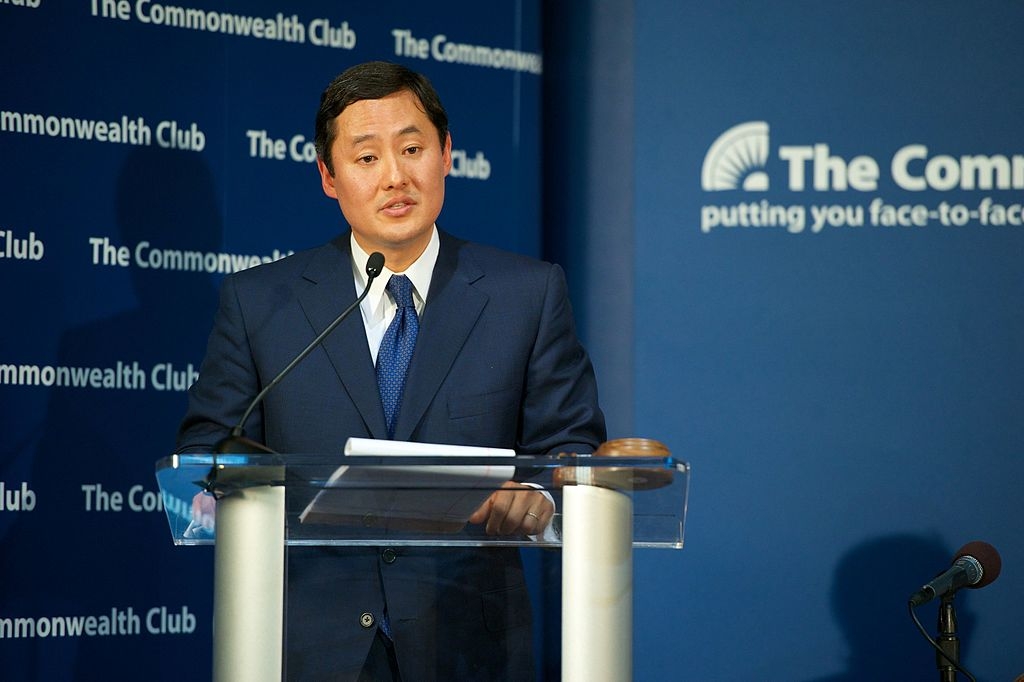
In 2009, Spanish judges opened a criminal file against some senior Bush administration officials, including John Yoo (pictured) of the Justice Department. Yoo, now a professor at University of California, Berkeley, wrote the 2003 memorandum authorizing the CIA"s interrogation techniques. (Image source: Commonwealth Club/Wikimedia Commons)


Recently, attorneys of the European Center for Constitutional and Human Rights (ECCHR) in Berlin, filed a criminal complaint against Gina Haspel, now the CIA"s number-two person under Director Mike Pompeo, and charged her with being involved in directing a secret CIA detention facility near Bangkok, Thailand. Will U.S. officials fear that traveling in Europe might expose them to arrest?


The Wall Street Journal wrote last year, regarding the De Sousa case:


"The threat from terrorism is worse than at any time since 9/11, even as the West has limited its capacity for self-defense... Those who work as spies know the risks from America"s enemies, but they shouldn"t have to worry about politicized retribution from its friends. Sabrina De Sousa"s abandonment by the U.S. government sends a demoralizing message to all who serve in the shadows, even as the war on terror enters a dangerous new phase."


That is the most important lesson: our brave spies and officials involved in the war against Islamic terrorism, like those who prevented another 9/11, now fear not only the wrath of the jihadists, but also the witch hunt of a Western media and judicial system.


As James E. Mitchell said, by prosecuting what the U.S. and the West have done in the war on terror, "we will be standing on the moral high ground, looking down into a smoking hole that used to be several city blocks".