Showing posts with label edible. Show all posts

Tuesday, September 26, 2017

7 Edible Weeds Your Ancestors Ate (And We’re Not Talking Dandelions)

7 Edible Weeds Your Ancestors Ate (And We’re Not Talking Dandelions)


Don’t get me wrong. There are plenty of wild plants you shouldn’t eat, and some are downright poisonous. But surprisingly, there are quite a few weeds and wild flowers that are not only delicious but also nutritious — and growing in your backyard or surrounding fields.


What’s critical is knowing what they look like and what parts to eat. A good example is dandelion. The leaves, flower and roots are edible. The flower stalk is not.


Many of these wild plants have significant nutritional value on par with spinach and kale. They also present a variety of flavor profiles, from salty to sweet to citrus accents. Most are best combined with other ingredients, but some taste great on their own as a side dish or salad.


A common caution, in addition to accurate identification, is to avoid areas that may have been exposed to herbicides or other chemicals when harvesting. This often happens in many yards, roadsides, public parks and other places that appear to be “too manicured.” You may have to find a field or wild place to find some, but just as many are in your yard if you haven’t been too aggressive about “killing the weeds.”


Discover The Secrets Of The Word’s Top Survivalists!


On that note, “weeds” is a prejudicial word. These are actually indigenous, wild plants – plants your great-grandparents and other ancestors ate. Those are plants that thrive in a certain part of the country and climate. Some have been imported over the years from various parts of the world, either intentionally or by accident, and others have been here a lot longer.


If I’m harvesting more than one kind of wild plant, I’ll often use one-gallon plastic bags so I can easily keep them separated. A mixed bag of wild plants may be a bit difficult to prepare or cook and eat because of the variety of types and uses.


You also should aggressively wash the plants in cold water with numerous rinses to clean off any dust, dirt, bugs or other stuff that have found their way onto the plant. A rinse in vinegar is not a bad idea to kill any bacteria, given that vinegar is a powerful and natural antiseptic.


Here’s the list, although it’s by no means all-inclusive. Various parts of North America present a broad variety of edible wild plants, but hopefully you’ll be able to find a few of these:

7 Edible Weeds Your Ancestors Ate (And We’re Not Talking Dandelions)

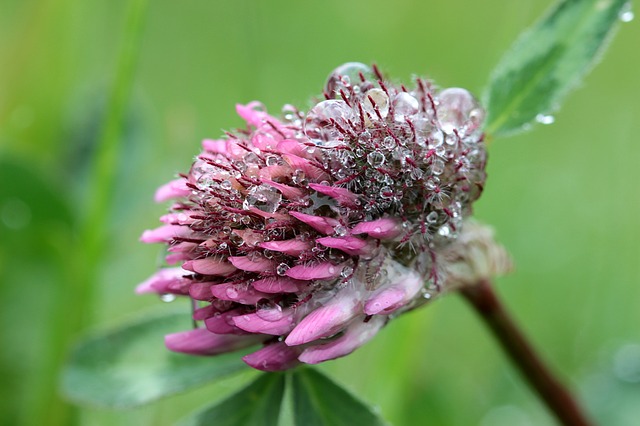
Red clover. Image source: Pixabay.com


1. Red clover. If you can’t find red clover in your yard or woods, you’re either living in the desert or high mountains. Red clover is just about everywhere, and the flowers are the primary food source — as a garnish for anything or in a soup or just a fresh snack. It has a mild flavor that is sometimes semi-sweet.


2. Wild garlic. This plant looks like a green onion and has light, purple flowers. If you crush the leaves, you’ll smell a distinctive garlic smell. That’s important because while the bulb will have a garlic smell, many other plants in the daffodil family have a garlic flavor-note in their bulbs — and they’re toxic. If the crushed green leaves don’t smell like garlic, ignore any garlic smell from the bulb. You can chop the leaves into a soup or salad or as part of a marinade or sauce, and you can also use the bulbs as garlic in any recipe.

7 Edible Weeds Your Ancestors Ate (And We’re Not Talking Dandelions)

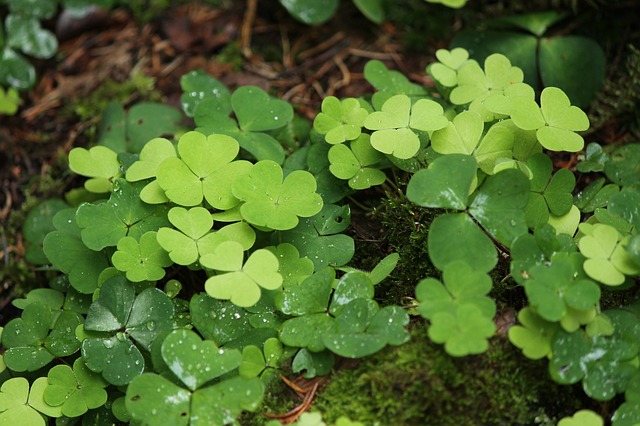
Wood sorrel. Image source: Pixabay.com


3. Wood sorrel. The leaves, flower and tender stem when the flowers are first emerging can be used in mixed salads, flavorful pies like strawberry and rhubarb pies, and have been identified as a salt substitute by some sources.


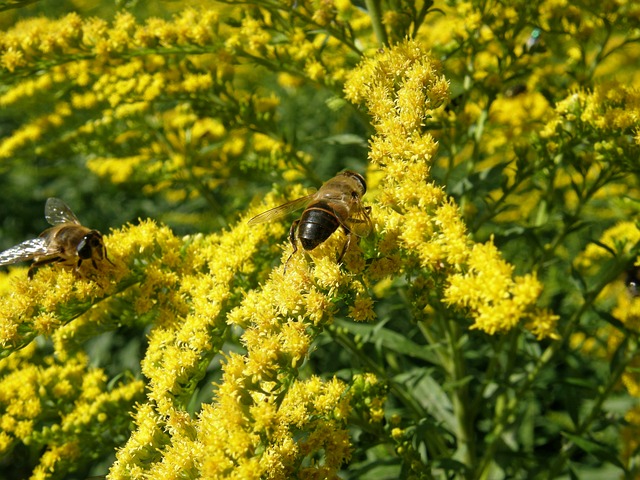
4. Sweet goldenrod. No. It doesn’t make you

7 Edible Weeds Your Ancestors Ate (And We’re Not Talking Dandelions)

Goldenrod. Image source: Pixabay.com


sneeze. That’s a myth unless you’re hypersensitive to pollen from any plant. The flowers and young buds have a semi-sweet, licorice-like flavor. It makes a great tea and is often added to breads, pancake batter and muffins.


5. Wild ginger. This is all about the roots. The rest of the plant shouldn’t be eaten, because it’s flavorless and a bit toxic. The roots can be harvested year-round. Be careful. A variety of wild ginger known as Asarum Caudatum has toxic properties. Asarum Canadanese is the safe variety. It’s used any way you would use ginger, from grated to sliced and pickled, to candied in sugar, to dehydrated.


7 Edible Weeds Your Ancestors Ate (And We’re Not Talking Dandelions)

Lamb’s quarters. Image source: Pixabay.com


6. Lamb’s quarters. It’s commonly known as pigweed, and I have a ton of it in my backyard. It spreads like mint and the leaves are like spinach when boiled in water for three minutes and shocked in ice water. It’s a great three-season plant, from spring to fall. In the fall, the seeds are usually harvested and used in breads or as a garnish.


7. Wild grape leaves. This is my personal favorite, and I saved it for last. We have wild grape vines growing everywhere, and it’s not about the wild grapes but the leaves. There’s a classic Greek recipe called “Dolmades,” or in some cultures “Dolmas.” It involves rolling a mix of meat and rice with herbs and spices in grape leaves about the size of a stubby cigar. Here’s the full recipe in case you come across these wonderful and natural wraps:


Dolmades


Ingredients


40 to 50 large wild grape leaves


4 cups of vinegar


4 cups of water


½ cup of salt


Directions


Soak wild grape leaves in mixture of vinegar, water and salt overnight. Drain and rinse.


Filling ingredients


1 pound of ground meat. Could be beef, pork, game, squirrrel or possum


2 cups of rice. Could be white, brown or wild rice


2 tablespoons of chopped mint


1 tablespoon of salt


1 teaspoon of pepper


Directions


Brown the meat and cook the rice. Combine both with the spices. Let the mixture cool. Take the wild grape leaves and place a finger-sized piece of the mixture on a grape leaf and roll it up in the shape of a small, stubby cigar. Place the roll into a baking dish and continue until the dish is full. Add a half cup of broth (beef or chicken) to the baking dish and bake at 325 for 30 minutes. Remove to a platter and serve. You can top with a sauce if you like, including the classic Greek Avgelemono, but they also taste great a’natureal.


There are other plants, trees and flowers you can eat, but remember: If you’re not sure, just skip it. Many plants are poisonous, and just as many look the same. Hopefully you’ll find some of these good guys and enjoy them on your table someday. The best news is … they’re free!


What advice would you add on harvesting these seven weeds? Would you add anything to this list? Share your advice in the section below:


Harness The Power Of Nature’s Most Remarkable Healer: Vinegar

Thursday, September 21, 2017

Milkweed Is Edible? Yes, And It’s Super-Easy To Prepare, Too

Milkweed Is Edible? Yes, And It

Photographer: Steve Nubie


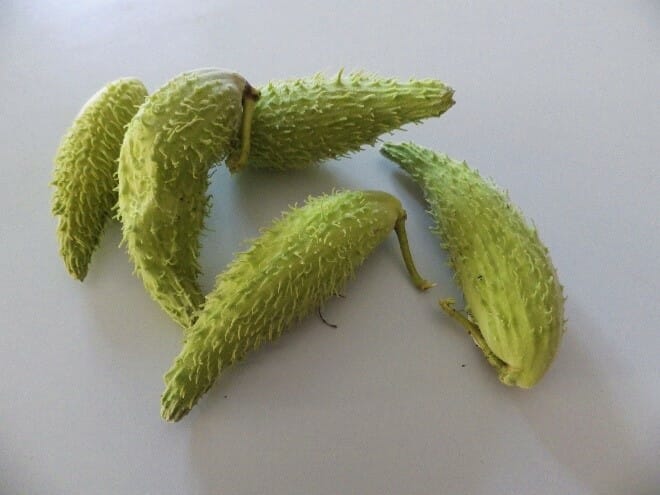
August, September and early October are the prime months for milkweed pods in many parts of North America. The pods range in size from 2 to 4 inches and grow in clusters of 4 to 8 pods.


They’re typically a light green color and filled with a combination of seeds and soft, silky floss. I’ll usually collect about 20 or so pods and head to the kitchen or camp.


In early to mid-summer, the milkweed shoots first emerge, and they taste great when gently boiled, shocked and sautéed in butter or olive oil. We’re going to start with the pods because they’re in season now, and cover the spring shoots later.


Prepping the Pods


Milkweed Is Edible? Yes, And It

Photographer: Steve Nubie


Raw milkweed pods are quite bitter and the white, milky sap is not exactly appetizing. It is also very sticky. They have numerous seeds and a stringy, silky floss inside of the pod. In order to remove the bitterness and the sap, they must be boiled in water and shocked in ice water, and then boiled and shocked again. (The duration for boiling is 10 minutes and then a shock in ice water followed by another 2 minutes in boiling water and a final shock in ice water.) This is done for any milkweed pod, regardless of its size.


Discover More Than 1,100 Homesteading Tips And Tricks!


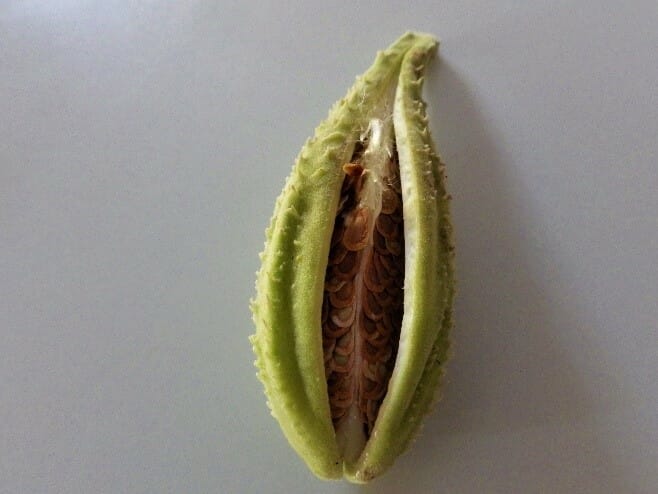
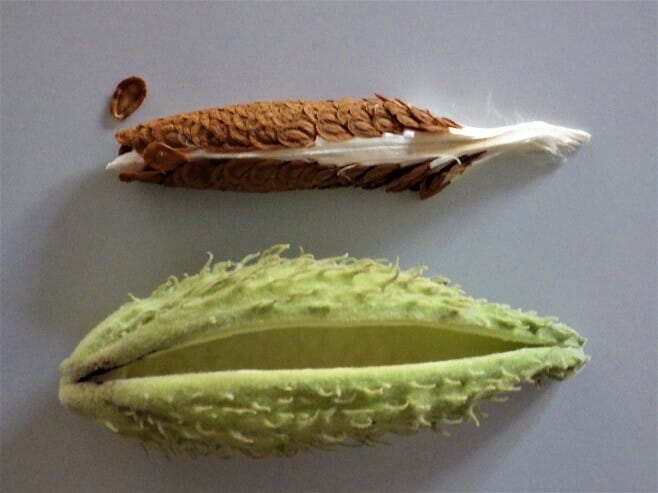
Prior to the boiling water/ice-water shock, the seeds and silky floss need to be removed.


This can be done by gently pulling the seam apart with your thumbs on the curved back of the pod and pulling out the silk and the seeds.


Milkweed Is Edible? Yes, And It

Photographer: Steve Nubie


There is also a tough, inner lining or membrane that needs to be removed. This is easy to do after the first boil and shock by gently pulling the tough membrane from the pod.


Large pods up to 4 inches are the best for stuffing. The best cooking methods involve baking or sautéing.


One thing you’ll notice during the first boil is a lot of bubbles and the white sap floating to the surface.


That’s good news, and you don’t have to skim the surface. The ice-water shock will rinse them.


Milkweed Is Edible? Yes, And It

Photographer: Steve Nubie


After you’ve chilled them for a few minutes in the ice water and you’ve removed the tough inner membrane, boil them again for 2 minutes. You shouldn’t see any more sap or bubbles. You’re just giving them a final rinse and finish to clean the now-exposed inner membrane of the pod, and they’re ready for stuffing.


Baked and Stuffed Milkweed Pods


Larger milkweed pods up to 4 inches are the best for stuffing. You can stuff them with any combination you like, but I prefer a mix of chopped vegetables and a cheese-like mozzarella or cream cheese. However, you can use any cheese. I’ve also tried some variations with chopped fruit. Here’s a sample recipe with the cheese blend and the proportions if you want to give it a try.


Ingredients:


  • 24 to 30 large prepped milkweed pods, about 3 to 4 inches in length.

  • 8 ounces of cream cheese or 8 ounces of shredded mozzarella.

  • 2 tablespoons of onion, finely diced.

  • 1 jalapeno finely diced or two tablespoons of sweet bell pepper.

  • 3 tablespoons of crispy, diced bacon.

  • Bread crumbs or corn meal.

  • Salt and pepper.

Directions:


Sautéed and Stuffed Milkweed Pod Halves


The large 3- to 4-inch pods also can be sautéed. Prep the pods the same way you would for baking, but break or cut them in half so they’re a half-shelled pod. Stuff them and sauté on the bottom of the pod only in 3 tablespoons of oil and 3 tablespoons of butter. Sauté for 4 to 5 minutes until they turn a golden brown.


Other Ways to Eat Milkweed Pods


  • Unstuffed small pods. Small pods up to 2-inches in length can be eaten unstuffed with the immature seeds and immature floss. You’ll still need to remove the inner membrane. so gently remove the immature seeds and silk and give the small pods the hot water treatment for 10 minutes before removing the membrane. Repeat for 2 minutes in the boiling water, followed by the ice water shock. Once they’re prepped, re-insert the immature seeds and silk and bake or sauté. The immature seeds and silk actually have a creamy texture. Don’t boil the pods with the immature seeds and silk inside. They’ll dissolve in the boiling water.

  • Salad or soup. Give the pods the boiling water/ice-water treatment and chill them in the refrigerator. Chop them and add them to a salad or soup.

  • Milkweed chips. Chop the prepped pods into larger chunks and sauté or deep fry them for milkweed chips.

  • In sauces. Dice the prepped pods and add them to a sauce like a marinara or chili.

Milkweed Shoots


Milkweed shoots show up in the Spring. They are surprisingly tender and not bitter. They look similar to dogbane shoots which are very bitter, but dogbane has pointy leaves and a smooth surface while milkweed shoots have a velvety leaf like sage and rounded leaves.


The best way to prepare milkweed shoots after you wash them is to remove the leaves from the stem and chop the stem into pieces about 2- to 3-inches long. Boil them for 3 minutes in salted water and then shock them in ice water. Drain the leaves and the shoots and sauté them in butter or olive oil. Sometimes I’ll add a little garlic.


They have an asparagus flavor note and the boiled and shocked leaves and stems also can be frozen for future use. A variation is to sauté them in rendered bacon fat and then top them with crumbled bacon.


Storing Milkweed Pods


Milkweed pods can be kept in the refrigerator and will have a shelf life similar to other produce in the fridge. The prepped pods also can be frozen and should be good for up to 3 months.


Milkweeds are easy to harvest and easy to prepare. Give them a try and who knows — you may really like them and try them again and again.


Have you ever eaten milkweed? Share your tips in the section below:

Wednesday, July 26, 2017

Ornamental Edibles: Vegetables That Can Beautiful Your Landscape AND Feed You

Ornamental Edibles: Beautify Your Landscape With What You Eat

Image source: Pixabay.com


Busy homesteaders do not have much time to devote to aesthetics. Those of us devoted to raising our own food and leading an independent way of life usually need to stay focused on practical endeavors — spending the warm seasons growing and preserving vegetables and fruit, milking dairy animals, tending other livestock, and shoring up infrastructure. With all that going on around my place, sometimes it’s all I can do to get the lawn mowed, much less plant and tend ornamental plants.


The cost of ornamentals is a consideration, as well. Purchasing flowers, greenery and shrubs—along with the borders and decorative mulch around them—can add up to real money.


But that does not mean that the curb appeal of homesteads cannot be attractive. Instead of carving time and money out of the food-growing budget for beautifying the front yard, why not choose plants that can do double duty?


Ornamental edibles are the perfect solution. While homestead gardeners always see the beauty in a well-tended plot of corn or a field of potatoes in bloom, some vegetables are so attractive that they can be planted in the front yard and admired by passers-by.


Leafy Greens


Some of the easiest solutions to mixing good looks with good eats are leafy greens. Selections like kale and Swiss chard grow quickly and are super hardy to a wide variety of conditions. They can be planted early in the season and grow into large lush plants, making them an excellent option for garden beds up close to the house where people typically plant vegetation adequate to cover the foundation of the house for an overall manicured appearance.


The All-Natural Fertilizer That Can Double Your Garden Yield!


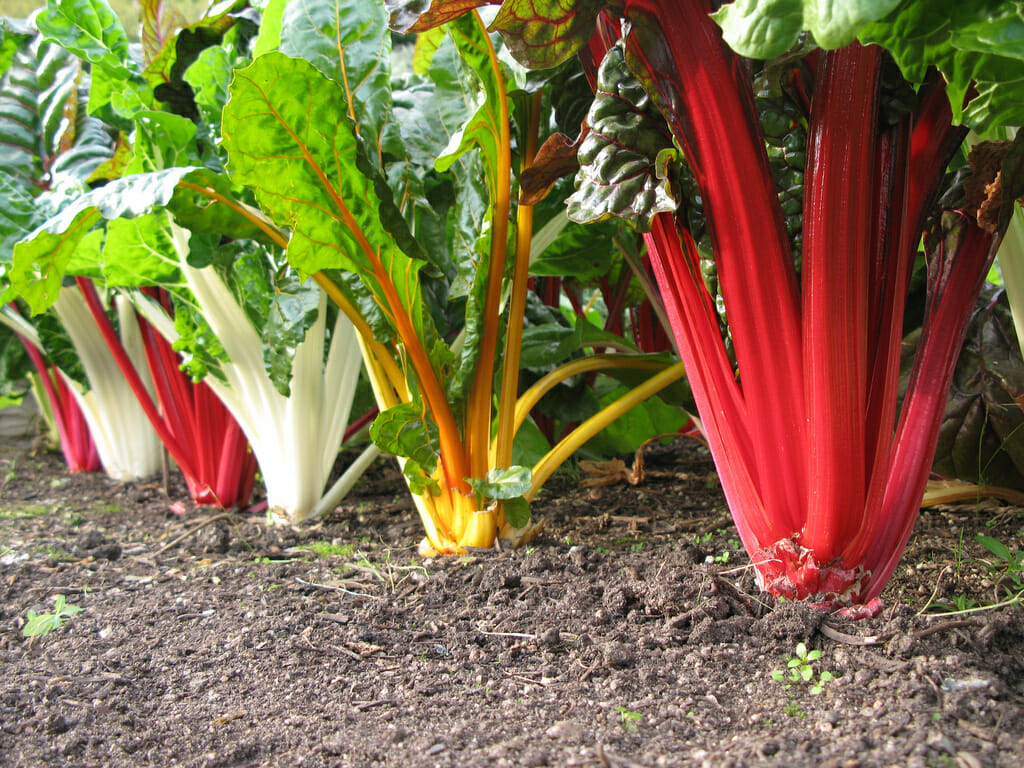
Swiss chard comes in a variety of bright colors and displays large showy leaves which would rival most ornamentals. Kale, collard greens, and other leafy vegetables grow into large impressive plants, as well, and all are easily planted from inexpensive seed. Another great thing about leafy greens is that they can tolerate—and in many cases prefer—partial shade or limited hours of summer sun, making them the perfect alternative to standard shade-loving plants that are not edible.


Ornamental Edibles: Beautify Your Landscape With What You Eat

Swiss chard. Image source: David Fisher/Flickr / Creative Commons


Most leafy greens will last all season by continuing to sprout new growth after harvesting, depending upon climate and siting. Even in places where leafy greens cannot survive the heat of high summer, careful succession planting can keep greens growing most of the time.


A Few That Might Surprise You


Other types of vegetable to consider planting for their looks as well as their edibility are those which spill out into a large pleasing shape. Think summer squash, which grows quickly into an enormous plant but does not send spreading runners all over. A big beautiful zucchini planting is the perfect choice for sunny spots to cover a lot of bare ground without getting out of control.


And don’t forget flowers. I know that sounds confusing, because I have been telling you about planting vegetables instead of flowers, but you can have both in the same plant. Remember that most of what we call “vegetables” are technically “fruit,” because they come from the fruiting part of the plant. That means that before peppers and tomatoes and cucumbers and peas become food, they must blossom—and “blossom” is another name for flower, of course.


Some vegetable flowers are more visually appealing than others. One of the most stunning is okra, with its deep yellow hibiscus-related blooms. Many eggplant varieties have lovely blossoms, as do most summer squashes. An added bonus to summer squash blossoms is that they can be eaten while in the flower stage; be sure to choose male blossoms so as to avoid diminishing fruit production—along with other edible flowers such as nasturtiums or daylilies.


Don’t Forget Containers!


Containers can dress up vegetables, too. Window boxes are a good place for shorter vegetables, either alone or mixed in with ornamentals, and aromatic selections such as basil or other herbs add an extra pleasing punch. Gardeners can create attractive locations for vegetables by upcycling reclaimed vessels and materials, building raised beds out of cordwood masonry, and using artistic shapes for beds. The sky is truly the limit here, and just about anything is possible. As an example, I was able to acquire a small homemade canoe from a custom boat maker. It was a failed experiment on his part, but it looks wonderful in my yard. I drilled holes in the bottom for drainage, filled it with soil, and the summer squash I planted in it is flowing gracefully out over the gunwales.


Ornamental edibles need not be just annuals. Consider highbush blueberries with their lovely fall foliage, miniature crabapple trees, hazelnut bushes, grape arbors, borders of high-climbing hops, and even rhubarb beds.


There is no need to divert precious time and money from food production for the sake of curb appeal. Instead, choose dual-purpose plants for practical eating and decorative appeal.


What edibles would you add to our list? Share your thoughts in the section below: