Showing posts with label Brandon Smith. Show all posts

Wednesday, April 25, 2018

How The Globalism Con Game Leads To A “New World Order”

By Brandon Smith


When globalists speak publicly about a “new world order” they are speaking about something very specific and rather sacred in their little cult of elitism. It is not simply the notion that civilization shifts or changes abruptly on its own; rather, it is their name for a directed and engineered vision — a world built according to their rules, not a world that evolved naturally according to necessity.


There are other names for this engineered vision, including the “global economic reset,” or the more general and innocuous term “globalism,” but the intention is the same. The ultimate goal of the new world order as an ideology is total centralization of economic and governmental power into the hands of a select and unaccountable bureaucracy made up of international financiers. This is governance according the the dictates of Plato’s Republic; a delusional fantasy world in which benevolent philosopher kings, supposedly smarter and more objective than the rest of us, rule from on high with scientific precision and wisdom. It is a world where administrators become gods.


Such precision and objectivity within human systems is not possible, of course. Human beings are far too susceptible to their own biases and personal desires to be given totalitarian power over others. The results will always be destruction and disaster. Then, add to this the fact that the kinds of people who often pursue such power are predominantly narcissistic sociopaths and psychopaths. If a governmental structure of high-level centralization is allowed to form, it opens a door for these mentally and spiritually broken people to play out their twisted motives on a global stage.


It is important to remember that sociopaths are prone to fabricating all kinds of high minded ideals to provide cover for their actions. That is to say, they will adopt a host of seemingly noble causes to rationalize their scramble for power, but in the end these “humanitarians” only care about imposing their will on as many people as possible while feeding off them for as long as time allows.


There are many false promises, misrepresentations and fraudulent conceptions surrounding the narrative of globalism. Some of them are rather clever and subversive and are difficult to pick out in the deliberately created fog. The schemes involved in implementing globalism are designed to confuse the masses with crisis until they end up ASKING for more centralization and less freedom.


Let’s examine some of the most common propaganda methods and arguments behind the push for globalization and a “new world order”…


Con #1: Globalism Is About “Free Markets”


A common pro-globalism meme is the idea that globalization is not really centralization, but decentralization. This plays primarily to the economic side of global governance, which in my view is the most important because without economic centralization political centralization is not possible.


Free markets according to Adam Smith, a pioneer of the philosophy, are supposed to provide open paths for anyone with superior ideas and ingenuity to pursue those ideas without interference from government or government aided institutions. What we have today under globalism are NOT free markets. Instead, globalism has supplied unfettered power to international corporations which cannot exist without government charter and government financial aid.


The corporate model is completely counter to Adam Smith’s original premise of free market trade. Large corporations receive unfair legal protection under limited liability as well as outright legislative protection from civil consequences (Monsanto is a perfect example of this).  They also receive immense taxpayer-funded welfare through bailouts and other sources when they fail to manage their business responsibly.  All this while small businesses and entrepreneurs are impeded at every turn by taxation and legal obstacles.


In terms of international trade being “free trade,” this is not really the case either. Only massive corporations supported by governments are able to exploit the advantages of international manufacturing and labor sources in a way that ensures long term success. Meanwhile, economic models that promote true decentralization and localism become impractical because real competition is never allowed. The world has not enjoyed free markets in at least a century. What we have today is something entirely different.


Con #2: Globalism Is About A “Multipolar World”


This is a relatively new disinformation tactic that I attribute directly to the success of the liberty movement and alternative economists. As the public becomes more educated on the dangers of economic centralization and more specifically the dangers of central banks, the globalists are attempting to shift the narrative to muddy the waters.


For example, the liberty movement has railed against the existence of the Federal Reserve and fiat dollar hegemony to the point that our information campaign has been breaking into mainstream thought. The problem is that globalism is not about the dollar, U.S. hegemony or the so-called “deep state,” which in my view is a distraction from the bigger issue at hand.


The fact is, globalist institutions and central banks permeate almost every corner of the world. Nations like Russia and China are just as heavily tied to the IMF and the Bank for International Settlements and international financial centers like Goldman Sachs as any Western government.


Part of the plan for the new world order, as has been openly admitted by globalists and globalist publications, is the decline of the U.S. and the dollar system to make way for one world financial governance through the IMF as well as the Special Drawing Rights basket as a mechanism for the world reserve currency. The globalists WANT a less dominant U.S. and a more involved East, while the East continues to call for more control of the global economy by the IMF. This concept unfortunately flies over the heads of most economists, even in the liberty movement.


So, the great lie being promoted now is that the fall of the U.S. and the dollar is a “good thing” because it will result in “decentralization,” a “multi-polar” world order and the “death” of globalism. However, what is really happening is that as the U.S. falls globalist edifices like the IMF and the BIS rise.  We are moving from centralization to super-centralization. Globalists have pulled a bait and switch in order to trick the liberty movement into supporting the success of the East (which is actually also globalist controlled) and a philosophy which basically amounts to a re-branding of the new world order as some kind of decentralized paradise.


Con #3: Nationalism Is The Source Of War, And Globalism Will End It


If there’s one thing globalists have a love/hate relationship with, it’s humanity’s natural tribal instincts. On the one hand, they like tribalism because in some cases tribalism can be turned into zealotry, and zealots are easy to exploit and manipulate. Wars between nations (tribes) can be instigated if the tribal instinct is weighted with artificial fears and threats.


On the other hand, tribalism lends itself to natural decentralization of societies because tribalism in its best form is the development of many groups organized around a variety of ideas and principles and projects. This makes the establishment of a “one world ideology” very difficult, if not impossible. The first inclination of human beings is to discriminate against ideas and people they see as destructive and counter to their prosperity. Globalists, therefore, have to convince a majority of people that the very tribalism that has fueled our social evolution and some of the greatest ideas in history is actually the source of our eventual doom.


Nationalism served the globalists to a point, but now they need to get rid of it entirely. This requires considerable crisis blamed on nationalism and “populist” ideals. Engineered war, whether kinetic or economic, is the best method to scapegoat tribalism. Every tragedy from now on must eventually be attributed to ideas of separation and logical discrimination against negative ideologies. The solution of globalism will then be offered; a one world system in which all separation is deemed “evil.”


Con #4: Globalism Is Natural And Inevitable


As mentioned earlier, globalists cannot have their “new world order” unless they can convince the masses to ask for it. Trying to implement such a system by force alone would end in failure, because revolution is the natural end result of tyranny. Therefore, the new world order has to be introduced as if it had been formed by coincidence or by providence. Any hint that the public is being conned into accepting global centralization would trigger widespread resistance.


This is why globalism is always presented in the mainstream media as a natural extension of civilization’s higher achievement. Even though it was the dangerous interdependency of globalism that helped fuel the economic crisis of 2008 and continues to escalate that crisis to this day, more globalism is continually promoted as the solution to the problem. It is spoken of with reverence in mainstream economic publications and political discussions. It receives almost religious praise in the halls of academia. Globalism is socioeconomic ambrosia — the food of deities. It is the fountain of youth. It is a new Eden.


Obviously, this adoration for globalism is nonsense. There is no evidence whatsoever that globalism is a positive force for humanity, let alone a natural one. There is far more evidence that globalism is a poisonous ideology that can only ever gain a foothold through trickery and through false flags.


We live in an era that represents an ultimate crossroads for civilization; a time of great uncertainty. Will we seek truth in the trials we face, and thus the ability to create our own solutions?  Or, will we take a seemingly easier road by embracing whatever solutions are handed to us by the establishment? Make no mistake — the globalists already have a solution prepackaged for us. They have been acclimating and conditioning the public to accept it for decades now. That solution will not bring what it promises. It will not bring peace, but eternal war. It will not bring togetherness, but isolation. It will not bring understanding, but ignorance.


When globalists eventually try to sell us on a full-blown new world order, they will pull out every conceivable image of heaven on Earth, but they will do this only after creating a tangible and ever present hell.


You can read more from Brandon Smith at his site Alt-Market.com. If you would like to support the publishing of articles like the one you have just read, visit our donations page here.  We greatly appreciate your patronage.


You can contact Brandon Smith at: brandon@alt-market.com


After 8 long years of ultra-loose monetary policy from the Federal Reserve, it’s no secret that inflation is primed to soar. If your IRA or 401(k) is exposed to this threat, it’s critical to act now! That’s why thousands of Americans are moving their retirement into a Gold IRA. Learn how you can too with a free info kit on gold from Birch Gold Group. It reveals the little-known IRS Tax Law to move your IRA or 401(k) into gold. Click here to get your free Info Kit on Gold.

Wednesday, April 18, 2018

Syrian Conflict Is A Distraction From A Secret War

By Brandon Smith


Back in March 2010 I published an article titled “Will Globalists Trigger Yet Another World War?” under the pen name Giordano Bruno describing what I felt would be the most effective triggers for a new global conflict. In that article I pointed to Syria as the primary powder keg, followed in close second by Iran and Yemen. This was written well before the Syrian civil war was engineered by establishment interests. I focused on potential false flags that could be used as a rationale by the U.S. or Israel to invade the region, thereby giving Russia and China reason to retaliate, for the most part economically. Ultimately, this scenario would play out perfectly as a cover for the deliberate collapse of the U.S. dollar as the world reserve currency.


In August 2012 I reiterated my concerns in an article titled “Syria And Iran Dominoes Lead To World War,” right after the Syrian civil war began to gain momentum.


Needless to say, I have not changed my general thesis since those days; however, I would like to touch upon certain factors now that the dangers I examined in those articles are mostly coming to pass in 2018.


First, no hard evidence has been produced by Western intelligence agencies to support the claim that Bashar al-Assad used chemical weapons against his own people. None. Therefore, there is no basis for the latest missile attacks on the regime. This same exact false flag tactic was attempted under the Obama administration to draw the U.S. people into open war in Syria, and it failed. Now the chemical weapon card is being played again, this time with a “conservative” president. The establishment must be hoping that Republicans will find excitement in becoming the war party so long after the Bush years.


As I queried the last time a chemical false flag was attempted, what exactly does Assad have to gain by initiating a chemical attack against innocent civilians when he has the tactical momentum and upper hand in the civil war?  The answer is nothing.  The only people that have anything to gain by asserting such an attack, either real or fabricated, are people seeking to create chaos for their own benefit.


The insinuation of neocon warmonger John Bolton into the Trump cabinet suggests that the neocons are very much back in charge and that ongoing war is guaranteed. At this late stage in the game, it is unlikely that our government or any other government involved in the Syrian theater even cares to explain its actions. When establishment criminals no longer care if their criminality is transparent to the public, THEN it is time for a large-scale societal collapse.


Second, each successive Trump-involved theater, from the trade tariffs to international war tensions, has become progressively more dramatic, and I believe this is meant to hide the effects of the Federal Reserve’s balance sheet cuts and interest rate hikes. The real and secret war being waged is not against Syria or Syria’s allies, but against the American people and our economic stability.


In January of this year, I warned that central banks were preparing to enter into an accelerating process to deflate the massive market bubbles they created to prop up our fiscal system over the past several years. That process is indeed continuing, and each successive rate hike and balance sheet cut will act in a cumulative fashion. Meaning, central bankers are treating the global economy like an oversized Jenga tower, pulling blocks here and there until the system topples completely from lack of stability.


This latest event in Syria is yet another grand gesture of illusion, designed to provide cover for the banking cabal as they pull the plug on financial life support. It also is timed rather conveniently for the Fed’s next policy meeting on May 1-2. The meeting is likely to include yet another interest rate hike as well as a large reduction in the balance sheet, resulting in another sizable plunge in stocks. All negative moves in our manipulated markets will now be blamed on Trump administration activities as well as blamed on trade retaliations by eastern nations. The mainstream media will no longer discuss the reality that central banks are the true cause behind a systemic breakdown.


Third, the current pattern of events suggest there will be a joint economic retaliation by Russia and China. China has publicly admonished the U.S. government for its strike in Syria, and this is merely added to the increasing tensions over trade tariffs by Trump. Again, this is a perfect opportunity to undermine the U.S. economy, primarily through China and Russia initiating a dump of the dollar as the world reserve currency.


The dump of the dollar has already begun in a semi-covert fashion. China’s currency has been inducted into the IMF’s Special Drawing Rights basket system, and China has also launched the first international oil exchange that does not use the dollar as the petro-currency. What many people are ignoring is the fact that the shift away from the dollar is being championed and helped along by the globalists at the IMF itself.


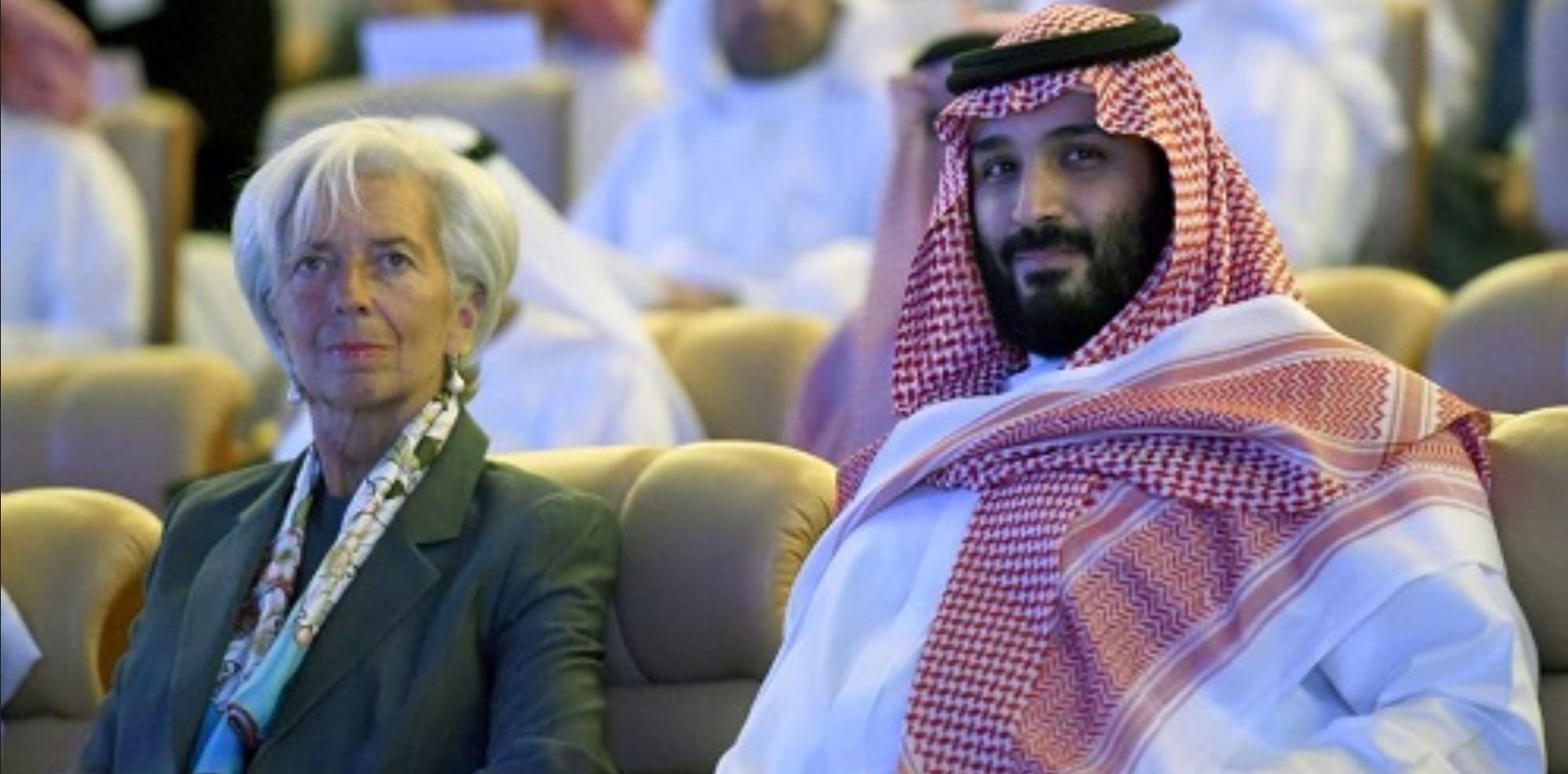
An impending change in the global monetary framework is often referred to as the great “global economic reset” by IMF members like Christine Lagarde. This change will be facilitated by central banks as they sabotage their respective national economies through the creation and destruction of market bubbles. Ultimately, it will not be the Chinese Yuan that replaces the dollar as world reserve currency, but the SDR basket system, controlled by the IMF.


The question of how this can be done by the globalists without an unprecedented liquidity crisis often comes up. I’m not so sure they care if there is a liquidity crisis, at least for a short time. Yes, the U.S. dollar has some of the most liquid markets in the world, but it is wrong to assume the globalists will not sacrifice those markets in order to force the public into accepting one world centralization of monetary administration (the biggest and most important step in establishing global government).


People who argue that the dollar will never be demolished by the globalists cling to the false notion that there is no liquidity replacement for the dollar. In reality, there is a replacement — cyrptocurrencies and blockchain technology.


The IMF has recently applauded blockchain systems and crypto as a potential rejuvenating force in international money transactions. Far from being opposed to cryptocurrencies, global elitists have been piling into them with praise and with investment dollars.


The global economic reset is not about East versus West. It is not about trade wars and nationalism. No, the global reset is about banker centralization of assets and consolidation of power. Beyond that, it is about the public ACCEPTING the reset as necessary and “good” for society. Globalists want us to beg for their rule. When one understands this simple truth, all the current events and disasters of our era begin to make sense. Crisis is the quickest path to complacency and tyranny.


The Syrian quagmire is a path to engineered and guided calamity.  Its effects will continue to leach into the economic world as an international excuse for a trade war tit-for-tat.  Syria is a smoke and mirrors game.


The true war, a secret war, is being fought between liberty champions and lying globalists. For now it remains a cold war, a battle of principles and facts versus disinformation and fear. One day this war will become a hot one. Until that time, distractions will assail the public like a hailstorm. My hope is that we can educate enough people to see through the fog of this hidden war; enough people to come out the other side and change things for the better.


You can read more from Brandon Smith at his site Alt-Market. If you would like to support the publishing of articles like the one you have just read, visit our donations page here.  We greatly appreciate your patronage.


You can contact Brandon Smith at: brandon@alt-market.com


After 8 long years of ultra-loose monetary policy from the Federal Reserve, it’s no secret that inflation is primed to soar. If your IRA or 401(k) is exposed to this threat, it’s critical to act now! That’s why thousands of Americans are moving their retirement into a Gold IRA. Learn how you can too with a free info kit on gold from Birch Gold Group. It reveals the little-known IRS Tax Law to move your IRA or 401(k) into gold. Click here to get your free Info Kit on Gold.


Image credit: Anthony Freda Art

Thursday, April 5, 2018

How To Recognize When Your Society Is Suffering A Dramatic Decline

By Brandon Smith


When historians and analysts look at the factors surrounding the collapse of a society, they often focus on the larger events and indicators — the moments of infamy. However, I think it’s important to consider the reality that large scale societal decline is built upon a mixture of elements, prominent as well as small. Collapse is a process, not a singular event. It happens over time, not overnight. It is a spectrum of moments and terrible choices, set in motion in most cases by people in positions of power, but helped along by useful idiots among the masses. The decline of a nation or civilization requires the complicity of a host of saboteurs.


So, instead of focusing on the top-down approach, which is rather common, let’s start from the foundations of our culture to better understand why there is clear and definable destabilization.


Declining Moral Compass


There is always a conflict between personal gain and personal conscience — this is the nature of being human. But in a stable society, these two things tend to balance out. Not so during societal decline, as personal gain (and even personal comfort and gratification) tends to greatly outweigh the checks and balances of moral principles.


People often mistake the term “morality” to be a religious creation, but this is not what I am necessarily referring to. The concepts of “good” and “evil” are archetypal — that is to say they are psychologically inherent in most human beings from the moment of birth. This is not a matter of faith, but a matter of fact, observed by those in the field of psychology and anthropology over the course of a century of study.  How we relate to these concepts can be affected by our environment and upbringing, but for the most part, our moral compass is psychologically ingrained. It is up to us to either follow it or not follow it.


Watching how people handle this choice is a bit of hobby of mine, and I do take notes. You can learn a lot about the state of your environment by observing what people around you tend to do when faced with the conflict of personal gain versus personal conscience. It is saddening to admit that even though I live in rural America, where you are more likely to find self-reliance and cultural stability, I can still see a faltering nation bleeding through.


I have seen supposedly good people act dishonestly in business agreements. I have seen local institutions scam hardworking citizens. I have seen a court system rife with bias and a “good old boy” attitude of favoritism. I have seen local companies pretend to be benevolent contributors to the community while at the same time running constant frauds and rackets. I have even seen a few people within the liberty movement itself put the movement at risk with their own avarice, gluttony, narcissism and sociopathy.


Again, it is important to make a note of such people and institutions, for as the system continues its downward spiral it is these people that will present the greatest threat to the innocent.


As Carl Jung notes in his book The Undiscovered Self, there is always a contingent of latent sociopaths and psychopaths within any culture; usually about 10% of the population. In normal times, they, at least most of them, are forced into moral acclimation by the rest of the populace. But in times of decline, they seem to leak out of the woodwork like a slimy fungus. During heightened collapse, they no longer have to pretend to be upstanding and they show their true colors.


Most dangerous is when latent sociopaths or full-blown sociopaths assume roles of leadership or power during the worst of times. With everyone distracted by their own plight, these people can become a cancer, infecting everything with their narcissistic pursuits and causing destruction in their wake.


Disinterest In Rewarding Conscience


During wider cultural collapse, it can become “fashionable” to see acts of principle as something to be scoffed at or ridiculed or to even see them as threats to the status quo. The concept of “going along to get along” takes precedence over doing what is right even when it is hard; this attitude is not relegated to the less honest people within society.


As a system collapses, a fog of apathy can result. Good people can become passive, scrambling to their individual corner of the world and hoping evil times will simply pass them by. The phrase “I just want to put all this behind me” is spoken regularly; but as we ignore the trespasses of terrible men and women, we also enable them. How? Because by doing nothing we allow them to continue their criminality, and we subject future persons and generations to victimization.


When doing the right thing is treated as laughable or “crazy” by what seems like a majority in the midst of widespread corruption, you are truly in the middle of a great decline.


In Christian circles, the idea of “the remnant” is sometimes spoken of. In Christian terms, this usually represents a minority of true believers surviving a tumultuous and immoral era. I see “the remnant” not so much as a contingent of Christians alone, but as a contingent of people that continue to maintain their principles and conscience when faced with unprecedented adversity. In the worst of times, these people remain stalwart, even if they are ridiculed for it.


Disinterest In Independent Effort


It is said that in this world there are two kinds of people — leaders and followers.  I’m not so sure about that, but I can see why this philosophy is promoted; it helps evil people in power stay in power by encouraging passive acceptance.


I would say that there are in fact two kinds of people in this world — people who want to control others and the people that just want to be left alone. In life sometimes we are both leaders and followers; we just have to be sure that when we lead we lead by example and not by force, and when we follow, we follow someone worth a damn.


In any case, passivity is not a solution to determining our roles in society. In most situations, independent action is required by every person to make the world a better place. Yet, in an era of systemic crisis, it is usually independent effort that is the first thing to go out the window. Millions upon millions of people wait around for someone, anyone, to tell them what they should be doing and how they should be doing it. In this way, society finds itself in stasis, frozen in a position of inaction.  Poisonous collectivism wins through mass aggression, but also through mass passivity.


In fact, when individualists do take action they can be admonished for it during times of societal breakdown, even if their actions have the potential to solve a problem. The idea that one man or woman (or a small group of people) could do anything about anything is sneered at as “fantasy” or “delusion.”  But mass movements of citizens working towards a practical goal are rare, and even more rare is when these movements are not controlled or manipulated to benefit the established order. It is not mass movements that change the world for the better, but individual people and small organizations of the dedicated, acting without permission and without administration.


It is these individuals and small groups that, over time and through relentless effort, inspire a majority to do what is necessary and right. It is these people that inspire others to finally take leadership in their own lives.


Individual Self-Isolation


I write often on the plight of the individual and individual rights within society, and I continue to see the factor of the individual as the most important element in any culture. A culture based on protecting and nurturing individualism and voluntarism is the only culture, in my view, that will ever be successful at avoiding full spectrum collapse. That said, the downside to overt individualism is the danger of self isolation. That is to say, when true individuals only concern themselves with their personal circumstances and ignore the circumstances of the rest of the world, they eventually set themselves up to be crushed by that world.


Organization on a voluntary basis is not only healthy but vital in the longevity of a society. The more people turn in on themselves and only care about their own general conditions, the easier it is for evil people to do evil things unnoticed. Also, self isolation in the wake of collapse sets individuals up for failure, as no one is capable of surviving without at least some help from a wider pool of knowledge and talents.


In a system based on corruption, the establishment will encourage self isolation as a means to control the populace. Or, they will offer a false choice, between self isolation versus mindless collectivism. The truth is there is always a middle ground. Voluntary organization and individualism are not mutually exclusive. I call this the “difference between community and collectivism.” A community does not supplant the individual, while a collective requires the complete erasure of individual pursuits and thought.


If you find yourself surrounded by people who refuse any organization, even practical and voluntary organization in the face of instability, then your society may be in the latter stages of a collapse.


Disaster Denial


Even as a crisis or collapse unfolds, if a society actually reels or reacts to it and takes note of the problem, there is hope for that society. If, however, that society willfully ignores the danger and denies it exists when presented with overwhelming evidence, then that society will likely suffer complete disintegration and will probably have to start all over from scratch — hopefully with a set of principles and ideals based on conscience and honor.


The strength of a culture can be measured by its willingness to self reflect. Its survival can be determined by its willingness to accept its flaws when they arise and its willingness to repair the damage done. Self-aware societies are difficult to corrupt or control. Only in denial can people be easily manipulated and enslaved.


If you cannot accept the reality of the abyss, you cannot move to avoid it or prepare yourself to survive the fall. I see this issue as perhaps the single most important element in the fight to save the portions of our society worth saving. Educating people on the blatant facts behind our own national decline can dissolve the wall of denial, and perhaps we will find when disaster strikes that there are far more awake and aware individuals ready to act than we originally thought.


You can read more from Brandon Smith at his site Alt-Market.com. If you would like to support the publishing of articles like the one you have just read, visit our donations page here.  We greatly appreciate your patronage.


After 8 long years of ultra-loose monetary policy from the Federal Reserve, it’s no secret that inflation is primed to soar. If your IRA or 401(k) is exposed to this threat, it’s critical to act now! That’s why thousands of Americans are moving their retirement into a Gold IRA. Learn how you can too with a free info kit on gold from Birch Gold Group. It reveals the little-known IRS Tax Law to move your IRA or 401(k) into gold. Click here to get your free Info Kit on Gold.

Thursday, March 22, 2018

White House Soap Operas Distract From Real Global Dangers

By Brandon Smith


In the liberty movement, we often refer to the historical tactic of the Roman “bread and circuses” when describing the deliberate mass distraction of the public of today. In the era when Roman emperors supplanted the senate and dominated political and social life, it was deemed advantageous to create various forms of “entertainment,” often violent, in order to keep the citizenry preoccupied and thus less likely to physically act against the power structure as the empire suffered economic decline. The use of bread and circuses continues into our era, but the method has been refined and the manipulations have become in some ways more subtle.


For example, in ancient Rome the horrors of the Colosseum were meant to keep the public’s attention AWAY from the government. Today, the soap opera of government keeps people’s attention away from the true power brokers within global finance.


The White House itself has been molded into just another reality TV show, and mainstream media coverage has been relentless. With Donald Trump (no stranger to reality TV) at center stage, it is difficult for the citizenry to gauge what is politically legitimate and important. What we are bombarded with is an ever escalating drama between Trump, his staff, and the media, and instead of ignoring the theater many people are desperately seeking to interpret the meaning behind a show that is actually meaningless.


Every two weeks or so another episode develops in which Trump, playing the character of the brash and aggressive “populist,” fires one of his cabinet as if The Apprentice never ended, but was simply transferred to the Oval Office. Some people find this entertaining as it is Trump doing what he is most recently famous for doing. Those on the political left interpret this as reckless abandon and confirmation that their fears over Trump being ill suited to the presidency are justified. Still others in the liberty movement who originally supported Trump’s campaign are perhaps desperately looking for vindication. They wanted so badly to avoid the inevitable evils of a Clinton regime that they are now willing to give Trump a pass on almost anything, and they argue that the endless turnover in the Trump White House is Trump fulfilling his election promise of “draining the swamp.”


It is important to note that Trump is NOT draining the swamp of elitism in Washington D.C. The public is so focused on who Trump gives the boot they are forgetting to pay attention to the institutions that never leave. But what do I mean by this?


Let’s look at the some of the more widely publicized staff changes at the White House. Dina Powell, a Goldman Sachs alumni, was recently replaced as National Security Adviser, and so, the argument that Trump is “draining the swamp” persists. Yet, Powell was replaced by H.R. McMaster, a member of the Council on Foreign Relations and hardly a stranger to elitist circles.


Gary Cohn, another Goldman Sachs agent, has left his post as Chief Economic Adviser and has been replaced by “conservative” Larry Kudlow, ostensibly as Trump is “cleaning house” and removing globalist influences in preparation for his war to balance the trade deficit. Yet, Kudlow is was a campaign coordinator who worked closely with the likes of Bill Clinton and John Podesta, as well as other major Democrat personalities. He began his career as a staff economist with the Federal Reserve Bank of New York, and oversaw the fall of Bear Stearns which was one of the sparks that launched the 2008 credit crisis. This guy is in no way a true conservative, nor is he some kind of anti-globalist replacement for Gary Cohn.


Rex Tillerson’s firing, one of the most recent dramas, has led to the position of Secretary of State being filled by CIA Director Mike Pompeo.  Pompeo is often portrayed as a former “Tea Party congressman,” yet he is a rabid supporter of mass surveillance of the American people by the NSA through FISA-related programs, and has referred to WikiLeaks as a “non-state hostile intelligence service.”  First, this only proves further the “Tea Party” label has been so thoroughly co-opted by the establishment that it is laughable to refer to it in any relation to true conservatives and liberty champions.  Second, it also shows that Trump has no intention of making any significant changes to the Beltway; only cosmetic changes are allowed.


Friday, March 16, 2018

The Fed Has Its Finger On The Button Of A Nuclear Debt Bomb

By Brandon Smith


I hear a lot of talk lately in the alternative media (and even the mainstream media) of the potential for World War III. The general assumption when one hears that term is that “nuclear conflict” is imminent. But a world war does not necessarily have to be fought with nukes. For example, we are perhaps already witnessing the first shots fired in a global economic war as the Trump administration gets ready to implement far-reaching trade tariffs. This action might provide cover (or justification) for destructive attacks on the U.S. fiscal system by China, Japan, Russia, the EU, OPEC nations, etc. The ultimate attack being a dumping of their U.S. debt holdings and the death of the dollar’s world reserve status.


Of course, an economic “world war” between nations would in itself be a smokescreen for and an even more insidious internal war being waged against the global economy by central banks.


There is a longstanding misconception that central banks always manipulate economic conditions to make them appear “healthy” and that the main concern of central bankers is to “defend the golden goose.” This is false. According to the evidence at hand as well as open admissions by central bankers, these private institutions have throughout history also deliberately created financial crises and collapses.


The question I always get from people new to the field of alternative economics is — “Why would central bankers crash a system they benefit from?” This question is drawn from a flawed understanding of the situation.


First, there is the assumption that economic systems are static rather than fluid. In reality, vast sums of wealth can be transferred into and out of any notion on a whim and at the speed of light. The collapse of one economy or multiple economies does not necessarily include the destruction of banker wealth. Even if wealth was their top goal (which it is not), global banks and central banks do not see any particular economy as a “cash cow” or a “golden goose.” From their behavior and tactics in the past, it is more likely that they see national economies as mere storage containers.


Banks can pour their wealth, which they create from thin air, into one or more of these many available containers. They can circulate that wealth within the container for a time and then pour all their wealth out at a moment’s notice. One container is no more valuable to them than any other container, and sometimes sacrificing a container can be beneficial.


The perceived destruction of a national economy can often be exploited as a means to a greater end. Usually this “greater end” means exploiting the crisis to justify centralization of power or the transfer of power from the public into the hands of an elitist class.


I have outlined the history of such transfers on numerous occasions, including the liquidity crisis of 1914 (just after the establishment of the Federal Reserve) leading into World War I and the subsequent hoarding of financial power by banks as well as the creation of the League of Nations.


Or how about the artificial bubble in multiple asset classes created by the Federal Reserve in the 1920s through low interest rates? A bubble which was then burst through the aggressive raising of interest rates at the onset of the Great Depression. This crash coincided with other fabricated economic disasters in Europe and Asia, leading to social despair, the rise of communism and fascism and World War II. This crisis benefited the banking establishment greatly as thousands of smaller independent banks were crushed and a handful of major banks devoured all assets. And, let’s not forget that WWII led to the creation of globalist edifices like the United Nations, the IMF, World Bank, the beginning roots of the European Union, etc.


Wednesday, March 7, 2018

Trump Trade Wars A Perfect Smokescreen For A Market Crash

By Brandon Smith


First, I would like to say that the timing of Donald Trump’s announcement on expansive trade tariffs is unusual if not impeccable. I say this only IF Trump’s plan was to benefit establishment globalists by giving them perfect cover for their continued demolition of the market bubbles that they have engineered since the crash of 2008.


If this was not his plan, then I am a bit bewildered by what he hopes to accomplish. It is certainly not the end of trade deficits and the return of American industry. But let’s explore the situation for a moment…


Trump is in my view a modern day Herbert Hoover. One of Hoover’s first actions as president in response to the crash of 1929 was to support increased tax cuts, primarily for corporations (this was then followed in 1932 by extensive tax increases in the midst of the depression, so let’s see what Trump does in the next couple of years).  Then, he instituted tariffs through the Smoot-Hawley Act.  His hyperfocus on massive infrastructure spending resulted in U.S. debt expansion and did nothing to dig the U.S. out of its unemployment abyss. In fact, infrastructure projects like the Hoover Dam, which were launched in 1931, were not paid off for over 50 years. Hoover oversaw the beginning of the Great Depression and ended up as a single-term Republican president who paved the way socially for Franklin D. Roosevelt, an essential communist and perhaps the worst president in American history.


This is not to say Hoover was responsible for the Great Depression.  That distinction goes to the Federal Reserve, which had artificially lowered interest rates and then suddenly raised them going into the economic downturn causing an aggressive bubble implosion (just like the central bank is doing right now).  But Hoover did actually aid the Fed in their undermining of economic stability by pursuing policies which were poorly timed.


I’m hitting readers with all of this because I am growing rather tired of the contingent of Trump apologists in the liberty movement scrambling to defend every single Trump action no matter how illogical. These people should know better.  Sorry, but Trump is not “playing 4D chess” against the globalists.  His primary actions have only served so far to create a useful distraction away from the globalists.


The disturbing key to all of this is the fact that many of Trump’s policies are things that I and many others have argued for in the past. The problem is, he is implementing them out of order and with bad timing, which will only make such policies appear destructive in the end, rather than constructive.


In terms of the implementation of tariffs, the people who are defending this action at this time do not seem to understand the basics of international trade. Tariffs can only be enacted from a position of economic strength and resource development. This strength comes from internal self-sufficiency in production; meaning, in order for the U.S. to force a trade balance (which is what tariffs are supposed to do) the U.S. must have a strong industrial base and MUST be capable of producing most if not all necessary goods and goods in broad demand.


The fact is, U.S. manufacturing has been utterly outsourced by the very corporations Trump just gave a 10% tax cut to, and rebuilding that industrial base would take decades. Why? Because there are no incentives for corporations to bring manufacturing back.


As I already stated, Trump is instituting potentially solid policies but he is doing so out of order. Tax cuts for corporations should have been enacted only as an incentive for manufacturing jobs to be returned to America. Instead, corporations got tax cuts for absolutely nothing. And will those tax cuts go towards more jobs or innovation? Nope. They will be going to pay off unprecedented corporate debts, and stock buybacks, most of which were accrued through borrowing from the Federal Reserve.


Thursday, February 15, 2018

Central Banks Will Let The Next Crash Happen

By Brandon Smith


If you have been following the public commentary from central banks around the world the past few months, you know that there has been a considerable change in tone compared to the last several years.


For example, officials at the European Central Bank are hinting at a taper of stimulus measures by September of this year and some EU economists are expecting a rate hike by December. The Bank of England has already started its own rate hike program and has warned of more hikes to come in the near term. The Bank of Canada is continuing with interest rate hikes and signaled more to come over the course of this year. The Bank of Japan has been cutting bond purchases, launching rumors that governor Haruhiko Kuroda will oversee the long overdue taper of Japan’s seemingly endless stimulus measures, which have now amounted to an official balance sheet of around $5 trillion.


This global trend of “fiscal tightening” is yet another piece of evidence indicating that central banks are NOT governed independently from one another, but that they act in concert with each other based on the same marching orders. That said, none of the trend reversals in other central banks compares to the vast shift in policy direction shown by the Federal Reserve.


First came the taper of QE, which almost no one thought would happen. Then came the interest rate hikes, which most analysts both mainstream and alternative said were impossible, and now the Fed is also unwinding its balance sheet of around $4 trillion, and it is unwinding faster than anyone expected.


Now, mainstream economists will say a number of things on this issue — they will point out that many investors simply do not believe the Fed will follow through with this tightening program. They will also say that even if the Fed does continue cutting off the easy money to banks and corporations, there is no doubt that the central bank will intervene in markets once again if the effects are negative.  I would say that this is rather delusional thinking based on a dangerous assumption; the assumption that the Fed wants to save markets.


When mainstream economists argue that the Federal Reserve could conceivably keep low interest rates and stimulus going for decades if necessary, they often use the example of the Bank of Japan as some kind of qualifier. Of course, what they fail to mention is that yes, the BOJ has spent decades increasing its balance sheet which now sits at around $4.7 trillion (U.S.), but the Fed exploded its balance sheet to around $4.5 trillion in only eight years. That is to say, the Fed inflated a bubble as large if not larger than the Bank of Japan in less than half the time.


Frankly, the comparison is idiotic. And clearly according to their own admissions, the Fed is not going to be continuing stimulus measures anyway. People cling to this fantasy because they WANT to believe that the easy money party will never end.  They are sorely mistaken.


I have been battling this delusion for quite some time.  When I predicted that the Fed would taper QE, I received a predominantly negative reaction. The same thing occurred when I predicted the Fed would begin hiking interest rates. Now, I’m finding it rather difficult to break through the narrative that the Fed will intervene before the next crash takes place.


There is something so intoxicating about the notion that central banks will stop at nothing to prop up stock markets and bond markets. It generates an almost crazed cult-like fervor in the investment world; a psychedelic high that makes financial participants think they can fly. Of course, what has really happened is that these people have jumped off the roof of their overpriced condo; they think they are flying but they are really falling like a brick weighted down with stupidity.


Former Fed chairman Janet Yellen upon exiting her position stated:


If stock prices or asset prices more generally were to fall, what would that mean for the economy as a whole?


I think our overall judgment is that, if there were to be a decline in asset valuations, it would not damage unduly the core of our financial system.


Yellen also said when asked about high stock prices:


Well, I don’t want to say too high. But I do want to say high. Price/earnings ratios are near the high end of their historical ranges…


Now, is that a bubble or is too high? And there it’s very hard to tell. But it is a source of some concern that asset valuations are so high.


Since the middle of last year, the Fed has been calling the stock market overpriced and “vulnerable.” This rhetoric has only become bolder over the past several months. Dallas Fed president Robert Kaplan dismissed concerns over the affect rate hikes might have on markets and hinted at the potential for MORE than the three hikes planned for 2018. The Dow fell 666 points that same day.


New York Fed’s Bill Dudley shrugged off concerns over recent volatility, saying that an equity rout like the one that occurred in recent days “has virtually no consequence for the economic outlook.”


Jerome Powell, the new Fed chairman, has said while taking the chair position that he will continue with the current Fed policy of rate hikes and balance sheet reductions,  and reiterated his support for more rate hikes this past week (while the mainstream media hyperfocused on his lip service promise to watch stock behavior closely).  This indicates once again that it does not matter who is at the wheel of the Fed, its course has already been set, and the Chairman is simply there to act as the ship’s parrot mascot. The Fed is expected to raise interest rates yet again in March.


Now, all the evidence including the Fed’s surprise balance sheet reduction of $18 billion in January shows that at least for now, the central bank no longer cares about stocks and bonds.


In the meantime, 10-year Treasury Yields are spiking to the ever present danger level of 3% after a hotter than expected inflation report, and the dollar index is plunging.  Showing us perhaps the first signs of a potential stagflationary crisis.  Bottom line – markets are not long for this world if yields pass 3% and the falling dollar provides yet another excuse for faster interest rate hikes.  More rate hikes means eventually cheap loans will become expensive loans.


My question is, if the Fed is not going to feed cheap fiat into banks and corporations to fuel stock buybacks, then WHO is going to buy equities now?


What about corporations? Nope, not going to happen. With corporate debt skyrocketing to levels far beyond that seen just before the 2008 crash, there is no chance that they will be able to sustain stock buybacks without aid from the Fed.


What about retail investors? I doubt it.  Retail investors are the primary pillar boosting stocks at this stage in the game, but as we saw during the panic last week, it is unlikely that retail investors will maintain hands strong enough to refrain from selling at the first sign of trouble. They do tend to hastily jump back into markets to buy every dip because for many years this simplistic strategy has worked, but if the Fed continues to back away from stimulus and we seen a few more incidences like the 1,000+ point drops of recent days, investor conditioning will be broken, and blind faith will be replaced by doubt.


What about the American consumer?  Will consumer profits boost companies and give them and they stock shares a solid foundation? I can barely write that question without laughing out loud. There was a time (it seems like so long ago) when company innovation and solid business strategies actually meant something when it comes to equities. Those days are over. Now, everything is based on the assumption of central bank intervention, and as I already noted, central banks are pulling the plug on life support.


Beyond that, U.S. consumers are now buried in historic levels of personal debt.


What about the Trump administration’s latest $1.5 trillion infrastructure plan? Will this act as a kind of indirect stimulus program picking up where the Fed left off? Unlikely.


Perhaps if such a plan had been implemented eight years ago in place of the useless bank bailouts and TARP, it might have made a difference. Though, a similar strategy did not work out very well for Herbert Hoover. In fact, many of the Hoover-era infrastructure projects were not paid off for decades after initial construction. Hoover was also a one term Republican president that oversaw the beginning of the Great Depression.


The system is too far into debt and too far gone for infrastructure spending to make any difference in the economic outcome. Add to that the fact that Treasury yields are liable to continue their upward trajectory due to the increased deficit spending, putting more pressure on stocks.


Interestingly, Trump’s budget director has even admitted that the plan will lead to even faster increases in interest rates, and Fed officials have been using this as a partial rationale for why they plan to continue cutting off stimulus measures.


I think anyone with any sense can see the narrative that is building here. The Federal Reserve is going to let markets crumble in 2018. They are going to continue raising interest rates and reducing their balance sheet faster than originally expected. They will not step in when equities crash. And, they don’t really need to. Trump continues to set himself up as the perfect scapegoat for a bubble implosion that had to happen eventually anyway. Now, the central banks can sufficiently avoid any blame.


You can read more from Brandon Smith at his site Alt-Market.com. If you would like to support the publishing of articles like the one you have just read, visit our donations page here.  We greatly appreciate your patronage.


You can contact Brandon Smith at: brandon@alt-market.com


After 8 long years of ultra-loose monetary policy from the Federal Reserve, it’s no secret that inflation is primed to soar. If your IRA or 401(k) is exposed to this threat, it’s critical to act now! That’s why thousands of Americans are moving their retirement into a Gold IRA. Learn how you can too with a free info kit on gold from Birch Gold Group. It reveals the little-known IRS Tax Law to move your IRA or 401(k) into gold. Click here to get your free Info Kit on Gold.

Wednesday, January 24, 2018

Global Crisis Events: The Weird Keeps Getting Weirder

By Brandon Smith


While the mainstream media and general public tend to assume that every new day is bringing us closer to a better future, many alternative analysts focus on the underlying weirdness of our world and all of the crisis factors that average people don’t want to think about. I have to say, in my view the “weirdness” has been escalating rather swiftly lately, and I don’t think that very many analysts, alternative or mainstream, appreciate the potential consequences.


The most important issue of course has always been the global economy. With nearly every sector of our system resting on massively inflated financial bubbles driven by central bank fiat printing and artificially low interest rates, there is only one question that really needs to be asked: How long before a geopolitical or economic shock event takes down the entire house of cards?


The mainstream philosophy seems to be that the economy is now impervious to such events. As the media now argues often, stock markets in particular do not appear to care whenever international threats present themselves. I would argue that this is because nothing substantial has actually happened quite yet. We have had a steady build-up of domestic and global political tensions, but the markets have so far been presented with a world that is comfortably predictable. It is a dangerous world with numerous potential pitfalls, but still predictable nonetheless.


And this is the very odd position we find ourselves in. A system which grows progressively more unstable year by year, and a society that has grown ignorantly used to it. To wake people up to the threats ahead would require a surprise, a slap to the face, something entirely unexpected. Here are a few developing powder kegs around the world that may present such a shock.


U.S. Debt Ceiling And The Government Shutdown Battle


I think a lot of people are missing some major points on the government shutdown situation. First, consider this — every new deal to keep the federal government funded offers a shorter stopgap than the last. The latest deal would only keep funding in place for three more weeks, then the same conflict over budget and spending initiatives happens all over again. It is not outlandish to expect that one day soon we will be faced with weekly or bi-weekly funding battles in D.C., while the greater problem of the U.S. debt ceiling is generally ignored.


You see, the “fight” within the federal government is not so much over whether or not more debt is a “bad thing.” In fact, both sides support more debt and bigger government. Instead, the fight is over the allocation of funds (debt) to certain projects and away from others. Who gets the money? And how can a government shutdown be used as leverage to gain the upper hand politically?


The thing is, this is all theater. There are no “sides” to the debate in Washington, and there is no battle. This is all designed to condition the American public into believing that the two parties are separate and opposed when they are in fact not. Beyond that, the shutdown battle also achieves a certain stress factor for the economy that many people are not aware of.


Among alternative analysts, cynicism runs rampant over a government shutdown. “Who cares?!” many of them will say, “Let it shut down!” But there are some concerns here, primarily the concern of full faith in U.S. debt issuance.


While I am all for the notion of the federal government going the way of the Dodo bird, I do not think many alternative analysts are considering the trade-off required when the system does in fact “reset.” For example, while the U.S. Treasury is supposed to remain functional during a government shutdown and certainly remains functional during stop gaps and debates over funding, this internal conflict though theatrical in nature can still produce a lack of faith in Treasury bonds and the dollar internationally. And frankly, faith is all that our economy has left to sustain itself.


If the funding battle continues with ever shorter stop gaps or with an extended period of government shutdown, there is a possibility that the largest foreign investors in U.S. debt and the dollar will begin dumping their holdings. When this is done, it will be done quietly and will be fully denied if questions arise. If China, for example, begins decoupling from U.S. debt, we will not find out until it is far too late. The Chinese would seek to be the first to dump their holding in order to avoid a vast international rush for the exits. They would want to be the first to sell, not the last.


Again, if the funding fight continues to become more aggressive and more absurd, eventually we will see a foreign dump of U.S. debt, and with it an unprecedented crisis. Whether or not this “needs” to happen is not what I am debating here, only that when it does happen, there will be consequences for us all, and being prepared for them is essential.


Syria Back On The Table


So, if you thought the Syrian situation could not get any weirder, the past week might have been a surprise.


The last major development was Vladimir Putin’s orders to pull a large percentage of standing Russian troops from the region, leaving the Assad government particularly vulnerable. This move did not surprise me in the least. In fact, I predicted that Russia would step aside in Syria in interviews last year.  I also wrote about the possible problems this would cause in my article ‘A Review Of The Most Disturbing Events Of 2017’. One of these problems would be Putin leaving the door wide open for a foreign force to invade Syria, drawing in other nations like Iran or Lebanon into the fight and expanding the war tenfold.


What did surprise me, though, was the brazen launch of forces into the region by Turkey in particular. Erdogan has been pecking away at Kurdish tribes in Syria for quite some time, but his latest measures are something entirely new. Keep in mind that Turkey is still technically a NATO member and an ally of the U.S., despite Erdogan’s anti-NATO rhetoric and threats to leave the multi-nation defense pact. Also keep in mind that the U.S. government is giving monetary and weapons support to the Kurds. So, to clarify, a U.S. ally is ignoring the tense situation in Syria and the possibility of triggering a wider regional war to hunt and destroy another U.S. ally, all while Saudi Arabia, Iran, Israel, Lebanon, Russia, etc., hover on the periphery waiting to jump into the fray.


Wednesday, December 6, 2017

Why The Globalists Need A War, And Soon

By Brandon Smith


It is difficult to gauge and understand geopolitical and economic events without first comprehending the fact that much of what happens in the world is engineered to happen and with a specific encompassing goal in mind. If you subscribe to the theory that all is random “chaos” and outcomes are circumstantial or coincidental, then you will be lost in the dark on most things. If you think a globalist “conspiracy” would require “too much control” or foresight, I would point out that organized conspiracy by people in power is a matter of history, not of theory. If such cabals were prevalent in the past, it is rather foolish to dismiss the reality that they are prevalent today.


In my articles “The Economic End Game Explained” and “The Economic End Game Continues,” I outline considerable evidence supporting the following conclusion: International financiers and political puppets in Western AND Eastern countries share a deep rooted ideology called “globalism” or the “new world order.” This ideology demands total centralization of economy and government resulting in a single global fiscal authority, a single global monetary system and a one world ruling structure. Obviously, such a pursuit would take extensive time and planning. It is a long-term project, with moments of accelerated change.


The globalists refer to the process of their intended change as the “global economic reset.” A reset of the world’s economic processes is not so far fetched as skeptics like to argue. When an organized group of ideologues maintains control over the currency production and interest rates of most nations on the planet, it would hardly be difficult to manipulate politicians, manipulate legislation or even scientifically conjure financial bubbles and collapses. By extension, it would also be simple to trigger international conflicts if needed.


But why would war be a necessary ingredient to globalization?


War is the ultimate distraction, the ultimate divider and, perhaps ironically, the ultimate consolidator. In the past century, war always seems to follow or coincide with economic crisis events that are later exposed as products of the banking elites and their aggressive monetary policies. And, in the aftermath of these wars, supranational institutions are often founded (like the League of Nations, the United Nations, the Bank for International Settlements and the International Monetary Fund) as “solutions” to preventing mass tragedies from ever happening again. War is a social steroid promoting mutation, usually in an unhealthy way.


In recent years the concept of “world war” has given way to a more insidious trend of constant and sporadic regional wars. In most cases these regional wars have helped to contribute to the steady downfall of the U.S. through accumulating national debts as well as international distrust or hatred. In fact, one might conclude that if we were to look at the macro-picture of the vast array of regional wars being perpetrated by the globalists we would see that all of them combined are amounting to a kind of world war in a different form.


That said, the globalists will need a new and far larger catalyst for their reset, and soon. Why?  Because a sizable distraction is essential to the next phase of the ongoing collapse. A pervasive scapegoat is needed; one that can be blamed for almost any negative scenario. This draws public attention away from the globalists themselves as the culprits behind fiscal crisis, maybe so much so that it will take decades before the mainstream ever questions what actually happened, if they ever question anything at all.


The fear generated through an uncertain war also acts as a form of psychological alchemy, transmuting the collective public mindset to accept centralization they never would have accepted otherwise.


Wednesday, November 15, 2017

Saudi Coup Signals War And The New World Order Reset

By Brandon Smith


For years now, I have been warning about the relationship of interdependency between the U.S. and Saudi Arabia and how this relationship, if ended, would mean disaster for the petrodollar system and by extension the dollar’s world reserve status. In my recent articles ‘Lies And Distractions Surrounding The Diminishing Petrodollar’ and ‘The Economic End Game Continues,’ I point out that the death of the dollar as the premier petrocurrency is actually a primary goal for establishment globalists. Why? Because in an effort to achieve what they sometimes call the “global economic reset,” or the “new world order,” a more publicly accepted centralized global economy and monetary framework is paramount. And, this means the eventual implementation of a single world currency and a single global economic and political authority above and beyond the dollar system.


But, it is not enough to simply initiate such socially and fiscally painful changes in a vacuum. The banking powers are not interested in taking any blame for the suffering that would be dealt to the masses during the inevitable upheaval (or blame for the suffering that has already been caused). Therefore, a believable narrative must be crafted. A narrative in which political intrigue and geopolitical crisis make the “new world order” a NECESSITY; one that the general public would accept or even demand as a solution to existing instability and disaster.


That is to say, the globalists must fashion a propaganda story to be used in the future, in which “selfish” nation-states abused their sovereignty and created conditions for calamity, and the only solution was to end that sovereignty and place all power into the hands of a select few “wise and benevolent men” for the greater good of the world.


I believe the next phase of the global economic reset will begin in part with the breaking of petrodollar dominance. An important element of my analysis on the strategic shift away from the petrodollar has been the symbiosis between the U.S. and Saudi Arabia. Saudi Arabia has been the single most important key to the dollar remaining as the petrocurrency from the very beginning.


The very first oil exploration and extraction deal in Saudi Arabia was sought by the vast international oil cartels of Royal Dutch Shell, Near East Development Company, Anglo-Persian, etc., but eventually fell into the hands of none other than the Rockefeller’s Standard Oil Company. The dark history of Standard Oil aside, this meant that Saudi business would be handled primarily by American interests. And the Western thirst for oil, especially after World War I, would etch our relationship with the reigning monarchy in stone.


A founding member of OPEC, Saudi Arabia was one of the few primary oil-producing nations that maintained an oil pipeline that expedited processing and bypassed the Suez Canal. (The pipeline was shut down, however, in 1983.) This allowed Standard Oil and the United States to tiptoe around the internal instability of Egypt, which had experienced ongoing conflict which finally culminated in the civil war of 1952.


Considered puppets of the British Empire at the time, the ruling elites of Egypt were toppled by the Muslim Brotherhood, leading to the eventual demise of the British pound sterling as the top petrocurrency and the world reserve. The British economy faltered and has never since returned to its former glory.


Perhaps we are seeing some parallels here?


Civil war may not be in the cards for Saudi Arabia; so far a quiet coup has been rather effective in completely changing the power base of the nation over the past few years. The primary beneficiary of that change in power has been crown prince Mohammed Bin Salman, who only answers to King Salman, an 81-year-old ruler barely involved in leadership.


To understand how drastic this coup has been, consider this — for decades Saudi Kings maintained political balance by doling out vital power positions to separate, carefully chosen successors. Positions such as Defense Minister, the Interior Ministry and the head of the National Guard. Today, Mohammed Bin Salman controls all three positions. Foreign policy, defense matters, oil and economic decisions and social changes are now all in the hands of one man.


But the real question is, who is behind that man?


Well, the recent political purge of various “neo-conservative” tied Saudis might lead some to believe that Prince Mohammed is seeking an end to globalist control of Saudi oil and politics. These people would be wrong for a number of reasons.


Prince Mohammed’s revolutionary “Vision for 2030” developed as he entered power was touted as a means to end Saudi reliance on oil revenues to support economic stability. However, I believe this plan is NOT about ending reliance on oil, but ending reliance on the U.S. dollar. In fact, the plan indicates a move away from the dollar as the world’s petrocurrency and a de-pegging of the Riyal from the dollar.


Prince Mohammed has also established much deeper ties to Russia and China, creating bilateral agreements which may end up removing the dollar as the mechanism for oil trade between the nations.


You would think that this kind of strategy would be highly damaging to the West and to American interests in particular and that the corporate establishment would be doing everything in their power to stop it. However, this is not at all the case. In reality, the globalist establishment is fully behind Mohammed Bin Sulman’s “Vision for 2030.”


Corporate behemoths such as the Carlyle Group (Bush family, etc.), Goldman Sachs, Blackstone and Blackrock have ALL been backing the Vision for 2030 and Prince Mohammed through his Public Investment Fund (PIF), of which he is the chairman.


Trillions in capital are flowing through PIF, most of it from the coffers of globalist establishment companies. Once again I point out that the so-called “East versus West division” and the Eastern “opposition” to the globalists is complete nonsense; banking elites and globalists are the true influence behind the move away from the dollar, as the Saudi example and the Vision for 2030 shows. The end of the dollar as world reserve works in their favor — it is planned.


This does not end with the death of the dollar’s petro-status, though. These kinds of upsets in the power dynamic invariably lead to war. War acts as a kind of cleansing of the historical record; it tends to distract the public, for generations, from those that truly benefit from geopolitical and economic strife.


Prince Mohammed has already triggered conflicts with Yemen and Qatar, but this seems to have only been a precursor to greater kinetic displays of force. The next target appears to be Lebanon, and eventually Iran and Syria.


The first signal came with the resignation of Lebanon’s Prime Minister Saad Hariri on November 4, a resignation Hezbollah claims was forced by the Saudi government. Interestingly, Saad Hariri recorded the televised announcement in Saudi Arabia.


This shocking disruption to Lebanon’s political apparatus has been followed by an escalation in saber rattling by Saudi Arabia against Hezbollah (which is considered by many to be merely a puppet organization of the Iranian government). If official polls are to be believed, the Lebanese population is in extreme disagreement over Iran and Hezbollah, which could add to internal divisions and civil war if tensions continue to grow. Add to this the suspected (but officially denied) “secret visit” by Prince Mohammed to Israel in September, and the newfound “friendship” between the two nations in the months since, and we have quite a bit of momentum for a war in Lebanon.


The question is, will a war between Saudi Arabia and perhaps Israel against Hezbollah in Lebanon remain a proxy war, or will it gestate into a wider conflict drawing in Iran, Syria and perhaps even the U.S.?


First, keep in mind that Prince Mohammed has already frozen and/or confiscated approximately $800 billion in assets from his imprisoned political enemies. More than enough to fund a war campaign for several years, maybe even an expanded war against Iran.


Trump’s rhetoric against Iran and his re-institution of sanctions seems to coincide nicely with the increasing tension between the Saudis and Hezbollah. Israel attempted an invasion of Lebanon in 2006 and was soundly and embarrassingly defeated. But, the Israeli government does still showcase a willingness to enter into a ground war in the region, and with the combined forces of the Saudis and the Israelis, we might see a different outcome. Iran would be forced to intervene.


Syria under the Assad regime would also most likely be drawn in through its mutual defense pact with Iran.


I believe that major powers like the U.S. and Russia will probably not become involved in a wider sense, but continue to insert covert forces into the region and support opposing nations through funding and armaments. As with North Korea, I would not expect “world war” on the scale of a nuclear conflagration to develop in the Middle East.


What I do expect is something far more devastating — namely an accelerated disintegration of our already collapsing economic structure as war plays out abroad and the loss of the dollar’s world reserve and petro-status hits us hard at home. So far, in my view it appears that the insanity in Saudi Arabia, (along with the continued war drums against North Korea), is a perfect trigger point that provides a catalyst for mass distraction.


World economic war is the real name of the game here, as the globalists play puppeteers to East and West. It is a geopolitical crisis they will have created to engineer public support for a solution they predetermined.


You can read more from Brandon Smith at his site Alt-Market.com. If you would like to support the publishing of articles like the one you have just read, visit our donations page here.  We greatly appreciate your patronage.


You can contact Brandon Smith at: brandon@alt-market.com


After 8 long years of ultra-loose monetary policy from the Federal Reserve, it’s no secret that inflation is primed to soar. If your IRA or 401(k) is exposed to this threat, it’s critical to act now! That’s why thousands of Americans are moving their retirement into a Gold IRA. Learn how you can too with a free info kit on gold from Birch Gold Group. It reveals the little-known IRS Tax Law to move your IRA or 401(k) into gold. Click here to get your free Info Kit on Gold.

Wednesday, June 14, 2017

Peak Economic Delusion Signals Coming Crisis


By Brandon Smith


In my article ‘The Trump Collapse Scapegoat Narrative Has Now Been Launched‘, I discussed the ongoing and highly obvious plan by globalists and international financiers to pull the plug on their fiat support for stock markets and portions of the general economy while blaming the Trump Administration (and the conservative ideal) for the subsequent crash. Numerous economic shocks and negative data which had been simmering for years before the 2016 elections are rising to the surface of the normally oblivious mainstream. This recently culminated in a surprise stock dive that stunned investors; investors that have grown used to the Dow moving perpetually upward, while the economic media immediately began connecting the entire event to Trump and the “Comey memos,” which likely do not exist.


My position according to Trump’s behavior and cabinet selection is that he is aware of this agenda and is playing along. That said, there is another important issue to consider – the participation of the ignorant in helping the Ponzi con-game continue.


There is a famous investor’s anecdote from Joe Kennedy, the father of John F. Kennedy, about the onset of the Great Depression – he relates that one day, just before the crash of 1929, a shoe shine boy tried to give him stock tips. He realized at that moment that when the shoe shiner is offering market tips the market is too popular for its own good. He cashed out of the market and avoided the crash that many people now wrongly assume was the “cause” of the Great Depression.


I don’t know that this story is true, but if it is, it is an interesting example of peak economic delusion. We do not have quite the same investment environment as existed in those days. Today, algorithmic computers dominate the functions of the stock market, chasing headlines and each other, but this does not and will not save the economy from another depression. In fact, all they have done along with substantial aid from central banks is artificially elevate equities while every other fiscal indicator implodes.


But this farce in stocks could not succeed for so many years without help. I would say the real “shoe shine boys” of our era are actually the dullards in the mainstream financial media, stabbing in the dark and desperate to believe that the astonishing “recovery” since 2009 is real.


This attitude is evident in a recent article published by Bloomberg titled ‘Prophets Of Doom With Too Much Gloom’. The piece focuses not on alternative analysts like myself which are usually targeted with the mentally lazy “doom and gloom” label by the MSM. Rather, the targets are “big names” in the investment world who now finally agree with what alternative analysts have been saying for some time. Names like Bill Gross and Paul Singer.


Bloomberg laments the sudden tide of negative predictions for their beloved Dow Jones and other exchanges from people who have the ear of the larger mainstream. Instead of considering their warnings and looking at the available evidence, Bloomberg instead decides to craft a conspiracy theory in which bond traders and hedge fund managers like Gross and Singer feel jilted by the unnatural rise in stocks and now scheme to lure investors away from the infinite fountain of wealth. Yes, that’s right, Bloomberg accuses Gross and Singer of “stock envy.”


I say, Bloomberg is a modern-day shoe shine boy.


Some might argue that Bloomberg is perfectly cognizant of the fact that the economy is in severe decline and that they are helping their central banker buddies keep the public in the dark through misinformation. While this may be true for Bloomberg himself and media elites like him, I think the average analyst at Bloomberg news is just as ignorant of the fiscal situation as most people. I think they are legitimately biased and will conjure whatever story they need to help them and others believe that the system is in ascendance rather than decline.


For those of us who were analysts before the derivatives crash of 2008, this mindset is nothing new. I remember the complete arrogance present in the mainstream just before the implosion; the sneering and attacks that were used in an attempt to silence anyone with the guts to openly suggest the fundamentals and the data did not support the investment exuberance. I remember many people asserting that that the economy’s progress was unstoppable, that another crash like 1929 was impossible, that the real estate market was an invincible engine. They were all wrong, yet, they were so confident. Most of these same people still work in the financial press to this day. Imagine that…


I would prefer to point to the hard data on hand than mere mainstream opinion. Maybe I’m a little paranoid, but I’ve already seen mainstream analysts fail on numerous occasions.


First, consider the fact that the Federal Reserve, the key component along with other central banks around the world in the rise of stock markets, is now cutting off the flow of easy money through continued interest rate hikes. I predicted this move back in 2015 when almost everyone said the Fed would go to negative rates instead. Without no-cost Fed money to feed the machine, stock markets have essentially stalled, and now, there is talk of a “tech dump” on the horizon.  With the vast majority of gains in equities the past year attributed to only five major companies, all of them tech oriented, this would be a disaster for stocks.


This is a considerable shift away from the last few years, in which it was expected by many that markets would expand exponentially for the foreseeable future. Now that the Fed’s quantitative easing and near-zero interest rates have been removed as fuel, the true economic picture is becoming clear, even to the mainstream.


According to the Atlanta Fed, US GDP in the first quarter of 2017 has declined to 0.7% , going back to lows touched on in 2014 after the Fed reduced QE.


The US has lost 5 million manufacturing jobs since the year 2000, and this trend has accelerated in recent years. Manufacturing in the US only accounts for 8.48% of all jobs according to May statistics.


102 million working age Americans do not currently have a job. This includes the 95 million Americans not counted by the Bureau of Labor because they assume these people have been unemployed so long they “do not want to work.”


Thousands of retail outlet stores, the primary engine of the American economy, are set to close in 2017.  Sweeping bankruptcies and downsizing are ravaging the retail sector, and internet retailers are not taking up the slack despite highly publicized growth.  In 2016, online retail sales only accounted for 8.1% of all retail sales.


Oil inventories continue to amass as US energy demand declines. Declining energy demand is a sure sign of overall economic decline. OPEC and other entities continue to argue that “too much supply” is the issue; an attempt to distract away from the reality of lower consumption and the falling wealth of consumers.


Corporate earnings expectations continue their dismal path, suggesting that stock markets have been supported by central bank stimulus and blind investor faith in central bank intervention. The stimulus is now being cut off. How long before investor faith is finally lost?


These are only a few of the MANY data points that paint a very ugly picture for the US economy. The rest of the world is just as tenuous if not worse.


This is why when I hear the phrase “doom and gloom” I have to laugh and think of the shoe shine boys. These are people with limited experience in tracking the economy, or very short memories, or both. This is also the product of a vast misconception about economic crisis or collapse – the assumption that crisis and collapse are “events,” that they happen suddenly and without warning. If the nation does not look like a television zombie drama tomorrow, there must not be a collapse. In truth, economic collapse NEVER happens without warning, because as I have said ten thousand times and will say ten thousand times more, collapse is a process, not an event. The data points above show an economy that is in severe deterioration, not recovery. Stock markets are next, not that stock markets matter much in the grand scheme of things.


It is unfortunate that so many people only track stocks when accounting for economic health. They have crippled themselves and their own observations, and actually condescend when confronted with counter-observations and data. They help globalists and international financiers by perpetuating false narratives; sometimes knowingly but often unconsciously. And, when the system does destabilize to the point that they actually realize it, they will blame all the wrong culprits for their pain and suffering.


The question is not “when” we will enter collapse; we are already in the midst of an economic collapse. The real question is, when will the uneducated and the biased finally notice? I suspect the only thing that will shock them out of their stupor will be a swift stock market drop, since this is the only factor they seem to pay attention to. This will happen soon enough. In the meantime, anyone who discusses legitimate data and warns of the dangers to come is a “doom and gloomer”. Mark my words, one day this label will be considered a badge of honor.


After 8 long years of ultra-loose monetary policy from the Federal Reserve, it’s no secret that inflation is primed to soar. If your IRA or 401(k) is exposed to this threat, it’s critical to act now! That’s why thousands of Americans are moving their retirement into a Gold IRA. Learn how you can too with a free info kit on gold from Birch Gold Group. It reveals the little-known IRS Tax Law to move your IRA or 401(k) into gold. Click here to get your free Info Kit on Gold.


If you would like to support the publishing of articles like the one you have just read, visit our donations page here.  We greatly appreciate your patronage.


You can contact Brandon Smith at: brandon@alt-market.com


Image Credit: SHTFplan.com