A very unique USAF surveillance aircraft has been flying highly defined circles over Seattle and its various suburbs for nine days now. Nobody at the DoD seems to know who the aircraft belongs to or what exactly it is doing flying so many missions over the Seattle area. But based on its visibly exotic configuration, and information collected by open source flight tracking websites, we can get a good idea of its capabilities and guess as to what it’s up to.
The aircraft, which goes by the callsign “SPUD21” and wears a nondescript flat gray paint job with the only visible markings being a USAF serial on its tail, is a CASA CN-235-300 transport aircraft that has been extensively modified for the surveillance mission. You can see more pictures of the aircraft here.
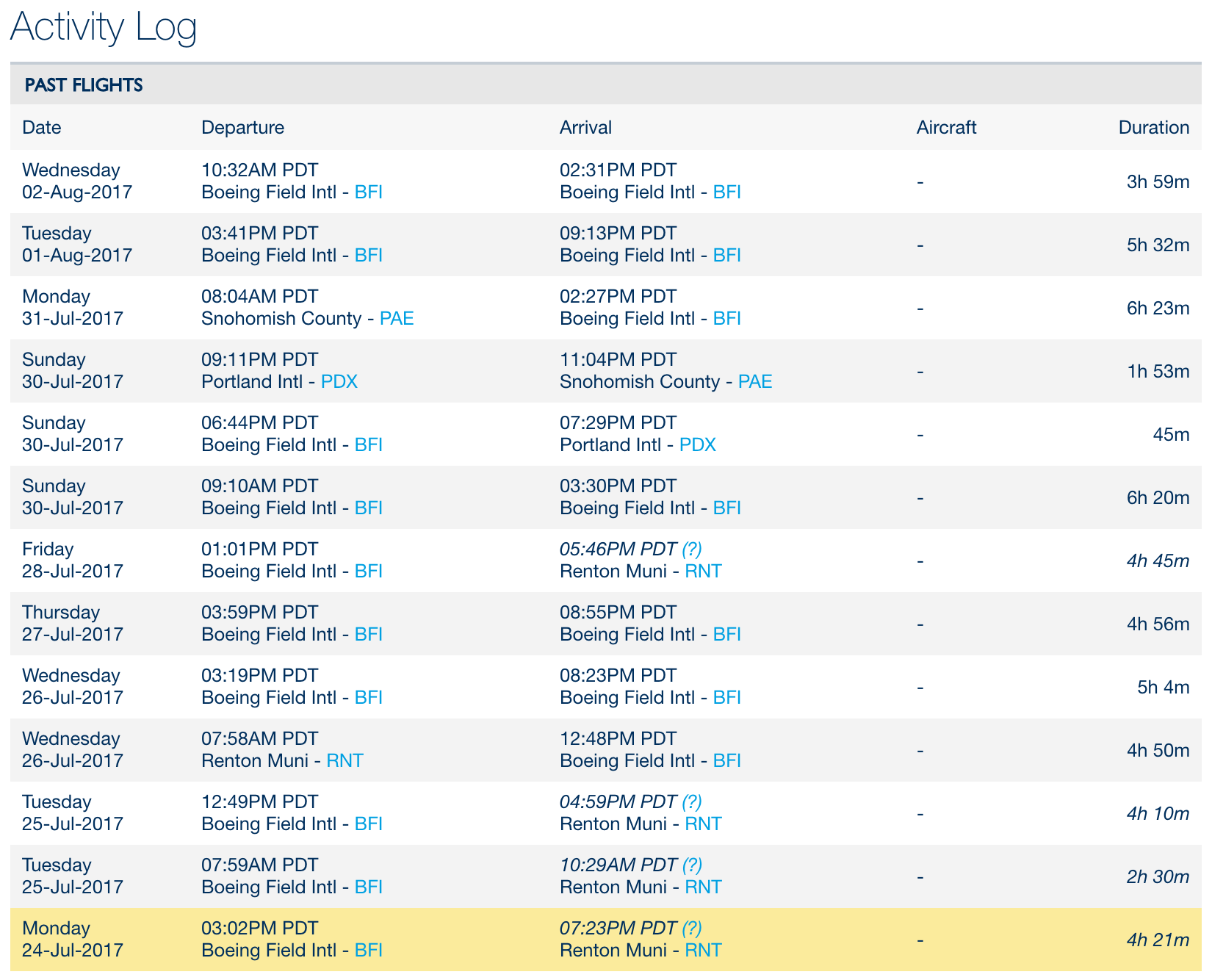
Flightaware.com
SPUD21 has flown roughly a dozen patrols over the Seattle area since arriving there on July 24th. The aircraft still remains at Boeing Field at the time of publishing.
It is covered in a dizzying array of blisters, protrusions, humps and bumps. These include missile approach warning detectors and large fairings on its empennage for buckets of forward-firing decoy flares, as well as both microwave—the dome antenna behind the wing and flat antenna modification in front of the wing—and ultra high-frequency satellite communications—the platter-like antenna behind the dome antenna. A communications intelligence suite also appears to be installed on the aircraft, with the antenna farm on the bottom of its fuselage being a clear indication of such a capability.
But what"s most interesting is the aircraft"s apparent visual intelligence gathering installation. It is placed in a fixed position, on the left side of the aircraft, below the plane’s forward emergency door. The rectangle structure has a sliding door that covers the system"s sensors when not in use.
On the lower end of the capabilities spectrum, the system installed could be similar to the DB110 reconnaissance system, which can provide very high fidelity imagery of a target area from standoff "slant" ranges. The system, which is popular among F-16 operators in a podded version, can be acquired in varying configurations. Some have multi-spectral fusion capability, where electro-optical and infrared imagery is combined to bring out unique details that neither can see alone. An additional wider angle camera is also available as well, along with an assortment of data-link options that can send the system’s imagery to analysts and “customers” on the ground for rapid exploitation. In this case, the analysts could fly inside the aircraft, eliminating the requirement—or at least the outright need—for such a feature.
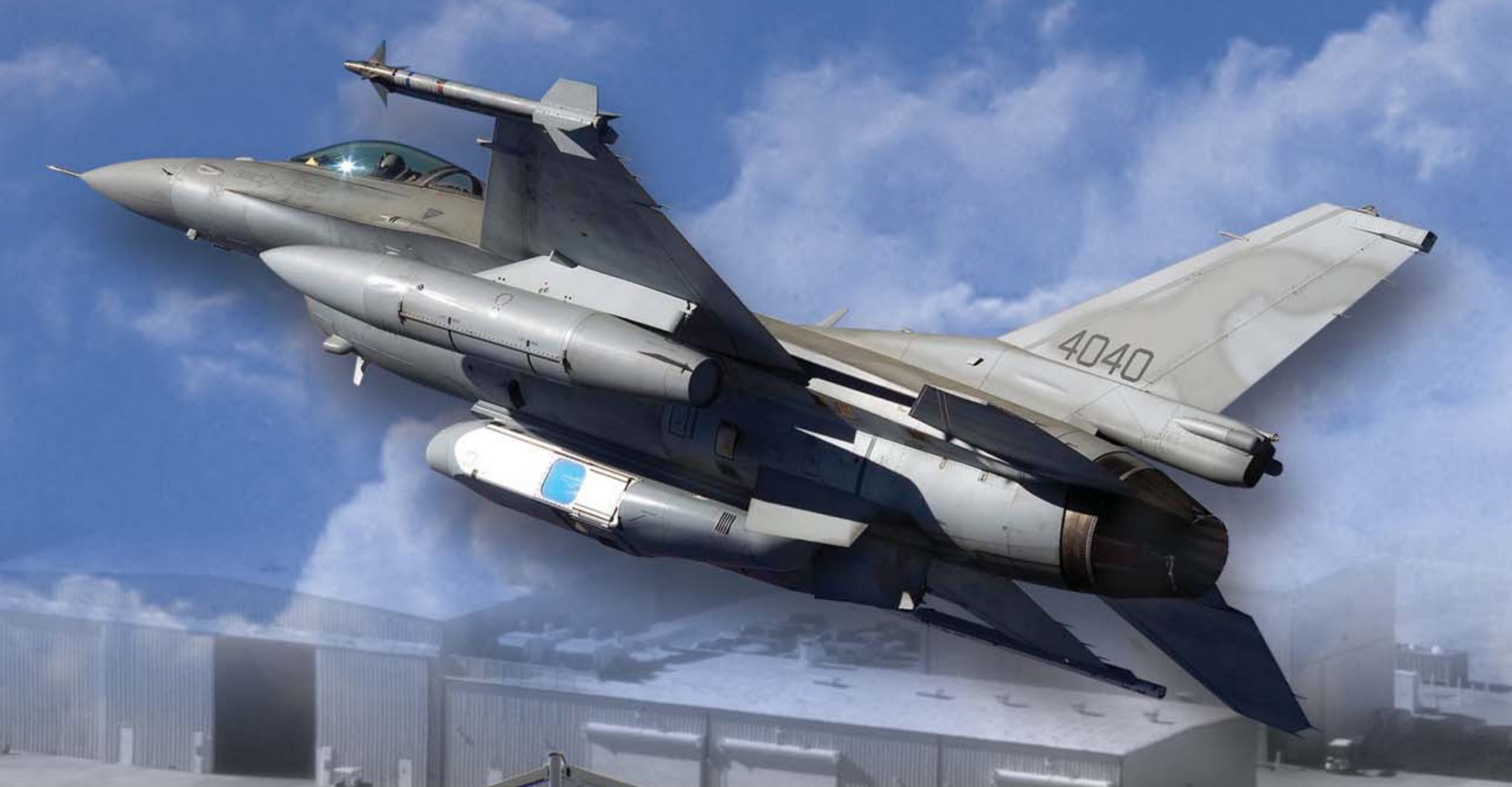
UTC Brochure
The DB-110 pod uses a very similar sliding door installation about the same size as the one installed on the CN-235.
On the higher end of the capability spectrum, the aperture could be filled with a wide area aerial surveillance (WAAS) camera system that can view a large area—the size of a town—continuously at one time. This technology, which allows for tagging of vehicles and other moving objects, and can even be used retroactively to trace someone"s movements over time, is among the biggest surveillance game-changers of our time. You can read all about how it works and its great potential to change everything from how we survey the battlefield to how we solve crimes here at home in this past feature.

No comments:
Post a Comment